Mini-Reviews: Bend, Redfern, Knew

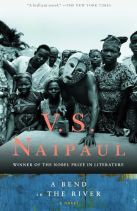
V.S. Naipaul, A Bend in the River

This novel depicts a pessimistic view of life in postcolonial Africa. It’s narrated by Salim, a young Indian Muslim who decides to move away from his family on the east coast and settle in a small town in the interior of Africa. There he observes the various struggles he and his neighbors face, from the petty corruption of local officials to large-scale political violence. Salim’s aimlessness and confusion mirror the experience of the town, which seems doomed to corruption and decay no matter who is ruling it. This is my first encounter with Naipaul, and while he’s an excellent writer, I didn’t much care for the book. As a novel, I don’t think it works; there’s not much plot, and Salim is an incredibly passive and unsympathetic character. Based on cursory internet research, Naipaul seems to be widely viewed as racist and sexist; the character of Salim certainly is both. But I didn’t read this as a pro-colonialist novel, as some have claimed. The fictional town here seems doomed to corruption and decay no matter who is ruling it. Regardless, this type of book isn’t for me, and I don’t plan to read more by Naipaul.

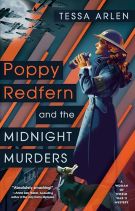
Tessa Arlen, Poppy Redfern and the Midnight Murders

It’s 1942, and Poppy Redfern is the local air raid warden in her village of Little Buffenden. Excitement has recently come to the village in the form of an American airfield; the Yanks have arrived to help win the war, and at first the locals embrace them with open arms. Some of the village’s young women begin dating the dashing American soldiers; but when two of the women are murdered, suspicion immediately falls on the outsiders. But Poppy, wondering whether someone from the village might be responsible, decides to investigate for herself. I enjoy a good historical mystery, and this one was fine, but nothing particularly stands out about it. Poppy is a fun narrator, but many of the secondary characters are flat and two-dimensional. I also felt there was a lot of info-dumping about life in England during World War II, which will be redundant for most people. Overall, this was an easy, pleasant read, but I’m not desperate to pick up the sequel.

Kristan Higgins, If You Only Knew

This novel follows two sisters as they face new challenges in their lives. Jenny, recently divorced but trapped in an unwanted “friendship” with her ex and his new wife, has moved back to her hometown for a fresh start. There she meets her attractive neighbor, Leo, who flirts with her but is adamant that he doesn’t want a relationship. Meanwhile, Jenny’s sister, Rachel, channels all her energy into being the perfect wife and mother—until she discovers that her husband cheated on her. Will she forgive him or forge a new path for herself? I enjoyed this book quite a bit; both Jenny and Rachel, who take turns narrating, are relatable and sympathetic characters. The serious issues in the book are leavened by humor and by a satisfying romance that develops throughout the novel. I stopped reading Higgins’s books after a while because they got too miserably depressing, but this one is a fun and uplifting read.
Mini-Reviews: Spouse, Duke, Fallen

Alice Coldbreath, A Contracted Spouse for the Prizefighter

Former prizefighter Clem Dabney has embarked upon a new career and established a popular music hall in London; now he seeks to expand into a real theater. The Parthenon, owned by Theodora Fields and her two siblings, is his target, but he’s surprised when she approaches him with a proposition: She’ll marry him and thus give him an ownership stake in the theater, if he agrees to put her male impersonation act onstage. Clem agrees and soon finds himself oddly drawn to his eccentric wife, but his secrets may threaten their happiness. I’ve enjoyed this whole series, and this book caps things off nicely. I liked Clem’s bewildered affection for Dora (as he calls her), and I enjoyed the music hall setting. I do think the book is oddly paced, and the conflict between them isn’t terribly substantial, but I still really enjoyed the central romance. I’m looking forward to my next read by this author!

Anna Harrington, If the Duke Demands

Miranda Hodgkins has been in love with her neighbor, Robert Carlisle, for years, but the attraction has always been one-sided. Determined finally to get his attention, Miranda sneaks into his bedroom and attempts to seduce him—only to encounter his older brother, Sebastian, instead. Sebastian offers to help her with Robert if she’ll help him find a suitable wife; as the Duke of Trent, he needs a woman with the right family and social connections. But as Miranda and Sebastian’s agreement brings them closer together, an inconvenient mutual attraction sparks. This Regency romance was a perfectly fine read, but it didn’t knock my socks off. I generally enjoy the “wrong brother” trope, but here it’s a relatively small part of the plot. Miranda also gives off strong “not like other girls” vibes. I did like that she’s honest with Sebastian about her feelings and desires, but I felt he was caddish and irresponsible for pursuing her without feeling able to marry her. Overall, I didn’t dislike this one but wouldn’t particularly recommend it either.

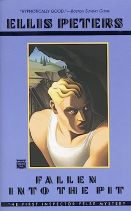
Ellis Peters, Fallen into the Pit

It’s been five years since World War II ended, but in the English town of Comerford, on the Welsh border, trouble persists. Helmut Schauffler, a former POW and proud Nazi, is deliberately antagonizing everyone, picking fights and tormenting a local Jewish woman. No one is sorry when his dead body turns up, but Sergeant George Felse knows it’s his duty to find the killer—especially when his teenage son, Dominic, gets involved in the investigation and ends up in danger. I adore the Brother Cadfael novels and was excited to finally try Peters’s other mystery series, which she set in her own era. Overall I really enjoyed this book, despite its being a bit too long; it manages to be a convincing depiction of a changing postwar England, a compelling mystery, and a surprisingly tender portrayal of George and Dominic’s relationship. The Cadfael series has my heart, but I think if you enjoy that series and like Golden Age-style mysteries, you’ll enjoy this one too. I’m excited to continue with the next book!

2025 Vintage Mysteries Wrap-Up

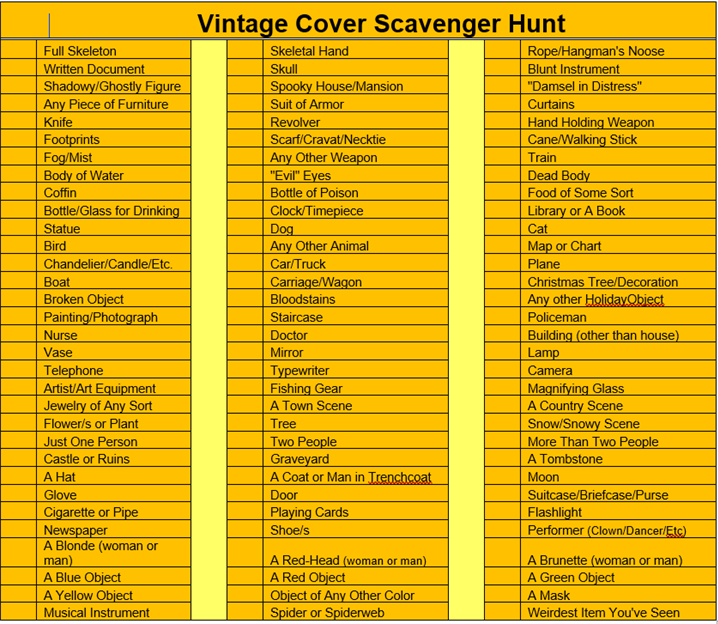
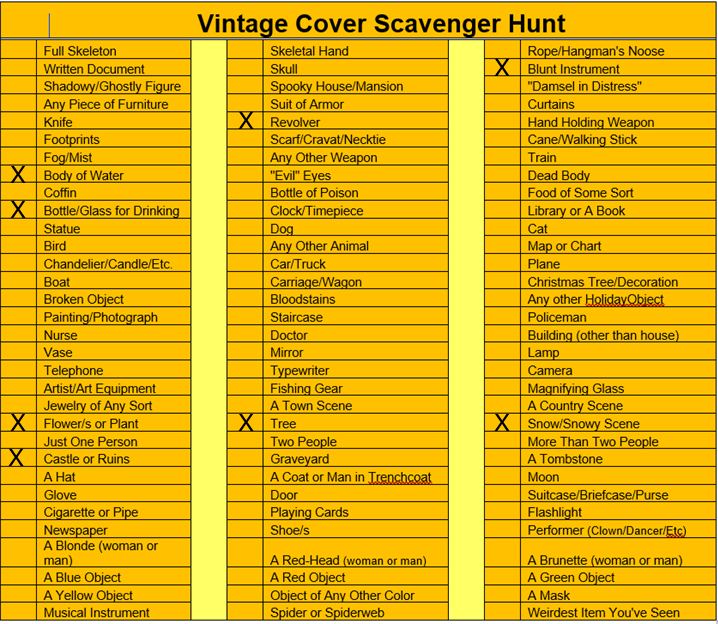
Happy (belated) New Year! 2026 really sneaked up on me, and I’m scrambling to finish up my 2025 reviews and recaps. I had another very fun year of reading vintage mysteries with the Vintage Scavenger Hunt Challenge at My Reader’s Block. My goal was to read at least eight books in the “Golden Age” period (published before 1960) and find items from the scavenger hunt list on the covers. Here’s what I read in 2025:

  1. Rupert Latimer, Murder After Christmas (1944): snowy scene
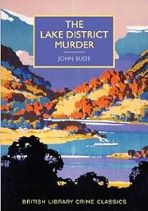
  2. John Bude, The Lake District Murder (1935): body of water
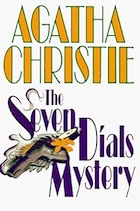
  3. Agatha Christie, The Seven Dials Mystery (1929): revolver
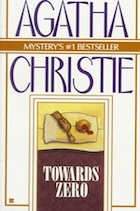
  4. Agatha Christie, Towards Zero (1944): blunt instrument
  5. Anthony Wynne, Murder of a Lady (1931): castle
  6. Richard Hull, Excellent Intentions (1938): tree
  7. Ngaio Marsh, Death at the Bar (1940): drinking glass
  8. Delano Ames, Murder Begins at Home (1949): flower or plant

Mini-Reviews: Ready, Ruined, Christmas

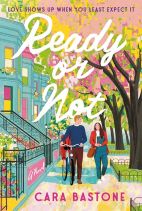
Cara Bastone, Ready or Not

When Eve unexpectedly gets pregnant after a one-night stand, her stable and predictable life suddenly gets a lot more complicated. She doesn’t have parents to lean on, and her best friend, Willa, is struggling with infertility and finding it hard to be supportive. Fortunately, Willa’s brother Shep, whom Eve has known since childhood, is showing up in a big way—and suddenly Eve is seeing him in a whole new light. But are her feelings real, or is this just a hormone-induced infatuation? I continue to be a fan of Cara Bastone’s contemporary romances, which tend to star real people dealing with real problems, and this one is no exception. Eve’s narrative voice is fun and down-to-earth, and I bought her as a character, as well as her friendship with Willa and her developing feelings for Shep. Shep himself is wonderful, perhaps a little too perfect (the pining!), but a great example of the golden retriever hero. Definitely recommended if you like this premise, and I look forward to my next Bastone book!

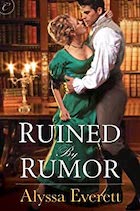
Alyssa Everett, Ruined by Rumor

Roxana has been engaged to the dashing Major Wyatt for five years, waiting patiently while he served in the Napoleonic Wars. Now that he’s back, she’s ecstatic finally to set the wedding date—but Wyatt suddenly breaks things off, and a devastated Roxana turns to her neighbor, Alex Ayersley, for comfort. Little does she know that the proper, stuffy Alex has been in love with her for years; when he attempts to give her a consoling hug, they end up kissing passionately. When he learns that their kiss was observed, and Roxana is the target of vicious gossip, he proposes marriage to save her reputation. But will she be able to return Alex’s love, especially when Wyatt comes back into the picture? This is a reread for me, and I enjoyed it just as much as I did the first time. Alex and Roxana are both terrible communicators, but their reasons for not being direct made sense to me. And the denouement, while a bit implausible, is extremely satisfying!

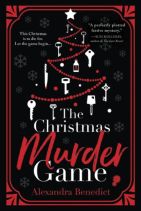
Alexandra Benedict, The Christmas Murder Game

Lily Armitage is summoned to Endgame House to participate in the family’s traditional Christmas Game. She hasn’t attended in years, ever since her mother’s suicide on the grounds of the estate. But this year, her aunt begged her to come, hinting that her mother was actually murdered. Moreover, the winner of this year’s game will inherit Endgame House. But tensions are high within the Armitage family, and as they start to play the game, it’s evident that everyone is hiding something. And then the players begin to die. This book had all the elements that should have appealed to me—a country house murder mystery set at Christmas, complete with anagrams and puzzle clues—but it never really clicked. The characters felt flat and predictable, and honestly the villain’s identity was pretty obvious. In theory, I liked the author’s inclusion of a scavenger hunt for readers (finding anagrams of the Twelve Days of Christmas within the book), but in practice it just distracted me from the story. A cool premise, but unfortunately the execution didn’t live up to it.

Mini-Reviews: Blue, Nothing, Wish

Lia Louis, Dear Emmie Blue

Emmie has been best friends with Lucas since high school, and lately she’s been hoping they can become more than friends. So when Lucas plans a nice dinner at their favorite restaurant with a big question to ask her, she’s ecstatic—until he asks her to be “best woman” at his upcoming wedding. Emmie is devastated, but ultimately she agrees and tries to suppress her feelings. Meanwhile, she finds herself unexpectedly growing closer to Lucas’s brother, Eliot, who helps her with some difficult family issues of her own. Has she been in love with the wrong brother all along? This was a reread for me, and I still enjoyed it this time around. There’s nothing groundbreaking about the plot, but I like that Emmie has important relationships and problems that don’t involve her love life at all. And without spoiling the romance, I’ll just say I enjoy a man who pines!

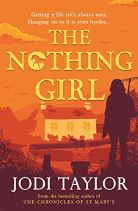
Jodi Taylor, The Nothing Girl

Growing up in the shadow of a strict aunt and malicious cousins, Jenny Dove has always faded into the background. Now she’s dissatisfied with her small life—always at home, never allowed to pursue an education or career—but doesn’t know how to change it. Enter Russell Checkland, a chaotic artist who’s just been rejected by the love of his life. He shocks Jenny by proposing a marriage of convenience: Her money (inherited from her parents) will help restore his dilapidated estate, and in return he’ll help her to try new things. But Jenny’s growing confidence and delight in her new life are threatened when it seems that someone is trying to kill her. There is so much plot in this book, and I didn’t even get to the magical talking horse! But this is a delightful little fairy tale, somewhat in the vein of The Blue Castle but with a modern setting and a bit more spice. I loved it, and it will definitely be in my top 10 books of the year!

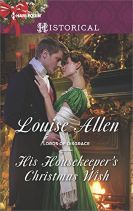
Louise Allen, His Housekeeper’s Christmas Wish

Alex Tempest runs (literally) into Tess Ellery on the streets of Ghent and causes her to miss her boat back to England. He therefore offers to escort her to London, where she hopes to find employment as a governess or companion. Unfortunately, a society matron spots them together on the boat and assumes Tess is Alex’s mistress, ruining her chances of a respectable job. With no other options, Alex hires Tess as his housekeeper, but their mutual attraction makes everything more complicated, especially when Alex is forced to visit his estranged family at Christmas. Louise Allen’s historical romances have been hit or miss for me, and unfortunately this was one of the misses. I found the plot contrived and unrealistic, and I never really bought Alex and Tess’s romance. I also don’t love stories where family dysfunction is magically healed just because it’s Christmas. Not a terrible book, but definitely not a keeper for me.

Mini-Reviews: Physicians, Trickerie, Promise

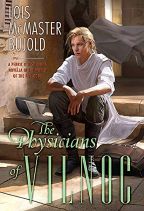
Lois McMaster Bujold, The Physicians of Vilnoc

Penric is summoned from his cozy home in Vilnoc with wife Nikys, baby daughter Florina, and mother-in-law Idrene to deal with a mysterious disease that’s broken out in the local army camp. It’s nothing the army healer or Penric has seen before, and they can’t figure out how (if at all) the illness is passed from person to person. As the cases and fatalities multiply, Pen begins to despair—but timely assistance from his god brings new insight and helps turn the tide of the disease. This novella came out in 2020, and while Bujold’s “outroduction” says she started writing it before Covid was on her horizon, it’s certainly an impactful coincidence of timing! I think she does a great job of illustrating a healthcare worker’s experience of a pandemic, though obviously it’s not fun to read about. A well-written but somber installment of the Penric and Desdemona series; I’m hoping the next one will have a little more lightness and humor!

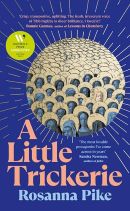
Rosanna Pike, A Little Trickerie

In the year 1500, Tibb Ingleby and her Ma are vagabonds in search of a permanent home. When Ma’s plans to get them a roof go awry, Tibb is left on her own and must navigate her way through a challenging and hostile world. Her adventures include living off the land with a troubled friend, performing with a group of traveling players, being kidnapped by a dangerous man, and faking a miracle (the “trickerie” of the title). I have mixed feelings about this book. I really liked Tibb’s irrepressible and unique voice—the author was definitely going for A Style, and I think it mostly worked. But I wasn’t a fan of the chapters told from another character’s POV; they took me out of the story, and I always found myself wanting to get back to Tibb. Also, the Catholic Church (and religion in general) doesn’t come off well in this book, which rubs up against my biases as a Catholic myself. Still, lovers of historical fiction will likely find a lot to enjoy here, and I’m glad I ventured a little bit outside my comfort zone for this one.

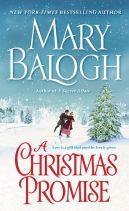
Mary Balogh, A Christmas Promise

Randolph Pierce, the new Earl of Falloden, is struggling to pay his predecessor’s considerable debts. A rich merchant has purchased all those debts and says he’ll write them off if Randolph marries his daughter, Eleanor. Randolph reluctantly agrees, not knowing that Eleanor isn’t happy with the match either—she’s only consenting because it’s her father’s dying wish. Initially, both Randolph and Eleanor are cold and distant, but as Christmas approaches and Eleanor’s boisterous, loving family comes to visit, they begin to see each other in a new light. I like Mary Balogh’s marriage-of-convenience romances, and this one is well done. The holiday setting is fun and not too cloying, and I enjoyed the slight secondary romance as well. Not my favorite Balogh, but probably my favorite (so far) of her Christmas romances.

Mini-Reviews: Children, Christmas, Mistletoe

P.D. James, The Children of Men

This dystopian novel imagines a near-future world in which no human children have been born since 1995. England is ruled by a seemingly benevolent dictator called the Warden, and most people’s material needs are satisfied. But the human race is dying out, and hope is a thing of the past. Theo Faron, a 50-year-old Oxford professor, views the future with detachment and despair. But when a young woman, one of his former students, approaches him with a surprising request, he finds himself unwillingly getting involved with a resistance movement. I’m of two minds about this book. On the plus side, it’s steeped in deep questions about morality and whether good and evil even matter if the world is ending. Certain scenes are quite memorable and chilling, and the dramatic tension builds effectively even when there’s not much going on. On the minus side, the pacing is slow, the world-building doesn’t feel completely thought out, and the ending leaves a lot of unanswered questions. I’m excited to talk about this book with my office reading group, as I’m sure it will generate an interesting discussion. But for me personally, it was an unsettling read.

Martha Waters, Christmas Is All Around

Artist Charlotte has never enjoyed Christmas, and she especially hates holiday rom-coms because when she was nine years old, she had a role in the modern holiday classic Christmas, Truly, which she’d love to forget about. But when she visits her sister in England for the holidays, she finds she can’t escape her past as they tour an estate that was used as a set on the film. There Charlotte meets Graham, the estate’s handsome owner, who hires her for an art project to bring much-needed publicity to the estate. Will grumpy Grinch Charlotte find herself in a holiday rom-com of her own? I enjoyed Martha Waters’s recent historical mystery and wanted to try more of her work, so I was excited for this contemporary romance. Unfortunately, it wasn’t quite as funny as I wanted it to be, and I didn’t really connect with the characters. It’s still a pleasant read – there are some fun one-liners, plentiful Love, Actually references, and cozy Christmas vibes – but this book won’t be a keeper for me.

Chloe Liese, The Mistletoe Motive

Gabriella Di Natale and Jonathan Frost are work nemeses. They’re co-managers of Bailey’s Bookstore and couldn’t be more different: Gabby is a festive ball of sunshine who loves the bookstore’s soul, while Jonathan is cold and grumpy and all about the bottom line. But as Christmas approaches, Gabby starts experiencing a strange attraction to Jonathan—an attraction that just might be reciprocated. I enjoy the enemies-to-lovers trope, so I was hoping to like this holiday novella a lot more than I did. But it suffers from perfect hero syndrome: Jonathan is outrageously handsome, incredibly attuned to Gabby’s every need, and the ideal ally when she discloses her autism. And while I think it’s great to see neurodivergent folks represented in romance, autism (plus loving Christmas) basically felt like Gabby’s entire personality. She’s so mean to Jonathan, yet he’s completely devoted to her. And don’t get me started on the overly Christmassy names—there is literally a character named George Bailey. In short, I found this book frustrating, and I won’t be reading more by Chloe Liese.

Mini-Reviews: Merry, Wallflower, Best

Charlotte MacLeod, Rest You Merry

This yuletide mystery is set in a college town, where Professor Peter Shandy hates the tacky, over-the-top Christmas light display in which all the residents are bullied into participating. This year Peter retaliates by putting up the most garish decorations possible, then promptly leaving for a Christmas cruise. When he returns to find local busybody Jemima Ames dead in his living room, he wonders whether his prank might have somehow contributed to her death. And when he suspects murder, the college president orders him to investigate before scandal can damage the college’s reputation. I really enjoyed this vintage mystery novel (first published in 1978), which includes all the predictable elements — an intelligent amateur sleuth, multiple suspicious deaths, some seeming impossibilities, a closed circle of suspects, and even a romance — but deploys them well, with plenty of clever wit. This is the first book in the Peter Shandy series, and I’ll happily read more if I can find them at my library.

Eloisa James, How to Be a Wallflower

Cleo Lewis has come to London for the Season, but she’s more interested in running the company her father left her, Lewis Commodes, than in finding a husband. In fact, she’s determined to be a wallflower and orders her wardrobe accordingly. At the dressmaker’s, she runs into Jacob Astor Addison, a rich American who wants to buy the dress shop and transport it to New York. Cleo immediately opposes this scheme, and they become business rivals—which of course leads to bickering, bantering, and falling in love. After enjoying Eloisa James’s story in Ladies in Waiting, I picked up a bunch of her full-length novels as free/cheap e-books, but this one was just okay for me. It’s the very definition of a wallpaper historical; Cleo and Jake would never have been tolerated in high society based on their speech and behavior, and the plot is completely implausible. There’s also not much conflict in the romance; Jake’s feelings and intentions are clear from the start, and Cleo comes around pretty early on. That said, James does have a fun, breezy writing style, and I’m hoping to have more luck with her other novels!

Kate Clayborn, Best of Luck

This final book in the Chance of a Lifetime series focuses on Greer, who’s trying to complete her degree at age 27 but needs a photography class to graduate. She asks her best friend’s brother, Alex, for help while he’s in town, since he’s a well-known photojournalist. But their collaboration is complicated by a mutual attraction that seems pointless in the long term, since Alex travels for his job and hates staying in one place. I really like Kate Clayborn; a lot of contemporary romances these days seem same-y and flat to me, but hers are heartfelt and complex. I loved that both Greer and Alex are dealing with real problems, but their trauma isn’t their only defining characteristic. They’ve both fought hard for what they have, so despite their affection for each other, they’re understandably wary of how a relationship might destabilize their lives. There’s maybe a bit too much angst toward the end of the novel, but overall I really liked this one, and I’d strongly recommend the whole series to those who enjoy contemporary romance!

Mini-Reviews: Orphans, Systems, Bookshop

Lois McMaster Bujold, The Orphans of Raspay

Penric is sailing home from what should have been a routine journey, but naturally his ship is captured by pirates, and things only get worse from there. Among his fellow captives are two young orphan girls who will almost certainly be sold into slavery, so Pen takes responsibility for them as he engineers a prison break. But between pirates, corrupt merchants, and a local distrust of sorcerers, it’s all Pen and Des can do to keep themselves and their charges alive. This is another enjoyable installment in the Penric and Desdemona saga, heavy on adventure and light on character development. I wonder if we’ll see the two orphans, Lencia and Seuka, in subsequent books. Otherwise, I don’t have much to say about this one – it’s entertaining but doesn’t really feel like a crucial (or even particularly necessary) installment of the series.

Martha Wells, All Systems Red

This novella is narrated by a SecUnit, a robotic “construct” made of both organic and inorganic materials, whose job is basically to provide security for whoever hires it. It’s currently accompanying a crew on a mission of planetary exploration, but all it really wants to do is watch soap operas on its entertainment feed. The longer the self-designated Murderbot spends with this particular crew of humans, however, the more it begins to care about them. And when it senses something off about the mission, it must figure out whether and how to help the humans. The Murderbot series has gotten a lot of hype, and I can definitely see why; the concept is fascinating, particularly now that AI is so prominent in our society, and Murderbot is a snarky yet sympathetic character. I’m just not sure if it’s my thing, you know? I did enjoy the story, but I haven’t decided whether I care enough to continue with the series—with apologies to all the Murderbot lovers out there!

Jenny Colgan, The Christmas Bookshop

Carmen has just been laid off and is struggling to find work in her dying Scottish town. She ends up moving to Edinburgh to stay with her sister, Sofia, who seems to have the perfect life — which Carmen both mocks and envies. Sofia gets Carmen a job with Mr. McCredie, who owns an unprofitable bookstore and expects Carmen to turn things around somehow. At first, Carmen hates everything about her new situation, but she eventually finds things to love about her job, the city, and even her sister. This book is like a warm hug; it’s cozy and Christmassy and makes me want to visit Edinburgh in December, despite what sounds like horrific weather. I loved Carmen and Sofia’s relationship, which felt very realistic and nuanced, and there’s a sweet romance as well, though it doesn’t get much page time. I would definitely recommend this as a great read to get into the holiday spirit!