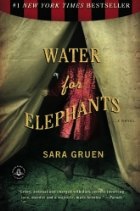
Review: Water for Elephants

Water for ElephantsSara Gruen, Water for Elephants

Jacob Jankowski is an old man in his 90s living out the remainder of his days in a nursing home. His children rarely come to visit, and he’s both lonely and frustrated by nursing home life. But when the circus comes to town one day, it triggers Jacob’s memories of his youth and the years he spent with the Benzini Brothers Greatest Show on Earth. In the 1930s, Jacob was a promising veterinary student who was about to join his father’s practice; but after his parents’ tragic death, the practice had to be sold to pay the family debts. Bereft and with nowhere to go, Jacob hopped a train that turned out to belong to a traveling circus; and because of his veterinary skills, the ruthless circus owner decided to keep him around. At the circus Jacob met a variety of new people, including a sarcastic dwarf, a mercurial animal trainer, and the trainer’s beautiful but trapped wife. Eventually his involvement with the circus would trigger a series of shocking and catastrophic events.

I remember that when this book first came out, a lot of my friends were raving about it, convinced that I’d absolutely love it. Unfortunately, I didn’t have that experience…maybe I’m missing something, but this book just didn’t resonate with me. I really enjoyed the setting; circus life in Depression-era America was fascinating, and I liked the photos of real historical circuses that preceded each chapter. It’s truly amazing to think about the amount of work (and food!) it took to keep the circus going! But I wasn’t that nuts about the plot or characters in this book. The main story is the romance between Jacob and Marlena, a performer who is trapped in an unhappy marriage. But while her menacing husband is an interesting (albeit repulsive), larger-than-life character, Marlena herself seems very bland, with no defining qualities other than her beauty and her misery. I also didn’t find Jacob particularly interesting; he acts like a stock character rather than an individual. Overall, the book is worth reading if you’re interested in the setting, but in my opinion it doesn’t live up to the hype.
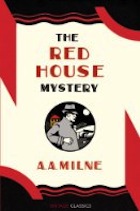
Review: The Red House Mystery

Red House Mystery, TheA.A. Milne, The Red House Mystery

In the time-honored tradition of the classic British mystery, a house party goes terribly awry when one of the guests is murdered and the host disappears. Mark Ablett, owner of the Red House, enjoys collecting people around him, so the house party includes such diverse characters as his private secretary, a military man, an actress, and several idle young people. The party appears to be going well until Ablett learns that his brother, the black sheep of the family who had been living in Australia, will be visiting the Red House for an unspecified but sinister reason. When Robert is inevitably murdered, Mark is nowhere to be found. Is he the murderer, or did someone else in the house party do the deed? Young man-about-town Antony Gillingham just happens to arrive on the scene at a pivotal moment, so he decides to try his skill as an amateur detective; but ultimately he discovers that the solution to the mystery is far more tragic than amusing.

When I came across this book a few years ago, I was delighted to discover that the creator of Winnie the Pooh had written a mystery story! It follows many conventions of the classic Golden Age mystery — such as being “fair,” with all clues presented to the reader as the detective discovers them — but it turned out to be a bit darker and sadder than I was expecting. Tony discovers the murderer’s identity fairly early in the book, so the bulk of the mystery lies in discovering how and why the deed was done. And the thing is, I found the murderer very sympathetic! So I was disappointed that this character turned out to be the guilty party. Also, unlike many mysteries from this period, this book doesn’t contain much humor, nor are there any subplots to lighten the mood of suspense and doom. Tony’s sidekick provides a few funny moments, but otherwise the tone remains pretty dark. Finally, Tony’s character isn’t developed very much, which disappointed me; he seemed really interesting, and I would have liked to know more about his backstory. The book is still worth reading if you enjoy Golden Age mysteries, but I have to admit, it wasn’t my favorite.

Review: Something New

Something NewElise Mac Adam, Something New: Wedding Etiquette for Rule Breakers, Traditionalists, and Everyone in Between

As the title indicates, this book is a wedding etiquette guide for brides (and others) who don’t quite fit into the traditional wedding mold. They don’t necessarily want to feel like a princess on their “special day,” they don’t want to spend six figures on their wedding reception, and they don’t want to buy a whole bunch of crap and annoy their families in the name of tradition or etiquette. To address this audience, Elise Mac Adam (erstwhile etiquette columnist at the now-defunct Indie Bride website) has written a straightforward, bare-bones approach to wedding etiquette. She describes the most common traditions surrounding various aspects of wedding planning, from the wording of invitations to the etiquette of gift registries. Then she explains why these traditions exist and how they can be modified to work for modern brides. Finally, she shares questions and answers from her days as an advice columnist to give examples of proper etiquette in action.

As I read this book, I couldn’t help comparing it with Meg Keene’s A Practical Wedding, which I think is a fantastic resource for engaged couples. This book is good, too, but it fulfills a somewhat different need. Keene’s book is more philosophical and doesn’t get into very much detail about invitation wording and the like. In contrast, this book gets a little bit more specific about the nitty-gritty aspects of wedding planning. Still, it’s not as detailed as it could be, so brides who are extremely type-A or who dream of the perfect Martha Stewart wedding likely won’t get much out of it. But for brides who want a more laid-back affair and just don’t want to upset their grannies, this book could be a good resource. I’ll likely keep my copy around for future reference!

Review: In Tearing Haste

In Tearing HasteCharlotte Mosley, ed., In Tearing Haste: Letters Between Deborah Devonshire and Patrick Leigh Fermor

Deborah Devonshire began life as the youngest of the (in)famous Mitford sisters, but she unexpectedly became the duchess of Devonshire when her husband, Andrew Cavendish, inherited the duchy from his brother. Patrick Leigh Fermor was a travel writer who became a war hero by kidnapping the commanding German officer on the Nazi-occupied island of Crete. (The movie “Ill Met by Moonlight” is a fictionalized account of his experience.) The two first met when Deborah was still a young debutante, but they eventually formed a deep friendship, as well as a correspondence that would last for more than half a century. Although “darling Paddy” and “darling Debo” lived through many political upheavals and personal tragedies, their letters to each other always remained upbeat, humorous, and cheerful.

I usually find nonfiction very slow going, but this book was a pleasure to read. Both “Debo” and “Paddy” wrote in a lively conversational style that’s very easy to read, and I felt truly immersed in their day-to-day lives. Patrick often wrote about the various exotic places he visited, including the little town in Greece where he and his wife eventually settled. Deborah largely stayed on the Devonshire estates in England and Ireland, where she waxed poetic about sheep breeding and various fox-hunting excursions. The book also provides some fascinating insights into the psychology of the British upper classes: for example, Deborah mentions, with the utmost casualness, dining with President Kennedy several times. Though there’s not much in-depth discussion of the historical events through which they lived, anyone who is interested in reading a firsthand account of the 20th century should pick up this book! I’d also recommend it for fans of the Mitfords or early 20th-century British literature in general.

Review: The Young Clementina

Young Clementina, TheD.E. Stevenson, The Young Clementina

Charlotte Dean can’t remember a time when she wasn’t in love with Garth Wisdon, her childhood playmate and next-door neighbor. Although Charlotte is merely the daughter of the local vicar, while Garth is the heir to a large estate, she grows up confident that they will marry someday. As they reach adulthood, Garth seems to reciprocate her feelings, but their love is arrested by the outbreak of World War I. Garth goes off to fight in the war, and when he returns, Charlotte no longer recognizes the man she once knew. The new Garth is angry and cynical and seems to hold her in contempt. Nevertheless, she is still overwhelmed with shock when he quickly becomes engaged to her younger sister, Kitty. Now Charlotte is living in a shabby flat in London, where she has little contact with Garth and Kitty. But a tragic turn of events brings them both back into her life — along with their strange, shy daughter, Clementina — and Charlotte must make a decision that could alter the entire course of her life.

I’m so glad Sourcebooks is reprinting the novels of D.E. Stevenson, because I’ve really enjoyed all the ones I’ve read so far! This book is a bit more somber than her Miss Buncle series, but it’s still a nice, leisurely, and ultimately sweet read. I was expecting the central storyline to be a romance, but really the book is much more about Charlotte’s growth as she is forced out of her comfort zone. In the beginning, it’s a bit difficult to feel much sympathy for her because she accepts her sister’s betrayal so passively. But as she emerges from her solitary cocoon and starts to cultivate friendships, she becomes a much stronger person who is capable of standing on her own two feet. On the other hand, I never felt much sympathy for Garth, even after he explained his actions; in my opinion, everything he suffered throughout the novel was his own stupid fault! But overall, I’d definitely recommend this book to people who like slower-paced, old-fashioned books with a contemplative feel.