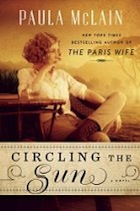
 Paula McLain, Circling the Sun
Beryl Markham is known to history as one of the pioneers of aviation: she was the first woman to fly solo across the Atlantic from east to west. But this novelized version of her life focuses on her childhood and youth on an African farm in what is now Kenya. Beryl’s family moved to Kenya when she was four years old, but her mother had trouble adapting to African life and soon returned to England. As a result, Beryl’s upbringing was unconventional, and her education was sporadic at best. She grew up with a deep love of the land and creatures surrounding her, and she loved to ride, shoot, and train horses. But as she approached adulthood, her father’s farm fell on hard times, and he eventually decided to sell the property and relocate to Nairobi. Distraught at the thought of leaving her home, and unwilling to be a burden on her father (with whom she was not close), Beryl married a neighboring farmer. But the marriage was not a happy one, and Beryl soon left him to become a horse trainer in her own right. The novel follows Beryl’s attempts to stand on her own against the odds, and it also chronicles her friendship with Karen Blixen — better known as Isak Dinesen, the author of Out of Africa — and her love affair with Denys Finch Hatton, whom the book portrays as the great love of Beryl’s life.
This book initially caught my interest because I find the early days of flight fascinating. It’s amazing to me that traveling by plane is so common now, when back then it was terribly dangerous, and only the most daring adventurers were brave enough to attempt it. Unfortunately, this novel has almost nothing to do with Beryl Markham’s career as an aviatrix; but I still ended up enjoying it a lot for the setting and characters. I don’t know much about Beryl’s life, so I can’t say how accurate the book is in its details, but it certainly paints a vivid and compelling picture of her character and of life in British East Africa at that time. The Beryl of this book was certainly ahead of her time in many ways. She married and divorced multiple times, and she had several extramarital affairs, including one with Prince Henry, Duke of Gloucester. She pursued a career at a time when most women were still relegated to the home. Such characteristics make her a compelling heroine, and I enjoyed reading about her adventures — although this book focuses a lot on her various romances, when I really wanted to know more about her professional life and aspirations. But I did enjoy the novel and would like to learn more about this era. I’ll have to read Out of Africa and Beryl’s own memoir, West with the Night!
 You Book Me All Night Long