Mini-Reviews: Dream, Fake, Shadow

Kristen Britain, The Dream Gatherer

This book is a collection of two short stories and one novella that Britain wrote to celebrate the 20th anniversary of Green Rider’s publication. The stories aren’t part of the Green Rider series per se, but they’re set in the same world and include some characters from the series. The book also contains some illustrations by Britain and a foreword from her friend and fellow fantasy writer Julie Czerneda. To me, this collection is nothing special, with the two short stories especially being quite forgettable. It feels like an attempt to pacify fans who’d gotten impatient of waiting three-plus years for each new book. I haven’t felt that same impatience, as I didn’t start the series till last year and am not a hugely invested fan. So I was neither excited nor disappointed; this volume is fine, but it’s unnecessary filler that does nothing to move the series forward. I was happy to have a little break from the usual 800-page tomes, though!

Charlotte Stein, My Big Fat Fake Marriage

Connie’s never had much luck with men, and the seemingly nice ones always turn out to be the biggest jerks. So she’s deeply suspicious of her neighbor, Henry Samuel Beckett, who appears to be the kindest person on the planet. Turns out, Beck does have a secret: He’s single, but because of a coworker’s bullying, he’s invented a fake marriage. And when he needs to prove his story, Connie volunteers to pose as his wife. Having enjoyed Stein’s When Grumpy Met Sunshine, I was eager to read this one, which features Mabel’s BFF. I really liked both Connie and Beck, both of whom have been constantly devalued by most of the people in their lives. As a result, they’re deeply insecure, and they have trouble standing up for themselves—but immediately leap to defend each other. There’s no plot to speak of, just enough scaffolding to get them to the fake marriage/only one bed premise. There’s also a lot of steam, which I’m not a fan of, but it’s par for the course with Stein. Overall, I did enjoy this one but would recommend looking at an online sample to see whether the writing style works for you.

Stella Riley, The Shadow Earl

Christian, the earl of Hazelmere, vanished three years ago on his Grand Tour. Now he’s suddenly reappeared in London, but he won’t disclose what happened to him while he was missing. He’s also not quite the same gentle, carefree young man he once was—a fact that dismays Sophie, who was informally betrothed to him before he disappeared. Will Christian heal from his traumatic experiences enough to find happiness with Sophie? I really like Stella Riley’s novels; you’re always going to get good writing, likable leads, and a historical setting that’s not just window dressing. But this book lacks any sort of dramatic tension. We learn what happened to Christian early on, and the bulk of the “plot” is he and his friends seeking revenge. I kept waiting for a surprising revelation or twist, but none came. The novel does, however, provide tons of sequel bait; there are at least six or seven supporting characters who could have their own books. Of course, I will read those sequels if/when they materialize! But I still prefer Riley’s Rockliffe books.

Mini-Reviews: Ticket, Fatally, Inconvenient

Freya Sampson, The Lost Ticket

In 1962, twentysomething Frank met a girl on a London bus, and that single encounter changed his life. Unfortunately, he lost the phone number she gave him, and he never saw her again. Sixty years later, Libby has just arrived in London after simultaneously losing her job and her boyfriend. When she meets Frank (on the bus, of course), she’s fascinated by his story and decides to help him find the girl from the bus—posting flyers, placing newspaper ads, inventing a Twitter hashtag, etc. In the course of the search, Libby grows in unexpected ways as she discovers a new purpose and perhaps a new romance. This is a gentle, bittersweet novel about community and the positive ways people can influence each other. There are a lot of tender, effective moments, and Libby is a realistically complex character. Some aspects of the plot, like the romance and Libby’s conflict with her family, get short shrift. But overall, this is a pleasant, escapist, not too saccharine read.

Ande Pliego, You Are Fatally Invited

Six mystery authors are invited to a writers’ retreat at the home of reclusive best-selling author J.R. Alastor. Alastor is a pen name, and no one knows the author’s true identity, but the guests are all eager to meet their host. They don’t know that Mila, the event coordinator acting as Alastor’s proxy, has a grudge against one of them and is planning murder as her revenge. But when someone turns up dead—and it’s not the murder Mila had planned—she and the guests must team up to find the killer(s?) in their midst. This novel is heavily influenced by Agatha Christie’s And Then There Were None, with a dash of the Clue board game thrown in. As such, I was sold on the premise, and ultimately I enjoyed the book. It’s a little gory, and some of the logistical plot elements didn’t quite make sense (but maybe that’s my fault, as I was racing to the end and might have missed some details). But I liked the ending, and I’m pleased with myself for figuring out Alastor’s identity. Recommended if the premise appeals to you.

Loretta Chase, My Inconvenient Duke

Lady Alice Ancaster has decided it’s time to marry. Her brother constantly engages in reckless behavior that could get him killed, and his heir is a terrible cousin who would make Alice’s life miserable. Unfortunately, she’s already in love with the wrong man: Giles, duke of Blackwood, one of her brother’s best friends and partners in crime. Giles has loved Alice for years but knows she’s far too good for him, and he’d rather sow wild oats with his friends than settle down to marriage and respectability. When circumstances push them together, however, their attraction threatens to overcome their better judgment. Much as I love Loretta Chase, I found this book a little disappointing. It’s the third in a series, and the first two books hinted at problems in Alice and Giles’s marriage, which I assumed this book would explore. Instead, this is more of a prequel, starting well before their marriage and the events of books 1 and 2. The story is entertaining and well told, but it’s not the story I was hoping for. It’s still a Chase novel, which means there’s still a lot to enjoy (I do love me some pining, and there’s plenty of it here!), but this one won’t be a keeper for me.

Mini-Reviews: Hunting, Zero, Secret

Anna Gavalda, Hunting and Gathering

This novel, set in the late ’90s/early aughts, follows four characters struggling to survive in Paris. There’s Camille, literally a starving artist, who’s eking out a living as a cleaning lady; Philibert, a sheltered aristocrat with OCD and no idea how to live in the 21st century; Franck, a talented chef who does nothing but work; and Paulette, Franck’s grandmother, who’s getting too old to live in her house but doesn’t want to move to a nursing home. All four are lonely and at the end of their resources, but as their lives intersect, they find connection and hope. I’ve read this book before and enjoy it every time. I laugh and cry and fall in love with the characters, and there’s an achingly lovely slow-burn romance as well. It’s not all sunshine and rainbows—Paulette’s story is particularly heartbreaking—but overall it’s a warm and uplifting book.

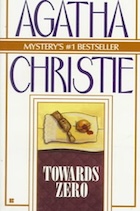
Agatha Christie, Towards Zero

The setup of this Christie novel is an ill-assorted house party in a small coastal town. Nevile Strange and his new wife, Kay, are visiting his former guardian, the rich invalid Lady Tressilian. Awkwardly, Nevile’s first wife, Audrey, happens to be visiting at the same time. The three members of the love triangle all claim to be perfectly fine with this arrangement, but tensions are high. When Lady Tressilian is murdered and it’s clearly an inside job, Superintendent Battle takes a hand in the investigation. This is one of Christie’s more farfetched tales, but it’s still a compelling read! I remembered the murderer’s identity and was entertained by the book’s clever misdirection involving certain clues and alibis. The characterization is on the weaker side—for example, there’s a romance shoehorned in at the end that doesn’t really work—but I still enjoyed rereading this one.

Genevieve Cogman, The Secret Chapter

In this sixth installment of the Invisible Library series, Irene is tasked with acquiring a book from Mr. Nemo, a mysterious Fae collector with a Bond-villain-esque island lair. In exchange, Mr. Nemo wants her to participate in a heist: She’ll work with a crew of dragons (including Kai) and Fae to steal a famous painting from an alt-21st-century Vienna. But tensions are high among the crew, the nascent dragon-Fae-Library treaty notwithstanding, and everyone has a hidden agenda. I love a good heist caper, so I found this book a lot of fun; it doesn’t do anything groundbreaking with the genre, but it both embraces and mocks the various tropes. I’m not sure the book does much to move the series forward, and with just two books remaining, I’m curious about the endgame. Guess I’ll just have to keep reading to find out!