Mini-Reviews: Dreams, Daring, Undone

Sarah Adams, In Your Dreams

Madison Walker has always seen herself as the “failure” among her successful siblings. She’s just graduated from culinary school in New York, but she’s no longer sure cooking brings her joy, and she doesn’t love the big city like she thought she would. Still, when family friend James Huxley offers her the executive chef position at his new restaurant, she jumps at the chance to move home to Rome, Kentucky, and prove that she can succeed at something. Little does she know that James has been secretly in love with her for years, and he may finally be ready to do something about it. I enjoyed this light, charming romance and felt Madison’s insecurities and issues with her (loving but imperfect) family were relatable. James is of course a bit too perfect as a romantic hero, though I liked that he had a conflict with his brother, Tommy, that was partly (or even mostly) his fault. It looks like this is the last book in the Rome series, but is it weird that I kind of want Tommy’s story now?

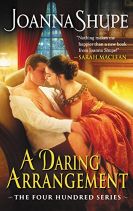
Joanna Shupe, A Daring Arrangement

Lady Nora Parker is a spirited young Englishwoman who’s fallen in love with an unsuitable artist. Her father has sent her away to New York to find a better match, but Nora just wants to return to England. She decides to find an outrageously unsuitable American man to pose as her fiancé, so her father will object to the match and summon her home. Wall Street tycoon Julius Hatcher seems like the perfect candidate; his lavish parties and scandalous paramours are the topic of every gossip column. But as Nora and Julius spend more time together, an inconvenient attraction sparks. I love the fake relationship trope and was excited about the Gilded Age setting of this romance, but ultimately the plot just doesn’t work. Nora wants Julius to help her create a scandal, while he is trying to use her to get into high society, so their desires are opposed from the start—why does either of them think this arrangement is a good idea? That said, I do think they have good chemistry, so I enjoyed the romance aspect. Overall, the book is fine but didn’t knock my socks off.

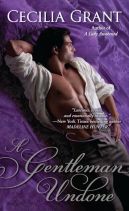
Cecilia Grant, A Gentleman Undone

Will Blackshear is a soldier who has returned from the Napoleonic Wars with visible and invisible wounds. He needs money to support the widow of one of his men, and he hopes to win it at the gambling tables. There he meets Lydia Slaughter, a prostitute who once worked in a brothel and is now a gentleman’s mistress. She also happens to be a genius at cards and agrees to help Will cheat in exchange for a share of the take. They are drawn to each other almost immediately, but they know that acting on their attraction would be a huge mistake: Will can’t afford to keep a mistress, and Lydia’s entire livelihood depends on her current protector. I finished this book thinking, “Now this is how you write historical romance!” Will and Lydia are both such complex characters, broken in many ways, convinced they’re unable to love and unworthy of being loved. Every interaction between them is fraught with tension, and while I don’t usually like books with a lot of steam, the sex scenes here are crucial to the development of character and relationship. If you want superior-quality historical romance, I can’t recommend Cecilia Grant highly enough!
Mini-Reviews: School, Remember, Secret

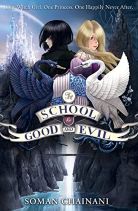
Soman Chainani, The School for Good and Evil

Every year, two children are kidnapped from the village of Gavaldon. One, beautiful and kind-hearted, is sent to the School for Good, and the other, ugly and malicious, goes to the School for Evil. This year, Sophie is determined to be the one selected for the School for Good, where she’ll become the heroine of her very own fairy tale, complete with Prince Charming. But when she and her friend, the plain and all-black-wearing Agatha, are chosen, she’s shocked to end up in Evil, while Agatha is sent to Good. Can the two girls figure out how to fix this mistake – and what happens if they want to go home? I loved the first sentence of this book (“Sophie had waited all her life to be kidnapped”), but unfortunately it was mostly downhill from there. The plot lurches along unsteadily and is surprisingly hard to follow, and I found Sophie so awful that I wondered why Agatha (or anyone) would want to be friends with her! There are some interesting ideas in the book, but they never quite gel into anything substantial. Not recommended, and I won’t be continuing with the series.

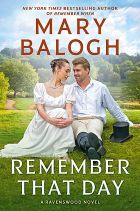
Mary Balogh, Remember That Day

Winifred Cunningham is close friends with Owen Ware and has been invited, with her family, to his family’s estate of Ravenswood for a few weeks. Winifred wonders whether Owen will propose to her; they share a passion for helping others and might do a lot of good together. But she’s not in love with him, and as the visit proceeds, she finds herself unexpectedly attracted to his brother, Colonel Nicholas Ware. Meanwhile, Nicholas is about to make a pragmatic proposal to his commanding officer’s daughter, but meeting Winifred throws a wrench in his plans. This is another mildly pleasant installment of the Ravenswood series. I liked the central love story but felt it lacked depth; too much time was spent on the myriad supporting characters in both Nicholas’s and Winifred’s families, and I just don’t find them interesting! I really hope the next book is Stephanie’s story, which still intrigues me, but after that I’ll probably stick with Balogh’s earlier titles.

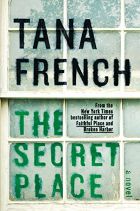
Tana French, The Secret Place

This fifth book in the Dublin Murder Squad series is set at St. Kilda’s, a posh girls’ boarding school where a student from the neighboring boys’ school was found dead a year ago. The case was never solved, but now Detective Stephen Moran has received an anonymous note saying, “I know who killed him.” Hoping for a permanent spot on the Murder Squad, Moran teams up with Antoinette Conway, the abrasive detective who worked the case the first time around. As they delve deeper into St. Kilda’s mysteries, they’re shocked to discover just how much these teenage girls are hiding. I liked this book a lot more than Broken Harbor, though a few things still bugged me: The narrative switches between the present-day investigation and the months leading up to the boy’s murder, and I found the present-day story much more interesting. The teen speak felt inauthentic, and I didn’t like the supernatural element. But I did really love the insights into teen friendship and psychology, as well as the development of Moran and Conway’s partnership. I’m interested to see how that dynamic continues and changes in the next (and final) book.

Mini-Reviews: Bend, Redfern, Knew

V.S. Naipaul, A Bend in the River

This novel depicts a pessimistic view of life in postcolonial Africa. It’s narrated by Salim, a young Indian Muslim who decides to move away from his family on the east coast and settle in a small town in the interior of Africa. There he observes the various struggles he and his neighbors face, from the petty corruption of local officials to large-scale political violence. Salim’s aimlessness and confusion mirror the experience of the town, which seems doomed to corruption and decay no matter who is ruling it. This is my first encounter with Naipaul, and while he’s an excellent writer, I didn’t much care for the book. As a novel, I don’t think it works; there’s not much plot, and Salim is an incredibly passive and unsympathetic character. Based on cursory internet research, Naipaul seems to be widely viewed as racist and sexist; the character of Salim certainly is both. But I didn’t read this as a pro-colonialist novel, as some have claimed. The fictional town here seems doomed to corruption and decay no matter who is ruling it. Regardless, this type of book isn’t for me, and I don’t plan to read more by Naipaul.

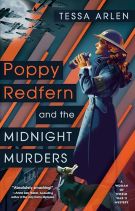
Tessa Arlen, Poppy Redfern and the Midnight Murders

It’s 1942, and Poppy Redfern is the local air raid warden in her village of Little Buffenden. Excitement has recently come to the village in the form of an American airfield; the Yanks have arrived to help win the war, and at first the locals embrace them with open arms. Some of the village’s young women begin dating the dashing American soldiers; but when two of the women are murdered, suspicion immediately falls on the outsiders. But Poppy, wondering whether someone from the village might be responsible, decides to investigate for herself. I enjoy a good historical mystery, and this one was fine, but nothing particularly stands out about it. Poppy is a fun narrator, but many of the secondary characters are flat and two-dimensional. I also felt there was a lot of info-dumping about life in England during World War II, which will be redundant for most people. Overall, this was an easy, pleasant read, but I’m not desperate to pick up the sequel.

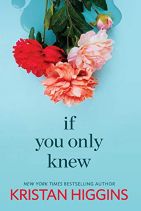
Kristan Higgins, If You Only Knew

This novel follows two sisters as they face new challenges in their lives. Jenny, recently divorced but trapped in an unwanted “friendship” with her ex and his new wife, has moved back to her hometown for a fresh start. There she meets her attractive neighbor, Leo, who flirts with her but is adamant that he doesn’t want a relationship. Meanwhile, Jenny’s sister, Rachel, channels all her energy into being the perfect wife and mother—until she discovers that her husband cheated on her. Will she forgive him or forge a new path for herself? I enjoyed this book quite a bit; both Jenny and Rachel, who take turns narrating, are relatable and sympathetic characters. The serious issues in the book are leavened by humor and by a satisfying romance that develops throughout the novel. I stopped reading Higgins’s books after a while because they got too miserably depressing, but this one is a fun and uplifting read.

Mini-Reviews: Spouse, Duke, Fallen

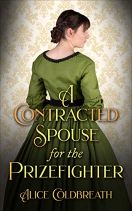
Alice Coldbreath, A Contracted Spouse for the Prizefighter

Former prizefighter Clem Dabney has embarked upon a new career and established a popular music hall in London; now he seeks to expand into a real theater. The Parthenon, owned by Theodora Fields and her two siblings, is his target, but he’s surprised when she approaches him with a proposition: She’ll marry him and thus give him an ownership stake in the theater, if he agrees to put her male impersonation act onstage. Clem agrees and soon finds himself oddly drawn to his eccentric wife, but his secrets may threaten their happiness. I’ve enjoyed this whole series, and this book caps things off nicely. I liked Clem’s bewildered affection for Dora (as he calls her), and I enjoyed the music hall setting. I do think the book is oddly paced, and the conflict between them isn’t terribly substantial, but I still really enjoyed the central romance. I’m looking forward to my next read by this author!

Anna Harrington, If the Duke Demands

Miranda Hodgkins has been in love with her neighbor, Robert Carlisle, for years, but the attraction has always been one-sided. Determined finally to get his attention, Miranda sneaks into his bedroom and attempts to seduce him—only to encounter his older brother, Sebastian, instead. Sebastian offers to help her with Robert if she’ll help him find a suitable wife; as the Duke of Trent, he needs a woman with the right family and social connections. But as Miranda and Sebastian’s agreement brings them closer together, an inconvenient mutual attraction sparks. This Regency romance was a perfectly fine read, but it didn’t knock my socks off. I generally enjoy the “wrong brother” trope, but here it’s a relatively small part of the plot. Miranda also gives off strong “not like other girls” vibes. I did like that she’s honest with Sebastian about her feelings and desires, but I felt he was caddish and irresponsible for pursuing her without feeling able to marry her. Overall, I didn’t dislike this one but wouldn’t particularly recommend it either.

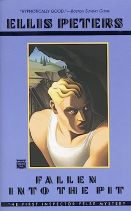
Ellis Peters, Fallen into the Pit

It’s been five years since World War II ended, but in the English town of Comerford, on the Welsh border, trouble persists. Helmut Schauffler, a former POW and proud Nazi, is deliberately antagonizing everyone, picking fights and tormenting a local Jewish woman. No one is sorry when his dead body turns up, but Sergeant George Felse knows it’s his duty to find the killer—especially when his teenage son, Dominic, gets involved in the investigation and ends up in danger. I adore the Brother Cadfael novels and was excited to finally try Peters’s other mystery series, which she set in her own era. Overall I really enjoyed this book, despite its being a bit too long; it manages to be a convincing depiction of a changing postwar England, a compelling mystery, and a surprisingly tender portrayal of George and Dominic’s relationship. The Cadfael series has my heart, but I think if you enjoy that series and like Golden Age-style mysteries, you’ll enjoy this one too. I’m excited to continue with the next book!

2025 Vintage Mysteries Wrap-Up

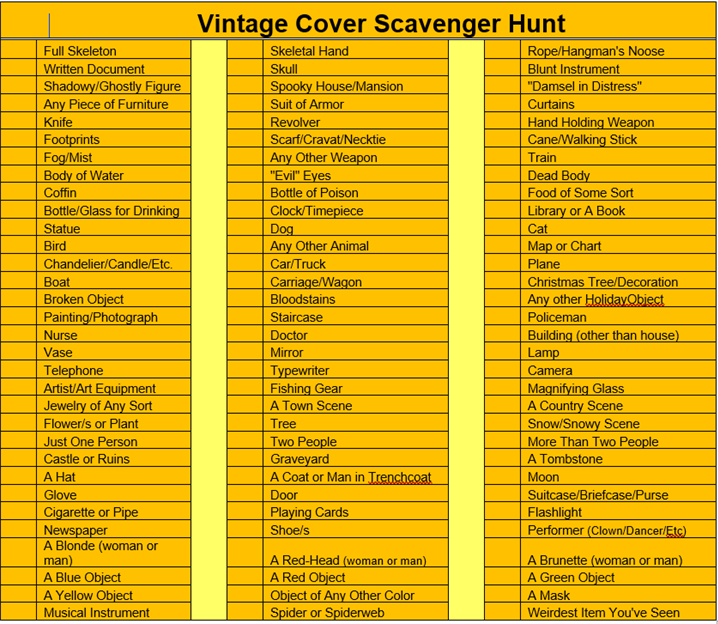
Happy (belated) New Year! 2026 really sneaked up on me, and I’m scrambling to finish up my 2025 reviews and recaps. I had another very fun year of reading vintage mysteries with the Vintage Scavenger Hunt Challenge at My Reader’s Block. My goal was to read at least eight books in the “Golden Age” period (published before 1960) and find items from the scavenger hunt list on the covers. Here’s what I read in 2025:

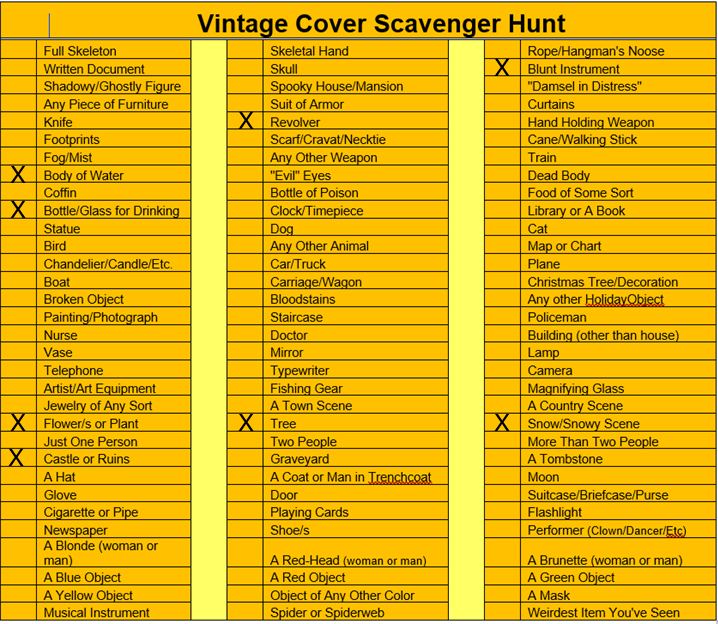
  1. Rupert Latimer, Murder After Christmas (1944): snowy scene
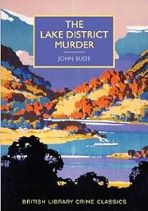
  2. John Bude, The Lake District Murder (1935): body of water
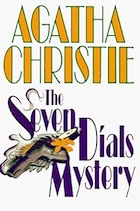
  3. Agatha Christie, The Seven Dials Mystery (1929): revolver
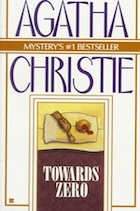
  4. Agatha Christie, Towards Zero (1944): blunt instrument
  5. Anthony Wynne, Murder of a Lady (1931): castle
  6. Richard Hull, Excellent Intentions (1938): tree
  7. Ngaio Marsh, Death at the Bar (1940): drinking glass
  8. Delano Ames, Murder Begins at Home (1949): flower or plant