Mini-Reviews: Christmas, Compromised, Morgan

Kerry Winfrey, Faking Christmas

Six months ago, Laurel interviewed for a social media job, and to demonstrate her skills, she showed some Instagram posts she’d done for her sister Holly’s farm. But her boss mistakenly assumed the farm belonged to Laurel, and because she desperately needed the job, she didn’t correct him. Now he’s invited himself to “Laurel’s” farm for Christmas, and she has to scramble to sustain the lie. The most awkward part is that she needs a fake husband, and the only option is her brother-in-law’s best friend, Max, whom she’s always hated. But as she spends more time with Max, she’s forced to reevaluate her opinion. This book is a frothy holiday read that will likely appeal to fans of Hallmark Christmas movies. But even as a fan of those movies, I found the book a bit too lightweight. The “comedic” hijinks of Laurel’s struggles to maintain her fictional persona get too much page time, at the expense of the romance and any deeper character development. It’s a cute story with plenty of Christmas spirit, but ultimately I wish it had been a little more substantial.

Darcie Wilde, A Lady Compromised

This fourth book in the Rosalind Thorne mystery series sees Rosalind traveling to Devon Winterbourne’s ducal estate. Ostensibly she’s there to help his cousin, Louisa, with her upcoming wedding; actually, she and Devon hope to decide whether they want to rekindle their romance. But Rosalind is soon distracted by another mystery: Louisa’s friend Helen has unanswered questions about her (Helen’s) brother’s recent death, and finding those answers could imperil Rosalind’s life as well as her relationship with Devon. I liked this series installment, which moves the setting from London to the country and also expands the narrative by increasing the number of point-of-view characters. I was also happy to see some progress in Rosalind’s romantic life. But as with the other books in the series, the plot is a bit slow and the mystery is unsolvable until almost the last moment. I’m still planning to continue with the series, but I’d call myself mildly interested rather than enthusiastic.

Amy Barry, Marrying Off Morgan McBride

As the oldest McBride sibling, Morgan has been like a parent to his younger siblings since Ma died. While he loves them dearly, he’s also tired of the responsibility. Now that his brother Kit is married and settled, he finally feels free to leave, but his little sister, Junebug, refuses to let him go. In desperation, she once again advertises for a mail-order bride. Epiphany “Pip” Hopgood has been rejected many times for her “plain” looks and views Morgan as her last chance. They’re immediately attracted to each other, but Morgan is adamant that he doesn’t want a wife. Can Pip change his mind? I really enjoyed the first book in the series, and this installment is very similar in tone. Junebug is a hilarious character, and I especially enjoyed the scenes with all the McBrides and their friends together. The romance itself was a little disappointing; though both Morgan and Pip are interesting, complex characters, they don’t really get to know each other very well. This book is also significantly steamier than the last one, which I found disappointing. Overall, though, I’m definitely still planning to read the next book when it comes out!

Mini-Reviews: Plumeria, Wake-Up, Shadow

Lauren Willig, The Passion of the Purple Plumeria

Gwen Meadows, a “spinster” in her mid-40s, is publicly the chaperone of her young relative, Miss Jane Wooliston — and privately a principal member of the League of the Pink Carnation. When Jane’s younger sister disappears from school, Gwen and Jane immediately suspect spy-related foul play. But another girl is also missing: the daughter of Colonel William Reid, a retired East India Company officer who’s only recently come to England. Gwen and William team up to look for the missing girls, finding a legendary Indian treasure — and love — in the process. This is another fun installment of the Pink Carnation series, and it’s nice that Miss Gwen (usually reduced to comic relief) finally gets her turn in the spotlight. It’s refreshing and sadly rare to read about more mature adults finding romance! This isn’t one of my favorites in the series, but it’s still a good read — can’t believe there are only two more books to go!

Beth O’Leary, The Wake-Up Call

Izzy and Lucas are colleagues at the Forest Manor Hotel, and they can’t stand each other. Izzy is a sunshiny people-pleaser who always goes above and beyond, whereas Lucas is grumpy, reserved, and blunt to the point of rudeness. Further, Izzy confessed a crush to Lucas about a year ago, and he (seemingly) responded in a particularly cruel and insensitive way. Of course, the truth is more complicated — and now that Izzy and Lucas are being forced to work together to save their beloved hotel, their mutual “hatred” is turning into something else entirely. I really loved Beth O’Leary’s debut novel, The Flatshare, but her subsequent books have been too angsty and/or gimmicky for me. This book, however, feels like a return to form; it’s just a strong, well-written romantic comedy with some bonus holiday charm thrown in. The conflict between Izzy and Lucas centers around miscommunication, which may be frustrating for some, but to me their misunderstandings made sense given their very different personalities. Fans of the enemies-to-lovers trope should definitely check this one out!

Philip Pullman, The Shadow in the North

Six years after the events of The Ruby in the Smoke, Sally Lockhart has established her own financial consulting firm. One of her clients loses her life’s savings when a shipping firm unexpectedly collapses, and she asks Sally to find out why. Meanwhile, Sally’s friends try to help a magician who’s receiving death threats. When the two cases turn out to be connected, Sally and her friends must go up against a ruthless businessman who will use any means necessary, including murder, to stop them. I’m continuing to enjoy the Sally Lockhart series, both for the immersive Victorian London setting and for the main characters, particularly Sally herself, her beau Fred, and their Cockney friend Jim. The book may be slightly too busy; there are a plethora of minor characters and plot strands that need following. There are also more than a few heartbreaking moments. But I nevertheless liked this book a lot and look forward to continuing with the series.

Mini-Reviews: Wicked, Left-Handed, Madam

Julia Quinn, When He Was Wicked

Michael Stirling is known throughout society as “the Merry Rake,” but despite his myriad sexual conquests, he’s been in love with Francesca Bridgerton since the moment he saw her. Unfortunately, she was betrothed to his cousin John at the time and is now John’s wife. When John dies unexpectedly, Michael can no longer hide his true feelings, but can he pursue a relationship with Francesca without dishonoring his cousin’s memory? I wanted to like this book more than I did. I enjoy a hero who pines for the heroine, but in this case I didn’t understand why Michael was so obsessed with Francesca. He’s already in love with her when the story begins, so we don’t see what makes her so special to him. Further, he “courts” her exclusively by seducing her, so their romantic relationship is based entirely on sex, which I didn’t find particularly appealing. I’ve really liked some books in the Bridgerton series, but this one just wasn’t for me.

Garth Nix, The Left-Handed Booksellers of London

Eighteen-year-old Susan Arkshaw has come to London to find the father she’s never met. She tracks down Frank Thringley, an old friend of her mother’s, to see if he knows anything about her father — but she arrives just in time to see him crumble into dust at the prick of a hatpin. The hatpin’s wielder is Merlin, who describes himself as a “left-handed bookseller” and tells Susan she is in grave danger. He explains that the Old World of myths, legends, and ancient powers is real, and it’s starting to intrude dangerously into the ordinary world — unless Susan and the booksellers can stop it. This is a really creative YA adventure novel that seems intended to introduce readers to (or reinforce their love of) British fantasy fiction and mythology. I really liked all the literary allusions and the occasional humorous banter, but the book is a bit too episodic and plot-driven for me — too many action sequences, not enough character development. Overall, I liked but didn’t love it, and I probably won’t read the sequel.

Mary Stewart, Madam, Will You Talk?

Charity Selborne is a young Englishwoman on holiday in the South of France. At her hotel in Avignon, she befriends a 13-year-old boy named David and gradually realizes that something is very wrong in his life. She then learns that David’s father, an accused murderer, is at large and has followed David to France. Charity’s decision to help David plunges her into days of suspense and fear, during which she encounters a mystery with its roots in World War II and finds love in an unexpected place. I really enjoy Mary Stewart’s novels of romantic suspense, though they all follow the same basic pattern: beautiful girl in exotic location finds danger and romance. But this is one of her strongest books, in my opinion — the plot is nice and twisty, and there’s a very memorable car chase. Recommended if you like this type of book!

Mini-Reviews: Daughter, Marry, Devil

Juliet Marillier, Daughter of the Forest

Sorcha has lived an idyllic life with her father and six older brothers at Sevenwaters, a small Irish estate in the heart of a magical forest. But things change when her father marries Lady Oonagh, whose malicious sorcery soon tears Sorcha’s family apart. When Oonagh ensnares her brothers in a dreadful curse, Sorcha must perform an impossible task to save them — and she must remain silent till the task is complete. As she struggles with her task, she suffers many trials, including abduction by Britons and life among a hostile people. This was a reread for me, yet the book still completely sucked me in. The pace is incredibly slow, but I think the languorous plot adds to the dreamy, immersive nature of the world Marillier creates. It also lets readers get to know Sorcha well enough to find her extraordinary endurance believable. I love the book’s romance and its hopeful, yet not entirely happy, ending. I’ve enjoyed a few other books by Marillier, and I’m now inspired to dig deeper into her backlist!

Anne Gracie, Marry in Haste

Major Calbourne Rutherford has just returned to England after the Napoleonic wars, only to find that his brother has died and he’s inherited an earldom. Cal intends to discharge his necessary duties quickly and then leave the country, but his plans change when he learns that his teenage half-sisters are getting into mischief. Unable to curb their behavior himself, he seeks out their former teacher, Emmaline Westwood, for help. She refuses his offer of employment, so in desperation he offers her a marriage of convenience instead. This Regency romance isn’t reinventing the wheel; it’s just a solid, fun, formulaic example of the genre, and that’s not a bad thing! Part of the joy of reading romance — and genre fiction in general — is that you know what you’re getting, and there’s comfort in that familiarity. I’m also a fan of the marriage-of-convenience trope, so I am definitely interested in continuing with the series. Recommended for historical romance fans!

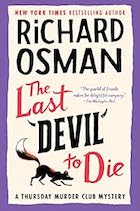
Richard Osman, The Last Devil to Die

The Thursday Murder Club is back in business when Kuldesh Sharma, an antiques dealer who helped them on their previous case, is shot in what appears to be a drug deal gone wrong. Kuldesh was temporarily in possession of a box of heroin worth £100,000, but now it’s gone missing. Who has the heroin, and did that person also murder Kuldesh? As always, the characters and humor make this series a delight; at one point, Joyce describes the bracelet her daughter’s boyfriend gave her as “a nice thought.” One of my favorite aspects of the series is that every character is portrayed as a real, complex human being — even the drug dealers and other bad guys. This book is a bit heavier than usual because it deals more with Elizabeth’s husband Stephen’s struggles with dementia. But it’s still a very good read, and I’m eagerly awaiting the net book — though the author has announced he’s taking a break and writing about new characters right now, alas!

Mini-Reviews: Good, End, Nobody

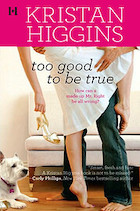
Kristan Higgins, Too Good to Be True

Grace Emerson is in a tough spot: Her ex-fiancé is now dating her perfect younger sister, and everyone in her close-knit but meddlesome family is pitying her. To get them off her back, Grace invents a fake boyfriend, a kind and handsome pediatric surgeon. She also attempts to find love in the real world, but the dating pool in her area is slim until handsome Callahan O’Shea moves in next door. Grace is attracted to Callahan, but he’s nothing like the ideal man she’s imagined. Will she continue to pursue the fantasy or take a chance on a real relationship? I like Kristan Higgins’s romances, but I’m learning that most of them are not keepers for me, and this one is no different. Grace’s judgmental attitude toward Callahan annoyed me, and I couldn’t see why he was interested in her. I felt Grace’s family dynamics were more interesting than the romance, but the “humor” in the family interactions was a bit forced. Overall, I’m glad I reread this one, as now I can remove it from my shelves.

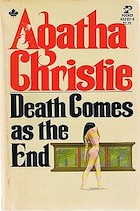
Agatha Christie, Death Comes as the End

In this novel, Agatha Christie puts a unique spin on her usual formula by setting the story in ancient Egypt. Young and beautiful Renisenb has recently been widowed and has returned to her father’s house. There she finds comfort in familiarity among her brothers and their wives and children. But when her father brings home a concubine, Nofret, things change: The family becomes discontented and quarrelsome, and Nofret delights in making them all miserable. When Nofret falls from a cliff and dies, most of the family is happy to accept it as a “tragic” accident, but Renisenb suspects murder — and then more people start to die. I’ve reread this particular Christie novel a few times and always enjoy it. I remembered the killer’s identity, so it was fun to spot the clues throughout the narrative. I also liked the introspective Renisenb and was happy with how her story turned out. If you haven’t tried this Christie book yet, I’d definitely recommend it!

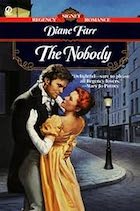
Diane Farr, The Nobody

Unconventional Caitlin Campbell is in the midst of her first London Season and feels stifled by some of the rules of propriety. In defiance of social norms, she decides to walk home alone from a ball, where she immediately gets into trouble: A man, fleeing from a gang of ruffians, grabs her and kisses her in order to evade pursuit. Caitlin knows she should be outraged, but the man’s friendly, playful manners disarm her despite herself. She is shocked to encounter the stranger again — he is in fact a viscount, as well as her new friend’s brother. The attraction between them seems to be mutual, but the gentleman is unfortunately already engaged. I’ve been hunting down used copies of Diane Farr’s novels, and this one, her debut, is quite charming. It’s light and frothy, despite the existence of a murder plot, and there are a couple cute secondary romances as well. The character development isn’t particularly deep, and I would have liked more interaction between Caitlin and her hero. Nevertheless, I definitely enjoyed the book and would recommend the author to fans of light historical romance.

Mini-Reviews: Serfdom, Benevolent, Wicked

F.A. Hayek, The Road to Serfdom

F.A. Hayek was an Austrian economist who moved to England in the 1930s and subsequently taught in both the UK and US. He won the Nobel prize in economics in 1974. In this essay, written during World War II and first published in 1944, he argues that Nazi fascism was not a reaction against socialism but rather a natural progression of socialist ideas. In Hayek’s view, socialism (by which he seems to mean a centrally planned economy) is bad economics because competition, not central planning, is what allows new ideas and wealth-creating innovations to flourish. But it’s also bad politics because under a socialist system, individual freedom will disappear; all power will reside in the hands of the central planners/the state. I broadly agree with Hayek’s ideas here, so my opinion is biased. But I think this essay is worth reading for anyone who is interested in a “liberal” (as opposed to socialist) view of economics or in the history of socialist thought. Hayek doesn’t straw-man his opponents, and his arguments are thoughtful and measured. Maybe I’ll tackle one of his full-length books at some point!

Alison Goodman, The Benevolent Society of Ill-Mannered Ladies

Lady Augusta “Gus” Colbrook and her sister, Lady Julia, are unmarried women in their 40s and thus are basically invisible in society. Instead of dwindling into spinsterish obscurity, they decide to help vulnerable women who are being abused by the men in their lives. Aiding them in their quest is the handsome Lord Evan Belford, whose checkered past doesn’t deter Gus from a more-than-friendly interest. This novel is hard to categorize; it’s not exactly a romance or a mystery, though it has elements of both. But the book mainly depicts the negative aspects of Regency society, particularly the limits placed on women, and offers a sort of revenge fantasy in which the women take charge and triumph over all wrongdoers. For some readers, this will be exactly their cup of tea, but for me, it was too anachronistic and felt a bit preachy. I didn’t dislike the book, though! Goodman is a good writer, the plot adventures are fun, and Gus is (usually) a sympathetic character. I believe a sequel is planned, and I’ll likely read it when it comes out.

Stella Riley, The Wicked Cousin

After a too-strict upbringing, Sebastian Audley has spent the past several years behaving as outrageously as possible, first in England and then abroad. Now his scandalous ways are beginning to pall, and he hopes to return to England and lead a quieter life, but his reputation makes that difficult. Meanwhile, Cassandra Delahaye is determined not to be impressed by the rakish Sebastian, but she soon finds herself attracted to his good looks and roguish sense of humor. I’m officially a huge fan of this series and enjoyed this installment as well, but it felt a little too long. The main obstacle to the romance is Sebastian’s obsessed ex-lover, which means there’s a lot of plot to slog through even after Sebastian and Cassie fall in love. (I find that Stella Riley uses the “evil ex” trope pretty often, which I’m not fond of.) I still liked the book a lot, though, and it was nice to catch up with the various recurring characters. Looking forward to the next one!

Mini-Reviews: Guide, Wicked, Kit

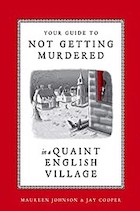
Maureen Johnson and Jay Cooper, Your Guide to Not Getting Murdered in a Quaint English Village

This charming, humorous little book presents itself as a guidebook for travelers in the English countryside who may unexpectedly find themselves in an English Murder Village. As everyone knows, such villages are fraught with peril, from the sinister antique shop to the overly violent cricket match to the local inn full of mysterious strangers. The book enumerates various people and places to avoid, both in the village itself and at the neighboring manor, such as the pond (“full of the skeletons of Victorian children and, if you are unwise, you”) and the kitchen (“no”). I got a few giggles out of this book, and the Gorey-esque illustrations really enhance the material. It does go on a bit too long for what is essentially a single joke, but I think fans of Agatha Christie novels and British mystery series like Midsomer Murders will enjoy it.

Elizabeth Bright, The Duke’s Wicked Wife

After years of rakish living, Sebastian Sinclair, the duke of Wessex, decides it’s time to marry and produce an heir. He plans to invite some marriagable ladies to a house party, and he asks his longtime friend, Eliza Benton, for help with the guest list. However, as the party commences, it’s Eliza herself whom Sebastian can’t stop thinking about. I’ve mentioned before that I enjoy romance heroes whose conflict is basically, “I’m having a feeling and I don’t like it!” I also like characters whose frivolous facades conceal hidden depths. That’s definitely Sebastian here, and he is by far the best part of the book, though Eliza is also a strong heroine and a great match for him. The book is billed as a stand-alone, but I’m not sure it totally works…characters from previous books in the series have prominent roles, and without having read their books, it was hard for me to keep everyone straight. I did enjoy the central romance here, but I don’t find myself particularly tempted to try more by the author.

Amy Barry, Kit McBride Gets a Wife

Junebug McBride is tired of doing all the chores for her four older brothers in the tiny town of Buck’s Creek, Montana, so she decides to advertise for a wife for her brother Kit. The woman must “expect neither doting nor compliments” and must be an excellent cook. A widow from St. Louis answers the ad, dragging along her disillusioned Irish servant, Maddy. Complications ensue when Kit has a meet-cute with Maddy and mistakenly thinks she’s his prospective bride. I’m not terribly interested in Westerns or cowboy romances, but I found this book unexpectedly charming! Some of the chapters are from Junebug’s point of view, and I really enjoyed her hilarious perspective on events. The romance between Kit and Maddy is sweet, though not terribly unique, and there aren’t many scenes with just the two of them. So if you like your romance to focus heavily on the central couple, this book might not be for you; but if you like a large cast of quirky characters and a unique setting, I’d recommend this one! I will definitely be continuing with the series.

Mini-Reviews: Agreeable, Dangerous, Ruby

Julia Seales, A Most Agreeable Murder

In the English village of Swampshire, everyone is governed by the strict rules of etiquette handed down by its founder. Women are expected to pursue only ladylike occupations such as embroidery, but Beatrice Steele has a secret fascination with crime-solving. She knows she must hide her interest, lest she be stigmatized as a “morbid creep” and rendered unmarriageable. But when an eligible bachelor is murdered at a local ball, Beatrice can’t help enthusiastically pursuing an investigation, with the help of a surly yet handsome detective. This is a fun historical mystery set in a heightened reality: Swampshire is beset by comically terrible weather and infested with “squelch holes,” and Beatrice’s youngest sister might be a werewolf. It’s all very silly, but I enjoyed the book’s colorful characters and its skewering of various historical romance tropes. If there’s ever a sequel, I will definitely seek it out!

Darcie Wilde, And Dangerous to Know

The stakes are higher than ever in Rosalind Thorne’s latest case: Lady Melbourne, a leader of London society, has hired her to recover some stolen letters. Lady Melbourne’s daughter-in-law is Lady Caroline Lamb, whose shocking love affair with Lord Byron has led many to believe she’s insane, so it’s especially important that the letters’ potentially scandalous contents are never publicized. Complicating matters is the fact that a woman was murdered at the gates of Melbourne House, and Rosalind suspects that the two incidents are connected. I liked this book a bit more than the previous one in the series; the mystery hangs together pretty well, although it’s almost peripheral to the intrigues swirling around the Melbourne clan. I’m also glad that things seem to be moving forward in Rosalind’s personal life (and in those of her friends as well). While I’m pretty confident that this series won’t be an all-time favorite, I’m looking forward to the next book!

Philip Pullman, The Ruby in the Smoke

Sixteen-year-old Sally Lockhart is left alone in the world after her father’s tragic death overseas. When she receives an anonymous note telling her to “beware the seven blessings,” it’s the first of many strange mysteries Sally must unravel. For instance: Who burgled her room, and what was he or she looking for? How did her father really meet his end? Where is the priceless Indian ruby that apparently belongs to Sally? And why does the evil Mrs. Holland want Sally dead? This is a compelling YA adventure novel that apes the drama and sensationalism of Victorian penny dreadfuls. Some of the plot machinations feel a bit over the top, and there’s some unpleasant stereotyping of Chinese characters. But the depiction of the seamier side of Victorian London is fascinating, and Sally and her friends are intelligent, courageous, interesting characters. I’m excited to read more of their adventures in subsequent books!

Mini-Reviews: Red, Rom-Com, Garden

Mary Roberts Rinehart, The Red Lamp

Professor William Porter has recently inherited a seaside house from his Uncle Horace. He decides to stay there during his summer vacation, along with his wife Jane, niece Edith, and Edith’s beau Warren Halliday. When they arrive, they immediately learn that the house is reputed to be haunted, and they soon witness strange occurrences themselves, such as a red light shining from the supposedly empty house. Then sheep start dying with their throats cut, and a police deputy goes missing. Are evil spirits responsible for these tragedies, or is human malice at work? This is my first book by Rinehart, and I wasn’t terribly impressed. The novel tries hard to create an atmosphere of eerie suspense, but I never fully felt that; instead, William’s constant musings on possible supernatural explanations just irritated me. In terms of moving the mystery plot forward, not much happens till almost the end of the book. I felt like there weren’t enough clues for readers to grab hold of, and I’m not quite sure the solution all hangs together. Still, Rinehart’s writing is good, and I’m interested to try more of her work; maybe this one is an uncharacteristic dud.

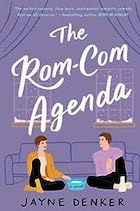
Jayne Denker, The Rom-Com Agenda

Eli has just been dumped by his girlfriend, Victoria, but he’s convinced she’s the one. While she’s on sabbatical in Europe, he and his friends devise a plan to win her back: He’ll give himself a makeover, basing his new look and personality on the heroes of classic romantic comedies. When he meets Leah, a lonely young woman who quickly gets absorbed into his friend group, they immediately hit it off and begin watching the rom-coms together. But as Eli and Leah grow closer, he must decide where his heart truly lies. This contemporary romance is predictable but sweet, and I enjoyed the allusions to some of my favorite movies, like Better Off Dead and The Princess Bride. I liked Leah’s quiet strength and Eli’s exuberant, genuine nature. The book also has a low steam factor with no explicit sex scenes, which is a plus for me. Overall, though, this is a fun read but not a standout, and I don’t feel particularly compelled to seek out more by the author.

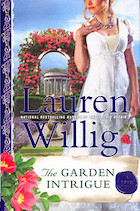
Lauren Willig, The Garden Intrigue

Augustus Whittlesby is widely regarded as the worst poet in Paris, but he’s also secretly a British agent working with — and infatuated by — the Pink Carnation, a.k.a. Miss Jane Wooliston. Jane’s friend, Emma Delagardie, constantly ridicules Augustus’s terrible poetry but is also maybe a tiny bit attracted to him. When Augustus and Emma are thrown together to write a masque for Bonaparte and his court, they develop a deeper relationship. But Augustus is conflicted, both because of his feelings for Jane and because he’s using Emma to learn more about Bonaparte’s plans for invading England. Augustus has been a frequently recurring character throughout this series, so I’m glad he finally got his own story. I liked that both he and Emma ultimately have the same conflict: they have to choose between guarding their (relatively) safe, self-protective lives and taking a chance on real love. This book isn’t quite as light and fun as earlier installments of the series, and it isn’t one of my favorites, but it’s still an enjoyable read.

Mini-Reviews: Charming, Fortune, Practice

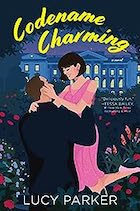
Lucy Parker, Codename Charming

This sequel to Battle Royal focuses on Pet De Vere, publicist to Johnny Marchmont, the sweet but accident-prone husband of Princess Rosie. After one too many photos is published of Johnny falling atop Pet at a public event, the tabloids insinuate they must be having an affair. This rumor is of course false, yet it could seriously damage Pet’s career, so the royals suggest that Pet fake a relationship with Johnny’s bodyguard, Matthias, to give the tabloids a different story to focus on. Matthias is Pet’s total opposite — grumpy and reserved where she’s bubbly and cheerful — but they’re also powerfully attracted to each other. As their fake relationship intensifies, they must finally deal with their real feelings. Lucy Parker is an auto-buy author for me, and I really enjoyed this book, though I think it suffers a bit in comparison to Battle Royal. Both books center around an emotionally stunted hero and an outgoing heroine who nevertheless craves love, so many of this book’s scenes and beats felt repetitive. Matthias also feels like a second draft of the character Mick from Parker’s first novel, Artistic License (published under a pen name). It’s still a very enjoyable read, but it’s not one of my favorites by this author.

Diane Farr, The Fortune Hunter

Lord Rival desperately needs to marry a rich woman, but his options are limited due to his rakish ways and bad reputation. He sets his sights on Lady Olivia Fairfax, an heiress who shuns society to focus on charitable work. But when he first approaches her, he mistakes her for a servant and impulsively confides his entire mercenary plan to her. Olivia has no intention of succumbing to Lord Rival’s considerable charms; she doesn’t want to marry at all, especially not someone who only wants her fortune. But as they continue to tease and flirt with one another, they both develop deeper feelings. I was interested in reading Lord Rival’s story, since he was a compelling antagonist in Falling for Chloe. But while I enjoyed the book overall, it didn’t grab me as much as its predecessor did. Even though Lord Rival has good reasons for needing a fortune, I still felt he was cruel to Olivia and manipulated her into loving him. He also falls in love eventually, and the solution to the love-or-money conundrum is satisfying, but I wanted a stronger apology from him in the end. I did still like the book, though, and will continue to seek out more by Farr.

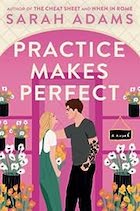
Sarah Adams, Practice Makes Perfect

Annie Walker, known as “Angel Annie” in her small town of Rome, Kentucky, is looking for love and marriage. But her introversion and social anxiety make her a disaster on dates, so her friends decide she needs some practice. Enter Will Griffin, a tattooed adventure seeker who’s just passing through town and has no interest in any type of commitment. He agrees to be Annie’s dating coach, but their mutual crushes on each other threaten to derail their plans. This is a cute sequel to When in Rome, but I don’t think it particularly works as a romance. Both Annie and Will are smitten from the beginning, so the only question is when they’ll finally admit their feelings. I did like the characters’ individual conflicts, though: Annie realizes that she doesn’t have to let her sisters and her town define her, while Will learns that he’s capable of love despite his dysfunctional upbringing. Overall, I wasn’t wowed by the book, but I’m interested enough to read the next one whenever it comes out.