Review and GIVEAWAY: The Gracekeepers

Gracekeepers, TheKirsty Logan, The Gracekeepers

This novel is set in a post-apocalyptic universe where almost the entire world is covered in ocean; the land has been reduced to a few small, isolated groups of islands. In this world, people are divided into “landlockers” and “damplings,” with the landlockers generally being richer and more powerful — though no one is truly rich anymore. But Callanish Sand has a unique status: though she lives on her own tiny island, she is a gracekeeper, one who performs the necessary burial rituals for damplings who have died. Her life is a solitary one, a self-imposed punishment for a mistake she made long ago — until she meets North, a dampling circus performer whose act involves dancing with a semi-trained bear. Both Callanish and North are lonely individuals trying to escape their unwanted destinies; but only when their lives collide do they dare to imagine a different life.

I have to say, I have mixed feelings about this book, and I think it’s because I was expecting a different kind of story. The back cover doesn’t reveal North’s gender, so I was assuming that the character was male and that there would be a romance with Callanish. But in fact, North is a woman, and her relationship with Callanish is somewhat ambiguous (possibly romantic, but not necessarily). I also assumed that the characters would interact far more than they actually do in the book. While there is some overlap, most of their stories take place in their own separate worlds. Personally, I found North’s story much more interesting, and I was fascinated by the description of the floating circus and its various performers. Callanish’s story is more subdued, and the stakes seem lower. Also, something about the writing style kept me a distance, so I didn’t feel very invested in the plot or characters. Overall, I think this book would appeal to people who love settings and strong world-building, but it didn’t do anything special for me.

**********

Win This Book!

If you’d like to win an ARC of this book, simply comment on this post by midnight on February 6, 2015 (EST). The giveaway is open to US residents only (sorry, international folks!). A winner will be chosen randomly, and results will be announced sometime on February 7. I’ll also try to contact the winner personally, but that only works if I can find contact info for you somewhere. 🙂 Good luck!
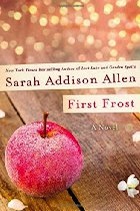
Review: First Frost

First FrostSarah Addison Allen, First Frost

***Warning: Spoilers for Garden Spells.***

It’s been ten years since the events of Garden Spells, and the Waverley clan has changed in unexpected ways. Claire has given up her catering business to run a much more profitable and far-reaching candy company. But while the candy company keeps her busy and brings in good money, Claire finds herself anxious and uneasy most of the time. Meanwhile, Sydney is married to Henry and desperately wants to give him a son, but so far she’s been unable to conceive a child. Meanwhile, her daughter Bay is now a teenager balancing her desire to fit in with her unique Waverley gifts. She has also fallen in love with local golden boy Josh Matteson, whose parents have big plans for him — plans that certainly don’t include Bay. As the Waverley women prepare for their annual celebration of the first frost, all these tensions continue to rise; and the arrival of a traveling magician with a sinister secret may break apart their family forever.

I love all of Sarah Addison Allen’s books, so it’s no surprise that I really enjoyed this one! Part of me wishes she hadn’t written a sequel to Garden Spells, which I think stands very well on its own. But on the other hand, it was nice to follow up with the Waverleys and see what happened after the happily-ever-after. One thing I really liked was that SAA doesn’t rehash the conflicts from the first book. Garden Spells mainly dealt with the development of Claire and Sydney’s relationship from near-strangers to close sisters, and in this book, that relationship remains solid. At the same time, the past definitely informs the present — for example, Bay’s relationship with Josh is certainly affected by Sydney’s prior relationship with Josh’s father. So in my opinion, this book is a really good sequel: it has certain themes in common with its predecessor, but it doesn’t tell the same story. I wasn’t a big fan of the traveling magician, who didn’t really add very much to the novel. But overall, I liked this book and would definitely recommend it to fans of Garden Spells!

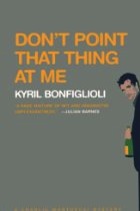
Review: Don’t Point That Thing at Me

Don't Point That Thing at MeKyril Bonfiglioli, Don’t Point That Thing at Me

This picaresque novel is narrated by the Hon. Charlie Mortdecai, an art dealer who usually operates on the shady side of the law. In the opening scene he is visited by Inspector Martland (of a secret branch of the British police) in connection with a stolen Goya. Mortdecai claims to know nothing of the matter, but he cheekily admits to the reader that it is hidden under the floorboards. After Martland’s visit, Mortdecai knows he must unload the painting, but his mission is complicated by the murder of one of his associates. Even worse, someone seems to want Mortdecai dead as well — so he strikes a bargain with Martland to get diplomatic passage to America, where he hopes to make good his escape. There he encounters a variety of adventures, from constant surveillance by men in blue Buicks to the sexual aggressiveness of a rich American widow. Through it all, Mortdecai maintains a cheerful unconcern as he matches wits with several dangerous opponents.

I have very conflicting feelings about this book. On the one hand, I don’t think I understood the plot at all; there’s definitely a painting involved, and a valuable antique Rolls Royce, and various people who want Mortdecai dead, but I was always a bit confused about what was actually going on. On the other hand, Mortdecai has a delightful narrative voice — very reminiscent of Bertie Wooster, if Bertie were an art thief with a crasser mode of expression. (For example, Mortdecai’s valet/bodyguard is called Jock Strapp, which is either funny to you or it isn’t.) So the book does provide a lot of laughs, but in the end I’m not really sure what to think of it. The novel is first in a series, and I may check out the others at some point. The movie “Mortdecai,” which comes out today in the U.S., is also based on this series, and I’m interested to see how it deviates from the book. Johnny Depp seems like a very odd casting choice, for starters, but I’m nevertheless intrigued!

Review: The Girls at the Kingfisher Club

Girls at the Kingfisher Club, TheGenevieve Valentine, The Girls at the Kingfisher Club

The Hamilton sisters have been trapped all their lives. Their father is a harsh, cruel man who desperately wanted a son but got twelve daughters instead. He keeps them locked in the house at all times, never allowing them to catch a glimpse of the outside world. As the girls grow up, the eldest, Jo, finds a way to make their lives bearable: they sneak out of the house every night and go dancing. In the murky underworld of 1920s New York, it’s easy to blend in with the crowd, to trade a dance for some champagne or gin, to stay out all night just to feel young and alive. But Jo knows that her sisters’ freedom is incredibly fragile, and she is always watching to make sure that no girl reveals her true identity, gets caught in a police raid, or (worst of all) falls in love. When her father announces that he wants to marry off the girls to various business associates, Jo must take desperate action. She reaches out to a man from her past, a bootlegger who almost stole her heart. But her need to protect her sisters may cost Jo her own chance at happiness.

The premise of this book intrigued me immediately — a retelling of The Twelve Dancing Princesses set during the Roaring Twenties? Sign me up! And thankfully, the novel more than lived up to my expectations. One of my favorite things about it is the setting; New York City in the 1920s really came alive for me. The book captures the glamor and freedom and excitement of dancing all night in a smoky club, listening to a hot jazz band, and drinking exotic cocktails. But it also evokes the dangers of the era, where alcohol was illegal and nightclub raids were commonplace (unless you paid off the right cops). This setting is perfect for the Hamilton sisters’ story, as they are trying to break free but also to stay safe. I was also impressed by the characterization of the sisters; there are twelve of them, so obviously some are more fully developed than others, but they all have at least one unique quality. I also enjoyed the romance in the book, which was bittersweet but ultimately satisfying. I would definitely recommend this book to anyone who enjoys historical fiction or fairy tale retellings!

Review: The Green Man

Green Man, TheMichael Bedard, The Green Man

O (don’t call her Ophelia) is a 14-year-old girl who is visiting her Aunt Emily for the summer. The plan is for Emily to take care of O while O’s father is off researching Ezra Pound in Italy; but O will also be taking care of Emily, who recently suffered a heart attack. When O arrives at Emily’s bookstore, the Green Man, she immediately senses something unique about it. The place is disorganized and covered in dust, but O learns that it was once a site for weekly poetry readings and that it may just be haunted by some literary ghosts. As O gets used to the Green Man and to her stubborn aunt, she eventually discovers that Emily is tormented by a secret from her past. But what does this secret have to do with an ancient flyer for a magic show, a collection of valuable old books, or the mysterious boy O befriends at the bookstore? Together, O and Emily must uncover the secret and allow their poets’ souls to believe in magic and mystery.

This book was apparently written in 2012, but it has a timeless quality that reminds me of the books I read in childhood. There are no references to computers or cellphones, and aside from one use of the word “hipster” (which was actually quite jarring), there’s nothing that really anchors the story to a specific place and time. I also think the book would be most enjoyed by a younger audience. Protagonist O is 14 or 15, but based on her actions in this book, she could be much younger. There’s a hint of romance with her mysterious male friend, but certainly nothing overt, and O’s main internal conflict involves her desire to write poetry. I personally found the book well-written and interesting, but I also found it easy to put aside. That said, I think 12-year-old me would have loved it! So I would recommend this book to teens and pre-teens who enjoy reading and magic, but I don’t think it’s a particularly great read for adults.

Review: The Rosie Effect

Rosie Effect, TheGraeme Simsion, The Rosie Effect

***Warning: SPOILERS for The Rosie Project***

Genetics professor Don Tillman and his wife Rosie are finally beginning to acclimate to their new life in New York. Don is a visiting professor at Columbia, and Rosie is enrolled in their medical school. Their biggest problem is that their laundry was accidentally dyed by a careless neighbor in their apartment building — that is, until Rosie gives Don some news that changes everything: she’s pregnant. Don immediately begins to panic, worrying that his brain’s atypical wiring will make him an unsuitable father. But in an effort to reduce Rosie’s stress levels, he conceals his own anxiety and commences the Fatherhood Project. By reading pregnancy books, researching the healthiest diets for pregnant women, and buying the safest (and most expensive) stroller money can buy, Don hopes that he can overcome his perceived deficiencies as a father. Eventually, his project becomes so all-engrossing that he and Rosie begin to drift apart. Will Don’s preoccupation with the Fatherhood Project cause him to lose the most important people in his life?

The Rosie Project was one of my favorite 2014 reads, so I was excited to see that Graeme Simsion had written a sequel! Overall, I think fans of the first book will really like this one as well. Don Tillman is still a wonderful, (unintentionally) hilarious narrator who, despite his “different” brain, is struggling with a fairly universal experience. I imagine every expectant parent has the same doubts and fears about how to provide and care for their children, and in Don’s case these fears are amplified by his autism. So I found the main plot of the book to be very relatable and touching. The subplots, involving the financial and romantic woes of Don’s friends Gene and Dave, are a bit less interesting, and I thought they could have been streamlined a bit. I also found Rosie pretty unlikeable in this book, frankly. It seems to me that she deliberately isolates herself from Don instead of telling him what she needs. She doesn’t recognize his efforts at all, nor does she make any effort to help him understand how she’s feeling. Still, I enjoyed this book overall and would definitely recommend it to those who loved The Rosie Project!

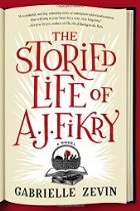
Review: The Storied Life of A.J. Fikry

Storied Life of A.J. Fikry, TheGabrielle Zevin, The Storied Life of A.J. Fikry

A.J. Fikry is going through a rough time. He is still grieving the loss of his wife, who died in a car accident two years ago. His small independent bookstore on Alice Island (somewhere off the coast of New England) is steadily failing. And someone has just stolen his most valuable possession, a first edition of Edgar Allan Poe’s Tamerlane. A.J.’s current method of dealing with these problems is to isolate himself from everyone, even Ismay, his sister-in-law, and Officer Lambiase, a compassionate policeman. But everything changes when someone leaves a baby girl in the bookstore, along with a note placing her in A.J.’s care. At first, A.J. wants nothing to do with this situation, but he eventually bonds with the child and decides to adopt her. The more time he spends with baby Maya, the more cracks appear in his cantankerous facade. He slowly opens up to Ismay, Lambiase, and the rest of his community, even finding the courage to fall in love again. A.J.’s story ultimately illustrates that good friends and good books make a good life.

I actually started this book on New Year’s Eve, but I stayed up past midnight to finish it, so I’m officially counting it as my first book of 2015! For obvious reasons, I’m drawn to books about bookstore owners, especially cranky ones with very particular literary tastes. As a result, I really liked A.J. as a character, even when he was being rude and obnoxious (which was often). His romance with publisher’s rep Amelia Loman is absolutely adorable, especially in its early stages when he’s being tentative and embarrassed. Their teasing, slightly awkward banter is a pleasure to read. I also liked Maya’s character, which surprised me a bit, since I usually find children in novels tiresome. But I enjoyed watching her grow up and absorb her father’s love of literature, which culminates in her own desire to be a writer. The book is somewhat disorganized, jumping into the heads of several different characters, and the stakes aren’t particularly high. But for a pleasant read about people who love books, I’d definitely recommend this novel!

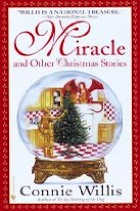
Review: Miracle and Other Christmas Stories

Miracle and Other Christmas StoriesConnie Willis, Miracle and Other Christmas Stories

This collection of holiday-themed short stories is, in essence, Connie Willis’ love letter to Christmas. In the introduction she professes her great love for all aspects of the season, and that love is very evident in the eight stories collected here. In “Miracle,” a young woman discovers her heart’s true desire with the help of “Miracle on 34th Street,” “It’s a Wonderful Life,” and the Spirit of Christmas Present. In “Newsletter,” a woman notices that everyone around her is suddenly acting kind and polite. Is it because of the Christmas spirit, or something more sinister? (Hint: the latter.) And in my personal favorite story, “Inn,” an alto in the church choir lets a homeless couple into the church, only to discover that it’s Mary and Joseph, lost in space and time on their way to Bethlehem. The genres in this collection range from romantic comedy to murder mystery, but each story deals with expectations that are turned upside-down, unexplained mysteries, and more than a few miracles.

I’m a big fan of Connie Willis, so I had high expectations for this collection, but I was still pleasantly surprised by how much I loved these stories. I knew I was in for a fun ride when Willis contended that “Miracle on 34th Street” is the best Christmas movie ever made, in defiance of the many lovers of “It’s a Wonderful Life.” I also loved the speculative edge to these stories, which really emphasized the wonder of Christmas to me. I mentioned that “Inn” is my favorite story in the bunch, and it’s because Willis managed to re-present the first Christmas story in a new way. It’s easy for that story to become familiar, comfortable, and even dull; but “Inn” reminded me that it’s actually a shocking tale in many ways. My one quibble with the collection is that Willis claimed all her stories would have happy endings, but at least two of them (“In Coppelius’s Toyshop” and “Cat’s Paw”) are quite dark! Nevertheless, I loved this book and think it’s a perfect December read!

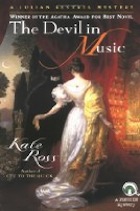
Review: The Devil in Music

Devil in Music, TheKate Ross, The Devil in Music

This final installment of the Julian Kestrel series moves from England to Italy, as Julian encounters a five-year-old mystery while traveling on the Continent. Lodovico Malvezzi, a powerful Milanese nobleman, was murdered in 1821, but because of the unstable political situation at the time, the local officials covered up the true cause of his death. Now, in 1825, the truth has finally come out, and the police are once more searching for Lodovico’s killer. The most likely suspect is a young tenor called Orfeo, whom Lodovico had been training for a career in opera and who disappeared shortly after the murder. But Lodovico had kept the singer’s real name a secret, and no one can give a clear description of him to the police. Meanwhile, Julian suspects that Orfeo may not be the guilty party, and he begins to investigate Lodovico’s family, including his fascinating young widow, Beatrice, and his politically involved brother, Carlo. He soon discovers several motives for Lodovico’s murder — but secrets from Julian’s own past will emerge before he can unmask the killer.

As previously mentioned, this is the last book in the Julian Kestrel series, and I’m heartbroken to have come to the end of it! I absolutely love historical fiction, mysteries, and anything set in the Regency period, so this series is really the perfect fit for me. Plus, I’m a sucker for a dandy who is more than he appears to be, which is definitely the case with Julian! That said, I’m not quite sure how I feel about this book specifically. The different setting was interesting, and I enjoyed the little bits of background about Italian politics and opera that permeate the book. I also liked the resolution of the mystery, although certain aspects of it were very predictable. The book’s pacing is also a little slow, and the focus of the book is much more on Julian’s character development than on the plot. While I was glad to see some more exploration of his character, it didn’t altogether satisfy me. I think my issue is the romance between Julian and Beatrice, which just didn’t ring true for me. Still, this is a good book in a great series, and I really wish there were more Julian Kestrel mysteries!

Review: No Longer at Ease

No Longer at EaseChinua Achebe, No Longer at Ease

This novel, published in 1960, follows the fortunes of Obi Okonkwo, a young Nigerian man who was educated in England and has now returned to work in the Nigerian civil service. In the first chapter, it is revealed that Obi is on trial for accepting a bribe; subsequent chapters go back in time to explain how this situation came about. When Obi first comes back from England, he is idealistic and relatively innocent. When he sees the widespread bribery and corruption in the Nigerian government, he is disgusted and indignantly refuses the first bribe offered to him. However, he soon finds himself caught between several conflicting responsibilities. A group of prominent members of his hometown financed his education, and he is obligated to pay back the money they invested in him. His impoverished family also needs money, especially when his mother falls ill. And all of Nigerian society expects him to maintain a certain standard of living now that he has a profitable government job. Obi’s predicament mirrors the problems of Nigeria as a whole, as it struggles to achieve independence and find its own identity.

I had to read Achebe’s Things Fall Apart several times in school, and while I started out disliking it, I eventually warmed up to it. This book is a sequel of sorts, as Obi is the grandson of Okonkwo from Things Fall Apart, and some of the same themes are present. Both books deal with the interaction of European and Nigerian culture in a very nuanced way, showing both the positive and negative consequences of such interaction. And in both books, the protagonist is caught in an untenable position between the old ways and the new. Obi is a Nigerian through and through, but his English education makes him something of an alien among his own people. He deplores the Nigerian custom of bribing government officials but recognizes the role the British ruling class has played in this corruption. The novel is ultimately about Nigeria’s identity crisis as well as Obi’s, as the country moves toward independence. The novel’s ending leaves the question open: how can Nigeria move forward from the negative aspects of its past while still retaining what is good?