Review: No Bed for Bacon

No Bed for BaconCaryl Brahms & S.J. Simon, No Bed for Bacon

In this hilarious send-up of the Elizabethan era — or rather, the Elizabethan era as perceived by popular culture — Sir Francis Bacon is desperate to obtain a bed that Queen Elizabeth has slept in during one of her royal progresses. He wants it to be an heirloom for his family, as he knows the bed’s value will only increase through the years. Sir Walter Raleigh’s attention is divided between his new cloak, which he hopes will be the envy of everyone at Elizabeth’s court (especially that dandy, the Earl of Essex), and his upcoming introduction of the potato to England. Meanwhile, Sir Francis Drake is grumbling about the fact that he hasn’t been able to do any really good pirating in years; theater owner Philip Henslowe will do anything in his power to shut down his rival, Burbage; and Shakespeare is trying to work on a new play, Love’s Labour’s Wunne, but he keeps getting distracted by the problem of how to spell his own name. Add a little romance, an overly ambitious watchman, and some reminiscing about the glory days of the Armada, and the stage is set for high comedy with a few history lessons thrown in.

I didn’t know it until I read the introduction, but this book is actually part of the basis for the Academy Award-winning movie “Shakespeare in Love.” But while the movie focuses almost entirely on the romance between Shakespeare and the noble Lady Viola, in the book it’s just one of many plots involving the most famous figures of the Elizabethan age. If you know anything about the era or are interested in learning more, I highly recommend this book! It’s pure farce, so there isn’t much “plot” to speak of, but the jokes are more than funny enough to make up for that! One of my favorites was an exchange between Shakespeare and Bacon about some plot element of Shakespeare’s play that Bacon didn’t like. Shakespeare responds with great indignation, “Master Bacon, do I write my plays or do you?” Then there’s this internal monologue from a Puritan who seeks to shut down the theater: “People had no right to enjoy themselves. He was going to stop them. His cause was a just one and he knew it. He was enjoying himself.” So if you like Shakespeare and don’t mind a little (or a lot of) silliness, you should definitely check out this book!
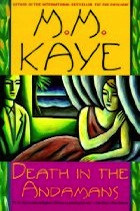
Review: Death in the Andamans

Death in the AndamansM.M. Kaye, Death in the Andamans

Caroline Ophelia Phoebe Elizabeth Randal, known to her friends as Copper, is staying with school chum Valerie on the tiny island of Ross in the Andaman Islands. The vast majority of the population is Burmese, but there is a small British community on the island as well, and Copper and Val naturally form part of this society. At first Copper views the island as a paradise, especially when compared to her rather dreary life in London; and the most upsetting aspect of her visit so far is her feelings for Nick Tarrent, a visiting naval officer who is friends with Valerie’s fiancé. But everything changes one fateful day when a terrible storm leads to widespread destruction on the island, and one of the British plantation owners is found dead. His death is assumed to be accidental until another visiting officer, who happens to be a doctor, suspects foul play. Then the doctor himself is murdered, and it slowly dawns on Copper and the others that the murderer has to be one of them — the storm has cut off all access from the outside world. Can Copper and her friends unmask the murderer before he or she kills again?

I’ve finally read the last of M.M. Kaye’s “Death in…” books, and I’m sorry to have reached the end of them. They all essentially follow the same formula — young woman visits exotic location, falls in love, and becomes involved with a murder — but it’s a formula that appeals to me, so I don’t mind! This book did a wonderful job describing the setting, which is unsurprising, since Kaye actually lived in the Andamans for a while and even experienced a storm like the one in the book! The fact that Copper and her friends were completely cut off from the outside world produced the proper atmosphere of creepy suspense; I was reminded at times of Agatha Christie’s And Then There Were None. I didn’t particularly like the fact that there was a lot of head-hopping in the book, from Copper to Val to Nick to various other characters. I also thought the solution of the mystery came out of nowhere. While the plot does hang together, I wasn’t terribly satisfied by the revelation of the murderer, as many other suspects could just as easily have committed the murders for the same reason. Overall, though, I enjoyed this book and am sad that I don’t have any more M.M. Kaye mysteries to look forward to!

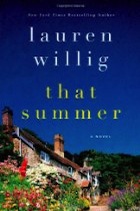
Review: That Summer

That SummerLauren Willig, That Summer

In 2009, Julia Conley learns that she’s inherited a house in England from a great-aunt she’s never met. She hasn’t even been to England since her mother died when she was little. When Julia reluctantly goes to London to get the house ready to sell, she teams up with her cousin Natalie and an attractive antiques dealer named Nick to sort through her great-aunt’s belongings. Julia is especially intrigued by a stunning painting that she finds in a wardrobe, which looks like it was painted by a member of the Pre-Raphaelite Brotherhood. Her quest to learn more about the painting leads her to the story of Imogen, who lived in the house with her husband Arthur in the 1840s. Imogen thought her marriage would be like a fairy tale, but in reality her husband is selfish and distant. She finally finds the love she’s been longing for when she meets a struggling painter named Gavin Thorne, who has been hired to paint her portrait. But will their romance last, or is it destined to end in tragedy?

I’m a longtime fan of Willig’s Pink Carnation series, so I was excited to read this book, her second stand-alone novel. As an added bonus, I really like Pre-Raphaelite art and was interested to learn a bit more about the movement. But while this was a fairly good read, I didn’t love it quite as much as I was hoping to. Both Julia’s and Imogen’s stories had the potential to be really interesting, but because the book divides its focus between them, neither plot is as rich as it could be. I had a hard time connecting to Imogen’s story in particular; the romance seemed to happen very abruptly. Also, I personally have a very hard time with love stories that expect me to condone adultery, so while I sympathized with Imogen’s plight, I wasn’t exactly rooting for her and Gavin to get together. Finally, I missed the lighthearted tone and occasionally silly humor of the Pink Carnation books. This novel is much more somber, and I didn’t find it as enjoyable. Overall, I’d say the book is worth a read if you’re a Willig completist (like me) or if you are particularly interested in the premise.

Review: Double Cross

Double CrossBen Macintyre, Double Cross: The True Story of the D-Day Spies

Seventy years ago, the Allies stormed the beaches of Normandy and began the campaign to liberate Nazi-occupied Europe. Many circumstances contributed to the success of the D-Day invasion, but one of the most important factors was the campaign of disinformation being fed to the Germans by a network of double agents whose sole purpose was to convince the Abwehr that the Allies would be landing at Calais rather than Normandy. Had these agents failed, the Germans would have concentrated their forces at Normandy, most likely stopping the Allied invasion in its tracks. This book tells the stories of the individual double agents involved in this task, including Serbian playboy Dusko Popov (“Tricycle”), Peruvian socialite Elvira Chaudoir (“Bronx”), and Polish nationalist Roman Czerniawski (“Valentine”). Ultimately, Macintyre makes a convincing case for the proposition that the Allies would never have won the war on the battlefields had they not already won the intelligence war.

This book gives a wealth of fascinating detail about the six men and women who acted as double agents in Britain, allegedly spying for Germany but really working for the Allies. I was shocked to learn that British intelligence had actually discovered and turned every German agent in Britain at the time! Because of this, the Allies were able to present a unified message to the Germans, subtlely directing their attention away from Normandy and toward other possible invasion sites. Some of the specific stories in the book prove once again that truth is stranger than fiction: for example, Dusko Popov thrived on creating networks of sub-agents that were entirely fictional, yet he retained the Abwehr’s complete trust. I also loved the fact that these double agents were handled in Britain by the Twenty Committee, so named because the Roman numeral for 20 is XX, or “double cross.” In short, if you’re interested in true stories of WWII-era espionage, Ben Macintyre is your man!

Review and GIVEAWAY: Mortal Heart

Mortal HeartRobin LaFevers, Mortal Heart

This final book in the His Fair Assassin trilogy focuses on Annith, one of the most skilled novices at the convent of St. Mortain in medieval Brittany. She has lived her entire life in the convent but yearns to be sent on her first mission to the outside world, so that she can finally use her skills to serve the god of death. But the abbess has stubbornly kept her in the convent while allowing other, less skilled novices to go out on missions. When Annith hears that the abbess intends to make her the next Seeress, effectively locking her within the convent walls forever, she decides to leave the convent and find her own way to serve Mortain. Along the way she runs into a group of hellequin, doomed souls who can only redeem themselves by ushering the spirits of the dying into the afterlife. At first the hellequin terrify Annith, but she soon grows closer to their mysterious leader, Balthazaar. Will Annith be able to overcome her past, including the secrets the abbess is keeping, and forge her own destiny?

I was a big fan of Grave Mercy and, to a lesser extent, Dark Triumph, so I jumped at the chance to grab this galley at BEA! Unfortunately, I wasn’t completely enamored with the book, although I’m having a hard time pinpointing why. For one thing, the plot doesn’t have much forward momentum; there’s a lot about Annith’s past and the secrets hidden in the convent, but her current journey is much less interesting. I also found Balthazaar underwhelming as a romantic lead. There’s just no spark between him and Annith, possibly because the book spends so much time in the past. And although his big secret makes total sense in the world of this series, it made me less enthusiastic about him and Annith as a couple. That said, I do think the book is a good resolution to the series as a whole, providing some closure on all the main characters and resolving the dangling plot threads from earlier books. So I’d certainly recommend this novel to fans of the series, but I still think the first book, Grave Mercy, is the best.

**********

WIN THIS BOOK

Since I was lucky enough to have the opportunity to read this book, I’d like to give someone else a  chance as well. So with that in mind, I am offering one lucky winner my advance reader copy of Mortal Heart. It’s only been read one time and is still in great shape, I promise! 🙂 Here’s how to enter:

  • Comment on this blog post between now and July 3, 2014, at 11:59 p.m. (Eastern time). Be sure to mention that you are entering the giveaway!
  • One entry per person, please!
  • This giveaway is limited to US readers only. (I know, I know, sorry!)
  • The winner will be chosen randomly, and I’ll announce the results in a new post sometime on July 4.

And…that’s it! Good luck, everyone!

Review: Since You’ve Been Gone

Since You've Been GoneMorgan Matson, Since You’ve Been Gone

Emily and Sloane are best friends; they’ve been inseparable ever since Sloane moved to town two years ago. While Sloane is adventurous and outgoing, Emily is shy by nature and happy to be known simply as “Sloane’s friend.” But one day, Sloane and her family are simply gone, and Sloane isn’t answering any of Emily’s calls or texts. Emily is both shocked and completely overwhelmed — how will she survive the summer without her best friend? Then she finds a list from Sloane, a list of tasks designed to get Emily out of her comfort zone. Not knowing what else to do, Emily decideds to complete the list, hoping that once she does, Sloane will come back. Some of the tasks seem relatively harmless (“Apple picking at night”), while others seem impossible (“Kiss a stranger”). But with help from some surprising sources — including popular class president Frank Porter — Emily makes her way through the list and gains a new identity in the process.

This book is the perfect summer read! It’s got everything — friendship, humor, romance, ice cream, and a sense of infinite possibility. Reading it, I felt nostalgic for the summers I had growing up, playing with the neighborhood kids and feeling like the summer would never end. I found Emily a great, realistic character; she’s more of a follower than a leader, she’s a bit unsure of her own identity, and she relies on Sloane to provide the adventure and excitement in her life. I loved watching her grow as a person and have her own adventures. I also adored the sweet romance with Frank, who is the kind of guy I totally would have had a crush on in high school! But the relationship at the heart of the book is really the friendship between Emily and Sloane, who is an incredibly vivid character even though she’s barely on page. In fact, my only tiny quibble with the book is that I wasn’t satisfied with Sloane’s reason for disappearing on Emily. But I would definitely recommend this book to anyone looking for a great beach or vacation read this summer!

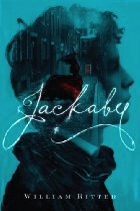
Review: Jackaby

JackabyWilliam Ritter, Jackaby

Abigail Rook has just arrived in the New England town of New Fiddleham with nowhere to go and no way to earn a living. As she sits in a tavern and ponders her next move, she encounters a strange man who turns out to be R.F. Jackaby, a private investigator with an extraordinary gift for detecting paranormal activity. Abigail’s talent for observation lands her a job as Jackaby’s assistant, and she is immediately embroiled in the investigation of a gruesome murder. Jackaby is convinced that the killer is supernatural, but the police scoff at the very idea — except for one young detective named Charlie Cane. With Cane’s help, Jackaby and Abigail pursue the investigation, encountering a banshee, a helpful madwoman, and a possible bridge troll along the way. Meanwhile, Abigail relishes the excitement of her new job, but several people warn her to stay away from Jackaby. She wants to keep her job, but will it cost her her reputation — or even her life?

Despite the fact that this book is classified as YA or even middle-grade, I really enjoyed it! The book is narrated by Abigail, a plucky protagonist who is suddenly thrown into a magical world with nothing but her wits to rely on. I like that she is basically ordinary; though smart and brave, she doesn’t have superpowers, so she is very relatable as she encounters the surprises and challenges of this world. Jackaby is a really fun character as well, with more than a few similiarities to Benedict Cumberbatch’s Sherlock Holmes! I also loved the richly imagined world of this novel, especially the random little gags that didn’t have much to do with the main plot, such as the frog in Jackaby’s office, or what happened to his former assistant. The mystery itself was fairly easy to solve — I figured out whodunnit almost as soon as the guilty character was introduced — but the fun of the book is the characters and setting. I’d definitely recommend this book to fans of historical fantasy, and I’m looking forward to the sequels!

Review: Mrs. Ames

Mrs. AmesE.F. Benson, Mrs. Ames

This novel is a precisely drawn satire of life in an English village in the early 20th century. Mrs. Ames has been the leader of society in Riseborough for many years, due partly to her commanding presence and partly to her distant familial connection with a nobleman. The other residents of Riseborough both admire and resent her for her position, and many of the local gossips would be glad to see her fail in some way. So when a (relatively speaking) new arrival, Mrs. Evans, begins to set herself up as Mrs. Ames’ social rival, the entire town waits with bated breath to see whether their queen will be dethroned. Meanwhile, both Mrs. Ames and Mrs. Evans dimly begin to realize that their lives are unfulfilling, but their search for deeper meaning takes them down drastically different paths, one of which may lead to scandal and heartbreak.

I expected this book to be nothing more than a light, witty comedy of manners — which it is, but it also took a more serious turn than I anticipated. The various social machinations of the ladies of Riseborough are very funny; there’s a particularly wonderful scene in which Mrs. Evans hosts a masquerade ball and several ladies (tragically, yet hilariously) show up wearing the same costume. But for me, the more compelling story was Mrs. Ames’ slow realization that her dreary, respectable life isn’t making her happy. It’s only when she begins to identify with a cause greater than herself that she actually finds contentment — even at the moment when all her respectability and social standing is taken away. So oddly enough, this comedy of manners turns into a coming-of-age story, and I found it a surprisingly thought-provoking read.

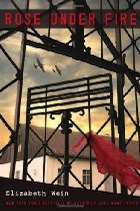
Review: Rose Under Fire

Rose Under FireElizabeth Wein, Rose Under Fire

Rose Justice is an American pilot who has just come to England to help with the war effort. Though women aren’t allowed to fly planes in combat, she is able to get a job with the Women’s Air Transport Auxiliary ferrying planes back and forth within Allied territory. At first Rose sees her work as a grand adventure, a fascinating change from her sheltered upbringing. But her life is instantly, horribly changed when she is captured by the Germans in the middle of a routine flight from France to England. She is immediately arrested and transported to the women’s concentration camp at Ravensbrück. There Rose confronts the hideous realities of this war for the first time, including the brutal scientific experiments performed on a group of young women known as “rabbits.” But depsite the horrific treatment Rose endures, she forges close bonds with a small group of fellow prisoners and somehow manages to hold onto hope.

This companion novel to Code Name Verity is equally powerful and moving, although it struck me in a very different way. I loved CNV for its suspense, its elements of espionage, and its intense portrayal of friendship. This book is not as suspenseful; we know from the start of Rose’s narrative about Ravensbrück that she is remembering her experiences after she has escaped. It’s also not as personal (if that’s the word I want) because while Rose forms incredibly close bonds with her fellow prisoners, the emphasis is less on individual relationships and more on the experience of Ravensbrück as a whole. Neverthless, this book did strike me on a very deep personal level. It’s easy to become a little desensitized to the atrocities committed by the Nazis, simply because we’ve heard about them so many times, but this book certainly made them vivid for me. The most horrifying thing is that similar atrocities are still occurring in parts of the world today. So this is not an easy read, but I think it’s a very important one.

Review: Mambo in Chinatown

Mambo in ChinatownJean Kwok, Mambo in Chinatown

Charlie Wong is a 22-year-old woman who lives with her Pa and her younger sister, Lisa, in New York City’s Chinatown. Although Charlie has lived her entire life in the U.S., she has very little contact with the world outside Chinatown. She works as a dishwasher in the restaurant where Pa makes noodles, but she dreams of a different life; so when she learns that a ballroom dance studio is hiring a new receptionist, she jumps at the opportunity. At first, her impulsive decision seems disastrous — she’s too shy, her clothes are all wrong, and she has trouble reading and writing down the dancers’ appointments. But when, due to a scheduling error, she is forced to teach an introductory class, Charlie realizes she has a gift for dancing. As Charlie learns more and more about ballroom, she also becomes more confident and optimistic about her future. But when her sister Lisa falls ill, and Pa will only use Eastern methods to treat her, Charlie wonders if she can truly reconcile her two different worlds.

This book is the literary equivalent of a feel-good movie; maybe it’s not great literature, but it’s entertaining and heartwarming. I really liked Charlie, even though her character arc is somewhat unbelievable (she goes from being a receptionist to a teacher in a matter of months!). She feels shy and perpetually clumsy, and she doesn’t really know how to react to this unfamiliar world of ballroom dancing. Watching her struggle to open up and be more confident was a pleasure, and I felt I could relate to her to some extent. I also enjoyed the portrayal of the Chinese community in this book, as Charlie begins to question some aspects of her upbringing while embracing others. I especially liked that Pa, the voice of tradition in the novel, is portrayed as a sympathetic character even though he doesn’t agree with all of Charlie’s choices. There’s also a sweet romance and a few tidbits about ballroom dancing, which I enjoyed. Overall, I’d recommend this to fans of chick lit or feel-good stories — it definitely left me smiling!