Review: Death at the President’s Lodging

Death at the President's LodgingMichael Innes, Death at the President’s Lodging

This first installment of the Inspector Appleby series is a classic locked-room mystery set in the fictional St. Anthony’s college, where its president, Dr. Umpleby, has just been murdered. Because of the prominence of the victim, Inspector Appleby is summoned from Scotland Yard to assist the local police. He soon learns that the layout of the college would have made it impossible for someone without a key to access the scene of the crime. Therefore, suspicion centers around the other fellows of the college, most of whom either had a key or could easily obtain one. As Appleby begins his investigation, he notices strong tensions among these men and uncovers various professional rivalries. He also begins to realize that the case is cluttered with many side issues and diversions. But as he sifts the relevant facts from the distractions, Appleby eventually reaches a conclusion as bizarre as it is shocking.

I’ve now read two mysteries by Michael Innes, and what I’ve learned is that I love his solutions, but I’m not terribly fond of how he gets there! In most mysteries that I read, there’s not a lot of irrelevant information; every fact the detective discovers is a clue. In this book, on the other hand, much of what Appleby discovers isn’t relevant to the solution of the murder. This is certainly more realistic than, say, a Poirot mystery, but it made the reading experience more difficult for me. I also didn’t like the relative lack of character delineation. It’s been less than a month since I read this book, and already I couldn’t tell you the main suspects’ names! Nobody (including Appleby) has much personality, so the murder is more like a logic puzzle than a dramatic event involving actual human beings. All that said, I really did love the solution to this one, which got downright farcical in places! So overall, I’m glad I read this book, but I doubt I’ll get sucked into the rest of the series — which is probably a good thing!

Review: Across a Star-Swept Sea

Across a Star-Swept SeaDiana Peterfreund, Across a Star-Swept Sea

In this post-apocalyptic retelling of The Scarlet Pimpernel (!), Earth’s civilization has been all but destroyed, thanks to the horrific unintended consequence of genetic engineering known as Reduction. Now, the island of Galatea seeks vengeance through revolution: aristocrats are being captured and forcibly Reduced, their minds irreparably damaged. Meanwhile, the neighboring island of Albion seems more interested in flirtation and gossip than in Galatea’s problems — except for the Wild Poppy, who daringly rescues Galatean aristocrats out from under the noses of the rebels. No one suspects that the Wild Poppy is really Persis Blake, a seemingly idle and frivolous courtier of Albion. In order to maintain her cover, Persis must befriend Justen Helo, a Galatean scientist whose family is famous for curing the initial Reduction. Justen seems to disagree with his country’s violent policies, but can Persis trust him? And will she be able to maintain her cover as their relationship deepens?

The Scarlet Pimpernel is one of my all-time favorite books, so I was really excited to discover this retelling with a sci-fi twist! I think the novel does a good job of following the original story while not being a scene-for-scene copy. While the original novel is mostly told from Marguerite/Justen’s point of view, this version is largely from the perspective of the Pimpernel character, Persis. In fact, one of the most fun aspects of this book is that the characters are gender-flipped! I did have one large-ish problem with the book, though; most of the larger narrative of How We Got To This Point was totally lost on me. There were some wars, and some people got Reduced, and the people who didn’t became the new aristocrats, I think? To be fair, it’s not that complicated…I’m afraid I just didn’t want to pay that much attention! Still, I picked up enough to get the gist of things, so I guess it doesn’t matter that much. Overall, I didn’t love the book, but it’s still a fun read for Pimpernel fans, especially those who also like YA.

Review: The Taliban Cricket Club

Taliban Cricket Club, TheTimeri N. Murari, The Taliban Cricket Club

The heroine of this novel is Rukhsana, an intelligent, independent young woman fighting for survival under the Taliban regime in Kabul. A former journalist, Rukhsana is no longer allowed to work, but she still manages to publish stories in foreign newspapers by using a pseudonym. When she is summoned to appear before a Taliban minister, she fears she’s been discovered; but to her surprise, the minister simply announces that Afghanistan will be holding a cricket tournament in three weeks, and the winning team will be leaving the country to compete with other teams around the world. Rukhsana seizes this opportunity to escape by convincing her brother and other male relatives to form a cricket team. Women are not allowed to play, but Rukhsana is familiar with the game from her time as a university student in Delhi. Will she be able to coach her team to victory and freedom, or will her rebellion have dire consequences for herself and her family?

This is a book I should have loved, and I’m a little confused about why it didn’t quite work for me. The premise is certainly compelling, and I was very interested in learning about daily life in Afghanistan under the Taliban. But while the picture Murari paints is certainly bleak, I didn’t connect to it on an emontional level; I believed the book’s depiction of a lives full of fear and oppression, but I didn’t feel it. The book frequently mentions that Rukhsana and her family are in grave danger, but we hardly ever see that danger firsthand, so the suspense doesn’t really build. I also think Rukhsana’s conflict is a bit too superficial or simplistic…she views the burka as a prison and hates the Taliban with every fiber of her being. Now, I’m not defending the Taliban, but I think having a little moral ambiguity in some of the characters would have made this a stronger novel. I did enjoy the contrast between the world of cricket, with its notions of order and fair play, and the world of war-torn Kabul. But overall, I was hoping to connect with this book more than I did.

Review: Borrower of the Night

Borrower of the NightElizabeth Peters, Borrower of the Night

This novel introduces Vicky Bliss, a confident, no-nonsense art historian and professor at a small Midwestern university. She and her colleague/boyfriend Tony stumble across a clue to a lost work by Tilman Riemenschneider, a 16th-century German woodcarver. They decide to embark on a friendly competition to see who can discover the artifact first — a competition Vicky is determined to win. She sets off immediately for the supposed location of the artifact, Castle Drachenstein in Rothenburg, Germany. Unfortunately, Tony is hot on her trail, along with several other parties interested in recovering the lost masterwork. As Vicky and her competitors begin their search, they soon realize that something is amiss at Castle Drachenstein, and the root of the trouble lies in the distant past. Is the castle being haunted by the ghost of a former countess, or is there a less supernatural explanation for the danger Vicky finds herself in?

I’ve read and enjoyed the first few books in the Amelia Peabody series, so I was interested to try this series as well. Overall, I thought it was a fun read and a pretty decent mystery. The emphasis wasn’t so much on the “whodunit” aspect of things; rather, the novel focuses on the suspense and danger evoked by the gothic setting. In that respect, I was reminded a lot of Mary Stewart’s novels (which I also really enjoy), and the archaelogical aspect of the plot called to mind “Indiana Jones.” I also liked reading about Vicky, whose sassy comments and progressive (in the 1970s) views always seemed to stir up trouble. I didn’t always like or agree with her, but she was consistently amusing! Overall, I found this book a fun read and will definitely be picking up the sequels at some point.

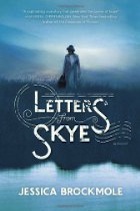
Review: Letters from Skye

Letters from SkyeJessica Brockmole, Letters from Skye

This epistolary novel tells two parallel love stories, each set against the backdrop of a world war. In 1912, Scottish poet Elspeth Dunn receives a fan letter from David Graham, an exuberant young American. Elspeth replies to the letter, and she and Davey soon strike up a regular correspondence. At first they discuss literature and their favorite books, but soon they’re exchanging ideas about everything under the sun, including their most secret dreams. Unsurprisingly, Elspeth and Davey fall in love, but their romance is fraught with complications. When America enters World War I, Davey enlists immediately as an ambulance driver on the battlefields of France. Additionally, Elspeth is already married, so her stolen moments with Davey are as fleeting as they are precious. Meanwhile, in 1940, Elspeth’s daughter Margaret — also involved in a wartime romance — stumbles upon one of Davey’s letters and decides to search for the secrets in her mother’s past.

In theory, I should love this book, since it combines a lot of my favorite things: epistolary novel, WWI and WWII setting, love stories, family secrets. But while I found it an entertaining read, my overall experience was somewhat disappointing. First of all, the story is really about Elspeth and Davey, so the parts about Margaret felt very cursory and not fleshed out at all. I would have liked to know a lot more about her reactions to her mother’s secret, as well as the details of her own romance. Also, the story itself seems very superficial, given the gravity of the WWI backdrop. Even though I enjoy light romances with happy endings, I felt like this book lacked emotional stakes. Elspeth and Davey are likeable characters, and their letters are often very charming, but I was never in any real doubt about the end result of their story. Maybe part of my problem is that this book seems like a copycat of The Guernsey Literary and Potato Peel Pie Society, only not nearly as good! Overall, this book is a nice, quick read, but it won’t stay with me the way Guernsey has.

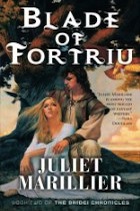
Review: Blade of Fortriu

Blade of FortriuJuliet Marillier, Blade of Fortriu

In this sequel to The Dark Mirror, King Bridei of the Priteni believes his mission is to eradicate the Gaels and their Christian religion from his lands. He is a strong king, brave in battle and devout in his allegiance to the old gods, so he’s the ideal person to unite the Priteni against this outside threat. Bridei is planning a big move against the Gaels, but in order to succeed, he needs the help of a foreign chieftain named Alpin. Bridei therefore proposes to offer his royal hostage, Ana, to Alpin as a bride, hoping this will ensure his loyalty. Ana longs to marry for love, but she knows she has no choice in the matter. She sets out for Alpin’s lands in the company of Faolan, Bridei’s most trusted bodyguard, spy, and assassin. As Ana and Faolan travel together, their relationship deepens, but she is already promised to Alpin. And when she finally arrives at Alpin’s court, Ana discovers a shocking secret that will have drastic implications for both Bridei’s campaign and her own heart.

Much like its predecessor, The Dark Mirror, this book is very slow-paced, and I had trouble getting into it as a result. I find the world of this series fascinating; it’s based on historical facts (the Priteni were real, and Bridei really was their king for a time), but Marillier weaves many fantastical elements into the setting. Half the novel focuses on Ana’s story, while the other half follows Bridei’s campaign against the Gaels. Personally, I was much more interested in Ana’s story, especially since I always enjoy a little romance with my fantasy! Interestingly, the story seems very predictable at first, but it eventually veers into an unexpected direction. I wasn’t entirely pleased with the resolution of Ana’s story, but it does provide some interesting avenues to explore in the final book of the trilogy. I’ll definitely be reading The Well of Shades to see how everything turns out, but I don’t think this series is Marillier’s best work. Try her Sevenwaters books instead!

Review: The Sunne in Splendour

Sunne in Splendour, TheSharon Kay Penman, The Sunne in Splendour

When most people think of Richard III, they picture a hunchbacked villain who was obsessed with being king and who murdered the princes in the Tower as a result. But in this novel, the last Plantagenet king is portrayed in a very different light: Richard (or Dickon, as most characters call him) is noble and loyal to a fault, and these good traits are ultimately what cause his downfall. The novel begins with Dickon’s childhood, when his father, the Duke of York, is killed in the war against the Lancastrian Henry VI. Dickon’s oldest brother Edward subsequently takes his father’s place in leading the Yorkist faction against Henry; eventually, he is crowned as Edward IV, and Dickon becomes one of his most trusted advisers and most skilled battle commanders. But as Edward obtains more and more power, Dickon becomes disillusioned with his brother’s morally questionable choices, and the struggle of brother against brother mirrors the broader conflict between York and Lancaster.

As always, in this book Sharon Kay Penman manages to bring the Middle Ages to life. I always enjoy her vivid descriptions of daily life during this period, as well as her depictions of medieval religion, warfare, and politics. This book in particular is a fascinating political study, showing that the cutthroat nature of modern politics is rooted in a long tradition. I also like the fact that this novel approaches Richard III from a countercultural perspective. While I don’t know enough about the subject to judge whether Penman’s interpretation is justified, it makes sense to me that Henry Tudor (who acceded to the throne after Richard’s death) would want to do everything in his power to discredit his predecessor. It’s always important to remember that history is written by the victors! All in all, I heartily recommend this book to anyone who is interested in Richard III, the War of the Roses, or the Middle Ages in general.

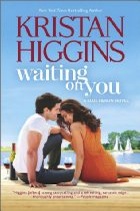
Review: Waiting on You

Waiting on YouKristan Higgins, Waiting on You

This third installment of the Blue Heron series features Colleen O’Rourke, co-owner of the local bar in the small town of Manningsport, New York. Colleen is beautiful, popular, and kind, with a penchant for matchmaking. But while she loves getting other people together, she hasn’t experienced a romance of her own in years — not since her first love, Lucas Campbell, broke her heart. When bad-boy Lucas moved to Manningsport during Colleen’s senior year of high school, she was smitten immediately, and they soon embarked on a passionate, intense relationship. They stayed together despite going to different colleges, and Colleen was convinced that Lucas was her one and only. But shortly after a breakup as unexpected as it was ugly, Colleen heard that Lucas had married someone else. But now Lucas is back in town, and his presence is stirring up some familiar feelings. Do Colleen and Lucas have a second chance, or will she get hurt all over again?

While I really enjoy Kristan Higgins’ contemporary romances, this book wasn’t one of my favorites. I think the biggest problem, for me, was the choppy timeline; it seemed like at least half the book took place in flashback, showing how Colleen and Lucas first met and fell in love. Both characters also have very involved backstories — Lucas’ tough childhood where he always felt like an outsider, Colleen’s reaction to her parents’ difficult divorce — and I didn’t quite get invested in them. I think these backstories were supposed to give the characters depth and make them sympathetic, but to me they felt a bit clichéd. Don’t get me wrong — this is a fun, light, romantic read, and I’d certainly recommend it to fans of contemporary romance. It’s just not my favorite of Higgins’ books, and I’m hoping that she will wrap up the Blue Heron series soon and move on to new endeavors. That said, I wouldn’t mind a book featuring Colleen’s brother Connor as the hero!

Review: One More Thing

One More Thing-Stories and Other StoriesB.J. Novak, One More Thing: Stories and Other Stories

In this collection of (very) short stories, B.J. Novak — formerly a writer, producer, and actor on the US version of “The Office” — uses his comedic imagination to ask a variety of hypothetical questions. What if the hare who lost the fabled race to the tortoise became obsessed with thoughts of a rematch? What if the handsome man you met in a bar turned out to be a brutally violent African warlord? What if you could literally hold a mirror up to Earth? And what if Chris Hansen, of “To Catch a Predator” fame, were forced to go to a Justin Bieber concert at the insistence of his tween daughter? Novak answers these questions and many more in his debut collection of funny, dark, ridiculous, and often poignant stories.

The first thing to say about these stories is that most of them are very short, some no more than a page or two. So most of the stories don’t have time to delve deeply into plot or character; rather, they focus sharply on a single joke or idea (see, for example, “The Comedy Central Roast of Nelson Mandela” or “The Market Was Down”). In that sense, it’s easy to see the influence of Novak’s TV background. However, even if you aren’t a fan of “The Office” or its style of comedy, you should still find plenty to enjoy in this book! I was very impressed by how smart Novak obviously is; clever wordplay and literary allusions abound. Several of the stories are laugh-out-loud funny, but the comedy is often followed by a swift stab to the gut. One story in particular, “The Ghost of Mark Twain,” gave me chills. Overall, I wasn’t sure what to expect when I picked up this book, but I was very pleasantly surprised!

I was fortunate to be able to attend a book signing with Novak at which he read a few of the stories out loud. Having heard the stories in his own voice, I would strongly recommend the audiobook to those of you who enjoy that format. Apparently Novak reads many of the stories himself, although there are some “special guest appearances” by other actors such as Mindy Kaling and Lena Dunham.

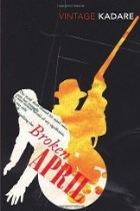
Review: Broken April

Broken AprilIsmail Kadare, Broken April (trans. from the Albanian)

In the remote mountains of Albania, communities live by the ancient rule of the Kanun, a code of conduct that governs every aspect of their lives. The most important part of the Kanun is the rules for blood feuding, which is an integral part of mountain life. Such feuds can endure for centuries and affect every aspect of the community. At the beginning of this novel, Gyorg is lying in wait to kill the man who killed his brother, in accordance with the dictates of the blood feud. But once he kills the man, his own life will be forfeit after a 30-day truce. Now living under a sentence of death, Gyorg travels throughout the countryside musing on the Kanun, fate, and his own impending death. Meanwhile, newlyweds Bessian and Diana have (unconventionally) decided to honeymoon in the wild Albanian mountains, to learn more about this harsh, rule-governed way of life. But while they start out as tourists, their exposure to the rules of the Kanun eventually changes them both in unexpected ways.

This is a very slow-paced, meditative novel that focuses entirely on the Kanun and the different characters’ responses to it. The visitors, especially Bessian, simultaneously romanticize the practice of blood feuding and regard it as a quaint, outdated custom. Gyorg, whose life is more directly affected, wishes he could somehow survive but views the Kanun as inevitable and unchangeable. I liked how Kadare shows the custom from these varying perspectives, so that the reader gets a fuller picture of what it actually means for the people involved. Something else I found particularly fascinating is that the novel is set between the two World Wars, when Albania was a monarchy, but Kadare wrote it in the 1970s, when the country was under Soviet control. So perhaps his exploration of the Kanun is indirectly a critical examination of a different set of harsh, all-encompassing laws. All in all, I found this book a very interesting window into a foreign (to me) culture, and I’d recommend it to people who find the premise interesting.