Review: Roseanna

RoseannaMaj Sjöwall and Per Wahlöö, Roseanna (trans. Lois Roth)

This book begins in the summer of 1965, when a dead body is dredged up from the bottom of a Swedish lake. The corpse is female and naked, with no clothing, jewelry, or personal effects of any kind. The police determine that she was raped and strangled to death, but they have absolutely no clue as to her identity, much less the murderer’s. Police inspector Martin Beck launches an investigation with the help of his colleagues; after weeks of diligent searching, they are able to identify the woman as Roseanna McGraw, an American woman who was touring Sweden by cruise. Slowly, Beck and the other policemen begin to piece together Roseanna’s final days, and with help from the American police, they are able to learn something about her character as well. Beck gradually begins to form an opinion about the personality of the murderer, and sifting through the scanty data gives him a specific suspect. But due to the lack of hard evidence in the case, Beck and his colleagues must set a daring, and dangerous, trap.

I’m a big fan of the mystery genre in general, but I tend to gravitate toward mysteries in which the reader is able to solve the crime right alongside the detective. This book is definitely not like that, but it offers a fascinating alternative perspective on what a mystery novel can be. The focus isn’t on the victim’s character or on a list of potential suspects who can be eliminated one by one; rather, it’s a very realistic portrayal of how police investigations actually work, with all the tedium and frustration and dead ends they entail. One detail I loved is how the case actually took the policemen months to solve, and how they were also working on other cases in the meantime. Interestingly, Beck’s personality is basically irrelevant, and we don’t learn much about him even though this is the first book in “his” series. Crime-solving is much more of a communal endeavor in this novel than it is in the (predominantly) British and American mysteries I’ve read — indicating a broader cultural difference, I suspect! Be that as it may, I enjoyed this book and would recommend it to mystery lovers, even though it was a departure from my normal reading experience.

Review: Transformations

TransformationsAnne Sexton, Transformations

This book is a collection of poetry, and I don’t really know how to review it, or even whether “reviewing” is appropriate for something that is supposed to strike you in a fundamental, visceral way. The poems are all re-imaginings of fairy tales as told by the Brothers Grimm, and Sexton uses the old stories to shed light on modern themes and concerns. For example, here’s the end of “Cinderella”:

Cinderella and the prince
lived, they say, happily ever after,
like two dolls in a museum case
never bothered by diapers or dust,
never arguing over the timing of an egg,
never telling the same story twice,
never getting a middle-aged spread,
their darling smiles pasted on for eternity.
Regular Bobbsey Twins.
That story.

The stories are all set in that quasi-medieval fairytale past, which is interestingly juxtaposed with some very modern language. When the witch in “Hansel and Gretel” is cooked in the oven, “Her blood began to boil up / like Coca-Cola.” When the prince in “Cinderella” tries the glass slipper on every maiden in the kingdom, the narrator observes, “The prince was getting tired. / He began to feel like a shoe salesman.”

All in all, this collection didn’t make a huge impact on me, but I would recommend it to people who like poetry and fairy tales. I’d definitely like to read more of Anne Sexton’s work!

Review: The Quick

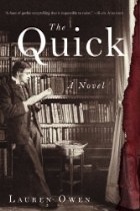
Quick, TheLauren Owen, The Quick

This novel, set in late Victorian England, centers around James Norbury and his sister Charlotte. After growing up isolated in a crumbling country estate, James is eager to move to London and try his luck as a poet. He slowly begins to conquer his shyness and mix a little in society, and eventually he even falls in love. But everything changes one fateful night when James is attacked, kidnapped, and initiated into the sinister Aegolius Club. Meanwhile, Charlotte has grown more and more anxious about her brother, who seems to have vanished without a trace. She journeys to London and attemps to discover what has happened to him, but what she finds out is more shocking and horrible than she ever could have imagined. As the Aegolius Club’s secrets are slowly revealed, and its members become more and more dangerous, Charlotte realizes that her only course of action is to destroy the club; but even if such a thing were possible, would she truly be able to rescue James?

I find that I really can’t talk about this book without mentioning one significant spoiler, so please STOP READING NOW if you don’t want to know anything else about the plot of this book! … If you’re still interested, here goes: this book is about vampires. I mention it because there is nothing in the book’s description or on the cover blurb about them, yet they are central to the entire book! Personally, I’m not a big fan of vampire novels and would not have picked up this book if I’d known they would be such a big part of the plot. That said, I actually really liked it a lot; Owen is a wonderful writer, and I found the novel a real page-turner despite the fact that it’s over 500 pages long. In fact, my other complaint is that it could probably have ended a few chapters before it did. I wasn’t a huge fan of the (largely depressing) ending, and I would have liked a little happiness for the main characters in the end, after they’d suffered so much. Still, this is a very accomplished gothic novel, and I’d definitely consider reading more by Lauren Owen.

Review: The Grimm Legacy

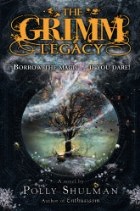
Grimm Legacy, ThePolly Shulman, The Grimm Legacy

High-school student Elizabeth Rew is feeling lonely: her new stepmother is taking up most of her father’s time, and she’s just transferred to a new school where she doesn’t have any friends. So when her history teacher suggests that she get a job with the New York Circulating Material Repository, she looks forward to the new experience. The Repository is a lending library for objects, including famous historical artifacts like Marie Antoinette’s wig; but Elizabeth soon discovers that there are even more important objects to be found. Specifically, the Grimm Collection houses fairytale items with magical properties, including flying carpets and seven-league boots. As Elizabeth explores the wonders of the Grimm Collection, she also befriends her fellow employees, including popular Marc, beautiful Anjali, and standoffish Aaron. When some of the magical items go missing, it’s up to Elizabeth and her newfound friends to discover who is stealing from the Grimm Collection — before they become the thief’s next victims.

A few years ago I read Polly Shulman’s other book, Enthusiasm, and really enjoyed it. Unfortunately, this book didn’t work for me quite as well. I absolutely loved the premise — what if you could actually borrow the magic mirror from Snow White or Aladdin’s lamp? — and many of the details related to this concept worked very well. I especially liked the idea that borrowers had to leave a “deposit” for the items, which could be something like their sense of direction, their singing voice, or their firstborn child. The problem with the book is that it’s geared toward a very young audience. I don’t have a problem with YA in general, and I’ve read many excellent books in the genre, but this one really felt like YA or even juvenile fiction. If I’d read the book at age 11, I probably would have loved it, but as an adult, I found it far too simplistic. There were also a few plot points that weren’t fully fleshed out, such as Elizabeth’s relationships with her dad and stepmom. Overall, the book is a decent read, but I wouldn’t recommend it unless you’re really OK with juvenile or YA fiction.

Review: Miss Hargreaves

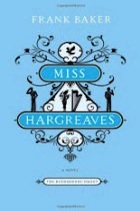
Miss HargreavesFrank Baker, Miss Hargreaves

When Norman Huntley and his friend Henry are on holiday in Ireland, they decide on a whim to visit the exceedingly ugly church of the village of Lusk. As their tour guide rhapsodizes about the church’s history, he mentions one of its former clerics. Intending to make a joke at the tour guide’s expense, Norman pretends to have heard of this cleric from a (fictional) common acquaintance, Miss Constance Hargreaves. He immediately — with assistance from Henry, who plays along — invents an entire personality and history for Miss Hargreaves, and after a while, the two young men almost believe she is real. But nothing can prepare Norman for the shock of discovering that a woman calling herself Miss Hargreaves is coming to visit him, and she is completely identical to the made-up description he and Henry had concocted! Miss Hargreaves soon embarrasses Norman with her eccentricities, and he begins to wish he could get rid of her — but how can he do so? And if he is really responsible for her existence, should he?

When I first picked up this book, I expected it to be a light, fluffy comedic tale, similar to most of the other early-20th-century British fiction I’ve read. I mean, the synopsis almost sounds like something out of P.G. Wodehouse! But while this book does have its comic moments — like everything that comes out of Norman’s father’s mouth! — it’s actually much more serious than it sounds. Norman’s reaction to learning that he has (presumably) created another human being runs the gamut from shock to amusement to horror. He’s often quite cruel to Miss Hargreaves when she doesn’t show him the love and respect he feels are his due. In this sense, I think Baker was making a point about the dangers of playing God: Norman created Miss Hargreaves and is therefore in some sense responsible for her, but he is too proud and impatient and flawed to fulfill his responsbilities. Overall, this is an odd little book that raises some fairly serious philosophical questions. Recommended if the premise sounds interesting to you!

Review: Mistress of Rome

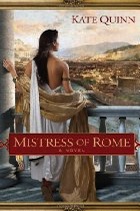
Mistress of RomeKate Quinn, Mistress of Rome

In the late first century A.D., Thea is a Jewish slave girl living in Rome after the rest of her family committed suicide during the siege of Masada. Thea’s owner, the spiteful Lepida Pollia, misses no opportunity to berate and abuse her; so when Rome’s most popular gladiator, Arius the Barbarian, falls in love with Thea and spurns Lepida’s advances, Lepida immediately takes a brutal revenge. This novel follows the stories of Thea, Arius, Lepida, and several other characters as they all try to better their fortunes, with varying degrees of success. Eventually, Thea uses her talents as a singer and musician to perform before the most fashionable crowds in Rome, where she catches the eye of Emperor Domitian. As the emperor’s mistress, she becomes the most powerful woman in Rome; but the more she learns about the enigmatic emperor’s true nature, the more desperate she becomes to escape her fate.

This is one of those books that hooked me almost immediately, and I found it compulsively readable. Ever since I took Latin in high school, I’ve been interested in the setting of ancient Rome, and this book explores so many aspects of life at that time, from social mores to military strategy to fashion. It’s a truly fascinating time period, and Quinn takes full advantage of the drama it provides. Indeed, the book is almost too melodramatic at times; it’s very much a soap opera, complete with fake deaths, illegitimate children, and even an orgy. The love story between Thea and Arius is often sweet but occasionally becomes a bit too over-the-top. I feel like I should also mention a particular review on Amazon, which pointed out several flaws in plot logic and historical accuracy. But personally, I really enjoyed the novel overall, and I’ll definitely seek out the sequels at some point. If you like your historical fiction gory, sexy, and extremely dramatic, I highly recommend this book!

Review: The Complaint of the Dove

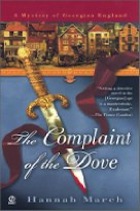
Complaint of the Dove, TheHannah March, The Complaint of the Dove

In 1760s England, private tutor Robert Fairfax is charged with escorting his pupil, Matthew Hemsley, to London for a bit of town polish. But Fairfax is apprehensive: how can he introduce Matthew to the worldly, sophisticated atmosphere of London while at the same time protecting him from bad influences? Unfortunately, during their very first trip to the theater, Matthew instantly falls in love with the beautiful and popular actress Lucy Dove. Though she is a sweet and talented girl, her profession is most unsuitable, so Fairfax hopes that Matthew’s infatuation is only temporary. But Matthew gets into even bigger trouble when Lucy is murdered shortly afterwards, and he is found at the crime scene under very suspicious circumstances. When Matthew is actually arrested for the murder, Fairfax knows it is his duty to clear his pupil’s name — which means launching an investigation to discover the real killer.

I discovered this series by accident at a library book sale where the second and third books were available for 25 cents each, so of course I had to track down the first book as well! I was intrigued by the concept of a Georgian mystery, since I haven’t seen many novels set in that era (especially compared to the much more popular 19th century!). Fortunately (or perhaps unfortunately, given the magnitude of my TBR list already), I’ve discovered a new mystery series to enjoy! I loved the period detail: the crush of theatergoers more interested in each other than in what’s happening onstage; the elaborate wigs, patches, and high heels worn by aristocratic men and women alike; the rudimentary knowledge of medicine, including the ingestion of mercury as a cure for venereal disease. It’s a fascinating time period, and March really brings the era to life. I also liked Robert Fairfax as a sleuth, and I look forward to seeing how his complex character will develop in subsequent books. Overall, I’d definitely recommend this book to fans of historical mysteries!

Review: By Love Possessed

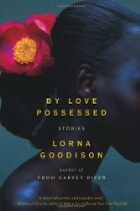
By Love PossessedLorna Goodison, By Love Possessed: Stories

As the title suggests, this collection of short stories is loosely focused on the theme of love, but not just romantic love: there are stories of friendships, parent-child relationships, and love requited and unrequited (mostly the latter). The stories are also pictures of life in Jamaica, chronicling the country’s postcolonial poverty, class warfare, desperation, and ambition. But while the setting is clearly and specifically delineated, the stories in this book also explore universal themes. In “The Helpweight,”a successful woman meets her ex-husband again after he has been in England for many years, but she is shocked when he asks for a favor. In “Shilling,” a teenage girl daydreams about her crush, but when he finally notices her, the reality is far different from her fantasies. And in “The Big Shot,” a man who has worked all his life to escape the grinding poverty of his childhood is suddenly confronted with his past.

I think this is the first book I have ever read by a Caribbean author, so it was an entirely new experience for me. I loved the fact that these stories paint such a vivid picture of life in Jamaica, from the weather to the food to the patterns of speech. Several of the stories are written in dialect, and the characters’ speech patterns vary depending on their level of education. While some of the phrases and spellings were unfamiliar to me, I really felt immersed in the world of these stories. Goodison is also a beautiful writer; she has a talent for conveying a lot of information without ever explicitly saying it. I found the endings of the stories especially impressive because they provide just enough closure without tying everything up too neatly. As with most short story collections, some were better than others, but I can’t think of any that I really disliked. (My favorites are the ones I mentioned in the first paragraph.) I would definitely recommend this book to anyone interested in Jamaican or Caribbean literature!

Review: With a Little Luck

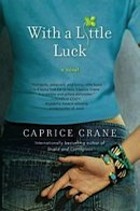
With a Little LuckCaprice Crane, With a Little Luck

Classic rock DJ Beryl “Berry” Lambert claims she doesn’t believe in luck; but thanks to her gambling-addict father, she has a superstition for almost every occasion. She wears a horseshoe necklace at all times, is appalled when someone opens an umbrella indoors, and believes bad luck comes in threes. So when perpetually single Berry goes on two promising first dates that both end in disaster, she’s convinced that her next boyfriend will be equally unlucky. But then she meets Ryan Riley, a successful “relationship expert” who works at her radio station, and their on-air squabbling soon takes a flirtatious turn. Ryan seems like the perfect guy — witty, handsome, and tolerant of Berry’s superstitious quirks — but she is convinced that he’ll eventually reveal himself as bad-luck boyfriend number three. Is Berry doomed to be perpetually unlucky in love, or will she meet her match at last?

Ever since I read and really liked Crane’s first novel, Stupid and Contagious, I’ve been hoping to enjoy her subsequent books just as much, but I’ve always been disappointed. Sadly, With a Little Luck is no exception; it’s a decently-written chick lit novel, but that’s about all I can say for it. Maybe part of the problem was that I couldn’t relate to Berry at all. Her belief in random superstitions is just so extreme, and while it’s understandable that she would have baggage given her past, she seems determined to sabotage every good thing in her life. I also didn’t particularly warm to Ryan, who is a fairly two-dimensional character throughout the book. I couldn’t figure out what makes him tick or why he’s interested in Berry at all. Even as a person who loves fluffy romance, I still have to believe that the hero and heroine would fall for each other, and that just wasn’t the case here. If you’re a chick lit fan, you could do worse, but you could also do a lot better.

Review: The Girl Is Murder

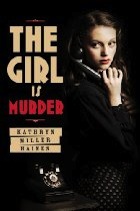
Girl Is Murder, TheKathryn Miller Haines, The Girl Is Murder

Fifteen-year-old Iris Anderson is having a hard time. About a year ago, her Pop returned from Pearl Harbor with a missing leg, which meant he was no longer able to do the active work required by his business as a private investigator. As a result, Pop and Iris have moved from their old affluent neighborhood to a poor area on the Lower East Side, and Iris has to go to public school instead of the elite private school she formerly attended. Hoping to get closer to her only surviving parent (her mother committed suicide shortly after Pop returned from the war), Iris tries to help Pop with his cases, but he forbids her from having anything to do with the PI business. When one of the boys at Iris’ new school goes missing, however, she can’t help but do a little sleuthing. Along the way, she makes a few friends at her new school, including the unpopular Pearl and the glamorous, fast-talking Suze; but as Iris navigates her way through various cliques and social minefields, how will she know whom she can really trust?

If you enjoy Haines’ Rosie Winter mysteries, you’ll feel right at home in the world of this novel, set in the fall of 1942. The book isn’t about World War II, yet the war permeates almost every aspect of Iris’ life, from the slang used by Suze and the other cool girls at school to the disturbing racisim and anti-Semitism espoused by some of the characters. (These attitudes are definitely not condoned by the book, however; they simply mirror the atttitudes of many Americans at that time.) I liked Iris as a protagonist; her problems are specific to her era yet also universal, as she struggles with her own identity, fitting in, and building a relationship with a distant parent. Her voice is occasionally too precocious for a 15-year-old, but I found that flaw forgivable since she’s so entertaining. As a mystery, the book is very weak; Iris doesn’t spend much time investigating anything, and she’s not even the one who solves the case! So I’d recommend this to someone looking for an interesting YA book about World War II, but it’s not a great read for a mystery fan.