Review: Just Like Heaven

Just Like HeavenJulia Quinn, Just Like Heaven

Lady Honoria Smythe-Smith is desperate to be married. Though she is part of a large, affectionate family, things have been very quiet in her parents’ house ever since her brother Daniel fled England after seriously wounding a man in a duel. Honoria longs to start her own family and once again feel surrounded by love; and as an added bonus, once she is married, she’ll no longer have to perform at the Smythe-Smiths’ infamous musicales. Meanwhile, Marcus Holroyd, the Earl of Chatteris, is Daniel’s best friend and has always felt more at home with the Smythe-Smiths than with his own distant family. Marcus and Honoria have always been friendly, but when a sprained ankle and a dangerous illness throw them together, they both begin to suspect that their relationship is deepening into something more.

I basically picked up this book for two reasons: 1) It shares a title with a really great Cure song, and 2) I’m a sucker for ridiculous British surnames. Fortunately, I ended up enjoying it quite a bit! Marcus is a delightful hero; he comes across as proud and brooding, but only because he feels shy and socially awkward (shades of Mr. Darcy!). And Honoria is a sweet girl with just enough humor to keep her from being insipid. Somewhat unusually for a Regency romance, most of this book doesn’t take place during the London Season; rather, Honoria spends a good portion of it nursing Marcus back to health from a life-threatening fever. Some might find the sickroom scenes tedious, but to me they underscored why Marcus and Honoria make such a great pair. All in all, I’d definitely recommend this light, quick read to fans of Regency romances, and I’ll probably pick up something else by Julia Quinn in the future.
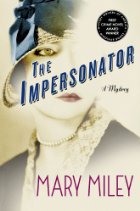
Review: The Impersonator

Impersonator, TheMary Miley, The Impersonator

Leah Randall is a talented but impoverished actress who has worked on the vaudeville circuit her whole life. During the course of one performance, she notices a strange man watching her intently. Eventually this man, Oliver Beckett, approaches her with an astonishing proposal. He tells Leah the story of his niece, Jessie Carr, heiress to a substantial fortune, who vanished from her home several years ago without a trace. Leah bears a striking resemblance to Jessie, so Oliver proposes a scheme: Leah will pose as Jessie and return “home” to claim her inheritance, which she will then split with Oliver. At first Leah wants nothing to do with it, but when she is fired from her vaudeville act and can’t get other work, she eventually reconsiders. With Oliver’s help, she assumes Jessie Carr’s identity and travels to the Carrs’ home in Oregon. But the more time she spends with the Carrs, the more she becomes determined to discover what really happened to Jessie all those years ago.

If you read that plot summary and thought, “That sounds an awful lot like Brat Farrar by Josephine Tey,” well, you’d be right. The premise is exactly the same — Miley even acknowledges that Tey’s novel was the main inspiration for her own — but I enjoyed Miley’s novel in its own right. I especially liked the period details about vaudeville, speakeasies, and other highlights of life in the 1920s. There were even references to some Supreme Court cases of the era, which I appreciated as a law school survivor. I also liked Leah’s narrative voice: she’s plain-spoken, independent, and very aware of both her talents and her flaws. The thing is, though, Brat Farrar is still by far the superior book. Miley’s novel is a bit disorganized at times, including several subplots that are more distracting than intriguing. I also hated the romantic aspect of this book; it was unbelievable and underdeveloped. I did enjoy the book overall and found it very readable, but if the premise sounds interesting to you, you should really just read the original instead!

Review: Life of Johnson

Life of JohnsonJames Boswell, Life of Johnson

James Boswell and Samuel Johnson were unlikely friends: Boswell was a young Scottish nobleman with a penchant for drinking and whoring, while Johnson was poorer, much more devout (in theory, at least), and a good 30 years older. Yet throughout the course of this monumental work, Boswell describes his reverence for Johnson’s intelligence, morality, and literary talents — a reverence so extreme that Boswell took notes on almost every conversation he ever had with the older man. As a result, this biography is stuffed full of Boswell’s personal anecdotes, letters both to and from Johnson, and first-person accounts of other contemporaries who knew him. Near the end of the book, Boswell states: “The character of Samuel Johnson has, I trust, been so developed in the course of this work, that they who have honoured it with a perusal, may be considered as well acquainted with him.” And indeed, anyone who reads this book will come away with an extremely vivid picture of a remarkable man.

This book is so huge and deals with so many things that I don’t quite know what to say about it. At first I was very intimidated, both by its length and by Boswell’s flowery 18th-century prose. But even though it’s not a quick read, this book contains a wealth of fascinating details about Johnson and the age in which he lived. I was struck by how literary the 18th century was, in the sense that seemingly anyone with a claim to intelligence was churning out books and pamphlets. In that way, Johnson’s time is very similar to our own, where everybody can (and does) publish blogs, tweets, and other forms of instantaneous literature. I was also fascinated by Johnson’s unique character; though intelligent, he was often pompous, narrow-minded, and abrasive. I frequently found myself underlining various Johnsonian sayings that were wise, or funny, or both — but I would have hated to be forced to converse with him! Overall, I would recommend this book to anyone interested in the time period or who enjoys very thorough biographies!

Review: Whom the Gods Love

Whom the Gods LoveKate Ross, Whom the Gods Love

Alexander Falkland, one of the darlings of English society, has just been murdered — bashed over the head with a poker in the middle of a party at his own house. The Bow Street Runners are at a loss to discover the killer; after all, who would want to murder a man who was universally liked? When the official investigation goes nowhere, Alexander’s father enlists the help of Regency dandy/sleuth Julian Kestrel. As a man of Alexander’s own social class, Julian has unique access to his friends and associates that the Bow Street Runners could never obtain. Julian agrees to take the case, but he warns Alexander’s father that unpleasant truths might emerge. And indeed, the further Julian digs into Alexander’s life, the more shocking secrets he uncovers, including several motives for murder.

I absolutely loved the first two books in the Julian Kestrel series, and I’m thrilled to be able to say that I loved this one as well! The strength of most mystery series depends on the protagonist, and Julian Kestrel is a wonderful sleuth: intelligent, intuitive, willing to cooperate with the police (a rare trait!), and always impeccably dressed. I also think this book is very well-plotted. Obviously there is more to Alexander Falkland than meets the eye, but the various twists and turns of the plot kept me in suspense until almost the very end of the book. My only problem with the book is that I really liked one particular character who ended up doing a horrible thing in the course of the plot. Because of this, the resolution of the mystery wasn’t completely satisfying for me; but I suppose that’s a testament to the author for making me care so much about that character! In short, I’d definitely recommend this book (and the entire series) to anyone who enjoys mysteries or historical fiction!

Review: Asleep in the Sun

Asleep in the SunAdolfo Bioy Casares, Asleep in the Sun (trans. Suzanne Jill Levine)

Lucio Bordenave is a fairly ordinary, contented man who lives with his wife, Diana, and an old servant called Ceferina. His life is not without problems, however, and most of them center around Diana, who is very high-strung and always seems to be unhappy about something. Lucio protests that he loves his wife and is generally happy in his marriage…but when a doctor from the nearby sanatorium suggests that Diana might benefit from a short treatment there, Lucio finds himself agreeing. Diana accordingly goes to the mental hospital, and when she returns, she is joyful, loving, and contented. At first, Lucio is pleased with Diana’s “cure,” but eventually he begins to feel that something is not quite right. But when he attempts to get more information from the mental hospital, he is propelled into a nightmarish state of confusion that culminates in his learning the shocking truth.

This is my first book by Bioy Casares, and I’ve read almost no South American literature, so I honestly had no idea what to expect. Overall, I was pleasantly surprised by this weird little novel. I really liked the narrative structure: Lucio is the narrator for most of the book, and the first page reveals that he is writing to an old acquaintance for help — so you know right away that something has gone terribly wrong. The framework also inevitably raises questions about Lucio’s reliability; is he lying, or has he possibly gone mad from worrying about a perceived difference in his wife that doesn’t really exist? An interesting ambiguity is maintained for most of the novel, but in the end — fortunately, from my point of view — the truth is revealed. I’m not opposed to ambiguous endings in certain circumstances, but I’ll admit that in general, I prefer to have some level of closure. I also want to note that most editions of this book have HUGE spoilers in the cover blurb; the NYRB edition is an especially egregious offender. For this reason, I’d encourage people to avoid plot synopses as much as possible and go into the book “blind”; I promise you’ll enjoy it more that way!

Review: Un Lun Dun

Un Lun DunChina Miéville, Un Lun Dun

Zanna and Deeba, two seemingly ordinarly pre-teen girls, are suddenly thrust into an unfamiliar world when they follow an umbrella into a dark London basement and emerge in Un Lun Dun. Un Lun Dun is an “abcity,” part of a universe that parallels our own but has many significant differences. (For example, giraffes aren’t exactly harmless herbivores in Un Lun Dun….) At first, Zanna and Deeba only want to go home; but they soon learn that Un Lun Dun is under attack by the evil Smog, and Zanna is supposed to be the “Schwazzy,” or chosen one, who will fulfill an ancient prophecy and defeat it. The girls are willing enough to help, but when their first encounter with the Smog goes terribly wrong, it’s up to Deeba, rather than the chosen Zanna, to save the day.

This was my first encounter with Miéville, and I’m thinking it won’t be my last. If you enjoy detailed world-building and clever puns, this is definitely a book for you! The world of Un Lun Dun is wildly inventive, from the trash-can warriors known as “binjas” to the flying buses to the “extreme librarians” who populate the abcity. You may think the book sounds a lot like Gaiman’s Neverwhere, what with the alternate London setting, but I was actually reminded a lot more of Jasper Fforde. The plot itself is rather predictable, but it’s still a fun ride to follow Deeba as she figures out who her real allies and her real enemies are. Some may find the book a bit preachy on the issue of environmentalism — the villain is literally called Smog, after all — but since this book is aimed toward younger readers, I suppose the message shouldn’t be too subtle! All in all, I found this book very entertaining, and I’m interested to try some of Miéville’s adult novels now.

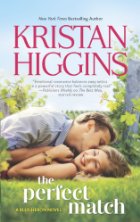
Review: The Perfect Match

The Perfect MatchKristan Higgins, The Perfect Match

Practical, reliable Honor Holland has been in love with her longtime best friend, Brogan Cain, since high school. But when she goes to the gynecologist on her 35th birthday (because that’s the kind of girl she is), the doctor tells her that she should think about having children soon if she wants to be a mom. Honor realizes it’s time to get serious about her love life, but her hopes for a romance with Brogan are dashed when he rejects her. Meanwhile, Tom Barlow is a British college professor whose visa is about to expire. He’s desperate to stay in America to be near his “almost-stepson” Charlie — even though Charlie is a sullen, withdrawn teenager who seems to want nothing to do with him. With a little help from some matchmaking friends and family, Honor and Tom decide to form a marriage of convenience; this will enable Tom to stay in America, and Honor will get a chance at motherhood. But all too soon, sparks start flying between them. Can Honor and Tom move past their baggage and insecurities to turn their fake relationship into something real?

I’m a big fan of Kristan Higgins’ light, witty contemporary romances, and this book is no exception. It’s a sequel of sorts to The Best Man, and there are welcome cameos from Honor’s sister, Faith, and the rest of the Holland clan. I really like books that feature big, rambunctious, mostly functional families; it’s very rare in fiction, unfortunately, and I found it a refreshing change. I also tend to enjoy the “fake relationship becomes real” romantic trope, although here I was a little confused about the setup. Honor agrees to marry Tom on the condition that they will both give the marriage a real effort, to see if something can grow between them. But that seems like an awfully big risk to take, especially since Honor is hoping to get a child out of the deal. Aside from that, though, I have no complaints! The romance is very well-written and well-developed, as usual in a Higgins novel. There are a few “adult” scenes, but nothing too explicit. I even liked Charlie, even though I usually hate the way children are portrayed in adult novels (too precocious, too sickeningly sweet, too much of a blatant plot device rather than a real character). All in all, I’d definitely recommend this book to fans of contemporary romance! You may want to pick up The Best Man first, but it’s definitely not necessary to follow this book.

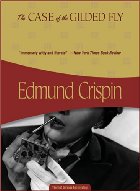
Review: The Case of the Gilded Fly

The Case of the Gilded FlyEdmund Crispin, The Case of the Gilded Fly

In 1940s England, a theater troupe converges upon Oxford to produce a new play by acclaimed playwright Robert Warner. One of the actresses, Yseut Haskell, is a beautiful girl who has attracted many admirers, but her outward appearance masks a cruel and self-absorbed personality. The other people involved with the play are frankly sick of her attitude, especially when she begins to stir up trouble within the company. So it’s not particularly surprising when Yseut is subsequently found murdered — in fact, nearly everyone in the theater company expresses relief that she’s finally gotten what she deserved. In the midst of this tense situation, Oxford don Gervase Fen uses his passion for criminology and his friendship with policeman Sir Richard Freeman to investigate the murder. As he talks to the various suspects and uncovers some unpleasant secrets, he begins to wonder whether exposing the murderer is really the best course of action.

This is a fairly typical Golden Age mystery, and as a fan of that genre, I enjoyed this book. I found Gervase Fen entertaining, although he wasn’t as prominent in the book as I expected he’d be; much of the story is told from the viewpoint of Nigel Blake, a young man who becomes involved with the theater troupe and falls in love with one of the actresses. I can see why Crispin chose that approach, though, because Fen claims to have solved the murder within three minutes of viewing the body! I also found Fen’s qualms about exposing the murderer very interesting. In many mysteries, it’s taken as a matter of course that the murderer should be unmasked and brought to justice; however, in this case the victim is a truly unpleasant person, and many of the characters think that the murderer did them a favor. Finally, I was struck by the fact that this really doesn’t feel like the first book of a series; there are several allusions to Fen’s past cases, and as I mentioned before, his character isn’t particularly fleshed out. Nevertheless, there are a few more Gervase Fen books, and I’ll probably seek them out at some point.

Review: An Old Betrayal

An Old BetrayalCharles Finch, An Old Betrayal

***Warning: SPOILERS for previous books in the series!***

Charles Lenox, Victorian gentleman and Member of Parliament, thinks he has left his former life as a detective behind. But when his aristocratic protégé, John Dallington, asks him for help with a prospective client, Charles is eager to lend a hand, leaving his work in the House of Commons behind. Since Dallington is laid up with a bad cold, Charles agrees to meet the prospective client in his place; but before Charles can make contact with the client, a young woman named Grace Ammons, she is scared away by a mysterious man. Eventually Charles learns that Grace has connections to Buckingham Palace, and he suspects a possible plot to steal the priceless items within it. But when the man who frightened Grace Ammons is later found murdered, Charles realizes that the plot against the palace is more shocking and deadly than he ever imagined.

This is the seventh Lenox mystery, and in my opinion, the series is still going strong. One of my biggest complaints about the last couple installments has been the neglect of the secondary characters, but this book gives them a lot more attention. There is a significant subplot involving Charles’ medical friend, Thomas McConnell, and Dallington (my favorite character!) is also prominently featured. I also largely enjoyed how the mystery plot unfolded in this book; unsurprisingly, the murder and the threat to Buckingham Palace turn out to be connected, and there are many clever twists and turns along the way. But I think my favorite aspect of this novel is how it ends: there are a lot of big changes for Lenox and his friends in this book, and in my opinon, they’re changes for the better. I’m really looking forward to seeing where the series goes from here!

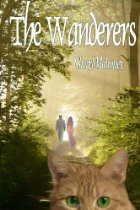
Review: The Wanderers

The WanderersCheryl Mahoney, The Wanderers

Jasper is a wandering adventurer-for-hire, fighting monsters and rescuing damsels in distress — for a fee. He stays in one place just long enough to collect his reward; he never sticks around for the happily-ever-after part. He doesn’t want any emotional entanglements, and he’s got a whole list of Rules to keep him suitably detached. But when a seemingly ordinary battle against an evil magician introduces Jasper to a talking cat, he finds himself breaking Rule 18 (always travel alone) and making a friend in the process. Things get even more complicated when one of the damsels Jasper rescues demands to join him on his adventures. Julie is determined, thirsty for adventure, and desperately afraid of her (literal) witch of a mother. As Jasper, Julie, and Tom the cat continue to travel in search of wrongs to right, Jasper finds it harder and harder to follow the Rules. Will this unlikley team be able to conquer their personal monsters and find their way to their own happy ending?

This is the debut novel of a blogger I follow, Cheryl Mahoney at Tales of the Marvelous. It’s always a little nerve-wracking to read a book by someone you know — even someone you only know on the Internet — but I’m happy to say that I found this book absolutely delightful! I loved Jasper as a protagonist, with his stubborn practicality and his long list of Rules. I like that he’s brave but not foolhardy; he knows that walking away from a fight you can’t win is sometimes the best choice. Julie is also a wonderful character, strong and capable but also legitimately fearful of her mother’s evil magic. Since she’s not invincibly tough all the time, I found her more relatable than many fantasy heroines. I also loved the world of this novel, which operates on fairytale-esque principles, but with some interesting twists. For example, third sons are normally fated to succeed on quests, but sometimes the son in question doesn’t quite have what it takes to get things done. Then there are the Good Fairies, who are actually much more dangerous than Bad Fairies when crossed. Ultimately, all I can say is that I finished this novel with a huge smile on my face. I would definitely recommend it to fans of this genre!

N.B. — The book is available as an e-book for Nook and Kindle, as well as through Amazon if you want a hard copy.