Review: Miss Manners’ Guide to a Surprisingly Dignified Wedding

Miss Manners' Guide to a Surprisingly Dignified WeddingJudith Martin & Jacobina Martin, Miss Manners’ Guide to a Surprisingly Dignified Wedding

In this book, which is apparently a revised and updated version of her earlier books on the subject, Miss Manners tackles the fraught subject of wedding etiquette. The modern wedding industry tends to use the term “etiquette” to justify a countless number of expensive, stressful, time-consuming tasks. But Miss Manners maintains that etiquette is just a fancy word for treating people with respect — and it has nothing to do with save-the-dates, unity candles, or wedding favors. Using her trademark saucy style, she answers questions on a variety of wedding-related topics and explains that a truly proper wedding is one that leaves both the betrothed couple and the guests as relaxed and joyful as possible.

I had never encountered Miss Manners before, and she definitely has a very distinctive style — sort of a tongue-in-cheek Austenesque tone. I can see how it would get on some people’s nerves, but I absolutely loved it! I also learned a lot of really interesting things about so-called wedding “traditions” that were unheard-of a generation ago. For example, here’s Miss Manners’ remark to a bride who was concerned about wedding favors: “Who told you that you had to give out wedding favors? Etiquette has never thought of weddings as comparable to children’s birthday parties where the guests might need consolation for not being the center of attention.” The problem is, even if favors are unnecessary, most people expect them and will think you’re rude if you don’t provide them. So I’m not sure how useful this book ultimately is…but it’s still a very entertaining read!

Review: The Three Musketeers

The Three MusketeersAlexandre Dumas, The Three Musketeers (trans. Richard Pevear)

This classic novel, whose title is somewhat misleading, follows a young solider named D’Artagnan who travels from his native Gascony to Paris in order to join the musketeers, an elite military force that serves the king. D’Artagnan naively believes that he will swiftly realize his dream and make his fortune, but his simple goal soon becomes much more complicated. Through a series of accidents he befriends the three most prestigious musketeers, Athos, Porthos, and Aramis. He also becomes involved in the struggle between King Louis XIII and Cardinal Richelieu, the two most powerful men in France. As a would-be musketeer, D’Artagnan is the king’s man, but his loyalty wavers when he meets the beautiful Milady, one of the cardinal’s most influential spies. With the help of his three friends, D’Artagnan must foil Milady’s sinister plot while fighting his own attraction for her.

I actually read this book when I was 12 or so, but I’m very glad I read it again now that I have at least some knowledge of the historical context! I find it very interesting that Dumas, who was writing in the 19th century (shortly after the Napoleonic era), chose to set this story during the 17th-century wars of religion, a similarly tumultuous time for France. But even without the bigger picture, this book is quite simply a rollicking good read! It’s a long book, but the story is gripping and seems to fly by. The strength of the book is definitely its plot; by contrast, the characters aren’t developed very well. It’s fun to watch D’Artagnan and the musketeers interact with each other, but they’re essentially stock characters (Athos is the noble one, Porthos is the buffoon, etc.). And Milady is an extremely flat villain who is Pure Evil ™ through and through. In my opinion, the scheming cardinal is by far the most interesting character! Regardless, I really enjoyed this book and would love to read the rest of the series…one of these years!

Review: A Practical Wedding

A Practical WeddingMeg Keene, A Practical Wedding: Creative Ideas for Planning a Beautiful, Affordable, and Meaningful Celebration

Meg Keene, creator of the blog A Practical Wedding, here sets forth her philosophy of weddings, which basically boils down to a few simple principles: (1) It’s not the greatest day of your life — or at least it shouldn’t be! (2) The only requirement for a perfect wedding is that you end up married at the end of it. And (3) it doesn’t have to cost your entire life’s savings! This book discusses wedding planning in light of these principles, from the engagement to the big day to the marriage that follows. It doesn’t delve too deeply into the details; for example, you’re not going to find a list of inexpensive-yet-chic venues or bakeries or stationery vendors here. Rather, this book takes a big-picture look at some of the most common wedding-related stressors and offers common-sense advice on how to rise above them.

Lately I’ve been very into wedding-related things. I watch all those bridal shows on TLC — “Say Yes to the Dress,” “Four Weddings,” “I Found the Gown,” etc. I’d like to blame some sort of external pressure, but I’m afraid I just like romantic stories and pretty dresses! While I enjoy these shows, though, I often find myself thinking that the women on them must be insane. Spending thousands of dollars on a wedding dress? Throwing a fit because the bridesmaids’ dresses don’t perfectly match the table linens? It’s a strange world we live in, folks. Well, this book is a wonderful antidote for all the wedding craziness out there! It really puts the wedding celebration in perspective without underrating the importance of marriage. It also offers advice on how to deal with the inevitable problems, like financial constraints and meddlesome relatives. I’m not married or engaged right now, but if and when I do take the plunge, I’ll definitely be referring to this book again!

Review: A Death in the Small Hours

A Death in the Small HoursCharles Finch, A Death in the Small Hours

Victorian gentleman and amateur detective Charles Lenox has largely given up sleuthing in the pursuit of other interests. A rising member of Parliament, he’s just been asked to give the opening speech for the next session — a very great honor that fills him with both pride and anxiety. But when his uncle, a well-to-do country squire, writes him a letter describing some recent acts of vandalism, Charles is tempted to return to his previous life of detection. He eventually accepts his uncle’s invitation, reasoning that a little time away from London will give him the peace and quiet necessary to work on his speech. When petty vandalism escalates to murder, however, Charles must use all his former skills to uncover the sinister secrets lurking within his uncle’s village.

I always enjoy the Charles Lenox mysteries, but I think this one is a bit of a weak link. My biggest complaint is that the mystery is very perfunctory and almost uninteresting. Although the solution was creative, with the appropriate number of red herrings and so forth, I just didn’t seem to care about it very much! To be fair, the main purpose of the book seems to be Charles’ internal development rather than the external mystery: he is beginning to learn that being a member of Parliament isn’t the dream career he thought it would be. I do love Charles’ character and am interested to see what will happen to him next; I was also very glad to see more of Dallington and would love to see him take a central role in upcoming books! Overall, I definitely plan to continue the series, but this is not one of the strongest installments.

Review: Spirit’s End

Spirit's EndRachel Aaron, Spirit’s End

***Warning: SPOILERS for previous books in this series!***

At the end of The Spirit War, the only thing that stood between the tiny island kingdom of Osera and total annihilation was Eli Monpress. To save his friends, Eli did the one thing he swore he’d never do: ask the Shepherdess for help. Now Eli is forced to live in the Shepherdess’ isolated realm and submit to her marks of favor while the world around him falls apart. Someone is stealing stars, the world’s strongest spirits, which is throwing the lesser spirits into a panic. Miranda is trapped in a power struggle with the Spirit Court, Josef is taking up the reins of kingship, and Nico is still fighting against the demon inside her. But this scattered group of allies must band together to face their biggest challenge yet, which just might be the end of the world.

As the convoluted summary should make clear, this is definitely not a stand-alone novel! Rather, this book is the conclusion to the Eli Monpress quintet, and it finally resolves the overarching plot elements of the series. It was nice to get some answers to the big questions raised in previous books about who is really running the universe and what the powers of Eli’s world are up against. That said, I was a little disappointed in this book; it felt bloated and unfocused, and it spent too much time on action sequences rather than character development. I absolutely loved the first three books in this series, and I think it’s because they were very tightly focused and had a clearly defined world. In the last two books, the story became a bit too epic, if that makes sense. The uniqueness of Eli and his world were sacrificed to the tired fantasy trope of a huge good-vs.-evil battle. Overall, I’m glad I read this book because it concluded the series, but I wish Aaron had taken things in a different direction.

Review: The Innocents

The InnocentsFrancesca Segal, The Innocents

Adam Newman is a successful young lawyer living in the posh London suburb of Temple Fortune, home of a tightly-knit Jewish community. He is about to marry Rachel Gilbert, his childhood sweetheart and a thoroughly suitable girl in every way. The Newmans and the Gilberts have been friends for many years, and the entire community of Temple Fortune has embraced Adam and Rachel’s upcoming marriage. The only discordant element in their plans is Rachel’s cousin, Ellie Schneider, who has recently returned to London to avoid a scandal from her life in New York. Adam disapproves of almost everything about Ellie, yet he finds himself strongly attracted to her. The more time he spends with her, the more his safe and secure world begins to unravel. But can Adam really choose Ellie if it means leaving Rachel, her family, and Temple Fortune behind forever?

When I first heard about this book and realized that it was a contemporary retelling of The Age of Innocence, I was immediately intrigued because I love Wharton’s novel. Although I was skepitcal at first, I think Segal did a wonderful job of taking the same plot and transposing it to a contemporary setting. I didn’t find Adam to be the most likeable character, but the book depicts his struggle in such a compassionate light that it was easy to understand his conflicting desires. I also loved the portrayal of the Temple Fortune community, with its focus on family, shared values, and food. (Seriously, the food! Fair warning, this book will make you hungry!) I wasn’t totally sold on the character of Ellie and couldn’t quite see why Adam was so strongly drawn to her. But I really liked the fact that there were no easy answers; one minute I was rooting for Adam and Ellie, but the next I was feeling sympathy for Rachel. The ending is very bittersweet and poignant, just as in the original novel. Overall, I enjoyed this book and would recommend it to those who liked The Age of Innocence.

Review: Spies and Prejudice

Spies and PrejudiceTalia Vance, Spies and Prejudice

Berry Fields isn’t exactly your typical teenage girl. Working as an assistant for her P.I. father, Berry is more likely to spend her weekend tailing a suspect than hanging out at the mall. She has also caught so many cheating boyfriends and husbands in the act that she doesn’t fully trust any of the guys she meets. So when drop-dead gorgeous Tanner and his stepbrother Ryan show up at her school, Berry is immediately suspicious and hostile — especially when she overhears Tanner dismiss her as “nothing amazing.” Meanwhile, Berry continues to grieve for her mother, who died eight years ago in a supposed accident. But Berry can’t help suspecting that there’s more to the story…and the more time she spends with Tanner, the more she’s convinced that he’s hiding something.

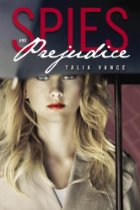
First off, this is definitely not a book you want to judge by its cover (which is pretty awful, am I right?). It has been described as a cross between Pride and Prejudice and “Veronica Mars,” and if that concept appeals to you, I think you’ll enjoy this book! I found Berry a very believable and interesting character, and her investigation into her mother’s death was a great way to propel the story forward. The romance between her and Tanner was well done, not too melodramatic or sappy, and the mystery balanced out the love story very well. I didn’t 100% understand the final solution to the mystery, but I was reading pretty quickly by that point, so I probably just missed a few background facts along the way. Finally, I really liked the way P&P was incorporated into the story; there’s enough for Austen fans to pick up on and appreciate, but it’s not an exact replica of the original plot. I like the fact that this book uses the P&P framework but incorporates its own spin. Definitely recommended to YA and Austen fans!

Review: This Burns My Heart

This Burns My HeartSamuel Park, This Burns My Heart

This novel, set in 1960s South Korea, tells the story of Soo-ja, the daughter of a wealthy factory owner who has never had to work for a living. She longs to become one of South Korea’s first female diplomats, but her family wants her to uphold tradition by making an advantageous marriage. When Soo-ja meets the handsome Min Lee, she’s convinced she’ll have the best of both worlds: She will be married to an attractive young man, and she’ll be able to move to Seoul and pursue her dreams. But when she marries Min, she learns that she is expected to stay in the house and be a servant for her new in-laws. As Soo-ja comes to terms with her new life, she remembers the young medical student who once urged her to marry him instead of Min, and she wonders how different her life could have been if she’d made a different choice.

I found this book very readable at the time, but the more I think about it, the fewer good things I can find to say about it. I just didn’t really feel like I got to know any of the characters…something about the tone of the novel kept me at a distance. The book was (as far as I know) originally written in English, but it feels like a translation, if that makes sense. The language was too simplistic, maybe? I also thought that the character portrayals were too black-and-white — Soo-ja’s in-laws are basically portrayed as monsters, while it seems like Soo-ja is supposed to be always right. Personally, I didn’t find her very sympathetic, so maybe that’s why the book didn’t work for me. I don’t mean to sound harsh; I don’t think this is a bad book, by any means. It just wasn’t the right book for me, and I don’t plan to seek out more by this author.

Review: Operation Mincemeat

Operation MincemeatBen Macintyre, Operation Mincemeat: How a Dead Man and a Bizarre Plan Fooled the Nazis and Assured an Allied Victory

This book about a World War II intelligence operation proves once again that truth is stranger than fiction. In the spring of 1943, the Allies hoped to invade a Europe that was firmly in control of the Nazis. The obvious target for an invasion was Sicily, but unfortunately, the Germans knew this all too well. So a few creative members of British intelligence came up with a daring plan, codenamed “Operation Mincemeat”: They would float a dead body wearing a British uniform onto a Spanish beach. This corpse would be carrying top-secret — and totally false — documents stating that the Allies were planning to launch a two-pronged attack against Greece and Sardinia; Sicily would only be a “decoy” target. Since neutral Spain had pro-German sympathies, it was hoped that the Spaniards would turn over these documents to the Germans and thus convince the Axis to rearrange their defensive forces. This book tells the story of this extraordinary plan and its even more extraordinary success.

I’m not normally a big reader of nonfiction, but the premise of this book caught my attention right away, and I’m really glad it did! This is an extremely readable and entertaining account of a plan so farfetched, it couldn’t possibly be true — except it is. The book covers every aspect of Operation Mincemeat with meticulous attention to detail, describing everything from the difficulties of acquiring an appropriate body to the creation of a fictitious identity for the corpse to the various personalities who contributed to the formation of the plan. To me, one of the most astonishing things about the operation was how easily everything could have gone wrong. What if the Spanish authorities had returned the documents to the British immediately (as, indeed, some of them tried to do)? What if the Germans had been skeptical of this intelligence instead of eagerly grasping at a welcome piece of news? In short, this is a well-written account of an absolutely fascinating subject. I definitely plan to read more by Ben Macintrye — Double Cross: The True Story of the D-Day Spies is already on my wishlist!

Review: Dark Triumph

Dark TriumphRobin LaFevers, Dark Triumph

This installment of the His Fair Assassin trilogy features Sybella, a novice of the convent of St. Mortain whose troubled past has driven her to the edge of madness. Chafing under the convent’s restrictions, Sybella is eager to receive her first assignment…until she learns that she’ll be staying in the household of the traitor D’Albret, who is waging war against the rightful duchess of Brittany. Not only is D’Albret faithless and cruel, but he also happens to be Sybella’s own father, the man who has made her entire life miserable. Sybella’s only hope is that the convent will allow her to kill him, but her actual orders are very different: She must rescue the Beast of Waroch, a skilled knight who is vital to the duchess’ cause, from D’Albret’s dungeons. As Sybella and the Beast engineer their escape, they begin to develop a strong bond. But will they reach the duchess in time to inform her of D’Albret’s latest treachery?

This book is very hard to summarize, mostly because it’s the second book in a series, and it definitely does not stand alone. The action essentially begins where the first book left off, and most of the major players have already been introduced. So if the premise of this book sounds interesting to you, I would definitely go back and read Grave Mercy first! If you’ve already read and enjoyed it, you’ll like this one too. As with the first book, there’s a nice mix of action, political maneuvering, and romance. I liked Sybella’s character but wished that the Beast had been fleshed out more; for this reason, I wasn’t totally captivated by the love story. The overarching plot of the duchess vs. D’Albret continues to be interesting, and I look forward to seeing what happens in the third book. I also want to learn more about the convent and its role in the political turmoil; there is definitely more going on there than meets the eye! As you can tell, I’m invested in the world of this series, and I highly recommend it to fans of YA and historical fantasy.