Review: To Know Christ Jesus

To Know Christ JesusFrank Sheed, To Know Christ Jesus

“This modern spiritual classic by Frank Sheed, the renowned author, publisher and lecturer, is brought back into print for the benefit of new generations of readers to develop a deeper, more profound knowledge of Jesus Christ. Sheed’s concern with the Gospels is to come to know Christ as he actually lived among us, interacted with all the various people he encountered from his infancy to his passion and death–the God-man who was like us in all things except sin. Sheed has tried especially to see Our Lord in his effect upon others–seeing how they saw him, trying to see why they saw him so. There is much about Mary and Joseph in their task of bringing up a baby who was literally adorable; about John the Baptist; about Mary of Bethany and Mary Magdalen; about Nicodemus; about people we meet only for a moment, like the man born blind and the owners of the drowned swine; and why the Pharisees, not only the worst of them but some of the best, would not accept Christ. Faith, doctrine, prayer, worship–all the content and consequences of Christian belief–rest on the person of Christ Jesus as recorded in the Gospels.” (Summary from Amazon.com.)

This book does pretty much what it says on the tin: it examines Jesus’s life and teachings as recorded in the four gospels. I really appreciated this deep dive into Scripture, and it definitely gave me a lot to think about. Sheed discusses the historical context of Jesus’s life, including the Roman occupation of Palestine, background on the Pharisees and Sadducees, and contemporary expectations of who the Messiah would be. He also interprets Jesus’s words about the “kingdom of God” in a very interesting and (to me) unique way. This book is definitely written from a Catholic perspective, which may annoy other Christian readers, but I think the focus on the Biblical text would be appreciated by Christians of all denominations. Overall, I would recommend this book to Christian readers and think it might make good supplemental material for a Bible study.
Review: Unapologetic

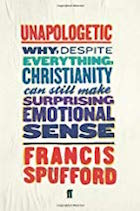
UnapologeticFrancis Spufford, Unapologetic: Why, Despite Everything, Christianity Can Still Make Surprising Emotional Sense

“Francis Spufford’s Unapologetic is a wonderfully pugnacious defense of Christianity. Refuting critics such as Richard Dawkins, Sam Harris, and the “new atheist” crowd, Spufford, a former atheist and Fellow of the Royal Society of Literature, argues that Christianity is recognizable, drawing on the deep and deeply ordinary vocabulary of human feeling, satisfying those who believe in it by offering a ruthlessly realistic account of the grown-up dignity of Christian experience.” (Summary from Amazon.com.)

A coworker recommended this book for my Lenten spiritual reading project, and I honestly had no idea what to expect, but I ended up liking it quite a bit. As the summary blurb indicates, Spufford is in some sense responding to popular atheist writers like Richard Dawkins and Christopher Hitchens; so the book’s tone is conversational, informal, and peppered with swear words. Spufford isn’t concerned with making logical arguments in favor of Christianity. Rather, he describes how it fulfills people’s emotional needs in a way that (in his opinion) modern secular culture doesn’t. I liked the premise and found the book a quick, enjoyable read. It doesn’t go into very much depth about Christian theology, but that might make it more accessible to a secular audience.

Review: God or Nothing

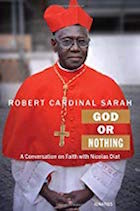
God or NothingRobert Cardinal Sarah and Nicolas Diat, God or Nothing: A Conversation on Faith (trans. Michael J. Miller)

“In this fascinating autobiographical interview, one of the most prominent and outspoken Catholic Cardinals gives witness to his Christian faith and comments on many current controversial issues. The mission of the Church, the joy of the gospel, the heresy of activism , and the definition of marriage are among the topics he discusses with wisdom and eloquence.” (Summary from Amazon.com.)

I read this as part of my Lenten spiritual reading project, but I must say, it isn’t quite what I expected. I thought it would focus on theology and Christian living, but it reads much more like a memoir or autobiography. I did find the story of Cardinal Sarah’s life fascinating; he was born in a small village in Guinea, was educated by French missionary priests, and eventually joined the priesthood himself. I was especially interested in his time as a bishop, during which he often came into conflict with the Communist regime of Sékou Touré. Ultimately, I think this is a good read for people who are interested in the history of postcolonial Africa and/or the institutional history of the Catholic Church. But it’s not great for devotional reading or for learning more about Catholic doctrine.

Review: Reflections on the Psalms

Reflections on the PsalmsC.S. Lewis, Reflections on the Psalms

“In this wise and enlightening book, C. S. Lewis—the great British writer, scholar, lay theologian, broadcaster, Christian apologist, and bestselling author of Mere Christianity, The Screwtape Letters, The Great Divorce, The Chronicles of Narnia, and many other beloved classics—examines the Psalms. As Lewis divines the meaning behind these timeless poetic verses, he makes clear their significance in our daily lives, and reminds us of their power to illuminate moments of grace.” (Summary from Amazon.com.)

As the title indicates, this book is a collection of C.S. Lewis’s reflections on the psalms. His thoughts aren’t presented in a systematic way; he doesn’t go through every psalm in order, for example. Instead, he discusses some themes that struck him personally in his reading and prayer. The end result is somewhat disjointed — I think this is one of Lewis’s lesser-known works for a reason — but I still found plenty of food for thought. His ideas about some of the psalms’ more surprising elements, such as the cursing of one’s enemies, make a lot of sense. He also discusses how 20th-century Christian interpretations might differ from (or, from his perspective, enhance) the psalmists’ original intention. Overall, I’m glad I read this, especially since Psalms is one of my favorite books in the Bible, but I’d recommend that newcomers to Lewis start elsewhere.

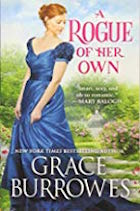
Review: A Rogue of Her Own

Rogue of Her OwnGrace Burrowes, A Rogue of Her Own

Charlotte Windham hates London “society” life and has suffered through too many seasons of being envied by other women (because of her titled connections) and dodging the proposals of fortune hunters. Meanwhile, Lucas Sherbourne is a commoner whose substantial wealth has gained him entrance into society, but he is still acutely aware of his lower status in the eyes of the aristocrats surrounding him. The two decide to embark upon a marriage of convenience: Charlotte will have a wealthy husband and a secluded Welsh estate to call home, while Lucas will benefit from marrying into a noble family. Of course, there’s no question of love; but as Lucas tries to jump-start a new coal mine and Charlotte gives her spending money to “fallen” women, they find themselves turning to each other for support and understanding.

I find myself very confused about this book, because the things I really liked about it are also the things I disliked about it! For example, I liked that the book has a lot of plot (trouble with the coal mine, Charlotte’s charitable giving, the backstory of why she’s so passionate about helping women in trouble), but I also felt that the romance suffered because of it. I also liked that both Lucas and Charlotte have friends and family who support them; I especially enjoyed the development of Lucas’s friendship with his aristocratic neighbors. But again, those relationships almost felt more central than the romance. I also thought some of the plot twists and turns were a little melodramatic. Overall, I liked this book for having characters with their own interests and lives outside of one another…but I think I wanted a little more of them together, too! That said, I’d definitely be willing to try another book by Grace Burrowes.

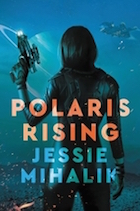
Review: Polaris Rising

Polaris RisingJessie Mihalik, Polaris Rising

Ada von Hasenberg is a princess on the run. The universe is ruled by a Consortium of noble Houses, of which the von Hasenberg family is one of the most powerful. As a result, Ada’s duty is to marry for her House’s political advantage, but rather than accept her fate, she’s determined to carve her own path. Unfortunately, she’s captured by a mercenary ship and forced to share a cell with Marcus Loch, the so-called Devil of Fornax Zero. Loch is said to have butchered his regiment in a past military action, so he has a price on his head almost as big as Ada’s. Now, Ada and Loch must work together to escape captivity — but when her fiancé, the son of a rival House, comes looking for her, Ada begins to suspect that more than a marriage is at stake. To figure out what’s going on, she’ll need Loch’s help, even though she’s finding it harder and harder to fight her attraction to him.

I found it hard to summarize this book because it’s chock full of plot. All you really need to know is that this is a very entertaining, page-turning sci-fi/romance adventure, and I really enjoyed it. Ada is a strong heroine, but not one of the obnoxious variety; she’s not incredibly amazing at everything, nor does she rush into decisions without thinking carefully about them first. One of my favorite details was how she always (smartly) checks for bugs and tracking devices when she enters an unfamiliar environment. I also found the overall plot compelling, albeit a little predictable. I wasn’t as enthralled with the romance — Loch is a pretty stereotypical alpha male (although not a jerk, which is nice!), and since the book is only told from Ada’s point of view, I felt I didn’t get a good insight into what makes him tick. Their relationship doesn’t seem to be based on anything more than physical attraction, so it fell a little flat for me. Nevertheless, this was a really fun read for me, and I look forward to reading the next book in the series when it comes out this fall!

Review: The Golden Tresses of the Dead

Golden Tresses of the DeadAlan Bradley, The Golden Tresses of the Dead

***Warning: SPOILERS for previous books in the series***

Flavia de Luce is at it again in this 10th book of the series. Her older sister Feely is finally getting married, and Flavia is surprised to find that she has mixed emotions about Feely’s leaving Buckshaw. But her inner turmoil soon becomes the least of Flavia’s concerns when, at the reception, she discovers a human finger in the wedding cake. Of course, Arthur W. Dogger and Associates are on the case — and of course, a second mystery presents itself soon afterward, involving a famous homeopathic doctor and two female missionaries who have recently returned from West Africa. As Flavia investigates, with the help of faithful Dogger and annoying cousin Undine, she realizes that the two cases may be connected.

Is it just me, or did the mystery plot of this book make even less sense than usual? One character dies in the novel, but I don’t think we ever find out for sure who the murderer was or how the killing took place. Another dies off-page, and it’s not actually clear what the cause of death was — murder, natural causes, something else? Maybe I wasn’t paying close enough attention, but I felt like there were a lot of loose ends with this plot. Nevertheless, I very much enjoyed the book for Flavia’s voice and her relationships with the other characters, particularly Dogger. I also like the fact that she’s slowly gaining more self-awareness as she grows up, and I hope to see that trend continue in subsequent books. So I actually did like this novel overall, but it’s not a book (or series, really) to read for the mystery.

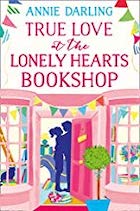
Review: True Love at the Lonely Hearts Bookshop

True Love at the Lonely Hearts BookshopAnnie Darling, True Love at the Lonely Hearts Bookshop

Despite her job at a bookstore specializing in romantic fiction, Verity Love is happy being single. But her well-meaning friends continue to set her up with every single man they know, and Verity’s tired of it—so tired, in fact, that she’s invented a fake boyfriend to deter their matchmaking. When her friends insist on meeting him, however, she quickly realizes she needs a real person to substantiate her scheme. Enter Johnny, a handsome stranger who also wouldn’t mind having a fake girlfriend to prevent being set up by his own interfering friends. Verity and Johnny agree to be each other’s dates to various social functions for one summer, at the end of which they’ll amicably part ways. But of course, the more time they spend together, the more blurry the boundaries of their relationship become.

Every chapter of this book begins with a quote from Pride and Prejudice, which immediately told me that I’d either love it or hate it. I’m happy to say that I mostly loved it, although occasionally the book does get a bit too twee and cutesy for its own good. But I really liked and related to Verity as a character; she’s an extreme introvert who needs alone time to recharge, but with her large, loving-but-noisy family, she never gets enough of it. As an introvert myself (though definitely not to Verity’s level), I empathized with her when she just couldn’t handle any more socializing. I also love a good “fake relationship” plot, so I was on board for Verity and Johnny’s romance. I was very pleasantly surprised by the writing style as well, give or take a minor copyediting error. Overall, this novel is just the charming, fun romance I was hoping for, and I’m definitely interested in reading the other books in this series at some point.

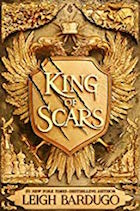
Review: King of Scars

King of ScarsLeigh Bardugo, King of Scars

***Warning: SPOILERS for the Grisha trilogy and the Dregs duology!***

Nikolai Lantsov, King of Ravka, is trying to lead his country in the wake of its devastating civil war. But he faces threats of invasion by the powerful Shu and the Grisha-hating Fjerdans, the rise of a new cult that worships the Darkling as a saint, plus the possibility that Kerch might call in Ravka’s staggering debts. And then there’s the fact that Nikolai is sharing his body with a demon that hungers for human flesh. Hoping to rid himself of the monster inside him, Nikolai and his Grisha general, Zoya, travel to the heart of the Fold to perform an ancient—and possibly deadly—ritual. Meanwhile, Nina Zenik is a Ravkan agent helping to rescue Grisha from Fjerda. She’s also grieving the death of Matthias, but she finds a new purpose when she discovers a new atrocity the Fjerdans are committing against Grisha women. As Nikolai, Zoya, and Nina encounter various surprises, reversals, and betrayals, who will be left standing in the end?

Phew, there is a LOT going on in this book, and I think that’s the main reason I didn’t like it as much as I expected to. I adore the character of Nikolai—for me, he’s the best part of the original Grisha trilogy by far—so I was disappointed that he didn’t get more “screen time” in his own book! Instead, half the novel follows Nina’s story, and I have to say, I wasn’t terribly interested in it, especially since it ended up having no relevance to Nikolai’s story. I wish Bardugo had just written two separate books! I did enjoy learning more about Zoya and seeing the events of previous books from her point of view. She’s an intriguing character, and I liked seeing her spar with Nikolai…I just wish there had been more of it! This book also dives deep into the religion and mythology of the Grishaverse, which was interesting but also caused the plot to get lost in the weeds, I think. Overall, I’m a bit irritated with this novel…but I’m sure I’ll still read the sequel when it comes out.

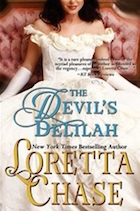
Review: The Devil’s Delilah

Devil's DelilahLoretta Chase, The Devil’s Delilah

Delilah Desmond is coming to London to make an advantageous marriage; but because her father is the notorious “Devil” Desmond, she knows being accepted by high society will be an uphill battle. Adding to her difficulties, the Devil has written a highly improper and scandalous memoir; though he’s promised not to publish it until he truly needs the money, Delilah knows that even a whiff of scandal will destroy her matrimonial prospects. When the memoir goes missing, she immediately flies into a panic. Luckily, she has the dependable, albeit absentminded, Jack Langdon to lean on. Jack has always been more comfortable with books than with people, especially women. But Delilah attracts him like no one else, and he’s determined to help her, even though the far more charming Lord Berne has his eye on the young beauty as well.

I’m really enjoying making my way through Loretta Chase’s traditional Regencies. Though she’s not quite Georgette Heyer, she’s definitely the next best thing. But I didn’t enjoy this book quite as much as Viscount Vagabond (to which this novel is technically a sequel, though it can be read as a stand-alone). I loved the idea of Jack as a hero — someone who seems bookish and absent-minded but who comes through when it counts. But I felt like his character was a bit inconsistent; he doesn’t spend very much time enjoying his scholarly pursuits because he’s always in turmoil about his feelings for Delilah. I also thought the scenes between Jack and Delilah were quite repetitive; they keep having the same fight over and over, which is frustrating. The book is still a fun, fast read with some witty dialogue — I especially enjoyed the Devil’s character — but it’s not my favorite by Chase.