Mini-Reviews: Heartless, Blunt, Mere

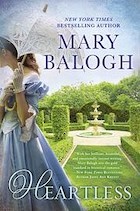
Mary Balogh, Heartless

For the past decade, Lucas Kendrick has lived in Paris, cultivating a reputation as a man without a heart. Ever since he was betrayed by and banished from his family 10 years ago, he’s resisted any hint of love or vulnerability. Now Luke has inherited a dukedom and must return to England to fulfill his duties. He also needs to marry and decides upon the beautiful, vivacious Anna Marlowe, though he has no intention of actually falling in love with his wife. Their relationship slowly deepens but is tested when Anna’s traumatic past catches up with her. I liked this book fine, but it would have been even better without the suspense subplot. I think romances are most interesting when the obstacles are internal to the people involved — character flaws they need to overcome, fears they need to face, etc. Luke and Anna have plenty of those obstacles, so the external conflict with the villain from Anna’s past felt like overkill. So while this is an enjoyable read, I don’t feel a need to keep it on my shelves.

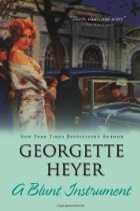
Georgette Heyer, A Blunt Instrument

When Ernest Fletcher is found dead in his study with his head bashed in, everyone is shocked — he was well-liked and seemingly had no enemies. But as the police begin their investigation, they soon unearth plenty of possible motives and suspects. There’s the dead man’s nephew, Neville Fletcher, who stands to inherit a fortune. There’s neighbor Helen North, whose gambling debts Ernest was using to blackmail her — and her husband, John, who may have been jealous of Ernest. But before the police can arrest anyone, they need to solve two problems: given the evidence at hand, how could anyone have had time to commit the murder? And what did the killer do with the weapon? This is one of Heyer’s best mysteries, in my opinion, with a clever solution and an entertaining cast of characters. My one quibble is that I wanted even more of Neville & co.; frankly, I felt the relationships among the suspects were more interesting than the mystery!

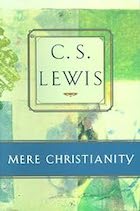
C.S. Lewis, Mere Christianity

A small group of people at my church decided to form a book club during Lent and chose this book. I’d read it before, years ago, but I’m really glad I decided to reread it now. Lewis is deservedly famous for his writings on Christianity; he has a gift for explaining complex ideas in a straightforward, accessible way. In this book, he suggests some arguments supporting belief in Christianity, states the religion’s core beliefs (shared by all denominations), discusses various aspects of Christian morality, and delves a bit into theological concepts such as the Trinity. Throughout the book, he emphasizes practical concepts such as what people must do in order to truly follow Jesus, and why it matters. I feel like most people interested in the topic have already read this book, but if it’s been a while since you’ve read it, I’d definitely encourage you to revisit it!
Mini-Reviews: Rose, Scandal, Lukov

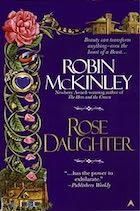
Robin McKinley, Rose Daughter

Robin McKinley’s Beauty is one of my favorite retellings of Beauty and the Beast; when I last read it in 2020, I called it the quintessential retelling, praising its thoughtful heroine and gorgeous prose. Rose Daughter is McKinley’s other Beauty and the Beast retelling, and until now I’d never reread it, thinking that if I wanted a Robin McKinley take on this story, I’d just read Beauty again. Now, while I still prefer Beauty, I think Rose Daughter is enchanting in its own way. In this version, Beauty is an avid gardener and lover of roses. When she comes to the Beast’s palace, she takes on the task of bringing back to life his overgrown and dying rose garden. Like most of McKinley’s books, this one is quite slow, and I wish we got more of a sense of the Beast’s personality. But Beauty and her two sisters are wonderful characters, and I liked the book’s emphasis on their close sibling relationship. If you like fairy tale retellings, I’d definitely recommend both this book and Beauty; I think they each bring something unique and worthwhile to the story.

Anne Gracie, Marry in Scandal

Lady Lily Rutherford longs to marry for love, but she believes that, between her plump figure and her inability to read, she’ll have a hard time finding a husband. Her large fortune, however, makes her a target for unscrupulous men, one of whom abducts her with the intention of forcing her into marriage. Fortunately, she’s rescued by her brother’s friend, Edward Galbraith — but when she and Ned take multiple days to travel back to London, they soon learn they must wed to avoid a scandal. Lily falls for Ned immediately, but he is reluctant to love anyone, even his beguiling wife. This is a pretty standard marriage-of-convenience setup, and Anne Gracie doesn’t really bring anything new to the table in terms of plot or characterization. I did find the main characters, particularly Ned, appealing and could see why they fell for each other. Overall, this is a solid, engaging historical romance, and I certainly plan to continue with the series, but it’s not doing anything particularly special or exciting.

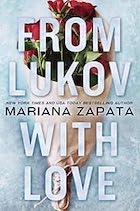
Mariana Zapata, From Lukov with Love

Jasmine Santos is a pairs figure skater with no partner, and at age 26, she’s running out of time to win the gold medal she wants more than anything. A surprising solution presents itself when superstar Ivan Lukov — whom Jasmine has known for years and always hated — suggests partnering up. Jasmine reluctantly agrees, but as she and Ivan train together, her feelings toward him slowly begin to change. Whether you like this book or not will probably depend on how you feel about Jasmine. She’s foulmouthed, angry, impatient, defensive, and not particularly kind — but also hardworking, determined, strong, and loyal. I didn’t always like her, but what sold me on the romance is that Ivan admires her toughness and appreciates her for who she is. It’s the slowest of slow burns, which I liked but other people might not, and I do think the book is bloated and repetitive in spots. But overall, I’m glad I read this one and would recommend it to fans of sports romances and the enemies-to-lovers trope.

Mini-Reviews: Fate, Bigger, Don’t

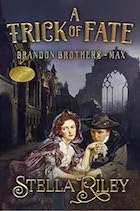
Stella Riley, A Trick of Fate

Max Brandon has a problem: Someone has been purchasing expensive goods and running up bills in his name, which he’s now being asked to pay. This minor nuisance becomes a major problem when the thief’s actions harm Frances Pendleton, Max’s first love. Now Max and Frances must team up to find the thief, and their quest leads them on a wild-goose chase throughout England and Scotland. After loving Stella Riley’s Rockliffe series, I had to continue with the spinoff Brandon Brothers trilogy (Max is Arabella’s brother from Cadenza). I don’t think you have to read any of the Rockliffe books to follow this one, but the two series are definitely set in the same universe. The love story in this book is a bit lightweight; while the obstacles originally dividing Max and Frances made sense, there was no reason for them not to be together in the present. But I love Riley’s writing and enjoyed the book anyway — especially since it also provides a peek at Elizabeth and Sherbourne, a couple from Cadenza whose story I’d wanted more of. I’d definitely recommend this book and author to historical romance fans and am eager to continue with the series.

Erle Stanley Gardner, The Bigger They Come

Most people know Erle Stanley Gardner as the author of the Perry Mason books, but he also wrote another series, featuring private detectives Bertha Cool and Donald Lam, under the pseudonym A.A. Fair. Narrated by Lam, this first book in the series describes how he got the job with Bertha Cool’s detective agency. It also details Lam’s first assignment: He’s tasked with serving divorce papers to an unfaithful husband, but no one seems to know where the man is. As Lam searches, he uncovers various secrets and even a murder — and demonstrates how, using a legal loophole, a person can commit murder and get away with it. This book is an enjoyable noir novel with plenty of fights, femmes fatales, and damsels in distress. The mystery itself isn’t terribly innovative, but Lam’s humorous narration keeps things light, and the book moves at a quick pace. I didn’t love the constant negative commentary on people’s sizes — part of the book’s “humor” comes from the fact that Bertha is a large woman, while Lam is a shrimpy guy — but I suppose that’s of its time. Overall, I liked the book and am interested in trying more by Gardner at some point.

Chloe Angyal, Pas de Don’t

Heather Hays’s dance career is finally taking off when she learns that her fiancé, a world-famous dancer in the same NYC ballet company, has been cheating on her. Desperate to get as far away as possible, she accepts a guest position with the Australian National Ballet. There she meets Marcus Campbell, a dancer recovering from an injury and grieving the recent death of his father. The two are immediately attracted to one another, but the ballet company has a firm no-dating policy. Will Heather and Marcus risk their jobs to follow their hearts? I have absolutely zero dance ability, but I’ve always enjoyed movies and TV shows about dancing, so the premise of this book intrigued me. I might have liked all the ballet background more than the actual romance, which is fine but a bit pedestrian. I did like the third-act conflict between Heather and Marcus, which felt realistic given the setup, and I enjoyed the resolution as well. A sequel is coming out in May, featuring Heather’s best friend, and I plan to get it from my library when it’s available.

Mini-Reviews: Tower, Bath, Gate

Nancy Campbell Allen, The Lady in the Coppergate Tower

Hazel Hughes has dreamed of a girl who looks exactly like her for years. So when her long-lost uncle reveals that she has a twin sister in Romania — a sister who appears to be slowly going mad — Hazel isn’t unduly shocked. She agrees to accompany her uncle to Romania in hopes that her skills as a Healer will help her sister. Dr. Sam MacInnes, Hazel’s employer, decides to come along for protection; as the two slowly fall in love, they also realize Hazel’s uncle is hiding something and try to uncover his sinister secrets. I’m continuing to enjoy this series of steampunk fairy tales. This installment is a riff on Rapunzel, but it also contains some clever allusions to Dracula — for example, in this book Hazel and Sam consider and reject the possibility that her uncle could be a vampire. The romance itself is a bit bland, as no real obstacles stand in the couple’s way. While I did like the book overall, I’m pretty sure I won’t be keeping the series on my selves once I read the fourth and final installment.

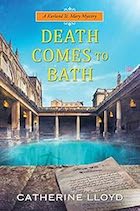
Catherine Lloyd, Death Comes to Bath

In this installment of the Kurland St. Mary series, Robert’s injured leg is paining him more than usual, so he and Lucy head for Bath in hopes that the spa town’s mineral-rich waters will provide relief and healing. There Robert befriends Sir William Benson, who’s also “taking the waters” for his health, and the two families soon become acquainted. But when Sir William dies, apparently drowned in the baths, Robert suspects foul play. And between Sir William’s much younger wife, three disappointing sons, and two odious stepsons, there’s no shortage of possible murderers. This is another strong entry in the series, benefiting from a new location and a close focus on the small circle of suspects. I liked Robert and Lucy’s dynamic as well; though they still butt heads occasionally, they work together and recognize each other’s strengths. I’m happy that the series is still so entertaining six books in, and I’m looking forward to the next one.

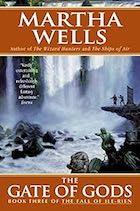
Martha Wells, The Gate of Gods

Following the events of The Ships of Air, Tremaine and her allies are in the country of Capidara, Ile-Rien’s ally and the current seat of its government-in-exile. They’re hoping to use their hard-won knowledge of the etheric gates to liberate the Rienish sorcerers trapped inside the besieged city of Lodun. But their plans go awry when half the group — including Tremaine, Ilias, and Giliead — travels to an unexplored world using a new type of etheric gate and can’t get back again. This conclusion to the Fall of Ile-Rien trilogy is a fitting end to the series; it answers the big questions of who the Gardier are and what they want, and it sees Tremaine finally deciding what she wants from her life. That said, I did find the ending anticlimactic — some of the answers the book provides don’t feel terribly satisfying. I also wanted more development for the secondary characters such as Florian, Gerard, and Niles, who were a constant presence throughout the trilogy but never really got their own stories. Overall, I’m glad I finally read this series but won’t be keeping it on my shelves.

Mini-Reviews: Tower, Flatshare, Aunt

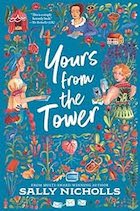
Sally Nicholls, Yours from the Tower

This epistolary novel centers around the correspondence between three school friends who are taking their first steps into adulthood. Tirzah is stuck being her strict grandmother’s companion in a remote Scottish village, but she longs for excitement and adventure. Sophia is in London for the Season and hopes to gain financial security through marriage, but she’s soon attracted to a penniless charmer. And Polly loves her job as a teacher in an orphanage, but complications ensue when she tries to find the father of one of her students. This book is wholesome and charming and delightful, and I really enjoyed it! Each girl is vividly drawn, with her own distinctive voice, and I found all three equally compelling. The letters are chatty and wide-ranging, covering everything from the minutiae of daily life to the girls’ deeper hopes and dreams. There are some some dark moments in the book involving alcoholism and depression, but the overall tone is light and hopeful. This is a YA novel, but I’d recommend it to adult fans of light historical fiction as well. I definitely want to read more by Sally Nicholls!

Beth O’Leary, The Flatshare

After moving out of her ex-boyfriend’s London flat, Tiffy desperately needs a new place to live. She sees an ad for a flatshare: The current tenant, Leon, works nights and will only be in the flat from 9 a.m. to 6 p.m., while Tiffy’s at work. The rent is cheap, so Tiffy jumps at the chance, even though she isn’t able to meet Leon in person before moving in. At first, they both find it odd to share their living space with a stranger, but as they start leaving notes for each other around the flat, they slowly become friends. When they finally do meet in person, they’re surprised by their mutual attraction, but difficulties arise when Tiffy’s ex reappears in her life. I feel like my summary of the book doesn’t do it justice at all. Both Tiffy and Leon are such endearing characters! Their notes to each other are adorable, and I like that they have jobs and friends and relatives and lives that don’t revolve solely around each other. Tiffy’s experiences with her ex are hard to read — the book does a great job of slowly revealing just how horrible he is — but the central romance is lovely. I’m glad I reread this one and would definitely recommend it to fans of contemporary romance!

Richard Hull, The Murder of My Aunt

Edward Powell lives in a small Welsh village with his Aunt Mildred. He hates Wales, the countryside, and everyone around him, especially his aunt. He only stays because she controls his finances; without the allowance he gets from her, he’d have nothing. As Edward broods over his distasteful circumstances, he realizes that his life would be much better if Aunt Mildred were to die. Soon he starts plotting possible murder scenarios, but his plans don’t work out the way he expects. This is both a funny and a grim book: Edward is a magnificently unreliable narrator whose misreading of conversations and events is often amusing, but he’s so snobbish and hateful that it’s tough to spend time in his head. I must admit, though, I didn’t find Aunt Mildred entirely sympathetic either! The ending is a surprise, but a well-plotted and foreshadowed one. Overall, this book isn’t strictly speaking a mystery—and certainly not a detective novel—but it’s worth reading for the narrative style and dramatic irony.

Mini-Reviews: Con, Tangle, Austen

Devon Daniels, The Rom Con

Cassidy, a reporter for the feminist website Siren, has just ended yet another disappointing relationship. Her grandmother suggests she try a different approach to dating, based on a 1950s list of rules for catching a husband. Cassidy is horrified, but when she meets Jack Bradford — co-founder of Siren’s rival website, Brawler, which Cassidy views as a bastion of toxic masculinity — she decides to use the antiquated rules on him. Once Jack falls for the Stepford Wives version of her, she’ll write an article exposing him as a sexist jerk. But as she begins dating him, she learns he might not be such a jerk after all. I’m of two minds about this book. On the plus side, it’s a fun, quick read with enjoyable banter between the two leads. But Jack is simultaneously too perfect and problematic — it’s never clear why, if he’s such a good guy, he’d continue to be involved with Brawler. There are also a few too many Big Misunderstandings near the end that seem to exist only to drag out the happy ending. Overall, I did enjoy the book while I was reading it, but looking back, I don’t think it totally works.

Theresa Romain, It Takes Two to Tangle

Soldier Henry Middlebrook has just returned to England after Napoleon’s defeat, wounded and unable to move his right arm. Frustrated by his perceived “uselessness” and the pity of his relatives, he decides to court Lady Caroline Stratton, a popular society beauty who he thinks will help reintegrate him into his old life. He enlists the help of Caroline’s companion, Frances Whittier, but complications ensue when he and Frances grow closer. I was intrigued by the setup of this book — Henry’s disability plus a Cyrano-esque plot point in which Frances writes him letters that he assumes are from Caroline. But unfortunately, I wasn’t as enamored of the book itself. Henry is far too slow to see what’s right under his nose, and the obstacles keeping him and Frances apart aren’t important enough to justify the length of the novel. There’s also more steam than I’d prefer, so overall, this just wasn’t the book for me. I was also underwhelmed by Romain’s Season for Temptation, so I think she’s not the author for me either.

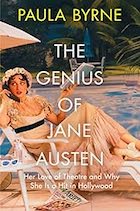
Paula Byrne, The Genius of Jane Austen: Her Love of Theatre and Why She Works in Hollywood

In Mansfield Park, Fanny Price disapproves of the amateur theatricals staged by her cousins and their friends. Some critics have inferred from this that Jane Austen herself disapproved of theater, but Byrne argues pretty convincingly that the opposite is true. Austen acted in private theatricals with her family and friends, she frequently attended plays while living in Bath and London, and her letters reveal that she was familiar with the famous actors and theater gossip of her day. The book explains how Austen’s life interacted with the theater; how she used theatrical plots, character types, and conventions in her novels; and why her books adapt so well to the screen. Byrne is obviously an Austen fan, and a very knowledgable one. The book is briskly written and appears well researched. I liked it a lot and would certainly recommend it to Austen lovers!

Mini-Reviews: Folly, Ships, School

Laura Kinsale, My Sweet Folly

When Folie Hamilton begins corresponding with Robert Cambourne, a relative of her husband’s who is stationed in India, they soon discover they’re kindred spirits. They fall in love through their letters, but their correspondence ends abruptly just after Folie’s husband dies. More than four years later, Robert is back in England and has summoned Folie and her stepdaughter, who is now Robert’s ward, to his remote country estate. But the cold, troubled, possibly insane man Folie meets is nothing like the man she remembers from the letters. I saw an old review online that said Kinsale writes “extreme romance,” and I definitely agree with that assessment — the drama and all the emotions are dialed up to 11. I don’t normally love high-angst romances, but this book really worked for me. The heavy drama is tempered by Folie’s lighthearted pragmatism, and while Robert is truly awful at times, we get enough insight into his state of mind at least to understand his actions. Despite the uneven and slightly bananas plot, I loved the central romance and will definitely be keeping this book on my shelves!

Martha Wells, The Ships of Air

This book picks up shortly after The Wizard Hunters left off: Tremaine has commandeered a large luxury ship, the Queen Ravenna, to transport evacuees out of Ile-Rien and try to reach the Rienish government-in-exile. She also hopes to forge a Rienish-Syprian alliance to unite against the Gardier — but she’s surprised when a political marriage becomes part of the bargain. Meanwhile, she and her allies face not only the Gardier threat but also a menacing presence aboard the ship itself. I’m continuing to enjoy this fantasy saga, though the pacing in this book is uneven; things really pick up about 2/3 of the way through, when a few of the characters get separated from the rest. Main characters Tremaine, Ilias, and Giliead get some good development, though most of the other characters remain pretty flat, and we finally learn a little bit about what makes the Gardier tick. Overall, a solid read, and I’m looking forward to the final book in the trilogy.

Catherine Lloyd, Death Comes to the School

Robert and Lucy Kurland have now been married for three years, but two miscarriages and the ensuing grief have strained their relationship. Lucy tries to distract herself with village activities and soon butts heads with the unpopular new schoolteacher, Miss Broomfield. When Miss Broomfield is subsequently stabbed to death with a hatpin, Lucy and Robert once again investigate. Could her murder be related to a spate of nasty anonymous letters circulating through the village? I’m still enjoying this series and think this book is one of the stronger installments. The conflict between Lucy and Robert feels realistic, and they’re both a bit to blame despite both having good intentions: He’s concerned for her welfare but expresses it in all the wrong ways, while she bottles up her emotions and won’t let him (or anyone else) support her. The mystery is a little lackluster and not really fair play, though I correctly guessed the culprit fairly early on. But the series’ strengths are the central characters and the immersive portrayal of village life. Looking forward to the next one!

Mini-Review: Murder, Pairing, Spindle

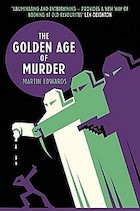
Martin Edwards, The Golden Age of Murder

This book is a sprawling account of the lives of the authors of detective fiction in the 1920s and ’30s, particularly the earliest members of the Detection Club. Martin Edwards is the current Detection Club president, and his enthusiasm for his predecessors — and for Golden Age mysteries in general — is both obvious and contagious. He gives biographical information about authors such as Agatha Christie, Dorothy L. Sayers, and Anthony Berkeley. He also speculates a fair bit about their personal lives and sexual proclivities, with varying amounts of supporting evidence. He discusses several Golden Age novels, though never in very much depth, and is pretty good about avoiding spoilers. I found the book a bit scattered and hard to follow at times; the content doesn’t necessarily correspond to the various chapter headings, and Edwards often bounces among several ideas in the course of a single paragraph. The book also has invisible endnotes, which I found a bit irritating, though that’s just a personal preference. Overall, though, I think this is a good read for fans of Golden Age detective fiction, and it’s certainly put several new-to-me novels and authors on my radar!

Elizabeth Harmon, Pairing Off

American pairs figure skater Carrie Parker is facing career death after her partner gets caught in a cheating scandal. So when a Russian coach invites her to Moscow for a tryout, Carrie seizes the opportunity — but is appalled to discover that her new partner is Anton Belikov, a top Russian skater with whom Carrie had a one-night stand seven years ago. Anton doesn’t seem to remember her, and his gruff demeanor intimidates her. But as they train for the upcoming competition season, they grow closer, until secrets from Carrie’s past threaten their budding relationship. This book appealed to the same part of my brain that enjoys sports movies (even though I don’t follow any sports). I got the impression that Harmon actually has some figure skating knowledge; her descriptions of the routines and workouts feel like more than window dressing. I liked the Moscow setting as well. The romance between Carrie and Anton is fine, though a bit angsty/“it’s destiny!” for my taste. Overall, a decent read that I’d recommend if you like figure skating and/or the ’90s movie The Cutting Edge.

Nancy Campbell Allen, Kiss of the Spindle

Isla Cooper is cursed: Every night, she falls into a deathlike sleep from which she can’t be awakened. To find the witch who cursed her and obtain the cure, she blackmails her way onto Daniel Pickett’s airship, which is headed for the city where the witch is rumored to be. Meanwhile, Daniel is illegally transporting shapeshifters out of England, where they’re facing political persecution. He doesn’t have time to help Isla, especially when another last-minute passenger who wants to exterminate all shapeshifters forces his way on board. Eventually, though, Daniel and Isla decide to work together — and fall in love in the process. This is a fun steampunk romance with nods to Sleeping Beauty, and though there’s nothing extraordinary about it, I really enjoyed it! I liked Daniel and Isla’s progression from grudging toleration to mutual attraction, and I also found more than one secondary character intriguing…I kind of hope they get their own books at some point! In the meantime, I’m happy to be reading this series and looking forward to the next installment!

Mini-Reviews: Secret, Lily, Always

Sharon Shinn, The Safe-Keeper’s Secret

I actually read this book in 2023 but for some reason didn’t post my review here at the time. Oh well, better late than never!

Damiana is a safe-keeper, which means she’s bound to listen to anyone who wants to confide a secret to her, and she’s not allowed to reveal these secrets to anyone. One night a mysterious stranger arrives at her door with a newborn baby, charging her to keep the infant safe and his parentage a secret. Damiana raises this baby alongside her own child, so Fiona and Reed grow up together as brother and sister. But as they mature into adulthood, they begin to question their identities in various ways. I like Sharon Shinn’s writing style and the gentle fantasy world she’s created in this book, but I was underwhelmed by the actual story. There’s really no plot to speak of until the last couple chapters, when some long-standing secrets are revealed. I was also a bit disturbed by the hint of romance between Fiona and Reed (they’re not related by blood but were raised as siblings). Overall, this isn’t one of Shinn’s stronger works, but I have the sequel on my shelves so will undoubtedly read it at some point.

Mimi Matthews, The Lily of Ludgate Hill

Six and a half years ago, Felix Hartford and Lady Anne Deveril were in love, but they parted after a bitter argument. Hart never stopped loving Anne, though, and now he’s determined to win her back, although he’ll have an uphill battle convincing her to trust him again. Meanwhile, ever since her father’s death, Anne has been consumed with supporting her grieving mother and hasn’t been able to live her own life. Hart attracts her as much as ever, but can she learn to let go of the past? I’m a big fan of Matthews’s intelligent (and steamless!) historical romances, and this book is no exception. I liked both Hart and Anne and bought the connection between them, as well as the obstacles keeping them apart. It’s frustrating that they’ve both martyred themselves to selfish family members and can’t seem to break free, and their hesitation to commit fully to each other goes on too long. Nevertheless, I really liked this one overall and am excited for the next (and final?) installment of the series!

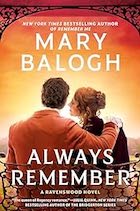
Mary Balogh, Always Remember

Ben Ellis, a widower with a young daughter, wants to remarry. He’s not looking for passionate love, just someone with whom he can be comfortable. He certainly shouldn’t be thinking about Lady Jennifer Arden, who’s extremely wealthy and the sister of a duke, whereas he is illegitimate. Meanwhile, Jennifer is convinced she’s unlovable due to a malformed leg that prevents her from walking. A fixer by nature, Ben helps her find various ways to become more mobile. As they grow closer, however, their families express concern about their different social stations. This third book in the Ravenswood series continues to frustrate me with its inclusion of not only Ben’s and Jennifer’s various relatives, but a bunch of random villagers as well. Most of these characters have no relevance to the plot, so why keep mentioning them? I don’t care! That said, I did like both Ben and Jennifer, who aren’t extraordinarily gorgeous or gifted; they’re just two kind people who genuinely like each other. Their relationship is pretty low-conflict; the dramatic tension comes mostly from the individual problems they’re working through. Overall, I do think this is an improvement over the previous two books in the series, but it’s still not one of Balogh’s stronger offerings.

Mini-Reviews: Fair, Wizard, Truth

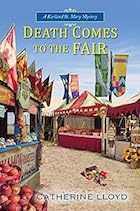
Catherine Lloyd, Death Comes to the Fair

***Warning: SPOILERS for previous books in the series!***

Lucy Harrington and Major Sir Robert Kurland have finally acknowledged their feelings and decided to marry. But before they can walk down the aisle, they encounter another violent death: Ezekiel Thurrock, a longtime village resident, is found in the church with his head bashed in. He’d been unpopular in the village ever since winning “too many” prizes for his vegetables at the local fair, but could someone have been angry enough to kill him? As Lucy and Robert investigate, they uncover secrets from centuries past that are still influencing the present. I’m continuing to enjoy this series; like its predecessors, this book is a pleasant historical mystery with a hint of romance. I wish the romance were a little more prominent, actually — we don’t get much of Lucy’s or Robert’s emotional state or much external evidence of their love for each other. Still, I plan to continue with the series and will be interested to see how the protagonists cope with married life!

Martha Wells, The Wizard Hunters

Tremaine Valiarde is a young woman whose world is literally on fire: Her homeland of Ile-Rien is being bombed by a mysterious but implacable enemy known as the Gardier. Ile-Rien’s only hope is a magical sphere in Tremaine’s possession, which is thought to be a weapon. In fact, it’s a teleportation device — when Tremaine and some compatriots test it, they’re taken to another world where they stumble upon a hidden Gardier base. They also team up with Ilias and Giliead, natives of this other world with their own score to settle against the Gardier. This book is well-written, with a creative world and engaging characters, but I also found it pretty slow going. The extensive action scenes, such as those in the caves, are overlong and a bit boring. That said, I did enjoy the book while I was reading it! I just found it put-down-able; I have less patience for these big, beefy fantasy novels than I used to. Still, I’m on board for the sequels — this book doesn’t exactly end on a cliffhanger, but there’s definitely more story to tell — and I hope that Tremaine and her allies will eventually prevail.

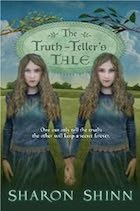
Sharon Shinn, The Truth-Teller’s Tale

This YA fantasy novel is narrated by Truth-Teller Eleda, who is honest to the point of rudeness and incapable of telling a lie. Her twin sister, Adele, is the opposite: As a Safe-Keeper, she’s entrusted with people’s secrets and valued for her discretion. The sisters are close, even though they often irritate each other, and as they grow up they come to see the value in each other’s skills. I really enjoyed the cozy and charming world of this book, which is centered around everyday life in the girls’ village. I also liked the depiction of Eleda and Adele’s complex but ultimately loving relationship. There isn’t much to the plot—a gentle coming-of-age story with a bit of romance thrown in—but it’s a pleasant read overall. I won’t be keeping it on my shelves, though; I think Sharon Shinn has written much better books!