Mini-Reviews: Faro’s, Night, Swordheart

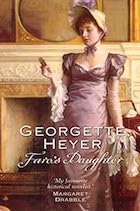
Georgette Heyer, Faro’s Daughter

When Max Ravenscar learns that his young cousin, Adrian, has fallen in love with Deborah Grantham, who works in her aunt’s gaming-house, Max immediately intervenes to prevent the match. He won’t allow Adrian to fall prey to a fortune hunter, no matter how attractive she may be. In fact, Deb has no intention of marrying Adrian, but Max’s interference angers her, and she decides to teach him a lesson. The ensuing battle of wits paradoxically draws them closer and ignites an unlikely romance. A Heyer reread is always a pleasure, and this book has a particularly fun plot, as Max and Deb’s prank war escalates to ridiculous heights. Max is a fictional hero after my own heart, cold and aloof and Darcy-esque until love inspires him to unbend a little. And of course, the intelligent and lively Deb is his perfect match. This isn’t one of my very top favorite Heyers, but it’s definitely near the top, and I’d still highly recommend it!

Julia Heaberlin, Night Will Find You

Vivvy Bouchet doesn’t call herself a psychic, but she does have certain unusual abilities. When she was 10, she had a vision that saved the life of a neighbor boy, Mike. Now, 18 years later, Mike is a cop who occasionally asks Vivvy to use her “gifts” to assist his investigations. The latest case involves a girl who’s been missing, presumed dead, for several years — but Vivvy senses she’s still alive. To work the case, Vivvy is paired with another cop, Jesse Sharp, who doesn’t trust her or believe in her paranormal abilities. As they investigate, Vivvy is forced to deal with the ghosts of her own past. This is not the type of book I usually read, and I wouldn’t necessarily say I liked it, but I did find it a compelling read! The mystery of the missing girl is a bit slight, but the plot isn’t really the point. Rather, the book is an exploration of science and faith, of truth and conspiracy, of why we sometimes choose to believe lies. I liked the philosophizing, although I can see why others might not, and I would consider reading more by Heaberlin.

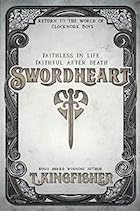
T. Kingfisher, Swordheart

Halla has just inherited a small fortune and is at the mercy of her odious in-laws, who want to steal her inheritance by forcing her into an unwanted marriage. Luckily, said inheritance includes an enchanted sword: When she draws it, a warrior named Sarkis appears and declares that he is bound to her service. Together, they escape from Halla’s family and seek to reclaim her inheritance, having various adventures — and falling in love — along the way. I absolutely adored this book! It’s so funny and lighthearted and full of kind people being kind to each other (though of course there are bad guys too, but they’re suitably dealt with). Pragmatic Halla and stoic Sarkis are characters after my own heart, and the supporting cast is lovely as well. My love affair with T. Kingfisher continues, and I’m definitely planning to read her Clocktaur War duology, which is set in the same world, sooner rather than later!

Mini-Reviews: Bird, Clockwork, Murder

Josie Silver, The Two Lives of Lydia Bird

When Lydia Bird’s fiancé, Freddie, dies in a car accident, she’s absolutely devastated. Even mundane daily tasks like bathing and eating feel unbearably difficult, and sleep is out of the question. But when she takes an experimental sleeping pill her doctor prescribes, she has a vividly lucid dream — or perhaps enters a parallel universe — in which Freddie is still alive. Soon her waking life becomes a chore as she waits desperately for the next time she can sleep and be with Freddie. But as time passes, she must decide where she truly belongs. This was an interesting book to start the new year with, since it’s all about exploring what-if scenarios, remembering the past, and making choices about the future. The novel is very slow-paced, but that makes sense, as more than anything else it’s a story about grief and navigating life after a big loss. There’s a slight element of romance that I didn’t find totally satisfying, but otherwise I liked the book and would recommend it if the premise appeals to you.

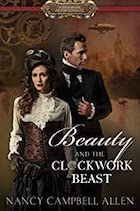
Nancy Campbell Allen, Beauty and the Clockwork Beast

In this steampunk twist on the gothic novel, Lucy Pickett travels to Blackwell Manor to care for her beloved cousin, Kate, who is suffering from a mysterious illness after her recent marriage to the earl of Blackwell’s younger brother. At the manor, Lucy experiences many terrors, from ghostly apparitions to the earl himself, whose surly and intimidating demeanor hides dangerous secrets. She and the earl, Miles, eventually team up to discover what’s causing Kate’s illness, who’s behind a spate of vampire attacks in the area, and who murdered Miles’s recently deceased wife and sister. So yes, there’s a lot going on in this book (and I didn’t even mention the werewolf!), but it’s easy enough to follow the narrative. I liked plucky Lucy and brooding Miles, and though the book is steamless, their mutual attraction is clear. I wasn’t as impressed with the book as I remember being when I first read it, but I enjoyed it nonetheless and look forward to continuing with the series.

Delano Ames, She Shall Have Murder

Jane Hamish, a clerk in a London law office, is writing a mystery novel in which her coworkers and legal clients are the main characters. Her boyfriend, Dagobert Brown, instigated the project and insists that Mrs. Robjohn, an elderly client who’s convinced mysterious men are out to get her, should be the murder victim. But when Mrs. Robjohn really does die — apparently due to an accidental gas leak in her home — Dagobert is convinced she was actually murdered and decides to investigate. This is my first encounter with Golden Age mystery writer Delano Ames, but it won’t be my last because I thoroughly enjoyed this book! Jane narrates the story and has a delightfully witty voice, and I’m intrigued by her relationship with Dagobert (this is book #1 in the series, but there’s clearly some interesting backstory that will hopefully be explored in later installments). The mystery itself is fine but not remarkable; the book’s strengths are its characterizations and style. I’ll be looking out for more in this series.

2023 Vintage Scavenger Hunt Wrap-Up

Now that 2023 has come to a close, it’s time to take stock of my 2023 vintage mystery challenge! The goal was to read at least eight Golden Age mysteries, and they each had to have a specific item on the cover. I ended up reading 11 books that qualified:

  1. W. Bolingbroke Johnson, The Widening Stain (1942) — library/books
  2. Ngaio Marsh, Artists in Crime (1938) — just one person
  3. J. Jefferson Farjeon, Seven Dead (1939) — boat
  4. Patricia Wentworth, The Case Is Closed (1937) — shadowy figure
  5. Ngaio Marsh, Death in a White Tie (1938) — timepiece (hourglass)
  6. Baynard Kendrick, The Odor of Violets (1941) — dog
  7. E.C.R. Lorac, Murder by Matchlight (1945) — flowers or plant
  8. Mary Roberts Rinehart, The Red Lamp (1925) — red object
  9. Agatha Christie, Death Comes as the End (1944) — brunette
  10. John Dickson Carr, The Red Widow Murders (1935) — playing cards
  11. Charlotte Armstrong, The Chocolate Cobweb (1948) — spiderweb

Of these, The Chocolate Cobweb was my definite favorite; it’s “domestic suspense” at its best, with characters who behave intelligently and edge-of-your-seat suspense. I also loved Death Comes as the End, a reread for me, and The Case Is Closed. I wasn’t as enamored of The Red Lamp or The Red Widow Murders, but I definitely want to read more by both Rinehart and Carr. Stay tuned for my sign-up post for the 2024 vintage mystery scavenger hunt!

Mini-Reviews: Once, Ex, Temptation

Diane Farr, Once upon a Christmas

When Celia Delacourt is left homeless and penniless after the tragic deaths of her parents and siblings, she is unexpectedly offered a home by her distant cousin, the duchess of Arnsford. The duchess is rigidly proper and seeks to mold Celia in her image so that she can become a suitable wife for the duchess’s son, Jack. Meanwhile, Jack has no intention of marrying right now, especially not a girl of his mother’s choosing. So when he comes home for Christmas, he decides to act obnoxious to Celia in hopes of putting her off. The trouble is, he’s immediately attracted to her, and his ruse works a little too well — she becomes convinced he’s insane! This is a sweet little Regency romance, and while it’s not particularly substantial, the complexity of the duchess’s character adds a bit of weight to the narrative. The romance is cute (and steamless, which is a plus for me), and I also liked the secondary romance, which features Jack’s sister, a minor character from Farr’s The Nobody. This isn’t Farr’s best work, but I’m continuing to enjoy my journey through her backlist.

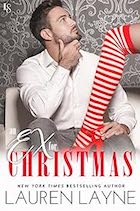
Lauren Layne, An Ex for Christmas

Third-grade teacher Kelly is single and lonely, so when a psychic tells her she’s already met her true love, she decides to track down her ex-boyfriends over the Christmas break and see if one of them might be Mr. Right. Her neighbor and longtime best friend, Mark, disapproves of Kelly’s plan, but he somehow always manages to be there for her when her meetups with her exes don’t go as planned. Eventually Kelly begins to see Mark in a different light and wonders if she should ditch her “reconnect with an ex” plan and instead explore a possible romance with Mark. This friends-to-lovers story didn’t particularly work for me. I can see the appeal of Mark, a strong silent type who’s pined for Kelly for years, but I also wonder why it took him so long to make a move! Further, their entire friendship is suspect because Mark never really wanted to be friends with Kelly; he was just biding his time until they could be together romantically. If you like this particular flavor of friends-to-lovers, this is a perfectly fine book, but the premise was not for me.

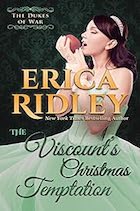
Erica Ridley, The Viscount’s Christmas Temptation

In this Regency romance novella, Lady Amelia Pembroke is a managing female who has decided it’s time to get married. She’ll seek a suitable groom at the 75th annual Christmas Eve ball hosted by Lord Benedict Sheffield. The only problem is that Benedict isn’t planning to host the ball this year, his ballroom having been destroyed by a rogue lightning strike (!). Undaunted, Amelia decides to help Benedict plan the ball in a new location — with or without his consent. Luckily, Benedict is intrigued by the beautiful and brainy Amelia, and he’s happy to go along with her plans while making a few of his own. This was…fine. The short length made any real character development or investment in the romance impossible, but I’m open to trying a full-length novel by Erica Ridley at some point. I’m not particularly eager to seek one out, though.

Mini-Reviews: Holiday, Crime, Cold

Catherine Walsh, Holiday Romance

Molly and Andrew are both Irish expats living in Chicago, and they’ve become friends over the years as they’ve taken the same flight home to Dublin every Christmas. This year, though, a winter storm grounds their flight, so they must desperately search for another way to get home for the holidays. What begins as the road trip from hell slowly evolves into something else as Molly starts feeling more-than-friendly toward Andrew, and it seems as though he might feel the same. This sweet romance, which I picked up as a cheap e-book, was a pleasant surprise! Molly and Andrew are likable characters, and I believed in both their friendship and their love story. It made sense to me why they hadn’t gotten together sooner, which is often my main gripe with a friends-to-lovers romance. I also liked that of the two of them, Andrew is the one who adores Christmas, while Molly (though not really a Scrooge) is more indifferent. I’d definitely recommend this book to fans of the genre and will be trying more by Catherine Walsh.

Martin Edwards, ed., The Christmas Card Crime and Other Stories

This anthology of short mystery stories set at Christmastime didn’t do much for me, unfortunately. I don’t tend to enjoy mysteries in short-story form, as they usually aren’t long enough to let the sleuth do any actual detecting, or to leave enough clues for the reader to play along. Instead, most of the stories here rely on a chilling atmosphere or a clever last-minute plot twist. Some of them do this quite well — I enjoyed “By the Sword” by Selwyn Jepson, for example, in which an overconfident man thinks he can get away with murder but soon discovers otherwise. Similarly, Cyril Hare’s “Sister Bessie or Your Old Leech” is a fine piece of dramatic irony centering around a man who wants to murder his blackmailer. I can’t think of any stories I particularly disliked, but most of the others were pretty forgettable. Ultimately, what I enjoy about reading mysteries is the chance to try and solve them along with the detective, and these stories don’t provide that experience.

Alicia Thompson, With Love, from Cold World

Lauren Fox and Asa Hutchinson both work at Cold World, a kitschy Florida amusement park that aims to create a winter wonderland all year round. However, they butt heads constantly; Lauren is a serious-minded, type A accountant (Asa calls her robotic), while Asa is fun-loving and carefree (Lauren calls him a slacker). When they’re forced to work together to come up with ideas for improving Cold World, they’re drawn to each other and tentatively embark on a relationship. But they each have baggage that prevents them from being open with each other. I enjoyed this cute contemporary romance; I like a good rivals-to-lovers plot, and I found Lauren particularly relatable in her insecurity and occasional social cluelessness. I also really liked Cold World and kind of wish it were a real place! So overall, I liked this one and would consider reading more by Thompson. Her previous book, Love in the Time of Serial Killers, looks fun!

Mini-Reviews: Betting, Gambit, Midwinter

Lynn Painter, Betting on You

Charlie and Bailey first meet on a 10-hour flight, where his careless cynicism clashes with her uptight, rule-following personality. But they really get to know each other three years later, when they end up working at the same amusement park. Charlie is adamant that guys and girls can’t really be friends, but Bailey is determined to prove him wrong. As they grow closer, however, the lines between friendship and romance get confusingly blurry. The book’s cover copy emphasizes fake dating and multiple bets among the main characters, but these are both pretty minor plot points. In reality, the novel is a cute friends-to-lovers YA romance, though it also gets into some heavier issues, as both Bailey and Charlie struggle with being children of divorced parents. I enjoy Lynn Painter’s writing style; she does good banter and makes her characters feel like believable people. I also liked getting some of Charlie’s POV, though Bailey is the primary narrator. The book perhaps owes a little too much to When Harry Met Sally, but I liked it nonetheless and now want to rewatch the movie!

Evie Dunmore, The Gentleman’s Gambit

Between writing a book on female political leaders, managing her absentminded father’s household, and working for the suffragist cause with her three best friends, Catriona MacPherson is burned out. When she meets her father’s handsome new colleague, Elias Khoury, she’s immediately attracted to him but doesn’t think he (or anyone) could be interested in her. Meanwhile, Elias is on a mission to repatriate historical artifacts — legally or otherwise — to his homeland of Mount Lebanon. He doesn’t have time for romance, but Catriona intrigues him. As with the previous books in this series, Evie Dunmore tries to balance a love story with a lot of historical detail, to mixed effect. In this case, information about the women’s suffrage movement and the ethics of removing antiquities from their lands of origin overwhelmed the romance. Also, between Catriona’s negative internal narrative (she seems to struggle with some form of depression) and the Serious Political Stuff, there’s just no joy in this book. Since I want joy in my romance novels, this one didn’t work for me, and I doubt I’ll read any future books from this author.

Stella Riley, Midwinter Magic

This novella caps off the Rockliffe series and gives readers one last look at most of the main series couples. Adrian and Caroline, the earl and countess of Sarre, are hosting a Christmas party at their country estate, but complications ensue when Caroline’s vulgar mother and sisters show up uninvited. Two romances develop, one involving Adrian’s French friend, Bertrand Didier, and there’s even a Christmas miracle. This is undoubtedly the weakest installment of the Rockliffe series — perhaps unsurprisingly, since it’s a novella with few new characters and (mostly) low stakes — but I still enjoyed it overall. I wish Ralph and Elizabeth from Cadenza had made an appearance, as I would have loved to get a peek at their marriage, and part of me wanted to roll my eyes at the aforementioned miracle. But I guess that sort of thing is to be expected in a Christmas story! I definitely would not recommend this novella if you haven’t read and enjoyed the rest of the Rockliffe books, but it’s a sweet holiday treat for fans of the series.

Mini-Reviews: Mistress, Princess, Death

Mary Balogh, The Secret Mistress

Lady Angeline Dudley has no interest in marrying a rake like her brothers; she just wants a steady, responsible man who will nevertheless love her passionately. So when Edward Ailsbury, the earl of Heyward, chivalrously rescues her from the improper attentions of a rake, she falls in love with him at once. Meanwhile, Edward knows he needs to marry, and Angeline is certainly eligible, but her outspoken, slightly wild behavior horrifies him. He’s also drawn to her despite himself, but he has trouble reconciling his feelings with his long-held image of the perfect wife. This is the final book of Balogh’s “Mistress” trilogy and, in my opinion, the most enjoyable. Angeline is a somewhat unconventional heroine in that she’s not particularly deep or intelligent; rather, she’s a flighty chatterbox with terrible fashion sense but a very warm heart. Edward isn’t a typical hero, either — he’s very responsible and practical and not rakish at all. I loved them both and was rooting for them to get together, although the last few chapters got a bit too flowery and sentimental for my taste. Still, overall I quite liked this one, which is a bit lighter than Balogh’s usual fare!

Philip Pullman, The Tin Princess

This final book in the Sally Lockhart series doesn’t actually have much Sally in it. Rather, the plot centers around Adelaide, who vanished at the end of The Ruby in the Smoke but has now resurfaced as the wife of the crown prince of a tiny Central European country. Accompanied by intrepid detective Jim Taylor and German tutor Becky Winter, she must travel to Razkavia and learn how to be a princess. But court intrigues, foreign interference, and assassination plots threaten both their own safety and that of Razkavia as a whole. As with the other books in this series, this is an entertaining adventure novel that’s chock-full of plot. The characterization is a bit less convincing; I didn’t believe Adelaide would become an expert politician so quickly, and the romance between her and Jim is barely sketched in. So while this is a fun series and I’m glad I read it, I won’t be keeping it on my shelves.

Catherine Lloyd, Death Comes to Kurland Hall

Lucy Harrington is back in Kurland St. Mary to help her best friend, Sophia, with Sophia’s upcoming wedding. One of the wedding guests, Mrs. Chingford, is a conniving widow who delights in spreading malicious gossip and antagonizes several of the other guests. On the wedding day, Mrs. Chingford falls down a flight of stairs and dies, and Lucy is convinced it’s no accident. She and Major Robert Kurland must once again work together to discover the killer — and sort out their complicated feelings for each other. This is another enjoyable installment of the Kurland St. Mary series, though it’s not a particularly memorable one in terms of the mystery. But I do like the way the world is being built out and how some of the recurring series characters are being developed. Lucy and Robert’s romance also takes a step forward in this one, though I wish the book had focused on it more…there was so much buildup, but the resolution fell flat. Regardless, though, I’ll certainly continue with the series.

Mini-Reviews: Curse, Moonflower, Pearls

Elizabeth C. Bunce, A Curse Dark as Gold

Charlotte Miller has been struggling to run Stirwaters, the mill she’s inherited from her father. Stirwaters is plagued by bad luck; the local townsfolk say it’s cursed. Charlotte is far too practical to believe in curses, but as mishap after mishap befalls Stirwaters, she’s determined to do whatever it takes to save the mill — even accept the help of the mysterious Jack Spinner, who claims he can spin straw into gold. But his help comes with a price, and eventually he’ll ask for something Charlotte is unwilling to pay. I really liked this retelling of Rumpelstiltskin when I first read it; this time around, I still think it’s very well done, but it might be a bit too slow for me. Most of the book is just Charlotte becoming more and more miserable as Stirwaters is threatened, and she pushes all her loved ones away to deal with the problem alone, which I found frustrating. But Charlotte’s community is well portrayed, there’s a sweet romance with realistic ups and downs, and I liked the resolution to the curse. I’d recommend this for fans of atmospheric fairytale retellings who don’t mind a slower pace.

Lauren Willig, The Lure of the Moonflower

The final book in the Pink Carnation series focuses on the Carnation herself, Miss Jane Wooliston, who is on a mission to locate the missing Portuguese queen before the French do. But since she doesn’t know the country or the language, she’ll need the help of Jack Reid, a British agent (and former French agent) known as the Moonflower. But will she be able to trust him with the mission — and her heart? The plot of this book is even less substantial than usual; even the climactic scene doesn’t have particularly high stakes, and the matter of the missing queen feels like an afterthought. The meat of the book, though, is Jane and Jack’s relationship, which I think is quite well done. Since Jane’s been a pivotal series character since book #1, it was important that she have a love interest worthy of her, and Jack definitely fits the bill. The book also gives us one last look at several of the other series couples, which was fun but a little overkill. I also appreciated Willig’s “where are they now” note at the end of the book, which did a pretty good job of wrapping things up. Overall, I think this is one of the better books in the series and definitely a fitting end to the Pink Carnation’s adventures.

Darcie Wilde, The Secret of the Lost Pearls

In this installment of the Rosalind Thorne series, an old school friend requests Rosalind’s help to discover who stole her valuable pearl necklace. The woman fears that the thief is her youngest sister, Nora, who’s recently returned to the family after a scandalous and ill-fated elopement. But when Rosalind goes to stay with the family, she senses many secrets and soon identifies several other plausible suspects. This book has the same strengths and weaknesses as the previous books in the series: a likable main character and an interesting look at the fringes of Regency high society, but an overly complicated plot that made the book feel like a slog. I think the next book in the series just came out, or will shortly; but while the series has its good points, I’m no longer interested enough to continue. Thankfully, Rosalind and her friends end up in a reasonably good place here, so I won’t feel like I’m abandoning their stories unfinished.

Mini-Reviews: Chocolate, Red, Mistress

Charlotte Armstrong, The Chocolate Cobweb

When Amanda Garth, an aspiring artist, learns that she was almost switched at birth with a painter’s son, she impulsively seeks out her “almost” family and befriends them. But when she’s invited to stay at their home, she soon discovers a sinister plot that threatens the life of one of its members. Amanda warns the intended victim, but he doesn’t believe her, so she devises an outrageous — and dangerous — plan to trap the evildoer in the act. I was surprised that the evildoer’s identity and basic plan are revealed quite early in the novel, but the book still manages to be suspenseful and exciting as Amanda and the villain play their cat-and-mouse game. The climactic scene, in which Amanda sets her plan in motion, is particularly thrilling. This the second book I’ve read by Charlotte Armstrong, the first being The Unsuspected, and so far she’s two for two! I’m definitely interested in reading more of her work.

Antoine Laurain, The Red Notebook (trans. Emily Boyce and Jane Aitken)

This short novel, set in contemporary Paris, begins when bookstore owner Laurent Letellier finds a woman’s handbag. It’s obviously been stolen — the wallet, ID, and phone are gone — so Laurent goes through the rest of the bag’s contents, hoping he’ll be able to discover the identity of its owner. Among the items is a red notebook filled with the owner’s thoughts, lists, dreams, and so on; as Laurent reads these miscellaneous entries, he becomes more and more fascinated by the woman who wrote them. But will he ever find her, and what will happen when he does? This is a charming book full of literary allusions, Parisian atmosphere, and understated romance. The fact that the main characters are in their 40s lends a nostalgic air to the story; even though the setting is modern-day, it feels timeless and a bit idealized. I enjoyed it and will likely read more by this author.

Mary Balogh, More Than a Mistress / No Man’s Mistress

In More Than a Mistress, Jocelyn Dudley, the duke of Tresham, is injured in a duel and hires the sharp-tongued Jane Ingleby as his nurse. Their constant bickering masks a mutual attraction, and when Tresham no longer needs a nurse, he offers Jane employment as his mistress. In No Man’s Mistress, Tresham’s brother, Ferdinand, wins a country estate in a card game. When he goes to inspect his new property, he’s shocked to find Viola Thornhill already living there; moreover, she claims the house is hers and refuses to move out. In both books, the women are hiding their true identities, and when the secrets come out, they unleash a lot of angst and conflict. I didn’t love either of these novels, mostly because I felt they went on too long after the secrets were revealed. I also found all four protagonists frustrating at times, as none of them were good at communicating their true feelings and opinions. My favorite character in both books was Tresham and Ferdinand’s sister, who fortunately has her own book! But these two novels are not among Balogh’s stronger offerings.