Mini-Reviews: Messenger, Crazy, Gothic

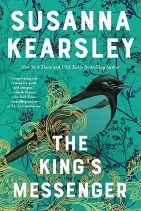
Susanna Kearsley, The King’s Messenger

It’s 1613, and King James I sits on the throne of England. His son, Prince Henry, has recently died, and rumors suggest that he was poisoned. To investigate (or possibly to set up a scapegoat), the king sends one of his messengers, Andrew Logan, to arrest the prince’s mentor and close companion, Sir David Moray. Traveling with Andrew are a scrivener and his daughter, Phoebe Westaway, who will record any statements made by Sir David. Andrew and Phoebe have a contentious history, but their proximity on this journey leads to very different feelings. Meanwhile, their perspective on Sir David also begins to change. Susanna Kearsley is a top-notch writer of historical fiction, and while I don’t know much about this time period, her depiction feels believable and authentic. I found the present-day adventure and romance more interesting than Sir David’s history with the prince, which is interspersed in the narrative via flashbacks. But overall, I really liked this one, though A Desperate Fortune remains my favorite Kearsley novel.

Annie Darling, Crazy in Love at the Lonely Hearts Bookshop

Nina, who works with her two BFFs at a bookstore specializing in romantic fiction, prides herself on being unconventional, from her vintage-pinup-girl style to her sleeves of tattoos. Her romantic ideal is Heathcliff from Wuthering Heights. Noah, a consultant who’s evaluating the bookstore’s finances, couldn’t be farther from Nina’s usual type—yet she feels a surprising attraction to him. But as they get to know each other, they discover an unpleasant shared history that may drive them apart. I remember enjoying the previous book in this series, True Love at the Lonely Hearts Bookshop, but this one didn’t do much for me. I think it’s because I can’t really relate to Nina at all (again, her romantic ideal is Heathcliff). The book also feels pretty dated in its approach to friendships and relationships, despite being published in 2018—it seems a bit like a Bridget Jones’s Diary copycat. Overall, not a horrible book, but not one I’d recommend either.

Silvia Moreno-Garcia, Mexican Gothic

It’s 1950, and Noemí Taboada is a glamorous socialite in Mexico City. But when she receives a disturbing letter from her cousin Catalina, who has recently married and moved to her husband’s remote mountaintop estate, she decides to visit and find out what’s going on. Noemí is repulsed by the decaying estate and its hostile inhabitants. She’s also alarmed by Catalina’s seeming insanity, and becomes even more so when she too starts having strange dreams. She eventually uncovers a complex and horrific history that’s holding her cousin captive—and is now attempting to ensnare her as well. I’ve enjoyed every Moreno-Garcia book I’ve read so far, and this is no exception, though it’s way closer to horror than I normally go! It’s definitely not for the faint of heart—there’s violence (including sexual violence), body horror, and all manner of creepy goings-on. But I really liked this take on the gothic genre and how it explores power dynamics, particularly conquerors vs. conquered and men vs. women. I also loved Noemí as a heroine; she’s got quite a bit more intelligence and spunk than some of her predecessors in this genre. It’s not quite my kind of book, but if this premise interests you, I’d highly recommend it!

Mini-Reviews: Beautiful, Winterlight, Impetuous

Emily Henry, Great Big Beautiful Life

Alice Scott is an entertainment journalist who’s trying to level up her career. So she’s thrilled when she gets the chance to interview Margaret Ives, a reclusive former “tabloid princess” who was the child of a media dynasty and the wife of a famous rockstar. If the interview goes well, Alice might get to write Margaret’s biography. But there’s another journalist in the running, Hayden Anderson, who’s won a Pulitzer and isn’t happy about having Alice as his competition. As Alice uncovers the secrets of Margaret’s past, she falls for Hayden in the present. I’ve enjoyed every Henry novel that I’ve read, and I think this one might be my favorite. The romance between Alice and Hayden, while lovely, actually gets somewhat short shrift because a lot of the book delves into Margaret’s family history. Some might find the divided focus distracting, but I was genuinely invested in every story. The novel is about love (both romantic and familial), grief, loneliness, art, and the things we regret. I liked it a lot and look forward to the next Emily Henry book.

Kristen Britain, Winterlight

After the events of Firebrand, Karigan is still dealing with trauma and constantly hearing the voice of her torturer, Nyssa, in her head. But she doesn’t have time to dwell on this because Second Empire has officially begun war with Sacoridia, capturing a strategically important castle in the mountains. Karigan and the other Riders are sent to help, but they must also contend with Darrow Raiders, evil wraiths, Eletians with a hidden agenda, and the looming threat of Mornhavon the Black. It took me forever to get through this 835-page tome, and honestly I’m not sure it was worth it. I did like seeing Karigan back among the other Green Riders, and it feels like progress is finally being made on some of the series-long arcs. But it’s still too long, some of the side plots feel uninteresting and inconsequential, and I just don’t care much about this series anymore. I’ll still read the new one that’s coming out this fall, but I hope it ties up some of the main storylines, because I’ll almost certainly be quitting the series after that.

Stephanie Laurens, Impetuous Innocent

Georgiana Hartley has just returned to England after living abroad for several years, only to find her odious cousin Charles living in her family’s ancestral home. When Charles makes unwanted advances, Georgiana runs away and begs her nearest neighbor—Dominic, a viscount—for help. Dominic escorts her to his sister in London but thinks little more of the matter at first. But as he sees Georgiana thriving in London society, surrounded by suitors, he finds himself attracted to her. Meanwhile, Georgiana is head over heels for Dominic but can’t believe he would be seriously interested in her. This book has its good points; it’s steamless, it’s reasonably well written, and though it’s nowhere near Heyer quality, some plot points and characters are vaguely reminiscent of her. But Georgiana and Dominic are incredibly frustrating! Why they fall for each other is a mystery, as they spend hardly any time together until they’re already “in love.” They seem incapable of rational communication and are kept apart by a series of increasingly stupid misunderstandings. So, unfortunately, this one is definitely not a keeper for me.

Mini-Reviews: Archive, Swept, Otherwhere

Genevieve Cogman, The Dark Archive

In the penultimate installment of the Invisible Library series, Irene Winters and her friends face a whole new set of problems. They’re the targets of various assassination attempts (even more so than usual), a new master criminal is on the loose in London, and an old enemy unexpectedly resurfaces. To figure out exactly who’s after them and why, Irene and company travel to a scientific exposition that leads to a dramatic showdown in Barcelona’s Sagrada Familia. As with the series in general, I liked this book, though I didn’t find it particularly hard to put down. With only one book left in the series, I’m wondering if everything will be wrapped up in a satisfying way. All along I’ve suspected that the Library may not be completely benign, but I fear the last book won’t explore that idea and will force me to take it at face value. I also question the durability of Irene and Kai’s relationship (and whatever happened to her unresolved sexual tension with Vale?). Looking forward to reading the last book to see how it all turns out.

Beth O’Leary, Swept Away

The back cover of this novel asks, “What if you were lost at sea … with your one-night stand?” And that’s the entire plot of this contemporary romance. Lexi and Zeke meet in a bar on the north coast of England. They have great sex in Zeke’s houseboat, but due to a miscommunication, neither of them secures the boat to the dock. So the next morning, they’ve been washed out to sea and must work together to survive and find their way home. I really like Beth O’Leary’s writing in general, and this book mostly worked for me. I loved the slow-burn romance; both Lexi and Zeke are very guarded people, and it’s lovely to watch them gradually let each other in. The survival stuff wasn’t as compelling for me, and I never really felt they were in serious danger (though of course in real life, they totally would be!). So The Flatshare is still my favorite O’Leary novel, but I did enjoy this one very much as well.

Emily J. Taylor, The Otherwhere Post

Maeve’s father is a notorious murderer, so for the past several years she’s lived under assumed names, never staying in one place long or getting too close to anyone. When she receives an anonymous letter saying her father was innocent, she’s determined to find out more. The answers may be at the Otherwhere Post, a place that teaches the art of scriptomancy—magic-infused writing that allows people to travel between worlds. But the search is dangerous, and Maeve may not be ready for the answers she finds. I really liked the concept of this novel (a school for magic writing! Alternate universes!), but for me, the plot and characters didn’t live up to it. Everything just felt a bit predictable—the characterization, the romance, the “twists” all felt like exactly what you’d find in a typical YA fantasy novel. Plus, Maeve does some unethical (and stupid) things in the course of her quest, which made her a less sympathetic character to me. Overall, a fine but not an exceptional read.

Mini-Reviews: Dream, Fake, Shadow

Kristen Britain, The Dream Gatherer

This book is a collection of two short stories and one novella that Britain wrote to celebrate the 20th anniversary of Green Rider’s publication. The stories aren’t part of the Green Rider series per se, but they’re set in the same world and include some characters from the series. The book also contains some illustrations by Britain and a foreword from her friend and fellow fantasy writer Julie Czerneda. To me, this collection is nothing special, with the two short stories especially being quite forgettable. It feels like an attempt to pacify fans who’d gotten impatient of waiting three-plus years for each new book. I haven’t felt that same impatience, as I didn’t start the series till last year and am not a hugely invested fan. So I was neither excited nor disappointed; this volume is fine, but it’s unnecessary filler that does nothing to move the series forward. I was happy to have a little break from the usual 800-page tomes, though!

Charlotte Stein, My Big Fat Fake Marriage

Connie’s never had much luck with men, and the seemingly nice ones always turn out to be the biggest jerks. So she’s deeply suspicious of her neighbor, Henry Samuel Beckett, who appears to be the kindest person on the planet. Turns out, Beck does have a secret: He’s single, but because of a coworker’s bullying, he’s invented a fake marriage. And when he needs to prove his story, Connie volunteers to pose as his wife. Having enjoyed Stein’s When Grumpy Met Sunshine, I was eager to read this one, which features Mabel’s BFF. I really liked both Connie and Beck, both of whom have been constantly devalued by most of the people in their lives. As a result, they’re deeply insecure, and they have trouble standing up for themselves—but immediately leap to defend each other. There’s no plot to speak of, just enough scaffolding to get them to the fake marriage/only one bed premise. There’s also a lot of steam, which I’m not a fan of, but it’s par for the course with Stein. Overall, I did enjoy this one but would recommend looking at an online sample to see whether the writing style works for you.

Stella Riley, The Shadow Earl

Christian, the earl of Hazelmere, vanished three years ago on his Grand Tour. Now he’s suddenly reappeared in London, but he won’t disclose what happened to him while he was missing. He’s also not quite the same gentle, carefree young man he once was—a fact that dismays Sophie, who was informally betrothed to him before he disappeared. Will Christian heal from his traumatic experiences enough to find happiness with Sophie? I really like Stella Riley’s novels; you’re always going to get good writing, likable leads, and a historical setting that’s not just window dressing. But this book lacks any sort of dramatic tension. We learn what happened to Christian early on, and the bulk of the “plot” is he and his friends seeking revenge. I kept waiting for a surprising revelation or twist, but none came. The novel does, however, provide tons of sequel bait; there are at least six or seven supporting characters who could have their own books. Of course, I will read those sequels if/when they materialize! But I still prefer Riley’s Rockliffe books.

Mini-Reviews: Ticket, Fatally, Inconvenient

Freya Sampson, The Lost Ticket

In 1962, twentysomething Frank met a girl on a London bus, and that single encounter changed his life. Unfortunately, he lost the phone number she gave him, and he never saw her again. Sixty years later, Libby has just arrived in London after simultaneously losing her job and her boyfriend. When she meets Frank (on the bus, of course), she’s fascinated by his story and decides to help him find the girl from the bus—posting flyers, placing newspaper ads, inventing a Twitter hashtag, etc. In the course of the search, Libby grows in unexpected ways as she discovers a new purpose and perhaps a new romance. This is a gentle, bittersweet novel about community and the positive ways people can influence each other. There are a lot of tender, effective moments, and Libby is a realistically complex character. Some aspects of the plot, like the romance and Libby’s conflict with her family, get short shrift. But overall, this is a pleasant, escapist, not too saccharine read.

Ande Pliego, You Are Fatally Invited

Six mystery authors are invited to a writers’ retreat at the home of reclusive best-selling author J.R. Alastor. Alastor is a pen name, and no one knows the author’s true identity, but the guests are all eager to meet their host. They don’t know that Mila, the event coordinator acting as Alastor’s proxy, has a grudge against one of them and is planning murder as her revenge. But when someone turns up dead—and it’s not the murder Mila had planned—she and the guests must team up to find the killer(s?) in their midst. This novel is heavily influenced by Agatha Christie’s And Then There Were None, with a dash of the Clue board game thrown in. As such, I was sold on the premise, and ultimately I enjoyed the book. It’s a little gory, and some of the logistical plot elements didn’t quite make sense (but maybe that’s my fault, as I was racing to the end and might have missed some details). But I liked the ending, and I’m pleased with myself for figuring out Alastor’s identity. Recommended if the premise appeals to you.

Loretta Chase, My Inconvenient Duke

Lady Alice Ancaster has decided it’s time to marry. Her brother constantly engages in reckless behavior that could get him killed, and his heir is a terrible cousin who would make Alice’s life miserable. Unfortunately, she’s already in love with the wrong man: Giles, duke of Blackwood, one of her brother’s best friends and partners in crime. Giles has loved Alice for years but knows she’s far too good for him, and he’d rather sow wild oats with his friends than settle down to marriage and respectability. When circumstances push them together, however, their attraction threatens to overcome their better judgment. Much as I love Loretta Chase, I found this book a little disappointing. It’s the third in a series, and the first two books hinted at problems in Alice and Giles’s marriage, which I assumed this book would explore. Instead, this is more of a prequel, starting well before their marriage and the events of books 1 and 2. The story is entertaining and well told, but it’s not the story I was hoping for. It’s still a Chase novel, which means there’s still a lot to enjoy (I do love me some pining, and there’s plenty of it here!), but this one won’t be a keeper for me.

Mini-Reviews: Hunting, Zero, Secret

Anna Gavalda, Hunting and Gathering

This novel, set in the late ’90s/early aughts, follows four characters struggling to survive in Paris. There’s Camille, literally a starving artist, who’s eking out a living as a cleaning lady; Philibert, a sheltered aristocrat with OCD and no idea how to live in the 21st century; Franck, a talented chef who does nothing but work; and Paulette, Franck’s grandmother, who’s getting too old to live in her house but doesn’t want to move to a nursing home. All four are lonely and at the end of their resources, but as their lives intersect, they find connection and hope. I’ve read this book before and enjoy it every time. I laugh and cry and fall in love with the characters, and there’s an achingly lovely slow-burn romance as well. It’s not all sunshine and rainbows—Paulette’s story is particularly heartbreaking—but overall it’s a warm and uplifting book.

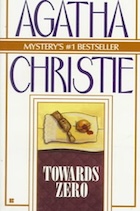
Agatha Christie, Towards Zero

The setup of this Christie novel is an ill-assorted house party in a small coastal town. Nevile Strange and his new wife, Kay, are visiting his former guardian, the rich invalid Lady Tressilian. Awkwardly, Nevile’s first wife, Audrey, happens to be visiting at the same time. The three members of the love triangle all claim to be perfectly fine with this arrangement, but tensions are high. When Lady Tressilian is murdered and it’s clearly an inside job, Superintendent Battle takes a hand in the investigation. This is one of Christie’s more farfetched tales, but it’s still a compelling read! I remembered the murderer’s identity and was entertained by the book’s clever misdirection involving certain clues and alibis. The characterization is on the weaker side—for example, there’s a romance shoehorned in at the end that doesn’t really work—but I still enjoyed rereading this one.

Genevieve Cogman, The Secret Chapter

In this sixth installment of the Invisible Library series, Irene is tasked with acquiring a book from Mr. Nemo, a mysterious Fae collector with a Bond-villain-esque island lair. In exchange, Mr. Nemo wants her to participate in a heist: She’ll work with a crew of dragons (including Kai) and Fae to steal a famous painting from an alt-21st-century Vienna. But tensions are high among the crew, the nascent dragon-Fae-Library treaty notwithstanding, and everyone has a hidden agenda. I love a good heist caper, so I found this book a lot of fun; it doesn’t do anything groundbreaking with the genre, but it both embraces and mocks the various tropes. I’m not sure the book does much to move the series forward, and with just two books remaining, I’m curious about the endgame. Guess I’ll just have to keep reading to find out!

Mini-Reviews: Shaman, Feast, Earl

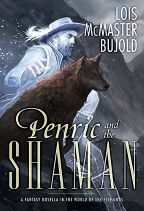
Lois McMaster Bujold, Penric and the Shaman

Four years after making the acquaintance of the demon Desdemona, sorcerer Penric has become a divine in the Bastard’s order. In that capacity, he is asked to participate in the hunt for a runaway shaman who’s responsible for the death of a young nobleman. His partner, the in-world equivalent of a police officer, distrusts all sorcerers and isn’t impressed by Pen’s youth and affability. But as they work together, they come to understand one another better—and realize that the shaman also isn’t quite what he seems. This novella has a lot of world-building that I found a bit hard to follow, even though I’ve read The Hallowed Hunt, which introduced the concept of shamans in this world. There’s also not much conflict; all the major players are well-intentioned and willing to collaborate to solve their problems. But I did enjoy the story and liked seeing Pen impress those who initially underestimated him. I’m excited to continue this series!

Ernest Hemingway, A Moveable Feast

I just got back from my first trip to Paris and thought this would be the perfect book to read while I was there! It’s Hemingway’s fictionalized account of his life in Paris in the 1920s with his first wife, Hadley. He talks about his favorite cafés, his writing process, his affinity for gambling and skiing, and his many friends and acquaintances in the Parisian literary world, such as Gertrude Stein and F. Scott Fitzgerald. I wouldn’t say I’m a huge Hemingway fan, but I do admire his writing style, and there are plenty of wonderfully evocative turns of phrase in this book. I think it’s a bit uneven—which is fair, as it was incomplete when he died and published posthumously—and I’m not sure I’ll ever want to reread it. I think it’s a bit too inside-baseball unless you’re intimately familiar with Hemingway and all the people he describes. Still, it’s reminded me that I would like to read more of Hemingway’s fiction.

Caroline Linden, An Earl Like You

Hugh Deveraux has just inherited an earldom, and with it a mountain of debt that his father had kept secret. With a widowed mother and two sisters to support, he needs money fast. He tries to recover his fortunes at the gaming tables, where he receives an unusual proposal: Rich merchant Edward Cross wants his daughter, Eliza, to marry an aristocrat. If Hugh is willing to be the bridegroom, Cross will pay all his debts and give Eliza a hefty dowry. Hugh is reluctant at first, but when he meets the warm and down-to-earth Eliza, he decides to go through with the marriage. But what will happen when Eliza discovers that her handsome suitor is only after her money? I quite enjoyed this variation on the marriage-of-convenience plot, where only one partner knows it’s a marriage of convenience. Hugh’s deception is appalling, especially because the kind and trusting Eliza thinks it’s a love match, and the book treats this conflict with the gravity it deserves while still making Hugh a likable and redeemable character. I liked this one and may try more from the author.

Mini-Reviews: Firebrand, Unhoneymooners, Bummel

Kristen Britain, Firebrand

Karigan is back in her own time but wounded and grieving after the events of Mirror Sight. Eventually she gets a new mission to distract her: She’ll head to the northern edge of the kingdom in search of allies in the coming war between Sacoridia and Second Empire. Meanwhile, an elemental spirit summoned by Grandmother attacks the royal family and abducts King Zachary. While I didn’t hate Mirror Sight, I’m glad this book takes us back to the series’ familiar setting and characters. I liked that Karigan has realistic human responses (sadness, anger, despair) to all the suffering she’s endured throughout the series. I also really enjoyed getting a bit more of Zachary’s POV than usual! The book is still far too long and has too many characters, and I could have done without some of the more melodramatic bits of violence near the end. But overall I enjoyed this one and will definitely continue with the series.

Christina Lauren, The Unhoneymooners

Olive and Ethan have never gotten along, even though her twin sister is marrying his brother. But when everyone at the wedding gets food poisoning except the two of them, they find themselves in the awkward position of taking their siblings’ places on the (nonrefundable) honeymoon to Hawaii. As they pretend to be married while participating in the various resort activities, Olive is surprised to discover another side to Ethan and finds herself falling for him. But a conflict between their siblings might derail their fledgling romance. This is my first encounter with Christina Lauren, and I enjoyed the book, but given the hype surrounding these authors, I think I was expecting a bit more. The initial conflict between Olive and Ethan felt very contrived and made me dislike Olive for jumping to conclusions. I did like the later conflict involving their siblings, which felt more realistic and gave some real stakes to the story. Overall, it’s a perfectly good read, but it just didn’t grab me.

Jerome K. Jerome, Three Men on the Bummel

In this sequel of sorts to Three Men in a Boat, narrator J. and his friends Harris and George decide to take another trip, this time a bicycle tour of Germany. But of course things start going wrong from the start, and the three men get into a variety of humorous scrapes. Meanwhile, J. often digresses to give his views on issues such as English vs. German education, the Germans’ passion for law and order, and why long descriptions of scenery aren’t necessary in a travelogue. Like its predecessor, this little book is a quick and enjoyable read, full of humor and satire. The book pokes gentle fun at the British traveler abroad, various countries’ attitudes toward foreigners, and the travel genre as a whole. There’s no plot to speak of, just a series of vaguely connected anecdotes. Worth a read if you enjoy this sort of light humor, though I remember liking Three Men in a Boat more.

N.B. According to Google Translate, “Bummel” can mean a stroll, spree, tour, wander, ramble, or saunter. All accurate descriptions of what J., Harris, and George get up to!

Mini-Reviews: Rake, Wildwood, Mistake

Eva Leigh, My Fake Rake

Lady Grace Wyatt and Sebastian Holloway have been friends for years, as both are socially awkward, scientifically minded nerds. Grace is infatuated with another scientist, but he sees her only as a colleague. So she and Sebastian concoct a plan: He’ll become a stylish, sought-after rake, then publicly flirt with Grace to make her crush jealous. But their plan goes awry when Grace and Sebastian find themselves wildly attracted to each other. I wanted to like this book – it seemed like a silly but fun gender-flipped take on the makeover trope (he takes off his glasses and is suddenly hot!) – but the execution fell flat. The hero and heroine are both anachronistically progressive (at one point, the hero refuses tobacco because it would be culturally appropriating Native American rituals), and their scientific interests try but fail to substitute for actual personalities. Ultimately, the book just wasn’t well-written or fun enough to compensate for these issues, and I don’t plan to try more by Leigh.

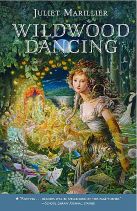
Juliet Marillier, Wildwood Dancing

Jena and her four sisters have a happy life as the daughters of a loving and prosperous merchant. Moreover, every full moon they’re able to visit the Other Kingdom, where they dance till dawn at the fairy court. But things change when Jena’s father travels south for his health, leaving the girls virtually alone. Jena’s sister Tati falls in love with a mysterious denizen of the Other Kingdom, and her cousin Cezar tries to take control of her father’s estate and business. Can Jena and her frog companion, Gogu, right these wrongs before it’s too late? I adored this book when I first read it and still liked it a lot this time around. Marillier’s prose is magical, and she creates a believable and immersive world. I really liked the incorporation of fairy tales and folklore, not just “The Twelve Dancing Princesses” but also “The Frog Prince” and vampire legends. I also appreciated the moral complexity of the book’s villain, Cezar, despite the intended YA audience. I prefer Marillier’s adult work, but this is still a very good read.

Sarah Mayberry, Her Best Worst Mistake

Martin is a conservative, buttoned-up corporate lawyer. Violet is a free spirit who wears scandalous outfits and likes breaking the rules. They’ve disliked each other for years but have had to get along because Martin was dating Violet’s best friend, Elizabeth. But when Elizabeth suddenly dumps Martin, Violet feels sorry for him and reaches out – only to discover a shocking sexual chemistry between them. But could that chemistry be the beginning of something more? This is a novella (about 150 pages) that manages to pack in quite a bit of backstory for the two main characters, setting up their opposites-attract dynamic and the conflicts that initially keep them apart. I liked both Martin and Violet and found their journey to love believable, if a bit sudden. There are several steamy scenes near the beginning, but the overall romance is surprisingly sweet. Recommended if you like the premise.

Mini-Reviews: Remember, Mortal, Bomb

Mary Balogh, Remember When

Clarissa Ware, the dowager countess of Ravenswood, is taking stock of her life. She’s nearly 50, her husband has been dead for several years, and her children are grown. Now she wants to discover who she is apart from her role as society wife and mother. To that end, she rekindles her friendship with village carpenter Matthew Taylor, who was her neighbor and best friend growing up. But any relationship between them will cause gossip; should they get together despite the possible cost to their reputations? This is a gentle, peaceful installment of the Ravenswood series. The conflict is practically nonexistent, and many of the scenes feel repetitive, as both Clarissa and Matthew spend a lot of time reflecting on whether they should be together. There are also the obligatory updates on Clarissa’s many children and family members, which I found a bit tedious. Overall, it was a decent enough read, but so far this series hasn’t grabbed me…though I am excited for Stephanie’s book now, and I hope it’s coming soon!

Genevieve Cogman, The Mortal Word

World-hopping, book-stealing Librarian Irene Winters has just been given her most high-stakes assignment yet. A secret peace treaty between dragons and Fae is in the works, mediated by the neutral Library—but one of the dragon negotiators has just been murdered. Irene and Vale are summoned to the scene of the crime, a version of Belle Époque Paris, where they must solve the murder and prevent negotiations from breaking down. But do the powers that be really want the truth to come out? This is another fun, page-turning installment of the Invisible Library series; it might even be my favorite so far. Most of the major series characters (Kai, Lord Silver, etc.) are on the scene and get some good page time. The romantic subplot takes a significant step forward. Plus, I always enjoy a good murder mystery! So yeah, I liked this one and am excited to continue with book 6.

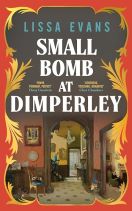
Lissa Evans, Small Bomb at Dimperley

World War II has just ended, and Valentine Vere-Thissett is leaving the army to return to Dimperley manor, which he’s just inherited (along with a title) from his older brother, who died in the war. Valentine doesn’t particularly want the responsibility, especially since Dimperley is falling apart. Fortunately, Zena Baxter, who came to Dimperley in a group of pregnant women who were evacuated from London during the war, has an idea that might save the estate. But not everyone is ready to embrace her plan. I loved this slice-of-life novel and its realistic depiction of postwar changes, but the characters are what really make the novel shine. Every single one is treated humanely and feels like a real person. There’s also plenty of quiet humor and an understated romance that I loved. All in all, an incredibly satisfying reading experience. I’m so glad I saw pamelad’s review on LibraryThing and decided to buy the book from a UK store (since it hasn’t been published in the US)—totally worth it!