Mini-Reviews: Scrappy, Baker’s, Alex, Warleggan

Scrappy Little NobodyBaker's Daughter, The

Anna Kendrick, Scrappy Little Nobody — This is a fun, breezy memoir by Anna Kendrick, an actress I generally enjoy and find likable. It’s not as funny as Tina Fey’s Bossypants or Mindy Kaling’s Is Everyone Hanging Out Without Me? (And Other Concerns), but fans of those books would probably like this one too. I was interested to learn that one of Kendrick’s first roles was the little sister in the 1998 Broadway production of High Society — I love the movie version with Grace Kelly!

D.E. Stevenson, The Baker’s Daughter — D.E. Stevenson is always reliable for a sweet, old-fashioned comfort read, and this book certainly fits the bill. The titular baker’s daughter is Sue Pringle, a plain and practical young woman whose life is changed forever by the arrival of John Darnay, an absentminded painter. If you like this kind of thing in general, you’ll enjoy the book.

Alex, ApproximatelyWarleggan

Jenn Bennett, Alex, Approximately — This book is billed as a YA contemporary You’ve Got Mail, but I don’t think it really delivers on that premise. Teenager Bailey is obsessed with old movies, and she’s been corresponding with her fellow cinephile Alex over the Internet. Now she’s moving to Alex’s hometown to live with her dad, and she’s excited to finally meet him in person. But she quickly gets swept off her feet by her annoyingly cocky yet handsome coworker, Porter. Fortunately, as the book jacket reveals, Porter IS Alex! But this whole You’ve Got Mail framework — which is what attracted me to the book in the first place — is the merest background, and it barely has anything to do with the plot. The meat of the story is the teen romance, which just didn’t do much for me. Another take on the YA You’ve Got Mail story is Kasie West’s P.S. I Like You, which I enjoyed a lot more.

Winston Graham, Warleggan — Things really get going in this fourth Poldark book, which is full of twists and betrayals and Ross making even more terrible decisions. I’m starting to think George isn’t such a villain; he undoubtedly does some despicable things, but after the events of this book, it’s clear that Ross isn’t exactly blameless. Demelza is definitely the true hero of this series!
Mini-Reviews: Geekerella, Eight, Only, Herrings

GeekerellaEight Days of Luke

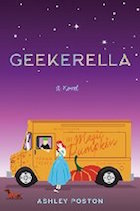
Ashley Poston, Geekerella — This is a cute YA take on the Cinderella story, where the protagonist is a teen who’s obsessed with the sci-fi TV show “Starfield,” and her Prince Charming is the lead actor in the upcoming “Starfield” movie. It’s an entertaining bit of fluff, but not something I’ll ever reread. I was also slightly annoyed with the main character because she mocks her “wicked stepsisters” for wearing makeup and caring about their looks, as if there’s something morally wrong with those things. Still, it’s a cute read, and you’ll probably enjoy it if the premise appeals to you.

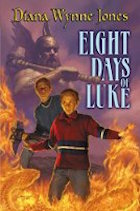
Diana Wynne Jones, Eight Days of Luke — This may be a children’s book, but I’d recommend it to anyone who is interested in Norse mythology. It’s the story of a boy named David who lives with his odious family and has no escape — until he meets the charming Luke, who takes him on several adventures. But it turns out that Luke is actually the Norse god Loki, and he’s in a lot of trouble with the other gods. This probably isn’t one of Diana Wynne Jones’s best books, but it’s still worth a read, in my opinion!

If You Only KnewFive Red Herrings, The

Kristan Higgins, If You Only Knew — Kristan Higgins is one of my auto-buy romance authors, but I’m really enjoying her forays into women’s fiction as well. This book still has a romance or two, but it also focuses on the personal journeys of Jenny, a wedding dress designer who’s struggling to get over her ex-husband, and her sister Rachel, who has just discovered her husband’s infidelity. Definitely recommended for fans of chick lit.

Dorothy L. Sayers, The Five Red Herrings — I’m a fan of the Lord Peter Wimsey mysteries, but I have to admit that this wasn’t one of my favorites. First of all, there’s no Harriet Vane, and I was really looking forward to seeing more of her after Strong Poison! Second, this is Sayers’s “alibi” mystery, where the solution involves railroad timetables and the like. I have to admit, I kind of skimmed over most of the in-depth alibi stuff, trusting that the denouement would give me all the information I really needed. So this wasn’t really the book for me, but I still found a lot to enjoy in Lord Peter’s antics and look forward to the next book in the series.

Mini-Reviews: Aunt, Farleigh, Likeness, Poldark

As you can tell, I’m not super motivated to blog at the moment, and I’m contemplating some possible changes to my process. Going forward, I’d like to absolve myself from trying to review every book I read, and maybe just focus on the best or most interesting books of each month. I’d also like to vary my content a little bit more, maybe by doing more discussion posts and memes à la Top Ten Tuesday. So I’m ruminating on that…but in the meantime, here are some more mini-reviews!

Death of My AuntIn Farleigh Field

C.H.B. Kitchin, Death of My Aunt — I love a good Golden Age mystery, but this one isn’t one of my favorites. I don’t remember it being particularly bad, but nothing stands out as particularly memorable either. It’s your standard “unpleasant family matriarch dies, the younger husband is the main suspect, but did he really do it?” plot. I did like the fact that the younger husband wasn’t an obvious slimeball, as they generally tend to be in these types of stories. But in the end, I think only diehard Golden Age fans will enjoy this one.

Rhys Bowen, In Farleigh Field — This book has a lot of my favorite things: historical fiction, World War II, spies, and a friends-to-lovers subplot. But while it was an enjoyable read, I didn’t fall in love with it. I think I wanted more from the espionage story, and the characters all seemed a little flat to me. Also, while the book can definitely be read as a standalone, I got the impression that it was setting up a sequel, and I’m not sure I care enough to continue with a (hypothetical) series.

Likeness, TheJeremy Poldark

Tana French, The Likeness — The modern crime thriller isn’t my preferred genre, but I made an exception for French’s In the Woods and completely devoured it. This is the second book in the Dublin Murder Squad series, and it focuses on Cassie, Ryan’s partner from the first book. The premise is somewhat outlandish, as Cassie must go undercover to investigate the murder of a young woman who looks just like her. But despite that, I found myself completely compelled by Cassie’s journey as she integrates herself into the dead woman’s life. I definitely plan to continue with this series — I’ve already bought book three!

Winston Graham, Jeremy Poldark — ***Warning: Spoilers for previous books in the Poldark series.***

Book three in the Poldark saga really amps up the drama, as it begins with Ross on trial for his life because of his role in the shipwreck and ensuing events at the end of Demelza. Of course, Ross is hellbent on making things as difficult as possible for himself, and George Warleggan is working behind the scenes to get Ross convicted. This is the book that really sold me on the series, although newcomers should start at the beginning with Ross Poldark.

Mini-reviews: Pretty Face + 3

Real life has been burning me out lately, so instead of getting stressed about the 20-ish reviews I still need to write, I’ve decided to Jack Bauer this situation and just write short ones! Here’s the first batch:

Pretty FaceShadow Bright and Burning, A

Lucy Parker, Pretty Face — I absolutely loved Act Like It, so Pretty Face went on my auto-buy list immediately. And I wasn’t disappointed; I devoured this romance between a beautiful actress who wants to be taken seriously and an older, talented but curmudgeonly director. If you like contemporary romance, you really need to give Lucy Parker a try!

Jessica Cluess, A Shadow Bright and Burning — Historical fantasy set in 19th century England is my jam, and when you add a bright young woman who is accepted into an all-male wizarding school, but she’s not actually the chosen one (or is she?), you can count me 100% in! I liked this book a lot, especially the bits about sorcery versus magic — and, of course, the hints of romance. Looking forward to book #2 in the fall!

Confession of Brother Haluin, TheBear and the Nightingale, The

Ellis Peters, The Confession of Brother Haluin — It’s always a delight to spend some time with Brother Cadfael and company, although this book doesn’t have one of the stronger mysteries in the series. Still, I love these books and am sad that there are only a few more left for me to read!

Katherine Arden, The Bear and the Nightingale — This historical fantasy novel based on Russian folklore is gorgeous and haunting, and I couldn’t put it down! I loved the main character, Vasya (even though she’s one of those not-beautiful-but-still-somehow-beautiful types), and her determination to save her family and land despite everyone else’s fear and skepticism. I was especially fascinated by the character of Father Konstantin, who isn’t exactly evil but is definitely flawed! Also, the setting is vivid and compelling, and I say this as someone who doesn’t usually care too much about setting. This is definitely going to be one of my top books of the year, and I can’t wait to see what Arden will write next!

Review: Demelza

DemelzaWinston Graham, Demelza

***Warning: spoilers for Ross Poldark.***

This second novel in the Poldark saga begins with Demelza giving birth to her and Ross’s first child, a baby girl named Julia. Uneasy at the thought of her lower-class, illiterate relatives mixing with Ross’s family and friends among the gentry, Demelza decides to hold two different parties for Julia’s christening. Of course, this plan goes terribly awry and ends in social disaster — the first of many situations in this novel where Demelza struggles with her new position in society as Ross’s wife. Meanwhile, low copper prices are causing trouble for Ross and the other mine owners, and many of the mine workers are facing dire poverty. Desperate, Ross joins a risky scheme that would give mine owners more control over copper prices, but the Warleggans are formidable enemies to this project. Personal tragedies, reversals of fortune, and love affairs gone wrong (or right) all play a part in this novel, but ultimately it’s the strength of Ross and Demelza’s relationship that gets them through it all.

I enjoyed this continuation of the Poldark series, which I think is a little more eventful and interesting than the first book. One of my favorite aspects of this novel is the portrayal of Ross and Demelza’s marriage. It’s a strong relationship but definitely not a perfect one: they argue, keep secrets from each other, and frequently become trapped in misunderstandings that a little honest communication could have prevented. But I love that Demelza isn’t afraid to speak her mind and that Ross genuinely respects her, notwithstanding her lower-class origins. I also liked the introduction of a few new characters, particularly Dwight Enys, a forward-thinking young doctor who becomes a fast friend of the Poldarks. Overall, this book got me excited about reading the entire series this year, and I’d definitely recommend it to fans of historical fiction or period dramas.

Review: My Lady Jane

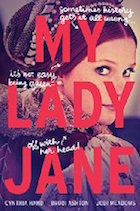
My Lady JaneCynthia Hand, Brodi Ashton, and Jodi Meadows, My Lady Jane

This novel is a highly fictionalized version of the events surrounding Lady Jane Grey’s accession to the throne of England, where she ruled for only nine days. The story begins as teenage king Edward VI learns that he is dying. He names his best friend Jane as his successor, which immediately makes her a highly desirable bride to the ambitious men at court. Although Jane is not particularly interested in marriage or becoming queen, she is forced to marry Gifford, the son of Edward’s most trusted counselor. Of course, Jane and Gifford don’t get along at first, but soon they must work together when she finds out that Gifford is an Edian, a person with the magical ability to turn into an animal. In fact, he can’t control this power, so he spends all his daylight hours as a horse. Jane and Gifford must conceal this politically dangerous secret and figure out how to control his power — all while navigating the perils surrounding the English monarchy.

When this book first came out, I refused to read it despite its popularity because of the terrible cover. But then I started reading reviews comparing it to things like The Princess Bride and Monty Python. And then I read the dedication — “For everyone who knows there was enough room for Leonardo DiCaprio on that door” — and I was hooked. This book is a fun and funny romp through Tudor history, and I thoroughly enjoyed it. Of course, those who are looking for realistic historical fiction from this era should definitely look elsewhere; the actual historical situation is just a springboard for the characters’ completely fantastical adventures. I really enjoyed the main characters, especially Edward, whose main complaint about dying is that he hasn’t ever kissed a girl. The plot does get a bit hectic toward the end, but by then I was happy to go along for the ride. Overall, I liked this book a lot, and now I’m interested in trying some of the authors’ solo works.

Review: The Long Way to a Small, Angry Planet

long-way-to-a-small-angry-planet-theBecky Chambers, The Long Way to a Small, Angry Planet

In a universe where space travel is common and humans mingle with aliens of various species, Rosemary Harper is about to join the crew of the Wayfarer, a spaceship whose job is essentially to facilitate interplanetary travel by punching wormholes through space. When Rosemary boards the Wayfarer, she meets a wildly diverse crew that nevertheless manages to live in (mostly) harmony. There’s Sissix, the lizardlike alien pilot; Kizzy and Jenks, the chatty engineers; Ashby, the captain; and Lovelace, the ship’s artificial intelligence system. They all embrace Rosemary as one of their own, even when they discover that she’s hiding a big secret from her past. But when the Wayfarer is hired for a particularly dangerous job, peace is threatened both among the crew and within the whole galaxy.

I’d read a lot of great reviews of this book, and I saw some comparisons to Firefly, so I was really hoping to love it. Unfortunately, I guess I’m in the minority on this one, because it honestly did nothing for me. The worldbuilding is excellent; the various alien species are well drawn, and the author obviously had fun exploring the cultural differences between her main characters. But the plot is practically nonexistent until the very end of the novel, when it’s finally revealed why this job is so dangerous and what’s at stake for the main characters. I also didn’t particularly care about any of the characters, and again I think it’s because there are no stakes; I don’t know what these characters want or what obstacles stand in their way. Finally, there’s an interspecies sexual encounter that I found distasteful, but of course other people’s mileage may vary. Overall, the great worldbuilding wasn’t enough to save this novel for me, and I won’t be reading the rest of the trilogy.

Review: On Second Thought

on-second-thoughtKristan Higgins, On Second Thought

After years of being single, Kate has finally found happiness with her new husband, Nathan. Their only marital problem so far is that Kate hasn’t yet gotten pregnant. Meanwhile, Kate’s half-sister Ainsley has been with her boyfriend Eric ever since college, and he’s dragging his feet about proposing to her, but she remains convinced that he’s “the one.” But the lives of both women change forever when Nathan dies in a tragic accident. Now a devastated Kate must deal with her grief — a horrible situation made even harder by her discovery that Nathan may have been hiding something from her. Meanwhile, the shock of Nathan’s death leads Eric to break up with Ainsley, who is blindsided by the loss of the future she’d been imagining for years. As both Kate and Ainsley try to move forward, they turn to each other for support and begin to forge a closer relationship.

I always enjoy Kristan Higgins’ contemporary romance novels, and even though this one isn’t quite as focused on romance, I still really liked it! I saw a few reviews that complained it’s depressing because it focuses so much on grief, and I can certainly understand that point of view. But to me, the story felt very hopeful and uplifting, because it’s about how both sisters are able to cope with the great pain and loss in their lives. I loved the relationship between Kate and Ainsley, who aren’t particularly close in the beginning of the book but eventually come to understand and appreciate one another. They both become more confident in their own lives, too, both professionally and in other family relationships. Of course, there is some romance in the novel as well, which I thoroughly (and predictably) enjoyed. I’d recommend this book to fans of romance or women’s fiction who don’t mind a slightly weightier premise.

Review: The Glimpses of the Moon

glimpses-of-the-moon-theEdith Wharton, The Glimpses of the Moon

In the glittering whirl of 1920s New York society, Nick Lansing and Susy Branch are intelligent but impoverished: they survive by living off the generosity of their richer friends. They fall in love with each other and decide to marry, but they agree that if either of them gets a chance to make a better financial match, they’ll divorce amicably. At first the marriage is very successful, and Nick and Susy are able to live off their friends’ extravagant wedding gifts. But when one of their friends lets them stay at her Italian villa during the honeymoon, they soon discover that she requires an ethically dubious favor in return. This favor drives a wedge between Nick and Susy — a wedge that widens even further when a titled Englishman and a rich heiress present themselves as alternative romantic options. In the end, will love or money prevail?

I don’t have much to say about this book except that I really loved it! Wharton’s prose is flawlessly precise, and she has an immense talent for evoking a character’s complete emotional state with a few subtle, well-chosen words. I actually found this book a bit stressful to read at times, because I cared about Nick and Susy so much, and I really wanted their marriage to work out despite the obstacles in their way. I liked the fact that no one is really a villain in the book, not even the wealthier romantic possibilities who are hoping that the marriage will break up. That said, Wharton does include some wonderfully biting satire about the upper classes and the frivolity and emptiness of their lifestyle. I’d recommend this book to anyone, especially those who love comedies of manners and the classics.

Review: Can I See You Again?

can-i-see-you-againAllison Morgan, Can I See You Again?

Bree Caxton owns a successful matchmaking business in California, and her first book is about to be published. So when her boyfriend of four years breaks up with her out of the blue, she panics: not only is she heartbroken on a personal level, but who wants to buy a book about love from someone whose own love life is a mess? Bree needs her book to sell big, both for her own career and for her grandmother, who is about to be evicted from her longtime home. Desperate, Bree asks one of her clients, Nixon Voss, to pose as her boyfriend in public interviews. Surprisingly, Nixon agrees, and the more time they spend together, the more Bree wonders whether they have a real connection. But will Bree’s determination to launch a bestseller — and the sudden reappearance of her ex — end their relationship before it begins?

As I frequently mention on this blog, “fake relationship becomes real” is one of my favorite romance tropes, so I was intrigued by the premise of this book. Sadly, I wasn’t particularly wowed by the execution. The central conflict — Bree needs her book to make the NYT bestseller list so that her grandma won’t lose her house — just seemed too farfetched. In what universe would that plan actually work? I also wasn’t particularly invested in Bree’s relationship with Nixon, for some reason. Maybe they don’t spend enough time together in the book? Or maybe neither character is developed well enough for me to see why they’re so right for each other. I did like that Nixon has some semblance of a personality, but as I said, he’s really not in the book that much; the primary focus is on Bree’s professional life and her relationship wth her grandma. Overall, while this book isn’t terrible, I don’t think it’s particularly interesting or memorable.