2024 Vintage Mystery Challenge Wrap-Up

Another year, another Vintage Mystery Challenge completed! The 2024 challenge was a scavenger hunt, in which participants were asked to read at least eight books with specific objects on the covers. I read ten qualifying books for the Golden Age challenge, which dealt with books published before 1960. Here’s what I read:

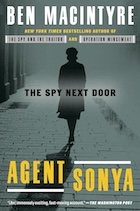
  1. Delano Ames, She Shall Have Murder (1948): shadowy figure
  2. Richard Hull, The Murder of My Aunt (1934): body of water
  3. Erle Stanley Gardner, The Bigger They Come (1939): door
  4. Georgette Heyer, A Blunt Instrument (1938): redhead
  5. Ngaio Marsh, Overture to Death (1939): blue object (ball of yarn)
  6. Christianna Brand, Green for Danger (1944): nurse
  7. Mignon G. Eberhart, Murder by an Aristocrat (1932): more than two people
  8. J. Jefferson Farjeon, Thirteen Guests (1936): flower or plant (green plant)
  9. Agatha Christie, And Then There Were None (1939): skull
  10. Cornell Woolrich, The Bride Wore Black (1940): hat

Mini-Reviews: Bookishly, Arabella, Goodbye

Mia Page, Bookishly Ever After

Lexi Austen loves her job as the owner of Pemberley Books in Washington, DC. But lately it’s been harder and harder to make ends meet, thanks in part to a rival bookstore that’s begun encroaching on her turf. She concocts a scheme to distract the other bookstore’s owner, Sam Dickens, by making him fall in love with her, using techniques inspired by Jane Austen novels. But as Lexi gets closer to Sam, she soon finds it’s her own heart that’s in danger. I’ve been on kind of a disappointing streak with contemporary romances lately; this one was just okay. Lexi’s plan is obviously ridiculous, but I almost wish she’d gone a bit farther with it; that would have at least made the story a bit more unique. I did enjoy the DC setting, as I live pretty close, and the book mentions several real businesses and neighborhoods. But overall, I was underwhelmed by this one.

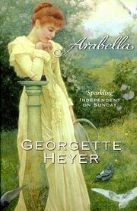
Georgette Heyer, Arabella

Arabella, a vicar’s daughter of no fortune, is eager to embark on her first London Season and hopefully marry a well-to-do man. En route, a carriage accident forces her to beg the help of Robert Beaumaris, one of the ton’s most eligible bachelors. When Arabella overhears Beaumaris complaining that she’s undoubtedly trying to trap him into marriage, she indignantly tells him she’s an heiress and has no need to marry for money. But when the rumor of her alleged fortune reaches London society, Arabella finds she needs Beaumaris’s help after all. This was one of my first Heyers, and it was a pleasure to revisit, although I found myself irritated that Beaumaris had so much more power and knowledge of the situation than Arabella did. But the romance is sweet nonetheless, and a mutt named Ulysses provides some fun comedy. Not a top-tier Heyer for me, but still a very good read!

Betty Neels, No Need to Say Goodbye

Louise Payne is a 26-year-old hospital nurse with three younger siblings to care for, and her salary barely allows them to make ends meet. A lucky inheritance from a distant relative provides the family with a country cottage to live in, where Louise finds that her near neighbor is Dr. Arlo van der Linden, with whom she worked in the London hospital. They were never particularly close before, but now Arlo is being friendly and helpful, even giving Louise a new job. Could he be interested in Louise’s pretty sister, Zoë? And if so, can Louise hide the fact that she’s fallen for Arlo herself? This was a quick read with a soothing, timeless atmosphere – I think it was published in the late ’80s or early ’90s but could have taken place much earlier. It’s a sweet though somewhat one-sided romance; Arlo is pretty high-handed, and we don’ know what’s going on in his mind till the very end of the book. I’ve got one more Neels novel on my shelves, and I’ll save it for the next time I want a quick read that doesn’t require any mental energy.

Mini-Reviews: Viscount’s, Christmas, Deerskin

Louise Allen, The Viscount’s Betrothal

Decima Ross, a spinster at age 27, is sure no man could ever fall in love with her because of her exceptional height. After her brother’s latest insensitive attempt to push her into the arms of an unwilling bachelor, Decima flees, but a snowstorm forces her to seek shelter with Adam, Viscount Grantham. Snowed in with only two servants, Decima and Adam soon grow close; but when they meet again in London, Adam is betrothed to another (beautiful and petite) lady. I’ve really enjoyed some of Allen’s other Regency historicals, but this one was disappointing: anachronistic behavior and dialogue, and characters behaving stupidly for the sake of the plot. I’ll continue to read more by Allen, but this is not one of her best.

Julianna Keyes, It’s Beginning to Look a Lot Like Christmas

Eve and Will are rival writers at the same travel blog, and they’ve both been assigned to cover Noelville, Vermont, during the run-up to Christmas. The problem is, neither one of them is a fan of the holiday season. But as they experience the marvels of the Christmas-themed town—including a nutcracker museum, cookie decorating classes, a moonlit sleigh ride, and more—they’re slowly won over despite themselves, and they also discover a surprising mutual attraction. I enjoyed this little Christmas novella, which feels like a self-aware Hallmark movie. Eve and Will’s snarking about the over-the-top Noelville traditions is the best part of the book, and they have a lot of fun banter. I felt like the romance was missing a scene or two; there’s never really a point at which they express their feelings for each other. But I’d recommend this one if you’re looking for a fun, bite-sized holiday treat.

Robin McKinley, Deerskin

Lissar, the daughter of a beloved king and queen of a prosperous kingdom, has a seemingly charmed life. But apart from her fleethound, Ash, she doesn’t have many friends and tends to be isolated and overlooked. When Lissar is 17, a traumatic event forces her to run away from home, and after a long period of healing, she finds herself in a new kingdom with a job in the royal kennels. As she slowly wins respect and love from those around her, she starts to hope for a better life—until the ghosts of her past trauma come back to haunt her. This book is a retelling of the Perrault fairytale “Donkeyskin,” which I’m not familiar with. But the dark thing that happens to Lissar is truly dark, so proceed with caution. Otherwise, McKinley’s books always seem to have weird pacing—lots of setup and a very short climax—but I don’t mind because she’s such a great writer that she just carries you along. This isn’t one of my top favorites by her, but it’s still well worth reading.

Mini-Reviews: Fangirl, Messy, Circling

Rainbow Rowell, Fangirl

When Cather and her twin sister, Wren, head off for college, Cath is overwhelmed by all the changes in her life. Her roommate, Reagan, is curt and intimidating; she doesn’t know where the dining hall is and she’s afraid to ask; and worst of all, Wren doesn’t seem to have time for her anymore. At least she has Simon Snow, a Harry Potter-esque series she’s always loved—and the fanfic she’s writing about Simon and his vampire roommate, Baz. But as Cath slowly acclimates to college life, she discovers that sometimes real life is better than fanfiction. Rowell is a wonderful writer, and in this book I think she does a great job of capturing the anxieties of entering college and the changes people experience during that formative time. I also think there’s way too much Simon Snow (both “canon” and fanfic)—Rowell was clearly working out the beginnings of the Simon Snow series she would later write, but it detracts from Cath’s own narrative. Still, I’m glad I revisited this one.

Matthew Kelly, Life Is Messy

I’m familiar with Matthew Kelly as the founder of the Dynamic Catholic Institute, which puts out educational videos and other materials for Catholics to grow in their faith. This book is sort of a memoir, based on his journals from a particularly tough time in his life—he doesn’t give specifics of the problems he was dealing with, but it’s clear he was extremely depressed and questioning a lot of things in his life. In the book, he ruminates on how he got through his hard time and shares his thoughts on how to move forward despite the problems and obstacles we encounter in life. Honestly, most of the book felt a bit trite to me, but he does pose a few insightful questions that will likely stay with me (“Do you like the person you’re becoming?”). Not sure I would recommend this one widely, but if the title or premise speaks to you, it might be worth picking up.

Julie Tieu, Circling Back to You

Cadence and Matt work at the same real estate firm, she as an analyst and he as a broker. They’ve always been friendly—and several coworkers have speculated on whether there’s a romantic element to their relationship—but they both insist they’re just friends, while secretly harboring a desire for more. When a work-related trip sends them both from their San Francisco office to L.A. (and in the same hotel suite, no less), the boundaries of their relationship get blurry; but conflicting career opportunities might end their romance before it ever gets started. I liked the premise of this workplace romance, but the execution felt meh. I never fully understood the work stuff (to be fair, maybe I just tuned it out because it was boring), and I didn’t feel much chemistry between Matt and Cadence. Overall, an okay read, but not one I’d recommend.

Mini-Reviews: Muse, Accomplished, Burning

Mimi Matthews, The Muse of Maiden Lane

This final book in the Belles of London series features Stella Hobhouse, who’s bold by nature but has been stifled by her strict brother and by self-consciousness about her unusual silver hair. Meanwhile, Teddy Hayes is a passionate artist who struggles to be independent despite having to use a wheelchair for mobility. When the two meet by chance in an art gallery, Teddy is struck by Stella’s unique beauty and wants to paint her. She resists at first, but as the two grow closer, they both find the courage to take a chance on art and love. I’ve been waiting for Teddy’s book since he appeared as a supporting character in A Convenient Fiction, and overall I was not disappointed. I liked that the book doesn’t shy away from either his flaws or his vulnerability, and Stella is a great match for him, as she understands and shares his struggle for freedom. The novel is a little too overpopulated with characters from previous books, but otherwise I really enjoyed this one. The first book in a new series by Matthews is slated to come out in 2025, and I will definitely be checking it out!

Amanda Quain, Accomplished

Georgie Darcy has been in a dark place ever since her boyfriend, Wickham Foster, betrayed her and almost got her expelled. Her classmates at Pemberley High all hate her, and her overprotective older brother, Fitz, seems to view her as nothing but a problem for him to solve. Georgie is determined to fix everything, but all her plans go spectacularly awry. I’m of two minds about this YA take on Pride and Prejudice from Georgiana’s POV. It’s a clever idea, and I actually really liked the book’s portrayal of Fitz Darcy (and Charlie Bingley, who is an utter delight). The novel also highlights just how horrible Wickham was to Georgiana in P&P; here, he’s clearly emotionally abusive and has left Georgie with some serious trauma. I honestly just wanted all the Darcys to go to therapy! I also found Georgie pretty frustrating, as she consistently makes the worst possible decisions. Overall, I think the pros of the book outweigh the cons, but I haven’t decided whether I want to keep it or not.

Genevieve Cogman, The Burning Page

After the events of The Masked City, Irene is on probation with the Library and is being sent on a lot of low-interest but high-danger jobs. But she’s back in action when her old enemy, Alberich, threatens both her specifically and the Library in general. Meanwhile, someone else also seems to be trying to kill her – could it be her Fae nemesis, Lady Guantes? As Irene pursues her dual goals of serving the Library and staying alive, she also gets some insight into Library politics and learns a bit more about whom she can really trust. I’m continuing to enjoy this series, and I was happy to see Irene, Kai, and Vale all working together in this installment. Irene’s growth is compelling: She’s always been emotionally detached and totally committed to the Library, but now she’s forging close relationships that may be changing her priorities. I’m interested to see how things develop, so I’ll most likely continue with the series into next year.

Mini-Reviews: Bride, Beau, Tomb

Mary Balogh, A Christmas Bride / Christmas Beau

In A Christmas Bride, Edgar Downes (brother of Cora from The Famous Heroine) is seeking a wife, but instead of proposing to one of society’s eligible young debutantes, he’s attracted to the scandalous widow Lady Helena Stapleton. Helena is drawn to Edgar as well, but because of certain events in her past (described in A Precious Jewel), she’s full of self-loathing and believes herself unworthy of love. Can Edgar change her mind? Then, in Christmas Beau, Max, the Marquess of Denbigh, is pursuing revenge against Judith Easton, the woman who jilted him eight years ago. He plans to seduce her, then break her heart as she broke his. But as he woos her, he begins to have second thoughts about his scheme.

One thing I admire about Balogh is her willingness to write unusual or unlikable protagonists. Helena and Max both do some objectively terrible things, and while I didn’t fully buy into their redemption arcs (especially Helena’s), I did appreciate their moral complexity. Christmas Beau is the more enjoyable book, in my opinion – A Christmas Bride has too many callbacks to previous novels – but both are pretty good reads. Be warned, both books are also overflowing with sappy depictions of a picture-perfect English country Christmas, complete with adorable children and unreasonably kind and accepting secondary characters. But ’tis the season for that sort of thing, and if you have a high sugar tolerance, you’ll probably enjoy these novels.

Kristen Britain, The High King’s Tomb

After the events of First Rider’s Call, the magical wall that protects the kingdom of Sacoridia from the dark magic of Blackveil is beginning to crumble. To fix it, King Zachary needs an ancient book that will explain the magic necessary to repair the wall, so he sends Karigan along with a rookie Rider to find it. But the acolytes of the evil sorcerer Mornhavon the Black are also after the book, hoping to destroy the wall for good. This continuation of the Green Rider series is, like its predecessors, a solid “classic” fantasy novel. I found it a bit too sprawling—there are a lot of POV characters and at least four different plots going at any one time, and it takes a while for everything to come together. That said, I appreciate the continuity between books and the realism of these characters having lives and problems in addition to the main “defeat the evil sorcerer” plot. My library has the rest of this series, so I’ll most likely continue with it in the new year.

Mini-Reviews: Rule, Convenient, Plus

Sarah Adams, The Rule Book

Nora Mackenzie is a talented sports agent who’s constantly fighting to be taken seriously by her male peers. So when she gets the opportunity to take on NFL star Derek Pender as a client, she jumps at the chance – even though they used to date in college, and it ended badly. When Derek learns that Nora wants to be his new agent, he decides it’ll be a good opportunity for him to get a little revenge on the woman who broke his heart. But their working relationship ignites old feelings, which may put both their careers at risk. I don’t particularly care about football, and second-chance romance isn’t one of my favorite tropes. That said, this is a pleasant, entertaining contemporary romance, and the connection between Nora and Derek feels genuine. It was also fun to get a few cameos from Nathan and Bree from The Cheat Sheet. Overall, it’s fine but not a book I’m super enthusiastic about.

Mimi Matthews, A Convenient Fiction

Alex Archer came from nothing; he was raised in an orphanage and ran away as soon as he could. Due to his skill at cards, he’s amassed a comfortable fortune through gambling over the years, but now he’s set on acquiring an estate through marriage. He has his sights set on a local heiress, Henrietta Talbot, but finds himself drawn to her friend Laura Hayes instead. Laura has neither property nor fortune – in fact, she’s barely making ends meet – but their mutual attraction threatens to overthrow all Alex’s plans. There’s nothing particularly unique about this Victorian romance, but for some reason it really works for me. What can I say? I love emotionally repressed heroes and practical heroines, and despite the fact that this book is steamless, the chemistry between Alex and Laura is palpable. I love Mimi Matthews in general, and this is one of my favorites by her. I’m now even more excited for The Muse of Maiden Lane, which features Laura’s brother, Teddy, as the hero.

Jenny L. Howe, On the Plus Side

Everly is a plus-size young woman who feels she’s “too much” and tends to hide herself, both physically and in terms of her opinions, desires, and talents. When she’s nominated for a makeover show geared toward plus-size individuals, she is excited for the chance to reinvent herself, and she soon finds herself drawn to grumpy cameraman Logan. But when the show starts taking some narrative liberties with Everly’s story, both her romance and her newfound confidence are threatened. I wanted to love this book, and as a plus-size woman myself, I could relate to many of Everly’s experiences and struggles. But in the end, everything works out for her pretty quickly and effortlessly. She attracts Logan’s admiration immediately, accepts her body wholeheartedly, and even mends her complicated relationship with her mother. It all just feels too easy and idealized. Overall, I’d consider trying more by Howe, but this book fell a little flat for me.

Mini-Reviews: Ghosts, Secret, Masked

Katherine Arden, The Warm Hands of Ghosts

The Great War has left Laura Iven an orphan. Her parents were recently killed in the Halifax Explosion of 1917, and now she’s received word that her only sibling, Freddie, is missing presumed dead after the Battle of Passchendaele. But if he’s missing, how could she have received his uniform and identification tags? Something doesn’t add up, so Laura goes to Europe looking for answers. This novel alternates between Laura’s story and Freddie’s, which takes place a few months earlier and reveals how he escaped the war’s horrors only to fall prey to something even worse. This book is beautifully written and emotionally harrowing; Arden’s depiction of the war and its all-consuming effects is relentlessly grim and graphically vivid. I found it a very hard read at times, but I’m glad I persevered and came to a whisper of hope in the end. I also loved how the story engages with literature and legends about the devil, who is very much present in the book. Highly recommended if you’re in the mood for something dark!

Benjamin Stevenson, Everyone This Christmas Has a Secret

Ernie Cunningham gets involved in a “holiday special” murder when his ex-wife, Erin, calls on him for help: Her current boyfriend, Lyle, was killed in their home, and she’s been arrested for the murder. Ernie’s investigation centers around Lyle’s philanthropic work at a theater in the Blue Mountains, which is currently staging a famous magic act. This means Ernie is surrounded by people familiar with stage magic and skilled in the art of misdirection—in other words, the perfect set of suspects. Can he clear Erin’s name and find the real murderer in time for Christmas? This novella is a fun installment of the series that makes good use of the time-honored detective novel trappings of theater, magic, and of course Christmas. I was able to guess the murderer but didn’t unravel the whole plan, and I enjoyed Ernie’s conviction that there are rules for holiday specials as well as for mysteries. Recommended if you’ve enjoyed previous books in the series.

Genevieve Cogman, The Masked City

Irene is happy with her new job as the Librarian-in-Residence in a steampunk version of Victorian London. But when her apprentice, Kai—the youngest son of a noble dragon family—is kidnapped, she must leave her (relatively) comfortable new position to rescue him and prevent an all-out war between dragons and Fae. To do so, she travels to an unfamiliar, extremely chaotic world that’s dominated by the Fae: a fairytale version of Venice where it’s always Carnival. This book is a pretty good follow-up to The Invisible Library, with exciting action scenes and some fun snark about the Fae’s addiction to storytelling tropes. I enjoyed Irene’s cleverness and practicality, though I missed Kai and Vale, who didn’t get a lot of page time in this installment. But overall, it’s a fun read, and I’m looking forward to book #3 next month.

Mini-Reviews: Rules, Witch, Bride

Sinéad Murphy, The Jane Austen Rules: A Classic Guide to Modern Love

This short book positions itself as a dating guide based on the timeless wisdom of Jane Austen. As a diehard Austen fan, I loved the premise, but I have mixed feelings on the execution. I do think the advice, both about dating and how to be a woman in the modern world, is largely good. The Austen analysis is also interesting; it’s not super deep literary criticism, but some of Murphy’s interpretations are ideas I hadn’t considered before. However, I wasn’t a fan of the writing style, which is trying—and mostly failing—to imitate Austen. Plus, Murphy misquotes the first sentence of Pride and Prejudice, which is frankly inexcusable! So, while I didn’t hate the book, I wouldn’t recommend it either, even for Austen fanatics.

Elizabeth George Speare, The Witch of Blackbird Pond

In 1687, orphan Kit Tyler experiences severe culture shock when she leaves her life of luxury on a Barbados plantation and moves in with her aunt’s family in Connecticut Colony. At first Kit hates her new life: Her uncle is strict, she’s forced to help with the unending household chores, and the broader Puritan community is suspicious and unwelcoming. Gradually she comes to appreciate her new situation, particularly after she befriends an old woman widely reputed to be a witch. But when the town’s hostility toward the “witch” turns ugly, Kit’s own safety is threatened. This was my favorite book for a while growing up, and upon rereading, I was surprised by just how many scenes I remembered. I found it a very enjoyable read that paints a vivid picture of colonial New England, both good and bad. I also loved Kit’s character development, as well as the multiple satisfying love stories. I’m glad I decided to revisit this one!

Cornell Woolrich, The Bride Wore Black

This thriller features a mysterious woman who is systematically murdering men throughout New York City. Her motive is unclear, as she doesn’t seem to know any of the men personally. Beautiful and clever, she’s easily able to gain access to her victims, and she always vanishes directly after the murder without a trace. Eventually, a policeman notices a pattern among the killings and makes it his mission to bring this femme fatale to justice. This is a fascinating, suspenseful novel with a clever structure, following the woman and each of her male victims in turn. As a result, I felt some measure of empathy for every character and was eager to discover the woman’s motive. The ending is both satisfying and heartbreaking—everything is resolved, but none of the characters get what they want. I’d definitely recommend this one to fans of suspense and noir, and I’m interested in reading more by Woolrich.

Mini-Reviews: Librarian, Lady, Call

C.J. Archer, The Librarian of Crooked Lane

In a fantasy version of post-World War I England, Sylvia Ashe supports herself by working as a librarian. Her path crosses with that of Gabriel Glass, a nobleman and the son of a famous magician, as he investigates the theft of a possibly magical painting. When he inadvertently gets Sylvia fired, he finds her a new job at a library specializing in magical tomes. He also draws her into both his investigation and his circle of friends. As Sylvia gets closer to Gabe, she also resaerches whether her family might possess silver magic, as her brother (who died in the war) believed. In terms of genre, this book is right up my alley—it’s essentially a historical mystery, with a few magical trappings and a hint of romance. The trouble is that I’ve read a lot of books in this genre, and after a while they all tend to feel pretty similar, unless there’s something truly remarkable about them. This book isn’t remarkable, but it’s a perfectly decent read. I certainly wouldn’t mind continuing with the series, but it’s not a high priority for me.

Mimi Matthews, A Lady of Conscience

This fifth (and final?) book in the Somerset series features the oldest Beresford brother, James, who is the heir to an earldom and is determined to rehabilitate the family name by making an advantageous marriage. His plans don’t include falling in love with Hannah Heywood, the shy daughter of an untitled naval officer, yet he finds himself struggling with unexpected feelings. Meanwhile, Hannah is attracted to James but doesn’t think they will be compatible in the long term. Can James convince her to give him a chance? I really enjoyed this book, which is somewhat in the Pride and Prejudice vein – James is a Darcy-esque, starchy, uptight hero who is slowly transformed by love. I liked Hannah too; she’s shy and quiet but still has a spine. Some aspects of the plot felt a bit rushed, but otherwise this is a strong installment of an entertaining series. Recommended if you enjoy steamless historical romance!

Kristen Britain, First Rider’s Call

Karigan G’ladheon tried to fight her destiny as a Green Rider and return to her former life as a rich merchant’s daughter. But she ultimately couldn’t resist the Riders’ call, though she’s now experiencing odd glitches in her magic and seeing visions of the long-dead First Rider, who seems to be desperately trying to tell her something. Meanwhile, an ancient evil is stirring in Blackveil Forest, and Karigan must dig deep into her country’s history to figure out how to stop it. This second book in the Green Rider series is a worthy sequel: It’s a solid fantasy novel with interesting world-building and a likable (if perhaps a little too special) heroine. The setting in particular is thoughtfully done; though the menace of Blackveil drives the main plot, the characters also have to deal with the problems of their everyday lives, such as court politics and romantic turmoil. I’m fairly invested in this series now and am looking forward to reading book #3 next month.