Review: The Impersonator

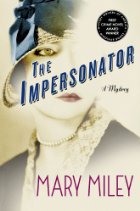
Impersonator, TheMary Miley, The Impersonator

Leah Randall is a talented but impoverished actress who has worked on the vaudeville circuit her whole life. During the course of one performance, she notices a strange man watching her intently. Eventually this man, Oliver Beckett, approaches her with an astonishing proposal. He tells Leah the story of his niece, Jessie Carr, heiress to a substantial fortune, who vanished from her home several years ago without a trace. Leah bears a striking resemblance to Jessie, so Oliver proposes a scheme: Leah will pose as Jessie and return “home” to claim her inheritance, which she will then split with Oliver. At first Leah wants nothing to do with it, but when she is fired from her vaudeville act and can’t get other work, she eventually reconsiders. With Oliver’s help, she assumes Jessie Carr’s identity and travels to the Carrs’ home in Oregon. But the more time she spends with the Carrs, the more she becomes determined to discover what really happened to Jessie all those years ago.

If you read that plot summary and thought, “That sounds an awful lot like Brat Farrar by Josephine Tey,” well, you’d be right. The premise is exactly the same — Miley even acknowledges that Tey’s novel was the main inspiration for her own — but I enjoyed Miley’s novel in its own right. I especially liked the period details about vaudeville, speakeasies, and other highlights of life in the 1920s. There were even references to some Supreme Court cases of the era, which I appreciated as a law school survivor. I also liked Leah’s narrative voice: she’s plain-spoken, independent, and very aware of both her talents and her flaws. The thing is, though, Brat Farrar is still by far the superior book. Miley’s novel is a bit disorganized at times, including several subplots that are more distracting than intriguing. I also hated the romantic aspect of this book; it was unbelievable and underdeveloped. I did enjoy the book overall and found it very readable, but if the premise sounds interesting to you, you should really just read the original instead!

Tune in Tuesday with Katelyn: Maybe it’s much too early in the game…

Tune in Tuesday-pinkThere’s no official theme for this week’s Tune in Tuesday, but given the fact that it’s New Year’s Eve, I really only had one choice of song. It wasn’t originally performed by them, but I love Zooey Deschanel and Joseph Gordon-Levitt’s rendition of “What Are You Doing New Year’s Eve?” It’s sly and cute and old-fashioned in the best way. Plus, ladies, admit it — you fell a little bit in love with JGL when he started singing, didn’t you? So on that note, I will wish you all a very happy New Year! May your 2014 be better than your 2013. 🙂

Top Ten Tuesday: Best of 2013

Top 10 Tuesday

On the last day of 2013, it seems only appropriate that we look back on our year and take stock of what we’ve read. This week’s Top Ten Tuesday topic facilitates said stock-taking by asking about the 10 best books we read in 2013. I have to say, I didn’t read anything this year that absolutely blew me away or that I would add to my list of all-time desert-island favorite books. But here are my 10 favorite books of the year, which I couldn’t possibly rank in order, so I’ve just listed them in the order in which I read them:

1. Anna Gavalda, Hunting and Gathering — I’m a sucker for a good love story, and this one is charming and somewhat philosophical and Parisian!

2. Jonathan Eig, Luckiest Man: The Life and Death of Lou Gehrig — I don’t read a lot of nonfiction, and I don’t really care much about sports, but I really loved this fantastic biography of one of baseball’s greatest legends.

3. Rainbow Rowell, Eleanor & Park — What more can I say about this book? It’s teen romance the way teen romance SHOULD be done.

4. Robin LaFevers, Grave Mercy — Medieval Brittany! Forbidden love! Political intrigue! Killer nuns! This book pushes so many of my happy buttons, it’s ridiculous.

5. Alexandre Dumas, The Count of Monte Cristo — I’ll admit, it was tough going at times. But this classic tale of revenge is so suspenseful and well-plotted that I don’t begrudge a minute of reading the complete and unabridged edition.

6. Ben Macintyre, Operation Mincemeat: How a Dead Man and a Bizarre Plan Fooled the Nazis and Assured an Allied Victory — I can’t quite believe it, but TWO nonfiction books made it onto my top 10 list this year! This is one of the most readable, entertaining books about WW2 espionage that I can imagine.

7. Maggie Stiefvater, The Dream Thieves — While not destined to become one of my all-time favorite books like The Scorpio Races, this book is further evidence of why Stiefvater is awesome and should keep writing dark, tortuous romantic fantasy forever.

8. Mary Doria Russell, Doc — This book is not only a great Western (and I don’t really care about Westerns) but a great work of historical fiction. I felt transported to Dodge City in the late 19th century, and it was one heck of an interesting ride!

9. Cheryl Mahoney, The Wanderers — I know, I keep talking about this book, and Cheryl is probably afraid I’m a crazy stalker person by now. But honestly, I just really liked this book, which reminds me of the excellent fantasy novels I read as a teenager that introduced me to the genre.

10. Kate Ross, Whom the Gods Love — Honestly, why aren’t ALL novels about Regency dandies who also solve murder mysteries? I mean, seriously.

Review: Life of Johnson

Life of JohnsonJames Boswell, Life of Johnson

James Boswell and Samuel Johnson were unlikely friends: Boswell was a young Scottish nobleman with a penchant for drinking and whoring, while Johnson was poorer, much more devout (in theory, at least), and a good 30 years older. Yet throughout the course of this monumental work, Boswell describes his reverence for Johnson’s intelligence, morality, and literary talents — a reverence so extreme that Boswell took notes on almost every conversation he ever had with the older man. As a result, this biography is stuffed full of Boswell’s personal anecdotes, letters both to and from Johnson, and first-person accounts of other contemporaries who knew him. Near the end of the book, Boswell states: “The character of Samuel Johnson has, I trust, been so developed in the course of this work, that they who have honoured it with a perusal, may be considered as well acquainted with him.” And indeed, anyone who reads this book will come away with an extremely vivid picture of a remarkable man.

This book is so huge and deals with so many things that I don’t quite know what to say about it. At first I was very intimidated, both by its length and by Boswell’s flowery 18th-century prose. But even though it’s not a quick read, this book contains a wealth of fascinating details about Johnson and the age in which he lived. I was struck by how literary the 18th century was, in the sense that seemingly anyone with a claim to intelligence was churning out books and pamphlets. In that way, Johnson’s time is very similar to our own, where everybody can (and does) publish blogs, tweets, and other forms of instantaneous literature. I was also fascinated by Johnson’s unique character; though intelligent, he was often pompous, narrow-minded, and abrasive. I frequently found myself underlining various Johnsonian sayings that were wise, or funny, or both — but I would have hated to be forced to converse with him! Overall, I would recommend this book to anyone interested in the time period or who enjoys very thorough biographies!

Historical Fiction 2013 Challenge Wrap-up

The 2013 Historical Fiction Challenge at Historical Tapestry isn’t officially over until December 31, but since I know I won’t be reading any more historical fiction this year, I’m doing my wrap-up post a little early.

2013 historical fiction

I chose to complete the Ancient History level of this challenge, which required me to read 25 or more books of historical fiction. Any subgenre of HF was welcome, including YA, fantasy, mystery, and romance. Here’s what I read:

  1. Erin Morgenstern, The Night Circus
  2. Larry McMurtry, Lonesome Dove
  3. Phillip Rock, The Passing Bells
  4. Anne Fortier, Juliet
  5. Gail Carriger, Etiquette & Espionage
  6. Kathryn Miller Haines, The Winter of Her Discontent
  7. Hilary Reyl, Lessons in French
  8. Rainbow Rowell, Eleanor & Park
  9. J.J. Murphy, Murder Your Darlings
  10. Patrick deWitt, The Sisters Brothers
  11. Peter Ho Davies, The Welsh Girl
  12. Jude Morgan, A Little Folly
  13. Mary Stewart, The Crystal Cave
  14. Robin LaFevers, Grave Mercy
  15. Sharon Kay Penman, Time and Chance
  16. Marie Brennan, A Natural History of Dragons
  17. Patricia Wynn, The Birth of Blue Satan
  18. Lauren Willig, The Ashford Affair
  19. Dorothy Dunnett, Niccolò Rising
  20. Robin LaFevers, Dark Triumph
  21. Samuel Park, This Burns My Heart
  22. Charles Finch, A Death in the Small Hours
  23. Alexandre Dumas, The Three Musketeers
  24. Stefanie Pintoff, In the Shadow of Gotham
  25. Charles Portis, True Grit
  26. Poul Anderson, A Midsummer Tempest
  27. Lauren Willig, The Passion of the Purple Plumeria
  28. Sharon Kay Penman, Devil’s Brood
  29. Rhys Bowen, Royal Blood
  30. Mary Stewart, The Hollow Hills
  31. Amy Patricia Meade, Million Dollar Baby
  32. Dai Sijie, Balzac and the Little Chinese Seamstress
  33. Mary Doria Russell, Doc
  34. Mary Stewart, The Last Enchantment
  35. Gail Carriger, Curtsies & Conspiracies
  36. Mary Doria Russell, Dreamers of the Day
  37. Ellis Peters, An Excellent Mystery
  38. Charles Finch, An Old Betrayal
  39. Kate Ross, Whom the Gods Love

Since historical fiction is one of my favorite genres, it was easy for me to complete this challenge. I read books whose settings ranged from the 12th century to the 1980s, and I really enjoyed most of them! Perhaps next year I’ll aim for 40 works of historical fiction. 🙂

Review: Whom the Gods Love

Whom the Gods LoveKate Ross, Whom the Gods Love

Alexander Falkland, one of the darlings of English society, has just been murdered — bashed over the head with a poker in the middle of a party at his own house. The Bow Street Runners are at a loss to discover the killer; after all, who would want to murder a man who was universally liked? When the official investigation goes nowhere, Alexander’s father enlists the help of Regency dandy/sleuth Julian Kestrel. As a man of Alexander’s own social class, Julian has unique access to his friends and associates that the Bow Street Runners could never obtain. Julian agrees to take the case, but he warns Alexander’s father that unpleasant truths might emerge. And indeed, the further Julian digs into Alexander’s life, the more shocking secrets he uncovers, including several motives for murder.

I absolutely loved the first two books in the Julian Kestrel series, and I’m thrilled to be able to say that I loved this one as well! The strength of most mystery series depends on the protagonist, and Julian Kestrel is a wonderful sleuth: intelligent, intuitive, willing to cooperate with the police (a rare trait!), and always impeccably dressed. I also think this book is very well-plotted. Obviously there is more to Alexander Falkland than meets the eye, but the various twists and turns of the plot kept me in suspense until almost the very end of the book. My only problem with the book is that I really liked one particular character who ended up doing a horrible thing in the course of the plot. Because of this, the resolution of the mystery wasn’t completely satisfying for me; but I suppose that’s a testament to the author for making me care so much about that character! In short, I’d definitely recommend this book (and the entire series) to anyone who enjoys mysteries or historical fiction!

Top Ten Tuesday: All I want for Christmas…

Top 10 TuesdayIt’s probably a little late to be bothering Santa, but this week’s Top Ten Tuesday is about the 10 books you’d like to see under the tree on Christmas morning (or otherwise receive for the winter holiday of your choice). So here are 10 books on my Christmas list, in no particular order:

1. Angela Thirkell, High Rising (Virago Modern Classics edition) — Over the past few years, I’ve become enamored with a certain genre of literature…I guess you’d call it women’s fiction from the first half of the 20th century? The types of books that Persephone, Bloomsbury, and Virago are publishing, in other words. I’ve heard good things about Thirkell, so I’m itching to try her Barsetshire books!

2. Jane Austen, Pride and Prejudice (Pulp! The Classics edition) — I already have 3 different copies of P&P, but I’m sorry, I need this:

P&P pulp cover

3. Julianna Deering, Rules of Murder — The rules of murder are a real thing! When the Detection Club was formed in 1930 (members included Agatha Christie, Dorothy L. Sayers, Anthony Berkeley, and many others), one of the members set forth 10 “rules” of how detective novels should be written. Deering’s novel, I am led to believe, breaks them all.

4. Ismail Kadare, Broken April — I’ve been making an effort lately to be more global in my reading, instead of just devouring novels set in England and the U.S. Something or other led me to this article, which led me to Broken April. I’ve never read anything set in Albania before, and I’m very curious!

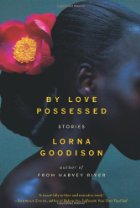
5. Lorna Goodison, By Love Possessed: Stories — Another “global” book, this time set in Jamaica. I’m sure the stories will be interesting, but honestly, I’m most drawn to the gorgeous cover:

By Love Possessed

6. Rainbow Rowell, Eleanor & Park — I’m trying really hard to wait for the paperback edition of this. But if someone ELSE were to buy the hardcover for me, I wouldn’t turn it down… 🙂

7. Rachel Bach, Fortune’s Pawn — Space opera and romance by the author of the Eli Monpress series? I want to go to there! Sadly, my library doesn’t have any copies, so it looks like I’ll just “have” to obtain my own.

8. Joyce Dennys, Henrietta’s War: News from the Home Front 1939-1942 — See #1 above. Woman writer + WWII = my kind of book!

9. Maurice Dekobra, The Madonna of the Sleeping Cars — Apparently this is a classic mystery novel referenced by many contemporary mystery/thriller writers. For example, Alan Furst’s train passengers are frequently seen reading it. What makes it so seminal? I want to find out!

10. D.E. Stevenson, The Two Mrs. Abbotts — If Santa can get to every house in the world on Christmas Eve, surely he can bring me a book 2 weeks before its official release date!

Tune in Tuesday with Katelyn: For happiness I long have sought

Tune in Tuesday-pinkFun fact about me: I am an alto in my church choir, and I actually love religious choral music. And this time of year in particular is GREAT for church music, since there are so many beautiful Christmas carols and hymns. My choir was supposed to perform the following piece for a Lessons & Carols service a few weeks ago, but it was sadly canceled due to snow. But since I absolutely adore this song, I at least had to share it with the Internet! So here is a Christmas carol called “Jesus Christ the Apple Tree,” written by Elizabeth Poston and performed by the Choir of King’s College, Cambridge: