Mini-Reviews: Masque, Library, Heartbeat

Stella Riley, Masque of Deceptions

Daniel, Viscount Reculver, has recently inherited his father’s title, along with a mountain of debt he didn’t know about. To make ends meet, he’s begun selling some of his family’s valuables. When Anna Hawthorne of Hawthorne’s porcelain manufactory hears this news, she’s determined to buy back the set of scent bottles that the late viscount had purchased from Hawthorne’s over the years. But when she meets the handsome and charming Daniel, she’s tempted to make a different offer entirely. As Daniel contemplates her surprising proposal, he begins to see Anna in a new light. This is the second book in Stella Riley’s new series, after The Shadow Earl, and I liked it more than its predecessor. Both Anna and Daniel are very sympathetic characters, and their slow journey from awkwardness to love is delightful. Of course Daniel’s close friends, at least two of whom are sequel bait, make a few appearances, but the focus is largely on the central romance. There are not one but two villains, which gets a bit tiresome, but luckily they don’t overwhelm the story. I’m hoping the next book in this series comes out soon, as I’m definitely excited to read it!

Sulari Gentill, The Woman in the Library

Four strangers are sitting at the same table in the reading room of the Boston Public Library, when they hear a woman scream. At the time nobody knows what’s happened, but news reports later reveal that the woman was murdered. The four strangers, who began talking to each other after hearing the scream, quickly become friends and speculate on who could have killed the woman—but things get complicated when it comes out that one of them has a violent past. I was intrigued by the premise of this book and imagined it would be a variation of the locked-room whodunnit, perhaps with a side of “unbreakable” alibi. Instead, very little time is actually spent on the woman in the library, as the book becomes more of a thriller, with plenty of “shocking” but repetitive revelations and a couple more violent deaths. As a thriller, it was…fine. The unmasking of the murderer fell flat, and then everything ended very abruptly. Overall, I just found it a bit lackluster, and I wouldn’t particularly recommend it.

Cara Bastone, Just a Heartbeat Away

Sebastian Dorner, grieving the sudden death of his wife, is shocked and ashamed when his son Matty’s preschool teacher, Via DeRosa, gently tells him that Matty shows signs of neglect. Seb vows to do better, and two years later, he and Matty are in much better shape. Seb is volunteering at Matty’s new school, where Via just happens to be the new guidance counselor. A mutual attraction builds between them, but Seb is 42 while Via is 27 and has a boyfriend. Will these obstacles prevent their romance? Ultimately, of course, the answer is no, but getting there is a delicious, achingly slow burn. I loved this book’s nuanced portrayal of grief and strong characterization, even of the minor players. Much as I adored Seb and Via together, some of my favorite scenes in the book were between Seb and his mother-in-law, who have a complicated relationship. Overall, I really enjoyed this novel and am eager to continue with the series. Highly recommended if you don’t mind some heavier elements in your romance.

Mini-Reviews: Dream, Fake, Shadow

Kristen Britain, The Dream Gatherer

This book is a collection of two short stories and one novella that Britain wrote to celebrate the 20th anniversary of Green Rider’s publication. The stories aren’t part of the Green Rider series per se, but they’re set in the same world and include some characters from the series. The book also contains some illustrations by Britain and a foreword from her friend and fellow fantasy writer Julie Czerneda. To me, this collection is nothing special, with the two short stories especially being quite forgettable. It feels like an attempt to pacify fans who’d gotten impatient of waiting three-plus years for each new book. I haven’t felt that same impatience, as I didn’t start the series till last year and am not a hugely invested fan. So I was neither excited nor disappointed; this volume is fine, but it’s unnecessary filler that does nothing to move the series forward. I was happy to have a little break from the usual 800-page tomes, though!

Charlotte Stein, My Big Fat Fake Marriage

Connie’s never had much luck with men, and the seemingly nice ones always turn out to be the biggest jerks. So she’s deeply suspicious of her neighbor, Henry Samuel Beckett, who appears to be the kindest person on the planet. Turns out, Beck does have a secret: He’s single, but because of a coworker’s bullying, he’s invented a fake marriage. And when he needs to prove his story, Connie volunteers to pose as his wife. Having enjoyed Stein’s When Grumpy Met Sunshine, I was eager to read this one, which features Mabel’s BFF. I really liked both Connie and Beck, both of whom have been constantly devalued by most of the people in their lives. As a result, they’re deeply insecure, and they have trouble standing up for themselves—but immediately leap to defend each other. There’s no plot to speak of, just enough scaffolding to get them to the fake marriage/only one bed premise. There’s also a lot of steam, which I’m not a fan of, but it’s par for the course with Stein. Overall, I did enjoy this one but would recommend looking at an online sample to see whether the writing style works for you.

Stella Riley, The Shadow Earl

Christian, the earl of Hazelmere, vanished three years ago on his Grand Tour. Now he’s suddenly reappeared in London, but he won’t disclose what happened to him while he was missing. He’s also not quite the same gentle, carefree young man he once was—a fact that dismays Sophie, who was informally betrothed to him before he disappeared. Will Christian heal from his traumatic experiences enough to find happiness with Sophie? I really like Stella Riley’s novels; you’re always going to get good writing, likable leads, and a historical setting that’s not just window dressing. But this book lacks any sort of dramatic tension. We learn what happened to Christian early on, and the bulk of the “plot” is he and his friends seeking revenge. I kept waiting for a surprising revelation or twist, but none came. The novel does, however, provide tons of sequel bait; there are at least six or seven supporting characters who could have their own books. Of course, I will read those sequels if/when they materialize! But I still prefer Riley’s Rockliffe books.

Mini-Reviews: Screenplay, Montesoro, Listening

Emma Thompson, The Sense and Sensibility Screenplay and Diaries: Bringing Jane Austen’s Novel to Film

I recently rewatched Emma Thompson’s adaptation of Sense and Sensibility and loved it—I hadn’t seen it in a while and had almost forgotten how great it is! I enjoyed it so much that I watched it again with the DVD commentary featuring Thompson and producer Lindsay Doran. And then I remembered that I own this book, which (as the title suggests) includes the shooting script of the film and Thompson’s diary entries that covered the filming process. There’s also an introduction by Doran explaining how she got the idea for the movie and how Thompson was chosen to be the screenwriter. If you’re the kind of person who enjoys a peek behind the scenes of your favorite movies, this book is for you. The script is maybe the least interesting part, since most of it does appear in the final film, but it’s fun to see the stage directions and think about how the actors interpreted the printed words. Thompson’s diary entries are hilarious—I laughed out loud several times—but she’s very kind and respectful about everyone she worked with. Overall, I’d definitely recommend this book for fans of the movie!

Stella Riley, The Montesoro Legacy

This final book in the Brandon Brothers trilogy focuses on the youngest brother, Leo, one of London’s most fashionable painters. When he is invited to a house party to paint a young debutante, he meets Mariella Talbot, who is trying to escape from her cruel, inheritance-stealing stepbrother. A society scandal forces Leo and Mariella into a fake engagement, so they team up to thwart the wicked stepbrother and secure Mariella’s rightful legacy. Stella Riley’s historical romances are always a treat, and this one is no exception. But I do wish the book had focused more on the central couple; instead, much of the plot deals with catching and punishing the villain. Further, Adam and Camilla, the couple from the previous book, play a big role in this story, and much as I like them, I felt they already had their book and I didn’t need to see quite so much of them here. Leo and Mariella feel underdeveloped by comparison, and their love story is basically resolved about halfway through the novel. Overall, it’s still an enjoyable read, but it’s not as romance-centric as I’d expected.

D.E. Stevenson, Listening Valley

I was in need of a cozy, quiet read, so naturally I turned to D.E. Stevenson. This particular novel follows Tonia, a quiet, dreamy girl who’s always been somewhat overshadowed by her bright, vivacious sister, Lou. But when Lou marries and moves away, Tonia comes into her own a bit, and she slowly begins to learn what she truly wants out of life. I really enjoyed this book, which is a quiet slice-of-life story with a bit of romance that also contains some heartbreaking elements. It was published in 1944, so World War II is a presence throughout the story, and there’s one very memorable scene where Tonia experiences an air raid in London. I feel the novel is a quintessential example of Britain’s “keep calm and carry on” mentality, and it’s fascinating to read books that were actually written during this period, when the outcome of the war was still uncertain. Definitely recommended if you like this kind of thing!

Mini-Reviews: Heartless, Blunt, Mere

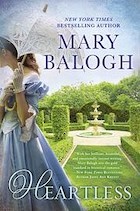
Mary Balogh, Heartless

For the past decade, Lucas Kendrick has lived in Paris, cultivating a reputation as a man without a heart. Ever since he was betrayed by and banished from his family 10 years ago, he’s resisted any hint of love or vulnerability. Now Luke has inherited a dukedom and must return to England to fulfill his duties. He also needs to marry and decides upon the beautiful, vivacious Anna Marlowe, though he has no intention of actually falling in love with his wife. Their relationship slowly deepens but is tested when Anna’s traumatic past catches up with her. I liked this book fine, but it would have been even better without the suspense subplot. I think romances are most interesting when the obstacles are internal to the people involved — character flaws they need to overcome, fears they need to face, etc. Luke and Anna have plenty of those obstacles, so the external conflict with the villain from Anna’s past felt like overkill. So while this is an enjoyable read, I don’t feel a need to keep it on my shelves.

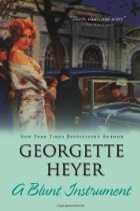
Georgette Heyer, A Blunt Instrument

When Ernest Fletcher is found dead in his study with his head bashed in, everyone is shocked — he was well-liked and seemingly had no enemies. But as the police begin their investigation, they soon unearth plenty of possible motives and suspects. There’s the dead man’s nephew, Neville Fletcher, who stands to inherit a fortune. There’s neighbor Helen North, whose gambling debts Ernest was using to blackmail her — and her husband, John, who may have been jealous of Ernest. But before the police can arrest anyone, they need to solve two problems: given the evidence at hand, how could anyone have had time to commit the murder? And what did the killer do with the weapon? This is one of Heyer’s best mysteries, in my opinion, with a clever solution and an entertaining cast of characters. My one quibble is that I wanted even more of Neville & co.; frankly, I felt the relationships among the suspects were more interesting than the mystery!

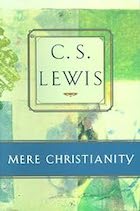
C.S. Lewis, Mere Christianity

A small group of people at my church decided to form a book club during Lent and chose this book. I’d read it before, years ago, but I’m really glad I decided to reread it now. Lewis is deservedly famous for his writings on Christianity; he has a gift for explaining complex ideas in a straightforward, accessible way. In this book, he suggests some arguments supporting belief in Christianity, states the religion’s core beliefs (shared by all denominations), discusses various aspects of Christian morality, and delves a bit into theological concepts such as the Trinity. Throughout the book, he emphasizes practical concepts such as what people must do in order to truly follow Jesus, and why it matters. I feel like most people interested in the topic have already read this book, but if it’s been a while since you’ve read it, I’d definitely encourage you to revisit it!

Mini-Reviews: Con, Tangle, Austen

Devon Daniels, The Rom Con

Cassidy, a reporter for the feminist website Siren, has just ended yet another disappointing relationship. Her grandmother suggests she try a different approach to dating, based on a 1950s list of rules for catching a husband. Cassidy is horrified, but when she meets Jack Bradford — co-founder of Siren’s rival website, Brawler, which Cassidy views as a bastion of toxic masculinity — she decides to use the antiquated rules on him. Once Jack falls for the Stepford Wives version of her, she’ll write an article exposing him as a sexist jerk. But as she begins dating him, she learns he might not be such a jerk after all. I’m of two minds about this book. On the plus side, it’s a fun, quick read with enjoyable banter between the two leads. But Jack is simultaneously too perfect and problematic — it’s never clear why, if he’s such a good guy, he’d continue to be involved with Brawler. There are also a few too many Big Misunderstandings near the end that seem to exist only to drag out the happy ending. Overall, I did enjoy the book while I was reading it, but looking back, I don’t think it totally works.

Theresa Romain, It Takes Two to Tangle

Soldier Henry Middlebrook has just returned to England after Napoleon’s defeat, wounded and unable to move his right arm. Frustrated by his perceived “uselessness” and the pity of his relatives, he decides to court Lady Caroline Stratton, a popular society beauty who he thinks will help reintegrate him into his old life. He enlists the help of Caroline’s companion, Frances Whittier, but complications ensue when he and Frances grow closer. I was intrigued by the setup of this book — Henry’s disability plus a Cyrano-esque plot point in which Frances writes him letters that he assumes are from Caroline. But unfortunately, I wasn’t as enamored of the book itself. Henry is far too slow to see what’s right under his nose, and the obstacles keeping him and Frances apart aren’t important enough to justify the length of the novel. There’s also more steam than I’d prefer, so overall, this just wasn’t the book for me. I was also underwhelmed by Romain’s Season for Temptation, so I think she’s not the author for me either.

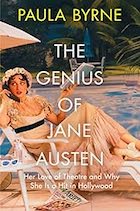
Paula Byrne, The Genius of Jane Austen: Her Love of Theatre and Why She Works in Hollywood

In Mansfield Park, Fanny Price disapproves of the amateur theatricals staged by her cousins and their friends. Some critics have inferred from this that Jane Austen herself disapproved of theater, but Byrne argues pretty convincingly that the opposite is true. Austen acted in private theatricals with her family and friends, she frequently attended plays while living in Bath and London, and her letters reveal that she was familiar with the famous actors and theater gossip of her day. The book explains how Austen’s life interacted with the theater; how she used theatrical plots, character types, and conventions in her novels; and why her books adapt so well to the screen. Byrne is obviously an Austen fan, and a very knowledgable one. The book is briskly written and appears well researched. I liked it a lot and would certainly recommend it to Austen lovers!

Mini-Reviews: Betting, Gambit, Midwinter

Lynn Painter, Betting on You

Charlie and Bailey first meet on a 10-hour flight, where his careless cynicism clashes with her uptight, rule-following personality. But they really get to know each other three years later, when they end up working at the same amusement park. Charlie is adamant that guys and girls can’t really be friends, but Bailey is determined to prove him wrong. As they grow closer, however, the lines between friendship and romance get confusingly blurry. The book’s cover copy emphasizes fake dating and multiple bets among the main characters, but these are both pretty minor plot points. In reality, the novel is a cute friends-to-lovers YA romance, though it also gets into some heavier issues, as both Bailey and Charlie struggle with being children of divorced parents. I enjoy Lynn Painter’s writing style; she does good banter and makes her characters feel like believable people. I also liked getting some of Charlie’s POV, though Bailey is the primary narrator. The book perhaps owes a little too much to When Harry Met Sally, but I liked it nonetheless and now want to rewatch the movie!

Evie Dunmore, The Gentleman’s Gambit

Between writing a book on female political leaders, managing her absentminded father’s household, and working for the suffragist cause with her three best friends, Catriona MacPherson is burned out. When she meets her father’s handsome new colleague, Elias Khoury, she’s immediately attracted to him but doesn’t think he (or anyone) could be interested in her. Meanwhile, Elias is on a mission to repatriate historical artifacts — legally or otherwise — to his homeland of Mount Lebanon. He doesn’t have time for romance, but Catriona intrigues him. As with the previous books in this series, Evie Dunmore tries to balance a love story with a lot of historical detail, to mixed effect. In this case, information about the women’s suffrage movement and the ethics of removing antiquities from their lands of origin overwhelmed the romance. Also, between Catriona’s negative internal narrative (she seems to struggle with some form of depression) and the Serious Political Stuff, there’s just no joy in this book. Since I want joy in my romance novels, this one didn’t work for me, and I doubt I’ll read any future books from this author.

Stella Riley, Midwinter Magic

This novella caps off the Rockliffe series and gives readers one last look at most of the main series couples. Adrian and Caroline, the earl and countess of Sarre, are hosting a Christmas party at their country estate, but complications ensue when Caroline’s vulgar mother and sisters show up uninvited. Two romances develop, one involving Adrian’s French friend, Bertrand Didier, and there’s even a Christmas miracle. This is undoubtedly the weakest installment of the Rockliffe series — perhaps unsurprisingly, since it’s a novella with few new characters and (mostly) low stakes — but I still enjoyed it overall. I wish Ralph and Elizabeth from Cadenza had made an appearance, as I would have loved to get a peek at their marriage, and part of me wanted to roll my eyes at the aforementioned miracle. But I guess that sort of thing is to be expected in a Christmas story! I definitely would not recommend this novella if you haven’t read and enjoyed the rest of the Rockliffe books, but it’s a sweet holiday treat for fans of the series.

Mini-Reviews: Wager, Cadenza, Check

Virginia Heath, Never Wager with a Wallflower

Miss Venus Merriwell has made some mistakes in the area of romance, but she’s still hoping an intellectual, high-minded gentleman will come along and sweep her off her feet. Of course, that gentleman will be nothing like Galahad Sinclair, a charming but apparently frivolous and ignorant gambler. In reality, Gal is intelligent and kind, and he finds himself reluctantly attracted to Vee. But conflict over a desirable London property (Gal wants it for his new high-class gambling establishment, while Vee hopes to expand the orphanage she helps run) may derail their romance. Eh, this book was fine, but I never really got invested in it. Something about the writing style didn’t quite work for me; the dialogue felt stilted and modern. I also didn’t particularly connect with either Gal or Vee, which is a problem for me in a romance! Overall, this book (like the rest of the series, really) is just OK — there’s much better historical romance out there.

Stella Riley, Cadenza

Speaking of much better historical romance! Julian Langham is a brilliant harpsichordist about to embark on a career as a concert musician in Vienna, when he learns he’s the distant heir to an earldom and is forced to return to England. Julian has no clue how to cope with his new responsibilities, especially the three illegitimate children of the previous earl, so he decides to hire a woman as his housekeeper/governess. But the girl who shows up on his doorstep, Arabella Brandon, gives him much more than he bargained for. I’m a huge fan of this series, and this is definitely one of my favorite installments! I adored the shy yet passionate Julian and the slowly deepening intimacy between him and Arabella. There’s also a secondary romance involving Arabella’s cousin, Elizabeth, which I wasn’t initially as invested in but which got a lot more compelling as it went along. My only complaint is that I kind of wish each romance had gotten its own book! I’m now even more eager to read Midwinter Magic, the novella that caps off the series, as I’m not ready to say goodbye to these characters yet.

Ali Hazelwood, Check & Mate

Hazelwood’s YA debut is a rivals-to-lovers romance between chess prodigies. Mallory Greenleaf hasn’t played chess for years, but when her BFF asks her to play in a charity tournament, she reluctantly agrees — only to beat “Kingkiller” Nolan Sawyer, who is currently the No. 1 ranked chess player in the entire world. Now Mal is facing unwelcome media attention and all kinds of pressure to continue playing, and Nolan seems surprisingly eager for a rematch. Will Mallory be able to find a renewed love of the game, and more importantly, will she allow herself to ask for what she truly wants? For me, the best part of this book by far is all the behind-the-scenes information on the world of elite chess. Hazelwood clearly did her research, and I found the ins and outs of training and tournaments fascinating. However, the romance fell flat for me, mostly because I found Mallory so exasperating. She’s completely obnoxious to almost everyone around her (when she’s not playing the martyr for her family) and makes the wrong choice at almost every turn. I honestly couldn’t see what the way-too-amazing Nolan saw in her, and I’m weary of the “perfect guy falls in love with deeply flawed girl” trope. I think I’m ready to acknowledge that Hazelwood just isn’t the author for me.

Mini-Review: Bridge, Hazard, Stardust

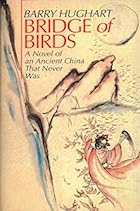
Barry Hughart, Bridge of Birds

Number Ten Ox is a peasant living in the Chinese village of Ku-fu. When all the village children suddenly contract a mysterious illness, Ox must find a wise man to discover the cause of the sickness and its cure. He finds Master Li, a very old man with “a slight flaw in his character,” and the two of them travel throughout China seeking the Great Root of Power that will supposedly cure the sickness. Along the way, they have a series of adventures involving thievery, beautiful women, murderous dictators, divine entities, and the occasional ghost. This is a fun picaresque novel full of improbable stories and sly jokes. Master Li and Number Ten Ox are the only characters with any depth, but I enjoyed them both immensely, and I also liked how some of the secondary characters kept reentering the narrative. I’m glad I finally got around to reading this one; it isn’t particularly deep or life-changing, but it’s certainly an entertaining read!

Stella Riley, Hazard

Aristide isn’t interested in love or marriage; right now he’s more focused on running the high-class gaming hall he co-owns. Meanwhile, Genevieve is a recent widow who’s desperate to marry again and escape the clutches of her overbearing brothers. Seizing upon a slight prior acquaintance with Aristide, Genevieve makes a shocking proposal, and Aristide is surprised by how tempted he is to accept. Meanwhile, the long-brewing romance between Aristide’s sister, Madeleine, and Nicholas, the duke of Rockliffe’s brother, finally comes to a head. I liked this book a lot, though I found Aristide’s story much more interesting than Madeleine’s. He’s learned to hide his true feelings under an iron mask of self-control, and it’s lovely to watch his growing affection for Genevieve transform him. Genevieve is also a deeply sympathetic character, though I felt she healed awfully quickly from her traumatic past, which includes an abusive husband as well as the aforementioned brothers. Overall, though, a great read in a great series!

Neil Gaiman, Stardust

The village of Wall has long stood at the border of Faerie, but none of the villagers has dared to cross that boundary — until 17-year-old Tristran Thorn vows to bring back a fallen star to impress the prettiest girl in the village. He didn’t count on the fact that the fallen star is actually a young woman, Yvaine; further, he’s not the only person seeking her. Also on the star’s track are the sons of Stormhold, who want a magical token she possesses, and a witch who needs the star’s heart to restore her youth. This novel is very atmospheric and brilliantly conjures up both the beauty and danger of Faerie. Tristran is a likable everyman hero, not too brave and not too clever. The book’s pacing is a bit off, for me — a ton of time is spent setting up the world, and I don’t think Tristran even gets to Faerie until about halfway through. Then he and Yvaine have some adventures that are briefly mentioned in a throwaway sentence or two, but I would have loved to learn more about them! If you’re looking for a book that gives gothic fairytale vibes, this is an excellent choice, but if you prefer a snappier plot in your fantasy novels, I’d look elsewhere.

Mini-Reviews: Serfdom, Benevolent, Wicked

F.A. Hayek, The Road to Serfdom

F.A. Hayek was an Austrian economist who moved to England in the 1930s and subsequently taught in both the UK and US. He won the Nobel prize in economics in 1974. In this essay, written during World War II and first published in 1944, he argues that Nazi fascism was not a reaction against socialism but rather a natural progression of socialist ideas. In Hayek’s view, socialism (by which he seems to mean a centrally planned economy) is bad economics because competition, not central planning, is what allows new ideas and wealth-creating innovations to flourish. But it’s also bad politics because under a socialist system, individual freedom will disappear; all power will reside in the hands of the central planners/the state. I broadly agree with Hayek’s ideas here, so my opinion is biased. But I think this essay is worth reading for anyone who is interested in a “liberal” (as opposed to socialist) view of economics or in the history of socialist thought. Hayek doesn’t straw-man his opponents, and his arguments are thoughtful and measured. Maybe I’ll tackle one of his full-length books at some point!

Alison Goodman, The Benevolent Society of Ill-Mannered Ladies

Lady Augusta “Gus” Colbrook and her sister, Lady Julia, are unmarried women in their 40s and thus are basically invisible in society. Instead of dwindling into spinsterish obscurity, they decide to help vulnerable women who are being abused by the men in their lives. Aiding them in their quest is the handsome Lord Evan Belford, whose checkered past doesn’t deter Gus from a more-than-friendly interest. This novel is hard to categorize; it’s not exactly a romance or a mystery, though it has elements of both. But the book mainly depicts the negative aspects of Regency society, particularly the limits placed on women, and offers a sort of revenge fantasy in which the women take charge and triumph over all wrongdoers. For some readers, this will be exactly their cup of tea, but for me, it was too anachronistic and felt a bit preachy. I didn’t dislike the book, though! Goodman is a good writer, the plot adventures are fun, and Gus is (usually) a sympathetic character. I believe a sequel is planned, and I’ll likely read it when it comes out.

Stella Riley, The Wicked Cousin

After a too-strict upbringing, Sebastian Audley has spent the past several years behaving as outrageously as possible, first in England and then abroad. Now his scandalous ways are beginning to pall, and he hopes to return to England and lead a quieter life, but his reputation makes that difficult. Meanwhile, Cassandra Delahaye is determined not to be impressed by the rakish Sebastian, but she soon finds herself attracted to his good looks and roguish sense of humor. I’m officially a huge fan of this series and enjoyed this installment as well, but it felt a little too long. The main obstacle to the romance is Sebastian’s obsessed ex-lover, which means there’s a lot of plot to slog through even after Sebastian and Cassie fall in love. (I find that Stella Riley uses the “evil ex” trope pretty often, which I’m not fond of.) I still liked the book a lot, though, and it was nice to catch up with the various recurring characters. Looking forward to the next one!

Mini-Reviews: Dragons, Mésalliance, Hallowed

John Moore, A Fate Worse Than Dragons

Valiant knight Sir Terry hopes to wed his true love, Princess Gloria, by slaying the dragon that’s terrorizing her kingdom. Unfortunately, he accidentally slays the dragon in the kingdom next door; meanwhile, Gloria’s parents arrange for her to marry the rich Roland Westfield, heir to a sliced-bread fortune, instead. To give Terry another chance, the enterprising Gloria fakes her own kidnapping, but complications ensue when real kidnappers intervene. This spoof of common fantasy tropes was just okay for me. There are some good jokes, and the farcical plot moves at a nice clip. But most of the humor didn’t quite land for me, and there’s not much to the book beyond that. I do think people who connect with the humor will enjoy it, though!

Stella Riley, The Mésalliance

At age 36 and with a high-spirited younger sister in his care, the Duke of Rockliffe knows it’s time for him to marry. But he has yet to find a society woman who doesn’t utterly bore him — that is, until he meets the witty yet guarded Adeline Kendrick at a house party. When they accidentally end up in a compromising situation, Rockliffe finds he’s not terribly reluctant to propose, but a secret from Adeline’s past threatens their fragile marriage. Despite the well-worn plot and characters that owe more than a little to Heyer, I really enjoyed this book, even more than the first in the series. I loved watching Rockliffe and Adeline slowly chip away at each other’s defenses, and their romance really worked for me. I also appreciated the reappearance of characters from the previous book; I think this series will be most enjoyable if read in order. The big misunderstanding was a bit frustrating, but otherwise, this was a winner for me! Looking forward to continuing with the series.

Lois McMaster Bujold, The Hallowed Hunt

Lord Ingrey, who holds a minor position at the court of the Hallow King, has a grim but simple task: The king’s son has been killed by the lady-in-waiting he was attempting to rape, and Ingrey has to bring the body home and escort the woman, Ijada, to trial. But when Ingrey sees the scene of the crime and meets Ijada, things immediately get a lot more complicated, in ways that will have dire consequences for the entire Hallow Kingdom. I’m finding it harder and harder to think critically about Bujold’s work because I’m a diehard fan now! I do think the pacing of this book is a little off — the setup and character introductions are compelling, but then things slow down for a while until the tumultuous conclusion. But I loved Ingrey and Ijada, as well as the various allies they meet along the way, and I also enjoyed learning more about the world of the Five Gods. I’ll have to start reading the Penric novellas soon!