Mini-Reviews: Necessary, Rome, Unknown

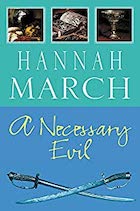
Hannah March, A Necessary Evil

In this fifth and final book of the series, Robert Fairfax trades London for Bath, where he’s tutoring a group of pleasant yet unteachable girls. He also becomes acquainted with Colonel James Delabole and his family, which consists of a wife and daughter, as well as a long-lost daughter from his first marriage, with whom Delabole is trying to reconcile. Tensions are high, so when Delabole is murdered, Robert has more than enough suspects to investigate. As with the other books in this series, this one is well-written, with a complex plot, interesting characters, and an evocative setting. However, I don’t think the author planned this to be a series finale, as there’s no resolution to Robert’s personal life. He seems to end in a worse place than he began, which I found disappointing. I do still recommend the series for those who enjoy historical mysteries, but I wish Robert could have found a little happiness in the end.

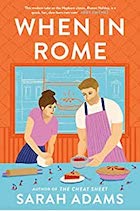
Sarah Adams, When in Rome

Pop star Amelia Rose is feeling burned out, so she decides to pull an Audrey Hepburn and go on a Roman holiday — to Rome, Kentucky, that is. But when her car breaks down, she’s forced to rely on the surly yet attractive Noah Walker for help. As they get to know each other, they have a hard time fighting their mutual attraction, but Noah’s life is in Rome and Amelia can’t stay forever, so how could they make a relationship work? This is a sweet contemporary romance that I enjoyed, though I sometimes felt the characters blew hot and cold for no reason. It paints an idyllic picture of life in a small town, which makes the book a fun escape even if it’s not particularly realistic. The author just came out with a novel featuring Noah’s younger sister, and I do plan to read it if I can get it from the library.

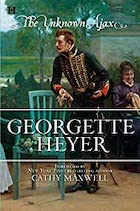
Georgette Heyer, The Unknown Ajax

When Lord Darracott’s son and heir dies unexpectedly, Darracott shocks his family by announcing that the new heir is a grandson he’s never met, who grew up in Yorkshire and whose mother was a commoner. When the heir, Hugo, arrives at the estate, the family expects an ignorant yokel, so Hugo plays along — but it’s not long before some members of the family, including his cousin Anthea, recognize his intelligence and true worth. I love Georgette Heyer, but I’d only read this novel once, so I was interested to remind myself why it’s not one of my favorites. I think the answer is that the romance, while appealing, takes a backseat to family drama and a smuggling plot. I wanted more of Hugo and Anthea interacting and fewer conversations about the pros and cons of “free trading.” So for me, this is not one of Heyer’s best.

Mini-Reviews: Parfit, Swift, Keeper

Stella Riley, The Parfit Knight

When an attack by highwaymen and a heavy snowfall force the Marquis of Amberley to take refuge in a stranger’s home, he doesn’t expect to fall in love, but the beautiful, intelligent Rosalind Vernon captures his heart almost immediately. Because she is blind, Rosalind hasn’t had a Season or met any gentlemen apart from her nearest neighbors. So Amberley encourages her to go to London, hoping to woo her once she’s mixed a little more with the world. But their romance is threatened by misunderstandings, jealous rivals, and a tragedy from the past. If you’ve read everything by Georgette Heyer and are looking for a read-alike, I think Stella Riley might fit the bill! Riley isn’t quite as witty, but the character types and dialogue are very Heyeresque. I tend to prefer romances where the characters take a little longer to fall in love — it’s pretty instantaneous for both Amberley and Rosalind here — but otherwise I really liked this one and can’t wait to continue with the series!

Chloe Neill, A Swift and Savage Tide

In this alternate 19th-century world, the Napoleon equivalent has escaped from exile and is bent on conquering Europe through the forbidden use of magic. So Captain Kit Brightling and her crew are once again called upon to stop him — along with infuriatingly attractive soldier Rian Grant. When they encounter an enemy who can manipulate magic in new, powerful, and terrifying ways, Kit realizes she may have to test the limits of her own magical Alignment as well. I enjoyed the first Kit Brightling book quite a bit, and this one is more of the same. I think the series is trying really hard for a “found family” element with Kit’s crew, but I must say I’m not really feeling it; the secondary characters still don’t feel like they have very distinct personalities. I do, however, enjoy the seafaring adventure and the romance, which definitely progresses in this book. I hope a third installment is in the works, because there’s a lot more to explore in this world!

Charlie N. Holmberg, Keeper of Enchanted Rooms

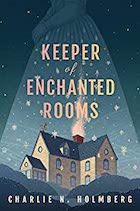
When Merritt Fernsby unexpectedly inherits a house on an isolated island in the Narragansett Bay, he’s delighted — until he realizes that the house is enchanted and won’t let him leave. Luckily, Hulda Larkin is on the case: She belongs to an agency that cares for bespelled houses and knows how to deal with walls that move, libraries that toss books around, bloodred paint that drips from the ceiling and so on. As Hulda helps Merritt adjust to his new home, their relationship deepens, but everything is threatened when a powerful wizard with a grudge against Hulda sets his sights on Merritt’s home. I enjoyed this book, which is sort of a cozy take on the haunted house genre. Both Merritt and Hulda are likable, interesting characters, and I enjoyed watching their relationship grow. But I found the chapters from the villain’s POV distracting and not terribly necessary to the story. Overall, though, I did like this one and plan to seek out the sequel.

Mini-Reviews: Spells, Dream, Distinction

Sylvia Izzo Hunter, A Season of Spells

A few years after the events of Lady of Magick, Lucia MacNeill, heiress to the throne of Alba, is finally traveling to Britain to meet her betrothed, Prince Roland. Sophie (along with Gray) travels with her, officially to be her guide to the British court and unofficially to encourage the relationship between her and Roland. But Sophie is soon distracted, first by her plans to restore Oxford’s defunct women’s college and then by the escape of the prisoners—including her stepfather—who plotted to assassinate the British king in The Midnight Queen. I was apprehensive about this final installment of the trilogy, having loved book one and been disappointed in book two. This book falls somewhere in the middle. As with the rest of the series, the plot is glacially slow, and I was frustrated not to see significant growth or change in most of the characters. However, I did enjoy the development of Lucia and Roland’s relationship, though I wish it had been more of a focus. Overall, I’m glad I finally read this series, but it may not be a keeper for me beyond book one.

Angie Hockman, Dream On

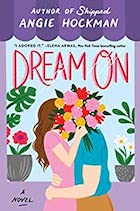
This contemporary romance has an unusual premise: Cass has vivid, detailed dreams about her perfect boyfriend, Devin, while she’s in a coma. But when she wakes up, she learns that he doesn’t exist — or at least, that’s what she thinks until she meets him in person a year later. The real Devin doesn’t recognize her, but she knows things about him she couldn’t possibly know unless they’ve met before. To solve the mystery, they spend some time together and eventually begin dating. But Cass is also having surprising feelings for Devin’s brother, Perry, as well as navigating her fledgling law career. This was a decent but not exceptional read. I liked the premise and was satisfied with the explanation of why Cass dreamed of Devin (though I have no idea whether it’s medically plausible). I also liked that the love triangle is resolved with neither Perry nor Devin being a bad guy. But the writing style was a bit too overblown for me, and I never really bought into the romance. Still, it’s a cute, fast read if the setup interests you.

Hannah March, A Distinction of Blood

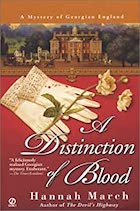
Robert Fairfax has just taken a job with wealthy tradesman Samuel Appleton, theoretically to tutor his two young sons but actually to dig into the life of his daughter, Charlotte, who has recently married the aristocratic but rakish Lord Mortlock. Mortlock’s terrible reputation has society speculating that his young wife may be seeking pleasure elsewhere. Fairfax’s job becomes harder when Mortlock is murdered in his own home, while Charlotte is hosting friends in the next room. The killer must be a servant or one of Charlotte’s guests, and as Fairfax investigates them all, he uncovers many motives and secrets. I’m continuing to like this series a lot (this is book #3), both for Fairfax’s complex character and for the setting of 1760s England. This book discusses the evils of slavery and the slave trade, but without preachiness or anachronism. I also thought the mystery plot was relatively strong in this one. Still really liking this series and would recommend it to fans of historical mysteries!

Mini-Reviews: Highway, Seven, Roughest

Hannah March, The Devil’s Highway

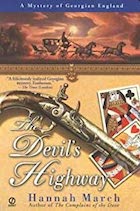
Former tutor Robert Fairfax is about to begin a new position as Sir Edward Nugent’s secretary. As he and Sir Edward travel to the latter’s country estate, they encounter an overturned stagecoach whose coachman and passengers have all been shot to death. Public opinion assumes a local highwayman is to blame, but Robert isn’t so sure — especially when one of the victims is incorrectly identified, and a woman who was supposed to be on the stagecoach is nowhere to be found. I enjoyed this book at least as much as the first in the series, if not more. Robert Fairfax is a sympathetic sleuth, and the Georgian setting is well realized, with this book touching on the state of mental asylums and the rise of Methodism. The mystery itself is perhaps a bit too convoluted, so I think this series is more for historical fiction fans than mystery buffs. But as a lover of both genres, I’d recommend it!

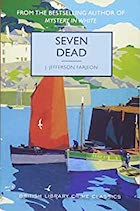
J. Jefferson Farjeon, Seven Dead

A petty thief breaks into Haven House hoping to steal a few valuables — but instead he stumbles upon seven corpses in a locked room. Who are they, how were they killed, and what brought them to Haven House? The local police are on the case, assisted by journalist and amateur yachtsman Thomas Hazeldean. The investigation takes Hazeldean to Boulogne in pursuit of the house’s absent owners, where he becomes embroiled in additional mysteries — and falls in love. I’ve tried a couple of Farjeon’s books in the past, with mixed results, but I liked this one a lot. The mystery isn’t particularly shocking in terms of whodunit, but there are plenty of twists and turns as readers learn just how horrible the culprit really is. Despite some dark elements, the book also has a fair amount of humor (plus the romantic subplot), which keeps it from getting too depressing. Recommended for fans of Golden Age mysteries.

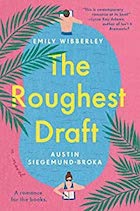
Emily Wibberley and Austin Siegemund-Broka, The Roughest Draft

Katrina and Nathan met at a writers’ workshop and instantly became writing partners and friends. They wrote two books together, the first moderately successful and the second a huge best-seller. But then they had a falling-out, and they haven’t spoken to each other in four years. Unfortunately, they still have a contract with their publisher for another co-written book. Reluctantly, they agree to work together one last time, but they’ll have to finally confront the issues that drove them apart. I liked the premise of this book, but in practice I was underwhelmed. Neither Katrina nor Nathan is very likable; they’re both extremely privileged (she lives in a $4 million house, he has a trust fund, neither has to work an actual job), and they’re mean to each other for a significant chunk of the book. The novel also focuses so narrowly on Katrina and Nathan that it feels somewhat claustrophobic — don’t they have any healthy relationships (family, friends) in their lives? The central romance is somewhat compelling if you like a lot of angst, but overall this book just wasn’t for me. I would consider trying something else by these authors, though.

Mini-Reviews: Complaint, Traveled, Autumn

Hannah March, The Complaint of the Dove

Robert Fairfax is a tutor tasked with introducing his pupil, 19-year-old Matthew Hemsley, to the sights and experiences of London. They go to the theater, where Matt immediately becomes infatuated with popular actress Lucy Dove. When Lucy is later stabbed to death, Matt is arrested for the murder. But Fairfax is convinced Matt is innocent and decides to find the real killer before Matt is hanged. I really enjoyed this well-written mystery, especially its unique 1760 setting. The book brings the era to life without sounding like a research dump. I also found Fairfax a likable and interesting sleuth, and I’m looking forward to continuing with the series! This author also writes historical fiction under the name Jude Morgan, and I like those books as well.

Jen DeLuca, Well Traveled

Louisa “Lulu” Malone is a corporate attorney, but she’s been feeling burned out and dissatisfied with her life. After one too many “urgent” texts on a Saturday, she impulsively quits her job and decides to travel the Renaissance Faire circuit with her friend Stacey and a band called The Dueling Kilts. Lulu embraces her new life but views it as temporary and isn’t sure what comes next. She also finds herself falling for Dex MacLean, guitarist of the Dueling Kilts and notorious ladies’ man. She doesn’t trust his flirtatious behavior, but as she gets to know him better, she discovers there’s more to him than meets the eye. This book was fine but honestly a bit meh. I always enjoy the Ren Faire setting of these books, but Lulu’s conflict felt a bit too paint-by-numbers, if that makes sense. Dex was also a pretty flat character; the romance really took second place to Lulu’s own character development. It’s not a bad read by any means, but not one I’d particularly recommend either.

Anne Gracie, The Autumn Bride

This series opener introduces the “Chance sisters,” four young women whose poverty and orphaned state have left them extremely vulnerable. A chance meeting with an elderly widow, Lady Beatrice Davenham, changes their fortunes: she agrees to take in the four girls and claim them as her nieces. Of course, Lady Beatrice’s actual nephew, Max, knows the girl are impostors, and he’s determined to figure out what they’re hiding. But as a romance grows between him and the eldest sister, Abby, he also learns that all four girls are in grave danger. I’ve actually already read The Winter Bride, book #2 in this series, and loved it, so I’m happy to report that I really enjoyed this one as well! The setup is of course ridiculous, but Max and Abby are both delightful (albeit not particularly unique) characters, and I loved snarky Aunt Bea as well. I could have done without the suspense plot, but overall I really liked this one and am thrilled to have discovered Anne Gracie!

Mini-Reviews: Golden, Holidays, Undertaking

Francis Spufford, Golden Hill

It’s November 1746, and Richard Smith has just arrived in the small town of New York. He visits a countinghouse and produces a note for 1,000 pounds — a huge sum. The denizens of New York don’t know what to make of him: Is he simply a rich man planning to explore the pleasures of a new place? Or is he some kind of fraud, spy, or scoundrel? As Smith explores the city, he gets into various kinds of financial, political, and romantic trouble, but it’s not till the end of the novel that his true purpose is revealed. I really enjoyed this book, which apes the picaresque adventures and digressive style of 18th-century novels. It does a good job of pointing out the social ills of the period (such a slavery) without being anachronistic or preachy. It’s also just plain fun to follow the possibly roguish Smith around and try to figure out what he’s up to, though the ending is a bit of a heartbreaker. But I’d still heartily recommend this book to historical fiction fans!

David Sedaris, Holidays on Ice

This book is a collection of holiday-themed stories and essays, some of them autobiographical and most previously published elsewhere. “SantaLand Diaries” chronicles the time Sedaris worked as a Macy’s elf, “Christmas Means Giving” follows two families as they compete to see who can best demonstrate the true meaning of the season, and “Jesus Shaves” sheds some light on different cultures’ Easter traditions. These short works contain some hilarious moments, but frankly, a lot of them are dark and depressing. One story ends with the murder of a baby, while in another, parents sell their children to a pedophile. So if you’re looking for light, fun stories to get you in the holiday spirit, I’d recommend skipping this one! But if you’re of a more cynical disposition during this time of year, then it could be just the thing for you. For me, it was a mixed bag and probably not a keeper.

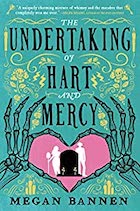
Megan Bannen, The Undertaking of Hart and Mercy

This book is a weird but winning genre mashup of romance, fantasy, and Western. Hart Ralston is a marshal in a fantasy world similar to our own, but with zombielike creatures called drudges; his job is to kill them and take their bodies to the nearby undertakers. One such undertaker is Mercy Birdsall, who loves her job but is desperately trying to keep the family business afloat, despite a sick father and uninterested brother. Hart and Mercy fight constantly, but their mutual antagonism is concealing very different feelings, which emerge when they become anonymous penpals. So basically, the book is The Shop around the Corner/You’ve Got Mail with a bit of zombie action and a Western flavor…which sounds like it shouldn’t work, but it totally does! I didn’t need quite as much world-building and would have preferred more of a buildup to the romance, but overall I loved this one and would recommend it if the premise sounds appealing.

Mini-Reviews: Met, Folly, Red

Sophie Cousens, Just Haven’t Met You Yet

Laura is a journalist whose latest assignment is to tell the romantic story of how her parents first met. For research, she travels to the Channel Island of Jersey, where it all began — and en route, a suitcase mix-up leads her to her own potential soulmate. But as she spends more time in Jersey, she learns that both her parents’ love story and her own romantic destiny are more complicated than she thought. I enjoyed this one; it’s entertaining and well written, and despite the focus on romance, I think it does a good job of portraying the complexity of relationships. That said, I didn’t fall in love with the book the way I was hoping to…though I now definitely want to visit the Channel Islands!

Josi S. Kilpack, Lord Fenton’s Folly

Charles, Lord Fenton, has been behaving badly — so badly, in fact, that his father plans to disinherit him. To avoid this fate, Charles agrees to his parents’ long list of conditions, including a demand that he marry before the end of the Season. At his mother’s encouragement, he proposes to Alice, an old friend of the family who (unbeknownst to him) has been infatuated with him for years. But when she learns why he proposed, she becomes angry and bitter. Can Charles and Alice recover from such a bad start and make their marriage work? This was a pleasant, PG-rated Regency romance, but I wanted to see a bit more of Charles and Alice together. They seemed to go from mean bickering to trust and love pretty quickly. I wouldn’t mind trying another book by this author, but it’s not a high priority for me.

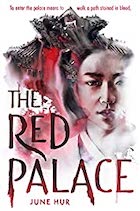
June Hur, The Red Palace

In 1758 Korea, Hyeon has risen from humble beginnings to become a palace nurse. But when four women are murdered in a single night and Hyeon’s beloved teacher is the prime suspect, she risks her position — and her life — to find the real killer. Along the way she teams up with handsome police inspector Eojin and becomes embroiled in the horrifying intrigues of the palace. This book is fast-paced with a likable protagonist, and I enjoyed the unique (to me) setting. It all felt a little insubstantial, and the mystery wasn’t particularly satisfying, but I did like the book overall. I doubt I’ll seek out more by this author, though.

Mini-Reviews: Garden, Murder, Love

Susanna Kearsley, The Rose Garden

Grieving the untimely death of her sister, Eva Ward decides to scatter her sister’s ashes at Trelowarth House in Cornwall, where they’d spent many happy summers as children. When she gets there, Eva is pleased to reconnect with the Trelowarth family and help them maintain the estate by setting up some new tourist attractions. But she also has some strange experiences and eventually discovers that she’s been going back in time, seeing Trelowarth as it was in the early 1700s. She also meets the house’s former inhabitants, one of whom, Daniel, soon captures her heart. But Daniel’s world is dangerous, especially because of his illicit smuggling career and his Jacobite sympathies. Eventually Eva must decide where she truly belongs. I enjoyed this novel but didn’t love it as much as I loved A Desperate Fortune. I wasn’t particularly interested in the time-travel element or the contemporary storyline; I would have preferred a straightforward historical novel. Maybe that’s why it took me several days to finish the book, even though I liked the overall story, characters, and writing style. It was just missing that spark for me.

Richard Osman, The Thursday Murder Club

The Thursday Murder Club is a group of four residents of a senior living facility, who meet once a week to discuss — and hopefully solve — various cold cases. So when a present-day murder lands on their doorstep (literally; the victim is the boorish owner of the senior living facility), they’re eager to get involved. But as the bodies continue to pile up, the investigation becomes more dangerous, and one of the club members might even be the next victim. I really enjoyed this mystery novel; it’s clever and funny, and I liked all the main characters, pensioners and police alike. I do feel like the plot falls apart a little bit toward the end. But ultimately, it was just a pleasure to read, and isn’t that all you can really ask of a book? There’s at least one sequel planned (coming out this fall in the US), and it’s definitely on my TBR list.

Marisa de los Santos, Love Walked In

Cornelia Brown is a 30-something barista in a Philadelphia café, trying to figure out what to do with her life. Then one day, a Cary Grant look-alike walks into the café and changes everything. Meanwhile, an 11-year-old girl named Clare is having problems at home: her father is absent, and her mother is behaving strangely. As her mother’s condition worsens, Clare becomes increasingly terrified that something awful will happen and she’ll be separated from her mom. When Cornelia’s and Clare’s paths converge, they transform each other in surprising ways. I loved this book and stayed up way too late to finish it! But despite the romantic title and chick-lit-esque marketing, it’s a tough read at times. Clare’s situation with her mother is heartbreaking and difficult, so if you’re not up for reading about mental illness and child neglect/abandonment, maybe skip this one. But the book is certainly hopeful and uplifting overall, and there is even a romance, though it’s not my favorite part of the story. I’m eager to read more by this author!

Mini-Reviews: Women, Coconut, Belle

Madeleine St. John, The Women in Black

This novel follows the lives of four women who all work at Goode’s department store in 1950s Sydney, Australia. Patty, in her mid-30s, is married but unhappily childless, and her husband Frank is oblivious to her emotional turmoil. Fay is around 30 and has been going out with men for years, but somehow none of them seem to want to marry her. Lisa, a temporary hire for the Christmas season, dreams of going to university and becoming a poet, but her strict father won’t hear of it. And Magda, a glamorous Slovenian immigrant, is adjusting to a culture very different from her own. I loved this book and devoured it in a single sitting. It’s light and charming and slyly funny, and I became invested in the stories of all four women. I especially loved Magda, who enjoys the finer things in life and is generous in sharing them. There’s a bit of romance, but the main focus is on women’s experiences and relationships. The book reminds me a bit of Miss Pettigrew Lives for a Day, but with a slightly more satirical edge. I expect to revisit it often and would recommend it as a great comfort read!

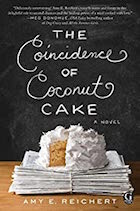
Amy E. Reichert, The Coincidence of Coconut Cake

Milwaukee restaurateur Lou Johnson is having a run of terrible luck. First her fiancé cheats on her; then, that very night, food critic Al Waters samples her cooking — which is subpar because of her distress over the breakup — and writes a scathing review. The day the review comes out, Lou goes to a bar to drown her sorrows and meets Al. They’re attracted to each other and soon strike up a romance. The only problem is, he doesn’t realize she owns the restaurant he panned, and she doesn’t know he’s the hostile reviewer because he writes under a pen name. I’m a sucker for a You’ve Got Mail story, and this is a fun one that made me want to visit Milwaukee and eat some fried cheese curds immediately. I never quite believed in Lou and Al as characters; they seemed like stock types rather than real people to me. But I liked the setting and the overall cheerful, Hallmark-esque vibe of this novel, so I’d consider trying more by this author.

Paula Byrne, Belle: The Slave Daughter and the Lord Chief Justice

The idea for this book came from an 18th-century English portrait of two young women — one white, one black — who are portrayed as equals, almost as sisters. The black woman was Dido Elizabeth Belle, the illegitimate daughter of an English naval captain and an African slave. She grew up in the house of her great-uncle, the Earl of Mansfield, who happened to be the Lord Chief Justice and who decided several cases that would be crucial to the antislavery movement in Britain. It’s a fascinating story, but unfortunately, there’s very little about Dido in the historical record, and consequently very little in the book! Instead, Byrne focuses on the English slave trade, the status of black individuals in London, the Earl of Mansfield’s legal career, etc. It’s all interesting, but I was hoping for more biography, less history. The book does have numbered endnotes, many of which cite primary sources, yet Byrne also editorializes a fair amount. I’d say it’s more of a popular history than a scholarly one. Overall, I’d recommend it for people who are interested in the period. Apparently there’s also a movie about Dido, called Belle, which I’m interested in watching now.

Here is the portrait of Dido and her cousin, Elizabeth Murray:

Mini-Reviews: Sapphire, Scandalous, Red, Silver

Singapore SapphireSlightly ScandalousRed NecklaceSilver Blade

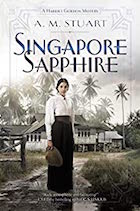
A.M. Stuart, Singapore Sapphire

I love a historical mystery, and this book’s uncommon setting of 1910 Singapore intrigued me, so I decided to give it a try. Overall, I liked but didn’t love it. Protagonist Harriet Gordon is a widow living with her brother and eking out a meager living as a typist. She’s been hired to type Sir Oswald Newbold’s memoirs, but after only a day of work, the man’s throat is cut. Inspector Robert Curran is on the case, and while he and Harriet get off to a bad start, they soon become friendly as they work together to solve the mystery. I think the mystery itself hangs together well, but it definitely takes a backseat to the setting and characters. It was interesting to get a glimpse of Singapore at this point in time, which was home to so many different cultures, both Asian and European. But if you’re looking for a novel with diverse characters, this isn’t it — there are a few Asian secondary characters, but they’re quite two-dimensional and have no impact on the story. Overall, I’m curious enough to give the next book a try, but this one fell a bit flat for me.

Mary Balogh, Slightly Scandalous

This third book in the Bedwyn saga focuses on Lady Freyja Bedwyn, who is much bolder and more direct than the typical Regency lady. Having grown up with four brothers, she can shoot and ride and box with the best of them. She’s also in no hurry to marry; most of the fashionable society men bore her, and she’s still not over a former flame who recently married someone else (as told in A Summer to Remember, though you don’t need to read that book to understand this one). But when Joshua Moore, marquess of Hallmere, proposes a fake betrothal, Freyja agrees to the scheme, not realizing that there is more to Josh than meets the eye. I continue to enjoy the Bedwyn books, and this might be my favorite so far! Freyja hasn’t been particularly likable in the previous books, but this novel gave her much more dimension. And the roguish Joshua, whose carefree manner and bad reputation hide his true goodness, is a hero after my own heart. The book does have some moments of cheesiness, but overall I liked it a lot and look forward to more of the Bedwyns. I find myself more and more excited for Wulfric’s book!

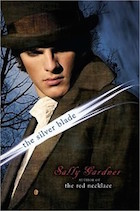
Sally Gardner, The Red Necklace and The Silver Blade

This YA fantasy duology set during the French Revolution focuses on Yann, a Gypsy boy with unusual gifts, and Sido, an aristocratic girl with a neglectful father. They meet in The Red Necklace when Yann’s theater troupe performs at Sido’s father’s house, and they are immediately drawn to one another. But when the troupe falls afoul of the powerful and evil Count Kalliovski, Yann must flee the country. Later, when Kalliovski sets his sights on Sido as a bride, Yann returns to rescue her. In The Silver Blade, Yann continues to rescue aristocrats from the guillotine, while Sido waits in England. But his plans are once again thwarted by Kalliovski, who wants Yann’s magic for himself. I found these books enjoyable enough — loved the French Revolution setting and the Pimpernel-esque elements — but didn’t like that they spend just as much time (if not more) on the villain as on the heroes. As a result, Yann and Sido don’t have much dimension; I wanted more time with them and less time describing just how evil Kalliovski is. I’m glad I read these books, but now they can leave my shelves to make room for something new!