Mini-Reviews: Wicked, Left-Handed, Madam

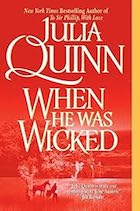
Julia Quinn, When He Was Wicked

Michael Stirling is known throughout society as “the Merry Rake,” but despite his myriad sexual conquests, he’s been in love with Francesca Bridgerton since the moment he saw her. Unfortunately, she was betrothed to his cousin John at the time and is now John’s wife. When John dies unexpectedly, Michael can no longer hide his true feelings, but can he pursue a relationship with Francesca without dishonoring his cousin’s memory? I wanted to like this book more than I did. I enjoy a hero who pines for the heroine, but in this case I didn’t understand why Michael was so obsessed with Francesca. He’s already in love with her when the story begins, so we don’t see what makes her so special to him. Further, he “courts” her exclusively by seducing her, so their romantic relationship is based entirely on sex, which I didn’t find particularly appealing. I’ve really liked some books in the Bridgerton series, but this one just wasn’t for me.

Garth Nix, The Left-Handed Booksellers of London

Eighteen-year-old Susan Arkshaw has come to London to find the father she’s never met. She tracks down Frank Thringley, an old friend of her mother’s, to see if he knows anything about her father — but she arrives just in time to see him crumble into dust at the prick of a hatpin. The hatpin’s wielder is Merlin, who describes himself as a “left-handed bookseller” and tells Susan she is in grave danger. He explains that the Old World of myths, legends, and ancient powers is real, and it’s starting to intrude dangerously into the ordinary world — unless Susan and the booksellers can stop it. This is a really creative YA adventure novel that seems intended to introduce readers to (or reinforce their love of) British fantasy fiction and mythology. I really liked all the literary allusions and the occasional humorous banter, but the book is a bit too episodic and plot-driven for me — too many action sequences, not enough character development. Overall, I liked but didn’t love it, and I probably won’t read the sequel.

Mary Stewart, Madam, Will You Talk?

Charity Selborne is a young Englishwoman on holiday in the South of France. At her hotel in Avignon, she befriends a 13-year-old boy named David and gradually realizes that something is very wrong in his life. She then learns that David’s father, an accused murderer, is at large and has followed David to France. Charity’s decision to help David plunges her into days of suspense and fear, during which she encounters a mystery with its roots in World War II and finds love in an unexpected place. I really enjoy Mary Stewart’s novels of romantic suspense, though they all follow the same basic pattern: beautiful girl in exotic location finds danger and romance. But this is one of her strongest books, in my opinion — the plot is nice and twisty, and there’s a very memorable car chase. Recommended if you like this type of book!
Mini-reviews: Inevitable, Ready, Loving, Duke

That Inevitable Victorian ThingReady Player One

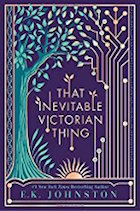
E.K. Johnston, That Inevitable Victorian Thing — This alt-historical novel is set in a version of the Victorian era in which technology has greatly advanced, leading to innovations such as a computer that predicts a person’s optimal spouse based on his or her genetic code. In this world, heir to the throne Margaret travels to Canada, posing as a commoner to have one last hurrah before she must submit to a computer-arranged marriage. There she meets Helena and August, who have been unofficially promised to each other for years but who both harbor shocking secrets.

I have mixed feelings about this book. I think it succeeds best when it focuses on the changing relationships among the three main characters (if you’re wondering whether there’s a queer love triangle, the answer is yes). On the other hand, I found myself in a situation where I actually wanted more world-building! The book contains some fascinating ideas about how the world might have been different if things had gone differently in the actual Victorian era, but I wish those ideas had been developed more. Also, I think there’s one significant plot weakness: about halfway through the novel, a big secret is revealed about Helena, but the implications of that secret are never really addressed. Not a bad book, by any means, but I didn’t like it nearly as much as I wanted to.

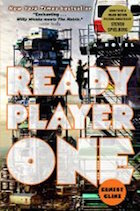
Ernest Cline, Ready Player One — I have to say, I did not enjoy this book at all! I know it’s very popular, and I can see how it would appeal to lovers of ’80s geek culture, but it is emphatically not the book for me. The protagonist, Wade, is a smug know-it-all who thinks he’s better than everyone else because of his dedication to memorizing the minutia of ’80s movies, music, and video games. He’s the kind of guy who will judge you for not knowing some obscure piece of trivia and claim that you’re not a “true fan” of whatever thing. I honestly can’t remember the last book I read whose protagonist annoyed me so much! That said, the overall concept — sort of The Matrix meets The Westing Game — is fun; it just doesn’t make up for the insufferable “hero,” in my opinion.

Loving Cup, TheDuke and I, The

Winston Graham, The Loving Cup — In the 10th Poldark book, Clowance makes a decision about her future; Jeremy struggles with his obsessive, unrequited love for Cuby; and tensions between Valentine and George finally come to a head. I’m so behind on reviews that I’ve actually finished the series now, so I can’t quite remember which events happened in this book versus others. I do remember Jeremy’s ultimate decision regarding Cuby, which was based on TERRIBLE advice from Ross! I also didn’t love the continued presence of Stephen Carrington, who starts to rehabilitate himself only to fall even more spectacularly. Still, I really enjoyed the series overall, and this installment did some important place-setting for the final two books.

Julia Quinn, The Duke and I — I’d read one Julia Quinn book previously (Just Like Heaven) and enjoyed it, so I decided to try this first book in her famous Bridgerton series. It’s a fun, quick read, but for me it never rose above somewhat mindless entertainment. For one thing, I’m not a huge fan of the “notorious rake is reformed by the love of a good woman” plotline. For another, I didn’t quite know what to make of the hero’s personal history, which basically amounts to serious verbal and emotional abuse from his father. Clearly this backstory is meant to make the hero more interesting and to create an obstacle in the plot; but the book generally has such a lighthearted tone that the backstory seems incongruous and almost inappropriate. All that said, I do enjoy some nice Regency fluff every now and then, so I’ll probably read more by this author…but maybe I’ll try one of her other series!