Mini-Reviews: Remember, Mortal, Bomb

Mary Balogh, Remember When

Clarissa Ware, the dowager countess of Ravenswood, is taking stock of her life. She’s nearly 50, her husband has been dead for several years, and her children are grown. Now she wants to discover who she is apart from her role as society wife and mother. To that end, she rekindles her friendship with village carpenter Matthew Taylor, who was her neighbor and best friend growing up. But any relationship between them will cause gossip; should they get together despite the possible cost to their reputations? This is a gentle, peaceful installment of the Ravenswood series. The conflict is practically nonexistent, and many of the scenes feel repetitive, as both Clarissa and Matthew spend a lot of time reflecting on whether they should be together. There are also the obligatory updates on Clarissa’s many children and family members, which I found a bit tedious. Overall, it was a decent enough read, but so far this series hasn’t grabbed me…though I am excited for Stephanie’s book now, and I hope it’s coming soon!

Genevieve Cogman, The Mortal Word

World-hopping, book-stealing Librarian Irene Winters has just been given her most high-stakes assignment yet. A secret peace treaty between dragons and Fae is in the works, mediated by the neutral Library—but one of the dragon negotiators has just been murdered. Irene and Vale are summoned to the scene of the crime, a version of Belle Époque Paris, where they must solve the murder and prevent negotiations from breaking down. But do the powers that be really want the truth to come out? This is another fun, page-turning installment of the Invisible Library series; it might even be my favorite so far. Most of the major series characters (Kai, Lord Silver, etc.) are on the scene and get some good page time. The romantic subplot takes a significant step forward. Plus, I always enjoy a good murder mystery! So yeah, I liked this one and am excited to continue with book 6.

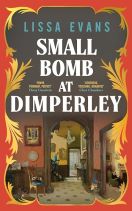
Lissa Evans, Small Bomb at Dimperley

World War II has just ended, and Valentine Vere-Thissett is leaving the army to return to Dimperley manor, which he’s just inherited (along with a title) from his older brother, who died in the war. Valentine doesn’t particularly want the responsibility, especially since Dimperley is falling apart. Fortunately, Zena Baxter, who came to Dimperley in a group of pregnant women who were evacuated from London during the war, has an idea that might save the estate. But not everyone is ready to embrace her plan. I loved this slice-of-life novel and its realistic depiction of postwar changes, but the characters are what really make the novel shine. Every single one is treated humanely and feels like a real person. There’s also plenty of quiet humor and an understated romance that I loved. All in all, an incredibly satisfying reading experience. I’m so glad I saw pamelad’s review on LibraryThing and decided to buy the book from a UK store (since it hasn’t been published in the US)—totally worth it!

Mini-Reviews: Fate, Bigger, Don’t

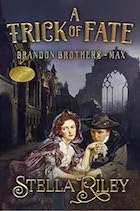
Stella Riley, A Trick of Fate

Max Brandon has a problem: Someone has been purchasing expensive goods and running up bills in his name, which he’s now being asked to pay. This minor nuisance becomes a major problem when the thief’s actions harm Frances Pendleton, Max’s first love. Now Max and Frances must team up to find the thief, and their quest leads them on a wild-goose chase throughout England and Scotland. After loving Stella Riley’s Rockliffe series, I had to continue with the spinoff Brandon Brothers trilogy (Max is Arabella’s brother from Cadenza). I don’t think you have to read any of the Rockliffe books to follow this one, but the two series are definitely set in the same universe. The love story in this book is a bit lightweight; while the obstacles originally dividing Max and Frances made sense, there was no reason for them not to be together in the present. But I love Riley’s writing and enjoyed the book anyway — especially since it also provides a peek at Elizabeth and Sherbourne, a couple from Cadenza whose story I’d wanted more of. I’d definitely recommend this book and author to historical romance fans and am eager to continue with the series.

Erle Stanley Gardner, The Bigger They Come

Most people know Erle Stanley Gardner as the author of the Perry Mason books, but he also wrote another series, featuring private detectives Bertha Cool and Donald Lam, under the pseudonym A.A. Fair. Narrated by Lam, this first book in the series describes how he got the job with Bertha Cool’s detective agency. It also details Lam’s first assignment: He’s tasked with serving divorce papers to an unfaithful husband, but no one seems to know where the man is. As Lam searches, he uncovers various secrets and even a murder — and demonstrates how, using a legal loophole, a person can commit murder and get away with it. This book is an enjoyable noir novel with plenty of fights, femmes fatales, and damsels in distress. The mystery itself isn’t terribly innovative, but Lam’s humorous narration keeps things light, and the book moves at a quick pace. I didn’t love the constant negative commentary on people’s sizes — part of the book’s “humor” comes from the fact that Bertha is a large woman, while Lam is a shrimpy guy — but I suppose that’s of its time. Overall, I liked the book and am interested in trying more by Gardner at some point.

Chloe Angyal, Pas de Don’t

Heather Hays’s dance career is finally taking off when she learns that her fiancé, a world-famous dancer in the same NYC ballet company, has been cheating on her. Desperate to get as far away as possible, she accepts a guest position with the Australian National Ballet. There she meets Marcus Campbell, a dancer recovering from an injury and grieving the recent death of his father. The two are immediately attracted to one another, but the ballet company has a firm no-dating policy. Will Heather and Marcus risk their jobs to follow their hearts? I have absolutely zero dance ability, but I’ve always enjoyed movies and TV shows about dancing, so the premise of this book intrigued me. I might have liked all the ballet background more than the actual romance, which is fine but a bit pedestrian. I did like the third-act conflict between Heather and Marcus, which felt realistic given the setup, and I enjoyed the resolution as well. A sequel is coming out in May, featuring Heather’s best friend, and I plan to get it from my library when it’s available.

Mini-Reviews: Tower, Bath, Gate

Nancy Campbell Allen, The Lady in the Coppergate Tower

Hazel Hughes has dreamed of a girl who looks exactly like her for years. So when her long-lost uncle reveals that she has a twin sister in Romania — a sister who appears to be slowly going mad — Hazel isn’t unduly shocked. She agrees to accompany her uncle to Romania in hopes that her skills as a Healer will help her sister. Dr. Sam MacInnes, Hazel’s employer, decides to come along for protection; as the two slowly fall in love, they also realize Hazel’s uncle is hiding something and try to uncover his sinister secrets. I’m continuing to enjoy this series of steampunk fairy tales. This installment is a riff on Rapunzel, but it also contains some clever allusions to Dracula — for example, in this book Hazel and Sam consider and reject the possibility that her uncle could be a vampire. The romance itself is a bit bland, as no real obstacles stand in the couple’s way. While I did like the book overall, I’m pretty sure I won’t be keeping the series on my selves once I read the fourth and final installment.

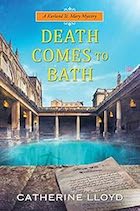
Catherine Lloyd, Death Comes to Bath

In this installment of the Kurland St. Mary series, Robert’s injured leg is paining him more than usual, so he and Lucy head for Bath in hopes that the spa town’s mineral-rich waters will provide relief and healing. There Robert befriends Sir William Benson, who’s also “taking the waters” for his health, and the two families soon become acquainted. But when Sir William dies, apparently drowned in the baths, Robert suspects foul play. And between Sir William’s much younger wife, three disappointing sons, and two odious stepsons, there’s no shortage of possible murderers. This is another strong entry in the series, benefiting from a new location and a close focus on the small circle of suspects. I liked Robert and Lucy’s dynamic as well; though they still butt heads occasionally, they work together and recognize each other’s strengths. I’m happy that the series is still so entertaining six books in, and I’m looking forward to the next one.

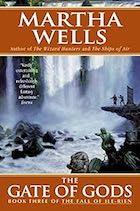
Martha Wells, The Gate of Gods

Following the events of The Ships of Air, Tremaine and her allies are in the country of Capidara, Ile-Rien’s ally and the current seat of its government-in-exile. They’re hoping to use their hard-won knowledge of the etheric gates to liberate the Rienish sorcerers trapped inside the besieged city of Lodun. But their plans go awry when half the group — including Tremaine, Ilias, and Giliead — travels to an unexplored world using a new type of etheric gate and can’t get back again. This conclusion to the Fall of Ile-Rien trilogy is a fitting end to the series; it answers the big questions of who the Gardier are and what they want, and it sees Tremaine finally deciding what she wants from her life. That said, I did find the ending anticlimactic — some of the answers the book provides don’t feel terribly satisfying. I also wanted more development for the secondary characters such as Florian, Gerard, and Niles, who were a constant presence throughout the trilogy but never really got their own stories. Overall, I’m glad I finally read this series but won’t be keeping it on my shelves.

Mini-Reviews: Con, Tangle, Austen

Devon Daniels, The Rom Con

Cassidy, a reporter for the feminist website Siren, has just ended yet another disappointing relationship. Her grandmother suggests she try a different approach to dating, based on a 1950s list of rules for catching a husband. Cassidy is horrified, but when she meets Jack Bradford — co-founder of Siren’s rival website, Brawler, which Cassidy views as a bastion of toxic masculinity — she decides to use the antiquated rules on him. Once Jack falls for the Stepford Wives version of her, she’ll write an article exposing him as a sexist jerk. But as she begins dating him, she learns he might not be such a jerk after all. I’m of two minds about this book. On the plus side, it’s a fun, quick read with enjoyable banter between the two leads. But Jack is simultaneously too perfect and problematic — it’s never clear why, if he’s such a good guy, he’d continue to be involved with Brawler. There are also a few too many Big Misunderstandings near the end that seem to exist only to drag out the happy ending. Overall, I did enjoy the book while I was reading it, but looking back, I don’t think it totally works.

Theresa Romain, It Takes Two to Tangle

Soldier Henry Middlebrook has just returned to England after Napoleon’s defeat, wounded and unable to move his right arm. Frustrated by his perceived “uselessness” and the pity of his relatives, he decides to court Lady Caroline Stratton, a popular society beauty who he thinks will help reintegrate him into his old life. He enlists the help of Caroline’s companion, Frances Whittier, but complications ensue when he and Frances grow closer. I was intrigued by the setup of this book — Henry’s disability plus a Cyrano-esque plot point in which Frances writes him letters that he assumes are from Caroline. But unfortunately, I wasn’t as enamored of the book itself. Henry is far too slow to see what’s right under his nose, and the obstacles keeping him and Frances apart aren’t important enough to justify the length of the novel. There’s also more steam than I’d prefer, so overall, this just wasn’t the book for me. I was also underwhelmed by Romain’s Season for Temptation, so I think she’s not the author for me either.

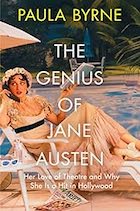
Paula Byrne, The Genius of Jane Austen: Her Love of Theatre and Why She Works in Hollywood

In Mansfield Park, Fanny Price disapproves of the amateur theatricals staged by her cousins and their friends. Some critics have inferred from this that Jane Austen herself disapproved of theater, but Byrne argues pretty convincingly that the opposite is true. Austen acted in private theatricals with her family and friends, she frequently attended plays while living in Bath and London, and her letters reveal that she was familiar with the famous actors and theater gossip of her day. The book explains how Austen’s life interacted with the theater; how she used theatrical plots, character types, and conventions in her novels; and why her books adapt so well to the screen. Byrne is obviously an Austen fan, and a very knowledgable one. The book is briskly written and appears well researched. I liked it a lot and would certainly recommend it to Austen lovers!

Mini-Reviews: Curse, Moonflower, Pearls

Elizabeth C. Bunce, A Curse Dark as Gold

Charlotte Miller has been struggling to run Stirwaters, the mill she’s inherited from her father. Stirwaters is plagued by bad luck; the local townsfolk say it’s cursed. Charlotte is far too practical to believe in curses, but as mishap after mishap befalls Stirwaters, she’s determined to do whatever it takes to save the mill — even accept the help of the mysterious Jack Spinner, who claims he can spin straw into gold. But his help comes with a price, and eventually he’ll ask for something Charlotte is unwilling to pay. I really liked this retelling of Rumpelstiltskin when I first read it; this time around, I still think it’s very well done, but it might be a bit too slow for me. Most of the book is just Charlotte becoming more and more miserable as Stirwaters is threatened, and she pushes all her loved ones away to deal with the problem alone, which I found frustrating. But Charlotte’s community is well portrayed, there’s a sweet romance with realistic ups and downs, and I liked the resolution to the curse. I’d recommend this for fans of atmospheric fairytale retellings who don’t mind a slower pace.

Lauren Willig, The Lure of the Moonflower

The final book in the Pink Carnation series focuses on the Carnation herself, Miss Jane Wooliston, who is on a mission to locate the missing Portuguese queen before the French do. But since she doesn’t know the country or the language, she’ll need the help of Jack Reid, a British agent (and former French agent) known as the Moonflower. But will she be able to trust him with the mission — and her heart? The plot of this book is even less substantial than usual; even the climactic scene doesn’t have particularly high stakes, and the matter of the missing queen feels like an afterthought. The meat of the book, though, is Jane and Jack’s relationship, which I think is quite well done. Since Jane’s been a pivotal series character since book #1, it was important that she have a love interest worthy of her, and Jack definitely fits the bill. The book also gives us one last look at several of the other series couples, which was fun but a little overkill. I also appreciated Willig’s “where are they now” note at the end of the book, which did a pretty good job of wrapping things up. Overall, I think this is one of the better books in the series and definitely a fitting end to the Pink Carnation’s adventures.

Darcie Wilde, The Secret of the Lost Pearls

In this installment of the Rosalind Thorne series, an old school friend requests Rosalind’s help to discover who stole her valuable pearl necklace. The woman fears that the thief is her youngest sister, Nora, who’s recently returned to the family after a scandalous and ill-fated elopement. But when Rosalind goes to stay with the family, she senses many secrets and soon identifies several other plausible suspects. This book has the same strengths and weaknesses as the previous books in the series: a likable main character and an interesting look at the fringes of Regency high society, but an overly complicated plot that made the book feel like a slog. I think the next book in the series just came out, or will shortly; but while the series has its good points, I’m no longer interested enough to continue. Thankfully, Rosalind and her friends end up in a reasonably good place here, so I won’t feel like I’m abandoning their stories unfinished.

Mini-Reviews: Guide, Wicked, Kit

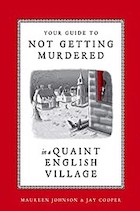
Maureen Johnson and Jay Cooper, Your Guide to Not Getting Murdered in a Quaint English Village

This charming, humorous little book presents itself as a guidebook for travelers in the English countryside who may unexpectedly find themselves in an English Murder Village. As everyone knows, such villages are fraught with peril, from the sinister antique shop to the overly violent cricket match to the local inn full of mysterious strangers. The book enumerates various people and places to avoid, both in the village itself and at the neighboring manor, such as the pond (“full of the skeletons of Victorian children and, if you are unwise, you”) and the kitchen (“no”). I got a few giggles out of this book, and the Gorey-esque illustrations really enhance the material. It does go on a bit too long for what is essentially a single joke, but I think fans of Agatha Christie novels and British mystery series like Midsomer Murders will enjoy it.

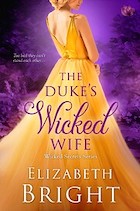
Elizabeth Bright, The Duke’s Wicked Wife

After years of rakish living, Sebastian Sinclair, the duke of Wessex, decides it’s time to marry and produce an heir. He plans to invite some marriagable ladies to a house party, and he asks his longtime friend, Eliza Benton, for help with the guest list. However, as the party commences, it’s Eliza herself whom Sebastian can’t stop thinking about. I’ve mentioned before that I enjoy romance heroes whose conflict is basically, “I’m having a feeling and I don’t like it!” I also like characters whose frivolous facades conceal hidden depths. That’s definitely Sebastian here, and he is by far the best part of the book, though Eliza is also a strong heroine and a great match for him. The book is billed as a stand-alone, but I’m not sure it totally works…characters from previous books in the series have prominent roles, and without having read their books, it was hard for me to keep everyone straight. I did enjoy the central romance here, but I don’t find myself particularly tempted to try more by the author.

Amy Barry, Kit McBride Gets a Wife

Junebug McBride is tired of doing all the chores for her four older brothers in the tiny town of Buck’s Creek, Montana, so she decides to advertise for a wife for her brother Kit. The woman must “expect neither doting nor compliments” and must be an excellent cook. A widow from St. Louis answers the ad, dragging along her disillusioned Irish servant, Maddy. Complications ensue when Kit has a meet-cute with Maddy and mistakenly thinks she’s his prospective bride. I’m not terribly interested in Westerns or cowboy romances, but I found this book unexpectedly charming! Some of the chapters are from Junebug’s point of view, and I really enjoyed her hilarious perspective on events. The romance between Kit and Maddy is sweet, though not terribly unique, and there aren’t many scenes with just the two of them. So if you like your romance to focus heavily on the central couple, this book might not be for you; but if you like a large cast of quirky characters and a unique setting, I’d recommend this one! I will definitely be continuing with the series.

Mini-Reviews: Agreeable, Dangerous, Ruby

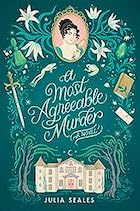
Julia Seales, A Most Agreeable Murder

In the English village of Swampshire, everyone is governed by the strict rules of etiquette handed down by its founder. Women are expected to pursue only ladylike occupations such as embroidery, but Beatrice Steele has a secret fascination with crime-solving. She knows she must hide her interest, lest she be stigmatized as a “morbid creep” and rendered unmarriageable. But when an eligible bachelor is murdered at a local ball, Beatrice can’t help enthusiastically pursuing an investigation, with the help of a surly yet handsome detective. This is a fun historical mystery set in a heightened reality: Swampshire is beset by comically terrible weather and infested with “squelch holes,” and Beatrice’s youngest sister might be a werewolf. It’s all very silly, but I enjoyed the book’s colorful characters and its skewering of various historical romance tropes. If there’s ever a sequel, I will definitely seek it out!

Darcie Wilde, And Dangerous to Know

The stakes are higher than ever in Rosalind Thorne’s latest case: Lady Melbourne, a leader of London society, has hired her to recover some stolen letters. Lady Melbourne’s daughter-in-law is Lady Caroline Lamb, whose shocking love affair with Lord Byron has led many to believe she’s insane, so it’s especially important that the letters’ potentially scandalous contents are never publicized. Complicating matters is the fact that a woman was murdered at the gates of Melbourne House, and Rosalind suspects that the two incidents are connected. I liked this book a bit more than the previous one in the series; the mystery hangs together pretty well, although it’s almost peripheral to the intrigues swirling around the Melbourne clan. I’m also glad that things seem to be moving forward in Rosalind’s personal life (and in those of her friends as well). While I’m pretty confident that this series won’t be an all-time favorite, I’m looking forward to the next book!

Philip Pullman, The Ruby in the Smoke

Sixteen-year-old Sally Lockhart is left alone in the world after her father’s tragic death overseas. When she receives an anonymous note telling her to “beware the seven blessings,” it’s the first of many strange mysteries Sally must unravel. For instance: Who burgled her room, and what was he or she looking for? How did her father really meet his end? Where is the priceless Indian ruby that apparently belongs to Sally? And why does the evil Mrs. Holland want Sally dead? This is a compelling YA adventure novel that apes the drama and sensationalism of Victorian penny dreadfuls. Some of the plot machinations feel a bit over the top, and there’s some unpleasant stereotyping of Chinese characters. But the depiction of the seamier side of Victorian London is fascinating, and Sally and her friends are intelligent, courageous, interesting characters. I’m excited to read more of their adventures in subsequent books!

Mini-Reviews: Red, Rom-Com, Garden

Mary Roberts Rinehart, The Red Lamp

Professor William Porter has recently inherited a seaside house from his Uncle Horace. He decides to stay there during his summer vacation, along with his wife Jane, niece Edith, and Edith’s beau Warren Halliday. When they arrive, they immediately learn that the house is reputed to be haunted, and they soon witness strange occurrences themselves, such as a red light shining from the supposedly empty house. Then sheep start dying with their throats cut, and a police deputy goes missing. Are evil spirits responsible for these tragedies, or is human malice at work? This is my first book by Rinehart, and I wasn’t terribly impressed. The novel tries hard to create an atmosphere of eerie suspense, but I never fully felt that; instead, William’s constant musings on possible supernatural explanations just irritated me. In terms of moving the mystery plot forward, not much happens till almost the end of the book. I felt like there weren’t enough clues for readers to grab hold of, and I’m not quite sure the solution all hangs together. Still, Rinehart’s writing is good, and I’m interested to try more of her work; maybe this one is an uncharacteristic dud.

Jayne Denker, The Rom-Com Agenda

Eli has just been dumped by his girlfriend, Victoria, but he’s convinced she’s the one. While she’s on sabbatical in Europe, he and his friends devise a plan to win her back: He’ll give himself a makeover, basing his new look and personality on the heroes of classic romantic comedies. When he meets Leah, a lonely young woman who quickly gets absorbed into his friend group, they immediately hit it off and begin watching the rom-coms together. But as Eli and Leah grow closer, he must decide where his heart truly lies. This contemporary romance is predictable but sweet, and I enjoyed the allusions to some of my favorite movies, like Better Off Dead and The Princess Bride. I liked Leah’s quiet strength and Eli’s exuberant, genuine nature. The book also has a low steam factor with no explicit sex scenes, which is a plus for me. Overall, though, this is a fun read but not a standout, and I don’t feel particularly compelled to seek out more by the author.

Lauren Willig, The Garden Intrigue

Augustus Whittlesby is widely regarded as the worst poet in Paris, but he’s also secretly a British agent working with — and infatuated by — the Pink Carnation, a.k.a. Miss Jane Wooliston. Jane’s friend, Emma Delagardie, constantly ridicules Augustus’s terrible poetry but is also maybe a tiny bit attracted to him. When Augustus and Emma are thrown together to write a masque for Bonaparte and his court, they develop a deeper relationship. But Augustus is conflicted, both because of his feelings for Jane and because he’s using Emma to learn more about Bonaparte’s plans for invading England. Augustus has been a frequently recurring character throughout this series, so I’m glad he finally got his own story. I liked that both he and Emma ultimately have the same conflict: they have to choose between guarding their (relatively) safe, self-protective lives and taking a chance on real love. This book isn’t quite as light and fun as earlier installments of the series, and it isn’t one of my favorites, but it’s still an enjoyable read.

Mini-Reviews: Cheat, Counterfeit, Betrayal

Sarah Adams, The Cheat Sheet

Bree and Nathan have been close friends since high school, and they’ve maintained that friendship even though Bree is now a dance teacher struggling to pay rent, while Nathan is a professional football player. In fact, they’re madly in love with each other, but they’re each convinced the other sees them only as a friend. Then one night, Bree drunkenly reveals her feelings to a reporter, so they agree to a “fake” relationship for the publicity while trying to conceal their very real feelings. I like the friends-to-lovers trope in theory, but this book is classic example of why it doesn’t often work for me in practice. Bree and Nathan have been crazy about each other for years, yet they’ve never been honest with each other about how they feel. I just don’t buy that neither of them ever made a move! I would have liked it more if, say, Nathan really didn’t see Bree as a romantic option at first, but something happened to change his perspective. That said, this book is a cute, fun, not too racy read, and I did enjoy Nathan’s interactions with his friends on the football team, so I’d recommend this one for friends-to-lovers fans.

Louise Allen, The Duke’s Counterfeit Wife

Nicholas Terrell, the duke of Severton, and Sarah Parrish, the daughter of a disgraced shipping company owner, are traveling aboard the same passenger boat when they realize that its captain is up to no good. When the captain threatens to kill them, Nicholas reveals his ducal identity and claims that Sarah is his wife, persuading the captain to hold them for ransom instead. While Nick and Sarah endure their shared captivity and plot their escape, they also fall in love, but their very different social standings impede their romance. I quite enjoyed this historical romance; it’s not too long (less than 300 pages in my e-book version) and has an adventurous plot along with the romance. Nick is my kind of buttoned-up, scowly duke, and he’s well matched in the practical and intelligent Sarah. Based on the reviews I’ve seen, it looks like Allen’s books are hit or miss, but I’d certainly consider trying more by her!

Lauren Willig, The Betrayal of the Blood Lily

Penelope Staines has been packed off to India with her husband, Freddy, after their hasty and scandalous marriage. Freddy is to be a special envoy to the court of Hyderabad, which Penelope soon learns is a hotbed of intrigue. Meanwhile, Captain Alex Reid is trying to keep a lid on that intrigue, especially when he learns that a French spy might be undermining the uneasy alliance between Indians and British. As he and Penelope unwillingly team up to unmask the spy, they also fight a mutual attraction, knowing that Penelope’s marriage precludes a relationship between them. This is another enjoyable installment of the Pink Carnation series. Willig was smart to change up the setting and remind readers that the Britain-France conflict had global ramifications. I also really liked Alex, though Penelope’s self-destructive tendencies grated on me a bit. It was hard for me to root for their romance, too, given that it involved marital infidelity. Overall, a good read but not one of my favorites in the series.

Mini-Reviews: Parfit, Swift, Keeper

Stella Riley, The Parfit Knight

When an attack by highwaymen and a heavy snowfall force the Marquis of Amberley to take refuge in a stranger’s home, he doesn’t expect to fall in love, but the beautiful, intelligent Rosalind Vernon captures his heart almost immediately. Because she is blind, Rosalind hasn’t had a Season or met any gentlemen apart from her nearest neighbors. So Amberley encourages her to go to London, hoping to woo her once she’s mixed a little more with the world. But their romance is threatened by misunderstandings, jealous rivals, and a tragedy from the past. If you’ve read everything by Georgette Heyer and are looking for a read-alike, I think Stella Riley might fit the bill! Riley isn’t quite as witty, but the character types and dialogue are very Heyeresque. I tend to prefer romances where the characters take a little longer to fall in love — it’s pretty instantaneous for both Amberley and Rosalind here — but otherwise I really liked this one and can’t wait to continue with the series!

Chloe Neill, A Swift and Savage Tide

In this alternate 19th-century world, the Napoleon equivalent has escaped from exile and is bent on conquering Europe through the forbidden use of magic. So Captain Kit Brightling and her crew are once again called upon to stop him — along with infuriatingly attractive soldier Rian Grant. When they encounter an enemy who can manipulate magic in new, powerful, and terrifying ways, Kit realizes she may have to test the limits of her own magical Alignment as well. I enjoyed the first Kit Brightling book quite a bit, and this one is more of the same. I think the series is trying really hard for a “found family” element with Kit’s crew, but I must say I’m not really feeling it; the secondary characters still don’t feel like they have very distinct personalities. I do, however, enjoy the seafaring adventure and the romance, which definitely progresses in this book. I hope a third installment is in the works, because there’s a lot more to explore in this world!

Charlie N. Holmberg, Keeper of Enchanted Rooms

When Merritt Fernsby unexpectedly inherits a house on an isolated island in the Narragansett Bay, he’s delighted — until he realizes that the house is enchanted and won’t let him leave. Luckily, Hulda Larkin is on the case: She belongs to an agency that cares for bespelled houses and knows how to deal with walls that move, libraries that toss books around, bloodred paint that drips from the ceiling and so on. As Hulda helps Merritt adjust to his new home, their relationship deepens, but everything is threatened when a powerful wizard with a grudge against Hulda sets his sights on Merritt’s home. I enjoyed this book, which is sort of a cozy take on the haunted house genre. Both Merritt and Hulda are likable, interesting characters, and I enjoyed watching their relationship grow. But I found the chapters from the villain’s POV distracting and not terribly necessary to the story. Overall, though, I did like this one and plan to seek out the sequel.