
Mini-Reviews: Shippers, Corpse, Brides

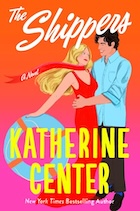
Katherine Center, The Shippers

JoJo Burton’s love life is a train wreck—a fact that becomes abundantly clear when she leaves her rich, “perfect” fiancé at the altar. JoJo thinks her problem may be rooted in unresolved feelings for her childhood crush, Finn Turner. Fortunately, her sister’s about to get married on a cruise ship, and newly divorced Finn is one of the guests. With several days of forced proximity and her sister’s help, JoJo is determined to attract Finn and thus fulfill her romantic destiny. The only problem is JoJo’s best friend, Cooper, who thinks her plan is ridiculous. As her attempts to lure Finn meet with disaster, JoJo eventually begins to question where her romantic destiny truly lies. This is a fun, fast-paced read with some cute banter, but I have to say that the romance drove me crazy! JoJo is implausibly blind to what’s right in front of her, and I don’t buy that Cooper would have kept his feelings a secret for so long. I also found the ending a bit anticlimactic after all the buildup. The book is still a fun, breezy summer read if you like this premise, but for me it’s not one of Center’s best.

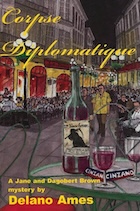
Delano Ames, Corpse Diplomatique

Jane and Dagobert Brown are traveling through France when they encounter a violent death, about which Dagobert immediately suggests Jane write another mystery novel. While staying in Nice, they meet a diplomat from “Santa Rica” who is terrified of being assassinated. His fears seem justified when a bullet whizzes by his head, narrowly missing him but killing Major Hugh Arkwright instead. Who was the true intended victim, and who among the Browns’ new acquaintances at their French hotel is the killer? This series is enjoyable mainly for Jane’s snarky running commentary on the various people and events she’s writing about. The characters are largely well drawn, and I enjoyed the touches of humor, but the mystery itself is a bit lackluster; it kind of plods along without any real forward motion until the very end. Overall I liked this book fine, and I’d read more in the series if I came across them, but I don’t feel compelled to seek them out.

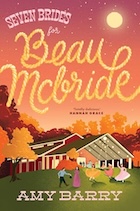
Amy Barry, Seven Brides for Beau McBride

After Junebug McBride found wives for two of her four older brothers, she’s been strictly forbidden from advertising for any more mail-order brides. But the third McBride brother, Beau, thinks Junebug had the right idea and places his own ad for a bride. Naturally, Junebug has to be involved and bets Beau that she can find a better wife than he can. But when she writes to six women instead of one, and they all come out West hoping to marry Beau, she has a problem on her hands. Especially when one of her brides, Ellie Neale, turns out to be best friends with Beau’s own pick, Diana—and Ellie soon falls for Beau herself! I enjoyed this fun Western romance, with its nonsensical yet enjoyable plot and over-the-top characters. Junebug is a lot and would be insufferable in real life, but she’s a lot of fun to read about. I liked that the seven potential brides were all decent and kind women, rather than being catty rivals. Beau and Ellie’s romance was sweet and had some funny moments due to Ellie’s melodramatic nature. I’m looking forward to the next book in the series!

Mini-Reviews: Waltz, First, Apprentice

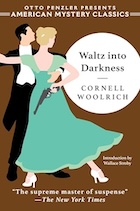
Cornell Woolrich, Waltz into Darkness

Louis Durand, age 37, is a prosperous but lonely businessman in 1880s New Orleans. Unable to bear his solitude, he begins corresponding with Julia Russell and proposes to her sight unseen. To his delight, the woman who arrives is younger and more beautiful than he expected. They marry immediately, and Louis is happy at first, but eventually he begins to notice some worrisome behaviors in his new wife. This novel is the literary equivalent of a train wreck: You know it’s going to be a disaster, but you can’t look away. I felt awful for Louis from the very first chapter, which reveals his aching loneliness and his hope that it’s finally about to end. I wanted things to work out for him, even though it was always obvious that they wouldn’t. The book is well written but painful! Ultimately, I’m just not a noir person; but if you are, I highly recommend Cornell Woolrich.

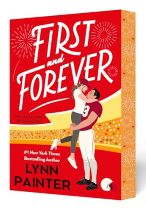
Lynn Painter, First and Forever

Duffy Distefano and her family are huge fans of the Minnesota Coyotes football team. But when the team’s mascot gropes Duffy at a game—and her retaliation is caught on camera—she becomes a target for Coyotes fans. She’s invited to tell her side of the story on a local morning TV show, only to be confronted by a Coyotes player, Connor Cunningham, who’s there to do damage control for the team. Their on-air conversation, which reads as flirtatious banter, creates good PR for the Coyotes, who suggest that Connor ask Duffy out to further improve the team’s image. But as they get to know each other better, they both develop real feelings. I really like Lynn Painter’s romances, which are fun and light with great banter, and this one is no exception. I’m not a sports person at all, so I felt like I was getting a little peek at a new-to-me subculture. I did find the plot a little bland, and the third-act breakup was both predictable and unnecessary, though at least it didn’t last too long. But overall, I liked this one and will be interested to see if there’s a sequel, as there did seem to be some chemistry between Duffy’s brother and her best friend!

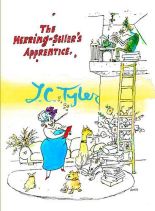
L.C. Tyler, The Herring-Seller’s Apprentice

Ethelred Tressider is a mediocre mystery writer and a bit of a sad sack. His wife, Geraldine, left him for his best friend years ago, and now he has neither a romantic partner nor any close friends. The only person he seems to interact with regularly is his literary agent, the abrasive Elsie Thirkettle. But when Geraldine goes missing—along with a fortune she obtained by scamming investors—it’s up to Ethelred, with unwanted assistance from Elsie, to solve the case. This book is a light, humorous mystery that has some fun playing with the conventions of the genre. I loved Elsie’s no-nonsense voice and the way she bullies Ethelred—for his own good, of course! That said, while I’ll definitely read book two because I own it, I’m not sure I’m invested enough to commit to the whole series.

Mini-Reviews: Name, Ántonia, Paris

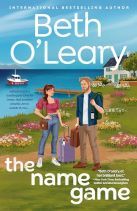
Beth O’Leary, The Name Game

Ormer is a tiny, picturesque island in the English Channel, with a population of 500. A farm shop on the island has just hired Charlie Jones to be its new manager. But complications ensue when two Charlie Joneses—one male, one female—show up, both claiming to be the person hired. They agree to share the job and accommodations on a trial basis, but as they live and work together, they learn they have much more in common than their name. Beth O’Leary has become known for writing contemporary romances with a twist, and in this case, the twist bugged me. It was clever, but I’m not sure it added anything to the story; in fact, it detracted a bit from my enjoyment of the romance. The book also felt a bit too heavy at times—most of the characters are dealing with some kind of trauma and/or mental illness. So this is definitely not a light, fun read, but those who enjoy more serious contemporary romances (and idyllic small-town settings) will likely enjoy it.

Willa Cather, My Ántonia

In this 1918 novel, Jim Burden recounts stories of his childhood growing up on the Nebraskan prairie. He recalls the hardships and joys of life on a farm, the mingling of various immigrant groups despite differences of faith and language, the harsh struggle for survival, and the beauty of the land. Many of Jim’s memories focus on his neighbor and friend Ántonia Shimerda, the daughter of Bohemian immigrants, who maintains her joy and zest for life despite many challenging circumstances. This is a beautifully written book with well-drawn characters and a vivid setting. Cather did live in Nebraska for part of her childhood in the 1880s, so she had firsthand experience of the places and people she wrote about. The book has no plot to speak of, and it’s disappointing that Jim’s adult life (revealed in the introduction, so not a spoiler) doesn’t seem to coincide with his true passions and inclinations. But the tone of bittersweet nostalgia is certainly very effective, and I think this book deserves its status as a great American novel.

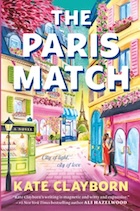
Kate Clayborn, The Paris Match

Physician Layla Bailey is on her way to a wedding in Paris, and she’s dreading it. The bride is her ex-husband’s sister, so she’ll be forced to mingle with her former in-laws—not to mention the ex himself, who is bringing his new girlfriend. Layla’s sole goal is to avoid any drama, but when the bride gets cold feet after a casual remark of hers, the groom’s abrasive best man, Griff, demands that she help him save the wedding. I really enjoy Clayborn’s contemporary romances, and I liked this one too, though it’s definitely angstier than the cover would suggest. I enjoyed the scenes between Layla and Griff much more than the peripheral wedding stuff; their chemistry is intense, and Griff is a compellingly damaged hero. But they fall very hard for each other very quickly, and I couldn’t entirely suspend my disbelief. Overall, this isn’t my favorite Clayborn novel, but it’s definitely worth reading if you like the premise and enjoy high-angst romance.

Mini-Reviews: Dreams, Daring, Undone

Sarah Adams, In Your Dreams

Madison Walker has always seen herself as the “failure” among her successful siblings. She’s just graduated from culinary school in New York, but she’s no longer sure cooking brings her joy, and she doesn’t love the big city like she thought she would. Still, when family friend James Huxley offers her the executive chef position at his new restaurant, she jumps at the chance to move home to Rome, Kentucky, and prove that she can succeed at something. Little does she know that James has been secretly in love with her for years, and he may finally be ready to do something about it. I enjoyed this light, charming romance and felt Madison’s insecurities and issues with her (loving but imperfect) family were relatable. James is of course a bit too perfect as a romantic hero, though I liked that he had a conflict with his brother, Tommy, that was partly (or even mostly) his fault. It looks like this is the last book in the Rome series, but is it weird that I kind of want Tommy’s story now?

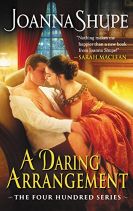
Joanna Shupe, A Daring Arrangement

Lady Nora Parker is a spirited young Englishwoman who’s fallen in love with an unsuitable artist. Her father has sent her away to New York to find a better match, but Nora just wants to return to England. She decides to find an outrageously unsuitable American man to pose as her fiancé, so her father will object to the match and summon her home. Wall Street tycoon Julius Hatcher seems like the perfect candidate; his lavish parties and scandalous paramours are the topic of every gossip column. But as Nora and Julius spend more time together, an inconvenient attraction sparks. I love the fake relationship trope and was excited about the Gilded Age setting of this romance, but ultimately the plot just doesn’t work. Nora wants Julius to help her create a scandal, while he is trying to use her to get into high society, so their desires are opposed from the start—why does either of them think this arrangement is a good idea? That said, I do think they have good chemistry, so I enjoyed the romance aspect. Overall, the book is fine but didn’t knock my socks off.

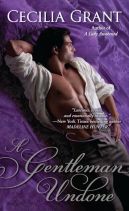
Cecilia Grant, A Gentleman Undone

Will Blackshear is a soldier who has returned from the Napoleonic Wars with visible and invisible wounds. He needs money to support the widow of one of his men, and he hopes to win it at the gambling tables. There he meets Lydia Slaughter, a prostitute who once worked in a brothel and is now a gentleman’s mistress. She also happens to be a genius at cards and agrees to help Will cheat in exchange for a share of the take. They are drawn to each other almost immediately, but they know that acting on their attraction would be a huge mistake: Will can’t afford to keep a mistress, and Lydia’s entire livelihood depends on her current protector. I finished this book thinking, “Now this is how you write historical romance!” Will and Lydia are both such complex characters, broken in many ways, convinced they’re unable to love and unworthy of being loved. Every interaction between them is fraught with tension, and while I don’t usually like books with a lot of steam, the sex scenes here are crucial to the development of character and relationship. If you want superior-quality historical romance, I can’t recommend Cecilia Grant highly enough!

Mini-Reviews: Remember, Mortal, Bomb

Mary Balogh, Remember When

Clarissa Ware, the dowager countess of Ravenswood, is taking stock of her life. She’s nearly 50, her husband has been dead for several years, and her children are grown. Now she wants to discover who she is apart from her role as society wife and mother. To that end, she rekindles her friendship with village carpenter Matthew Taylor, who was her neighbor and best friend growing up. But any relationship between them will cause gossip; should they get together despite the possible cost to their reputations? This is a gentle, peaceful installment of the Ravenswood series. The conflict is practically nonexistent, and many of the scenes feel repetitive, as both Clarissa and Matthew spend a lot of time reflecting on whether they should be together. There are also the obligatory updates on Clarissa’s many children and family members, which I found a bit tedious. Overall, it was a decent enough read, but so far this series hasn’t grabbed me…though I am excited for Stephanie’s book now, and I hope it’s coming soon!

Genevieve Cogman, The Mortal Word

World-hopping, book-stealing Librarian Irene Winters has just been given her most high-stakes assignment yet. A secret peace treaty between dragons and Fae is in the works, mediated by the neutral Library—but one of the dragon negotiators has just been murdered. Irene and Vale are summoned to the scene of the crime, a version of Belle Époque Paris, where they must solve the murder and prevent negotiations from breaking down. But do the powers that be really want the truth to come out? This is another fun, page-turning installment of the Invisible Library series; it might even be my favorite so far. Most of the major series characters (Kai, Lord Silver, etc.) are on the scene and get some good page time. The romantic subplot takes a significant step forward. Plus, I always enjoy a good murder mystery! So yeah, I liked this one and am excited to continue with book 6.

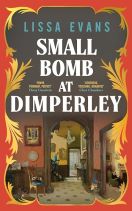
Lissa Evans, Small Bomb at Dimperley

World War II has just ended, and Valentine Vere-Thissett is leaving the army to return to Dimperley manor, which he’s just inherited (along with a title) from his older brother, who died in the war. Valentine doesn’t particularly want the responsibility, especially since Dimperley is falling apart. Fortunately, Zena Baxter, who came to Dimperley in a group of pregnant women who were evacuated from London during the war, has an idea that might save the estate. But not everyone is ready to embrace her plan. I loved this slice-of-life novel and its realistic depiction of postwar changes, but the characters are what really make the novel shine. Every single one is treated humanely and feels like a real person. There’s also plenty of quiet humor and an understated romance that I loved. All in all, an incredibly satisfying reading experience. I’m so glad I saw pamelad’s review on LibraryThing and decided to buy the book from a UK store (since it hasn’t been published in the US)—totally worth it!

Mini-Reviews: Fate, Bigger, Don’t

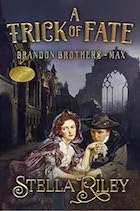
Stella Riley, A Trick of Fate

Max Brandon has a problem: Someone has been purchasing expensive goods and running up bills in his name, which he’s now being asked to pay. This minor nuisance becomes a major problem when the thief’s actions harm Frances Pendleton, Max’s first love. Now Max and Frances must team up to find the thief, and their quest leads them on a wild-goose chase throughout England and Scotland. After loving Stella Riley’s Rockliffe series, I had to continue with the spinoff Brandon Brothers trilogy (Max is Arabella’s brother from Cadenza). I don’t think you have to read any of the Rockliffe books to follow this one, but the two series are definitely set in the same universe. The love story in this book is a bit lightweight; while the obstacles originally dividing Max and Frances made sense, there was no reason for them not to be together in the present. But I love Riley’s writing and enjoyed the book anyway — especially since it also provides a peek at Elizabeth and Sherbourne, a couple from Cadenza whose story I’d wanted more of. I’d definitely recommend this book and author to historical romance fans and am eager to continue with the series.

Erle Stanley Gardner, The Bigger They Come

Most people know Erle Stanley Gardner as the author of the Perry Mason books, but he also wrote another series, featuring private detectives Bertha Cool and Donald Lam, under the pseudonym A.A. Fair. Narrated by Lam, this first book in the series describes how he got the job with Bertha Cool’s detective agency. It also details Lam’s first assignment: He’s tasked with serving divorce papers to an unfaithful husband, but no one seems to know where the man is. As Lam searches, he uncovers various secrets and even a murder — and demonstrates how, using a legal loophole, a person can commit murder and get away with it. This book is an enjoyable noir novel with plenty of fights, femmes fatales, and damsels in distress. The mystery itself isn’t terribly innovative, but Lam’s humorous narration keeps things light, and the book moves at a quick pace. I didn’t love the constant negative commentary on people’s sizes — part of the book’s “humor” comes from the fact that Bertha is a large woman, while Lam is a shrimpy guy — but I suppose that’s of its time. Overall, I liked the book and am interested in trying more by Gardner at some point.

Chloe Angyal, Pas de Don’t

Heather Hays’s dance career is finally taking off when she learns that her fiancé, a world-famous dancer in the same NYC ballet company, has been cheating on her. Desperate to get as far away as possible, she accepts a guest position with the Australian National Ballet. There she meets Marcus Campbell, a dancer recovering from an injury and grieving the recent death of his father. The two are immediately attracted to one another, but the ballet company has a firm no-dating policy. Will Heather and Marcus risk their jobs to follow their hearts? I have absolutely zero dance ability, but I’ve always enjoyed movies and TV shows about dancing, so the premise of this book intrigued me. I might have liked all the ballet background more than the actual romance, which is fine but a bit pedestrian. I did like the third-act conflict between Heather and Marcus, which felt realistic given the setup, and I enjoyed the resolution as well. A sequel is coming out in May, featuring Heather’s best friend, and I plan to get it from my library when it’s available.

Mini-Reviews: Tower, Bath, Gate

Nancy Campbell Allen, The Lady in the Coppergate Tower

Hazel Hughes has dreamed of a girl who looks exactly like her for years. So when her long-lost uncle reveals that she has a twin sister in Romania — a sister who appears to be slowly going mad — Hazel isn’t unduly shocked. She agrees to accompany her uncle to Romania in hopes that her skills as a Healer will help her sister. Dr. Sam MacInnes, Hazel’s employer, decides to come along for protection; as the two slowly fall in love, they also realize Hazel’s uncle is hiding something and try to uncover his sinister secrets. I’m continuing to enjoy this series of steampunk fairy tales. This installment is a riff on Rapunzel, but it also contains some clever allusions to Dracula — for example, in this book Hazel and Sam consider and reject the possibility that her uncle could be a vampire. The romance itself is a bit bland, as no real obstacles stand in the couple’s way. While I did like the book overall, I’m pretty sure I won’t be keeping the series on my selves once I read the fourth and final installment.

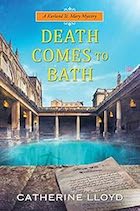
Catherine Lloyd, Death Comes to Bath

In this installment of the Kurland St. Mary series, Robert’s injured leg is paining him more than usual, so he and Lucy head for Bath in hopes that the spa town’s mineral-rich waters will provide relief and healing. There Robert befriends Sir William Benson, who’s also “taking the waters” for his health, and the two families soon become acquainted. But when Sir William dies, apparently drowned in the baths, Robert suspects foul play. And between Sir William’s much younger wife, three disappointing sons, and two odious stepsons, there’s no shortage of possible murderers. This is another strong entry in the series, benefiting from a new location and a close focus on the small circle of suspects. I liked Robert and Lucy’s dynamic as well; though they still butt heads occasionally, they work together and recognize each other’s strengths. I’m happy that the series is still so entertaining six books in, and I’m looking forward to the next one.

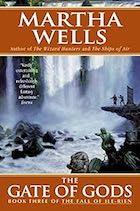
Martha Wells, The Gate of Gods

Following the events of The Ships of Air, Tremaine and her allies are in the country of Capidara, Ile-Rien’s ally and the current seat of its government-in-exile. They’re hoping to use their hard-won knowledge of the etheric gates to liberate the Rienish sorcerers trapped inside the besieged city of Lodun. But their plans go awry when half the group — including Tremaine, Ilias, and Giliead — travels to an unexplored world using a new type of etheric gate and can’t get back again. This conclusion to the Fall of Ile-Rien trilogy is a fitting end to the series; it answers the big questions of who the Gardier are and what they want, and it sees Tremaine finally deciding what she wants from her life. That said, I did find the ending anticlimactic — some of the answers the book provides don’t feel terribly satisfying. I also wanted more development for the secondary characters such as Florian, Gerard, and Niles, who were a constant presence throughout the trilogy but never really got their own stories. Overall, I’m glad I finally read this series but won’t be keeping it on my shelves.

Mini-Reviews: Con, Tangle, Austen

Devon Daniels, The Rom Con

Cassidy, a reporter for the feminist website Siren, has just ended yet another disappointing relationship. Her grandmother suggests she try a different approach to dating, based on a 1950s list of rules for catching a husband. Cassidy is horrified, but when she meets Jack Bradford — co-founder of Siren’s rival website, Brawler, which Cassidy views as a bastion of toxic masculinity — she decides to use the antiquated rules on him. Once Jack falls for the Stepford Wives version of her, she’ll write an article exposing him as a sexist jerk. But as she begins dating him, she learns he might not be such a jerk after all. I’m of two minds about this book. On the plus side, it’s a fun, quick read with enjoyable banter between the two leads. But Jack is simultaneously too perfect and problematic — it’s never clear why, if he’s such a good guy, he’d continue to be involved with Brawler. There are also a few too many Big Misunderstandings near the end that seem to exist only to drag out the happy ending. Overall, I did enjoy the book while I was reading it, but looking back, I don’t think it totally works.

Theresa Romain, It Takes Two to Tangle

Soldier Henry Middlebrook has just returned to England after Napoleon’s defeat, wounded and unable to move his right arm. Frustrated by his perceived “uselessness” and the pity of his relatives, he decides to court Lady Caroline Stratton, a popular society beauty who he thinks will help reintegrate him into his old life. He enlists the help of Caroline’s companion, Frances Whittier, but complications ensue when he and Frances grow closer. I was intrigued by the setup of this book — Henry’s disability plus a Cyrano-esque plot point in which Frances writes him letters that he assumes are from Caroline. But unfortunately, I wasn’t as enamored of the book itself. Henry is far too slow to see what’s right under his nose, and the obstacles keeping him and Frances apart aren’t important enough to justify the length of the novel. There’s also more steam than I’d prefer, so overall, this just wasn’t the book for me. I was also underwhelmed by Romain’s Season for Temptation, so I think she’s not the author for me either.

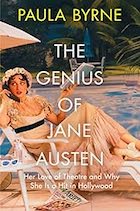
Paula Byrne, The Genius of Jane Austen: Her Love of Theatre and Why She Works in Hollywood

In Mansfield Park, Fanny Price disapproves of the amateur theatricals staged by her cousins and their friends. Some critics have inferred from this that Jane Austen herself disapproved of theater, but Byrne argues pretty convincingly that the opposite is true. Austen acted in private theatricals with her family and friends, she frequently attended plays while living in Bath and London, and her letters reveal that she was familiar with the famous actors and theater gossip of her day. The book explains how Austen’s life interacted with the theater; how she used theatrical plots, character types, and conventions in her novels; and why her books adapt so well to the screen. Byrne is obviously an Austen fan, and a very knowledgable one. The book is briskly written and appears well researched. I liked it a lot and would certainly recommend it to Austen lovers!

Mini-Reviews: Curse, Moonflower, Pearls

Elizabeth C. Bunce, A Curse Dark as Gold

Charlotte Miller has been struggling to run Stirwaters, the mill she’s inherited from her father. Stirwaters is plagued by bad luck; the local townsfolk say it’s cursed. Charlotte is far too practical to believe in curses, but as mishap after mishap befalls Stirwaters, she’s determined to do whatever it takes to save the mill — even accept the help of the mysterious Jack Spinner, who claims he can spin straw into gold. But his help comes with a price, and eventually he’ll ask for something Charlotte is unwilling to pay. I really liked this retelling of Rumpelstiltskin when I first read it; this time around, I still think it’s very well done, but it might be a bit too slow for me. Most of the book is just Charlotte becoming more and more miserable as Stirwaters is threatened, and she pushes all her loved ones away to deal with the problem alone, which I found frustrating. But Charlotte’s community is well portrayed, there’s a sweet romance with realistic ups and downs, and I liked the resolution to the curse. I’d recommend this for fans of atmospheric fairytale retellings who don’t mind a slower pace.

Lauren Willig, The Lure of the Moonflower

The final book in the Pink Carnation series focuses on the Carnation herself, Miss Jane Wooliston, who is on a mission to locate the missing Portuguese queen before the French do. But since she doesn’t know the country or the language, she’ll need the help of Jack Reid, a British agent (and former French agent) known as the Moonflower. But will she be able to trust him with the mission — and her heart? The plot of this book is even less substantial than usual; even the climactic scene doesn’t have particularly high stakes, and the matter of the missing queen feels like an afterthought. The meat of the book, though, is Jane and Jack’s relationship, which I think is quite well done. Since Jane’s been a pivotal series character since book #1, it was important that she have a love interest worthy of her, and Jack definitely fits the bill. The book also gives us one last look at several of the other series couples, which was fun but a little overkill. I also appreciated Willig’s “where are they now” note at the end of the book, which did a pretty good job of wrapping things up. Overall, I think this is one of the better books in the series and definitely a fitting end to the Pink Carnation’s adventures.

Darcie Wilde, The Secret of the Lost Pearls

In this installment of the Rosalind Thorne series, an old school friend requests Rosalind’s help to discover who stole her valuable pearl necklace. The woman fears that the thief is her youngest sister, Nora, who’s recently returned to the family after a scandalous and ill-fated elopement. But when Rosalind goes to stay with the family, she senses many secrets and soon identifies several other plausible suspects. This book has the same strengths and weaknesses as the previous books in the series: a likable main character and an interesting look at the fringes of Regency high society, but an overly complicated plot that made the book feel like a slog. I think the next book in the series just came out, or will shortly; but while the series has its good points, I’m no longer interested enough to continue. Thankfully, Rosalind and her friends end up in a reasonably good place here, so I won’t feel like I’m abandoning their stories unfinished.

Mini-Reviews: Guide, Wicked, Kit

Maureen Johnson and Jay Cooper, Your Guide to Not Getting Murdered in a Quaint English Village

This charming, humorous little book presents itself as a guidebook for travelers in the English countryside who may unexpectedly find themselves in an English Murder Village. As everyone knows, such villages are fraught with peril, from the sinister antique shop to the overly violent cricket match to the local inn full of mysterious strangers. The book enumerates various people and places to avoid, both in the village itself and at the neighboring manor, such as the pond (“full of the skeletons of Victorian children and, if you are unwise, you”) and the kitchen (“no”). I got a few giggles out of this book, and the Gorey-esque illustrations really enhance the material. It does go on a bit too long for what is essentially a single joke, but I think fans of Agatha Christie novels and British mystery series like Midsomer Murders will enjoy it.

Elizabeth Bright, The Duke’s Wicked Wife

After years of rakish living, Sebastian Sinclair, the duke of Wessex, decides it’s time to marry and produce an heir. He plans to invite some marriagable ladies to a house party, and he asks his longtime friend, Eliza Benton, for help with the guest list. However, as the party commences, it’s Eliza herself whom Sebastian can’t stop thinking about. I’ve mentioned before that I enjoy romance heroes whose conflict is basically, “I’m having a feeling and I don’t like it!” I also like characters whose frivolous facades conceal hidden depths. That’s definitely Sebastian here, and he is by far the best part of the book, though Eliza is also a strong heroine and a great match for him. The book is billed as a stand-alone, but I’m not sure it totally works…characters from previous books in the series have prominent roles, and without having read their books, it was hard for me to keep everyone straight. I did enjoy the central romance here, but I don’t find myself particularly tempted to try more by the author.
Amy Barry, Kit McBride Gets a Wife

Junebug McBride is tired of doing all the chores for her four older brothers in the tiny town of Buck’s Creek, Montana, so she decides to advertise for a wife for her brother Kit. The woman must “expect neither doting nor compliments” and must be an excellent cook. A widow from St. Louis answers the ad, dragging along her disillusioned Irish servant, Maddy. Complications ensue when Kit has a meet-cute with Maddy and mistakenly thinks she’s his prospective bride. I’m not terribly interested in Westerns or cowboy romances, but I found this book unexpectedly charming! Some of the chapters are from Junebug’s point of view, and I really enjoyed her hilarious perspective on events. The romance between Kit and Maddy is sweet, though not terribly unique, and there aren’t many scenes with just the two of them. So if you like your romance to focus heavily on the central couple, this book might not be for you; but if you like a large cast of quirky characters and a unique setting, I’d recommend this one! I will definitely be continuing with the series.