Now that 2023 has come to a close, it’s time to take stock of my 2023 vintage mystery challenge! The goal was to read at least eight Golden Age mysteries, and they each had to have a specific item on the cover. I ended up reading 11 books that qualified:
Of these, The Chocolate Cobweb was my definite favorite; it’s “domestic suspense” at its best, with characters who behave intelligently and edge-of-your-seat suspense. I also loved Death Comes as the End, a reread for me, and The Case Is Closed. I wasn’t as enamored of The Red Lamp or The Red Widow Murders, but I definitely want to read more by both Rinehart and Carr. Stay tuned for my sign-up post for the 2024 vintage mystery scavenger hunt!
When Amanda Garth, an aspiring artist, learns that she was almost switched at birth with a painter’s son, she impulsively seeks out her “almost” family and befriends them. But when she’s invited to stay at their home, she soon discovers a sinister plot that threatens the life of one of its members. Amanda warns the intended victim, but he doesn’t believe her, so she devises an outrageous — and dangerous — plan to trap the evildoer in the act. I was surprised that the evildoer’s identity and basic plan are revealed quite early in the novel, but the book still manages to be suspenseful and exciting as Amanda and the villain play their cat-and-mouse game. The climactic scene, in which Amanda sets her plan in motion, is particularly thrilling. This the second book I’ve read by Charlotte Armstrong, the first being The Unsuspected, and so far she’s two for two! I’m definitely interested in reading more of her work.
Antoine Laurain, The Red Notebook (trans. Emily Boyce and Jane Aitken)
This short novel, set in contemporary Paris, begins when bookstore owner Laurent Letellier finds a woman’s handbag. It’s obviously been stolen — the wallet, ID, and phone are gone — so Laurent goes through the rest of the bag’s contents, hoping he’ll be able to discover the identity of its owner. Among the items is a red notebook filled with the owner’s thoughts, lists, dreams, and so on; as Laurent reads these miscellaneous entries, he becomes more and more fascinated by the woman who wrote them. But will he ever find her, and what will happen when he does? This is a charming book full of literary allusions, Parisian atmosphere, and understated romance. The fact that the main characters are in their 40s lends a nostalgic air to the story; even though the setting is modern-day, it feels timeless and a bit idealized. I enjoyed it and will likely read more by this author.
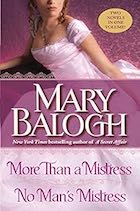
Mary Balogh, More Than a Mistress / No Man’s Mistress
In More Than a Mistress, Jocelyn Dudley, the duke of Tresham, is injured in a duel and hires the sharp-tongued Jane Ingleby as his nurse. Their constant bickering masks a mutual attraction, and when Tresham no longer needs a nurse, he offers Jane employment as his mistress. In No Man’s Mistress, Tresham’s brother, Ferdinand, wins a country estate in a card game. When he goes to inspect his new property, he’s shocked to find Viola Thornhill already living there; moreover, she claims the house is hers and refuses to move out. In both books, the women are hiding their true identities, and when the secrets come out, they unleash a lot of angst and conflict. I didn’t love either of these novels, mostly because I felt they went on too long after the secrets were revealed. I also found all four protagonists frustrating at times, as none of them were good at communicating their true feelings and opinions. My favorite character in both books was Tresham and Ferdinand’s sister, who fortunately has her own book! But these two novels are not among Balogh’s stronger offerings.
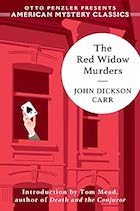
“Do you believe that a room can kill?” The people gathered at Lord Mantling’s London home are about to answer that question. One particular room in the house, dubbed the Widow’s Room, has been the site of four previous violent deaths. All the victims were alone in the room and apparently poisoned, though no one could discover how the poison was administered. Now Lord Mantling and his guests draw lots to see who will spend two hours locked inside the Widow’s Room — and when the unlucky loser dies like his predecessors, detective Sir Henry Merrivale must figure out how, and by whose hand, the death occurred. I have mixed feelings about this book. The solution to the locked-room puzzle is ingenious, but the book really plods. Also, none of the characters feel or behave like real human beings, and the murderer’s plan is incredibly farfetched. This is my second encounter with Carr’s work, and so far I’m not really clicking with him, but I hope that future reads will work better for me.
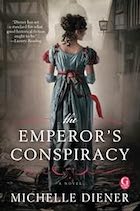
Michelle Diener, The Emperor’s Conspiracy
Charlotte Raven started life on the streets, but she was rescued from poverty by a warmhearted noblewoman. Now she lives among the upper classes, but she still maintains ties to her roots. When she warns a society friend about a vicious gentleman she encountered in her old life, she’s plunged into danger, along with the friend’s brother, Lord Edward Durnham. Charlotte and Edward team up to figure out who’s trying to do them harm, falling in love in the process. But Charlotte’s oldest friend, who is now a London crime boss, isn’t ready to let her go. So many things annoyed me about this book, from the utter implausibility of Charlotte’s situation to the anachronistic prose to the insta-love between Charlotte and Edward. What kept me reading was the fast-paced plot, and I’ll admit I was mildly entertained. But I definitely wouldn’t recommend this one and won’t be keeping my copy.
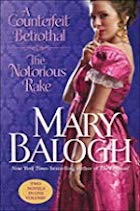
Mary Balogh, The Notorious Rake
Mary, Lady Mornington, has been terrified of thunderstorms ever since a traumatic event in her past. So when she’s caught in one with only Lord Edmond Waite for company, she clings to him in terror, even though she despises him because of his terrible reputation. Desperate to block out the storm, she sleeps with him — but when the intrigued Edmond wants to pursue a relationship with her, she wants nothing more to do with him. As he persistently seeks her out, however, she slowly discovers there’s more to him than meets the eye. This book definitely has its flaws: The thunderstorm thing is a bit ridiculous (although Balogh does a pretty good job of selling it), and Edmond is a problematic hero in that he keeps bothering Mary even after she repeatedly tells him to back off. And yet, I can forgive a lot in a romance novel if I find the central relationship believable, and I definitely bought the connection between Edmond and Mary. Plus, Edmond grows a lot throughout the book and reveals surprising depths, which for me redeems him as a hero. Balogh’s books can be hit or miss, but this one is a winner!
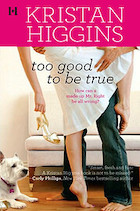
Grace Emerson is in a tough spot: Her ex-fiancé is now dating her perfect younger sister, and everyone in her close-knit but meddlesome family is pitying her. To get them off her back, Grace invents a fake boyfriend, a kind and handsome pediatric surgeon. She also attempts to find love in the real world, but the dating pool in her area is slim until handsome Callahan O’Shea moves in next door. Grace is attracted to Callahan, but he’s nothing like the ideal man she’s imagined. Will she continue to pursue the fantasy or take a chance on a real relationship? I like Kristan Higgins’s romances, but I’m learning that most of them are not keepers for me, and this one is no different. Grace’s judgmental attitude toward Callahan annoyed me, and I couldn’t see why he was interested in her. I felt Grace’s family dynamics were more interesting than the romance, but the “humor” in the family interactions was a bit forced. Overall, I’m glad I reread this one, as now I can remove it from my shelves.
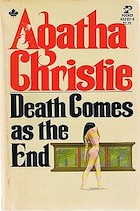
Agatha Christie, Death Comes as the End
In this novel, Agatha Christie puts a unique spin on her usual formula by setting the story in ancient Egypt. Young and beautiful Renisenb has recently been widowed and has returned to her father’s house. There she finds comfort in familiarity among her brothers and their wives and children. But when her father brings home a concubine, Nofret, things change: The family becomes discontented and quarrelsome, and Nofret delights in making them all miserable. When Nofret falls from a cliff and dies, most of the family is happy to accept it as a “tragic” accident, but Renisenb suspects murder — and then more people start to die. I’ve reread this particular Christie novel a few times and always enjoy it. I remembered the killer’s identity, so it was fun to spot the clues throughout the narrative. I also liked the introspective Renisenb and was happy with how her story turned out. If you haven’t tried this Christie book yet, I’d definitely recommend it!
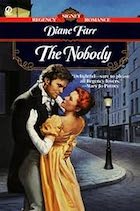
Diane Farr, The Nobody
Unconventional Caitlin Campbell is in the midst of her first London Season and feels stifled by some of the rules of propriety. In defiance of social norms, she decides to walk home alone from a ball, where she immediately gets into trouble: A man, fleeing from a gang of ruffians, grabs her and kisses her in order to evade pursuit. Caitlin knows she should be outraged, but the man’s friendly, playful manners disarm her despite herself. She is shocked to encounter the stranger again — he is in fact a viscount, as well as her new friend’s brother. The attraction between them seems to be mutual, but the gentleman is unfortunately already engaged. I’ve been hunting down used copies of Diane Farr’s novels, and this one, her debut, is quite charming. It’s light and frothy, despite the existence of a murder plot, and there are a couple cute secondary romances as well. The character development isn’t particularly deep, and I would have liked more interaction between Caitlin and her hero. Nevertheless, I definitely enjoyed the book and would recommend the author to fans of light historical romance.
Professor William Porter has recently inherited a seaside house from his Uncle Horace. He decides to stay there during his summer vacation, along with his wife Jane, niece Edith, and Edith’s beau Warren Halliday. When they arrive, they immediately learn that the house is reputed to be haunted, and they soon witness strange occurrences themselves, such as a red light shining from the supposedly empty house. Then sheep start dying with their throats cut, and a police deputy goes missing. Are evil spirits responsible for these tragedies, or is human malice at work? This is my first book by Rinehart, and I wasn’t terribly impressed. The novel tries hard to create an atmosphere of eerie suspense, but I never fully felt that; instead, William’s constant musings on possible supernatural explanations just irritated me. In terms of moving the mystery plot forward, not much happens till almost the end of the book. I felt like there weren’t enough clues for readers to grab hold of, and I’m not quite sure the solution all hangs together. Still, Rinehart’s writing is good, and I’m interested to try more of her work; maybe this one is an uncharacteristic dud.
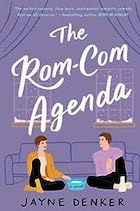
Jayne Denker, The Rom-Com Agenda
Eli has just been dumped by his girlfriend, Victoria, but he’s convinced she’s the one. While she’s on sabbatical in Europe, he and his friends devise a plan to win her back: He’ll give himself a makeover, basing his new look and personality on the heroes of classic romantic comedies. When he meets Leah, a lonely young woman who quickly gets absorbed into his friend group, they immediately hit it off and begin watching the rom-coms together. But as Eli and Leah grow closer, he must decide where his heart truly lies. This contemporary romance is predictable but sweet, and I enjoyed the allusions to some of my favorite movies, like Better Off Dead and The Princess Bride. I liked Leah’s quiet strength and Eli’s exuberant, genuine nature. The book also has a low steam factor with no explicit sex scenes, which is a plus for me. Overall, though, this is a fun read but not a standout, and I don’t feel particularly compelled to seek out more by the author.
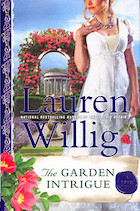
Lauren Willig, The Garden Intrigue
Augustus Whittlesby is widely regarded as the worst poet in Paris, but he’s also secretly a British agent working with — and infatuated by — the Pink Carnation, a.k.a. Miss Jane Wooliston. Jane’s friend, Emma Delagardie, constantly ridicules Augustus’s terrible poetry but is also maybe a tiny bit attracted to him. When Augustus and Emma are thrown together to write a masque for Bonaparte and his court, they develop a deeper relationship. But Augustus is conflicted, both because of his feelings for Jane and because he’s using Emma to learn more about Bonaparte’s plans for invading England. Augustus has been a frequently recurring character throughout this series, so I’m glad he finally got his own story. I liked that both he and Emma ultimately have the same conflict: they have to choose between guarding their (relatively) safe, self-protective lives and taking a chance on real love. This book isn’t quite as light and fun as earlier installments of the series, and it isn’t one of my favorites, but it’s still an enjoyable read.
Ten years ago, Eliza Courtenay married the wealthy Earl of Somerset out of duty to her family, even though she was in love with Somerset’s nephew at the time. The marriage was restrictive and unhappy, but now the earl has died and left Eliza unexpectedly rich. She decides to take control of her life and set up her own household in Bath. But her newfound independence comes with complications, especially when she’s torn between her old love (who is now the earl) and the charming yet scandalous Lord Melville. I greatly enjoyed Irwin’s debut novel, A Lady’s Guide to Fortune Hunting, so I had high hopes for this one, but it never quite grabbed me. I liked the development of the love triangle, where Eliza’s choice of man reflects her choice about what kind of life she really wants. But at the same time, that conflict feels very modern; with historical romance, I want to be transported to a different time, and I didn’t feel that here. Overall, I’d call this one good but not great.
Sarah Ready, French Holiday
After watching her sister marry her best friend, with whom she’s been desperately in love for the past four years, Merry DeLuca needs an escape. Her godmother offers to let her stay in her French chateau, and Merry jumps at the chance. But she’s shocked to discover that Noah Wright, the best man at her sister’s wedding, is also staying at the chateau to work on a travel documentary. Merry and Noah have always disliked each other, but now their close proximity causes them to reevaluate their relationship. I enjoyed this contemporary romance, though it feels a little unpolished (which makes sense, as I believe it’s self-published). At times the prose gets a bit overwrought, and some of the humor veers toward cringey, but the romantic/sexual tension is well done, with excellent use of the “only one bed” trope. Definitely worth a read if the premise interests you!
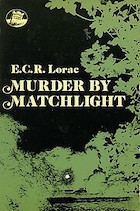
E.C.R. Lorac, Murder by Matchlight
In the opening chapter of this World War II-era mystery, a young man witnesses a murder—but because of the wartime blackout, he doesn’t actually see anything except a face that’s briefly revealed when the victim lights a match in the seconds before his death. Scotland Yard Inspector Macdonald is on the case and soon learns that the key to the truth lies in the dead man’s mysterious identity and background. This vintage mystery was a bit of a mixed bag for me. I loved the wartime setting and its subtle but important effects on the plot — for example, one of Macdonald’s suspect interviews is interrupted by an air raid. The cast of characters is interesting, and Macdonald is a likable sleuth. But I think the mystery itself is a bit weak, and the plot is mostly just Macdonald interviewing people, which gets boring. Overall, though, I’d be interested in reading more by Lorac.
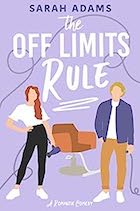
After losing her job and her boyfriend pretty much simultaneously, Lucy temporarily moves in with her overprotective big brother, Drew. That becomes a problem when Lucy meets — and is immediately smitten with — Drew’s best friend, Cooper. The attraction is mutual, but they’re hesitant to pursue a relationship for fear of Drew’s reaction. This is a cute, quick read, but because Lucy and Cooper are into each other almost immediately, there’s very little romantic tension. The obstacle of Drew’s disapproval seems silly to me; these people are adults and should be beyond the “eww, no dating my sister!” stage. And a lot of the “humor” comes from Lucy’s embarrassment over her cringeworthy behavior, which makes her seem incompetent and immature. All that said, there is something appealing about the novel’s cutesy style and the banter between the main characters, but it’s definitely not destined to be a favorite.
Baynard Kendrick, The Odor of Violets
Duncan Maclain lost his sight in the First World War. Now, at the beginning of the second, he works as a private investigator and does the occasional job for U.S. intelligence. When a fellow spy is murdered, Maclain’s investigation leads him to the prominent Treadwill family, which includes a famous theater producer, an engineer working on secret military equipment, and the dead spy’s ex-wife. This is an odd book that tries to combine a traditional mystery with a spy thriller, and the result is a little half-baked. Because of the book’s split focus, there’s not enough time to flesh out the various suspects or provide meaningful clues. However, I did enjoy the depiction of a blind detective who relies on hearing, touch, and smell to observe the world. Kendrick apparently did a lot of research and tried to make Maclain’s abilities as realistic as possible. Overall, I liked some elements of this novel, but it didn’t quite gel for me.
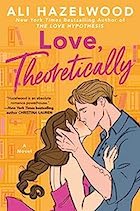
Ali Hazelwood, Love, Theoretically
Elsie is a theoretical physicist who’s desperate to find a research position, but for now she’s stuck as a poorly paid adjunct professor. To supplement her income, she works for a fake-dating app. While on a “date” with her favorite client, she meets Jack, the client’s brother, who seems disapproving and suspicious of her. Disastrously, she meets him again while interviewing for her dream job at MIT, where Jack—an experimental physicist with a well-known grudge against theorists—is on the search committee. But as Elsie spends more time with Jack, she revises her first impression of him and learns his true feelings for her. The thing about Ali Hazelwood is that I’m often irritated by her books, but I still devour them in one sitting! As with her previous novels, I thought the hero’s level of devotion to the heroine was pretty implausible, and the overabundant science references were clumsily inserted. But I did find Elsie relatable in her need to be liked, though she takes people-pleasing to an unhealthy extreme. This is a flawed but compelling read, and I’ll doubtless continue to read Hazelwood’s work.
The London Season is in full swing with its debutantes, chaperones, and elaborate parties. Unfortunately, a blackmailer is also making the social rounds, preying upon high-society women. Inspector Roderick Alleyn is on the case, and he asks his friend Lord Robert “Bunchy” Gospell for help, since Bunchy is invited everywhere and will be able to observe suspicious activity firsthand. When Bunchy is murdered, Alleyn will do whatever it takes to bring his killer to justice — but was it the blackmailer or someone else with a grudge against Bunchy? This is another excellent Alleyn novel; I loved getting more insight into his character as he’s forced to investigate the death of a friend and to suspect people he knows and likes personally. I’ll certainly continue with the series and am glad Marsh was so prolific!
Chloe Neill, The Bright and Breaking Sea
In an alternate 19th-century Britain, Kit Brightling is a naval captain who is magically Aligned to water. Her successes at sea have earned her the queen’s favor, and now the queen has ordered her to rescue a spy who’s been caught by the enemy and imprisoned in a pirate fortress. But Kit is also compelled to team up with Rian Grant, a viscount and former soldier. They distrust each other at first, but their opinions change as they’re forced to work together. Meanwhile, they uncover a dangerous conspiracy involving a deposed emperor and a ship capable of weaponizing magic. What a fun book! The plot is full of excitement, from daring escapes to naval battles to espionage at society events. I also really liked Kit and Grant’s relationship, though I found most of the secondary characters underdeveloped and unmemorable. Still, I’d heartily recommend this book if you love historical romance and/or tales of the British navy with a bit of magic thrown in. There’s a sequel that I plan to get my hands on ASAP!
Rebecca Serle, One Italian Summer
After her mother’s tragic death, Katy feels utterly bereft and disconnected. The loss makes her question everything in her life, including her marriage to her college sweetheart. Needing space, Katy decides to go solo on the trip to Italy she’d been planning with her mom. But when she gets to Positano, she’s shocked to meet her mother in the flesh at age 30 (not a spoiler, it’s mentioned in the cover copy). As Katy gets to know this younger version of her mother—and embarks on a flirtation with a handsome stranger—she also learns more about herself and begins to process her grief. I’ll say one thing about this book, it made me want to travel to the Amalfi coast immediately! But I found Katy a frustrating character. Though her grief is understandable, her actions aren’t particularly sympathetic, and while I love my mom, I can’t imagine idolizing her to the extent Katy does! So while I’m now even more eager to travel to Italy one of these days, I wouldn’t particularly recommend this book.
One year ago, Geoffrey Grey was convicted of murdering his uncle and is now in prison. His wife and her cousin Hilary believe he’s innocent, but the evidence against him is overwhelming — that is, until Hilary has a chance meeting with Mrs. Mercer, one of the prosecution’s star witnesses. Mrs. Mercer seems deeply troubled and hints at secrets she could reveal if she weren’t deathly afraid of her husband. Hilary decides to investigate with the help of her beau, Henry, but her sleuthing soon puts her in danger. I really enjoyed this book! The mystery is satisfying, albeit not particularly complex, and I also adored the romance between Hilary and Henry. They’ve quarreled at the beginning of the book, but they obviously still love each other, and it’s a treat to peek inside their heads as they attempt to get back together. If you like your vintage mysteries on the lighter side, with a generous helping of romance, you’ll enjoy this one!
Eva Ibbotson, A Countess below Stairs
Newly arrived in England after fleeing the Russian Revolution, Countess Anna Grazinsky has no choice but to work as a housemaid at the grand estate of Mersham. Despite her noble upbringing, she’s willing to work hard and soon endears herself to the other servants and the entire household. She also catches the eye of Rupert, Mersham’s owner, but he is already engaged to the beautiful but coldhearted Muriel. This book is one of my favorite comfort reads, and I adored it just as much this fifth or sixth time through. The central romance is sweet and passionate, and there’s a wealth of sympathetic, lovable secondary characters as well. The good characters are a bit too perfect and the bad ones totally irredeemable, but I love the book so much that I can easily overlook its flaws.
Lynn Painter, The Love Wager
After a drunken one-night stand, Hallie Piper is determined to make better romantic choices, so she joins a dating app in hopes of meeting “the one.” On the app, she spots her one-night stand, Jack Marshall, and decides to send him a joking message. He responds, and they soon strike up a fun conversation, which turns into a real-life friendship. They make a bet about which of them will find love first — but the more time they spend together, the more they begin to wonder if they’re each other’s perfect match. I enjoyed this fun and funny romantic comedy. Hallie and Jack both felt like real people, and their playful banter had me rooting for them from the beginning. I did find the central conflict a bit frustrating, since it all came down to poor communication, and the ending felt a bit drawn out. But I still liked the book overall and would definitely recommend Lynn Painter to fans of contemporary romance.
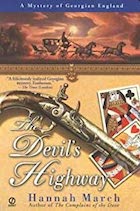
Former tutor Robert Fairfax is about to begin a new position as Sir Edward Nugent’s secretary. As he and Sir Edward travel to the latter’s country estate, they encounter an overturned stagecoach whose coachman and passengers have all been shot to death. Public opinion assumes a local highwayman is to blame, but Robert isn’t so sure — especially when one of the victims is incorrectly identified, and a woman who was supposed to be on the stagecoach is nowhere to be found. I enjoyed this book at least as much as the first in the series, if not more. Robert Fairfax is a sympathetic sleuth, and the Georgian setting is well realized, with this book touching on the state of mental asylums and the rise of Methodism. The mystery itself is perhaps a bit too convoluted, so I think this series is more for historical fiction fans than mystery buffs. But as a lover of both genres, I’d recommend it!
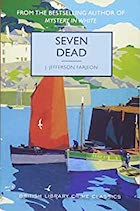
J. Jefferson Farjeon, Seven Dead
A petty thief breaks into Haven House hoping to steal a few valuables — but instead he stumbles upon seven corpses in a locked room. Who are they, how were they killed, and what brought them to Haven House? The local police are on the case, assisted by journalist and amateur yachtsman Thomas Hazeldean. The investigation takes Hazeldean to Boulogne in pursuit of the house’s absent owners, where he becomes embroiled in additional mysteries — and falls in love. I’ve tried a couple of Farjeon’s books in the past, with mixed results, but I liked this one a lot. The mystery isn’t particularly shocking in terms of whodunit, but there are plenty of twists and turns as readers learn just how horrible the culprit really is. Despite some dark elements, the book also has a fair amount of humor (plus the romantic subplot), which keeps it from getting too depressing. Recommended for fans of Golden Age mysteries.
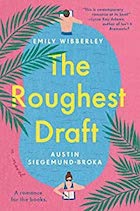
Emily Wibberley and Austin Siegemund-Broka, The Roughest Draft
Katrina and Nathan met at a writers’ workshop and instantly became writing partners and friends. They wrote two books together, the first moderately successful and the second a huge best-seller. But then they had a falling-out, and they haven’t spoken to each other in four years. Unfortunately, they still have a contract with their publisher for another co-written book. Reluctantly, they agree to work together one last time, but they’ll have to finally confront the issues that drove them apart. I liked the premise of this book, but in practice I was underwhelmed. Neither Katrina nor Nathan is very likable; they’re both extremely privileged (she lives in a $4 million house, he has a trust fund, neither has to work an actual job), and they’re mean to each other for a significant chunk of the book. The novel also focuses so narrowly on Katrina and Nathan that it feels somewhat claustrophobic — don’t they have any healthy relationships (family, friends) in their lives? The central romance is somewhat compelling if you like a lot of angst, but overall this book just wasn’t for me. I would consider trying something else by these authors, though.








 You Book Me All Night Long