Another year, another Vintage Mystery Challenge completed! The 2024 challenge was a scavenger hunt, in which participants were asked to read at least eight books with specific objects on the covers. I read ten qualifying books for the Golden Age challenge, which dealt with books published before 1960. Here’s what I read:
Sinéad Murphy, The Jane Austen Rules: A Classic Guide to Modern Love
This short book positions itself as a dating guide based on the timeless wisdom of Jane Austen. As a diehard Austen fan, I loved the premise, but I have mixed feelings on the execution. I do think the advice, both about dating and how to be a woman in the modern world, is largely good. The Austen analysis is also interesting; it’s not super deep literary criticism, but some of Murphy’s interpretations are ideas I hadn’t considered before. However, I wasn’t a fan of the writing style, which is trying—and mostly failing—to imitate Austen. Plus, Murphy misquotes the first sentence of Pride and Prejudice, which is frankly inexcusable! So, while I didn’t hate the book, I wouldn’t recommend it either, even for Austen fanatics.
Elizabeth George Speare, The Witch of Blackbird Pond
In 1687, orphan Kit Tyler experiences severe culture shock when she leaves her life of luxury on a Barbados plantation and moves in with her aunt’s family in Connecticut Colony. At first Kit hates her new life: Her uncle is strict, she’s forced to help with the unending household chores, and the broader Puritan community is suspicious and unwelcoming. Gradually she comes to appreciate her new situation, particularly after she befriends an old woman widely reputed to be a witch. But when the town’s hostility toward the “witch” turns ugly, Kit’s own safety is threatened. This was my favorite book for a while growing up, and upon rereading, I was surprised by just how many scenes I remembered. I found it a very enjoyable read that paints a vivid picture of colonial New England, both good and bad. I also loved Kit’s character development, as well as the multiple satisfying love stories. I’m glad I decided to revisit this one!
Cornell Woolrich, The Bride Wore Black
This thriller features a mysterious woman who is systematically murdering men throughout New York City. Her motive is unclear, as she doesn’t seem to know any of the men personally. Beautiful and clever, she’s easily able to gain access to her victims, and she always vanishes directly after the murder without a trace. Eventually, a policeman notices a pattern among the killings and makes it his mission to bring this femme fatale to justice. This is a fascinating, suspenseful novel with a clever structure, following the woman and each of her male victims in turn. As a result, I felt some measure of empathy for every character and was eager to discover the woman’s motive. The ending is both satisfying and heartbreaking—everything is resolved, but none of the characters get what they want. I’d definitely recommend this one to fans of suspense and noir, and I’m interested in reading more by Woolrich.
Twins Jean and Maggie Conway are about to start their first London Season, but the death of King George III and the subsequent political unrest delay their come-out. However, the girls don’t need a Season to find romance: Jean is smitten with Owen Davies, a radical poet, while Maggie falls for Johnny Dyott, her cousin’s private secretary. But when Owen’s poetry runs afoul of the sedition laws, the whole Conway family must band together to protect both him and themselves. This book is a sequel to Lady Elizabeth’s Comet, which I loved, but it also features characters from The Bar Sinister, which I haven’t read. And while Simonson gives enough background that readers won’t be totally confused, I don’t think they will care much about these characters unless they’ve read the previous two books. Also, if you’re expecting a romance, you’ll be disappointed; the love story between Maggie and Johnny is brief and barely developed. This novel is well written and well researched, but for me it was disappointing, especially compared with Lady Elizabeth’s Comet.
Agatha Christie, And Then There Were None
Ten people of different ages, genders, and walks of life are summoned to an island off the coast of Devon. They’ve been invited under various pretexts, but the real reason becomes clear after dinner on their first night, when a recorded voice accuses them all of murder. Then the guests start dying one by one, in ways that echo a sinister nursery rhyme displayed in each of their bedrooms. Who is behind these deaths, and will anyone make it off the island alive? This is one of Christie’s most famous mysteries, and also in my opinion one of her creepiest! The setup—a mysterious murderer on the rampage in an isolated location—is straight out of a horror novel, and the tension builds wonderfully as the guests each face their inevitable fate. To be honest, it’s so dark that it isn’t one of my favorites by Christie, but it’s masterfully done and I admire the way she pulled it off!
Side note: Newer versions of this book have understandably used this title rather than the far more problematic Ten Little Indians (and, before that, Ten Little N—–s). I don’t fault the publisher for that, but I do wish this edition had acknowledged that changes were made, not only to the title but to the rhyme itself and several lines of dialogue. If I’m reading something different from the originally published version, I want to know about it!
Lish McBride, Rough around the Hedges
Will and Vanessa have been best friends for years, and he’s been in love with her the entire time. Van has only ever seen him as a friend—until their mutual friend group unintentionally spills the beans. Now she’s seeing him in a whole new light, but because of her cold, manipulative father and horrible upbringing, she’s scared to take a chance on love. Meanwhile, Van wants to enroll in courses to become a hedge witch, but her father, an esteemed professor, may throw a wrench in her plans. This book is a sequel to A Little Too Familiar, which I remember liking, but this one didn’t work as well for me. The world is so black and white—the good characters are all perfectly understanding and emotionally fluent, while the bad characters are irredeemably awful. Will in particular is flawless (unless you count the fact that he’s been lying to his supposed best friend for their entire relationship) and just doesn’t feel believable as a person to me. Overall, a very “meh” read.
When twentysomething Delphie chokes on a microwavable hamburger and dies, she finds herself in a strange version of the afterlife. She’s greeted by Merritt, a quirky and enthusiastic “afterlife coach,” and also meets a handsome man named Jonah who isn’t dead, just unconscious during a dental surgery. Merritt, a lover of romance novels, decides to give Delphie a second chance: She claims that Delphie and Jonah are soulmates, and if she can find him on Earth and get him to kiss her within 10 days, she’ll get her life back. Finding Jonah is more difficult than Delphie expected, but as she looks for him, she also starts to see her life and the people around her in a new light. I stayed up way too late to read this book in a single sitting, and I’d definitely recommend it to romantic comedy fans! But it’s a surprisingly emotional book, too; Delphie’s initial loneliness is heart-wrenching, and it’s satisfying to see her slowly open up to the people in her life. Overall, I liked this one a lot and will look out for more by Greenwood.
J. Jefferson Farjeon, Thirteen Guests
Lord Aveling has invited 12 guests to his country house for a hunting party. They’re a strange assortment that includes a politician, an actress, a painter, a journalist, and a rich tradesman’s family. A last-minute 13th guest observes various tensions among the group—tensions that come to a head with vandalism, a dead dog, and finally murder. I liked a lot of things about this book: The plot is twisty without being overly complicated, and several of the characters are three-dimensional and interesting. However, it’s hard to know whom to care about or root for because there’s no clear protagonist. At first it seems like the 13th guest, John Foss, and his love interest are the main characters, but they’re largely abandoned in the middle for the police inspector and a few sleuths among the guests. I found the shifts in focus distracting and frustrating, and I also didn’t love the ultimate solution of the mystery. Overall, a decent read, but I’m not eager to read more by Farjeon.
Ally Carter, The Most Wonderful Crime of the Year
Maggie Chase is a successful writer of cozy mysteries. Ethan Wyatt writes blockbuster thrillers for the same publisher. She’s hated him for years, viewing him as a golden boy who’s able to coast through life, while he continually calls her Marcie. But the two find themselves unlikely allies when they’re both invited to the estate of Eleanor Ashley, the world’s greatest living mystery writer, for Christmas. When Eleanor disappears from a locked room—and many of her guests have a motive for wanting her gone—Maggie and Ethan team up to solve the mystery, and perhaps to find love in the process. I enjoyed this book, but it didn’t give me the same sense of pure, unadulterated glee as The Blonde Identity. There was just a little too much going on between Eleanor’s disappearance, Maggie’s and Ethan’s individual pasts, and their budding romance. It’s definitely heavier than the fun Christmas caper I was expecting. I did like the book overall, but sadly not quite as much as I was hoping to.
Jewelry store owner Eliza is dismayed when she sees on social media that her ex-boyfriend has just gotten engaged. To console herself, she tries on the store’s most extravagant ring and takes a photo – then accidentally posts it to Instagram. When she wakes up the next morning, she discovers thousands of new social media followers, as well as several big online orders from the store. Since her fake engagement is good for business, she decides to keep up the charade. But as her little white lie spirals out of control, she risks losing both her business and a chance at love. I thought this book sounded cute, but Eliza’s behavior made me so mad! Basically, she starts dating a guy in the hope that he’ll actually become her fiancé (and thus make the lie true)…but she 100% leads him on and manipulates him into falling in love with her, not telling him the truth until after he proposes. I thought it was irredeemably awful of her, and her subsequent happy ending felt undeserved. Not recommended.
Mimi Matthews, Gentleman Jim
Ten years ago, stableboy Nicholas Seaton and young lady Margaret Honeywell fell in love, but the cruel interference of a rival suitor forced Nicholas to run away, and Maggie hasn’t heard from him since. Now, visiting a friend in London, she encounters Lord St. Clare, an enigmatic viscount who has recently come to England after years spent abroad. Maggie is convinced that St. Clare is Nicholas, but he staunchly denies it, while at the same time determinedly pursuing a relationship with her. Who is St. Clare, and what’s his purpose in coming to London? I haven’t hit a bad Matthews book yet, and this one is just as well written and entertaining as her others. It’s explicitly inspired by The Count of Monte Cristo, so if you know that story, the plot is pretty predictable. I also found the central romance a bit farfetched, given that Maggie and Nicholas were so young when they initially fell in love. But then, second-chance romance really just isn’t my trope. I did like the book and plan to continue with the series, though this installment can 100% stand alone.
Mignon G. Eberhart, Murder by an Aristocrat
Nurse Sarah Keate is called to the home of the wealthy and prominent Thatcher family when one of its members, Bayard, is shot in the arm. The family claims the shot was an accident that occurred while Bayard was cleaning his gun, but Bayard tells Nurse Keate that someone in the household tried to kill him. His claim seems to be proved true when he’s later found dead in the library. The family then coerces Nurse Keate into staying at the house, where more sinister things occur, including another death. This was my first book by Mignon G. Eberhart, and I quite liked it! The sensible Nurse Keate is a great narrator, and I appreciated the way the mystery unfolded; new evidence came to light at a good pace and so forth. The suspense aspects of the plot (lots of “had I but known” moments) aren’t really my thing, but they’re not too intrusive here. I’ll certainly read more by Eberhart, especially if I can get my hands on some other Nurse Keate books.
Set in a fantastical underwater universe, this epistolary novel centers around the correspondence between E., a reclusive but curious young woman, and Henery Clel, a scientist who answers her letter about a potentially undiscovered species. As E. and Henery write to each other, they forge a deep connection and fall in love. But one year later, something bad has happened and they’ve both disappeared. So E.’s sister, Sophy, and Henery’s brother, Vyerin, begin their own correspondence to figure out what happened to their missing siblings. I liked the premise of this novel but was disappointed by the execution. There seems to be a trend these days for books that are “no plot, just vibes,” and this book definitely falls into that category…in fact, it’s apparently just the setup for a sequel, complete with cliffhanger ending! The writing style is stilted and overly formal, and the four main characters all have the same voice – and essentially the same blandly pleasant personality. Honestly, I found this book a bit of a slog, and I won’t be continuing with the series.
Jackie Lau, Love, Lies, and Cherry Pie
Emily Hung hasn’t figured out her life yet and feels vaguely ashamed of it. Her writing career seems to be stalling, she doesn’t own a home or a car, and she’s “still” single at age 33. Her meddling mother is determined to “help” by setting Emily up with Mark Chan, the perfect-on-paper son of family friends. Emily is sure she won’t like Mark and immediately writes him off as too boring. But to get her mom off her back, she proposes a fake-dating arrangement, to which Mark surprisingly agrees. As they spend more time together to keep up the charade, they grow closer until Emily begins to see Mark with new eyes. This was a cute contemporary rom-com; Emily is a relatable character, and I enjoyed the development of her relationship with Mark, though he’s not quite as nuanced a character as she is. There were a couple steamy scenes that felt superfluous, and the third-act “breakup” was a bit forced, though thankfully it didn’t last long. Overall, a fun but forgettable summer read.
Christianna Brand, Green for Danger
This classic mystery novel takes place during World War II at a military hospital in Kent. Joseph Higgins, an elderly postman, is injured in an air raid and brought to the hospital for treatment. It’s supposed to be a simple surgery, but Higgins unexpectedly dies on the operating table. Was it natural causes or murder? A second death confirms the latter, and there are only six people who could possibly be the killer – six doctors and nurses who’ve worked and socialized together for months, and whose relationships are slowly poisoned by mutual suspicion. I love a Golden Age mystery, and this one has all the classic elements: a closed circle of suspects, an ingenious murder method, and an abundance of hidden motives. But what elevates this novel is the strong characterization of the six suspects, who feel like real people with realistic emotions and reactions to the book’s events. When the guilty party was identified, I was both surprised and a bit heartbroken, as I’d come to care about all the characters. Highly recommended for fans of this genre, and I will definitely seek out more by Brand!
In the near future, a secret branch of the UK government called the Ministry of Time has discovered time travel, but they’re still figuring out its rules and limits. As an experiment, they’ve extracted five “expats,” people from earlier periods of history who would have died in their own eras, and brought them into the present. The book’s narrator works for the ministry; her job is to live with one of the expats—Commander Graham Gore, a naval officer lost in an Arctic expedition in the 1840s—and help him acclimate to the 21st century. As the narrator gets closer to Gore and learns more about the ministry’s project, she discovers some sinister secrets and must decide where her loyalties truly lie. I’m still processing this book, to be honest, but I think I might love it. Bradley writes beautifully, and her characters are complex and interesting (especially Gore, whom I adored!). The only thing I didn’t like was the denouement, which felt a bit rushed and obvious. But the novel manages to be thought-provoking about power, narratives, and identity, while still being an excellent story. I’ll definitely be reading this again at some point!
Sheila Simonson, Lady Elizabeth’s Comet
The titular Lady Elizabeth is a would-be astronomer tracking a comet across the night sky. At age 28, she’s also been the de facto head of her family since her father’s death more than a year ago. So when the heir to her father’s earldom, distant cousin Thomas Conway, finally takes possession of the family home, Elizabeth is wary and defensive toward the newcomer. But when she helps nurse him after a battlefield injury catches up with him, she finds her feelings changing. Complicating matters is her quasi-engagement to Tom’s friend Lord Bevis and her need to care for her twin 15-year-old sisters. While I don’t mind the occasional “wallpaper historical,” it is refreshing to read a Regency romance that actually feels authentic to the period! While Elizabeth has a unique-for-her-time interest, she’s not a 21st-century heroine in costume. I also enjoyed her witty first-person narration, which is unusual for this genre. The romance is quite lovely with some funny moments (and steamless, which is a bonus for me). I’d definitely recommend this one to fans of historical romance and will be seeking out more by the author!
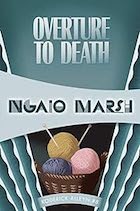
Ngaio Marsh, Overture to Death
This Golden Age mystery, book #8 in the Roderick Alleyn series, has a classic setup: Seven people in a small English village decide to put on a play. One of the actors, a universally disliked spinster, is murdered in a shocking fashion on opening night – shot via a booby trap hidden in a piano. Complicating matters is that Miss Eleanor Prentice, the victim’s equally unpopular friend/rival, may have been the intended target. Suspects include the local squire, a pair of young lovers, the vicar, the village doctor, and a femme fatale. Fortunately, Inspector Alleyn is on hand to uncover adultery, blackmail, and murder. I generally enjoy Marsh’s mysteries, although I think her books get less interesting after the murder occurs. This one is true to form: The setup and character introductions are great, but once Alleyn arrives on the scene, the “plot” is basically just a bunch of suspect interviews. That said, I still enjoyed the book, and I’m pleased that I managed to solve the mystery before the culprit was revealed.
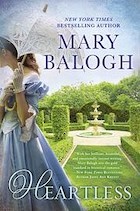
For the past decade, Lucas Kendrick has lived in Paris, cultivating a reputation as a man without a heart. Ever since he was betrayed by and banished from his family 10 years ago, he’s resisted any hint of love or vulnerability. Now Luke has inherited a dukedom and must return to England to fulfill his duties. He also needs to marry and decides upon the beautiful, vivacious Anna Marlowe, though he has no intention of actually falling in love with his wife. Their relationship slowly deepens but is tested when Anna’s traumatic past catches up with her. I liked this book fine, but it would have been even better without the suspense subplot. I think romances are most interesting when the obstacles are internal to the people involved — character flaws they need to overcome, fears they need to face, etc. Luke and Anna have plenty of those obstacles, so the external conflict with the villain from Anna’s past felt like overkill. So while this is an enjoyable read, I don’t feel a need to keep it on my shelves.
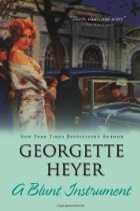
Georgette Heyer, A Blunt Instrument
When Ernest Fletcher is found dead in his study with his head bashed in, everyone is shocked — he was well-liked and seemingly had no enemies. But as the police begin their investigation, they soon unearth plenty of possible motives and suspects. There’s the dead man’s nephew, Neville Fletcher, who stands to inherit a fortune. There’s neighbor Helen North, whose gambling debts Ernest was using to blackmail her — and her husband, John, who may have been jealous of Ernest. But before the police can arrest anyone, they need to solve two problems: given the evidence at hand, how could anyone have had time to commit the murder? And what did the killer do with the weapon? This is one of Heyer’s best mysteries, in my opinion, with a clever solution and an entertaining cast of characters. My one quibble is that I wanted even more of Neville & co.; frankly, I felt the relationships among the suspects were more interesting than the mystery!
C.S. Lewis, Mere Christianity
A small group of people at my church decided to form a book club during Lent and chose this book. I’d read it before, years ago, but I’m really glad I decided to reread it now. Lewis is deservedly famous for his writings on Christianity; he has a gift for explaining complex ideas in a straightforward, accessible way. In this book, he suggests some arguments supporting belief in Christianity, states the religion’s core beliefs (shared by all denominations), discusses various aspects of Christian morality, and delves a bit into theological concepts such as the Trinity. Throughout the book, he emphasizes practical concepts such as what people must do in order to truly follow Jesus, and why it matters. I feel like most people interested in the topic have already read this book, but if it’s been a while since you’ve read it, I’d definitely encourage you to revisit it!
Max Brandon has a problem: Someone has been purchasing expensive goods and running up bills in his name, which he’s now being asked to pay. This minor nuisance becomes a major problem when the thief’s actions harm Frances Pendleton, Max’s first love. Now Max and Frances must team up to find the thief, and their quest leads them on a wild-goose chase throughout England and Scotland. After loving Stella Riley’s Rockliffe series, I had to continue with the spinoff Brandon Brothers trilogy (Max is Arabella’s brother from Cadenza). I don’t think you have to read any of the Rockliffe books to follow this one, but the two series are definitely set in the same universe. The love story in this book is a bit lightweight; while the obstacles originally dividing Max and Frances made sense, there was no reason for them not to be together in the present. But I love Riley’s writing and enjoyed the book anyway — especially since it also provides a peek at Elizabeth and Sherbourne, a couple from Cadenza whose story I’d wanted more of. I’d definitely recommend this book and author to historical romance fans and am eager to continue with the series.
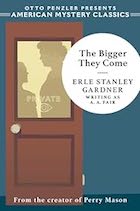
Erle Stanley Gardner, The Bigger They Come
Most people know Erle Stanley Gardner as the author of the Perry Mason books, but he also wrote another series, featuring private detectives Bertha Cool and Donald Lam, under the pseudonym A.A. Fair. Narrated by Lam, this first book in the series describes how he got the job with Bertha Cool’s detective agency. It also details Lam’s first assignment: He’s tasked with serving divorce papers to an unfaithful husband, but no one seems to know where the man is. As Lam searches, he uncovers various secrets and even a murder — and demonstrates how, using a legal loophole, a person can commit murder and get away with it. This book is an enjoyable noir novel with plenty of fights, femmes fatales, and damsels in distress. The mystery itself isn’t terribly innovative, but Lam’s humorous narration keeps things light, and the book moves at a quick pace. I didn’t love the constant negative commentary on people’s sizes — part of the book’s “humor” comes from the fact that Bertha is a large woman, while Lam is a shrimpy guy — but I suppose that’s of its time. Overall, I liked the book and am interested in trying more by Gardner at some point.
Chloe Angyal, Pas de Don’t
Heather Hays’s dance career is finally taking off when she learns that her fiancé, a world-famous dancer in the same NYC ballet company, has been cheating on her. Desperate to get as far away as possible, she accepts a guest position with the Australian National Ballet. There she meets Marcus Campbell, a dancer recovering from an injury and grieving the recent death of his father. The two are immediately attracted to one another, but the ballet company has a firm no-dating policy. Will Heather and Marcus risk their jobs to follow their hearts? I have absolutely zero dance ability, but I’ve always enjoyed movies and TV shows about dancing, so the premise of this book intrigued me. I might have liked all the ballet background more than the actual romance, which is fine but a bit pedestrian. I did like the third-act conflict between Heather and Marcus, which felt realistic given the setup, and I enjoyed the resolution as well. A sequel is coming out in May, featuring Heather’s best friend, and I plan to get it from my library when it’s available.
This epistolary novel centers around the correspondence between three school friends who are taking their first steps into adulthood. Tirzah is stuck being her strict grandmother’s companion in a remote Scottish village, but she longs for excitement and adventure. Sophia is in London for the Season and hopes to gain financial security through marriage, but she’s soon attracted to a penniless charmer. And Polly loves her job as a teacher in an orphanage, but complications ensue when she tries to find the father of one of her students. This book is wholesome and charming and delightful, and I really enjoyed it! Each girl is vividly drawn, with her own distinctive voice, and I found all three equally compelling. The letters are chatty and wide-ranging, covering everything from the minutiae of daily life to the girls’ deeper hopes and dreams. There are some some dark moments in the book involving alcoholism and depression, but the overall tone is light and hopeful. This is a YA novel, but I’d recommend it to adult fans of light historical fiction as well. I definitely want to read more by Sally Nicholls!
Beth O’Leary, The Flatshare
After moving out of her ex-boyfriend’s London flat, Tiffy desperately needs a new place to live. She sees an ad for a flatshare: The current tenant, Leon, works nights and will only be in the flat from 9 a.m. to 6 p.m., while Tiffy’s at work. The rent is cheap, so Tiffy jumps at the chance, even though she isn’t able to meet Leon in person before moving in. At first, they both find it odd to share their living space with a stranger, but as they start leaving notes for each other around the flat, they slowly become friends. When they finally do meet in person, they’re surprised by their mutual attraction, but difficulties arise when Tiffy’s ex reappears in her life. I feel like my summary of the book doesn’t do it justice at all. Both Tiffy and Leon are such endearing characters! Their notes to each other are adorable, and I like that they have jobs and friends and relatives and lives that don’t revolve solely around each other. Tiffy’s experiences with her ex are hard to read — the book does a great job of slowly revealing just how horrible he is — but the central romance is lovely. I’m glad I reread this one and would definitely recommend it to fans of contemporary romance!
Richard Hull, The Murder of My Aunt
Edward Powell lives in a small Welsh village with his Aunt Mildred. He hates Wales, the countryside, and everyone around him, especially his aunt. He only stays because she controls his finances; without the allowance he gets from her, he’d have nothing. As Edward broods over his distasteful circumstances, he realizes that his life would be much better if Aunt Mildred were to die. Soon he starts plotting possible murder scenarios, but his plans don’t work out the way he expects. This is both a funny and a grim book: Edward is a magnificently unreliable narrator whose misreading of conversations and events is often amusing, but he’s so snobbish and hateful that it’s tough to spend time in his head. I must admit, though, I didn’t find Aunt Mildred entirely sympathetic either! The ending is a surprise, but a well-plotted and foreshadowed one. Overall, this book isn’t strictly speaking a mystery—and certainly not a detective novel—but it’s worth reading for the narrative style and dramatic irony.









 You Book Me All Night Long