Review: Farthing

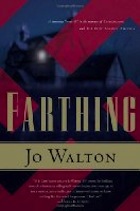
FarthingJo Walton, Farthing

This novel is a murder mystery with a twist: what if a fascist English government had made a separate peace with Hitler? In the world of this book, it’s 1949, and war still rages between the Third Reich (which now encompasses all of Europe) and the Soviet Union, but England has managed to remain at peace. The “Farthing set,” who engineered the treaty with Hitler, have congregated at an English country estate, where Lucy (the daughter of the house) and her husband David are staying. Because David is Jewish, they both endure various snubs and cruelties from the other guests. Then a notable member of the Farthing set is murdered, and his corpse is decorated with Jewish symbols. Lucy is convinced that her husband has been framed, and Inspector Carmichael of Scotland Yard agrees. But as the English government becomes more totalitarian and anti-Semitic, both Lucy and Carmichael must make devastating choices that could allow the murderer to go free.

This book was unsettling, to say the least, and I have very conflicting feelings about it. Part of the story is told from Lucy’s perspective, and I really enjoyed her character and her narrative voice. I also think the book very skillfully depicts a nation’s slow slide into despotism; one of the most heartbreaking and effective parts of the book, for me, was David’s strong faith in England. Despite the hardships he endures, he is convinced that Jews will never be persecuted in England the way they are in the Reich…but of course, events in the book ultimately prove him wrong. On the negative side, the “mystery” element of the book is very underdeveloped. I also became irritated by the sheer number of secret, illicit, and/or adulterous relationships in the book; it seemed like EVERY character was involved, which strained my credulity. (Also, everyone seems to have really good “gaydar,” if you’ll pardon the expression!) Overall, I’m not sure the positives outweighed the negatives for me, and I’m still undecided about continuing with the series.

Review: Water for Elephants

Water for ElephantsSara Gruen, Water for Elephants

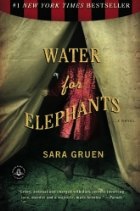
Jacob Jankowski is an old man in his 90s living out the remainder of his days in a nursing home. His children rarely come to visit, and he’s both lonely and frustrated by nursing home life. But when the circus comes to town one day, it triggers Jacob’s memories of his youth and the years he spent with the Benzini Brothers Greatest Show on Earth. In the 1930s, Jacob was a promising veterinary student who was about to join his father’s practice; but after his parents’ tragic death, the practice had to be sold to pay the family debts. Bereft and with nowhere to go, Jacob hopped a train that turned out to belong to a traveling circus; and because of his veterinary skills, the ruthless circus owner decided to keep him around. At the circus Jacob met a variety of new people, including a sarcastic dwarf, a mercurial animal trainer, and the trainer’s beautiful but trapped wife. Eventually his involvement with the circus would trigger a series of shocking and catastrophic events.

I remember that when this book first came out, a lot of my friends were raving about it, convinced that I’d absolutely love it. Unfortunately, I didn’t have that experience…maybe I’m missing something, but this book just didn’t resonate with me. I really enjoyed the setting; circus life in Depression-era America was fascinating, and I liked the photos of real historical circuses that preceded each chapter. It’s truly amazing to think about the amount of work (and food!) it took to keep the circus going! But I wasn’t that nuts about the plot or characters in this book. The main story is the romance between Jacob and Marlena, a performer who is trapped in an unhappy marriage. But while her menacing husband is an interesting (albeit repulsive), larger-than-life character, Marlena herself seems very bland, with no defining qualities other than her beauty and her misery. I also didn’t find Jacob particularly interesting; he acts like a stock character rather than an individual. Overall, the book is worth reading if you’re interested in the setting, but in my opinion it doesn’t live up to the hype.

Review: The Red House Mystery

Red House Mystery, TheA.A. Milne, The Red House Mystery

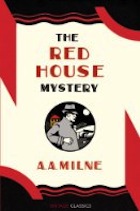
In the time-honored tradition of the classic British mystery, a house party goes terribly awry when one of the guests is murdered and the host disappears. Mark Ablett, owner of the Red House, enjoys collecting people around him, so the house party includes such diverse characters as his private secretary, a military man, an actress, and several idle young people. The party appears to be going well until Ablett learns that his brother, the black sheep of the family who had been living in Australia, will be visiting the Red House for an unspecified but sinister reason. When Robert is inevitably murdered, Mark is nowhere to be found. Is he the murderer, or did someone else in the house party do the deed? Young man-about-town Antony Gillingham just happens to arrive on the scene at a pivotal moment, so he decides to try his skill as an amateur detective; but ultimately he discovers that the solution to the mystery is far more tragic than amusing.

When I came across this book a few years ago, I was delighted to discover that the creator of Winnie the Pooh had written a mystery story! It follows many conventions of the classic Golden Age mystery — such as being “fair,” with all clues presented to the reader as the detective discovers them — but it turned out to be a bit darker and sadder than I was expecting. Tony discovers the murderer’s identity fairly early in the book, so the bulk of the mystery lies in discovering how and why the deed was done. And the thing is, I found the murderer very sympathetic! So I was disappointed that this character turned out to be the guilty party. Also, unlike many mysteries from this period, this book doesn’t contain much humor, nor are there any subplots to lighten the mood of suspense and doom. Tony’s sidekick provides a few funny moments, but otherwise the tone remains pretty dark. Finally, Tony’s character isn’t developed very much, which disappointed me; he seemed really interesting, and I would have liked to know more about his backstory. The book is still worth reading if you enjoy Golden Age mysteries, but I have to admit, it wasn’t my favorite.

Review: In Tearing Haste

In Tearing HasteCharlotte Mosley, ed., In Tearing Haste: Letters Between Deborah Devonshire and Patrick Leigh Fermor

Deborah Devonshire began life as the youngest of the (in)famous Mitford sisters, but she unexpectedly became the duchess of Devonshire when her husband, Andrew Cavendish, inherited the duchy from his brother. Patrick Leigh Fermor was a travel writer who became a war hero by kidnapping the commanding German officer on the Nazi-occupied island of Crete. (The movie “Ill Met by Moonlight” is a fictionalized account of his experience.) The two first met when Deborah was still a young debutante, but they eventually formed a deep friendship, as well as a correspondence that would last for more than half a century. Although “darling Paddy” and “darling Debo” lived through many political upheavals and personal tragedies, their letters to each other always remained upbeat, humorous, and cheerful.

I usually find nonfiction very slow going, but this book was a pleasure to read. Both “Debo” and “Paddy” wrote in a lively conversational style that’s very easy to read, and I felt truly immersed in their day-to-day lives. Patrick often wrote about the various exotic places he visited, including the little town in Greece where he and his wife eventually settled. Deborah largely stayed on the Devonshire estates in England and Ireland, where she waxed poetic about sheep breeding and various fox-hunting excursions. The book also provides some fascinating insights into the psychology of the British upper classes: for example, Deborah mentions, with the utmost casualness, dining with President Kennedy several times. Though there’s not much in-depth discussion of the historical events through which they lived, anyone who is interested in reading a firsthand account of the 20th century should pick up this book! I’d also recommend it for fans of the Mitfords or early 20th-century British literature in general.

Review: The Young Clementina

Young Clementina, TheD.E. Stevenson, The Young Clementina

Charlotte Dean can’t remember a time when she wasn’t in love with Garth Wisdon, her childhood playmate and next-door neighbor. Although Charlotte is merely the daughter of the local vicar, while Garth is the heir to a large estate, she grows up confident that they will marry someday. As they reach adulthood, Garth seems to reciprocate her feelings, but their love is arrested by the outbreak of World War I. Garth goes off to fight in the war, and when he returns, Charlotte no longer recognizes the man she once knew. The new Garth is angry and cynical and seems to hold her in contempt. Nevertheless, she is still overwhelmed with shock when he quickly becomes engaged to her younger sister, Kitty. Now Charlotte is living in a shabby flat in London, where she has little contact with Garth and Kitty. But a tragic turn of events brings them both back into her life — along with their strange, shy daughter, Clementina — and Charlotte must make a decision that could alter the entire course of her life.

I’m so glad Sourcebooks is reprinting the novels of D.E. Stevenson, because I’ve really enjoyed all the ones I’ve read so far! This book is a bit more somber than her Miss Buncle series, but it’s still a nice, leisurely, and ultimately sweet read. I was expecting the central storyline to be a romance, but really the book is much more about Charlotte’s growth as she is forced out of her comfort zone. In the beginning, it’s a bit difficult to feel much sympathy for her because she accepts her sister’s betrayal so passively. But as she emerges from her solitary cocoon and starts to cultivate friendships, she becomes a much stronger person who is capable of standing on her own two feet. On the other hand, I never felt much sympathy for Garth, even after he explained his actions; in my opinion, everything he suffered throughout the novel was his own stupid fault! But overall, I’d definitely recommend this book to people who like slower-paced, old-fashioned books with a contemplative feel.

Review: The Haunted Bookshop

Haunted Bookshop, TheChristopher Morley, The Haunted Bookshop

In this sequel to Parnassus on Wheels, bibliophile Roger Mifflin has temporarily abandoned his traveling bookstore for a more permanent location on Gissing Street in Brooklyn. He calls his store the Haunted Bookshop, claiming that it is “haunted” by the ghosts of great literature. One day a young salesman named Aubrey Gilbert enters the store, hoping to persuade Roger to advertise with his firm; instead, the two men have an intense discussion that leaves Aubrey with a newfound appreciation for literature. When Aubrey returns to the shop a few days later, he is immediately smitten with Titania Chapman, the beguiling new shopgirl. But as he starts to visit the store more regularly, he notices something strange: an old and rather obscure volume keeps disappearing from the Haunted Bookshop and then re-appearing without warning. Is there a literary-minded thief frequenting the bookstore, or is something more sinister at work?

This is one of those cozy little books that take you back to a simpler time, and I found it absolutely charming! Roger Mifflin’s enthusiasm for books is infectious, and the novel is full of his musings on literature, both in general and about specific books. Unfortunately, I didn’t recognize most of the titles he mentioned, presumably because they’ve gone out of fashion (and print!) since the book was published in 1919. But this is definitely the type of book that reminds me of the huge number of books in the world that I still haven’t read! The mystery plot is clever, though very slight and easy to guess (and very much a product of its time). I also liked the central characters, especially Aubrey, who makes a lot of endearing mistakes in his quest to solve the mystery and win Titania’s heart. All in all, I finished this book wishing that I could stop by the Haunted Bookshop for dinner and a literary discussion with these characters.

Review: The Hunter

Hunter, TheRichard Stark, The Hunter

This book introduces Parker, a criminal whose combination of street smarts and brute force has enabled him to live comfortably on the proceeds from his thefts. But his life is fundamentally disrupted when a job goes awry and one of his partners double-crosses him. Now Parker is consumed with thoughts of revenge, and he’ll do anything to catch up with Mal Resnick, the man who stole both his money and his wife. Parker uses a variety of tactics, including intimidation and murder, to track Mal down; meanwhile, Mal learns that Parker is on his trail and tries desperately to escape his clutches. Parker’s task is made more complicated by the fact that Mal is a memeber of an extremely influential crime syndicate called the Outfit, and the Outfit isn’t inclined to let Parker have his way. In order to exact his revenge, Parker must eventually go up against the whole organization; but will killing Mal sign his own death warrant?

While I enjoy the occasional film noir or con movie, I don’t tend to like the noir genre in book form. I tend to prefer my mysteries a little less violent, with a more clearly defined moral code (i.e., the killer is the bad guy). This book has a very cynical tone and a protagonist with few, if any, redeeming qualities. Frankly, I found Parker horrifying, especially in his violent treatment of women and his casual approach to killing anyone who gets in his way. Yet I actually ended up enjoying this book! I liked the writing style, which doesn’t waste any words and gets straight to the point. I also really enjoyed watching the story unfold: the book alternates from Parker’s story in the present to the story of the job that went wrong. Additionally, it was fascinating to see how Parker’s situation changes throughout the novel, as his quest for vengeance against one man turns into a war against the entire Outfit. If I’m ever in the mood for a darker mystery, I may even continue with this series!

There are also two film adaptations of the book, “Point Blank” (1967, starring Lee Marvin) and “Payback” (1999, starring Mel Gibson). I haven’t seen either of them, but I think this story would translate really well to film! Has anyone seen either of these movies, and if so, would you recommend them?

Review: A Blunt Instrument

Blunt Instrument, AGeorgette Heyer, A Blunt Instrument

When wealthy Englishman Ernest Fletcher is found in his study with his head bashed in, his relatives and neighbors are shocked. Ernest was well-liked and seemingly had no enemies, so why would anyone want to kill him? But as Superintendent Hannasyde and Sergeant Hemingway investigate the case, they soon uncover several motives. First there’s Neville Fletcher, the dead man’s nephew and heir to his fairly large fortune. Then there is Helen North, who has a secret involving Ernest that she doesn’t want anybody — especially her husband — to know about. Or the culprit could be Abraham Budd, a businessman who was complicit in some of Ernest’s shady financial dealings. But as the police collect motives and unearth secrets, they become more and more puzzled by the conflciting testimony about what actually happened on the night of the murder. And when a second victim appears, Hannasyde and Hemingway know they will have to act fast to catch a partiuclarly elusive killer.

In general I prefer Heyer’s romances to her mysteries, but I really enjoyed this book! There are some wonderful characters in this one: the vague, mischievous Neville, who is much sharper than he appears; the blunt, monocle-wearing Sally Drew, who writes detective novels; Constable Glass, the Bible-quoting policeman; and the impatient, down-to-earth Sergeant Hemingway. The dialogue is witty and sparkling, as usual, and I loved the romance(s) that emerged throughout the course of the book. The mystery itself is also a bit more substantial than in some of Heyer’s other books, and I was surprised by the Christie-esque twist that revealed the murderer’s identity. Overall, if you’re interested in trying Heyer’s mysteries, I think this is a really good place to start! (Hannasyde and Hemingway are recurring characters in her mysteries, but the books absolutely do not have to be read in order.) I’m reading these mysteries in chronological order, so I’ll be interested to see whether they get even better as they go on!

Review: Double Cross

Double CrossBen Macintyre, Double Cross: The True Story of the D-Day Spies

Seventy years ago, the Allies stormed the beaches of Normandy and began the campaign to liberate Nazi-occupied Europe. Many circumstances contributed to the success of the D-Day invasion, but one of the most important factors was the campaign of disinformation being fed to the Germans by a network of double agents whose sole purpose was to convince the Abwehr that the Allies would be landing at Calais rather than Normandy. Had these agents failed, the Germans would have concentrated their forces at Normandy, most likely stopping the Allied invasion in its tracks. This book tells the stories of the individual double agents involved in this task, including Serbian playboy Dusko Popov (“Tricycle”), Peruvian socialite Elvira Chaudoir (“Bronx”), and Polish nationalist Roman Czerniawski (“Valentine”). Ultimately, Macintyre makes a convincing case for the proposition that the Allies would never have won the war on the battlefields had they not already won the intelligence war.

This book gives a wealth of fascinating detail about the six men and women who acted as double agents in Britain, allegedly spying for Germany but really working for the Allies. I was shocked to learn that British intelligence had actually discovered and turned every German agent in Britain at the time! Because of this, the Allies were able to present a unified message to the Germans, subtlely directing their attention away from Normandy and toward other possible invasion sites. Some of the specific stories in the book prove once again that truth is stranger than fiction: for example, Dusko Popov thrived on creating networks of sub-agents that were entirely fictional, yet he retained the Abwehr’s complete trust. I also loved the fact that these double agents were handled in Britain by the Twenty Committee, so named because the Roman numeral for 20 is XX, or “double cross.” In short, if you’re interested in true stories of WWII-era espionage, Ben Macintyre is your man!

Review: Mrs. Ames

Mrs. AmesE.F. Benson, Mrs. Ames

This novel is a precisely drawn satire of life in an English village in the early 20th century. Mrs. Ames has been the leader of society in Riseborough for many years, due partly to her commanding presence and partly to her distant familial connection with a nobleman. The other residents of Riseborough both admire and resent her for her position, and many of the local gossips would be glad to see her fail in some way. So when a (relatively speaking) new arrival, Mrs. Evans, begins to set herself up as Mrs. Ames’ social rival, the entire town waits with bated breath to see whether their queen will be dethroned. Meanwhile, both Mrs. Ames and Mrs. Evans dimly begin to realize that their lives are unfulfilling, but their search for deeper meaning takes them down drastically different paths, one of which may lead to scandal and heartbreak.

I expected this book to be nothing more than a light, witty comedy of manners — which it is, but it also took a more serious turn than I anticipated. The various social machinations of the ladies of Riseborough are very funny; there’s a particularly wonderful scene in which Mrs. Evans hosts a masquerade ball and several ladies (tragically, yet hilariously) show up wearing the same costume. But for me, the more compelling story was Mrs. Ames’ slow realization that her dreary, respectable life isn’t making her happy. It’s only when she begins to identify with a cause greater than herself that she actually finds contentment — even at the moment when all her respectability and social standing is taken away. So oddly enough, this comedy of manners turns into a coming-of-age story, and I found it a surprisingly thought-provoking read.