Mini-Reviews: Holiday, Crime, Cold

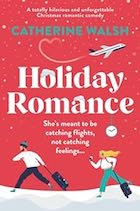
Catherine Walsh, Holiday Romance

Molly and Andrew are both Irish expats living in Chicago, and they’ve become friends over the years as they’ve taken the same flight home to Dublin every Christmas. This year, though, a winter storm grounds their flight, so they must desperately search for another way to get home for the holidays. What begins as the road trip from hell slowly evolves into something else as Molly starts feeling more-than-friendly toward Andrew, and it seems as though he might feel the same. This sweet romance, which I picked up as a cheap e-book, was a pleasant surprise! Molly and Andrew are likable characters, and I believed in both their friendship and their love story. It made sense to me why they hadn’t gotten together sooner, which is often my main gripe with a friends-to-lovers romance. I also liked that of the two of them, Andrew is the one who adores Christmas, while Molly (though not really a Scrooge) is more indifferent. I’d definitely recommend this book to fans of the genre and will be trying more by Catherine Walsh.

Martin Edwards, ed., The Christmas Card Crime and Other Stories

This anthology of short mystery stories set at Christmastime didn’t do much for me, unfortunately. I don’t tend to enjoy mysteries in short-story form, as they usually aren’t long enough to let the sleuth do any actual detecting, or to leave enough clues for the reader to play along. Instead, most of the stories here rely on a chilling atmosphere or a clever last-minute plot twist. Some of them do this quite well — I enjoyed “By the Sword” by Selwyn Jepson, for example, in which an overconfident man thinks he can get away with murder but soon discovers otherwise. Similarly, Cyril Hare’s “Sister Bessie or Your Old Leech” is a fine piece of dramatic irony centering around a man who wants to murder his blackmailer. I can’t think of any stories I particularly disliked, but most of the others were pretty forgettable. Ultimately, what I enjoy about reading mysteries is the chance to try and solve them along with the detective, and these stories don’t provide that experience.

Alicia Thompson, With Love, from Cold World

Lauren Fox and Asa Hutchinson both work at Cold World, a kitschy Florida amusement park that aims to create a winter wonderland all year round. However, they butt heads constantly; Lauren is a serious-minded, type A accountant (Asa calls her robotic), while Asa is fun-loving and carefree (Lauren calls him a slacker). When they’re forced to work together to come up with ideas for improving Cold World, they’re drawn to each other and tentatively embark on a relationship. But they each have baggage that prevents them from being open with each other. I enjoyed this cute contemporary romance; I like a good rivals-to-lovers plot, and I found Lauren particularly relatable in her insecurity and occasional social cluelessness. I also really liked Cold World and kind of wish it were a real place! So overall, I liked this one and would consider reading more by Thompson. Her previous book, Love in the Time of Serial Killers, looks fun!

Mini-Reviews: Chocolate, Red, Mistress

Charlotte Armstrong, The Chocolate Cobweb

When Amanda Garth, an aspiring artist, learns that she was almost switched at birth with a painter’s son, she impulsively seeks out her “almost” family and befriends them. But when she’s invited to stay at their home, she soon discovers a sinister plot that threatens the life of one of its members. Amanda warns the intended victim, but he doesn’t believe her, so she devises an outrageous — and dangerous — plan to trap the evildoer in the act. I was surprised that the evildoer’s identity and basic plan are revealed quite early in the novel, but the book still manages to be suspenseful and exciting as Amanda and the villain play their cat-and-mouse game. The climactic scene, in which Amanda sets her plan in motion, is particularly thrilling. This the second book I’ve read by Charlotte Armstrong, the first being The Unsuspected, and so far she’s two for two! I’m definitely interested in reading more of her work.

Antoine Laurain, The Red Notebook (trans. Emily Boyce and Jane Aitken)

This short novel, set in contemporary Paris, begins when bookstore owner Laurent Letellier finds a woman’s handbag. It’s obviously been stolen — the wallet, ID, and phone are gone — so Laurent goes through the rest of the bag’s contents, hoping he’ll be able to discover the identity of its owner. Among the items is a red notebook filled with the owner’s thoughts, lists, dreams, and so on; as Laurent reads these miscellaneous entries, he becomes more and more fascinated by the woman who wrote them. But will he ever find her, and what will happen when he does? This is a charming book full of literary allusions, Parisian atmosphere, and understated romance. The fact that the main characters are in their 40s lends a nostalgic air to the story; even though the setting is modern-day, it feels timeless and a bit idealized. I enjoyed it and will likely read more by this author.

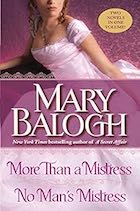
Mary Balogh, More Than a Mistress / No Man’s Mistress

In More Than a Mistress, Jocelyn Dudley, the duke of Tresham, is injured in a duel and hires the sharp-tongued Jane Ingleby as his nurse. Their constant bickering masks a mutual attraction, and when Tresham no longer needs a nurse, he offers Jane employment as his mistress. In No Man’s Mistress, Tresham’s brother, Ferdinand, wins a country estate in a card game. When he goes to inspect his new property, he’s shocked to find Viola Thornhill already living there; moreover, she claims the house is hers and refuses to move out. In both books, the women are hiding their true identities, and when the secrets come out, they unleash a lot of angst and conflict. I didn’t love either of these novels, mostly because I felt they went on too long after the secrets were revealed. I also found all four protagonists frustrating at times, as none of them were good at communicating their true feelings and opinions. My favorite character in both books was Tresham and Ferdinand’s sister, who fortunately has her own book! But these two novels are not among Balogh’s stronger offerings.

Mini-Reviews: Fight, Familiar, Village

Maureen Lee Lenker, It Happened One Fight

Joan Davis has worked hard to become a famous and beloved movie star, and her goal is nearly in sight. Her only problem is her costar, Dash Howard. Audiences love “Davis and Dash” films, but she can’t stand him, and he’s constantly pranking her on set. When one of his pranks goes spectacularly awry, leaving Dash and Joan legally married, the answer is simple: move production of their current film to Reno, where they can divorce after residing there for six weeks. But as Joan and Dash get to know each other better, they reconsider their plan to separate. This book is obviously inspired by the screwball comedies of the 1930s, and I enjoyed the setting and the movie allusions very much. However, the romance itself fell a bit flat. Mostly, I thought the book dragged on too long — there were several points when Joan and Dash overcame a big conflict and the book could have ended, but instead they had to confront yet another obstacle. I just got a bit tired of it. I’d love to read more historical romance set in this time period, but this one wasn’t as enthralling as I hoped it would be.

Lish McBride, A Little Too Familiar

This cozy paranormal romance centers around Declan, a werewolf, and Lou, an animal mage who specializes in bonding humans to animal familiars. When Declan moves in with Lou and her housemates, the two are immediately attracted to each other, but Declan has a traumatic past that’s left him distrustful of animal mages. When that past comes back to haunt him, he and Lou (and their other housemates and friends) must team up to stop Declan’s enemies. I don’t read a lot of paranormal romance, but I liked this book a lot. All the main characters are kind, well-intentioned people, and the “found family” vibe is strong. The romance worked for me (though it’s definitely racier than I’d prefer), and the suspense plot provided some stakes for the novel, but it’s pretty low-conflict overall. Some of my favorite scenes were when Declan, Lou, and their friends were just hanging out and bantering. There’s at least one sequel to this book, and I definitely plan on picking it up at some point!

Catherine Lloyd, Death Comes to the Village

After being seriously injured at Waterloo, Major Robert Kurland is back at his estate near the village of Kurland St. Mary to recover. One night, looking out his bedroom window, he sees an unidentified figure carrying a heavy load. Meanwhile, Lucy Harrington, the vicar’s oldest daughter, is disturbed when one of the young female servants disappears without even collecting the wages she’s owed. When Lucy visits Robert (an errand of mercy on her father’s behalf), they compare notes and team up to discover what’s going on, soon uncovering evidence of theft and murder. I really enjoyed this cozy historical mystery! While Lucy seems to have a bit more freedom than is period-appropriate (conversing with the major in his bedroom, gasp!), she’s not just a progressive 21st-century heroine in period garb. The mystery is solid, though not brilliant, and I appreciated that the plot wasn’t overly convoluted. I’m definitely interested in continuing with the series; it looks like there are seven more books, and luckily my library seems to have them all!

Mini-Reviews: Widow, Conspiracy, Rake

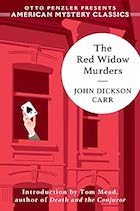
John Dickson Carr, The Red Widow Murders

“Do you believe that a room can kill?” The people gathered at Lord Mantling’s London home are about to answer that question. One particular room in the house, dubbed the Widow’s Room, has been the site of four previous violent deaths. All the victims were alone in the room and apparently poisoned, though no one could discover how the poison was administered. Now Lord Mantling and his guests draw lots to see who will spend two hours locked inside the Widow’s Room — and when the unlucky loser dies like his predecessors, detective Sir Henry Merrivale must figure out how, and by whose hand, the death occurred. I have mixed feelings about this book. The solution to the locked-room puzzle is ingenious, but the book really plods. Also, none of the characters feel or behave like real human beings, and the murderer’s plan is incredibly farfetched. This is my second encounter with Carr’s work, and so far I’m not really clicking with him, but I hope that future reads will work better for me.

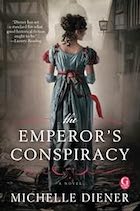
Michelle Diener, The Emperor’s Conspiracy

Charlotte Raven started life on the streets, but she was rescued from poverty by a warmhearted noblewoman. Now she lives among the upper classes, but she still maintains ties to her roots. When she warns a society friend about a vicious gentleman she encountered in her old life, she’s plunged into danger, along with the friend’s brother, Lord Edward Durnham. Charlotte and Edward team up to figure out who’s trying to do them harm, falling in love in the process. But Charlotte’s oldest friend, who is now a London crime boss, isn’t ready to let her go. So many things annoyed me about this book, from the utter implausibility of Charlotte’s situation to the anachronistic prose to the insta-love between Charlotte and Edward. What kept me reading was the fast-paced plot, and I’ll admit I was mildly entertained. But I definitely wouldn’t recommend this one and won’t be keeping my copy.

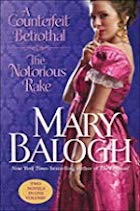
Mary Balogh, The Notorious Rake

Mary, Lady Mornington, has been terrified of thunderstorms ever since a traumatic event in her past. So when she’s caught in one with only Lord Edmond Waite for company, she clings to him in terror, even though she despises him because of his terrible reputation. Desperate to block out the storm, she sleeps with him — but when the intrigued Edmond wants to pursue a relationship with her, she wants nothing more to do with him. As he persistently seeks her out, however, she slowly discovers there’s more to him than meets the eye. This book definitely has its flaws: The thunderstorm thing is a bit ridiculous (although Balogh does a pretty good job of selling it), and Edmond is a problematic hero in that he keeps bothering Mary even after she repeatedly tells him to back off. And yet, I can forgive a lot in a romance novel if I find the central relationship believable, and I definitely bought the connection between Edmond and Mary. Plus, Edmond grows a lot throughout the book and reveals surprising depths, which for me redeems him as a hero. Balogh’s books can be hit or miss, but this one is a winner!

Mini-Reviews: Wicked, Left-Handed, Madam

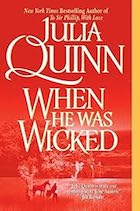
Julia Quinn, When He Was Wicked

Michael Stirling is known throughout society as “the Merry Rake,” but despite his myriad sexual conquests, he’s been in love with Francesca Bridgerton since the moment he saw her. Unfortunately, she was betrothed to his cousin John at the time and is now John’s wife. When John dies unexpectedly, Michael can no longer hide his true feelings, but can he pursue a relationship with Francesca without dishonoring his cousin’s memory? I wanted to like this book more than I did. I enjoy a hero who pines for the heroine, but in this case I didn’t understand why Michael was so obsessed with Francesca. He’s already in love with her when the story begins, so we don’t see what makes her so special to him. Further, he “courts” her exclusively by seducing her, so their romantic relationship is based entirely on sex, which I didn’t find particularly appealing. I’ve really liked some books in the Bridgerton series, but this one just wasn’t for me.

Garth Nix, The Left-Handed Booksellers of London

Eighteen-year-old Susan Arkshaw has come to London to find the father she’s never met. She tracks down Frank Thringley, an old friend of her mother’s, to see if he knows anything about her father — but she arrives just in time to see him crumble into dust at the prick of a hatpin. The hatpin’s wielder is Merlin, who describes himself as a “left-handed bookseller” and tells Susan she is in grave danger. He explains that the Old World of myths, legends, and ancient powers is real, and it’s starting to intrude dangerously into the ordinary world — unless Susan and the booksellers can stop it. This is a really creative YA adventure novel that seems intended to introduce readers to (or reinforce their love of) British fantasy fiction and mythology. I really liked all the literary allusions and the occasional humorous banter, but the book is a bit too episodic and plot-driven for me — too many action sequences, not enough character development. Overall, I liked but didn’t love it, and I probably won’t read the sequel.

Mary Stewart, Madam, Will You Talk?

Charity Selborne is a young Englishwoman on holiday in the South of France. At her hotel in Avignon, she befriends a 13-year-old boy named David and gradually realizes that something is very wrong in his life. She then learns that David’s father, an accused murderer, is at large and has followed David to France. Charity’s decision to help David plunges her into days of suspense and fear, during which she encounters a mystery with its roots in World War II and finds love in an unexpected place. I really enjoy Mary Stewart’s novels of romantic suspense, though they all follow the same basic pattern: beautiful girl in exotic location finds danger and romance. But this is one of her strongest books, in my opinion — the plot is nice and twisty, and there’s a very memorable car chase. Recommended if you like this type of book!

Mini-Reviews: Red, Rom-Com, Garden

Mary Roberts Rinehart, The Red Lamp

Professor William Porter has recently inherited a seaside house from his Uncle Horace. He decides to stay there during his summer vacation, along with his wife Jane, niece Edith, and Edith’s beau Warren Halliday. When they arrive, they immediately learn that the house is reputed to be haunted, and they soon witness strange occurrences themselves, such as a red light shining from the supposedly empty house. Then sheep start dying with their throats cut, and a police deputy goes missing. Are evil spirits responsible for these tragedies, or is human malice at work? This is my first book by Rinehart, and I wasn’t terribly impressed. The novel tries hard to create an atmosphere of eerie suspense, but I never fully felt that; instead, William’s constant musings on possible supernatural explanations just irritated me. In terms of moving the mystery plot forward, not much happens till almost the end of the book. I felt like there weren’t enough clues for readers to grab hold of, and I’m not quite sure the solution all hangs together. Still, Rinehart’s writing is good, and I’m interested to try more of her work; maybe this one is an uncharacteristic dud.

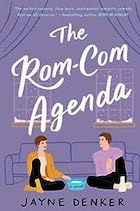
Jayne Denker, The Rom-Com Agenda

Eli has just been dumped by his girlfriend, Victoria, but he’s convinced she’s the one. While she’s on sabbatical in Europe, he and his friends devise a plan to win her back: He’ll give himself a makeover, basing his new look and personality on the heroes of classic romantic comedies. When he meets Leah, a lonely young woman who quickly gets absorbed into his friend group, they immediately hit it off and begin watching the rom-coms together. But as Eli and Leah grow closer, he must decide where his heart truly lies. This contemporary romance is predictable but sweet, and I enjoyed the allusions to some of my favorite movies, like Better Off Dead and The Princess Bride. I liked Leah’s quiet strength and Eli’s exuberant, genuine nature. The book also has a low steam factor with no explicit sex scenes, which is a plus for me. Overall, though, this is a fun read but not a standout, and I don’t feel particularly compelled to seek out more by the author.

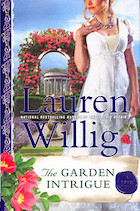
Lauren Willig, The Garden Intrigue

Augustus Whittlesby is widely regarded as the worst poet in Paris, but he’s also secretly a British agent working with — and infatuated by — the Pink Carnation, a.k.a. Miss Jane Wooliston. Jane’s friend, Emma Delagardie, constantly ridicules Augustus’s terrible poetry but is also maybe a tiny bit attracted to him. When Augustus and Emma are thrown together to write a masque for Bonaparte and his court, they develop a deeper relationship. But Augustus is conflicted, both because of his feelings for Jane and because he’s using Emma to learn more about Bonaparte’s plans for invading England. Augustus has been a frequently recurring character throughout this series, so I’m glad he finally got his own story. I liked that both he and Emma ultimately have the same conflict: they have to choose between guarding their (relatively) safe, self-protective lives and taking a chance on real love. This book isn’t quite as light and fun as earlier installments of the series, and it isn’t one of my favorites, but it’s still an enjoyable read.

Mini-Reviews: Scandal, French, Murder

Sophie Irwin, A Lady’s Guide to Scandal

Ten years ago, Eliza Courtenay married the wealthy Earl of Somerset out of duty to her family, even though she was in love with Somerset’s nephew at the time. The marriage was restrictive and unhappy, but now the earl has died and left Eliza unexpectedly rich. She decides to take control of her life and set up her own household in Bath. But her newfound independence comes with complications, especially when she’s torn between her old love (who is now the earl) and the charming yet scandalous Lord Melville. I greatly enjoyed Irwin’s debut novel, A Lady’s Guide to Fortune Hunting, so I had high hopes for this one, but it never quite grabbed me. I liked the development of the love triangle, where Eliza’s choice of man reflects her choice about what kind of life she really wants. But at the same time, that conflict feels very modern; with historical romance, I want to be transported to a different time, and I didn’t feel that here. Overall, I’d call this one good but not great.

Sarah Ready, French Holiday

After watching her sister marry her best friend, with whom she’s been desperately in love for the past four years, Merry DeLuca needs an escape. Her godmother offers to let her stay in her French chateau, and Merry jumps at the chance. But she’s shocked to discover that Noah Wright, the best man at her sister’s wedding, is also staying at the chateau to work on a travel documentary. Merry and Noah have always disliked each other, but now their close proximity causes them to reevaluate their relationship. I enjoyed this contemporary romance, though it feels a little unpolished (which makes sense, as I believe it’s self-published). At times the prose gets a bit overwrought, and some of the humor veers toward cringey, but the romantic/sexual tension is well done, with excellent use of the “only one bed” trope. Definitely worth a read if the premise interests you!

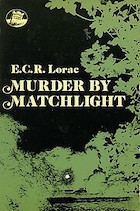
E.C.R. Lorac, Murder by Matchlight

In the opening chapter of this World War II-era mystery, a young man witnesses a murder—but because of the wartime blackout, he doesn’t actually see anything except a face that’s briefly revealed when the victim lights a match in the seconds before his death. Scotland Yard Inspector Macdonald is on the case and soon learns that the key to the truth lies in the dead man’s mysterious identity and background. This vintage mystery was a bit of a mixed bag for me. I loved the wartime setting and its subtle but important effects on the plot — for example, one of Macdonald’s suspect interviews is interrupted by an air raid. The cast of characters is interesting, and Macdonald is a likable sleuth. But I think the mystery itself is a bit weak, and the plot is mostly just Macdonald interviewing people, which gets boring. Overall, though, I’d be interested in reading more by Lorac.

Mini-Reviews: Rule, Violets, Theoretically

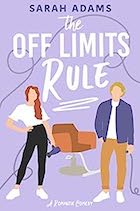
Sarah Adams, The Off Limits Rule

After losing her job and her boyfriend pretty much simultaneously, Lucy temporarily moves in with her overprotective big brother, Drew. That becomes a problem when Lucy meets — and is immediately smitten with — Drew’s best friend, Cooper. The attraction is mutual, but they’re hesitant to pursue a relationship for fear of Drew’s reaction. This is a cute, quick read, but because Lucy and Cooper are into each other almost immediately, there’s very little romantic tension. The obstacle of Drew’s disapproval seems silly to me; these people are adults and should be beyond the “eww, no dating my sister!” stage. And a lot of the “humor” comes from Lucy’s embarrassment over her cringeworthy behavior, which makes her seem incompetent and immature. All that said, there is something appealing about the novel’s cutesy style and the banter between the main characters, but it’s definitely not destined to be a favorite.

Baynard Kendrick, The Odor of Violets

Duncan Maclain lost his sight in the First World War. Now, at the beginning of the second, he works as a private investigator and does the occasional job for U.S. intelligence. When a fellow spy is murdered, Maclain’s investigation leads him to the prominent Treadwill family, which includes a famous theater producer, an engineer working on secret military equipment, and the dead spy’s ex-wife. This is an odd book that tries to combine a traditional mystery with a spy thriller, and the result is a little half-baked. Because of the book’s split focus, there’s not enough time to flesh out the various suspects or provide meaningful clues. However, I did enjoy the depiction of a blind detective who relies on hearing, touch, and smell to observe the world. Kendrick apparently did a lot of research and tried to make Maclain’s abilities as realistic as possible. Overall, I liked some elements of this novel, but it didn’t quite gel for me.

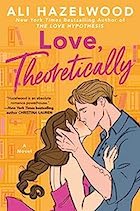
Ali Hazelwood, Love, Theoretically

Elsie is a theoretical physicist who’s desperate to find a research position, but for now she’s stuck as a poorly paid adjunct professor. To supplement her income, she works for a fake-dating app. While on a “date” with her favorite client, she meets Jack, the client’s brother, who seems disapproving and suspicious of her. Disastrously, she meets him again while interviewing for her dream job at MIT, where Jack—an experimental physicist with a well-known grudge against theorists—is on the search committee. But as Elsie spends more time with Jack, she revises her first impression of him and learns his true feelings for her. The thing about Ali Hazelwood is that I’m often irritated by her books, but I still devour them in one sitting! As with her previous novels, I thought the hero’s level of devotion to the heroine was pretty implausible, and the overabundant science references were clumsily inserted. But I did find Elsie relatable in her need to be liked, though she takes people-pleasing to an unhealthy extreme. This is a flawed but compelling read, and I’ll doubtless continue to read Hazelwood’s work.

Mini-Reviews: Tie, Bright, Italian

Ngaio Marsh, Death in a White Tie

The London Season is in full swing with its debutantes, chaperones, and elaborate parties. Unfortunately, a blackmailer is also making the social rounds, preying upon high-society women. Inspector Roderick Alleyn is on the case, and he asks his friend Lord Robert “Bunchy” Gospell for help, since Bunchy is invited everywhere and will be able to observe suspicious activity firsthand. When Bunchy is murdered, Alleyn will do whatever it takes to bring his killer to justice — but was it the blackmailer or someone else with a grudge against Bunchy? This is another excellent Alleyn novel; I loved getting more insight into his character as he’s forced to investigate the death of a friend and to suspect people he knows and likes personally. I’ll certainly continue with the series and am glad Marsh was so prolific!

Chloe Neill, The Bright and Breaking Sea

In an alternate 19th-century Britain, Kit Brightling is a naval captain who is magically Aligned to water. Her successes at sea have earned her the queen’s favor, and now the queen has ordered her to rescue a spy who’s been caught by the enemy and imprisoned in a pirate fortress. But Kit is also compelled to team up with Rian Grant, a viscount and former soldier. They distrust each other at first, but their opinions change as they’re forced to work together. Meanwhile, they uncover a dangerous conspiracy involving a deposed emperor and a ship capable of weaponizing magic. What a fun book! The plot is full of excitement, from daring escapes to naval battles to espionage at society events. I also really liked Kit and Grant’s relationship, though I found most of the secondary characters underdeveloped and unmemorable. Still, I’d heartily recommend this book if you love historical romance and/or tales of the British navy with a bit of magic thrown in. There’s a sequel that I plan to get my hands on ASAP!

Rebecca Serle, One Italian Summer

After her mother’s tragic death, Katy feels utterly bereft and disconnected. The loss makes her question everything in her life, including her marriage to her college sweetheart. Needing space, Katy decides to go solo on the trip to Italy she’d been planning with her mom. But when she gets to Positano, she’s shocked to meet her mother in the flesh at age 30 (not a spoiler, it’s mentioned in the cover copy). As Katy gets to know this younger version of her mother—and embarks on a flirtation with a handsome stranger—she also learns more about herself and begins to process her grief. I’ll say one thing about this book, it made me want to travel to the Amalfi coast immediately! But I found Katy a frustrating character. Though her grief is understandable, her actions aren’t particularly sympathetic, and while I love my mom, I can’t imagine idolizing her to the extent Katy does! So while I’m now even more eager to travel to Italy one of these days, I wouldn’t particularly recommend this book.

Mini-Reviews: Neighbors, Cluny, Velvet

Stephanie Burgis, Good Neighbors

Ever since Mia and her father were run out of town by an angry mob wielding torches and pitchforks, she’s tried to appear normal and respectable, hiding her true identity as a metal mage. Too bad her new home is right next door to a necromancer’s castle. Leander has no interest in hiding his own unnatural gifts, and he soon seeks Mia out to form a defensive alliance against the hostile townsfolk. But as Mia and Leander grow closer, the town’s increasing anger toward those with magical powers forces them to take a stand. This is an enjoyable but insubstantial wisp of a book with a heavy-handed message about how society treats those who are perceived as different. The story is a bit sketchy and underdeveloped, and several loose threads are left dangling. I like the author but wouldn’t recommend this particular work — try Masks and Shadows or Congress of Secrets instead.

Margery Sharp, Cluny Brown

Cluny Brown is a young woman who, according to her plumber uncle, doesn’t know her place, so he decides to find one for her as a parlormaid in an English country house. Cluny isn’t a great success as a parlormaid, but she does make several new friends, both upstairs and down. Eventually she decides where (and with whom) she’ll make her true place in the world. This is a quiet slice-of-life novel set just before the outbreak of World War II. It satirizes the English class system but does so in a gentle and affectionate, not mocking, way. The plot centers around romantic complications that all come right in the end, although I did feel sorry for Cluny’s rejected suitor! I also watched the movie starring Charles Boyer and Jennifer Jones, which I didn’t like quite as much as the book (it changed too many things, and I think Boyer was miscast). But I would recommend the book if you like this type of novel!

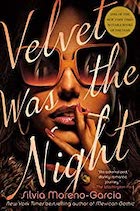
Silvia Moreno-Garcia, Velvet Was the Night

This novel, billed as “neo noir,” is set in 1971 against the backdrop of the Mexican Dirty War. Elvis belongs to a gang with shadowy ties to the repressive government; he’s tasked with brutalizing student activists and other left-wing demonstrators. Meanwhile, Maite is dissatisfied with her life and escapes through the pages of romantic magazines. When Maite’s neighbor Leonora, a young woman with possible communist ties, disappears, Elvis and Maite cross paths as they both try to track her down. I’m not a big noir reader, as I generally prefer optimism in my fiction, but I found this novel fascinating. I know shamefully little about Mexican history, so I was happy to learn more about an unfamiliar place and time. I also really enjoyed the story and was able to guess some of the twists and turns. The ending isn’t exactly happy (this is noir, after all!), but it is satisfying and arguably hopeful. Overall, this book impressed me, and I’m eager to try more of Moreno-Garcia’s work.