Mini-Reviews: Blonde, Accomplice, Wager

Ally Carter, The Blonde Who Came In from the Cold

Alex Sterling and Michael “King” Kingsley III are spies with a complicated history. In the present, they wake up in an unfamiliar pitch-black room in an unknown location, with no idea how they got there—and they’re handcuffed to each other. The book jumps back and forth in time between their present predicament and the history of their relationship, from when they first met 10 years ago to their first joint mission to the various covert ops they’ve done together. It’s clear from the outset that Alex and King have amazing chemistry, but it’s less clear that their romance could ever have a happy ending. I adored The Blonde Identity—the previous book in this series, featuring Alex’s sister, Zoe—and this book is a similarly well-written, fast-paced, enjoyable spy romance. I cared about both Alex and King as characters, and though they’re frustrating and stubborn sometimes, I was rooting for them all the way. I do think this book is less fun than The Blonde Identity; there’s a lot more drama and angst in the romance, and the stakes of the spy plot feel higher. But if you love a good romantic caper and don’t mind the constant time-hopping, you should definitely check this one out.

Hannah Nicole Maehrer, Accomplice to the Villain

In this third installment of the Villain series, the entire villainous gang is on a quest to find the magical items and people that will allow them to fulfill the Rennedawn Prophecy, defeat King Benedict, and save the kingdom. But Trystan’s magic is malfunctioning, Kingsley is losing his humanity and becoming pure frog, and there’s a traitor inside the Villain’s ranks (again). Meanwhile, Trystan tries to keep his distance from Evie because of a prophecy that they’ll destroy each other, but obviously Evie is having none of that. This book, and the series as a whole, is a hot mess. I honestly have only the faintest idea of what’s going on with the plot, and I’m not sure it matters; clearly the only thing readers are supposed to care about is the romance. And I’ll admit, I do care about Trystan and Evie’s relationship, which takes a big step forward here. And some of the side romances are also adorable (Gideon and Keeley!). Apparently the author plans one more book in this series, and I will read it just to see how everything turns out. But quality-wise, I can’t say I’d recommend this series.

Loretta Chase, Knaves’ Wager

Lilith Davenant is a widow of icy demeanor and unquestionable virtue. Julian, the Marquess of Brandon, is a notorious rake. For plot reasons, Julian wagers that he can seduce Lilith within eight weeks. But as he uses every tactic at his disposal to woo Lilith, he begins to genuinely enjoy her company. Meanwhile, Lilith dislikes and distrusts Julian at first, but as she gets to know him better, she realizes she’s seriously at risk of losing her heart. I’m a fan of Chase’s romances in general, but I think this one might be my favorite. It’s very reminiscent of Heyer in its language and plot, but with a bit more angst and drama in the romance. Love makes both Lilith and Julian better people, and Julian’s transformation from callous seducer to sincere lover is particularly great to watch. Highly recommended for historical romance fans, this one was a pleasure to reread!

Mini-Reviews: Mistress, Princess, Death

Mary Balogh, The Secret Mistress

Lady Angeline Dudley has no interest in marrying a rake like her brothers; she just wants a steady, responsible man who will nevertheless love her passionately. So when Edward Ailsbury, the earl of Heyward, chivalrously rescues her from the improper attentions of a rake, she falls in love with him at once. Meanwhile, Edward knows he needs to marry, and Angeline is certainly eligible, but her outspoken, slightly wild behavior horrifies him. He’s also drawn to her despite himself, but he has trouble reconciling his feelings with his long-held image of the perfect wife. This is the final book of Balogh’s “Mistress” trilogy and, in my opinion, the most enjoyable. Angeline is a somewhat unconventional heroine in that she’s not particularly deep or intelligent; rather, she’s a flighty chatterbox with terrible fashion sense but a very warm heart. Edward isn’t a typical hero, either — he’s very responsible and practical and not rakish at all. I loved them both and was rooting for them to get together, although the last few chapters got a bit too flowery and sentimental for my taste. Still, overall I quite liked this one, which is a bit lighter than Balogh’s usual fare!

Philip Pullman, The Tin Princess

This final book in the Sally Lockhart series doesn’t actually have much Sally in it. Rather, the plot centers around Adelaide, who vanished at the end of The Ruby in the Smoke but has now resurfaced as the wife of the crown prince of a tiny Central European country. Accompanied by intrepid detective Jim Taylor and German tutor Becky Winter, she must travel to Razkavia and learn how to be a princess. But court intrigues, foreign interference, and assassination plots threaten both their own safety and that of Razkavia as a whole. As with the other books in this series, this is an entertaining adventure novel that’s chock-full of plot. The characterization is a bit less convincing; I didn’t believe Adelaide would become an expert politician so quickly, and the romance between her and Jim is barely sketched in. So while this is a fun series and I’m glad I read it, I won’t be keeping it on my shelves.

Catherine Lloyd, Death Comes to Kurland Hall

Lucy Harrington is back in Kurland St. Mary to help her best friend, Sophia, with Sophia’s upcoming wedding. One of the wedding guests, Mrs. Chingford, is a conniving widow who delights in spreading malicious gossip and antagonizes several of the other guests. On the wedding day, Mrs. Chingford falls down a flight of stairs and dies, and Lucy is convinced it’s no accident. She and Major Robert Kurland must once again work together to discover the killer — and sort out their complicated feelings for each other. This is another enjoyable installment of the Kurland St. Mary series, though it’s not a particularly memorable one in terms of the mystery. But I do like the way the world is being built out and how some of the recurring series characters are being developed. Lucy and Robert’s romance also takes a step forward in this one, though I wish the book had focused on it more…there was so much buildup, but the resolution fell flat. Regardless, though, I’ll certainly continue with the series.

Mini-Reviews: Serfdom, Benevolent, Wicked

F.A. Hayek, The Road to Serfdom

F.A. Hayek was an Austrian economist who moved to England in the 1930s and subsequently taught in both the UK and US. He won the Nobel prize in economics in 1974. In this essay, written during World War II and first published in 1944, he argues that Nazi fascism was not a reaction against socialism but rather a natural progression of socialist ideas. In Hayek’s view, socialism (by which he seems to mean a centrally planned economy) is bad economics because competition, not central planning, is what allows new ideas and wealth-creating innovations to flourish. But it’s also bad politics because under a socialist system, individual freedom will disappear; all power will reside in the hands of the central planners/the state. I broadly agree with Hayek’s ideas here, so my opinion is biased. But I think this essay is worth reading for anyone who is interested in a “liberal” (as opposed to socialist) view of economics or in the history of socialist thought. Hayek doesn’t straw-man his opponents, and his arguments are thoughtful and measured. Maybe I’ll tackle one of his full-length books at some point!

Alison Goodman, The Benevolent Society of Ill-Mannered Ladies

Lady Augusta “Gus” Colbrook and her sister, Lady Julia, are unmarried women in their 40s and thus are basically invisible in society. Instead of dwindling into spinsterish obscurity, they decide to help vulnerable women who are being abused by the men in their lives. Aiding them in their quest is the handsome Lord Evan Belford, whose checkered past doesn’t deter Gus from a more-than-friendly interest. This novel is hard to categorize; it’s not exactly a romance or a mystery, though it has elements of both. But the book mainly depicts the negative aspects of Regency society, particularly the limits placed on women, and offers a sort of revenge fantasy in which the women take charge and triumph over all wrongdoers. For some readers, this will be exactly their cup of tea, but for me, it was too anachronistic and felt a bit preachy. I didn’t dislike the book, though! Goodman is a good writer, the plot adventures are fun, and Gus is (usually) a sympathetic character. I believe a sequel is planned, and I’ll likely read it when it comes out.

Stella Riley, The Wicked Cousin

After a too-strict upbringing, Sebastian Audley has spent the past several years behaving as outrageously as possible, first in England and then abroad. Now his scandalous ways are beginning to pall, and he hopes to return to England and lead a quieter life, but his reputation makes that difficult. Meanwhile, Cassandra Delahaye is determined not to be impressed by the rakish Sebastian, but she soon finds herself attracted to his good looks and roguish sense of humor. I’m officially a huge fan of this series and enjoyed this installment as well, but it felt a little too long. The main obstacle to the romance is Sebastian’s obsessed ex-lover, which means there’s a lot of plot to slog through even after Sebastian and Cassie fall in love. (I find that Stella Riley uses the “evil ex” trope pretty often, which I’m not fond of.) I still liked the book a lot, though, and it was nice to catch up with the various recurring characters. Looking forward to the next one!

Mini-Reviews: Agreeable, Dangerous, Ruby

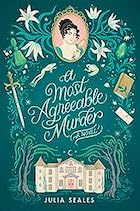
Julia Seales, A Most Agreeable Murder

In the English village of Swampshire, everyone is governed by the strict rules of etiquette handed down by its founder. Women are expected to pursue only ladylike occupations such as embroidery, but Beatrice Steele has a secret fascination with crime-solving. She knows she must hide her interest, lest she be stigmatized as a “morbid creep” and rendered unmarriageable. But when an eligible bachelor is murdered at a local ball, Beatrice can’t help enthusiastically pursuing an investigation, with the help of a surly yet handsome detective. This is a fun historical mystery set in a heightened reality: Swampshire is beset by comically terrible weather and infested with “squelch holes,” and Beatrice’s youngest sister might be a werewolf. It’s all very silly, but I enjoyed the book’s colorful characters and its skewering of various historical romance tropes. If there’s ever a sequel, I will definitely seek it out!

Darcie Wilde, And Dangerous to Know

The stakes are higher than ever in Rosalind Thorne’s latest case: Lady Melbourne, a leader of London society, has hired her to recover some stolen letters. Lady Melbourne’s daughter-in-law is Lady Caroline Lamb, whose shocking love affair with Lord Byron has led many to believe she’s insane, so it’s especially important that the letters’ potentially scandalous contents are never publicized. Complicating matters is the fact that a woman was murdered at the gates of Melbourne House, and Rosalind suspects that the two incidents are connected. I liked this book a bit more than the previous one in the series; the mystery hangs together pretty well, although it’s almost peripheral to the intrigues swirling around the Melbourne clan. I’m also glad that things seem to be moving forward in Rosalind’s personal life (and in those of her friends as well). While I’m pretty confident that this series won’t be an all-time favorite, I’m looking forward to the next book!

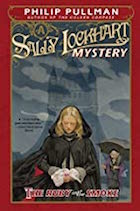
Philip Pullman, The Ruby in the Smoke

Sixteen-year-old Sally Lockhart is left alone in the world after her father’s tragic death overseas. When she receives an anonymous note telling her to “beware the seven blessings,” it’s the first of many strange mysteries Sally must unravel. For instance: Who burgled her room, and what was he or she looking for? How did her father really meet his end? Where is the priceless Indian ruby that apparently belongs to Sally? And why does the evil Mrs. Holland want Sally dead? This is a compelling YA adventure novel that apes the drama and sensationalism of Victorian penny dreadfuls. Some of the plot machinations feel a bit over the top, and there’s some unpleasant stereotyping of Chinese characters. But the depiction of the seamier side of Victorian London is fascinating, and Sally and her friends are intelligent, courageous, interesting characters. I’m excited to read more of their adventures in subsequent books!

Mini-Reviews: Queen, Unsuspected, Thieves

Rachel Bach, Heaven’s Queen

***Warning: SPOILERS for previous books in the series!***

In this conclusion to the Paradox trilogy, space mercenary Devi Morris and her lover Rupert are on the run, trying to figure out how to save the universe from the constant threat of the phantoms. Devi is determined keep her promise to save Ma’at and her Daughters; but since they’re the only known weapons that actually work against the phantoms, she’s fighting an uphill battle. Luckily, Devi’s good at thinking outside the box, and with Rupert at her side and some help from unexpected places, her crazy plan just might work. This is a satisfying conclusion to the Paradox trilogy, but you really need to read all three books to understand what’s going on. And I must confess, I was kind of tired of this series before I even picked up Heaven’s Queen. It’s a lot of space battles, Devi obsessing about her fancy suit of armor, Rupert declaring his undying love for Devi…I got bored after a while. I was underwhelmed by the romance; it felt very over-the-top and teen-angsty to me. Nevertheless, I’m glad I finished the series, and hardcore fans of the genre might enjoy it more than I did.

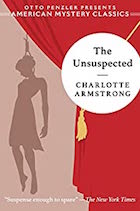
Charlotte Armstrong, The Unsuspected

In the eyes of the world, Rosaleen Wright’s tragic death was a suicide, but Rosaleen’s friend Jane is convinced it was murder. Jane turns to her friend Francis for help, telling him that she thinks Rosaleen’s employer, the famous radio personality Luther Grandison, is guilty. Francis immediately takes action, ingratiating himself into “Grandy’s” inner circle by pretending to be the husband of his ward Mathilda, who supposedly died in a shipwreck. But when Mathilda turns up alive, Francis must use any means necessary, including straight-up gaslighting, to maintain his cover and bring the killer to justice. So, yeah, the plot of this book is bananas, but I actually really enjoyed it! I thought the inverted structure of the mystery would make it less exciting, but there was plenty of forward motion to keep me on the edge of my seat. I also liked the main characters, especially Mathilda and Jane — and while Francis does some pretty despicable things, he’s conflicted and regretful enough that I ended up liking him too. Overall, this was a super fun and compelling read — I stayed up way too late to finish it — and I definitely want to read more by Charlotte Armstrong!

Megan Whalen Turner, Thick as Thieves

***Warning: SPOILERS for previous books in the series!***

This fifth installment of the Queen’s Thief series centers around Kamet, whom we briefly met in The Queen of Attolia as a slave and personal secretary to Nahusheresh, then the Mede ambassador to Attolia. Now, despite his master’s disgrace, Kamet is content with his power and status in the Mede empire. But the sudden death of Nahusheresh changes his life irrevocably: Kamet is forced to flee, or he and his fellow slaves will all be tortured and killed. He finds an unlikely companion in an Attolian soldier (whom, it turns out, we’ve also met before), who promises Kamet safety and freedom in Attolia. But Kamet has other plans, as does the Attolian king, Eugenides. This book is pretty uneventful compared with the rest of the series; most of it follows Kamet and the Attolian on their journey as they hunt for food, sell their belongings for cash, and evade their Mede pursuers. But the development of Kamet’s character and his friendship with the Attolian are a delight, and of course we get a bit of Eugenides and a few other familiar characters at the end. I heartily recommend both this book and the entire series — I can’t wait to read the next one!

Review: Washington Black

Washington BlackEsi Edugyan, Washington Black

George Washington Black is an 11-year-old slave, born on a sugar plantation in Barbados and doomed to a grueling life working in the cane fields. But when the master’s brother arrives at the plantation, he changes the course of Wash’s destiny. Christopher “Titch” Wilde is a scientist, and he enlists Wash’s help in building and testing a flying machine of his own invention. Titch also teaches Wash to read and encourages his talent for drawing. Eventually, a tragedy at the plantation forces Wash and Titch to flee, and their subsequent adventures take them as far as the Arctic and beyond. As Wash faces an uncertain future, he also ponders his identity as a black man in a hostile world and questions the significance of various relationships in his life.

I enjoyed this book and found it much more of a page-turner than I expected. Wash is a compelling narrator, and I was invested in his fate from the very beginning. His relationship with Titch is the central relationship in the book, and Edugyan does an excellent job of showing its complexity and ambiguity: Titch is kind to Wash and staunchly anti-slavery, yet their interactions are always complicated by their very different social status. However, I found the first half of the book more interesting than the second half; the plot seems to run out of steam, and the ending doesn’t really resolve anything. Which I think is intentional — after all, Wash grows from a boy of 11 to a young man of 18, but at the end of the novel he is just entering into his adult life. But I personally enjoy novels with a bit more resolution and emotional payoff. That said, I still liked the book and would recommend it to anyone who is interested in the premise.

Mini-reviews: Journey, Burning, Bella

Journey to the River SeaBurning BrightBella Poldark

Eva Ibbotson, Journey to the River Sea — Maia is an orphan living at a boarding school in England, when one day she is adopted by distant relatives living in Brazil. She is eager to meet her new family until she discovers that they are selfish and cruel and only took her in for financial reasons. However, she finds consolation in the natural beauties around her, the strange vegetation and wildlife, and the friends she makes in her new homeland. I’ve read and loved all of Ibbotson’s adult/YA books, but I’m still discovering her works for younger readers. This is delightful, and I think it would appeal to kids (and adults!) who enjoy exploration and adventure.

Melissa McShane, Burning Bright — This is a Regency-era fantasy novel, so obviously it’s right up my alley, and I very much enjoyed it! Protagonist Elinor is a Scorcher, which means she can start fires with magic; and she’s also an Extraordinary, which means she can control and put out the fires as well. This talent makes her an extremely valuable prize on the marriage market, and her controlling father wants to snare a rich and powerful husband for her. To escape this fate, Elinor offers her services to the Royal Navy instead. There’s shipboard combat and pirates and romance — basically everything I’m looking for from this type of book. Highly recommended if the premise appeals to you!

Winston Graham, Bella Poldark — Phew, I can’t believe this is the last book in the Poldark series! Clowance decides whether to marry again and must choose between two suitors; Bella embarks on a career; Valentine stirs the pot, as usual; and a serial murderer is on the loose in Cornwall. Not every loose end in the series is tied up, but overall the book is a strong conclusion for the characters I’ve come to know and love over the past 12 books. It’s hard to believe there won’t be any more stories about them!

Review: The Three Musketeers

The Three MusketeersAlexandre Dumas, The Three Musketeers (trans. Richard Pevear)

This classic novel, whose title is somewhat misleading, follows a young solider named D’Artagnan who travels from his native Gascony to Paris in order to join the musketeers, an elite military force that serves the king. D’Artagnan naively believes that he will swiftly realize his dream and make his fortune, but his simple goal soon becomes much more complicated. Through a series of accidents he befriends the three most prestigious musketeers, Athos, Porthos, and Aramis. He also becomes involved in the struggle between King Louis XIII and Cardinal Richelieu, the two most powerful men in France. As a would-be musketeer, D’Artagnan is the king’s man, but his loyalty wavers when he meets the beautiful Milady, one of the cardinal’s most influential spies. With the help of his three friends, D’Artagnan must foil Milady’s sinister plot while fighting his own attraction for her.

I actually read this book when I was 12 or so, but I’m very glad I read it again now that I have at least some knowledge of the historical context! I find it very interesting that Dumas, who was writing in the 19th century (shortly after the Napoleonic era), chose to set this story during the 17th-century wars of religion, a similarly tumultuous time for France. But even without the bigger picture, this book is quite simply a rollicking good read! It’s a long book, but the story is gripping and seems to fly by. The strength of the book is definitely its plot; by contrast, the characters aren’t developed very well. It’s fun to watch D’Artagnan and the musketeers interact with each other, but they’re essentially stock characters (Athos is the noble one, Porthos is the buffoon, etc.). And Milady is an extremely flat villain who is Pure Evil ™ through and through. In my opinion, the scheming cardinal is by far the most interesting character! Regardless, I really enjoyed this book and would love to read the rest of the series…one of these years!