Mini-Reviews: Midwife’s, Check, Talking

Midwife's ApprenticeCheck Me OutTalking as Fast as I Can

Karen Cushman, The Midwife’s Apprentice

Catherine, Called Birdy was one of my favorite books as a child, but I don’t think I’d ever read The Midwife’s Apprentice by the same author. It’s about a young girl in medieval England who is completely alone; she begins the novel by sleeping in a dung heap to keep warm. But the village midwife eventually takes her in as a servant/apprentice, and the girl’s life improves somewhat. Eventually she learns enough about midwifery to make herself useful, makes a friend, and even gets a name of her own: Alyce. But when Alyce makes a mistake in her work, she runs away, certain that everyone will hate her. Will she ever find a place she truly belongs? I was charmed by this book and wish I had read it as a child; while it’s not a keeper for me now, I would definitely recommend it to elementary schoolers!

Becca Wilhite, Check Me Out

I really liked the premise of this book, with its librarian heroine and Cyrano vibes, but the execution was disappointing. Twenty-four-year-old Greta loves her job and her BFF Will, but she hasn’t managed to find romance yet. That is, until she meets dreamy Mac in the poetry section, and he sweeps her off her feet with his good looks and romantic texts. The trouble is, in person he’s not as sweet or witty as he is in print. Meanwhile, the library is in danger of shutting down, so Greta embarks on a series of fundraising schemes to save it. I thought the library-related stuff was interesting, and the book did a good job of covering the complexities of the situation (community benefits vs. budget, historical value of the library vs. need for a modern, accessible space). But the romance was frustrating for me; I felt Greta was clueless and shallow, and her descriptions of Will (who is overweight) were downright cruel at times. Overall, I was disappointed in this book and wouldn’t recommend it.

Lauren Graham, Talking as Fast as I Can: From “Gilmore Girls” to “Gilmore Girls” and Everything in Between

A fun celebrity memoir by Lauren Graham, best known for her roles as Lorelai Gilmore on Gilmore Girls and Sarah Braverman on Parenthood. As a huge Gilmore fan and someone who has always admired Lauren Graham, I was definitely the target audience for this book, and I enjoyed it overall. It doesn’t delve very deeply into Gilmore Girls, which I was a little disappointed by, but upon reflection it makes sense: Gilmore was legendary for its long hours and demanding showrunner who expected every line to be word-perfect, so it makes sense that Graham would be reticent about the probable difficulties of working on the show. She obviously feels much more warmly about Parenthood, a show I stopped watching after season 1. Still a worthwhile read for fans of either show, and Graham has a funny, likable voice. But Tina Fey’s Bossypants and Mindy Kaling’s two memoirs are still my favorites in this genre.
Mini-Reviews: Mask, Winter, Unlimited

Grey MaskWinter of the WitchDetection Unlimited

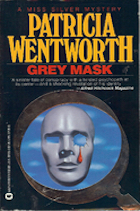
Patricia Wentworth, Grey Mask

Charles Moray has just returned to England after four years abroad. When he reaches his home, he is surprised to find that it is unlocked and that a secret meeting is taking place inside. He learns that the intruders are members of a criminal organization led by an unknown man in a grey mask. He also sees Margaret Langton — the woman he once loved, who broke off their engagement right before the wedding with no explanation — enter the house and speak with Grey Mask. Charles decides not to go to the police but to investigate the matter himself. He and Margaret eventually team up to save a beautiful young heiress who is in danger from the gang and to discover the identity of Grey Mask. I thought this book would be somewhat cheesy and campy, but in fact I really enjoyed it! I will definitely read more by Patricia Wentworth; this is technically the first book in the Miss Silver series, but Miss Silver is a pretty marginal character in this installment.

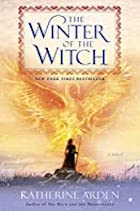
Katherine Arden, The Winter of the Witch

I loved the first two books in this trilogy, The Bear and the Nightingale and The Girl in the Tower, and this book was a fitting conclusion to the series. I love the setting, which is essentially a magical version of medieval Russia that contains various elements of Russian folklore. I also really like that the series doesn’t shy away from consequences: although Vasilisa is a sympathetic heroine, sometimes her choices have unexpected or unintended effects on those close to her. It’s a morally complex universe where no one is completely good or evil, and I liked that the book has some sympathy for even the most destructive characters. My only complaint is that the novel is a bit slow-moving, but if you liked earlier books in the series, you should definitely read this last installment!

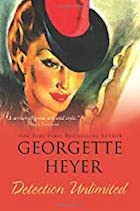
Georgette Heyer, Detection Unlimited

I love Georgette Heyer, but this isn’t one of my favorite of her mysteries. I’m a little surprised that I feel this way, though, because the mystery plot itself is one of her strongest. It’s a simple setup: a universally disliked man is shot in his garden, and everyone seems to have an alibi for the time of death. I thought the solution was clever and hung together well, although I was a bit disappointed in the choice of murderer because I liked that character! But the reason I didn’t totally love this book is that there’s a lot of padding surrounding the mystery plot; most of the book is just descriptions of the various characters and how they interact with one another. And while Heyer is great at characterization, I just wanted the story to go somewhere!

Mini-Reviews: Witch, Scarlet, Homicide

Water Witch*Study in Scarlet WomenHome Sweet Homicide

Cynthia Felice and Connie Willis, Water Witch

I’m a huge Connie Willis fan, so I had high hopes for this book, especially because it also contains some of my favorite elements: con artists, a missing princess, and a sci-fi/romance combo. But overall I found it pretty underwhelming. I really liked the kernel of the story, but I wanted it to be fleshed out a lot more, especially the characterization. The romance essentially comes out of nowhere, and I never really felt like I got to know the hero at all. That said, I really liked a twist involving one of the secondary characters, who came to be a lot more important than I initially expected. Overall, I didn’t like this as much as Willis’s solo work, but I already own two more Willis/Felice collaborations, so I’ll definitely read them at some point.

Sherry Thomas, A Study in Scarlet Women

I’d heard great things about the Lady Sherlock series but was hesitant to dive in, fearing that the books wouldn’t live up to the hype. But I was pleasantly surprised — I really enjoyed this book, which recasts literature’s most famous detective as Charlotte Holmes, a Victorian woman whose brilliant mind is constrained by the social rules of her time. So she decides to leave home and forge her own path. Meanwhile, of course, she solves several murders by realizing that they are all connected. I loved this take on a Holmesian character; Charlotte has a brilliant deductive mind but also really enjoys fashion, and her style is surprisingly ornate and gaudy. I also loved that the book, while sympathetic to Charlotte, also shows her flaws and the negative consequences of some of her decisions. I will definitely continue with the series sooner rather than later!

Craig Rice, Home Sweet Homicide

I found this mystery novel delightful. It’s about three children (ages 8 to 14, I believe) whose mother is a popular mystery novelist. When their neighbor is murdered in real life, the kids are ecstatic — now Mother might get some new material for her books, and the publicity is bound to be good for business. Plus, the handsome detective working the case looks like excellent stepfather material, though Mother doesn’t seem to agree. The children team up to solve the mystery with the help of their friends and neighbors; the result is a farcical romp that I thoroughly enjoyed.

Review: Love Lettering

Love LetteringKate Clayborn, Love Lettering

Meg Mackworth, the “Planner of Park Slope,” has a thriving business in which she creates unique, hand-lettered planners, journals, and calendars for her clients. She’s reasonably successful and Instagram-famous, and now a major stationery brand is interested in hiring her, which would be a big step forward in her career — if only she weren’t completely creatively blocked. To make matters worse, Meg is unexpectedly confronted by a professional faux pas she made about a year ago, when she hid the word “mistake” in a wedding program she designed. The would-be groom, Reid Sutherland, noticed the pattern and has sought out Meg looking for answers. An unlikely friendship grows between them as Reid accompanies Meg on various walks around New York City, searching for inspiration in the city’s wealth of hand-lettered signs. But their relationship can only be temporary, since Reid hates the city and plans to move soon. Can Meg convince him to fall in love with New York — and with her — before it’s too late?

I feel I’ve done a horribly inadequate job of describing this book, which is so much more compelling than I’ve made it sound! Most of what I mentioned above is the setup; the meat of the book is the slow development of Meg and Reid’s relationship. It’s a joy to see them fall in love in such a simple, quiet way, without a lot of unnecessary drama or conflict. The book is told exclusively from Meg’s point of view, so the reader gets to know Reid the same way she does, relying on every little comment, look, or gesture to figure out what he’s thinking. Some readers might be annoyed by this, but I actually really liked it! Reid is definitely my type of hero — a bit Darcy-esque in his directness and occasional awkwardness. I will say, I didn’t love the last section of the book, in which a big external conflict suddenly arises to threaten Meg and Reid’s relationship. I couldn’t figure out what purpose it served, other than to provide the obligatory “It almost didn’t work out!” story beat before the ultimate resolution. But overall, I loved this book and resented every time I had to put it down! Definitely recommended for fans of contemporary romance.

Review: Call Down the Hawk

Call Down the HawkMaggie Stiefvater, Call Down the Hawk

Ronan Lynch is a dreamer, someone who’s able to take objects from his dreams into the waking world. But lately he’s been having trouble with his dreams: he can’t always control what he brings back, and he’s unable to stay away from his home (near a ley line in Virginia) for any length of time. So when he encounters someone else in his dreams, another dreamer who calls himself Bryde, he’s eager to learn more — even though everyone else in his life warns him it’s incredibly dangerous. Meanwhile, Jordan Hennessy is an art forger on a mission to steal a particular painting that just so happens to have been dreamt by Ronan’s father. But complications ensue when her mission brings her into contact with Declan Lynch, Ronan’s uptight and seemingly boring older brother. And then there’s Carmen Farooq-Lane, who is part of a government agency tasked with finding and killing dreamers, because the agency believes a dreamer will cause the end of the world. But the more she learns about the agency’s agenda and tactics, the more she questions her role.

This book is set in the same world as the Raven Cycle, and while it is technically a stand-alone, I really think having the background from TRC is helpful for understanding the world of the novel and the characters of the Lynch brothers in particular. At the same time, I think fans of TRC might be disappointed by how little the other characters from that series appear. Adam is in a few scenes, but Gansey and Blue only appear briefly via text message. So I’m not quite sure who this book is for, if that makes sense; it seems like it would fall short for both newbies and TRC fans. Also, there’s a lot going on in this book, and I’m not sure it all works; the disparate stories take a long time to converge, and before they do, it can be tedious and confusing to figure out what’s going on. I did really like Declan’s story in this book; he was an intriguing character in the Raven Cycle, and I was glad to see more development for him here. But the Carmen sections particularly dragged and didn’t seem necessary for the plot. Of course, this is the first book in a projected trilogy, so maybe she’ll become more integral later on. But I should say that, while there’s no cliffhanger per se, the main plot lines are not resolved in this book. I’ll most likely continue with the trilogy to find out what happens, but so far I’m not enjoying it as much as the Raven Cycle.

Review: The Cut Direct

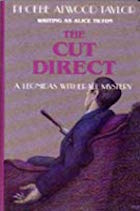
Cut Direct.jpgAlice Tilton, The Cut Direct

Leonidas Witherall, a retired professor at a boys’ school, can’t imagine why anyone would want to murder him; but within the first few chapters of this book, he is twice run over by a car. The perpetrator looks like one of Witherall’s former pupils, an unpleasant young man named Bennington Brett. But when Witherall regains consciousness after the second vehicular assault, he wakes up in a chair across from Brett’s corpse. Concerned that he’ll be the number-one suspect if he calls the police, Witherall decides that the only available course of action is to solve the murder himself. Along the way, he accumulates a motley crew of assistants, including a drinking pal of Bennington’s, the Brett household’s beautiful secretary, a mobster and his girlfriend, and the kindly widow next door — whose brother just happens to be the local chief of police. Of course, Witherall’s attempts to investigate are hampered by the fact that his description is all over the police reports and the newspapers. As his efforts to evade capture become ever more farcical, he slowly begins to piece the mystery together.

This second book in the Witherall series is just as much madcap fun as the first book, Beginning with a Bash. The book is light, breezy, and full of delicious banter; it reminds me of the great screwball comedies of the 1930s, and I really wish someone would adapt the series for television. The opening chapters of the book are a little bewildering because Witherall himself doesn’t know what has happened to him, but it’s actually pretty easy to follow all the strands of the somewhat convoluted plot. As a mystery, I’m not sure it’s entirely successful; some aspects of the solution aren’t fair play, although I think astute readers will spot the culprit fairly quickly. But the characters, the dialogue, and the humor more than make up for any plot deficiencies. I especially loved Mrs. Price, the thoroughly respectable widow who wholeheartedly embraces Witherall’s schemes, even going so far as to use police resources to help him out of various difficulties. In short, this book (and, so far, the series) is a delight, especially for fans of movies like His Girl Friday and Bringing Up Baby.

Review: Pumpkinheads

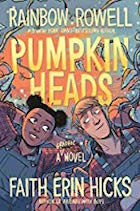
PumpkinheadsRainbow Rowell and Faith Erin Hicks, Pumpkinheads

Deja and Josiah are high school seniors who have worked at the local pumpkin patch every fall for the past three years. They don’t interact much in winter, spring, or summer, but when they’re working together at the Succotash Hut, they’re firm friends. This year, introspective Josiah is contemplating the bittersweet fact that tonight is his last night at the patch; in response, outgoing Deja declares that they need to make the most of it by having an adventure. She encourages Josiah to finally approach his longtime crush, the girl who works at the Fudge Shoppe, but Josiah will only do it if Deja comes along for moral support. Their mission takes them all over the pumpkin patch, from the various food vendors to the bumper cars to the corn maze. Along the way, they reminisce about how they first met and about how much they’ve enjoyed their time at the patch. When Josiah finally catches up with the Fudge Shoppe girl, he realizes that he needs to accomplish one more mission before leaving the pumpkin patch behind.

I’m a big Rainbow Rowell fan, so I was predisposed to like this book even though I don’t normally read graphic novels. And I will say that, while Faith Erin Hicks’s art is very cute and charming, it didn’t add very much to the story for me. But I think I’m just not a very visual person, so your mileage may vary! Anyway, I very much enjoyed the story, which perfectly encapsulates that bittersweet feeling of nostalgia that comes with the end of an era. I also loved the contrast between Josiah and Deja in their attitude toward change: Josiah is a melancholy, head-in-the-clouds type, whereas Deja is more pragmatic and confident. She gives him the kick in the pants he needs to get out of his own head, while his gentleness and sincerity disarm her. I completely bought their friendship and enjoyed watching it develop as the story unfolded. The plot is not particularly suspenseful, but there were times when I genuinely didn’t know how everything would turn out. (I had certain hopes, but I wasn’t sure until a fair way into the book.) Overall, this is a lightweight but very enjoyable story, and I’d love to see it as a movie!

Review: Well Met

Well MetJen DeLuca, Well Met

Emily Parker has just moved to the small town of Willow Creek, Maryland, to care for her sister, who was seriously injured in a car accident, and her teenage niece. But she’s also hoping for a fresh start, having left nothing behind her but a jerk of an ex-boyfriend and an unfinished English degree. Following her niece Caitlin’s lead, Emily soon becomes involved with the local Renaissance Faire, where she has a lot of fun learning about history, working on her British accent, and creating her new identity as a tavern wench. The only bad aspect of her new life is Simon Graham, the organizer of the Faire, who always seems to be criticizing and judging her. But in his Faire persona as a roguish pirate, he’s a completely different person — one who flirts shamelessly with Emily’s character. To Emily’s chagrin, she discovers that she likes their role-playing, and Simon himself, a lot more than she thought. But is their connection real or only an act? And when the Faire ends, what will happen to their relationship?

This is a fun, light romance set in the unusual world of a Renaissance Faire, and I really enjoyed it for the unique setting. I’ve been to the Maryland Renaissance Festival and would love to go back; who could resist the combination of history, theater, and roast turkey legs? So I was predisposed to be charmed by this book. I found Emily a likable character overall, although she does seem to make snap judgments about Simon that she doesn’t make about anyone else. At one point she describes herself as having “emotional whiplash” about him, and I definitely experienced that also, as she kept changing her mind about him. I liked Simon too — I love a straitlaced hero with a sense of humor, and a knowledge of English literature is certainly a bonus! — but he remains a little mysterious because everything is told from Emily’s first-person point of view. The obstacles to their romance aren’t particularly huge, and sometimes I just wanted them to communicate already; on the other hand, sometimes it’s nice to read a book with minimal angst, where the characters are all basically good people doing their best. Overall, I did enjoy the book and am glad to see that DeLuca is planning a sequel set in the same world!

Review: Life and Other Inconveniences

Life and Other InconveniencesKristan Higgins, Life and Other Inconveniences

Emma London is a single mom raising her teenage daughter, Riley, in Chicago. She adores Riley, but the rest of her family is more complicated: her mother took her own life when Emma was a child, and her father has never really been in the picture. Then there’s her grandmother, Genevieve, a wealthy fashion designer who cared for Emma after her mom died but kicked her out when she got pregnant before graduating from high school. Emma and Genevieve have been estranged ever since, so when Genevieve calls Emma to reveal that she’s terminally ill, Emma doesn’t have a lot of sympathy. Nevertheless, when Genevieve hints that Riley might inherit a fortune in her will, Emma decides to go back to her Maine hometown with Riley in tow, to care for Genevieve in her last days. In the course of the visit, Emma and Genevieve come to understand each other a little better, and they both deal with some unresolved issues in their pasts.

I’ve read several of Kristan Higgins’s lighthearted romance novels and really enjoyed them. Recently she’s moved into women’s fiction, and I’ve been more lukewarm on those books, although I still quite liked If You Only Knew and On Second Thought. This book, however, just irritated me. There’s nothing lighthearted or joyful about it; everyone is miserable, and they basically stay miserable until the very end. I’ve already described Emma’s sad backstory, but every other character is dealing with multiple tragic problems, too: Genevieve is not only dying, but she’s devastated by the loss of her husband and her older son. Miller, Emma’s love interest, is mourning his dead wife and trying to raise a hostile three-year-old alone. Emma has a sister who can’t live on her own due to a rare genetic disorder. It’s all just too depressing, especially when I’ve historically looked to this author for light and fluffy reading! I also didn’t love that the majority of the book is told in flashbacks; there’s very little forward motion to the plot, just a slow unfolding of past tragedies. In short, I’m not a fan of this one, and Higgins is no longer a must-read author for me.

Review: The Bookish Life of Nina Hill

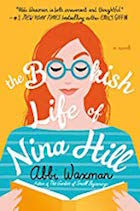
Bookish Life of Nina HillAbbi Waxman, The Bookish Life of Nina Hill

Nina Hill has a quiet, predictable life, and she likes it that way. She works in an independent bookstore in LA’s Larchmont Village and runs a book club for young female readers. She has some friends in her coworkers and her weekly pub trivia team, but her favorite activity is staying home and reading. Everything changes, however, when Nina learns that her father, whom she never knew, has died and left her something in his will. He’s also left her an assortment of relatives: stepmothers, siblings, aunts and uncles, nephews and nieces. Most of them are eager to welcome Nina with open arms, but Nina is uncomfortable with suddenly having a family, and she isn’t sure if she can — or even wants to — incorporate them into her life. Then there’s the issue of her trivia nemesis, Tom, whom Nina initially dismisses as a dumb jock; they have nothing in common but their love of trivia, yet they also find each other infuriatingly attractive. But can they make a relationship work despite their differences?

I enjoyed this book while I was reading it, but I find I don’t have much to say about it a few weeks later. I do remember the writing style; while I normally like plain, unobtrusive prose, this book definitely has a cheeky, quirky style that I mostly enjoyed. On the other hand, the actual plot fell flat for me. The big conflict is supposed to be that Nina is extremely introverted and is thus uncomfortable with her brand-new family. But the thing is, she’s not all that uncomfortable, and everyone accepts everyone else pretty much right away. One of her aunts is hostile at first and kicks up a fuss about the will, but Nina isn’t bothered by it, and eventually the aunt comes around. The romance with Tom is also pretty dull, although to be fair, the book isn’t primarily a romance. I think my biggest issue is that I expected Nina to be more bookish and more introverted than she was. She seemed to perceive herself as incredibly unusual, but her levels of bookishness and introversion are pretty common among readers, at least in my experience! So maybe I was just a little let down by the premise. Overall, this was a good-not-great book for me, but I’d consider reading more by Waxman.