Review: The Grimm Legacy

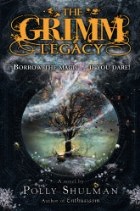
Grimm Legacy, ThePolly Shulman, The Grimm Legacy

High-school student Elizabeth Rew is feeling lonely: her new stepmother is taking up most of her father’s time, and she’s just transferred to a new school where she doesn’t have any friends. So when her history teacher suggests that she get a job with the New York Circulating Material Repository, she looks forward to the new experience. The Repository is a lending library for objects, including famous historical artifacts like Marie Antoinette’s wig; but Elizabeth soon discovers that there are even more important objects to be found. Specifically, the Grimm Collection houses fairytale items with magical properties, including flying carpets and seven-league boots. As Elizabeth explores the wonders of the Grimm Collection, she also befriends her fellow employees, including popular Marc, beautiful Anjali, and standoffish Aaron. When some of the magical items go missing, it’s up to Elizabeth and her newfound friends to discover who is stealing from the Grimm Collection — before they become the thief’s next victims.

A few years ago I read Polly Shulman’s other book, Enthusiasm, and really enjoyed it. Unfortunately, this book didn’t work for me quite as well. I absolutely loved the premise — what if you could actually borrow the magic mirror from Snow White or Aladdin’s lamp? — and many of the details related to this concept worked very well. I especially liked the idea that borrowers had to leave a “deposit” for the items, which could be something like their sense of direction, their singing voice, or their firstborn child. The problem with the book is that it’s geared toward a very young audience. I don’t have a problem with YA in general, and I’ve read many excellent books in the genre, but this one really felt like YA or even juvenile fiction. If I’d read the book at age 11, I probably would have loved it, but as an adult, I found it far too simplistic. There were also a few plot points that weren’t fully fleshed out, such as Elizabeth’s relationships with her dad and stepmom. Overall, the book is a decent read, but I wouldn’t recommend it unless you’re really OK with juvenile or YA fiction.
Review: With a Little Luck

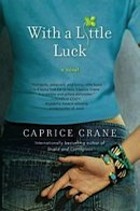
With a Little LuckCaprice Crane, With a Little Luck

Classic rock DJ Beryl “Berry” Lambert claims she doesn’t believe in luck; but thanks to her gambling-addict father, she has a superstition for almost every occasion. She wears a horseshoe necklace at all times, is appalled when someone opens an umbrella indoors, and believes bad luck comes in threes. So when perpetually single Berry goes on two promising first dates that both end in disaster, she’s convinced that her next boyfriend will be equally unlucky. But then she meets Ryan Riley, a successful “relationship expert” who works at her radio station, and their on-air squabbling soon takes a flirtatious turn. Ryan seems like the perfect guy — witty, handsome, and tolerant of Berry’s superstitious quirks — but she is convinced that he’ll eventually reveal himself as bad-luck boyfriend number three. Is Berry doomed to be perpetually unlucky in love, or will she meet her match at last?

Ever since I read and really liked Crane’s first novel, Stupid and Contagious, I’ve been hoping to enjoy her subsequent books just as much, but I’ve always been disappointed. Sadly, With a Little Luck is no exception; it’s a decently-written chick lit novel, but that’s about all I can say for it. Maybe part of the problem was that I couldn’t relate to Berry at all. Her belief in random superstitions is just so extreme, and while it’s understandable that she would have baggage given her past, she seems determined to sabotage every good thing in her life. I also didn’t particularly warm to Ryan, who is a fairly two-dimensional character throughout the book. I couldn’t figure out what makes him tick or why he’s interested in Berry at all. Even as a person who loves fluffy romance, I still have to believe that the hero and heroine would fall for each other, and that just wasn’t the case here. If you’re a chick lit fan, you could do worse, but you could also do a lot better.

Review: The Girl Is Murder

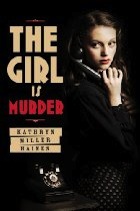
Girl Is Murder, TheKathryn Miller Haines, The Girl Is Murder

Fifteen-year-old Iris Anderson is having a hard time. About a year ago, her Pop returned from Pearl Harbor with a missing leg, which meant he was no longer able to do the active work required by his business as a private investigator. As a result, Pop and Iris have moved from their old affluent neighborhood to a poor area on the Lower East Side, and Iris has to go to public school instead of the elite private school she formerly attended. Hoping to get closer to her only surviving parent (her mother committed suicide shortly after Pop returned from the war), Iris tries to help Pop with his cases, but he forbids her from having anything to do with the PI business. When one of the boys at Iris’ new school goes missing, however, she can’t help but do a little sleuthing. Along the way, she makes a few friends at her new school, including the unpopular Pearl and the glamorous, fast-talking Suze; but as Iris navigates her way through various cliques and social minefields, how will she know whom she can really trust?

If you enjoy Haines’ Rosie Winter mysteries, you’ll feel right at home in the world of this novel, set in the fall of 1942. The book isn’t about World War II, yet the war permeates almost every aspect of Iris’ life, from the slang used by Suze and the other cool girls at school to the disturbing racisim and anti-Semitism espoused by some of the characters. (These attitudes are definitely not condoned by the book, however; they simply mirror the atttitudes of many Americans at that time.) I liked Iris as a protagonist; her problems are specific to her era yet also universal, as she struggles with her own identity, fitting in, and building a relationship with a distant parent. Her voice is occasionally too precocious for a 15-year-old, but I found that flaw forgivable since she’s so entertaining. As a mystery, the book is very weak; Iris doesn’t spend much time investigating anything, and she’s not even the one who solves the case! So I’d recommend this to someone looking for an interesting YA book about World War II, but it’s not a great read for a mystery fan.

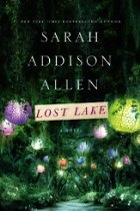
Review: Lost Lake

Lost LakeSarah Addison Allen, Lost Lake

The tiny vacation resort of Lost Lake in Suley, Georgia, means different things to different people. For Eby Pim, it’s a tangible reminder of her happy life with her now-deceased husband, George; but it’s also an increasingly burdensome property to maintain, and Eby has decided to sell it. For Eby’s longtime friend and constant companion, Lisette, Lost Lake is a refuge, and she vows she’ll never leave. And for Kate Pheris, widowed one year ago and just now waking up from her grief, Lost Lake is a memory of the best summer she ever had. When Kate impulsively decides to revisit Lost Lake with her daughter, Devin, she is immediately drawn to Eby and the other colorful inhabitants of the surrounding town. Kate and Devin’s arrival also catalyzes several important changes in Suley, including the resolution of a long-buried tragedy and the banishing of an old ghost. Eventually Kate is able to help Eby create a new future — and maybe even find one for herself.

As a longtime fan of Sarah Addison Allen, I couldn’t resist buying her newest book immediately (in hardcover, no less!) and devouring it as soon as possible. Fortunately, this book contains all of SAA’s trademark elements: a community of strong women with interconnected lives, decades-old secrets that are gradually revealed, understated romance, and a hint of magic. I especially loved the flashbacks to Eby’s life with George in Europe; they were so romantic and lavishly described that they made me want to hop on the next plane to Paris! I wasn’t terribly fond of the storyline with the alligator…I don’t want to spoil the book, so I’ll just say that the magical element was a bit too prominent for me. Overall, this is not my favorite SAA novel (that would be The Sugar Queen), but it is a lovely, relaxing read that I would definitely recommend to fans of this genre.

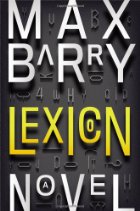
Review: Lexicon

LexiconMax Barry, Lexicon

Emily Ruff is a teenager living on the streets of San Francisco, subsisting on the change she earns by fleecing people at cards. So when she is approached by a mysterious organization that wants to send her to a special boarding school, all expenses paid, she jumps at the chance without asking too many questions. When Emily arrives at the school, she learns that its purpose is to train poets, an elite group of individuals who can use words to “persuade” people to do anything. Emily learns that people can be divided into segments based on their personality type, and each segment responds to a unique set of words. The poets want Emily because they have ascertained that she is more than usually persuasive. Meanwhile, Wil Parte is on the run, accompanied by a renegade poet called Eliot — but he doesn’t know who he’s running from or why they’re looking for him. Both Emily and Wil must eventually face violence and impossible choices as the connection between their stories becomes evident.

I picked up this book because I loved the premise, which is essentially that words have power (something book lovers already know!). Max Barry has imagined a world in which the masses can be controlled by an elite few with words alone — a world that is frighteningly close to our own. For me, the book’s biggest strength is how plausible it is; with our private lives increasingly made public through the Internet, it’s very easy to imagine governments and other powerful groups using that private information for their own ends. The book also reads extremely quickly and is chock-full of action. However, the book was a little too graphic for me, in terms of both sex and violence. And more importantly, I feel like Barry missed a great opportunity to explore some interesting philosophical questions in the novel. Clearly the poets are to some extent sinister, and the villain of the book is quite obviously the villain; but even the so-called heroes do a lot of morally questionable things, and their behavior is never really called to account. The book has a happy(ish) ending, and I just don’t think it’s justified. Still, this is a fun read if you’re interested in the premise, but I’d recommend getting it from the library rather than buying.

Review: Fer-de-Lance

Fer-de-LanceRex Stout, Fer-de-Lance

This novel introduces the famous detective team of Nero Wolfe, an eccentric genius whose skill in detection is rivaled only by his fondness for orchids, and Archie Goodwin, his streetwise secretary. Although they live in comparative luxury, Wolfe and Archie have not been immune to the effects of the Great Depression, and they certainly won’t turn down any opportunity of making some hard cash. So when a worried Italian woman comes to their doorstep asking them to track down her missing brother, they are eager to take the case. Due to Wolfe’s obese build and strange fears of the outside world, he refuses to leave his home; so it’s up to Archie to investigate the man’s disappearance. He soon discovers, however, that the missing Italian man is just one piece of a much larger puzzle involving the sudden death of a prominent university professor. While Archie collects evidence, Wolfe applies his considerable talents to solving the mystery.

This is my first encounter with Nero Wolfe and Archie Goodwin, but it certainly won’t be my last! I loved Archie as the narrator; his wry, amusing voice reminds me of the fast-talking banter of the great screwball comedies of the 1930s. It was great fun to see the investigation through his eyes, as he applies his own special brand of persuasion to the various suspects and interested parties. Nero Wolfe, by contrast, is significantly less interesting, since the inner workings of his mind remain largely mysterious. He did have some funny moments, though, and I liked his extremely formal patterns of speech. He and Archie make a nice contrast in that regard, since Archie is full of contemporary slang and has an almost aggressively casual tone. As for the mystery itself, it is quite well-plotted, even if the solution isn’t very surprising. The only thing I disliked was that the book keeps going after the culprit’s identity is revealed. For me, the fun of reading a mystery is trying to solve it; once the solution is discovered, I don’t want to read a long denouement about how the guilty party was finally caught. So I thought the end dragged a bit; but other than that, I enjoyed this mystery and look forward to reading more in the series.

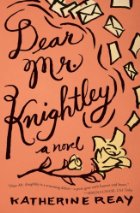
Review: Dear Mr. Knightley

Dear Mr. KnightleyKatherine Reay, Dear Mr. Knightley

Samantha Moore has been in and out of foster homes her whole life. Now, at age 23, she’s living at a group home called Grace House, but she’ll soon have to leave unless she can find a way to go back to school. One day she gets a surprising offer: if she can get into the Medill School of Journalism at Northwestern University, an anonymous donor will pay her tuition and living expenses. The only condition is that she must write regular letters detailing her educational progress to the donor under the name Mr. Knightley. Samantha is reluctant at first, particularly because she feels much more connected to fiction than journalism. Indeed, her closest friends growing up were the classic novels that kept her company through dark times, and she frequently hides in the world of books when real life is confusing or difficult. Still, Sam agrees to the deal, and through her letters to “Mr. Knightley,” she is finally able to face her past — and her future.

Despite what the title might suggest, this book is not a Jane Austen spinoff; rather, it’s a contemporary reimagining of Jean Webster’s novel Daddy-Long-Legs. My overall opinion is that the original is far better, but I can’t get into more depth without SPOILERS for both books, so skip the rest of this review if you don’t want to know how they end! … OK, so if you’re still with me, what happens is that Samantha eventually falls in love with “Mr. Knightley,” who turns out to be the handsome mystery novelist who’s been keeping Sam company throughout the book. He knows everything about Samantha, whose letters to him have been more like a diary, yet he doesn’t confess his true identity until the very end of the book. There’s this huge power imbalance between him and Sam, and the book never really addresses it, and I just couldn’t buy it as a romantic or satisfying ending at all. For some reason I didn’t mind it as much in the original – maybe because of the time period in which it was written? So I had a huge issue with the core of the story, and I also didn’t like the author’s writing style. It’s a very readable book, and if you like Daddy-Long-Legs you may enjoy this one too, but I was disappointed.

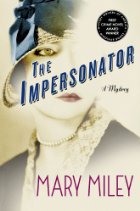
Review: The Impersonator

Impersonator, TheMary Miley, The Impersonator

Leah Randall is a talented but impoverished actress who has worked on the vaudeville circuit her whole life. During the course of one performance, she notices a strange man watching her intently. Eventually this man, Oliver Beckett, approaches her with an astonishing proposal. He tells Leah the story of his niece, Jessie Carr, heiress to a substantial fortune, who vanished from her home several years ago without a trace. Leah bears a striking resemblance to Jessie, so Oliver proposes a scheme: Leah will pose as Jessie and return “home” to claim her inheritance, which she will then split with Oliver. At first Leah wants nothing to do with it, but when she is fired from her vaudeville act and can’t get other work, she eventually reconsiders. With Oliver’s help, she assumes Jessie Carr’s identity and travels to the Carrs’ home in Oregon. But the more time she spends with the Carrs, the more she becomes determined to discover what really happened to Jessie all those years ago.

If you read that plot summary and thought, “That sounds an awful lot like Brat Farrar by Josephine Tey,” well, you’d be right. The premise is exactly the same — Miley even acknowledges that Tey’s novel was the main inspiration for her own — but I enjoyed Miley’s novel in its own right. I especially liked the period details about vaudeville, speakeasies, and other highlights of life in the 1920s. There were even references to some Supreme Court cases of the era, which I appreciated as a law school survivor. I also liked Leah’s narrative voice: she’s plain-spoken, independent, and very aware of both her talents and her flaws. The thing is, though, Brat Farrar is still by far the superior book. Miley’s novel is a bit disorganized at times, including several subplots that are more distracting than intriguing. I also hated the romantic aspect of this book; it was unbelievable and underdeveloped. I did enjoy the book overall and found it very readable, but if the premise sounds interesting to you, you should really just read the original instead!

Review: The Perfect Match

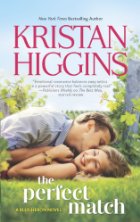
The Perfect MatchKristan Higgins, The Perfect Match

Practical, reliable Honor Holland has been in love with her longtime best friend, Brogan Cain, since high school. But when she goes to the gynecologist on her 35th birthday (because that’s the kind of girl she is), the doctor tells her that she should think about having children soon if she wants to be a mom. Honor realizes it’s time to get serious about her love life, but her hopes for a romance with Brogan are dashed when he rejects her. Meanwhile, Tom Barlow is a British college professor whose visa is about to expire. He’s desperate to stay in America to be near his “almost-stepson” Charlie — even though Charlie is a sullen, withdrawn teenager who seems to want nothing to do with him. With a little help from some matchmaking friends and family, Honor and Tom decide to form a marriage of convenience; this will enable Tom to stay in America, and Honor will get a chance at motherhood. But all too soon, sparks start flying between them. Can Honor and Tom move past their baggage and insecurities to turn their fake relationship into something real?

I’m a big fan of Kristan Higgins’ light, witty contemporary romances, and this book is no exception. It’s a sequel of sorts to The Best Man, and there are welcome cameos from Honor’s sister, Faith, and the rest of the Holland clan. I really like books that feature big, rambunctious, mostly functional families; it’s very rare in fiction, unfortunately, and I found it a refreshing change. I also tend to enjoy the “fake relationship becomes real” romantic trope, although here I was a little confused about the setup. Honor agrees to marry Tom on the condition that they will both give the marriage a real effort, to see if something can grow between them. But that seems like an awfully big risk to take, especially since Honor is hoping to get a child out of the deal. Aside from that, though, I have no complaints! The romance is very well-written and well-developed, as usual in a Higgins novel. There are a few “adult” scenes, but nothing too explicit. I even liked Charlie, even though I usually hate the way children are portrayed in adult novels (too precocious, too sickeningly sweet, too much of a blatant plot device rather than a real character). All in all, I’d definitely recommend this book to fans of contemporary romance! You may want to pick up The Best Man first, but it’s definitely not necessary to follow this book.

Review: Dreamers of the Day

Dreamers of the DayMary Doria Russell, Dreamers of the Day

This novel, set in the early 20th century, is narrated by Agnes Shanklin, a schoolteacher who has spent her entire life caring for her domineering mother. But when the influenza pandemic of 1918 carries off most of her family, including Mumma, Agnes finds herself unexpectedly inheriting a substantial sum of money. Though she is grieved by the multiple deaths in her family, she is also finally free from Mumma’s influence. Impulsively, she decides to see the world and books a trip to Egypt. There she meets several prominent British officers and diplomats, who are in Cairo to come to an agreement on Middle Eastern policy. Agnes is drawn into their social circle and mingles with the likes of Winston Churchill and Thomas Edward Lawrence, now famously known as “Lawrence of Arabia.” She also meets a German called Karl Weilbacher, who is handsome, kind, and attentive, but may not be all that he seems. Ultimately, the people Agnes meets and events she witnesses in Egypt will have a profound effect on the rest of her life.

After finally reading and loving Doc, I was eager to try another book by Mary Doria Russell. This one was very readable, and the insights into the Cairo Conference of 1921 were fascinating. It’s a historical event that still has obvious ramifications for our world today, covering issues such as a Jewish homeland in Palestine, the territorial boundaries of new nations like Iraq, and the amount of influence Western countries should continue to have in the Middle East. I enjoyed Russell’s depictions of real historical figures in this book, particularly Churchill, wo made me laugh even at his most exasperating. I didn’t like this novel nearly as much as Doc, however, mostly because I found it too preachy. Agnes is an extremely opinionated character, and due to a strange framing device in the novel, she narrates from a quasi-omniscient perspective. Because of this, she judges the events of her time from a 21st-century point of view, which I find very irritating in historical novels. And since Western involvement in the Middle East is still a very complex and controversial issue, I didn’t appreciate Agnes’ more simplistic perspective. But even though this aspect of the book rubbed me the wrong way, I think it’s still worth a read for people interested in the time period or in the creation of the modern Middle East.