Mini-Reviews: Firebrand, Unhoneymooners, Bummel

Kristen Britain, Firebrand

Karigan is back in her own time but wounded and grieving after the events of Mirror Sight. Eventually she gets a new mission to distract her: She’ll head to the northern edge of the kingdom in search of allies in the coming war between Sacoridia and Second Empire. Meanwhile, an elemental spirit summoned by Grandmother attacks the royal family and abducts King Zachary. While I didn’t hate Mirror Sight, I’m glad this book takes us back to the series’ familiar setting and characters. I liked that Karigan has realistic human responses (sadness, anger, despair) to all the suffering she’s endured throughout the series. I also really enjoyed getting a bit more of Zachary’s POV than usual! The book is still far too long and has too many characters, and I could have done without some of the more melodramatic bits of violence near the end. But overall I enjoyed this one and will definitely continue with the series.

Christina Lauren, The Unhoneymooners

Olive and Ethan have never gotten along, even though her twin sister is marrying his brother. But when everyone at the wedding gets food poisoning except the two of them, they find themselves in the awkward position of taking their siblings’ places on the (nonrefundable) honeymoon to Hawaii. As they pretend to be married while participating in the various resort activities, Olive is surprised to discover another side to Ethan and finds herself falling for him. But a conflict between their siblings might derail their fledgling romance. This is my first encounter with Christina Lauren, and I enjoyed the book, but given the hype surrounding these authors, I think I was expecting a bit more. The initial conflict between Olive and Ethan felt very contrived and made me dislike Olive for jumping to conclusions. I did like the later conflict involving their siblings, which felt more realistic and gave some real stakes to the story. Overall, it’s a perfectly good read, but it just didn’t grab me.

Jerome K. Jerome, Three Men on the Bummel

In this sequel of sorts to Three Men in a Boat, narrator J. and his friends Harris and George decide to take another trip, this time a bicycle tour of Germany. But of course things start going wrong from the start, and the three men get into a variety of humorous scrapes. Meanwhile, J. often digresses to give his views on issues such as English vs. German education, the Germans’ passion for law and order, and why long descriptions of scenery aren’t necessary in a travelogue. Like its predecessor, this little book is a quick and enjoyable read, full of humor and satire. The book pokes gentle fun at the British traveler abroad, various countries’ attitudes toward foreigners, and the travel genre as a whole. There’s no plot to speak of, just a series of vaguely connected anecdotes. Worth a read if you enjoy this sort of light humor, though I remember liking Three Men in a Boat more.

N.B. According to Google Translate, “Bummel” can mean a stroll, spree, tour, wander, ramble, or saunter. All accurate descriptions of what J., Harris, and George get up to!

Mini-Reviews: Lake, Simple, Beg

John Bude, The Lake District Murder

At an isolated garage in the Lake District, a man is found dead inside a car, with an apparatus indicating that he deliberately killed himself by asphyxiation. But Inspector Meredith notices a few things that aren’t consistent with suicide and soon comes to believe the man was murdered. As Meredith investigates, he also uncovers shady business dealings at the garage and searches for the connection between them and the murder. I love a good Golden Age mystery, but this one was often frustrating for me. The plot doesn’t really present a puzzle for readers to solve; rather, the story plods along with what feels like a minute-by-minute account of Meredith’s investigation. I think Bude was trying to make the point that detective work is often dull routine, not dramatic and glamorous—but that doesn’t make it fun to read about the dull routine! Overall, fans of police procedurals might enjoy this one more than I did, but I found it a slog.

Pamela Morsi, Simple Jess

Althea Winsloe is a young widow with a three-year-old son and a good farm property. Her small, tight-knit community is pressuring her to marry again, but she has no desire to give up her freedom or her farm. Still, she needs a man to help her work the land, so she hires Jesse Best, known to everyone as “Simple Jess” because he has an intellectual disability. As Althea gets to know Jesse, she realizes that despite his limitations, he’s very knowledgeable about farming and hunting – as well as being kind, loyal, and handsome. I think this is a book that might be polarizing; Morsi boldly chooses to tell some of the story from Jesse’s POV, and while I think she portrays him with sensitivity and kindness, it’s certainly a fine line to walk. I was rooting for him from the start, and I also liked the various secondary characters who populate Althea and Jesse’s community. Overall, I really liked this one and appreciated the unique premise, but I don’t think it’s a book for everyone.

Sarah Adams, Beg, Borrow, or Steal

This is Adams’s third book set in Rome, Kentucky, and the heroine is the oldest Walker sister, Emily. She’s the one who (seemingly) has it all together, who helps her family with terrifying competence and no hesitation. But lately she’s been feeling lonely and dissatisfied—that is, until her longtime nemesis, Jack Bennett, moves back to town. Emily and Jack have always argued, but now their fights are feeling more flirty than genuinely aggressive. They’ll have to overcome some baggage, however, before they can move past their bickering and truly trust each other. I enjoy the enemies-to-lovers trope and think this book does it well. I’m also a fan of prickly heroines who are outwardly competent but inwardly struggling, so Emily particularly appealed to me. Toward the end, I think things got a bit too syrupy-sweet (all the men in this series are annoyingly perfect), but I enjoyed the book and will definitely read the next one when it comes out!

Mini-Reviews: Miles, Plot, Country

Jenny Colgan, 500 Miles from You

Lissa and Cormac are both home care nurses, she in London and he in the tiny town of Kirrinfief, Scotland. When Lissa is traumatized by an on-the-job tragedy, her boss forces her into a swap: She’ll go to Kirrinfief for three months, where she’ll theoretically have enough peace and quiet to begin healing, and Cormac will take her place in London. At first, both Lissa and Cormac have trouble adjusting to their new surroundings, but gradually they grow and change in unexpected ways. I’ve read a few books by Colgan and found them sweet, uplifting comfort reads. This book definitely has more darkness in it: Lissa’s trauma is described in detail, and many of the patients she and Cormac treat suffer horribly. But the novel retains a gentle feel and warm sense of community, especially in Kirrinfief. Scottish life is a bit too idealized, and the novel seemed to end rather abruptly, but I did enjoy it overall and will continue to read more by Colgan.

Genevieve Cogman, The Lost Plot

In this fourth installment of the Invisible Library series, Irene and Kai are unwillingly roped into political intrigue among the dragons, which puts the Library’s careful neutrality between dragons and Fae in jeopardy. To protect the Library, Irene and Kai travel to an alternate version of Prohibition-era New York City, where they have to evade mobsters and police as well as dragons. This fourth installment of the Invisible Library series is a fun read, consistent with previous books in the series. I enjoyed the new setting with its gangsters and speakeasies, and Irene continues to subtly grow and change as she realizes the Library isn’t always her highest priority. I missed Vale in this book, but it looks like he’ll be more prominent in book 5, which I plan to read next month.

Fiona Hill, The Country Gentleman

Anne Guilfoyle is celebrated as one of the cleverest ladies in London, and she relishes her position and status. But when her fortune is lost due to a bad investment, she’s forced to move to a country manor she’s inherited from a distant relative—and by the terms of the will, she must reside there for 10 months every year. Anne resents the change in her circumstances and views her country neighbors—especially the owner of the closest estate, Henry Highet—as ignorant bumpkins. But as she acclimates to her new life, she grows to appreciate country living, and Highet, more. I’m always on the hunt for well-written, steamless historical romances, and this one definitely fits the bill! Anne is somewhat hard to like at first, as she’s very condescending, but she grows sufficiently throughout the book. I also really liked Anne’s companion and the secondary love story featuring her. Overall, this was a very pleasant surprise, and I’m eager to try more by Fiona Hill.

Mini-Reviews: Christmas, Paupers, Garden

Rupert Latimer, Murder after Christmas

A Christmas house party turns deadly when the guest of honor, Sir Willoughby Keene-Cotton, is found dead on Boxing Day. Uncle Willie was very rich, so plenty of people had a motive to kill him—except that, based on the specific legal circumstances surrounding his demise, it was unclear who would inherit his fortune. Similarly, he died by poisoning—but apparently nothing he ate in the hours before his death could have contained the poison. The increasingly bewildered police must sift through piles of red herrings before they can even verify that a murder has been committed, let alone by whom. This breezy vintage mystery multiplies motives and clues so that it’s nearly impossible to separate the important information from the surrounding camouflage. And that’s what makes it such a fun read—that, and the whimsical characters who needlessly obstruct the investigation. I really enjoyed this one and would recommend it as a good vintage holiday read.

Sheri Cobb South, Of Paupers and Peers

James Weatherly, a poor village curate, is shocked when a London solicitor informs him that he’s the new Duke of Montford. He travels to Montford immediately to claim his title, only to be attacked by thieves and lose his memory in the process. Miss Margaret Darrington finds him at the side of the road and assumes he’s Mr. Fanshawe, the tutor she hired for her teenage brother. James has no reason to doubt her identification and takes up his new tutorial position. But complications ensue when James seems smitten by Margaret’s beautiful sister, Amanda, who must marry a wealthy man — and when Margaret begins to fall for James herself. This is a sweet and steamless Regency romance that I very much enjoyed, despite the fact that it’s not particularly original. I liked that, while there are various moments of mistaken identity, they’re not drawn out too long and are solved promptly with intelligent communication. I’d definitely recommend this to fans of traditional Regencies, and I’ll seek out more by Sheri Cobb South.

Sarah Addison Allen, Garden Spells

In the small town of Bascom, North Carolina, magic is an understood and largely unspoken fact of life. Everyone knows, for instance, that the Waverley family’s garden produces plants that can influence your mood, and that if you eat the apples from their tree, you’ll have a vision of the biggest event in your life. Claire Waverley has embraced her family’s legacy and uses the magic plants in her catering business, while her estranged sister, Sydney, never liked being a Waverley and couldn’t wait to leave town. But when Sydney unexpectedly returns with a five-year-old daughter in tow, Claire’s carefully cultivated life begins to change. I really enjoy Allen’s books, which are tales of family, romance, and female friendship overlaid with a patina of magic. Claire and Sydney’s relationship is the heart of this novel, and I loved how they slowly grew closer despite years of misunderstandings. Recommended if you like books about small towns and the bonds between women.

Mini-Reviews: Bookishly, Arabella, Goodbye

Mia Page, Bookishly Ever After

Lexi Austen loves her job as the owner of Pemberley Books in Washington, DC. But lately it’s been harder and harder to make ends meet, thanks in part to a rival bookstore that’s begun encroaching on her turf. She concocts a scheme to distract the other bookstore’s owner, Sam Dickens, by making him fall in love with her, using techniques inspired by Jane Austen novels. But as Lexi gets closer to Sam, she soon finds it’s her own heart that’s in danger. I’ve been on kind of a disappointing streak with contemporary romances lately; this one was just okay. Lexi’s plan is obviously ridiculous, but I almost wish she’d gone a bit farther with it; that would have at least made the story a bit more unique. I did enjoy the DC setting, as I live pretty close, and the book mentions several real businesses and neighborhoods. But overall, I was underwhelmed by this one.

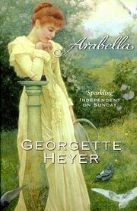
Georgette Heyer, Arabella

Arabella, a vicar’s daughter of no fortune, is eager to embark on her first London Season and hopefully marry a well-to-do man. En route, a carriage accident forces her to beg the help of Robert Beaumaris, one of the ton’s most eligible bachelors. When Arabella overhears Beaumaris complaining that she’s undoubtedly trying to trap him into marriage, she indignantly tells him she’s an heiress and has no need to marry for money. But when the rumor of her alleged fortune reaches London society, Arabella finds she needs Beaumaris’s help after all. This was one of my first Heyers, and it was a pleasure to revisit, although I found myself irritated that Beaumaris had so much more power and knowledge of the situation than Arabella did. But the romance is sweet nonetheless, and a mutt named Ulysses provides some fun comedy. Not a top-tier Heyer for me, but still a very good read!

Betty Neels, No Need to Say Goodbye

Louise Payne is a 26-year-old hospital nurse with three younger siblings to care for, and her salary barely allows them to make ends meet. A lucky inheritance from a distant relative provides the family with a country cottage to live in, where Louise finds that her near neighbor is Dr. Arlo van der Linden, with whom she worked in the London hospital. They were never particularly close before, but now Arlo is being friendly and helpful, even giving Louise a new job. Could he be interested in Louise’s pretty sister, Zoë? And if so, can Louise hide the fact that she’s fallen for Arlo herself? This was a quick read with a soothing, timeless atmosphere – I think it was published in the late ’80s or early ’90s but could have taken place much earlier. It’s a sweet though somewhat one-sided romance; Arlo is pretty high-handed, and we don’ know what’s going on in his mind till the very end of the book. I’ve got one more Neels novel on my shelves, and I’ll save it for the next time I want a quick read that doesn’t require any mental energy.

Mini-Reviews: Viscount’s, Christmas, Deerskin

Louise Allen, The Viscount’s Betrothal

Decima Ross, a spinster at age 27, is sure no man could ever fall in love with her because of her exceptional height. After her brother’s latest insensitive attempt to push her into the arms of an unwilling bachelor, Decima flees, but a snowstorm forces her to seek shelter with Adam, Viscount Grantham. Snowed in with only two servants, Decima and Adam soon grow close; but when they meet again in London, Adam is betrothed to another (beautiful and petite) lady. I’ve really enjoyed some of Allen’s other Regency historicals, but this one was disappointing: anachronistic behavior and dialogue, and characters behaving stupidly for the sake of the plot. I’ll continue to read more by Allen, but this is not one of her best.

Julianna Keyes, It’s Beginning to Look a Lot Like Christmas

Eve and Will are rival writers at the same travel blog, and they’ve both been assigned to cover Noelville, Vermont, during the run-up to Christmas. The problem is, neither one of them is a fan of the holiday season. But as they experience the marvels of the Christmas-themed town—including a nutcracker museum, cookie decorating classes, a moonlit sleigh ride, and more—they’re slowly won over despite themselves, and they also discover a surprising mutual attraction. I enjoyed this little Christmas novella, which feels like a self-aware Hallmark movie. Eve and Will’s snarking about the over-the-top Noelville traditions is the best part of the book, and they have a lot of fun banter. I felt like the romance was missing a scene or two; there’s never really a point at which they express their feelings for each other. But I’d recommend this one if you’re looking for a fun, bite-sized holiday treat.

Robin McKinley, Deerskin

Lissar, the daughter of a beloved king and queen of a prosperous kingdom, has a seemingly charmed life. But apart from her fleethound, Ash, she doesn’t have many friends and tends to be isolated and overlooked. When Lissar is 17, a traumatic event forces her to run away from home, and after a long period of healing, she finds herself in a new kingdom with a job in the royal kennels. As she slowly wins respect and love from those around her, she starts to hope for a better life—until the ghosts of her past trauma come back to haunt her. This book is a retelling of the Perrault fairytale “Donkeyskin,” which I’m not familiar with. But the dark thing that happens to Lissar is truly dark, so proceed with caution. Otherwise, McKinley’s books always seem to have weird pacing—lots of setup and a very short climax—but I don’t mind because she’s such a great writer that she just carries you along. This isn’t one of my top favorites by her, but it’s still well worth reading.

Mini-Reviews: Muse, Accomplished, Burning

Mimi Matthews, The Muse of Maiden Lane

This final book in the Belles of London series features Stella Hobhouse, who’s bold by nature but has been stifled by her strict brother and by self-consciousness about her unusual silver hair. Meanwhile, Teddy Hayes is a passionate artist who struggles to be independent despite having to use a wheelchair for mobility. When the two meet by chance in an art gallery, Teddy is struck by Stella’s unique beauty and wants to paint her. She resists at first, but as the two grow closer, they both find the courage to take a chance on art and love. I’ve been waiting for Teddy’s book since he appeared as a supporting character in A Convenient Fiction, and overall I was not disappointed. I liked that the book doesn’t shy away from either his flaws or his vulnerability, and Stella is a great match for him, as she understands and shares his struggle for freedom. The novel is a little too overpopulated with characters from previous books, but otherwise I really enjoyed this one. The first book in a new series by Matthews is slated to come out in 2025, and I will definitely be checking it out!

Amanda Quain, Accomplished

Georgie Darcy has been in a dark place ever since her boyfriend, Wickham Foster, betrayed her and almost got her expelled. Her classmates at Pemberley High all hate her, and her overprotective older brother, Fitz, seems to view her as nothing but a problem for him to solve. Georgie is determined to fix everything, but all her plans go spectacularly awry. I’m of two minds about this YA take on Pride and Prejudice from Georgiana’s POV. It’s a clever idea, and I actually really liked the book’s portrayal of Fitz Darcy (and Charlie Bingley, who is an utter delight). The novel also highlights just how horrible Wickham was to Georgiana in P&P; here, he’s clearly emotionally abusive and has left Georgie with some serious trauma. I honestly just wanted all the Darcys to go to therapy! I also found Georgie pretty frustrating, as she consistently makes the worst possible decisions. Overall, I think the pros of the book outweigh the cons, but I haven’t decided whether I want to keep it or not.

Genevieve Cogman, The Burning Page

After the events of The Masked City, Irene is on probation with the Library and is being sent on a lot of low-interest but high-danger jobs. But she’s back in action when her old enemy, Alberich, threatens both her specifically and the Library in general. Meanwhile, someone else also seems to be trying to kill her – could it be her Fae nemesis, Lady Guantes? As Irene pursues her dual goals of serving the Library and staying alive, she also gets some insight into Library politics and learns a bit more about whom she can really trust. I’m continuing to enjoy this series, and I was happy to see Irene, Kai, and Vale all working together in this installment. Irene’s growth is compelling: She’s always been emotionally detached and totally committed to the Library, but now she’s forging close relationships that may be changing her priorities. I’m interested to see how things develop, so I’ll most likely continue with the series into next year.

Mini-Reviews: Rule, Convenient, Plus

Sarah Adams, The Rule Book

Nora Mackenzie is a talented sports agent who’s constantly fighting to be taken seriously by her male peers. So when she gets the opportunity to take on NFL star Derek Pender as a client, she jumps at the chance – even though they used to date in college, and it ended badly. When Derek learns that Nora wants to be his new agent, he decides it’ll be a good opportunity for him to get a little revenge on the woman who broke his heart. But their working relationship ignites old feelings, which may put both their careers at risk. I don’t particularly care about football, and second-chance romance isn’t one of my favorite tropes. That said, this is a pleasant, entertaining contemporary romance, and the connection between Nora and Derek feels genuine. It was also fun to get a few cameos from Nathan and Bree from The Cheat Sheet. Overall, it’s fine but not a book I’m super enthusiastic about.

Mimi Matthews, A Convenient Fiction

Alex Archer came from nothing; he was raised in an orphanage and ran away as soon as he could. Due to his skill at cards, he’s amassed a comfortable fortune through gambling over the years, but now he’s set on acquiring an estate through marriage. He has his sights set on a local heiress, Henrietta Talbot, but finds himself drawn to her friend Laura Hayes instead. Laura has neither property nor fortune – in fact, she’s barely making ends meet – but their mutual attraction threatens to overthrow all Alex’s plans. There’s nothing particularly unique about this Victorian romance, but for some reason it really works for me. What can I say? I love emotionally repressed heroes and practical heroines, and despite the fact that this book is steamless, the chemistry between Alex and Laura is palpable. I love Mimi Matthews in general, and this is one of my favorites by her. I’m now even more excited for The Muse of Maiden Lane, which features Laura’s brother, Teddy, as the hero.

Jenny L. Howe, On the Plus Side

Everly is a plus-size young woman who feels she’s “too much” and tends to hide herself, both physically and in terms of her opinions, desires, and talents. When she’s nominated for a makeover show geared toward plus-size individuals, she is excited for the chance to reinvent herself, and she soon finds herself drawn to grumpy cameraman Logan. But when the show starts taking some narrative liberties with Everly’s story, both her romance and her newfound confidence are threatened. I wanted to love this book, and as a plus-size woman myself, I could relate to many of Everly’s experiences and struggles. But in the end, everything works out for her pretty quickly and effortlessly. She attracts Logan’s admiration immediately, accepts her body wholeheartedly, and even mends her complicated relationship with her mother. It all just feels too easy and idealized. Overall, I’d consider trying more by Howe, but this book fell a little flat for me.

Mini-Reviews: Rules, Witch, Bride

Sinéad Murphy, The Jane Austen Rules: A Classic Guide to Modern Love

This short book positions itself as a dating guide based on the timeless wisdom of Jane Austen. As a diehard Austen fan, I loved the premise, but I have mixed feelings on the execution. I do think the advice, both about dating and how to be a woman in the modern world, is largely good. The Austen analysis is also interesting; it’s not super deep literary criticism, but some of Murphy’s interpretations are ideas I hadn’t considered before. However, I wasn’t a fan of the writing style, which is trying—and mostly failing—to imitate Austen. Plus, Murphy misquotes the first sentence of Pride and Prejudice, which is frankly inexcusable! So, while I didn’t hate the book, I wouldn’t recommend it either, even for Austen fanatics.

Elizabeth George Speare, The Witch of Blackbird Pond

In 1687, orphan Kit Tyler experiences severe culture shock when she leaves her life of luxury on a Barbados plantation and moves in with her aunt’s family in Connecticut Colony. At first Kit hates her new life: Her uncle is strict, she’s forced to help with the unending household chores, and the broader Puritan community is suspicious and unwelcoming. Gradually she comes to appreciate her new situation, particularly after she befriends an old woman widely reputed to be a witch. But when the town’s hostility toward the “witch” turns ugly, Kit’s own safety is threatened. This was my favorite book for a while growing up, and upon rereading, I was surprised by just how many scenes I remembered. I found it a very enjoyable read that paints a vivid picture of colonial New England, both good and bad. I also loved Kit’s character development, as well as the multiple satisfying love stories. I’m glad I decided to revisit this one!

Cornell Woolrich, The Bride Wore Black

This thriller features a mysterious woman who is systematically murdering men throughout New York City. Her motive is unclear, as she doesn’t seem to know any of the men personally. Beautiful and clever, she’s easily able to gain access to her victims, and she always vanishes directly after the murder without a trace. Eventually, a policeman notices a pattern among the killings and makes it his mission to bring this femme fatale to justice. This is a fascinating, suspenseful novel with a clever structure, following the woman and each of her male victims in turn. As a result, I felt some measure of empathy for every character and was eager to discover the woman’s motive. The ending is both satisfying and heartbreaking—everything is resolved, but none of the characters get what they want. I’d definitely recommend this one to fans of suspense and noir, and I’m interested in reading more by Woolrich.

Mini-Reviews: Bookshop, Notebooks, Vampire

Madeline Martin, The Last Bookshop in London

Grace and her best friend Viv are excited to move to London from the countryside, both of them dreaming of working in a fashionable clothing shop. But the only job Grace can get is as an assistant at the disorganized and overcrowded Primrose Hill Books. At first she just wants to work there long enough to get a good reference, but gradually she comes to find fulfillment in her job, as well as a new love of literature. However, her joy in her work is tempered by the onset of World War II, in which she experiences the horrors of the Blitz firsthand. I have to say, much as I enjoy a book set during the Blitz, this one did nothing for me. The writing style felt awkward and unpolished, and while the author obviously did some research, it intruded on the narrative rather than being subtly incorporated. I wasn’t impressed with this one and won’t seek out more by this author.

John Curran, Agatha Christie’s Secret Notebooks: Fifty Years of Mysteries in the Making

This book is based on a collection of Agatha Christie’s notebooks, in which she jotted down the ideas and worked out the plots that would eventually become her published novels, stories, and plays. Curran, obviously a huge fan, compares Christie’s notes with her finished works and thereby paints a picture of her creative process. I think Christie aficionados would enjoy this book, but it’s definitely not for the casual fan as it assumes in-depth knowledge of her work (though Curran does provide spoiler warnings). Many of the notes aren’t particularly detailed or interesting, though they do shed a fun light on Christie’s somewhat haphazard process. The book also feels disorganized, with photos of the notebooks and little informational boxes interrupting the main narrative, sometimes for several pages. Basically, I’d only recommend this one to the true die-hard fans, but it did make me want to go back and reread some of my favorite Christie novels!

Jenna Levine, My Roommate Is a Vampire

Struggling artist Cassie is about to be evicted, so when she sees a “roommate wanted” ad on Craigslist for a great apartment with a suspiciously low rent, she’s desperate enough to check it out. Her would-be roommate, Frederick J. Fitzwilliam, seems strange and old-fashioned but harmless – that is, until she discovers the bags of human blood in the refrigerator. Yes, Frederick is a vampire, and he needs Cassie’s help to navigate the modern world. A romance soon develops between them, but people from Frederick’s past seek to keep them apart. I liked the premise of this book and found it a fun read, but I was unable to suspend my disbelief about Frederick’s situation. There are too many inconsistencies in what he knows about the modern world vs. what he doesn’t, and very little time is spent on what vampire life is like, whether Cassie will be “turned” and what that will mean for her, etc. Those hoping for a modern vampire story that makes sense will be disappointed, but if you’re just looking for a cute contemporary romance with paranormal trappings, you might like this one.