Mini-Reviews: Bookshop, Notebooks, Vampire

Madeline Martin, The Last Bookshop in London

Grace and her best friend Viv are excited to move to London from the countryside, both of them dreaming of working in a fashionable clothing shop. But the only job Grace can get is as an assistant at the disorganized and overcrowded Primrose Hill Books. At first she just wants to work there long enough to get a good reference, but gradually she comes to find fulfillment in her job, as well as a new love of literature. However, her joy in her work is tempered by the onset of World War II, in which she experiences the horrors of the Blitz firsthand. I have to say, much as I enjoy a book set during the Blitz, this one did nothing for me. The writing style felt awkward and unpolished, and while the author obviously did some research, it intruded on the narrative rather than being subtly incorporated. I wasn’t impressed with this one and won’t seek out more by this author.

John Curran, Agatha Christie’s Secret Notebooks: Fifty Years of Mysteries in the Making

This book is based on a collection of Agatha Christie’s notebooks, in which she jotted down the ideas and worked out the plots that would eventually become her published novels, stories, and plays. Curran, obviously a huge fan, compares Christie’s notes with her finished works and thereby paints a picture of her creative process. I think Christie aficionados would enjoy this book, but it’s definitely not for the casual fan as it assumes in-depth knowledge of her work (though Curran does provide spoiler warnings). Many of the notes aren’t particularly detailed or interesting, though they do shed a fun light on Christie’s somewhat haphazard process. The book also feels disorganized, with photos of the notebooks and little informational boxes interrupting the main narrative, sometimes for several pages. Basically, I’d only recommend this one to the true die-hard fans, but it did make me want to go back and reread some of my favorite Christie novels!

Jenna Levine, My Roommate Is a Vampire

Struggling artist Cassie is about to be evicted, so when she sees a “roommate wanted” ad on Craigslist for a great apartment with a suspiciously low rent, she’s desperate enough to check it out. Her would-be roommate, Frederick J. Fitzwilliam, seems strange and old-fashioned but harmless – that is, until she discovers the bags of human blood in the refrigerator. Yes, Frederick is a vampire, and he needs Cassie’s help to navigate the modern world. A romance soon develops between them, but people from Frederick’s past seek to keep them apart. I liked the premise of this book and found it a fun read, but I was unable to suspend my disbelief about Frederick’s situation. There are too many inconsistencies in what he knows about the modern world vs. what he doesn’t, and very little time is spent on what vampire life is like, whether Cassie will be “turned” and what that will mean for her, etc. Those hoping for a modern vampire story that makes sense will be disappointed, but if you’re just looking for a cute contemporary romance with paranormal trappings, you might like this one.
Mini-Reviews: Sonya, Benedettos, Magic

Ben Macintyre, Agent Sonya: The Spy Next Door

Born to German Jewish parents in Berlin in 1906, Ursula Kuczynski grew up sympathetic to left-wing politics and joined the German Communist Party in her teens. After her marriage, she and her husband moved to Shanghai, where she was approached by a Soviet intelligence officer and recruited as a spy. She accepted the work eagerly, her ardent communist beliefs intensifying as the Nazis rose to power in Germany. Using the code name Sonya, Ursula engaged in espionage for the USSR for decades, her missions taking her all over the world and eventually leading her to the UK. I don’t generally gravitate toward nonfiction, but Ursula’s life is so fascinating that this biography reads like a novel. Macintyre weaves in plenty of history to give context to Ursula’s actions and also paints a vivid picture of her personal life, using her own writings and those of her family, friends, and associates as sources. This is definitely another winner from Macintyre!

Katie Cotugno, Meet the Benedettos

A few years ago, the five Benedetto sisters were living the high life in LA as stars of a successful reality TV show. Now, their fame and status are fading, and they’re even in danger of losing their house. Lilly, the sisters’ de facto leader, is determined to hold her family together but doesn’t quite know how. And things get even more complicated when movie star Charlie Bingley and his friend Will Darcy move into their neighborhood – especially when Charlie seems interested in Lilly’s sister June, and Lilly herself is simultaneously attracted to and repulsed by the snobbish Will. I couldn’t resist this Pride and Prejudice retelling and devoured it in a day. I like how this novel centers the relationships among all five Benedetto sisters; they’re very different people, but it’s obvious how much they love each other. I also loved the chemistry between Lilly and Will and especially loved getting inside Will’s head. Some things didn’t quite work for me – the ending was a bit anticlimactic – but overall I enjoyed this one, and it’s reminded me that I really want to read P&P again soon!

V.E. Schwab, A Darker Shade of Magic

This novel is set in a universe in which there are four different Londons: Grey London, in the ordinary world; Red London, in a prosperous world with abundant magic; White London, where magic is scarce and used as a weapon; and Black London, which devoured itself long ago. Kell lives in Red London but has a unique ability to travel between the worlds. Lila, a Grey Londoner, is a thief with ambitions to become a pirate. They meet when Lila picks Kell’s pocket, but the item she steals turns out to be an extremely powerful and dangerous artifact from Black London. Together, they must return it to its proper world before it falls into the wrong hands. I really love the creative world-building of this novel, and Kell and Lila are both compelling characters. Once they meet up, the book becomes a page-turner after a somewhat slow start. I first read this novel eight years ago and wondered whether it would hold up, but I still enjoyed it this time around and am excited to continue with the trilogy.

Mini-Review: Murder, Pairing, Spindle

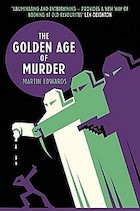
Martin Edwards, The Golden Age of Murder

This book is a sprawling account of the lives of the authors of detective fiction in the 1920s and ’30s, particularly the earliest members of the Detection Club. Martin Edwards is the current Detection Club president, and his enthusiasm for his predecessors — and for Golden Age mysteries in general — is both obvious and contagious. He gives biographical information about authors such as Agatha Christie, Dorothy L. Sayers, and Anthony Berkeley. He also speculates a fair bit about their personal lives and sexual proclivities, with varying amounts of supporting evidence. He discusses several Golden Age novels, though never in very much depth, and is pretty good about avoiding spoilers. I found the book a bit scattered and hard to follow at times; the content doesn’t necessarily correspond to the various chapter headings, and Edwards often bounces among several ideas in the course of a single paragraph. The book also has invisible endnotes, which I found a bit irritating, though that’s just a personal preference. Overall, though, I think this is a good read for fans of Golden Age detective fiction, and it’s certainly put several new-to-me novels and authors on my radar!

Elizabeth Harmon, Pairing Off

American pairs figure skater Carrie Parker is facing career death after her partner gets caught in a cheating scandal. So when a Russian coach invites her to Moscow for a tryout, Carrie seizes the opportunity — but is appalled to discover that her new partner is Anton Belikov, a top Russian skater with whom Carrie had a one-night stand seven years ago. Anton doesn’t seem to remember her, and his gruff demeanor intimidates her. But as they train for the upcoming competition season, they grow closer, until secrets from Carrie’s past threaten their budding relationship. This book appealed to the same part of my brain that enjoys sports movies (even though I don’t follow any sports). I got the impression that Harmon actually has some figure skating knowledge; her descriptions of the routines and workouts feel like more than window dressing. I liked the Moscow setting as well. The romance between Carrie and Anton is fine, though a bit angsty/“it’s destiny!” for my taste. Overall, a decent read that I’d recommend if you like figure skating and/or the ’90s movie The Cutting Edge.

Nancy Campbell Allen, Kiss of the Spindle

Isla Cooper is cursed: Every night, she falls into a deathlike sleep from which she can’t be awakened. To find the witch who cursed her and obtain the cure, she blackmails her way onto Daniel Pickett’s airship, which is headed for the city where the witch is rumored to be. Meanwhile, Daniel is illegally transporting shapeshifters out of England, where they’re facing political persecution. He doesn’t have time to help Isla, especially when another last-minute passenger who wants to exterminate all shapeshifters forces his way on board. Eventually, though, Daniel and Isla decide to work together — and fall in love in the process. This is a fun steampunk romance with nods to Sleeping Beauty, and though there’s nothing extraordinary about it, I really enjoyed it! I liked Daniel and Isla’s progression from grudging toleration to mutual attraction, and I also found more than one secondary character intriguing…I kind of hope they get their own books at some point! In the meantime, I’m happy to be reading this series and looking forward to the next installment!

Mini-Reviews: Dragon, Austen, Venom

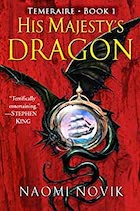
Naomi Novik, His Majesty’s Dragon

When naval captain Will Laurence captures a French ship with a coveted dragon egg aboard, his life is turned upside-down. He bonds with the baby dragon, Temeraire, which means he must give up his naval career to become an aviator — a way of life completely different from what Laurence is used to. But his newfound friendship with Temeraire carries him through, and the two of them will have an important role to play in England’s ongoing war with France. I’ve read several books in this series, but I’d forgotten how much I enjoyed them! The concept (Napoleonic Wars plus dragons) is right up my alley, and I adore both Laurence and Temeraire as characters. I can’t wait to read about their further adventures in subsequent books! 

Lucy Worsley, Jane Austen at Home

This biography is a breezy and entertaining look at Jane Austen’s life through the lens of the homes she lived in. It also explores how the concepts of home and domesticity informed her work. As an enthusiastic Janeite, I enjoyed this book, although if you’ve read other Austen biographies you don’t particularly need to read this one. It appears reasonably well cited; there are numbered endnotes, and Worsley quotes many primary sources. She speculates quite a bit about motives and emotions (as she herself admits in the introduction), and I occasionally found her interpretations farfetched. Overall, though, a good read, especially for those who haven’t read other books on Austen’s life and work.

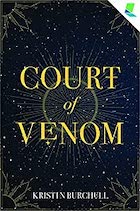
Kristin Burchell, Court of Venom

Badriya never wanted to become the queen’s poisoner, but she has no choice. The malicious Queen Solena will kill her if she refuses, and the city is surrounded by a wasteland full of witches and demons, making it impossible for her to run away. But when a neighboring prince arrives as a potential suitor for the queen, Badriya may finally get the chance to pursue a different life. This novel reads like a standard YA fantasy (though it’s marketed as adult); the heroine is an outsider with special powers who eventually has to fight for justice. It’s entertaining enough, but not particularly unique. I didn’t like how the book kept jumping between past and present; I think it was supposed to generate suspense, but instead it just made the world-building confusing and hard to follow. Overall, while I certainly didn’t hate this book, I wouldn’t particularly recommend it either.

Mini-Reviews: Women, Coconut, Belle

Madeleine St. John, The Women in Black

This novel follows the lives of four women who all work at Goode’s department store in 1950s Sydney, Australia. Patty, in her mid-30s, is married but unhappily childless, and her husband Frank is oblivious to her emotional turmoil. Fay is around 30 and has been going out with men for years, but somehow none of them seem to want to marry her. Lisa, a temporary hire for the Christmas season, dreams of going to university and becoming a poet, but her strict father won’t hear of it. And Magda, a glamorous Slovenian immigrant, is adjusting to a culture very different from her own. I loved this book and devoured it in a single sitting. It’s light and charming and slyly funny, and I became invested in the stories of all four women. I especially loved Magda, who enjoys the finer things in life and is generous in sharing them. There’s a bit of romance, but the main focus is on women’s experiences and relationships. The book reminds me a bit of Miss Pettigrew Lives for a Day, but with a slightly more satirical edge. I expect to revisit it often and would recommend it as a great comfort read!

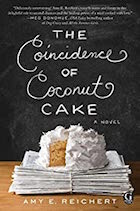
Amy E. Reichert, The Coincidence of Coconut Cake

Milwaukee restaurateur Lou Johnson is having a run of terrible luck. First her fiancé cheats on her; then, that very night, food critic Al Waters samples her cooking — which is subpar because of her distress over the breakup — and writes a scathing review. The day the review comes out, Lou goes to a bar to drown her sorrows and meets Al. They’re attracted to each other and soon strike up a romance. The only problem is, he doesn’t realize she owns the restaurant he panned, and she doesn’t know he’s the hostile reviewer because he writes under a pen name. I’m a sucker for a You’ve Got Mail story, and this is a fun one that made me want to visit Milwaukee and eat some fried cheese curds immediately. I never quite believed in Lou and Al as characters; they seemed like stock types rather than real people to me. But I liked the setting and the overall cheerful, Hallmark-esque vibe of this novel, so I’d consider trying more by this author.

Paula Byrne, Belle: The Slave Daughter and the Lord Chief Justice

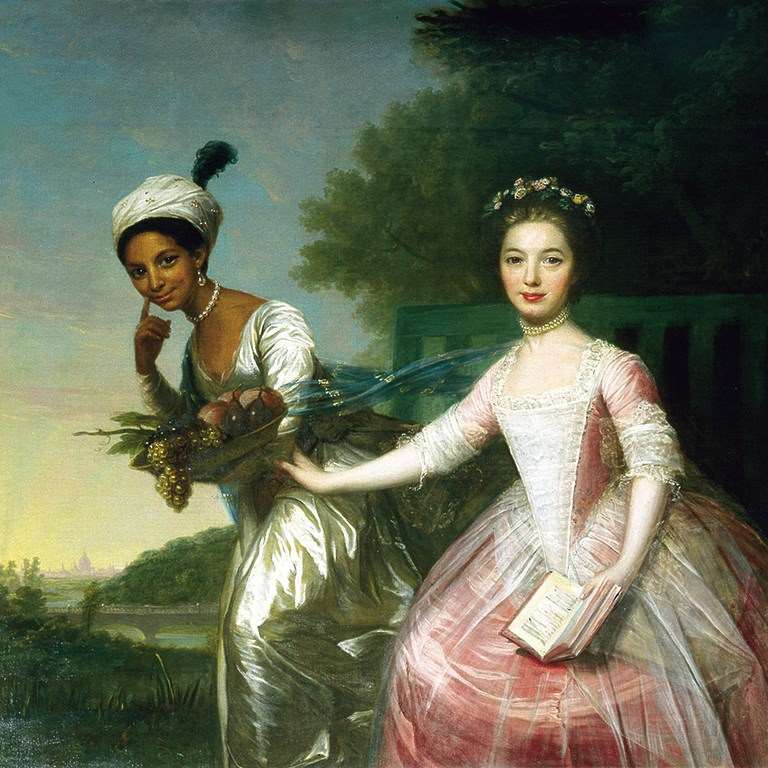
The idea for this book came from an 18th-century English portrait of two young women — one white, one black — who are portrayed as equals, almost as sisters. The black woman was Dido Elizabeth Belle, the illegitimate daughter of an English naval captain and an African slave. She grew up in the house of her great-uncle, the Earl of Mansfield, who happened to be the Lord Chief Justice and who decided several cases that would be crucial to the antislavery movement in Britain. It’s a fascinating story, but unfortunately, there’s very little about Dido in the historical record, and consequently very little in the book! Instead, Byrne focuses on the English slave trade, the status of black individuals in London, the Earl of Mansfield’s legal career, etc. It’s all interesting, but I was hoping for more biography, less history. The book does have numbered endnotes, many of which cite primary sources, yet Byrne also editorializes a fair amount. I’d say it’s more of a popular history than a scholarly one. Overall, I’d recommend it for people who are interested in the period. Apparently there’s also a movie about Dido, called Belle, which I’m interested in watching now.

Here is the portrait of Dido and her cousin, Elizabeth Murray:

Review: Spinster

SpinsterKate Bolick, Spinster: Making a Life of One’s Own

In this book that’s part literary biography, part memoir, journalist Kate Bolick engages with the notion of “spinsterhood” and claims that, rather than being used pejoratively, it should be seen as a term of female autonomy and empowerment. She notes that contemporary society is full of single women (whether never-married, widowed, or divorced), but “spinsterhood” is still largely viewed as an aberration. In other words, as she states in the first sentence of Chapter 1, “Whom to marry, and when it will happen — these two questions define every woman’s existence…” Bolick talks about her own life as a 40-something, never-married woman and how she was inspired to find her own path by the lives of five literary women: Maeve Brennan, Neith Boyce, Edna St. Vincent Millay, Charlotte Perkins Gilman, and Edith Wharton. She weaves the biographies of these women into her own autobiography as she explores what it means to be a spinster and concludes that it can actually be a good thing.

This book was an odd read for me; some parts of it were very interesting and thought-provoking, while others made me roll my eyes in annoyance. I think its main problem is that it’s trying to be too many different genres; I was hoping for more of a cultural study and often found Bolick’s personal reminiscences tiresome. I also struggled with her definition of spinsterhood. To me, a spinster would be a woman who remains unmarried and uncoupled throughout her life. But Bolick’s literary inspirations, all of whom she styles as “spinsters,” mostly did get married eventually. Some of the marriages were tempestuous, and some of them ended in divorce, but these women did not live their entire lives uncoupled. Bolick herself, though technically never married, talks at length about her previous and current relationships, and she has even cohabited with some of her romantic partners. So I feel like she’s not really writing from the perspective of a spinster, but rather as a woman who is in a long-term, committed relationship — married in all but name. That said, the little biographies of the five “spinsters” who inspired Bolick were interesting, and I’d like to learn more about these writers and/or read some of their works. But overall, this book disappointed me; it just wasn’t what I expected.

Review: Life of Johnson

Life of JohnsonJames Boswell, Life of Johnson

James Boswell and Samuel Johnson were unlikely friends: Boswell was a young Scottish nobleman with a penchant for drinking and whoring, while Johnson was poorer, much more devout (in theory, at least), and a good 30 years older. Yet throughout the course of this monumental work, Boswell describes his reverence for Johnson’s intelligence, morality, and literary talents — a reverence so extreme that Boswell took notes on almost every conversation he ever had with the older man. As a result, this biography is stuffed full of Boswell’s personal anecdotes, letters both to and from Johnson, and first-person accounts of other contemporaries who knew him. Near the end of the book, Boswell states: “The character of Samuel Johnson has, I trust, been so developed in the course of this work, that they who have honoured it with a perusal, may be considered as well acquainted with him.” And indeed, anyone who reads this book will come away with an extremely vivid picture of a remarkable man.

This book is so huge and deals with so many things that I don’t quite know what to say about it. At first I was very intimidated, both by its length and by Boswell’s flowery 18th-century prose. But even though it’s not a quick read, this book contains a wealth of fascinating details about Johnson and the age in which he lived. I was struck by how literary the 18th century was, in the sense that seemingly anyone with a claim to intelligence was churning out books and pamphlets. In that way, Johnson’s time is very similar to our own, where everybody can (and does) publish blogs, tweets, and other forms of instantaneous literature. I was also fascinated by Johnson’s unique character; though intelligent, he was often pompous, narrow-minded, and abrasive. I frequently found myself underlining various Johnsonian sayings that were wise, or funny, or both — but I would have hated to be forced to converse with him! Overall, I would recommend this book to anyone interested in the time period or who enjoys very thorough biographies!

Review: Luckiest Man

Luckiest ManJonathan Eig, Luckiest Man: The Life and Death of Lou Gehrig

This well-researched biography of Lou Gehrig follows his life and baseball career in vivid detail, from his humble beginnings playing high school ball to his stellar performance as first baseman and power hitter for the New York Yankees. Along the way, Eig discusses some of the broader social developments in America in the 1920s and ’30s, but the focus remains on baseball and how it evolved throughout the early 20th century. The book uses a wealth of primary sources, particularly the many newspaper stories that covered Gehrig’s remarkable career. Most importantly, though, this biography illuminates Gehrig’s personality — humble, modest, conscientious, hardworking, and determined to do his best in life both on and off the field.

I don’t particularly follow baseball (or any other sport, frankly), but for some reason I’ve always been interested in Lou Gehrig — probably because he was left-handed, like me, and because he died tragically young. So I decided to check out this biography, and I’m glad I did because it is fantastic. I felt like I really got a sense of Lou Gehrig as a person, and it was a pleasure to read about someone so admirable. I also loved learning more about the other legendary players of that era: Babe Ruth figures prominently in the book, and there are plentiful references to other greats like Ty Cobb and Joe DiMaggio. Eig discusses Gehrig’s baseball career in great detail, sometimes describing almost every play of a game. I suppose this might be boring for some, but I really appreciated all the information since I knew basically nothing coming in. Overall, I would highly recommend this book to anyone, although it will probably be most appealing to baseball fans.