Mini-Reviews: Dance, Babel, Thief

Lois McMaster Bujold, Mira’s Last Dance

Penric’s rescue mission continues in this novella, as he flees to safety with political target General Arisaydia and his widowed sister Nikys. They need to leave the country without being discovered, which means they must travel in disguise. When their journey leads them to shelter in a brothel, Penric poses as a female courtesan, drawing on the experience of Mira, one of Desdemona’s previous riders. But this masquerade is dangerous in more ways than one, as it complicates the mutual attraction between Penric and Nikys. This series continues to be enjoyable, though this installment is very short on plot. Penric’s gender-bending disguise is the main event, and it causes Nikys to reflect more deeply on the relationship between Penric and Desdemona, and what that might mean for a possible romance. The novella ends on an ambiguous note, so I’m interested to see what happens next!

R.F. Kuang, Babel

Robin Swift is a half-Chinese boy plucked from the slums of Canton and raised to study at Oxford’s prestigious Babel Institute of Translation. Babel scholars are trained to work silver magic via their powers of translation—and this magic in turn powers the might of the British Empire. When Robin first comes to Oxford, he falls in love with the university and the people in his cohort, who are all outsiders like him because of race, gender, or both. But the more he learns about silver magic and its ties to imperialism, the more conflicted he becomes. This is a novel I really wanted to like, and I did enjoy parts of it, like the Oxford setting and all the information about linguistics. But this is a novel with a clear message (imperialism is bad and must be resisted with violence), and I felt like I was reading a polemic rather than a story. The characters we’re supposed to like are not very likable or nuanced, and the villains are absolutely pure evil. So overall, I found this book disappointing, though I think I’m in the minority with that opinion.

Ellis Peters, The Holy Thief

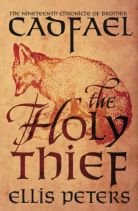
In the penultimate book of the Cadfael series, the civil war between King Stephen and Empress Maud has led to the destruction of a Benedictine abbey in Ramsey. Some of its brothers come to Brother Cadfael’s abbey in Shrewsbury to request their aid. Meanwhile, a troubadour from the South of France and his entourage, which includes a beautiful young woman, are also staying at the abbey. When a saint’s relics are stolen and a witness to the theft is murdered, Cadfael must once again investigate these mysteries and determine how justice can best be served. It’s always a pleasure to escape into the world of these novels, and I liked that after taking a backseat in The Summer of the Danes, Cadfael is back at the center of the action, finding clues, interviewing suspects, and talking things over with Hugh. I also liked the callbacks to A Morbid Taste for Bones, although if you don’t remember certain events from that book, you may have a little trouble following this one. But if you love the Cadfael series, this novel won’t disappoint.
Mini-Review: Bridge, Hazard, Stardust

Barry Hughart, Bridge of Birds

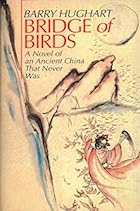
Number Ten Ox is a peasant living in the Chinese village of Ku-fu. When all the village children suddenly contract a mysterious illness, Ox must find a wise man to discover the cause of the sickness and its cure. He finds Master Li, a very old man with “a slight flaw in his character,” and the two of them travel throughout China seeking the Great Root of Power that will supposedly cure the sickness. Along the way, they have a series of adventures involving thievery, beautiful women, murderous dictators, divine entities, and the occasional ghost. This is a fun picaresque novel full of improbable stories and sly jokes. Master Li and Number Ten Ox are the only characters with any depth, but I enjoyed them both immensely, and I also liked how some of the secondary characters kept reentering the narrative. I’m glad I finally got around to reading this one; it isn’t particularly deep or life-changing, but it’s certainly an entertaining read!

Stella Riley, Hazard

Aristide isn’t interested in love or marriage; right now he’s more focused on running the high-class gaming hall he co-owns. Meanwhile, Genevieve is a recent widow who’s desperate to marry again and escape the clutches of her overbearing brothers. Seizing upon a slight prior acquaintance with Aristide, Genevieve makes a shocking proposal, and Aristide is surprised by how tempted he is to accept. Meanwhile, the long-brewing romance between Aristide’s sister, Madeleine, and Nicholas, the duke of Rockliffe’s brother, finally comes to a head. I liked this book a lot, though I found Aristide’s story much more interesting than Madeleine’s. He’s learned to hide his true feelings under an iron mask of self-control, and it’s lovely to watch his growing affection for Genevieve transform him. Genevieve is also a deeply sympathetic character, though I felt she healed awfully quickly from her traumatic past, which includes an abusive husband as well as the aforementioned brothers. Overall, though, a great read in a great series!

Neil Gaiman, Stardust

The village of Wall has long stood at the border of Faerie, but none of the villagers has dared to cross that boundary — until 17-year-old Tristran Thorn vows to bring back a fallen star to impress the prettiest girl in the village. He didn’t count on the fact that the fallen star is actually a young woman, Yvaine; further, he’s not the only person seeking her. Also on the star’s track are the sons of Stormhold, who want a magical token she possesses, and a witch who needs the star’s heart to restore her youth. This novel is very atmospheric and brilliantly conjures up both the beauty and danger of Faerie. Tristran is a likable everyman hero, not too brave and not too clever. The book’s pacing is a bit off, for me — a ton of time is spent setting up the world, and I don’t think Tristran even gets to Faerie until about halfway through. Then he and Yvaine have some adventures that are briefly mentioned in a throwaway sentence or two, but I would have loved to learn more about them! If you’re looking for a book that gives gothic fairytale vibes, this is an excellent choice, but if you prefer a snappier plot in your fantasy novels, I’d look elsewhere.

Mini-Reviews: Throne, Beloved, Marion

Naomi Novik, Throne of Jade

Former naval captain Will Laurence and dragon Temeraire are now fast friends and inseparable companions. But because Temeraire is an extremely rare and valuable Chinese dragon, China is demanding him back. So Laurence and Temeraire are forced to travel to the imperial court to placate the emperor and prevent the Chinese from allying with France. This book is a worthy continuation of His Majesty’s Dragon, fleshing out the global political situation and contrasting English and Chinese treatment of dragons. I enjoyed watching Temeraire mature a bit and start to question the English way of doing things. Looking forward to book 3!

Mary Balogh, Only Beloved

George, the Duke of Stanbrook, has helped the other six Survivors to heal from their war wounds and find true love. But he has never truly coped with his own pain and loss: his son died in the Napoleonic Wars, and his wife took her own life soon afterward. Now George is lonely and decides to remarry, but his chosen wife is determined to help him finally confront and heal from his tragic past. This isn’t one of my favorite installments of the Survivors’ Club series, but I still enjoyed it. I like Balogh’s style, and it’s refreshing to see historical romance protagonists in their 30s and 40s. The book takes an oddly melodramatic turn toward the end, and the last few chapters are a bit cloying, with all the blissfully married Survivors and their babies. But it’s still worth a read, especially if you’ve enjoyed the rest of the series.

T.A. Willberg, Marion Lane and the Midnight Murder

Marion Lane is an apprentice at a mysterious private detective agency that operates beneath the streets of London. When one of her colleagues is murdered and her mentor is accused of the crime, Marion decides to investigate. But she uncovers some troubling secrets about the agency’s history and isn’t sure whom she can trust. I really liked the world of this novel (shadowy secret society + crime fighting + cool steampunk gadgets!), but I wish it had been more developed. The novel is almost entirely focused on plot, to the detriment of character development and world building. I also found myself oddly sympathetic to the villain! I’m interested enough to read book 2 in the series, but I hope the setting and characters will be more fleshed out.

Review: Balzac and the Little Chinese Seamstress

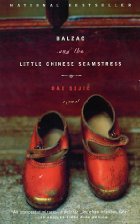
Balzac and the Little Chinese SeamstressDai Sijie, Balzac and the Little Chinese Seamstress (trans. Ina Rilke)

This slight novel tells the story of two young Chinese men who are sent to a remote mountain village to be “re-educated” during the cultural revolution of the 1970s. Both youths are talented individuals; the unnamed narrator plays the violin, and his best friend Luo is a master storyteller. Despite these gifts, however, they soon feel oppressed by the overwhelming boredom of their new lives, where they are forced to perform manual labor from dawn to dusk. But two unexpected events soon occur, changing the course of their lives forever: they discover a hidden cache of Western classics translated into Chinese, and they meet a beautiful young seamstress who steals both their hearts.

This is a very short book, and it honestly felt more like a tableau than a novel to me. The setting is described vividly with meticulous prose, but nothing much happens. I think I was expecting the book to be more overtly political, since the author was himself “re-educated” during this time period and ended up leaving China for France. But while the cultural revolution certainly isn’t praised, the boys’ lives aren’t portrayed in a particularly negative light either. Also, their exposure to Western culture isn’t always a good thing; in fact, their relationship with the seamstress is irrevocably altered by her exposure to European literature. So I was very interested by the ambiguities in the novel, but the plot and characters didn’t particularly grip me. I’d like to read another novel (or nonfiction work) about this time period, which seems like it would be rich in dramatic material.

Review: The Girl Who Played Go

Shan Sa, The Girl Who Played Go (trans. Adriana Hunter)

This novel is set in a place and time that I have very little knowledge of, Manchuria in the 1930s. The two narrators are a Chinese schoolgirl whose passion for the game of go makes her unique and a Japanese soldier who has come to China with Japan’s invading army. The soldier muses on the nature of war and his victorious country’s relationship with the conquered Chinese. The girl, on the other hand, is more concerned with her widening romantic experience and the problems of daily life. But when the two characters meet over a game of go, the consequences will be far-reaching and devastating for them both.

What I liked most about this book is that it opened a window for me into another culture and way of life. I mistakenly thought the book would be more about Japan’s military movements in World War II, but instead it deals with an earlier conflict that I knew nothing about. But while the setting was unique, the problems the soldier faces in this book are universal: What is courage? What are the possible justifications, if any, for waging war? What are the circumstances under which a soldier can or should disobey orders? I found the soldier a more compelling character overall than the Chinese girl. She’s very shallow and frivolous for much of the novel, and while she does eventually change, it happened too late for me to care much about her. I also didn’t feel the emotional impact of the ending the way I think I was supposed to. Overall, I enjoyed this novel, but I wouldn’t race to pick up another book by this author.