Mini-Reviews: Hugo, Clouds, Slender

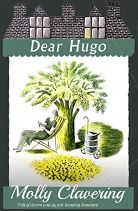
Molly Clavering, Dear Hugo

It’s 1951, and 40-year-old Sara Monteith has just moved to the Scottish village of Ravenskirk, the hometown of her fiancé, Ivo, who was killed in World War II. Sara writes to Ivo’s brother, Hugo, about her experiences in the village: taking tea with the local gossips, making friends (and frenemies), gardening, and exploring the beautiful landscape. She also becomes the guardian of her cousin’s child, 13-year-old Atty, and reflects on the highs and lows of parenting a teenage boy. Several romances blossom around her, some of which she helps along, but ultimately Sara’s story is one of contentment in this new season of her life. This is a pleasant, peaceful read with a bit of light humor and some very sweet moments, especially between Sara and Atty. There’s absolutely no plot to speak of, and I was disappointed that Sara didn’t get her own romance, but I liked this one overall and think it will please anyone who enjoys this type of book.

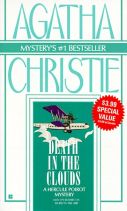
Agatha Christie, Death in the Clouds

In this 1935 mystery, a woman is murdered on an airplane in the middle of a cross-Channel flight—and Hercule Poirot unfortunately sleeps through the whole thing! The victim was killed with a blow-dart coated in an obscure poison, but how could anyone have shot the dart without being observed? Poirot collaborates with the English and French police—as well as some of the passengers on the fatal flight—to learn more about the dead woman and discover who had a motive to kill her. He also finds a vital clue in the passengers’ luggage that reveals how the murder occurred. I enjoy this Christie novel and have read it a few times. I think the solution to the mystery is really clever, especially Poirot’s reconstruction of how the crime must have occurred. There’s a fair bit of humor—I love the detective novelist, Mr. Clancy—and multiple romantic subplots. Recommended if you’re in the mood for a fun Golden Age romp!

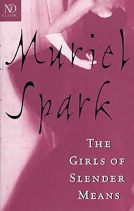
Muriel Spark, The Girls of Slender Means

This slender book (see what I did there?) is set in a boardinghouse called the May of Teck Club, inhabited by women eking out a living in postwar London. The girls pursue various jobs and love affairs, sharing jokes and a single glamorous evening gown, until a tragedy radically alters their lives. This is a very odd novel; aside from the aforementioned tragedy at the end, hardly anything actually happens. I’m also not quite sure how the author intends us to feel about some of the characters — she seems to mock them all pretty indiscriminately. That said, the book is absolutely hilarious, and I loved the frequent satire of the publishing industry:

She had put aside Nicholas’s manuscript for the time being, as it was a sticky proposition; she had not yet, in fact, grasped the theme of the book, as was necessary before deciding on a significant passage to cast doubt upon, although she had already thought of the comment she would recommend George to make: “Don’t you think this part is a bit derivative?” Jane had thought of it in a brain-wave.

Overall, highly recommended for the writing style and setting, but not if you need a plot and/or likable characters.
Mini-Reviews: Shaman, Feast, Earl

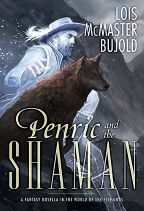
Lois McMaster Bujold, Penric and the Shaman

Four years after making the acquaintance of the demon Desdemona, sorcerer Penric has become a divine in the Bastard’s order. In that capacity, he is asked to participate in the hunt for a runaway shaman who’s responsible for the death of a young nobleman. His partner, the in-world equivalent of a police officer, distrusts all sorcerers and isn’t impressed by Pen’s youth and affability. But as they work together, they come to understand one another better—and realize that the shaman also isn’t quite what he seems. This novella has a lot of world-building that I found a bit hard to follow, even though I’ve read The Hallowed Hunt, which introduced the concept of shamans in this world. There’s also not much conflict; all the major players are well-intentioned and willing to collaborate to solve their problems. But I did enjoy the story and liked seeing Pen impress those who initially underestimated him. I’m excited to continue this series!

Ernest Hemingway, A Moveable Feast

I just got back from my first trip to Paris and thought this would be the perfect book to read while I was there! It’s Hemingway’s fictionalized account of his life in Paris in the 1920s with his first wife, Hadley. He talks about his favorite cafés, his writing process, his affinity for gambling and skiing, and his many friends and acquaintances in the Parisian literary world, such as Gertrude Stein and F. Scott Fitzgerald. I wouldn’t say I’m a huge Hemingway fan, but I do admire his writing style, and there are plenty of wonderfully evocative turns of phrase in this book. I think it’s a bit uneven—which is fair, as it was incomplete when he died and published posthumously—and I’m not sure I’ll ever want to reread it. I think it’s a bit too inside-baseball unless you’re intimately familiar with Hemingway and all the people he describes. Still, it’s reminded me that I would like to read more of Hemingway’s fiction.

Caroline Linden, An Earl Like You

Hugh Deveraux has just inherited an earldom, and with it a mountain of debt that his father had kept secret. With a widowed mother and two sisters to support, he needs money fast. He tries to recover his fortunes at the gaming tables, where he receives an unusual proposal: Rich merchant Edward Cross wants his daughter, Eliza, to marry an aristocrat. If Hugh is willing to be the bridegroom, Cross will pay all his debts and give Eliza a hefty dowry. Hugh is reluctant at first, but when he meets the warm and down-to-earth Eliza, he decides to go through with the marriage. But what will happen when Eliza discovers that her handsome suitor is only after her money? I quite enjoyed this variation on the marriage-of-convenience plot, where only one partner knows it’s a marriage of convenience. Hugh’s deception is appalling, especially because the kind and trusting Eliza thinks it’s a love match, and the book treats this conflict with the gravity it deserves while still making Hugh a likable and redeemable character. I liked this one and may try more from the author.

Mini-Reviews: Serfdom, Benevolent, Wicked

F.A. Hayek, The Road to Serfdom

F.A. Hayek was an Austrian economist who moved to England in the 1930s and subsequently taught in both the UK and US. He won the Nobel prize in economics in 1974. In this essay, written during World War II and first published in 1944, he argues that Nazi fascism was not a reaction against socialism but rather a natural progression of socialist ideas. In Hayek’s view, socialism (by which he seems to mean a centrally planned economy) is bad economics because competition, not central planning, is what allows new ideas and wealth-creating innovations to flourish. But it’s also bad politics because under a socialist system, individual freedom will disappear; all power will reside in the hands of the central planners/the state. I broadly agree with Hayek’s ideas here, so my opinion is biased. But I think this essay is worth reading for anyone who is interested in a “liberal” (as opposed to socialist) view of economics or in the history of socialist thought. Hayek doesn’t straw-man his opponents, and his arguments are thoughtful and measured. Maybe I’ll tackle one of his full-length books at some point!

Alison Goodman, The Benevolent Society of Ill-Mannered Ladies

Lady Augusta “Gus” Colbrook and her sister, Lady Julia, are unmarried women in their 40s and thus are basically invisible in society. Instead of dwindling into spinsterish obscurity, they decide to help vulnerable women who are being abused by the men in their lives. Aiding them in their quest is the handsome Lord Evan Belford, whose checkered past doesn’t deter Gus from a more-than-friendly interest. This novel is hard to categorize; it’s not exactly a romance or a mystery, though it has elements of both. But the book mainly depicts the negative aspects of Regency society, particularly the limits placed on women, and offers a sort of revenge fantasy in which the women take charge and triumph over all wrongdoers. For some readers, this will be exactly their cup of tea, but for me, it was too anachronistic and felt a bit preachy. I didn’t dislike the book, though! Goodman is a good writer, the plot adventures are fun, and Gus is (usually) a sympathetic character. I believe a sequel is planned, and I’ll likely read it when it comes out.

Stella Riley, The Wicked Cousin

After a too-strict upbringing, Sebastian Audley has spent the past several years behaving as outrageously as possible, first in England and then abroad. Now his scandalous ways are beginning to pall, and he hopes to return to England and lead a quieter life, but his reputation makes that difficult. Meanwhile, Cassandra Delahaye is determined not to be impressed by the rakish Sebastian, but she soon finds herself attracted to his good looks and roguish sense of humor. I’m officially a huge fan of this series and enjoyed this installment as well, but it felt a little too long. The main obstacle to the romance is Sebastian’s obsessed ex-lover, which means there’s a lot of plot to slog through even after Sebastian and Cassie fall in love. (I find that Stella Riley uses the “evil ex” trope pretty often, which I’m not fond of.) I still liked the book a lot, though, and it was nice to catch up with the various recurring characters. Looking forward to the next one!

Mini-Reviews: Safe, Hero, Willoughby

Ashley Weaver, Playing It Safe

As bombs fall on London in the autumn of 1940, Ellie McDonnell is summoned to the port city of Sunderland by her handler, Major Ramsey. She doesn’t know the details of her mission, but things get complicated fast when a man dies right in front of her the day she arrives. She and Ramsey both suspect the man has been murdered, possibly because of shady spy activities. As Ellie befriends the dead man’s social circle, she uncovers many secrets and endangers her life in the process. I’m continuing to enjoy this series, mainly for the likable main characters and WW2 setting. I wasn’t as compelled by the mystery — the murderer’s identity seems to come out of nowhere — but there are some good suspenseful scenes. I also liked the developments in Ellie’s relationship with Ramsey. This book just came out, but I’m already impatient for the next one!

Robin McKinley, The Hero and the Crown

Aerin has always felt like an outsider who doesn’t belong. She’s the daughter of the king’s second wife, a reputed witch who supposedly died of disappointment that Aerin wasn’t a boy. She doesn’t have the magical Gift that’s shared by all people of royal blood. Most of her cousins despise her, and she’d rather ride her father’s old warhorse or practice swordplay than be a courtier. But when dragons and demon-magic from the North threaten her kingdom, Aerin discovers she has a crucial role to play. This is a book of my heart; I loved it as a child and am delighted to discover it’s just as good as I remember. Aerin is surprisingly relatable for someone who slays dragons, and Robin McKinley’s writing is pure magic. I’m really happy I revisited this one!

Claudia Gray, The Late Mrs. Willoughby

***Warning: SPOILERS for Sense and Sensibility***

Jonathan Darcy has been invited to Allenham, the estate his old schoolmate John Willoughby has just inherited. Willoughby was a bully during their school days, so Jonathan isn’t particularly excited about the visit — until he meets Juliet Tilney again, who’s staying nearby with her friend Marianne Brandon. He and Juliet are both eager to renew their acquaintance, but things take a dark turn when Willoughby’s wife is murdered. Could Willoughby or Marianne be the culprit? I don’t usually love Austen pastiches, but so far this series has impressed me with its fidelity to Austen’s characters even as it places them within a murder mystery. I was able to identify the murderer pretty early on, but I still enjoyed the plot, and I liked the development of Jonathan and Juliet’s relationship. To get the most out of this book, you definitely have to be familiar with both The Murder of Mr. Wickham and Sense and Sensibility, but if you liked book #1 of the series, you’ll enjoy this one too.

Mini-Reviews: Jenny, Alliance, Birdy

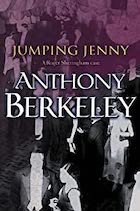
Anthony Berkeley, Jumping Jenny

A disagreeable woman dies at a house party, apparently by suicide, but amateur detective Roger Sheringham discovers proof that she was murdered. Yet Roger — along with all the other party guests — believes that she deserved to be murdered, so while his curiosity prompts him to search for the truth, he also works to shield the killer from the police. This novel has an interesting structure, in that you think you know what’s going on by the end of chapter 4, but there are several more twists and turns to the plot. Berkeley is a good writer but cruel to his characters, and I didn’t find a single one of them likable. I thought everyone’s attitude toward the dead woman was pretty horrifying. Yes, she was obnoxious, but everyone hated her so much that I found myself pitying her! All in all, this novel was very clever but a little too mean-spirited for me.

Lois McMaster Bujold, Captain Vorpatril’s Alliance

Ivan Vorpatril likes to keep his head down and stay as far away from politics as he can. But he gets dragged into a sticky situation when an ImpSec operative asks him to protect a mysterious woman, Tej, and her blue-skinned companion from unknown enemies. Ivan is willing to help, but complications ensue when an emergency forces him to offer Tej the protection of marriage. Ivan is one of my favorite characters in this series, so I was excited to read his book, and fortunately it delivered everything I wanted! More than once I found myself chuckling and affectionately murmuring “Oh, Ivan” (not an exaggeration, I literally did this!). A large chunk of the book is a cozy reunion with beloved series characters; Byerly Vorrutyer makes a welcome return; there’s a lovely exploration of Simon Illyan’s relationship with Ivan; plus a treasure hunt, multiple romances, and a few thrilling heroics. In short, I adored this book, and it’s definitely my favorite of the Vorkosigan saga!

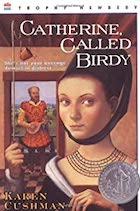
Karen Cushman, Catherine, Called Birdy

Catherine is a 13-year-old girl growing up in the Middle Ages, but she’s not particularly interested in becoming the lady of the manor. She loathes spinning and embroidery, her best friend is Perkin the goat boy, and she’d rather join a circus or go on crusade than get married. But when her father finds her an old, ugly, rude — but rich — suitor, Catherine doesn’t know how to escape her fate. This was one of my favorite books as a child, and I decided to reread it because there’s a new Amazon Prime adaptation coming out today. I was delighted to find that the book really holds up! Catherine’s voice is a joy as she describes her unique thoughts and the various scrapes she gets into. The depiction of life in the Middle Ages is also vivid and compelling. I’m glad I read this book again and discovered that it really is as good as I remembered!

Review: Doctor Thorne

Doctor ThorneAnthony Trollope, Doctor Thorne

The Greshams of Greshamsbury have long been one of the most important and well-respected families in their county, but the present squire’s mismanagement of the estate has forced him to sell part of the land and borrow heavily against the rest. As a result, the Greshams are in serious financial difficulties, and the only way to overcome them (in their eyes) is for the young Greshams to marry money. This duty is especially important for Frank Gresham, the oldest son and heir to the estate. Unfortunately, Frank has already fallen in love with Mary Thorne, the niece of the village doctor. Mary has no fortune, and the circumstances of her birth are unknown to all but Doctor Thorne; she may not even be his legitimate niece. So the Gresham family — especially Frank’s mother, Lady Arabella — is determined to discourage the match and find Frank a rich wife. But when a surprising turn of events makes Mary the possible heir to a large fortune, Doctor Thorne must decide how much he can legitimately reveal, knowing that Mary’s happiness may depend on whether or not she gets the inheritance.

I’ve only read a couple of books by Anthony Trollope, but I really enjoy his writing style. He’s like Dickens but funnier, and the prose style is one of the most enjoyable elements of this novel. There’s some wonderful satire of the upper classes, as represented by the de Courcys (Lady Arabella’s relatives) and the Duke of Omnium, who can’t be bothered to talk to the guests at his own dinner party. I also learned a fair amount about parliamentary elections in the 19th century, and it seems that in some ways, not much has changed! Further, I found the book interesting in its treatment of money versus breeding. The Greshams are proud of their status as landed gentry and look down on those who are “in trade,” but they’re also willing to compromise their principles if the tradesmen are wealthy enough. I suspect that their attitude reflects a broader cultural shift. As for the characters, Frank and Mary are fairly two-dimensional, but Doctor Thorne is more complex and interesting. The plot is well constructed, but everything that happens is telegraphed ahead of time and therefore predictable. I liked the book, but I’d recommend it more for the style and the social insights than for the story. I would also recommend the Julian Fellowes adaptation, which is currently free to stream on Amazon Prime!

Mini-reviews: Sleep, Magpie, Bookshop

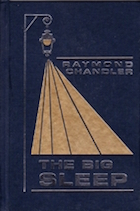
Big SleepRaymond Chandler, The Big Sleep

I haven’t read widely in the hardboiled mystery genre, but I don’t tend to love dark books, so I was a bit apprehensive about trying this one. But I actually really enjoyed the voice of this book — it’s funny and descriptive and uses startlingly apt metaphors. The plot is exciting and twisty, highlighting the governmental and societal corruption of 1930s Los Angeles in a grim yet matter-of-fact way. Philip Marlowe is a flawed protagonist, to say the least, and the book’s portrayal of women is ugly, albeit true to its time. But all in all, I’m interested to read more of Raymond Chandler in the future.

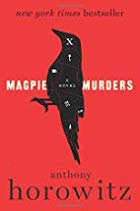
Magpie MurdersAnthony Horowitz, Magpie Murders

This book has gotten a lot of good buzz, including a lot of comparisons to Agatha Christie, so I was excited to read it. Ultimately, though, I have mixed feelings about it. There are two mysteries for the price of one. First, an editor is reading the manuscript of famous mystery writer Alan Conway’s latest novel, but the last chapters are missing. What happened to them, and where is Conway now? Second, of course, there’s the mystery within Conway’s novel, which involves two deaths that may or may not be related. I was much more interested in the second mystery than the first; I found the editor tiresome, Conway odious, and none of the other characters in that story memorable. But I did think the solution to the second mystery (within Conway’s novel) was pretty ingenious. Basically, I enjoyed the puzzle but could have done without all the meta stuff.

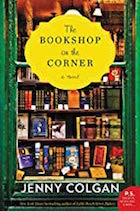
Bookshop on the CornerJenny Colgan, The Bookshop on the Corner

I’m now officially a fan of Jenny Colgan. This book is pure wish-fulfillment fantasy, but it’s also well-written and charming — the perfect read if you’re looking for something light and uplifting. When main character Nina gets laid off from her job, she decides to follow her dream of opening a mobile bookstore. I think a lot of us bookish folks can relate! Nina also, naturally, finds herself torn between two suitors…I wanted to roll my eyes at the saccharine predictability of it all, but the romance actually did work for me, so I won’t complain too much! A lovely comfort read, and I’ll continue to seek out more books by Jenny Colgan.

Mini-Reviews: The 13 Clocks; Chalice

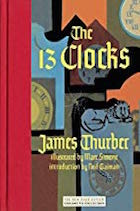
13 ClocksJames Thurber, The 13 Clocks (illustrated by Marc Simont)

This odd little book is like nothing I’ve ever read. A sort of fable or fairytale for adults, it’s the story of a wicked duke who is keeping captive the beautiful Princess Saralinda, and of the noble prince who must complete an impossible task in order to rescue her. Good ultimately triumphs over evil, yet the overall mood is creepy and melancholy. Neil Gaiman was the perfect choice to write the short introduction, because his writing gives me a similar (though even darker) vibe. I would definitely recommend this to anyone, and I think it will be even more interesting on a reread.

***

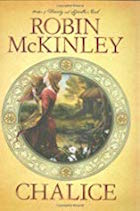
ChaliceRobin McKinley, Chalice

Robin McKinley is an author onto whom I imprinted sometime in my late elementary or middle school years. Novels such as The Blue Sword, Beauty, and The Outlaws of Sherwood were my introduction to the fantasy genre, and they remain some of my all-time favorite books. Chalice was written several years later, and while I still bought and read it immediately, I remember not loving it as much as McKinley’s other books. Because of my memory of that disappointment, I’d never reread it until now, but I appreciated it more this time around. I loved the protagonist, Mirasol, and her stubborn attempts to do her duty in an unusual situation. It was a pleasure to sink into the lush descriptions and slow unfolding of the story. It is a very slow-moving book, which might put off some people; but if you like McKinley’s style of writing, you’ll like this one.

Review: The Glimpses of the Moon

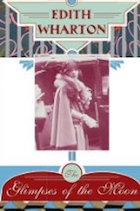
glimpses-of-the-moon-theEdith Wharton, The Glimpses of the Moon

In the glittering whirl of 1920s New York society, Nick Lansing and Susy Branch are intelligent but impoverished: they survive by living off the generosity of their richer friends. They fall in love with each other and decide to marry, but they agree that if either of them gets a chance to make a better financial match, they’ll divorce amicably. At first the marriage is very successful, and Nick and Susy are able to live off their friends’ extravagant wedding gifts. But when one of their friends lets them stay at her Italian villa during the honeymoon, they soon discover that she requires an ethically dubious favor in return. This favor drives a wedge between Nick and Susy — a wedge that widens even further when a titled Englishman and a rich heiress present themselves as alternative romantic options. In the end, will love or money prevail?

I don’t have much to say about this book except that I really loved it! Wharton’s prose is flawlessly precise, and she has an immense talent for evoking a character’s complete emotional state with a few subtle, well-chosen words. I actually found this book a bit stressful to read at times, because I cared about Nick and Susy so much, and I really wanted their marriage to work out despite the obstacles in their way. I liked the fact that no one is really a villain in the book, not even the wealthier romantic possibilities who are hoping that the marriage will break up. That said, Wharton does include some wonderfully biting satire about the upper classes and the frivolity and emptiness of their lifestyle. I’d recommend this book to anyone, especially those who love comedies of manners and the classics.

Mini-Reviews #9: Readathon reviews

With this batch of mini-reviews, I’m once again caught up with my backlog. I read three of the four books during the October 24-hour readathon, hence the title of this post. 🙂

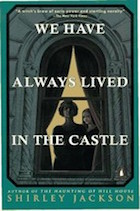
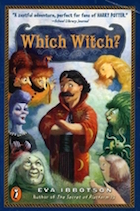
we-have-always-lived-in-the-castlewhich-witch

Shirley Jackson, We Have Always Lived in the Castle — Merricat Blackwood, her sister Constance, and her Uncle Julian are the last remnant of a once-prominent family. They live in a decrepit, isolated old house, and they don’t associate with any of the people in the nearby town. The novel’s sinister atmosphere is augmented by the suspicion that seven years ago, Constance deliberately poisoned the rest of her family. I’m no fan of horror, but I found this to be a very well-written, creepy but not too scary book. I may even read some more Shirley Jackson in the future.

Eva Ibbotson, Which Witch? — I’ve been a fan of Ibbotson’s YA/adult novels for years now, but this was my first experience reading one of her books for children. It was just as delightful as I expected it to be, telling the story of a dark wizard who holds a competition to determine which witch will be his bride. Beautiful and kind Belladonna would love to be the winner, but her magic is inescapably good. How will she convince Arriman the Awful that she’s his perfect match?

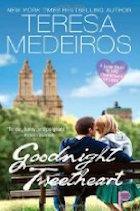
goodnight-tweetheartcrooked-kingdom

Teresa Medeiros, Goodnight Tweetheart — The plot of this romance novel is essentially “Boy meets girl on Twitter.” As such, the book is inescapably dated, but I must admit I enjoyed it anyway! It had some good banter and some sweet moments…overall, a pleasant escapist read. It’s not a new favorite or anything, but it’s definitely a fun way to spend an evening (or, in my case, the middle of the night!).

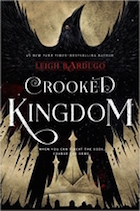
Leigh Bardugo, Crooked Kingdom — If you loved Six of Crows, which I didCrooked Kingdom will not disappoint! The twists and turns of the plot kept me hooked, and I loved the fact that Kaz was always one step ahead of his enemies. And as with the previous book, I was completely invested in these characters and rooting for them all to achieve their goals. I especially liked that this book gave more attention to Jesper and Wylan, the two characters who were least fleshed out in Six of Crows. There was also a very welcome appearance by Nikolai, my favorite character in the Grisha trilogy, which leads me to believe that Bardugo isn’t done with this world yet!