Review: War and Peace

War and PeaceLeo Tolstoy, War and Peace (trans. Anthony Briggs)

“Set against the sweeping panoply of Napoleon’s invasion of Russia, War and Peace — presented here in the first new English translation in forty years — is often considered the greatest novel ever written. At its center are Pierre Bezukhov, searching for meaning in his life; cynical Prince Andrei, ennobled by wartime suffering; and Natasha Rostov, whose impulsiveness threatens to destroy her happiness. As Tolstoy follows the changing fortunes of his characters, he crafts a view of humanity that is both epic and intimate and that continues to define fiction at its most resplendent.” (Summary from Amazon.)

It took me more than three months to read this book, and I’m still not quite sure what to make of it. I feel a bit presumptuous in criticizing such a well-known classic, but certain parts of the novel worked for me much more than others. There’s a lot of social comedy in this book, which I loved! And I find the Napoleonic era fascinating, although I’ve only been exposed to it from a British point of view, so it was interesting to see that conflict from a Russian perspective. However, there are reasons most people never finish this book, and those reasons are: the overly long, mind-numbingly tedious descriptions of battles; philosophical digressions; and tirades about the right and wrong way to study history. I do think this book is worth reading once, but I’m glad I don’t ever have to read it again!

I also want to note that I liked the Briggs translation; it’s not as word-for-word accurate as the Pevear-Volokhonsky translation is rumored to be, but I suspect it’s more readable. Instead of footnoting the long French passages, Briggs just translates them directly into English, although he does note when certain characters are speaking French. I actually preferred this, but some readers may not. Also, the Briggs translation is pretty aggressively British; for example, some of the lower-class soldiers have Cockney accents! Again, I didn’t mind this, but I can see how others might. All in all, I’d recommend this translation for casual readers but maybe not for serious scholars.
Review: The Little Prince

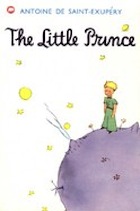
Little Prince, TheAntoine de Saint-Exupéry, The Little Prince (trans. Katherine Woods)

After trying to review this book in my usual way, I’ve given it up as a lost cause. So I will just say that this classic children’s fable about a stranded pilot and a little boy from another planet is a wonderful read, for adults as well as for children. It’s full of allegories and lessons for attentive readers, from the folly of greed to the power of friendship. I’m sorry I never read this as a child, but I still found it incredibly touching and moving — the perfect book for a winter’s evening!

Review: The Phantom Tollbooth

Phantom Tollbooth, TheNorton Juster, The Phantom Tollbooth

This classic children’s book tells the story of a bored little boy named Milo who comes home one day to find a mysterious package in his bedroom. The package turns out to be a toy tollbooth, and when he assembles it and drives through in his little electric car, he is transported to a new world. Milo visits a variety of unusual places, including the hostile cities of Dictionopolis and Digitopolis and the island of Conclusions (you get there by jumping). He also receives an important mission: to rescue the princesses Rhyme and Reason from where they are imprisoned in a castle in the air. Along the way, Milo encounters many dangers, including the land of Illusion, the Doldrums, and the demons of Ignorance. Luckily, with the help of his friends Tock and Humbug, he is finally able to rescue the princesses and restore them to the Kingdom of Wisdom. Ultimately, he learns that his “boring” life is actually more interesting than he ever imagined.

For some reason, I never read this beloved children’s classic when I was growing up. If I had read it around age 7 or 8, it probably would have been one of my favorite books. But even as an adult reading it for the first time, I found a lot to enjoy and admire. I’m a sucker for puns and wordplay, and this book is chock-full of it, from the watchdog with a clock for a body to King Azaz of Dictionopolis. There’s also a hint of satire, as when the Humbug explains that several family members have occupied prominent positions in history; for example, many kings have been Humbugs. The book is quite didactic, though, which I wasn’t expecting. Nearly every creature and situation Milo encounters is designed to teach him (and the book’s young readers) a lesson. I did find these constant “teaching moments” a little tedious, but luckily the book has a lot of whimsy to make up for them. Overall, I definitely think this is a great book for children, but if you missed it as a kid, it’s not too late to enjoy it as an adult!

Review: The World of Jeeves

World of Jeeves, TheP.G. Wodehouse, The World of Jeeves

This book is an omnibus of short stories describing the adventures of Bertie Wooster, an amiable but dim aristocrat in early 20th-century England, and Jeeves, the consummate gentleman’s gentleman. Bertie is a friendly soul who just wants to be left alone to enjoy himself. Unfortunately, he has plenty of friends and relatives who are continually making demands on him, both financially and emotionally. His terrifying Aunt Agatha holds him in contempt, yet she is constantly trying to “improve” him and set him up with equally terrifying young females. His friend Bingo Little is always falling desperately in love with some girl or other, and for some reason he always approaches Bertie for help. Though Bertie is not overburdened with brains, he has a generous heart and usually wants to help. Good thing he has Jeeves, whose gravity and intelligence always manage to get Bertie and his friends out of whatever scrapes they’re in.

What can I say about Jeeves and Wooster that the entire world hasn’t said already? Wodehouse has a very specific style and brand of humor, and literally nobody does it better than he does. Bertie’s narrative voice is an utter joy to read, showcasing his own lack of intelligence but also satirizing the pretentious language of some popular fiction at the time. Strangely enough, his friends and family all think of him as the village idiot, but he’s probably smarter than most of his friends — definitely wiser than poor Bingo, for example! And the interplay between Bertie and Jeeves is wonderful; Jeeves always appears completely respectful and subservient, yet he dominates Bertie mercilessly (for his own good, of course!). I definitely recommend the story “Bertie Changes His Mind,” which is narrated by Jeeves and demonstrates how skillfully he is able to manipulate his employer. My one caveat is that you should pace yourself while reading this book, because the stories are all very similar and could become tedious after a while. But I loved it and would recommend it to anyone who enjoys British humor and wants a good belly laugh!

Review: The Giver

Giver, TheLois Lowry, The Giver

Eleven-year-old Jonas lives with his parents and sister in an idyllic place called simply the Community. The Community is governed by a set of Rules covering all aspects of life, which results in a peaceful, orderly society. Everyone has a specific role to play in the Community, with the Elders evaluating the children on their twelfth birthday in order to determine how they will serve the Community as adults. Jonas is looking forward to his Ceremony of Twelve with great excitement, wondering which job he’ll be assigned to perform. But when the fateful day finally arrives, Jonas is stunned to learn that he’s been chosen for the most prestigious and mysterious job of all: he will be the Community’s new Receiver. At first Jonas doesn’t even know what being the Receiver entails, but he soon learns that it will isolate him from everyone he knows, even his family. And as his training with the former Receiver (now called the Giver) continues, Jonas realizes that the supposedly benevolent Community is hiding some very dark secrets.

Despite the fact that this book came out during my childhood, I somehow never read it before. So I was a bit nervous that I wouldn’t enjoy it, reading it for the first time as an adult. Fortunately, my fear was groundless — I thought this was an absolutely fantastic book! Of course, some of the more sinister aspects of the Community will be unsurprising to adult readers, who have presumably encountered other dystopian novels and can guess what’s coming. But Lowry does such an amazing job of peeling back the seemingly perfect facade of the Community bit by bit, slowly revealing surprising tidbits of this allegedly ideal world. I also really loved the character of Jonas, who reacts to his new discoveries in such an understandable way. I practically got chills at the scene where he gets his list of Rules for how to be the Receiver — it perfectly encapsulates the confusing new world he’s been thrust into. Finally, I liked the ambiguity of the ending; Jonas decides to take a stand, but the outcome of this decision remains uncertain. I highly recommend this book to anyone who likes dystopian novels!

Review: Life of Johnson

Life of JohnsonJames Boswell, Life of Johnson

James Boswell and Samuel Johnson were unlikely friends: Boswell was a young Scottish nobleman with a penchant for drinking and whoring, while Johnson was poorer, much more devout (in theory, at least), and a good 30 years older. Yet throughout the course of this monumental work, Boswell describes his reverence for Johnson’s intelligence, morality, and literary talents — a reverence so extreme that Boswell took notes on almost every conversation he ever had with the older man. As a result, this biography is stuffed full of Boswell’s personal anecdotes, letters both to and from Johnson, and first-person accounts of other contemporaries who knew him. Near the end of the book, Boswell states: “The character of Samuel Johnson has, I trust, been so developed in the course of this work, that they who have honoured it with a perusal, may be considered as well acquainted with him.” And indeed, anyone who reads this book will come away with an extremely vivid picture of a remarkable man.

This book is so huge and deals with so many things that I don’t quite know what to say about it. At first I was very intimidated, both by its length and by Boswell’s flowery 18th-century prose. But even though it’s not a quick read, this book contains a wealth of fascinating details about Johnson and the age in which he lived. I was struck by how literary the 18th century was, in the sense that seemingly anyone with a claim to intelligence was churning out books and pamphlets. In that way, Johnson’s time is very similar to our own, where everybody can (and does) publish blogs, tweets, and other forms of instantaneous literature. I was also fascinated by Johnson’s unique character; though intelligent, he was often pompous, narrow-minded, and abrasive. I frequently found myself underlining various Johnsonian sayings that were wise, or funny, or both — but I would have hated to be forced to converse with him! Overall, I would recommend this book to anyone interested in the time period or who enjoys very thorough biographies!

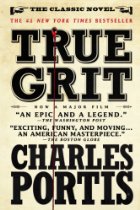
Review: True Grit

True GritCharles Portis, True Grit

In the postwar American West, Mattie Ross is a girl on a mission: her father has been killed by one of his drunken hired hands, and she’s determined to avenge his death. Despite being only 14 years old, Mattie has utter faith in her own ability to achieve her goal. As she arranges her father’s burial rites, she demands to know the name of a U.S. Marshal with “true grit” — someone who will be able to hunt down her father’s killer and exact retribution. Thus Mattie sets out with Rooster Cogburn, who is technically on the side of the law but whose own past is murky at best, and a Texan cowboy named LaBoeuf, who is hunting the same man for a different crime, on a quest for justice and revenge.

Though I don’t normally read Westerns, I’m very impressed with the ones I’ve been reading this year! The best part of this book is Mattie’s voice, which is completely distinctive and very funny, often unintentionally. For example, here’s a tidbit in which Mattie asks the sheriff about the various U.S. Marshals who could help her:

The sheriff thought on it for a minute. He said, “…The meanest one is Rooster Cogburn. He is a pitiless man, double-tough, and fear don’t enter into his thinking. … Now L.T. Quinn, he brings his prisoners in alive. He may let one get by now and then but he believes even the worst of men is entitled to a fair shake.” … I said, “Where can I find this Rooster?”

Another thing I found fascinating about this novel was its exploration of law in the Wild West. Near the beginning of the book, Mattie transcribes the trial of a man whom Rooster Cogburn had caught, complete with lawyers’ arguments and objections. It’s easy to see that, in the world of this novel, the law is largely ineffective and irrelevant to the men whose job is enforcing it. Perhaps that’s why Mattie feels such a strong urge to personally ensure that justice (as she sees it) is done. I’d definitely recommend this book as a quick, adventurous read that raises some thought-provoking questions.

Review: The Three Musketeers

The Three MusketeersAlexandre Dumas, The Three Musketeers (trans. Richard Pevear)

This classic novel, whose title is somewhat misleading, follows a young solider named D’Artagnan who travels from his native Gascony to Paris in order to join the musketeers, an elite military force that serves the king. D’Artagnan naively believes that he will swiftly realize his dream and make his fortune, but his simple goal soon becomes much more complicated. Through a series of accidents he befriends the three most prestigious musketeers, Athos, Porthos, and Aramis. He also becomes involved in the struggle between King Louis XIII and Cardinal Richelieu, the two most powerful men in France. As a would-be musketeer, D’Artagnan is the king’s man, but his loyalty wavers when he meets the beautiful Milady, one of the cardinal’s most influential spies. With the help of his three friends, D’Artagnan must foil Milady’s sinister plot while fighting his own attraction for her.

I actually read this book when I was 12 or so, but I’m very glad I read it again now that I have at least some knowledge of the historical context! I find it very interesting that Dumas, who was writing in the 19th century (shortly after the Napoleonic era), chose to set this story during the 17th-century wars of religion, a similarly tumultuous time for France. But even without the bigger picture, this book is quite simply a rollicking good read! It’s a long book, but the story is gripping and seems to fly by. The strength of the book is definitely its plot; by contrast, the characters aren’t developed very well. It’s fun to watch D’Artagnan and the musketeers interact with each other, but they’re essentially stock characters (Athos is the noble one, Porthos is the buffoon, etc.). And Milady is an extremely flat villain who is Pure Evil ™ through and through. In my opinion, the scheming cardinal is by far the most interesting character! Regardless, I really enjoyed this book and would love to read the rest of the series…one of these years!

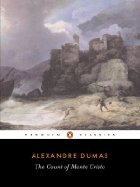
Review: The Count of Monte Cristo

The Count of Monte CristoAlexandre Dumas, The Count of Monte Cristo (trans. Robin Buss)

This classic novel tells the story of Edmond Dantès, a naïve young sailor who seems to be on the verge of getting everything he’s ever wanted: The owner of his ship wants to promote him to captain, and he’s about to marry his true love. But Edmond has jealous rivals, both professionally and romantically, who would like nothing more than to get rid of him and take his place. These men concoct a plan to accuse Edmond of being a Bonapartist — a deadly serious crime in a time when Napoleon has just been exiled to Elba and the French monarchy is still unstable. Although Edmond is innocent, he possesses a highly incriminating letter that seals his doom, and he is sent to France’s most notorious prison. With nothing to do but brood over the cruelty of his fate, Edmond becomes consumed by thoughts of vengeance. When he finally escapes from prison, he creates a new identity as the Count of Monte Cristo and sets out to destroy the men who ruined his life.

First of all, this novel is HUGE — the edition I read was over 1200 pages long — so I was surprised to discover how much of a page-turner it was! Although the plot is very slow-moving, Dumas cleverly builds suspense throughout the novel as Edmond’s plan of vengeance slowly reveals itself. The main thing that surprised me about this novel was how little time (comparatively speaking) it spends inside Edmond’s head. About the first quarter of the book is from his point of view, describing his feelings when he is arrested and imprisoned. But when he escapes and returns as the Count of Monte Cristo, the book barely ever relates his thoughts or feelings. Rather, the most developed characters turn out to be Edmond’s enemies (and a few friends), which makes Edmond’s actions more morally ambiguous. All in all, I’m very glad I finally took time to read this novel, whose status as a classic is well-deserved. I’ve been planning to read The Three Musketeers this year as well, and now I’m really looking forward to it!

Review: The Poetics of Aristotle

Aristotle, Poetics (trans. Preston H. Epps)

In this slim treatise, Aristotle shares his philosophy of literature, including both tragedy and epic poetry. (There may at one point have been a section on comedy also, but if so, it has been lost.) He sets forth the various rules governing tragedy in some detail, including what subjects are appropriate for a tragedy, the best plot devices to use, the proper length, the best types of characters, and the primary goal of tragedy. He backs up his assertions with examples from the various poets and playwrights of his day, none of whom measure up to “the divine Homer.” With systematic deliberation (and occasional humor), Aristotle lays out his formula for creating great literature.

The thing about Aristotle is that he is hard — and the Poetics is harder than many of his other works, for several reasons. First of all, there’s no single definitive text, so translations can vary widely. (I read a cheap edition published by UNC Press in the 1940s. It seemed serviceable enough, and there were many footnotes explaining why the translator had chosen one word over another.) Also, many of Aristotle’s literary examples made no sense to me, since I’m not terribly familiar with ancient Greek drama. In fact, I think many of the plays he cites have been lost to the modern world! That said, I did find his general rules about literature to be interesting, and I’m glad I finally read this classic work.

N.B. — The version depicted in the picture is not the same as the version I read. I have no knowledge about the quality of the respective translations.