Mini-Reviews: Flowerheart, Seething, Fuzzy

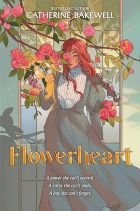
Catherine Bakewell, Flowerheart

Clara Lucas has always wanted to be initiated into the Council of Magicians, but the Council won’t accept her until she learns to control her strong, wild magic. When she accidentally curses her father with a life-threatening illness, her plight becomes even more urgent. Desperate, Clara makes a bargain with Xavier Morwyn, her former childhood friend and now a prominent magician: If he teaches her to control her magic so that she can heal her father, she’ll then surrender all her magic to him. But as she works with Xavier, she learns that he and the Council are both keeping secrets. This is a cozy YA fantasy with a side of romance, which should have been right up my alley, but I found it bland and juvenile. The book had a few interesting ideas but never went beyond the surface level, and I just didn’t care about Clara or her problems. This may work better for a YA (or younger) audience, but it did nothing for me.

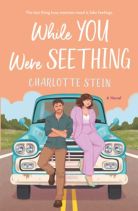
Charlotte Stein, While You Were Seething

PR expert Daisy Emmett has been hired to fix the image of famous romance author Caleb Miller, who recently disparaged his fans on national TV. Daisy has set up a regional tour to humanize Caleb and promote his new book, but there are two big flaws in her plan: (1) Caleb is basically a recluse and has no interest in doing the tour; and (2) he was her nemesis in college, and they still can’t get through a conversation without arguing. As their road trip progresses, though, Daisy learns that Caleb doesn’t hate her as much as she thought. I found this book really compelling and devoured it in two days, but I also kept wondering why Caleb is so unnaturally closed off and self-loathing. There’s never a satisfying explanation for his behavior, or why he couldn’t just have told Daisy the truth back in college and saved them both 10 years of pain and pining. So this book was fun in the moment for me, but the plot logic doesn’t really pass the smell test.

H. Beam Piper, Little Fuzzy

Zarathustra is a frontier planet, governed by Terra but effectively managed by the Zarathustra Company, which profits greatly from the planet’s natural resources. The Company’s hegemony is threatened, however, when prospector Jack Holloway encounters a monkey-like being he dubs “Little Fuzzy.” The creature and his Fuzzy friends soon exhibit signs of sapience, which would be a major scientific discovery—but would also necessitate turning the planet into a protected aboriginal zone, drastically limiting the Company’s rights. This book is a fun, plot-driven read that I think would make a good movie or TV episode. The inquiry into the Fuzzies’ sapience is entertaining, with lots of skullduggery as the Company tries to rig the outcome in its favor. There’s not much nuance in the novel; it’s clear from the outset who all the good guys and bad guys are. But I enjoyed it nonetheless and am interested to read John Scalzi’s “reboot,” Fuzzy Nation, at some point.

Mini-Reviews: Regency, Eyes, Spellman

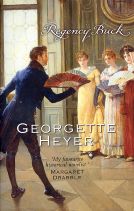
Georgette Heyer, Regency Buck

Judith Taverner and her brother Peregrine travel to London to meet their guardian, Lord Worth, who they assume is a curmudgeonly old man. In fact, Worth is relatively young, a leader of fashionable society, and friends with Beau Brummell. His autocratic manner immediately offends strong-willed Judith, and their frequent arguments comprise the most dramatic parts of the book. Meanwhile, someone is trying to kill Peregrine, but is the villain Worth or someone else? I love Heyer, but this is not one of my favorites by her, and now I remember why. It’s one of her earliest Regency romances, and it seems like she dumped all her research here. We get so much detail about Beau Brummell, the Royal Pavilion at Brighton, prizefighting, and so on that there’s no space for the romance. The hero treats Judith badly, and we don’t get enough insight into his feelings or motives. If you want a detailed window into the Regency era, this novel is great, but it’s not very satisfying as a romance.

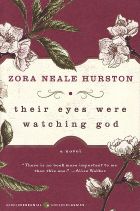
Zora Neale Hurston, Their Eyes Were Watching God

Janie Crawford is a young black woman living in Florida in the early 20th century. Her grandmother, who was born in slavery, has a specific vision for Janie’s life: She should marry a well-to-do man and let him take care of her, so that she never has to work or struggle. But Janie has an adventurous spirit and wants to see more of the world. Some of her choices don’t work out—she meets men who want to stifle and control her, and she endures poverty and great suffering. But she also finds true love and spiritual freedom despite her circumstances. This is a beautifully written novel with a compelling protagonist; Janie felt like a real person to me, and in the end I was convinced that she’d be okay no matter what happened next. I also liked the portrayal of Janie’s community, which felt vivid and true to life. The characters all use a specific dialect, which means you have to pay close attention while reading, but I think that’s a feature rather than a bug. Overall, I can see why this book is regarded as a classic and would definitely recommend it.

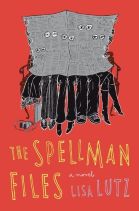
Lisa Lutz, The Spellman Files

The Spellmans are a loving but dysfunctional family of private investigators. They tail each other around town, record each other’s private conversations, and break into each other’s locked rooms. Twenty-eight-year-old Izzy, who narrates this novel, is the screwup of the Spellman children and wants to leave the family business. But her parents make her take on one last case before they’ll allow her to quit, and Izzy’s questionable investigative tactics cause even more family drama. This is a really clever book with a fun premise—I enjoyed Izzy’s deadpan narrative voice and the various hijinks she and her family get into. At the same time, it all requires a huge suspension of disbelief, and you can’t think too hard about the reality of this family or you’ll realize how truly tragic and dysfunctional it is. This is the first book in a series, but I’m not sure I’ll be continuing…I did enjoy it, but I don’t think I need more.

Mini-Reviews: Lions, Correspondent, Bank

Poul Anderson, Three Hearts and Three Lions

Holger Carlsen is a Danish engineer who joins the underground to fight the Nazis during World War II. When he’s injured and loses consciousness in battle, he wakes up in an unfamiliar environment: in the middle of an ancient forest, next to a stallion decked out as a medieval warhorse. Though unsure of what’s occurred, Holger soon realizes that he has a role to play in his new surroundings. Along with the warhorse, a dwarf, and a beautiful girl who can transform into a swan, Holger sets out to find his way home, fighting various forces of evil along the way. This is an entertaining fantasy tale in the vein of an Arthurian legend. Holger meets all the expected foes: evil Faeries, dragons, trolls, a werewolf, and even Morgan le Fay. Every woman in the story tries to sleep with him, which I found annoying, but the book at least acknowledges that it’s strange! And I liked his instinct to try and understand his predicament scientifically. Overall, there’s nothing particularly unique about this novel, but it’s a good yarn.

Virginia Evans, The Correspondent

This epistolary novel comprises the correspondence to and from seventy-something Sybil Van Antwerp. She spends a significant amount of time writing letters, and her correspondents range from close friends (her brother Felix and best friend Rosalie) to pen pals (author Joan Didion) to complete strangers (the customer service representative at a DNA analysis website). Through these letters, Sybil is revealed as an intelligent, flawed, complicated woman who reflects on her life and discovers it’s not too late to change. I can see why this book has gotten so much good buzz – it’s a really fascinating portrait of an ordinary life. I genuinely did both laugh and cry as I read it. That said, I didn’t like Sybil as much as I think I was supposed to; while the book acknowledges her flaws, it also has more patience for her abrasiveness and unkindness than I did. The subplot about her trying to audit classes at the University of Maryland drove me crazy! I know others’ mileage will vary, however, and I’m excited to pass the book on to my mom, who I think will enjoy it.

Benjamin Stevenson, Everyone in This Bank Is a Thief

Ernie Cunningham and his fiancée, Juliette, have just entered Huxley’s Bank, hoping to get a loan to start a private detective business. But their plans are interrupted when an armed, masked individual enters the bank and takes everyone inside hostage. Strangely, the robber doesn’t seem very clear on his or her demands, and Ernie soon discovers that his fellow hostages all have something to hide. Throw in a missing person, multiple murders, and what looks like spontaneous combustion, and Ernie is on track to solve another sensational case—if he doesn’t get killed first. I’m continuing to enjoy this series. I always like a good heist narrative, and while Ernie isn’t always the most likable narrator, the other characters (especially Juliette) do call him out for his questionable decisions. I’d recommend this book to mystery fans, but the series should be read in order, starting with Everyone in My Family Has Killed Someone.

Mini-Reviews: Hitchhiker’s, Rake, Emma

Douglas Adams, The Hitchhiker’s Guide to the Galaxy

It’s an ordinary Thursday, and British everyman Arthur Dent is lying in front of a bulldozer, trying to stop his house from being demolished. Little does he know that the entire planet is about to be demolished to make way for an interstellar bypass. Fortunately, his alien friend, Ford Prefect, saves him from vaporization by hitching a ride on a spaceship. From there, Arthur and Ford brave many dangers, including Vogon poetry, infinite improbability, automated attacks from dead planets, and the evil machinations of white mice. I remember reading this book (and the sequels) in my tween or teen years, and at the time I thought it was hilarious. This time around, I could still appreciate some of the humor, but I had less patience for it. The book isn’t attempting to be anything more than a rapid-fire series of jokes, and after a while I found it a bit tedious. So even though there’s no real resolution at the end of this novel, I’m not tempted to continue with the series.

Mary Jo Putney, The Rake

Notorious rake Reggie Davenport is growing tired of his aimless life; so when his cousin, the Earl of Wargrave, unexpectedly gives him an estate, he views it as a fresh start. Upon arriving at the estate, Reggie is shocked to discover that his very capable steward is a woman, Alys Weston. Alys fled her aristocratic family at a young age and has fought hard to make her own way in the world, so at first she fears and resents Reggie’s presence. Eventually they discover each other’s good qualities, but Reggie’s drinking problem threatens their relationship. I was pleasantly surprised by this book! I loved its refusal to romanticize rakishness: Reggie’s drinking and womanizing have serious consequences, particularly his struggle with what we now call alcoholism. His feelings for Alys are one motivating factor in his desire to change, but not the only one, and her love doesn’t magically solve his problems. I liked Alys too and related to her insecurities, but this is really Reggie’s book. I would highly recommend it to historical romance fans, and I’m interested in trying more by Putney—anyone have any recommendations?

Audrey Bellezza and Emily Harding, Emma of 83rd Street

In this contemporary retelling of Jane Austen’s Emma, Emma Woodhouse is a privileged 23-year-old living on the Upper East Side and getting a master’s in art history. Socially, she’s at a loose end now that her beloved older sister has married and moved out. So when she meets country-mouse classmate Nadine, Emma decides to give her a makeover—as well as some dubious romantic advice. Emma’s friend Knightley doesn’t hesitate to point out the flaws in her approach, but lately their good-natured sparring seems to be taking a romantic turn. I adore Austen but tend to steer clear of retellings; I broke my rule for this one, and sadly I don’t think it was worth it. The novel has its good points—it successfully translates the original book’s major plot points, and it gives us some peeks at Knightley’s point of view—but to me it felt like a standard contemporary romance with nothing particularly interesting or compelling about it. Unless you’re a diehard Austen fanfic lover, I’d skip this one.

Mini-Reviews: Dreams, Daring, Undone

Sarah Adams, In Your Dreams

Madison Walker has always seen herself as the “failure” among her successful siblings. She’s just graduated from culinary school in New York, but she’s no longer sure cooking brings her joy, and she doesn’t love the big city like she thought she would. Still, when family friend James Huxley offers her the executive chef position at his new restaurant, she jumps at the chance to move home to Rome, Kentucky, and prove that she can succeed at something. Little does she know that James has been secretly in love with her for years, and he may finally be ready to do something about it. I enjoyed this light, charming romance and felt Madison’s insecurities and issues with her (loving but imperfect) family were relatable. James is of course a bit too perfect as a romantic hero, though I liked that he had a conflict with his brother, Tommy, that was partly (or even mostly) his fault. It looks like this is the last book in the Rome series, but is it weird that I kind of want Tommy’s story now?

Joanna Shupe, A Daring Arrangement

Lady Nora Parker is a spirited young Englishwoman who’s fallen in love with an unsuitable artist. Her father has sent her away to New York to find a better match, but Nora just wants to return to England. She decides to find an outrageously unsuitable American man to pose as her fiancé, so her father will object to the match and summon her home. Wall Street tycoon Julius Hatcher seems like the perfect candidate; his lavish parties and scandalous paramours are the topic of every gossip column. But as Nora and Julius spend more time together, an inconvenient attraction sparks. I love the fake relationship trope and was excited about the Gilded Age setting of this romance, but ultimately the plot just doesn’t work. Nora wants Julius to help her create a scandal, while he is trying to use her to get into high society, so their desires are opposed from the start—why does either of them think this arrangement is a good idea? That said, I do think they have good chemistry, so I enjoyed the romance aspect. Overall, the book is fine but didn’t knock my socks off.

Cecilia Grant, A Gentleman Undone

Will Blackshear is a soldier who has returned from the Napoleonic Wars with visible and invisible wounds. He needs money to support the widow of one of his men, and he hopes to win it at the gambling tables. There he meets Lydia Slaughter, a prostitute who once worked in a brothel and is now a gentleman’s mistress. She also happens to be a genius at cards and agrees to help Will cheat in exchange for a share of the take. They are drawn to each other almost immediately, but they know that acting on their attraction would be a huge mistake: Will can’t afford to keep a mistress, and Lydia’s entire livelihood depends on her current protector. I finished this book thinking, “Now this is how you write historical romance!” Will and Lydia are both such complex characters, broken in many ways, convinced they’re unable to love and unworthy of being loved. Every interaction between them is fraught with tension, and while I don’t usually like books with a lot of steam, the sex scenes here are crucial to the development of character and relationship. If you want superior-quality historical romance, I can’t recommend Cecilia Grant highly enough!

Mini-Reviews: School, Remember, Secret

Soman Chainani, The School for Good and Evil

Every year, two children are kidnapped from the village of Gavaldon. One, beautiful and kind-hearted, is sent to the School for Good, and the other, ugly and malicious, goes to the School for Evil. This year, Sophie is determined to be the one selected for the School for Good, where she’ll become the heroine of her very own fairy tale, complete with Prince Charming. But when she and her friend, the plain and all-black-wearing Agatha, are chosen, she’s shocked to end up in Evil, while Agatha is sent to Good. Can the two girls figure out how to fix this mistake – and what happens if they want to go home? I loved the first sentence of this book (“Sophie had waited all her life to be kidnapped”), but unfortunately it was mostly downhill from there. The plot lurches along unsteadily and is surprisingly hard to follow, and I found Sophie so awful that I wondered why Agatha (or anyone) would want to be friends with her! There are some interesting ideas in the book, but they never quite gel into anything substantial. Not recommended, and I won’t be continuing with the series.

Mary Balogh, Remember That Day

Winifred Cunningham is close friends with Owen Ware and has been invited, with her family, to his family’s estate of Ravenswood for a few weeks. Winifred wonders whether Owen will propose to her; they share a passion for helping others and might do a lot of good together. But she’s not in love with him, and as the visit proceeds, she finds herself unexpectedly attracted to his brother, Colonel Nicholas Ware. Meanwhile, Nicholas is about to make a pragmatic proposal to his commanding officer’s daughter, but meeting Winifred throws a wrench in his plans. This is another mildly pleasant installment of the Ravenswood series. I liked the central love story but felt it lacked depth; too much time was spent on the myriad supporting characters in both Nicholas’s and Winifred’s families, and I just don’t find them interesting! I really hope the next book is Stephanie’s story, which still intrigues me, but after that I’ll probably stick with Balogh’s earlier titles.

Tana French, The Secret Place

This fifth book in the Dublin Murder Squad series is set at St. Kilda’s, a posh girls’ boarding school where a student from the neighboring boys’ school was found dead a year ago. The case was never solved, but now Detective Stephen Moran has received an anonymous note saying, “I know who killed him.” Hoping for a permanent spot on the Murder Squad, Moran teams up with Antoinette Conway, the abrasive detective who worked the case the first time around. As they delve deeper into St. Kilda’s mysteries, they’re shocked to discover just how much these teenage girls are hiding. I liked this book a lot more than Broken Harbor, though a few things still bugged me: The narrative switches between the present-day investigation and the months leading up to the boy’s murder, and I found the present-day story much more interesting. The teen speak felt inauthentic, and I didn’t like the supernatural element. But I did really love the insights into teen friendship and psychology, as well as the development of Moran and Conway’s partnership. I’m interested to see how that dynamic continues and changes in the next (and final) book.

Mini-Reviews: Bend, Redfern, Knew

V.S. Naipaul, A Bend in the River

This novel depicts a pessimistic view of life in postcolonial Africa. It’s narrated by Salim, a young Indian Muslim who decides to move away from his family on the east coast and settle in a small town in the interior of Africa. There he observes the various struggles he and his neighbors face, from the petty corruption of local officials to large-scale political violence. Salim’s aimlessness and confusion mirror the experience of the town, which seems doomed to corruption and decay no matter who is ruling it. This is my first encounter with Naipaul, and while he’s an excellent writer, I didn’t much care for the book. As a novel, I don’t think it works; there’s not much plot, and Salim is an incredibly passive and unsympathetic character. Based on cursory internet research, Naipaul seems to be widely viewed as racist and sexist; the character of Salim certainly is both. But I didn’t read this as a pro-colonialist novel, as some have claimed. The fictional town here seems doomed to corruption and decay no matter who is ruling it. Regardless, this type of book isn’t for me, and I don’t plan to read more by Naipaul.

Tessa Arlen, Poppy Redfern and the Midnight Murders

It’s 1942, and Poppy Redfern is the local air raid warden in her village of Little Buffenden. Excitement has recently come to the village in the form of an American airfield; the Yanks have arrived to help win the war, and at first the locals embrace them with open arms. Some of the village’s young women begin dating the dashing American soldiers; but when two of the women are murdered, suspicion immediately falls on the outsiders. But Poppy, wondering whether someone from the village might be responsible, decides to investigate for herself. I enjoy a good historical mystery, and this one was fine, but nothing particularly stands out about it. Poppy is a fun narrator, but many of the secondary characters are flat and two-dimensional. I also felt there was a lot of info-dumping about life in England during World War II, which will be redundant for most people. Overall, this was an easy, pleasant read, but I’m not desperate to pick up the sequel.

Kristan Higgins, If You Only Knew

This novel follows two sisters as they face new challenges in their lives. Jenny, recently divorced but trapped in an unwanted “friendship” with her ex and his new wife, has moved back to her hometown for a fresh start. There she meets her attractive neighbor, Leo, who flirts with her but is adamant that he doesn’t want a relationship. Meanwhile, Jenny’s sister, Rachel, channels all her energy into being the perfect wife and mother—until she discovers that her husband cheated on her. Will she forgive him or forge a new path for herself? I enjoyed this book quite a bit; both Jenny and Rachel, who take turns narrating, are relatable and sympathetic characters. The serious issues in the book are leavened by humor and by a satisfying romance that develops throughout the novel. I stopped reading Higgins’s books after a while because they got too miserably depressing, but this one is a fun and uplifting read.

Mini-Reviews: Ready, Ruined, Christmas

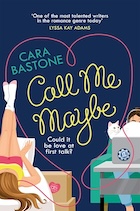
Cara Bastone, Ready or Not

When Eve unexpectedly gets pregnant after a one-night stand, her stable and predictable life suddenly gets a lot more complicated. She doesn’t have parents to lean on, and her best friend, Willa, is struggling with infertility and finding it hard to be supportive. Fortunately, Willa’s brother Shep, whom Eve has known since childhood, is showing up in a big way—and suddenly Eve is seeing him in a whole new light. But are her feelings real, or is this just a hormone-induced infatuation? I continue to be a fan of Cara Bastone’s contemporary romances, which tend to star real people dealing with real problems, and this one is no exception. Eve’s narrative voice is fun and down-to-earth, and I bought her as a character, as well as her friendship with Willa and her developing feelings for Shep. Shep himself is wonderful, perhaps a little too perfect (the pining!), but a great example of the golden retriever hero. Definitely recommended if you like this premise, and I look forward to my next Bastone book!

Alyssa Everett, Ruined by Rumor

Roxana has been engaged to the dashing Major Wyatt for five years, waiting patiently while he served in the Napoleonic Wars. Now that he’s back, she’s ecstatic finally to set the wedding date—but Wyatt suddenly breaks things off, and a devastated Roxana turns to her neighbor, Alex Ayersley, for comfort. Little does she know that the proper, stuffy Alex has been in love with her for years; when he attempts to give her a consoling hug, they end up kissing passionately. When he learns that their kiss was observed, and Roxana is the target of vicious gossip, he proposes marriage to save her reputation. But will she be able to return Alex’s love, especially when Wyatt comes back into the picture? This is a reread for me, and I enjoyed it just as much as I did the first time. Alex and Roxana are both terrible communicators, but their reasons for not being direct made sense to me. And the denouement, while a bit implausible, is extremely satisfying!

Alexandra Benedict, The Christmas Murder Game

Lily Armitage is summoned to Endgame House to participate in the family’s traditional Christmas Game. She hasn’t attended in years, ever since her mother’s suicide on the grounds of the estate. But this year, her aunt begged her to come, hinting that her mother was actually murdered. Moreover, the winner of this year’s game will inherit Endgame House. But tensions are high within the Armitage family, and as they start to play the game, it’s evident that everyone is hiding something. And then the players begin to die. This book had all the elements that should have appealed to me—a country house murder mystery set at Christmas, complete with anagrams and puzzle clues—but it never really clicked. The characters felt flat and predictable, and honestly the villain’s identity was pretty obvious. In theory, I liked the author’s inclusion of a scavenger hunt for readers (finding anagrams of the Twelve Days of Christmas within the book), but in practice it just distracted me from the story. A cool premise, but unfortunately the execution didn’t live up to it.

Mini-Reviews: Blue, Nothing, Wish

Lia Louis, Dear Emmie Blue

Emmie has been best friends with Lucas since high school, and lately she’s been hoping they can become more than friends. So when Lucas plans a nice dinner at their favorite restaurant with a big question to ask her, she’s ecstatic—until he asks her to be “best woman” at his upcoming wedding. Emmie is devastated, but ultimately she agrees and tries to suppress her feelings. Meanwhile, she finds herself unexpectedly growing closer to Lucas’s brother, Eliot, who helps her with some difficult family issues of her own. Has she been in love with the wrong brother all along? This was a reread for me, and I still enjoyed it this time around. There’s nothing groundbreaking about the plot, but I like that Emmie has important relationships and problems that don’t involve her love life at all. And without spoiling the romance, I’ll just say I enjoy a man who pines!

Jodi Taylor, The Nothing Girl

Growing up in the shadow of a strict aunt and malicious cousins, Jenny Dove has always faded into the background. Now she’s dissatisfied with her small life—always at home, never allowed to pursue an education or career—but doesn’t know how to change it. Enter Russell Checkland, a chaotic artist who’s just been rejected by the love of his life. He shocks Jenny by proposing a marriage of convenience: Her money (inherited from her parents) will help restore his dilapidated estate, and in return he’ll help her to try new things. But Jenny’s growing confidence and delight in her new life are threatened when it seems that someone is trying to kill her. There is so much plot in this book, and I didn’t even get to the magical talking horse! But this is a delightful little fairy tale, somewhat in the vein of The Blue Castle but with a modern setting and a bit more spice. I loved it, and it will definitely be in my top 10 books of the year!

Louise Allen, His Housekeeper’s Christmas Wish

Alex Tempest runs (literally) into Tess Ellery on the streets of Ghent and causes her to miss her boat back to England. He therefore offers to escort her to London, where she hopes to find employment as a governess or companion. Unfortunately, a society matron spots them together on the boat and assumes Tess is Alex’s mistress, ruining her chances of a respectable job. With no other options, Alex hires Tess as his housekeeper, but their mutual attraction makes everything more complicated, especially when Alex is forced to visit his estranged family at Christmas. Louise Allen’s historical romances have been hit or miss for me, and unfortunately this was one of the misses. I found the plot contrived and unrealistic, and I never really bought Alex and Tess’s romance. I also don’t love stories where family dysfunction is magically healed just because it’s Christmas. Not a terrible book, but definitely not a keeper for me.
Mini-Reviews: Children, Christmas, Mistletoe

P.D. James, The Children of Men

This dystopian novel imagines a near-future world in which no human children have been born since 1995. England is ruled by a seemingly benevolent dictator called the Warden, and most people’s material needs are satisfied. But the human race is dying out, and hope is a thing of the past. Theo Faron, a 50-year-old Oxford professor, views the future with detachment and despair. But when a young woman, one of his former students, approaches him with a surprising request, he finds himself unwillingly getting involved with a resistance movement. I’m of two minds about this book. On the plus side, it’s steeped in deep questions about morality and whether good and evil even matter if the world is ending. Certain scenes are quite memorable and chilling, and the dramatic tension builds effectively even when there’s not much going on. On the minus side, the pacing is slow, the world-building doesn’t feel completely thought out, and the ending leaves a lot of unanswered questions. I’m excited to talk about this book with my office reading group, as I’m sure it will generate an interesting discussion. But for me personally, it was an unsettling read.

Martha Waters, Christmas Is All Around

Artist Charlotte has never enjoyed Christmas, and she especially hates holiday rom-coms because when she was nine years old, she had a role in the modern holiday classic Christmas, Truly, which she’d love to forget about. But when she visits her sister in England for the holidays, she finds she can’t escape her past as they tour an estate that was used as a set on the film. There Charlotte meets Graham, the estate’s handsome owner, who hires her for an art project to bring much-needed publicity to the estate. Will grumpy Grinch Charlotte find herself in a holiday rom-com of her own? I enjoyed Martha Waters’s recent historical mystery and wanted to try more of her work, so I was excited for this contemporary romance. Unfortunately, it wasn’t quite as funny as I wanted it to be, and I didn’t really connect with the characters. It’s still a pleasant read – there are some fun one-liners, plentiful Love, Actually references, and cozy Christmas vibes – but this book won’t be a keeper for me.
Chloe Liese, The Mistletoe Motive

Gabriella Di Natale and Jonathan Frost are work nemeses. They’re co-managers of Bailey’s Bookstore and couldn’t be more different: Gabby is a festive ball of sunshine who loves the bookstore’s soul, while Jonathan is cold and grumpy and all about the bottom line. But as Christmas approaches, Gabby starts experiencing a strange attraction to Jonathan—an attraction that just might be reciprocated. I enjoy the enemies-to-lovers trope, so I was hoping to like this holiday novella a lot more than I did. But it suffers from perfect hero syndrome: Jonathan is outrageously handsome, incredibly attuned to Gabby’s every need, and the ideal ally when she discloses her autism. And while I think it’s great to see neurodivergent folks represented in romance, autism (plus loving Christmas) basically felt like Gabby’s entire personality. She’s so mean to Jonathan, yet he’s completely devoted to her. And don’t get me started on the overly Christmassy names—there is literally a character named George Bailey. In short, I found this book frustrating, and I won’t be reading more by Chloe Liese.