Mini-Reviews: Aunt, Farleigh, Likeness, Poldark

As you can tell, I’m not super motivated to blog at the moment, and I’m contemplating some possible changes to my process. Going forward, I’d like to absolve myself from trying to review every book I read, and maybe just focus on the best or most interesting books of each month. I’d also like to vary my content a little bit more, maybe by doing more discussion posts and memes à la Top Ten Tuesday. So I’m ruminating on that…but in the meantime, here are some more mini-reviews!

Death of My AuntIn Farleigh Field

C.H.B. Kitchin, Death of My Aunt — I love a good Golden Age mystery, but this one isn’t one of my favorites. I don’t remember it being particularly bad, but nothing stands out as particularly memorable either. It’s your standard “unpleasant family matriarch dies, the younger husband is the main suspect, but did he really do it?” plot. I did like the fact that the younger husband wasn’t an obvious slimeball, as they generally tend to be in these types of stories. But in the end, I think only diehard Golden Age fans will enjoy this one.

Rhys Bowen, In Farleigh Field — This book has a lot of my favorite things: historical fiction, World War II, spies, and a friends-to-lovers subplot. But while it was an enjoyable read, I didn’t fall in love with it. I think I wanted more from the espionage story, and the characters all seemed a little flat to me. Also, while the book can definitely be read as a standalone, I got the impression that it was setting up a sequel, and I’m not sure I care enough to continue with a (hypothetical) series.

Likeness, TheJeremy Poldark

Tana French, The Likeness — The modern crime thriller isn’t my preferred genre, but I made an exception for French’s In the Woods and completely devoured it. This is the second book in the Dublin Murder Squad series, and it focuses on Cassie, Ryan’s partner from the first book. The premise is somewhat outlandish, as Cassie must go undercover to investigate the murder of a young woman who looks just like her. But despite that, I found myself completely compelled by Cassie’s journey as she integrates herself into the dead woman’s life. I definitely plan to continue with this series — I’ve already bought book three!

Winston Graham, Jeremy Poldark — ***Warning: Spoilers for previous books in the Poldark series.***

Book three in the Poldark saga really amps up the drama, as it begins with Ross on trial for his life because of his role in the shipwreck and ensuing events at the end of Demelza. Of course, Ross is hellbent on making things as difficult as possible for himself, and George Warleggan is working behind the scenes to get Ross convicted. This is the book that really sold me on the series, although newcomers should start at the beginning with Ross Poldark.

Mini-reviews: Pretty Face + 3

Real life has been burning me out lately, so instead of getting stressed about the 20-ish reviews I still need to write, I’ve decided to Jack Bauer this situation and just write short ones! Here’s the first batch:

Pretty FaceShadow Bright and Burning, A

Lucy Parker, Pretty Face — I absolutely loved Act Like It, so Pretty Face went on my auto-buy list immediately. And I wasn’t disappointed; I devoured this romance between a beautiful actress who wants to be taken seriously and an older, talented but curmudgeonly director. If you like contemporary romance, you really need to give Lucy Parker a try!

Jessica Cluess, A Shadow Bright and Burning — Historical fantasy set in 19th century England is my jam, and when you add a bright young woman who is accepted into an all-male wizarding school, but she’s not actually the chosen one (or is she?), you can count me 100% in! I liked this book a lot, especially the bits about sorcery versus magic — and, of course, the hints of romance. Looking forward to book #2 in the fall!

Confession of Brother Haluin, TheBear and the Nightingale, The

Ellis Peters, The Confession of Brother Haluin — It’s always a delight to spend some time with Brother Cadfael and company, although this book doesn’t have one of the stronger mysteries in the series. Still, I love these books and am sad that there are only a few more left for me to read!

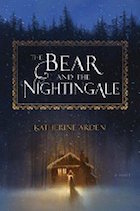
Katherine Arden, The Bear and the Nightingale — This historical fantasy novel based on Russian folklore is gorgeous and haunting, and I couldn’t put it down! I loved the main character, Vasya (even though she’s one of those not-beautiful-but-still-somehow-beautiful types), and her determination to save her family and land despite everyone else’s fear and skepticism. I was especially fascinated by the character of Father Konstantin, who isn’t exactly evil but is definitely flawed! Also, the setting is vivid and compelling, and I say this as someone who doesn’t usually care too much about setting. This is definitely going to be one of my top books of the year, and I can’t wait to see what Arden will write next!

Review: Demelza

DemelzaWinston Graham, Demelza

***Warning: spoilers for Ross Poldark.***

This second novel in the Poldark saga begins with Demelza giving birth to her and Ross’s first child, a baby girl named Julia. Uneasy at the thought of her lower-class, illiterate relatives mixing with Ross’s family and friends among the gentry, Demelza decides to hold two different parties for Julia’s christening. Of course, this plan goes terribly awry and ends in social disaster — the first of many situations in this novel where Demelza struggles with her new position in society as Ross’s wife. Meanwhile, low copper prices are causing trouble for Ross and the other mine owners, and many of the mine workers are facing dire poverty. Desperate, Ross joins a risky scheme that would give mine owners more control over copper prices, but the Warleggans are formidable enemies to this project. Personal tragedies, reversals of fortune, and love affairs gone wrong (or right) all play a part in this novel, but ultimately it’s the strength of Ross and Demelza’s relationship that gets them through it all.

I enjoyed this continuation of the Poldark series, which I think is a little more eventful and interesting than the first book. One of my favorite aspects of this novel is the portrayal of Ross and Demelza’s marriage. It’s a strong relationship but definitely not a perfect one: they argue, keep secrets from each other, and frequently become trapped in misunderstandings that a little honest communication could have prevented. But I love that Demelza isn’t afraid to speak her mind and that Ross genuinely respects her, notwithstanding her lower-class origins. I also liked the introduction of a few new characters, particularly Dwight Enys, a forward-thinking young doctor who becomes a fast friend of the Poldarks. Overall, this book got me excited about reading the entire series this year, and I’d definitely recommend it to fans of historical fiction or period dramas.

Review: My Lady Jane

My Lady JaneCynthia Hand, Brodi Ashton, and Jodi Meadows, My Lady Jane

This novel is a highly fictionalized version of the events surrounding Lady Jane Grey’s accession to the throne of England, where she ruled for only nine days. The story begins as teenage king Edward VI learns that he is dying. He names his best friend Jane as his successor, which immediately makes her a highly desirable bride to the ambitious men at court. Although Jane is not particularly interested in marriage or becoming queen, she is forced to marry Gifford, the son of Edward’s most trusted counselor. Of course, Jane and Gifford don’t get along at first, but soon they must work together when she finds out that Gifford is an Edian, a person with the magical ability to turn into an animal. In fact, he can’t control this power, so he spends all his daylight hours as a horse. Jane and Gifford must conceal this politically dangerous secret and figure out how to control his power — all while navigating the perils surrounding the English monarchy.

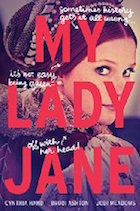
When this book first came out, I refused to read it despite its popularity because of the terrible cover. But then I started reading reviews comparing it to things like The Princess Bride and Monty Python. And then I read the dedication — “For everyone who knows there was enough room for Leonardo DiCaprio on that door” — and I was hooked. This book is a fun and funny romp through Tudor history, and I thoroughly enjoyed it. Of course, those who are looking for realistic historical fiction from this era should definitely look elsewhere; the actual historical situation is just a springboard for the characters’ completely fantastical adventures. I really enjoyed the main characters, especially Edward, whose main complaint about dying is that he hasn’t ever kissed a girl. The plot does get a bit hectic toward the end, but by then I was happy to go along for the ride. Overall, I liked this book a lot, and now I’m interested in trying some of the authors’ solo works.

Review: The Glimpses of the Moon

glimpses-of-the-moon-theEdith Wharton, The Glimpses of the Moon

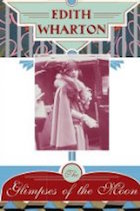
In the glittering whirl of 1920s New York society, Nick Lansing and Susy Branch are intelligent but impoverished: they survive by living off the generosity of their richer friends. They fall in love with each other and decide to marry, but they agree that if either of them gets a chance to make a better financial match, they’ll divorce amicably. At first the marriage is very successful, and Nick and Susy are able to live off their friends’ extravagant wedding gifts. But when one of their friends lets them stay at her Italian villa during the honeymoon, they soon discover that she requires an ethically dubious favor in return. This favor drives a wedge between Nick and Susy — a wedge that widens even further when a titled Englishman and a rich heiress present themselves as alternative romantic options. In the end, will love or money prevail?

I don’t have much to say about this book except that I really loved it! Wharton’s prose is flawlessly precise, and she has an immense talent for evoking a character’s complete emotional state with a few subtle, well-chosen words. I actually found this book a bit stressful to read at times, because I cared about Nick and Susy so much, and I really wanted their marriage to work out despite the obstacles in their way. I liked the fact that no one is really a villain in the book, not even the wealthier romantic possibilities who are hoping that the marriage will break up. That said, Wharton does include some wonderfully biting satire about the upper classes and the frivolity and emptiness of their lifestyle. I’d recommend this book to anyone, especially those who love comedies of manners and the classics.

Review: Belgravia

belgraviaJulian Fellowes, Belgravia

This novel by the creator of Downton Abbey tells the story of two families, the aristocratic Bellasises and the social-climbing Trenchards, as their paths collide on the eve of Waterloo and again 25 years later. James Trenchard begins the novel as Wellington’s chief supplier, and thus he has some contact with high society despite being a mere tradesman. When his beautiful daughter Sophia catches the eye of Lord Edmund Bellasis, James is certain that a marriage will soon take place, despite the skepticism of Anne, his pragmatic wife. But Edmund tragically dies at Waterloo, and Sophia follows shortly thereafter – but not before giving birth to his child. The Trenchards place the baby with a foster family in an attempt to hush up the scandal, but the secret threatens to emerge when Anne decides to search for Sophia’s child, Charles Pope, now an intelligent young man of 25. When Charles is introduced into society despite his (supposedly) working-class origins, rumors start flying, and several people begin to ask questions about his true identity. What they uncover is a secret that could be dangerous not only to the Trenchards’ social standing, but to the young man’s very life.

I watched Downton Abbey from start to finish, so I was intrigued that its writer, Julian Fellowes, had written a book set during my favorite historical period. However, I was left feeling pretty underwhelmed by this novel. Much as I enjoyed Downton, it often had problems with pacing and with juggling its large ensemble cast, and those same problems are apparent in Belgravia. The “suspense,” such as it is, comes from the question of whether (or when) the scandal of Charles’s birth will be revealed, but since the reader knows the secret from almost the beginning of the novel, it’s not a very compelling question. I also didn’t care at all about most of the secondary characters. The villain of the piece has moments of being interesting, but he’s largely a flat character who only cares about money and social status. And the downstairs characters get very short shrift, in my opinion; while a couple of the servants do play a role in the plot, their characterization is negligible. Overall, I found this book to be very “meh,” although avid Downton Abbey fans may find it worth reading.

Review: Thrice the Brinded Cat Hath Mew’d

thrice-the-brinded-cat-hath-mewdAlan Bradley, Thrice the Brinded Cat Hath Mew’d

Flavia is thrilled to be back in England after her Canadian adventure at Miss Bodycote’s Female Academy, but she soon discovers that all is not well at Buckshaw. Her oldest sister Feely is in a fight with her fiancé Dieter, and her annoying cousin Undine won’t leave her alone. Most upsetting of all, her father is sick with pneumonia, and she’s not even allowed to visit him in the hospital. Desperate for a distraction, Flavia agrees to run an errand for the vicar’s wife, delivering a message to the woodcarver who is refurbishing the church. But when Flavia arrives at the woodcarver’s residence, she discovers the man hanging upside-down from his bedroom door, quite dead. Of course, she jumps at the chance to solve another murder, which leads her to uncover a decades-old conspiracy involving a famous author. But as always, Flavia’s investigative skills are so sharp that she finds herself in danger.

I’m a longtime fan of the Flavia de Luce series, so I enjoyed this latest installment. However, I’m starting to feel so sad for Flavia that the books are becoming less fun to read. In the first few books, Flavia and her sisters are constantly fighting, but you get the sense that, deep down, they do care for each other. In this book, the arguments are so mean-spirited and brutal that it’s really no fun to read. Flavia also seems particularly isolated in this book; her father is almost entirely off page, her sisters ignore her when they’re not actively being cruel, and she doesn’t seem to have any friends at all (except the vicar’s wife). The ending of this book seems to indicate an even bleaker future for Flavia, and if that’s the case, the series might actually be too depressing for me to continue. I also didn’t love the mystery in this one, although I was happy to see some interaction between Flavia and her former teacher Mrs. Bannerman. Overall, I found this book somewhat disappointing, and I’m not sure I’ll be continuing with the series (although I may try one more book just to see if things improve).

Mini-Reviews #11: December, part 1

I can’t believe it’s already New Year’s Eve…time to finish up those 2016 (mini) reviews before 2017 arrives!

skink-no-surrendersomebody-to-love

Carl Hiaasen, Skink: No Surrender — Teenager Richard teams up with the idiosyncratic Skink (former governor, current homeless eco-warrior) to find Richard’s missing cousin Malley. There’s no particular mystery about what happened to her, but the fun is in the journey, as rule-follower Richard finds his worldview enlarged by Skink’s more reckless lifestyle. Overall, while this isn’t really my kind of book, I did enjoy it and may read more by the author. I believe Skink is a recurring character in Hiaasen’s novels, and I’d like to know more of his backstory.

Kristan Higgins, Somebody to Love — Another light, charming contemporary romance from Kristan Higgins. Although most of her books are not serialized, this one borrows the location (and a few characters) from Catch of the Day, and it also features the couple from The Next Best Thing. Having read those two books, I enjoyed seeing how the various fictional worlds overlapped. That said, I don’t think you’d miss anything important if you haven’t read the other two books. I always enjoy Higgins’ books, but this one isn’t destined to be one of my favorites.

old-dogsenvious-casca

Donna Moore, Old Dogs — If you enjoy heist movies, you should definitely check out this book, which involves two priceless historical artifacts: solid gold dog statues. Main characters Letty and Dora are aging ex-hookers who hope to enjoy a lavish retirement by stealing the dogs from a museum exhibit. The trouble is, they’re not the only ones after the dogs…. While I didn’t find this one laugh-out-loud funny, it does include plenty of entertaining mishaps, mistaken identities, and mad schemes of vengeance. Definitely worth reading if the word “caper” appeals to you!

Georgette Heyer, Envious Casca — So far, I’ve found Heyer’s mysteries to be a bit hit-or-miss, but I think this is her best one yet! It’s an English country house murder set at Christmas. Of course, there’s a big family party, and of course, everyone has a reason to wish the estate’s owner dead. The novel is very well plotted, and the solution to the mystery is (in my opinion) utterly convincing. Even if you’ve tried another Heyer mystery and didn’t particularly like it, I’d urge you to give this one a try!

Mini-reviews #10: A mixed bag

I’m still so far behind on both reading and reviewing. I’m still hoping to read six more books in December, but with just two weeks left, I’m not sure how possible that is! At any rate, I can at least try to catch up with the review backlog:

month-in-the-country-avanishing-thief-the

J.L. Carr, A Month in the Country — This quiet, deceptively simple novel is about a World War I veteran who spends a summer restoring a medieval mural in a village church. Nothing much happens, plot-wise, but the narrator (now an old man) remembers this summer as one of the only times in his life when he was truly happy. I really enjoyed this book, which contains some subtle humor despite its overall tone of melancholy, and I’m interested in reading more by Carr.

Kate Parker, The Vanishing Thief — I should have loved this book, which is about a female bookseller in the Victorian era who is also a member of a secret society of detectives. Unfortunately, I wasn’t a fan of the writing style, which I found choppy and clumsy, nor was I interested enough in any of the characters to continue with the series. The author does have another mystery series set in the 1930s, which I might try, but I’ll definitely be going in with more moderate expectations.

code-talkerthis-adventure-ends

Joseph Bruchac, Code Talker — This YA novel is told from the perspective of Ned Begay, a Navajo man who enlists in the Marines as a teenager and becomes a “code talker” during World War II. Although the writing style is a bit simplistic at times, the book presents a good introduction to the Navajo code talkers, and it made me want to read a lot more about them! I was also very touched by the book’s dedication:

This book is dedicated to those who have always, in proportion to their population, volunteered in the greatest numbers, suffered the most casualties, won the most Purple Hearts and decorations for valor, and served loyally in every war fought by the United States against foreign enemies, from the American Revolution to Afghanistan and Iraq–to the American Indian soldier.

Emma Mills, This Adventure Ends — I loved this book! It’s a YA contemporary novel that, while it contains a (very cute!) romance, primarily focuses on friendship. Main character Sloane has always been something of a loner, but when the charismatic Vera reaches out to her, she suddenly finds herself in the midst of a very tight-knit friend group. I found Sloane very relatable, though not always likable, and I really enjoyed all aspects of the story. Definitely recommended for people who like YA contemporaries — this is a fantastic example of the genre.

Mini-Reviews #9: Readathon reviews

With this batch of mini-reviews, I’m once again caught up with my backlog. I read three of the four books during the October 24-hour readathon, hence the title of this post. 🙂

we-have-always-lived-in-the-castlewhich-witch

Shirley Jackson, We Have Always Lived in the Castle — Merricat Blackwood, her sister Constance, and her Uncle Julian are the last remnant of a once-prominent family. They live in a decrepit, isolated old house, and they don’t associate with any of the people in the nearby town. The novel’s sinister atmosphere is augmented by the suspicion that seven years ago, Constance deliberately poisoned the rest of her family. I’m no fan of horror, but I found this to be a very well-written, creepy but not too scary book. I may even read some more Shirley Jackson in the future.

Eva Ibbotson, Which Witch? — I’ve been a fan of Ibbotson’s YA/adult novels for years now, but this was my first experience reading one of her books for children. It was just as delightful as I expected it to be, telling the story of a dark wizard who holds a competition to determine which witch will be his bride. Beautiful and kind Belladonna would love to be the winner, but her magic is inescapably good. How will she convince Arriman the Awful that she’s his perfect match?

goodnight-tweetheartcrooked-kingdom

Teresa Medeiros, Goodnight Tweetheart — The plot of this romance novel is essentially “Boy meets girl on Twitter.” As such, the book is inescapably dated, but I must admit I enjoyed it anyway! It had some good banter and some sweet moments…overall, a pleasant escapist read. It’s not a new favorite or anything, but it’s definitely a fun way to spend an evening (or, in my case, the middle of the night!).

Leigh Bardugo, Crooked Kingdom — If you loved Six of Crows, which I didCrooked Kingdom will not disappoint! The twists and turns of the plot kept me hooked, and I loved the fact that Kaz was always one step ahead of his enemies. And as with the previous book, I was completely invested in these characters and rooting for them all to achieve their goals. I especially liked that this book gave more attention to Jesper and Wylan, the two characters who were least fleshed out in Six of Crows. There was also a very welcome appearance by Nikolai, my favorite character in the Grisha trilogy, which leads me to believe that Bardugo isn’t done with this world yet!