Review: The Gilded Shroud

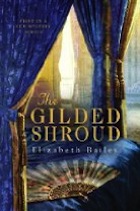
Gilded Shroud, TheElizabeth Bailey, The Gilded Shroud

Ottilia Draycott has just accepted a position as companion to the Dowager Lady Polbrook, expecting nothing more adventurous than a change of scenery after her former position as governess to her two young nephews. But on her very first day at her new post, the current Lady Polbrook (the dowager’s daughter-in-law) is found dead in her room, having been strangled sometime during the night. The household immediately falls into a panic, especially when it becomes evident that the master of the house has disappeared. Ottilia knows that suspicion is bound to fall on Randal Polbrook; no one knows where he has gone or why, and it’s common knowledge that he and his wife were estranged. But Ottilia, after examining the scene of the crime, believes the late Lady Polbrook was entertaining a lover on the night she died. She shares her suspicions with the dowager and with Lord Francis Fanshawe, the younger brother of the absent marquis. Together, they try to discover the lover’s identity and clear Randal’s name, while minimizing the scandal as much as possible. Meanwhile, the pragmatic, clear-headed Ottilia finds her objectivity compromised as she grows closer to Lord Francis.

I love a good historical mystery, and this book is a very solid member of the genre. Ottilia (despite her ridiculous name) is a very likable heroine, with a keen intelligence and a mischievous sense of humor. The other major players are also interesting, from the sharp-tongued but kindly dowager to the handsome Lord Francis. At times I felt that the characters were essentially copied from Georgette Heyer, but since I’m a big Heyer fan, I didn’t mind too much! And one big difference between this book and Heyer’s novels is that here, the servants aren’t just window dressing; they actually have some relevance to the plot. The mystery is well done, although I was able to guess the culprit before the solution was revealed in the book. I also liked the writing style, which seemed appropriate to the time period but was still fairly easy to understand. Oddly enough, my least favorite part of this book was the romance, which just seemed a bit stilted. Overall, I liked this book and will certainly read the sequel at some point, but I didn’t love it in the same way I love Kate Ross’s books, for example.

Review: Don’t Point That Thing at Me

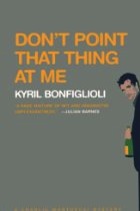
Don't Point That Thing at MeKyril Bonfiglioli, Don’t Point That Thing at Me

This picaresque novel is narrated by the Hon. Charlie Mortdecai, an art dealer who usually operates on the shady side of the law. In the opening scene he is visited by Inspector Martland (of a secret branch of the British police) in connection with a stolen Goya. Mortdecai claims to know nothing of the matter, but he cheekily admits to the reader that it is hidden under the floorboards. After Martland’s visit, Mortdecai knows he must unload the painting, but his mission is complicated by the murder of one of his associates. Even worse, someone seems to want Mortdecai dead as well — so he strikes a bargain with Martland to get diplomatic passage to America, where he hopes to make good his escape. There he encounters a variety of adventures, from constant surveillance by men in blue Buicks to the sexual aggressiveness of a rich American widow. Through it all, Mortdecai maintains a cheerful unconcern as he matches wits with several dangerous opponents.

I have very conflicting feelings about this book. On the one hand, I don’t think I understood the plot at all; there’s definitely a painting involved, and a valuable antique Rolls Royce, and various people who want Mortdecai dead, but I was always a bit confused about what was actually going on. On the other hand, Mortdecai has a delightful narrative voice — very reminiscent of Bertie Wooster, if Bertie were an art thief with a crasser mode of expression. (For example, Mortdecai’s valet/bodyguard is called Jock Strapp, which is either funny to you or it isn’t.) So the book does provide a lot of laughs, but in the end I’m not really sure what to think of it. The novel is first in a series, and I may check out the others at some point. The movie “Mortdecai,” which comes out today in the U.S., is also based on this series, and I’m interested to see how it deviates from the book. Johnny Depp seems like a very odd casting choice, for starters, but I’m nevertheless intrigued!

Review: Mrs. Tim of the Regiment

Mrs. Tim of the RegimentD.E. Stevenson, Mrs. Tim of the Regiment

This novel purports to be the diary of Hester Christie, a young army wife who must juggle her responsibilities to her family, to the regiment, and to the society in which she lives. Lively and popular, Hester has many demands on her time, including mandatory socializing with several disagreeable officers’ wives. But her perpetually busy life becomes even more chaotic when her husband, Tim, is transferred to a regiment in Scotland. Hester is sorry to leave but tries to make the best of it, although it means she will be lonely and friendless while Tim is busy with army duties. However, she soon makes a few friends and is even invited to spend time in the country with one of them. In these beautiful surroundings, with congenial company, Hester becomes more reconciled to her new life — and finds plenty of ways to occupy her time, including assisting several young lovers. Little does she realize, of course, that one of the men she meets is interested in her!

When I want a light, charming comfort read, D.E. Stevenson always fits the bill, and this book is no exception. It’s an interesting mixture of slice-of-life with comedy of manners, as Hester can’t help poking fun at some of her less congenial acquaintances. I thoroughly enjoyed her narrative voice and found her a very likeable character. The biggest flaw in the book, in my opinion, is her husband Tim. He’s not “on page” terribly often, and while it’s obvious that Hester loves him very much, she also can’t help noticing his little foibles. So I was a bit lukewarm on their relationship, especially when Hester’s other suitor, Major Morley, is so much more interesting! Morley actually plays a fairly large role in the book, as he is Tim’s fellow officer and ends up visiting Hester’s hostess in the Scottish countryside. He has an air of cynicism but is also quite sweet to Hester, and I couldn’t help wishing that she was single (and less oblivious) so that they could get together! But aside from that, I enjoyed the book and would be interested in reading the sequels, though I think they might be out of print now.

Review: The Laws of Murder

Laws of Murder, TheCharles Finch, The Laws of Murder

Victorian gentleman Charles Lenox has given up his seat in Parliament to return to his true vocation as a detective. He’s even started a detective agency with his friend John Dallington, former rival Polly Buchanan, and a talented Frenchman called LeMaire. Though the business is new, Lenox is confident that it will succeed; but a streak of bad publicity in the London newspapers causes trouble for the fledgling enterprise. Just when Lenox is considering throwing in the towel, however, an unexpected murder forces the police to seek out his services — for the victim is none other than Inspector Jenkins of Scotland Yard. Moreover, Jenkins’ body was found outside the town house of the Marquess of Wakefield, one of London’s most hardened (yet so far uncatchable) criminals. Was Jenkins investigating Wakefield when he met his death? Was Wakefield himself the killer? Lenox and his fellow detectives are on the case, but the conspiracy they uncover is more shocking than they ever could have imagined.

I like this series a lot, and this book is another good installment; but I have to confess, one month later, it’s hard for me to remember much about it! I do recall thinking that the mystery was a little predictable, but there were certainly enough twists and turns to keep me interested. The book also takes time to check in with the various secondary characters who comprise Lenox’s world, which I appreciated — although I would have liked to see even more of McConnell, Lady Jane, and the others! I also think it was a smart move to make Lenox part of a detective agency, as this introduces some new characters and relationships into the mix. The agency also illustrates some interesting areas of blindness in Lenox, especially regarding class. When the business begins to fail, Lenox is upset, but he is never in danger of experiencing real financial hardship. Some of his colleagues, however, depend on the agency for their livelihood, and this doesn’t occur to Lenox initially. So I appreciate that we got a little character growth in this installment, and I look forward to the next book!

Review: In for a Penny

In for a PennyRose Lerner, In for a Penny

The young Lord Nevinstoke, known to his friends as Nev, loves nothing more than a good time, whether it’s drinking with his friends or dallying with his mistress. But when his father dies unexpectedly, Nev suddenly inherits the responsibility of being head of the family, as well as a mountain of crushing debt. With a large estate to repair and no money for the task, his only choice is to marry a rich woman, and heiress Penelope Brown fits the bill nicely. Since Penelope’s father is a tradesman, she is not of Nev’s class, but her money seems a fair trade for his title. Nev and Penelope marry quickly, but despite their growing attraction to each other, they encounter many obstacles. Nev’s estate is in even worse shape than he thought, and he has no knowledge of business matters. His tenants have grown increasingly discontented as the estate has become less prosperous. And meanwhile, Penelope feels uprooted from everything familiar and thrust into a place where she doesn’t belong. Will Nev and Penelope be able to solve these problems and finally find happiness together?

I enjoy a good Regency romance every once in a while, and I’d read that this one is the next best thing to Georgette Heyer. I don’t know if I’d go that far, but I do think the book is very well written and often entertaining. I enjoy the “marriage of convenience turns into something more” trope, so I was predisposed to like the plot, and I also liked both Nev and Penelope as characters. Specifically, I was a big fan of how Nev grows and changes throughout the book. He starts out as a careless young man — albeit a likable one — who lives entirely for pleasure. But when he is confronted with his responsibilities for the first time, he takes them seriously and tries to learn all he can. I also sympathized with Penelope quite a bit, as she experiences a lot of insecurity when she marries “above” herself. I did get annoyed at all the misunderstandings between her and Nev, though; every time it seemed like they were finally on the same page, one of them would second-guess the relationship for no good reason. There was also a lot more, ahem, “romance” than I was expecting. But overall, as Regency romances go, this is a fairly enjoyable one.

Review: The Brontës Went to Woolworths

Brontes Went to Woolworths, TheRachel Ferguson, The Brontës Went to Woolworths

This book follows the fortunes of three sisters: Katrine is an actress, Deirdre is a journalist, and Sheil is still in the schoolroom. All three girls have very rich imaginations, and they have populated their world with a host of ficitonal friends, some of whom are based on real people. When the girls’ mother acts as a juror in the courtroom of Judge Toddington, the sisters immediately adopt him and his wife into their circle of imaginary friends. They affectionately nickname him “Toddy” and concoct a wealth of details about his life, from the state of his marriage to his favorite foods. But their world of make-believe collides with reality when Deirdre actually meets Judge Toddington’s wife at a charity event. As she and her sisters get to know Toddy in real life, will they be able to cope with the shattering of their illusions? Are they bound to be disappointed by the flesh-and-blood Toddingtons? And what would Toddy and his wife say if they knew the truth?

This is a strange little book, and I’m not quite sure how I feel about it. On the one hand, Deirdre and her sisters are a lot of fun, and their flights of fancy are as entertaining as they are ridiculous. I often got confused about what was actually fantasy versus reality — but then again, I think that’s the point. I also loved the actual characters of Judge Toddington and his wife, as distinct from the girls’ fictional narrative about them. They are both very kind people who actually want to become friends with the girls, and when they realize that they are stepping into a pre-existing narrative, they do their best not to disturb the girls’ fun. On the other hand, I couldn’t help being a little put off by the girls themselves. The reader is clearly supposed to sympathize with their flights of fancy, but I couldn’t help identifying a little bit with Sheil’s governess, who is shocked by the magnitude of their fantasy world. These girls are not practical, and they live a wildly sheltered life; I found them quite irritating at times. Still, the book is very charming overall, and I’d recommend it to anyone who likes the premise.

Review: Good Omens

Good OmensNeil Gaiman & Terry Pratchett, Good Omens

Since the beginning of the world, the forces of good and evil have been preparing for battle, and now Armageddon is imminent. The Four Horsepersons of the Apocalypse roam the earth, the Antichrist is about to be born, and the end times are at hand. But angel Aziraphale and demon Crowley aren’t terribly enthusiastic about the upcoming war and ensuing destruction of Earth. In fact, they’ve both become rather fond of the planet and the foolish humans who populate it. So unbeknownst to their superiors, they strike a truce: neither one of them will attempt to influence the newborn Antichrist in their favor. Little do they know that, thanks to a mix-up at the hospital, they’ve focused their efforts on the wrong baby! Meanwhile, the Antichrist grows up as a perfectly normal human boy called Adam Young, who knows nothing about his special destiny. But as the signs of the end times become harder to ignore, Aziraphale and Crowley must race against time to prevent Adam from unwittingly using his powers to destroy the world.

This book is a delightful romp through the Book of Revelation and common cultural perceptions regarding the end of the world. It truly has something for everyone, from demons to witchfinders to psychics to aliens, and I lost count of the jokes that made me laugh out loud! I loved the fact that Famine (one of the Horsepersons) was a diet guru, and that one of Crowley’s most notable Hellish accomplishments was the M25 motorway surrounding London. The book’s plot is rather sprawling, and I wasn’t a big fan of every storyline (didn’t care too much about Anathema Device, for example, although I loved Newton Pulsifer — the name alone!). But then again, who cares about plot when there’s such brilliant silliness to enjoy? I do think this book would be best enjoyed by people who are at least somewhat familiar with the Book of Revelation, because otherwise you won’t get all the jokes! But I honestly think that anyone who enjoys British humor will find this book hugely entertaining.

Review: The Beauty Chorus

Beauty Chorus, TheKate Lord Brown, The Beauty Chorus

This novel centers around three female pilots who join the Air Transport Auxiliary, ferrying planes back and forth between Allied bases during World War II. Evie Chase is a headstrong young debutante who enjoys her life of privilege but wants to “do her bit” for the war effort — and escape from her odious stepmother. Stella Grainger is struggling with being separated from her baby boy, whom she’s sent to her husband’s parents in Ireland. And Megan Jones, a 17-year-old Welsh girl, wants nothing more than to keep her family’s farm running and to marry her sweetheart, Bill. These three young women couldn’t be more different, but when they join the ATA and become roommates, they form an extremely close bond. Together they deal with the challenges of flying different aircraft, the discrimination they face for being women in a man’s world, and the joys and sorrows of wartime love affairs. But despite their strength and determination, they can never quite escape the brutal realities of war.

This is a book I really wanted to love. The story has so much going for it — WWII, female pilots, romance, and even a little espionage! — but unfortunately, I was disappointed. The biggest problem for me was the clunky writing style; for example, on one occasion, the author drops a character name into the story before introducing that character. I had to flip backward to make sure I hadn’t somehow missed his entrance, but in fact, it was just a confusing way to introduce the new character. There’s also a lot of head-hopping in the book; not only does the point of view shift between the three girls (which would be understandable), but there are random paragraphs from the perspectives of their suitors and various other minor characters. Finally, while I liked the main characters in theory, they never really rose above clichés. For example, Evie is a typical HF heroine: incredibly beautiful, naturally talented as a flyer, and implausibly far ahead of her time. Overall, while the book certainly wasn’t a slog, I can’t say I’d recommend it either.

Review: Bellman & Black

Bellman & BlackDiane Setterfield, Bellman & Black

This atmospheric novel tells the story of William Bellman, who makes one decision in childhood that will alter the entire course of his life. When he is ten years old, he and a few friends are playing in the field near their village, and they see a rook on a far-off tree branch. Will bets his friends that he can hit the bird with his slingshot, and to everyone’s astonishment, he actually does it. Will and his friends soon forget the incident, but from then on, rooks become a touchstone and a bad omen for William Bellman. As he gets older, he becomes more and more successful: first he get a job at his uncle’s mill, then rises through the ranks until he eventually runs it. He marries and has children, and he begins to make a very comfortable living. But when an illness sweeps through the village and takes most of William’s family, he will do anything to save his remaining daughter — including making a desperate deal with the mysterious Mr. Black. William’s encounter with Black leads him to an entirely different business venture, one that eventually threatens to consume him.

I absolutely loved Diane Setterfield’s debut novel, The Thirteenth Tale, so I had high expectations for this book. Unfortunately, I’m coming away from it with mixed feelings. The writing style is just as rich and gorgeous as I remember, and I found myself reading very quickly despite the slow-moving plot. I also admire the novel’s atmosphere of suspense; it has a wonderfully autumnal, sinister quality, despite the fact that not a lot of scary stuff actually happens. In fact, that may be my biggest problem with the book: there’s this great buildup of tension throughout the novel, but in the end there’s no payoff. The interludes about rooks — and William’s encounters with them throughout the book — are meant to heighten the suspense, I think, but I didn’t really understand their role in the story. Frankly, I was a bit confused about the story as a whole; I was expecting a Faustian narrative in which William essentially sells his soul for success, but that’s not really what happens. In short, I’m not sure what I’m supposed to be taking away from this book — but I’m definitely not giving up on Setterfield yet!

Review: The Lady Vanishes

Lady Vanishes, TheEthel Lina White, The Lady Vanishes

Iris Carr is a privileged young Englishwoman enjoying a holiday somewhere in Europe with a large group of friends. But when her crowd is ready to leave, Iris decides to stay an extra day and enjoy the beauties of the mountains by herself. When she boards the train to go home, she is immediately isolated from the other passengers because she doesn’t speak the native language. So when a talkative English spinster named Miss Froy introduces herself, Iris is glad to have the company, even though Miss Froy is rather a bore. After a long chat, Iris takes a nap in her compartment; but when she wakes up, Miss Froy is gone! Eventually she begins to worry, so she finds a young Englisman to act as interpreter and ask the other passengers where Miss Froy went. To Iris’ shock, they all claim not to remember Miss Froy and say Iris must be imagining things. Iris knows she didn’t imagine Miss Froy, but without any evidence to the contrary, how can she be sure? And if the lady does exist, why won’t anyone admit to seeing her?

Recently I watched Alfred Hitchcock’s “The Lady Vanishes” and really enjoyed it, but I had no idea it was based on a book! I’m glad I discovered the novel, though, because with all due deference to Hitchcock, the book is better. While the movie is a somewhat straightforward thriller, the book has more psychological tension because it keeps you in the dark about Iris’ mental state for much longer. Are the other passengers involved in some sort of unlikely but sinister conspiracy, meaning that she and Miss Froy are both in danger? Or, perhaps even worse, is Iris having a mental breakdown and imagining the whole thing? Either way, she’s trapped in a nightmarish situation, and the book does an excellent job of heightening this tension. I also think the book’s ending is better than the movie’s; while the film ends with a dramatic shootout, the novel has a much more subtle conclusion. So I would definitely recommend this novel to anyone who likes psychological thrillers, especially if you’ve seen or plan to see the movie!