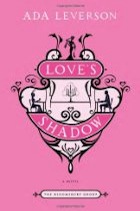
Review: Love’s Shadow

Love's ShadowAda Leverson, Love’s Shadow

Edith Ottley, a pretty and intelligent young woman, has begun to be bored with her life. Her husband Bruce is pompous, condescending, and unaware of his intellectual inferiority to his wife. Edith’s only solace is the companionship of her friend Hyacinth Verney, a young heiress who is living a dashing and unconventional life in London. Hyacinth has just begun to explore the possibility of getting married, and she is strongly attracted to the handsome but aloof Cecil Reeve. But Cecil, in turn, is hopelessly in love with a widow ten years his senior, although she doesn’t return his affections. In short, this novel is a comedy of manners about a social circle in which everyone is in love with the wrong person. Amidst all their tangled romances and unrequited loves, can any of the characters find true happiness?

I read this novel a couple weeks ago, and I find that I don’t have much to say about it now. The book is quite witty in places, and some of the situations and characters strongly reminded me of Jane Austen. (Bruce Ottley, for example, is a slightly more sympathetic Mr. Collins if ever there was one — which makes me wonder why Edith married him in the first place!) But this book never really goes below the surface or allows the reader to sympathize with any of the characters. All the conflicts in the book came across as trivial to me, and in the end I didn’t much care how all the various romances resolved. If you enjoy stylish, witty comedies of manners, you’ll find something to enjoy in this novel; but if you need a strong plot or sympathetic characters, you’ll end up feeling frustrated, as I did.
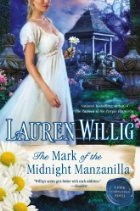
Review: The Mark of the Midnight Manzanilla

Mark of the Midnight Manzanilla, TheLauren Willig, The Mark of the Midnight Manzanilla

In the autumn of 1806, a popular novel called The Convent of Orsino (written by none other than Miss Gwen!) has sparked a vampire craze in fashionable society. Rumors swirl around one man in particular — Lucien, Duke of Belliston — whose long absence from society is seen as evidence that he is a creature of the night. Practical, outspoken Sally Fitzhugh is determined to prove this rumor false, so she seeks out an acquaintance with the duke. For Lucien, the rumor escalates from inconvenient to dangerous when a young woman is murdered at a society ball, with what appear to be fang marks on her throat. Lucien and Sally quickly realize that someone is framing Lucien for the murder, so together they decide to find the real killer. Is it someone with a personal grudge against Lucien, or could the nefarious French spy known as the Black Tulip be at work again? The more time Lucien and Sally spend together, the more they are drawn to each other; but before they can be together, they must defeat a cunning killer.

This 11th novel in the Pink Carnation series once again combines romance, historical fiction, and a touch of intrigue for a very enjoyable read. I wasn’t totally enthused about the plot of this installment beforehand, since vampires aren’t really my thing, but fortunately they’re not a big part of the story. I also didn’t completely warm up to Lucien or Sally, both of whom seem like types rather than characters…Sally in particular just seems like a younger version of Miss Gwen. But there’s still an awful lot to enjoy in this book! I was pleasantly surprised by the resolution of the mystery, which is quite clever and hangs together well. And as always, I adore the light, tongue-in-cheek tone of the series; it doesn’t take itself too seriously and aims to be entertaining above all else. I should mention that the contemporary story takes some significant steps forward in this installment, with Eloise facing important decisions both personally and professionally. So I’m really looking forward to the next (and last!) Pink Carnation novel, which will finally tell the story of the Carnation herself!

Review: Somewhere in France

Somewhere in FranceJennifer Robson, Somewhere in France

Lady Elizabeth Neville-Ashford, known to friends and family as Lilly, has always felt stifled by her privileged upbringing. Though she’d like to go to university and embark on a career, it seems her only task in life will be to snare a rich, titled husband. Unfortunately, the only man to catch her eye is Robbie Frasier, a promising young surgeon whom her parents consider quite unsuitable. But with the outbreak of World War I, Lilly suddenly has access to a variety of new opportunities. Hoping to help with the war effort, she learns how to drive and eventually applies to the Women’s Army Auxiliary Corps, where she becomes an ambulance driver. Meanwhile, she carries on a clandestine correspondence with Robbie, who is working in a field hospital in France. When she and her colleagues are offered a chance to transport injured soldiers from the front lines, Lilly jumps at the chance to be reunited with Robbie. But will the tragic violence of this war ultimately separate them forever?

I picked up this book because I wanted to read something set in World War I for the centennial, but I wasn’t in the mood for something incredibly dark or depressing. Unfortunately, this book goes too far in the other direction; it’s a light, pleasant romance, but the World War I setting is a mere backdrop. I don’t need to read about the horrors of war in graphic detail, but I do want to feel that the characters are in real danger, that they must struggle against real obstacles, and that the war has left some kind of mark on them. Instead, even the descriptions of what Robbie sees on his makeshift operating table are bland, evoking no emotional response whatsoever. Part of the problem is that Lilly and Robbie are both such clichés: she is the naive and enthusiastic upper-class heroine, while he is the overprotective self-made hero. I just didn’t really care about either character, so I wasn’t invested in their romance at all. I was more interested in the secondary characters, Lilly’s brother Edward and her friend Charlotte — I’d love to read the story of their romance! Overall, this book isn’t a bad read, but it is completely and utterly forgettable.

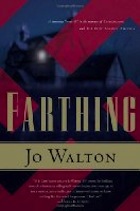
Review: Farthing

FarthingJo Walton, Farthing

This novel is a murder mystery with a twist: what if a fascist English government had made a separate peace with Hitler? In the world of this book, it’s 1949, and war still rages between the Third Reich (which now encompasses all of Europe) and the Soviet Union, but England has managed to remain at peace. The “Farthing set,” who engineered the treaty with Hitler, have congregated at an English country estate, where Lucy (the daughter of the house) and her husband David are staying. Because David is Jewish, they both endure various snubs and cruelties from the other guests. Then a notable member of the Farthing set is murdered, and his corpse is decorated with Jewish symbols. Lucy is convinced that her husband has been framed, and Inspector Carmichael of Scotland Yard agrees. But as the English government becomes more totalitarian and anti-Semitic, both Lucy and Carmichael must make devastating choices that could allow the murderer to go free.

This book was unsettling, to say the least, and I have very conflicting feelings about it. Part of the story is told from Lucy’s perspective, and I really enjoyed her character and her narrative voice. I also think the book very skillfully depicts a nation’s slow slide into despotism; one of the most heartbreaking and effective parts of the book, for me, was David’s strong faith in England. Despite the hardships he endures, he is convinced that Jews will never be persecuted in England the way they are in the Reich…but of course, events in the book ultimately prove him wrong. On the negative side, the “mystery” element of the book is very underdeveloped. I also became irritated by the sheer number of secret, illicit, and/or adulterous relationships in the book; it seemed like EVERY character was involved, which strained my credulity. (Also, everyone seems to have really good “gaydar,” if you’ll pardon the expression!) Overall, I’m not sure the positives outweighed the negatives for me, and I’m still undecided about continuing with the series.

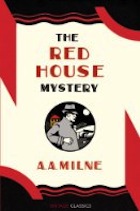
Review: The Red House Mystery

Red House Mystery, TheA.A. Milne, The Red House Mystery

In the time-honored tradition of the classic British mystery, a house party goes terribly awry when one of the guests is murdered and the host disappears. Mark Ablett, owner of the Red House, enjoys collecting people around him, so the house party includes such diverse characters as his private secretary, a military man, an actress, and several idle young people. The party appears to be going well until Ablett learns that his brother, the black sheep of the family who had been living in Australia, will be visiting the Red House for an unspecified but sinister reason. When Robert is inevitably murdered, Mark is nowhere to be found. Is he the murderer, or did someone else in the house party do the deed? Young man-about-town Antony Gillingham just happens to arrive on the scene at a pivotal moment, so he decides to try his skill as an amateur detective; but ultimately he discovers that the solution to the mystery is far more tragic than amusing.

When I came across this book a few years ago, I was delighted to discover that the creator of Winnie the Pooh had written a mystery story! It follows many conventions of the classic Golden Age mystery — such as being “fair,” with all clues presented to the reader as the detective discovers them — but it turned out to be a bit darker and sadder than I was expecting. Tony discovers the murderer’s identity fairly early in the book, so the bulk of the mystery lies in discovering how and why the deed was done. And the thing is, I found the murderer very sympathetic! So I was disappointed that this character turned out to be the guilty party. Also, unlike many mysteries from this period, this book doesn’t contain much humor, nor are there any subplots to lighten the mood of suspense and doom. Tony’s sidekick provides a few funny moments, but otherwise the tone remains pretty dark. Finally, Tony’s character isn’t developed very much, which disappointed me; he seemed really interesting, and I would have liked to know more about his backstory. The book is still worth reading if you enjoy Golden Age mysteries, but I have to admit, it wasn’t my favorite.

Review: In Tearing Haste

In Tearing HasteCharlotte Mosley, ed., In Tearing Haste: Letters Between Deborah Devonshire and Patrick Leigh Fermor

Deborah Devonshire began life as the youngest of the (in)famous Mitford sisters, but she unexpectedly became the duchess of Devonshire when her husband, Andrew Cavendish, inherited the duchy from his brother. Patrick Leigh Fermor was a travel writer who became a war hero by kidnapping the commanding German officer on the Nazi-occupied island of Crete. (The movie “Ill Met by Moonlight” is a fictionalized account of his experience.) The two first met when Deborah was still a young debutante, but they eventually formed a deep friendship, as well as a correspondence that would last for more than half a century. Although “darling Paddy” and “darling Debo” lived through many political upheavals and personal tragedies, their letters to each other always remained upbeat, humorous, and cheerful.

I usually find nonfiction very slow going, but this book was a pleasure to read. Both “Debo” and “Paddy” wrote in a lively conversational style that’s very easy to read, and I felt truly immersed in their day-to-day lives. Patrick often wrote about the various exotic places he visited, including the little town in Greece where he and his wife eventually settled. Deborah largely stayed on the Devonshire estates in England and Ireland, where she waxed poetic about sheep breeding and various fox-hunting excursions. The book also provides some fascinating insights into the psychology of the British upper classes: for example, Deborah mentions, with the utmost casualness, dining with President Kennedy several times. Though there’s not much in-depth discussion of the historical events through which they lived, anyone who is interested in reading a firsthand account of the 20th century should pick up this book! I’d also recommend it for fans of the Mitfords or early 20th-century British literature in general.

Review: The Young Clementina

Young Clementina, TheD.E. Stevenson, The Young Clementina

Charlotte Dean can’t remember a time when she wasn’t in love with Garth Wisdon, her childhood playmate and next-door neighbor. Although Charlotte is merely the daughter of the local vicar, while Garth is the heir to a large estate, she grows up confident that they will marry someday. As they reach adulthood, Garth seems to reciprocate her feelings, but their love is arrested by the outbreak of World War I. Garth goes off to fight in the war, and when he returns, Charlotte no longer recognizes the man she once knew. The new Garth is angry and cynical and seems to hold her in contempt. Nevertheless, she is still overwhelmed with shock when he quickly becomes engaged to her younger sister, Kitty. Now Charlotte is living in a shabby flat in London, where she has little contact with Garth and Kitty. But a tragic turn of events brings them both back into her life — along with their strange, shy daughter, Clementina — and Charlotte must make a decision that could alter the entire course of her life.

I’m so glad Sourcebooks is reprinting the novels of D.E. Stevenson, because I’ve really enjoyed all the ones I’ve read so far! This book is a bit more somber than her Miss Buncle series, but it’s still a nice, leisurely, and ultimately sweet read. I was expecting the central storyline to be a romance, but really the book is much more about Charlotte’s growth as she is forced out of her comfort zone. In the beginning, it’s a bit difficult to feel much sympathy for her because she accepts her sister’s betrayal so passively. But as she emerges from her solitary cocoon and starts to cultivate friendships, she becomes a much stronger person who is capable of standing on her own two feet. On the other hand, I never felt much sympathy for Garth, even after he explained his actions; in my opinion, everything he suffered throughout the novel was his own stupid fault! But overall, I’d definitely recommend this book to people who like slower-paced, old-fashioned books with a contemplative feel.

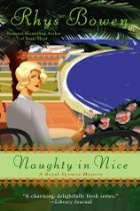
Review: Naughty in Nice

Naughty in NiceRhys Bowen, Naughty in Nice

Lady Georgiana Rannoch is facing yet another a dreary winter in London. Despite her royal pedigree — she’s 34th in line to the throne of England — she has no income, and the worldwide depression in the wake of World War I has made it impossible for her to find work. What’s more, her brother Binky and his intolerable wife, Fig, have decided to close up their London house, which means Georgie will be essentially homeless. Fortunately, the queen comes to her rescue by sending her to the French Riviera on a secret mission: she must recover a stolen snuffbox, believed to be in the possession of one Sir Toby Groper. At first, Georgie is ecstatic to be in Nice, mingling with rich English pleasure-seekers and dashing French aristocrats. She even meets Coco Chanel, who asks her to model one of the looks from Chanel’s new collection. But then a priceless necklace is stolen and a man is murdered — and in the eyes of the French police, Georgie is the prime suspect! Can she clear her name by finding the real thief and murderer?

I’m really enjoying the Royal Spyness series, and this book (the 5th installment) is no exception. It’s a light, exuberant mystery that still manages to incorporate a lot of information about this time period. For example, the Prince of Wales and his paramour, Wallis Simpson, make brief appearances in the book, and there are also a few mentions of Hitler as he begins his rise to power in Germany. In addition to the setting, I enjoyed the plot of this book, which is a bit more substantial than some of the earlier books in the series. Georgie is a fun character, but she’s not really much of a detective; she tends to stumble onto the solution of the mystery rather than actually investigating or deducing anything. In this book, though, she actually does take some initiative and is able to put the pieces together — though not before her own life is endangered once more. All in all, I think this is one of the better installments of the series, and I’m planning to continue with The Twelve Clues of Christmas in December!

Review: A Blunt Instrument

Blunt Instrument, AGeorgette Heyer, A Blunt Instrument

When wealthy Englishman Ernest Fletcher is found in his study with his head bashed in, his relatives and neighbors are shocked. Ernest was well-liked and seemingly had no enemies, so why would anyone want to kill him? But as Superintendent Hannasyde and Sergeant Hemingway investigate the case, they soon uncover several motives. First there’s Neville Fletcher, the dead man’s nephew and heir to his fairly large fortune. Then there is Helen North, who has a secret involving Ernest that she doesn’t want anybody — especially her husband — to know about. Or the culprit could be Abraham Budd, a businessman who was complicit in some of Ernest’s shady financial dealings. But as the police collect motives and unearth secrets, they become more and more puzzled by the conflciting testimony about what actually happened on the night of the murder. And when a second victim appears, Hannasyde and Hemingway know they will have to act fast to catch a partiuclarly elusive killer.

In general I prefer Heyer’s romances to her mysteries, but I really enjoyed this book! There are some wonderful characters in this one: the vague, mischievous Neville, who is much sharper than he appears; the blunt, monocle-wearing Sally Drew, who writes detective novels; Constable Glass, the Bible-quoting policeman; and the impatient, down-to-earth Sergeant Hemingway. The dialogue is witty and sparkling, as usual, and I loved the romance(s) that emerged throughout the course of the book. The mystery itself is also a bit more substantial than in some of Heyer’s other books, and I was surprised by the Christie-esque twist that revealed the murderer’s identity. Overall, if you’re interested in trying Heyer’s mysteries, I think this is a really good place to start! (Hannasyde and Hemingway are recurring characters in her mysteries, but the books absolutely do not have to be read in order.) I’m reading these mysteries in chronological order, so I’ll be interested to see whether they get even better as they go on!

Review: No Bed for Bacon

No Bed for BaconCaryl Brahms & S.J. Simon, No Bed for Bacon

In this hilarious send-up of the Elizabethan era — or rather, the Elizabethan era as perceived by popular culture — Sir Francis Bacon is desperate to obtain a bed that Queen Elizabeth has slept in during one of her royal progresses. He wants it to be an heirloom for his family, as he knows the bed’s value will only increase through the years. Sir Walter Raleigh’s attention is divided between his new cloak, which he hopes will be the envy of everyone at Elizabeth’s court (especially that dandy, the Earl of Essex), and his upcoming introduction of the potato to England. Meanwhile, Sir Francis Drake is grumbling about the fact that he hasn’t been able to do any really good pirating in years; theater owner Philip Henslowe will do anything in his power to shut down his rival, Burbage; and Shakespeare is trying to work on a new play, Love’s Labour’s Wunne, but he keeps getting distracted by the problem of how to spell his own name. Add a little romance, an overly ambitious watchman, and some reminiscing about the glory days of the Armada, and the stage is set for high comedy with a few history lessons thrown in.

I didn’t know it until I read the introduction, but this book is actually part of the basis for the Academy Award-winning movie “Shakespeare in Love.” But while the movie focuses almost entirely on the romance between Shakespeare and the noble Lady Viola, in the book it’s just one of many plots involving the most famous figures of the Elizabethan age. If you know anything about the era or are interested in learning more, I highly recommend this book! It’s pure farce, so there isn’t much “plot” to speak of, but the jokes are more than funny enough to make up for that! One of my favorites was an exchange between Shakespeare and Bacon about some plot element of Shakespeare’s play that Bacon didn’t like. Shakespeare responds with great indignation, “Master Bacon, do I write my plays or do you?” Then there’s this internal monologue from a Puritan who seeks to shut down the theater: “People had no right to enjoy themselves. He was going to stop them. His cause was a just one and he knew it. He was enjoying himself.” So if you like Shakespeare and don’t mind a little (or a lot of) silliness, you should definitely check out this book!