Mini-Reviews: Bird, Clockwork, Murder

Josie Silver, The Two Lives of Lydia Bird

When Lydia Bird’s fiancé, Freddie, dies in a car accident, she’s absolutely devastated. Even mundane daily tasks like bathing and eating feel unbearably difficult, and sleep is out of the question. But when she takes an experimental sleeping pill her doctor prescribes, she has a vividly lucid dream — or perhaps enters a parallel universe — in which Freddie is still alive. Soon her waking life becomes a chore as she waits desperately for the next time she can sleep and be with Freddie. But as time passes, she must decide where she truly belongs. This was an interesting book to start the new year with, since it’s all about exploring what-if scenarios, remembering the past, and making choices about the future. The novel is very slow-paced, but that makes sense, as more than anything else it’s a story about grief and navigating life after a big loss. There’s a slight element of romance that I didn’t find totally satisfying, but otherwise I liked the book and would recommend it if the premise appeals to you.

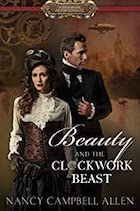
Nancy Campbell Allen, Beauty and the Clockwork Beast

In this steampunk twist on the gothic novel, Lucy Pickett travels to Blackwell Manor to care for her beloved cousin, Kate, who is suffering from a mysterious illness after her recent marriage to the earl of Blackwell’s younger brother. At the manor, Lucy experiences many terrors, from ghostly apparitions to the earl himself, whose surly and intimidating demeanor hides dangerous secrets. She and the earl, Miles, eventually team up to discover what’s causing Kate’s illness, who’s behind a spate of vampire attacks in the area, and who murdered Miles’s recently deceased wife and sister. So yes, there’s a lot going on in this book (and I didn’t even mention the werewolf!), but it’s easy enough to follow the narrative. I liked plucky Lucy and brooding Miles, and though the book is steamless, their mutual attraction is clear. I wasn’t as impressed with the book as I remember being when I first read it, but I enjoyed it nonetheless and look forward to continuing with the series.

Delano Ames, She Shall Have Murder

Jane Hamish, a clerk in a London law office, is writing a mystery novel in which her coworkers and legal clients are the main characters. Her boyfriend, Dagobert Brown, instigated the project and insists that Mrs. Robjohn, an elderly client who’s convinced mysterious men are out to get her, should be the murder victim. But when Mrs. Robjohn really does die — apparently due to an accidental gas leak in her home — Dagobert is convinced she was actually murdered and decides to investigate. This is my first encounter with Golden Age mystery writer Delano Ames, but it won’t be my last because I thoroughly enjoyed this book! Jane narrates the story and has a delightfully witty voice, and I’m intrigued by her relationship with Dagobert (this is book #1 in the series, but there’s clearly some interesting backstory that will hopefully be explored in later installments). The mystery itself is fine but not remarkable; the book’s strengths are its characterizations and style. I’ll be looking out for more in this series.

Mini-Reviews: Once, Ex, Temptation

Diane Farr, Once upon a Christmas

When Celia Delacourt is left homeless and penniless after the tragic deaths of her parents and siblings, she is unexpectedly offered a home by her distant cousin, the duchess of Arnsford. The duchess is rigidly proper and seeks to mold Celia in her image so that she can become a suitable wife for the duchess’s son, Jack. Meanwhile, Jack has no intention of marrying right now, especially not a girl of his mother’s choosing. So when he comes home for Christmas, he decides to act obnoxious to Celia in hopes of putting her off. The trouble is, he’s immediately attracted to her, and his ruse works a little too well — she becomes convinced he’s insane! This is a sweet little Regency romance, and while it’s not particularly substantial, the complexity of the duchess’s character adds a bit of weight to the narrative. The romance is cute (and steamless, which is a plus for me), and I also liked the secondary romance, which features Jack’s sister, a minor character from Farr’s The Nobody. This isn’t Farr’s best work, but I’m continuing to enjoy my journey through her backlist.

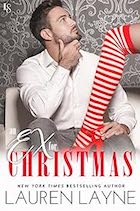
Lauren Layne, An Ex for Christmas

Third-grade teacher Kelly is single and lonely, so when a psychic tells her she’s already met her true love, she decides to track down her ex-boyfriends over the Christmas break and see if one of them might be Mr. Right. Her neighbor and longtime best friend, Mark, disapproves of Kelly’s plan, but he somehow always manages to be there for her when her meetups with her exes don’t go as planned. Eventually Kelly begins to see Mark in a different light and wonders if she should ditch her “reconnect with an ex” plan and instead explore a possible romance with Mark. This friends-to-lovers story didn’t particularly work for me. I can see the appeal of Mark, a strong silent type who’s pined for Kelly for years, but I also wonder why it took him so long to make a move! Further, their entire friendship is suspect because Mark never really wanted to be friends with Kelly; he was just biding his time until they could be together romantically. If you like this particular flavor of friends-to-lovers, this is a perfectly fine book, but the premise was not for me.

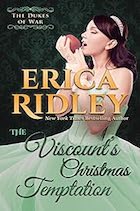
Erica Ridley, The Viscount’s Christmas Temptation

In this Regency romance novella, Lady Amelia Pembroke is a managing female who has decided it’s time to get married. She’ll seek a suitable groom at the 75th annual Christmas Eve ball hosted by Lord Benedict Sheffield. The only problem is that Benedict isn’t planning to host the ball this year, his ballroom having been destroyed by a rogue lightning strike (!). Undaunted, Amelia decides to help Benedict plan the ball in a new location — with or without his consent. Luckily, Benedict is intrigued by the beautiful and brainy Amelia, and he’s happy to go along with her plans while making a few of his own. This was…fine. The short length made any real character development or investment in the romance impossible, but I’m open to trying a full-length novel by Erica Ridley at some point. I’m not particularly eager to seek one out, though.

Mini-Reviews: Betting, Gambit, Midwinter

Lynn Painter, Betting on You

Charlie and Bailey first meet on a 10-hour flight, where his careless cynicism clashes with her uptight, rule-following personality. But they really get to know each other three years later, when they end up working at the same amusement park. Charlie is adamant that guys and girls can’t really be friends, but Bailey is determined to prove him wrong. As they grow closer, however, the lines between friendship and romance get confusingly blurry. The book’s cover copy emphasizes fake dating and multiple bets among the main characters, but these are both pretty minor plot points. In reality, the novel is a cute friends-to-lovers YA romance, though it also gets into some heavier issues, as both Bailey and Charlie struggle with being children of divorced parents. I enjoy Lynn Painter’s writing style; she does good banter and makes her characters feel like believable people. I also liked getting some of Charlie’s POV, though Bailey is the primary narrator. The book perhaps owes a little too much to When Harry Met Sally, but I liked it nonetheless and now want to rewatch the movie!

Evie Dunmore, The Gentleman’s Gambit

Between writing a book on female political leaders, managing her absentminded father’s household, and working for the suffragist cause with her three best friends, Catriona MacPherson is burned out. When she meets her father’s handsome new colleague, Elias Khoury, she’s immediately attracted to him but doesn’t think he (or anyone) could be interested in her. Meanwhile, Elias is on a mission to repatriate historical artifacts — legally or otherwise — to his homeland of Mount Lebanon. He doesn’t have time for romance, but Catriona intrigues him. As with the previous books in this series, Evie Dunmore tries to balance a love story with a lot of historical detail, to mixed effect. In this case, information about the women’s suffrage movement and the ethics of removing antiquities from their lands of origin overwhelmed the romance. Also, between Catriona’s negative internal narrative (she seems to struggle with some form of depression) and the Serious Political Stuff, there’s just no joy in this book. Since I want joy in my romance novels, this one didn’t work for me, and I doubt I’ll read any future books from this author.

Stella Riley, Midwinter Magic

This novella caps off the Rockliffe series and gives readers one last look at most of the main series couples. Adrian and Caroline, the earl and countess of Sarre, are hosting a Christmas party at their country estate, but complications ensue when Caroline’s vulgar mother and sisters show up uninvited. Two romances develop, one involving Adrian’s French friend, Bertrand Didier, and there’s even a Christmas miracle. This is undoubtedly the weakest installment of the Rockliffe series — perhaps unsurprisingly, since it’s a novella with few new characters and (mostly) low stakes — but I still enjoyed it overall. I wish Ralph and Elizabeth from Cadenza had made an appearance, as I would have loved to get a peek at their marriage, and part of me wanted to roll my eyes at the aforementioned miracle. But I guess that sort of thing is to be expected in a Christmas story! I definitely would not recommend this novella if you haven’t read and enjoyed the rest of the Rockliffe books, but it’s a sweet holiday treat for fans of the series.

Mini-Reviews: Mistress, Princess, Death

Mary Balogh, The Secret Mistress

Lady Angeline Dudley has no interest in marrying a rake like her brothers; she just wants a steady, responsible man who will nevertheless love her passionately. So when Edward Ailsbury, the earl of Heyward, chivalrously rescues her from the improper attentions of a rake, she falls in love with him at once. Meanwhile, Edward knows he needs to marry, and Angeline is certainly eligible, but her outspoken, slightly wild behavior horrifies him. He’s also drawn to her despite himself, but he has trouble reconciling his feelings with his long-held image of the perfect wife. This is the final book of Balogh’s “Mistress” trilogy and, in my opinion, the most enjoyable. Angeline is a somewhat unconventional heroine in that she’s not particularly deep or intelligent; rather, she’s a flighty chatterbox with terrible fashion sense but a very warm heart. Edward isn’t a typical hero, either — he’s very responsible and practical and not rakish at all. I loved them both and was rooting for them to get together, although the last few chapters got a bit too flowery and sentimental for my taste. Still, overall I quite liked this one, which is a bit lighter than Balogh’s usual fare!

Philip Pullman, The Tin Princess

This final book in the Sally Lockhart series doesn’t actually have much Sally in it. Rather, the plot centers around Adelaide, who vanished at the end of The Ruby in the Smoke but has now resurfaced as the wife of the crown prince of a tiny Central European country. Accompanied by intrepid detective Jim Taylor and German tutor Becky Winter, she must travel to Razkavia and learn how to be a princess. But court intrigues, foreign interference, and assassination plots threaten both their own safety and that of Razkavia as a whole. As with the other books in this series, this is an entertaining adventure novel that’s chock-full of plot. The characterization is a bit less convincing; I didn’t believe Adelaide would become an expert politician so quickly, and the romance between her and Jim is barely sketched in. So while this is a fun series and I’m glad I read it, I won’t be keeping it on my shelves.

Catherine Lloyd, Death Comes to Kurland Hall

Lucy Harrington is back in Kurland St. Mary to help her best friend, Sophia, with Sophia’s upcoming wedding. One of the wedding guests, Mrs. Chingford, is a conniving widow who delights in spreading malicious gossip and antagonizes several of the other guests. On the wedding day, Mrs. Chingford falls down a flight of stairs and dies, and Lucy is convinced it’s no accident. She and Major Robert Kurland must once again work together to discover the killer — and sort out their complicated feelings for each other. This is another enjoyable installment of the Kurland St. Mary series, though it’s not a particularly memorable one in terms of the mystery. But I do like the way the world is being built out and how some of the recurring series characters are being developed. Lucy and Robert’s romance also takes a step forward in this one, though I wish the book had focused on it more…there was so much buildup, but the resolution fell flat. Regardless, though, I’ll certainly continue with the series.

Mini-Reviews: Curse, Moonflower, Pearls

Elizabeth C. Bunce, A Curse Dark as Gold

Charlotte Miller has been struggling to run Stirwaters, the mill she’s inherited from her father. Stirwaters is plagued by bad luck; the local townsfolk say it’s cursed. Charlotte is far too practical to believe in curses, but as mishap after mishap befalls Stirwaters, she’s determined to do whatever it takes to save the mill — even accept the help of the mysterious Jack Spinner, who claims he can spin straw into gold. But his help comes with a price, and eventually he’ll ask for something Charlotte is unwilling to pay. I really liked this retelling of Rumpelstiltskin when I first read it; this time around, I still think it’s very well done, but it might be a bit too slow for me. Most of the book is just Charlotte becoming more and more miserable as Stirwaters is threatened, and she pushes all her loved ones away to deal with the problem alone, which I found frustrating. But Charlotte’s community is well portrayed, there’s a sweet romance with realistic ups and downs, and I liked the resolution to the curse. I’d recommend this for fans of atmospheric fairytale retellings who don’t mind a slower pace.

Lauren Willig, The Lure of the Moonflower

The final book in the Pink Carnation series focuses on the Carnation herself, Miss Jane Wooliston, who is on a mission to locate the missing Portuguese queen before the French do. But since she doesn’t know the country or the language, she’ll need the help of Jack Reid, a British agent (and former French agent) known as the Moonflower. But will she be able to trust him with the mission — and her heart? The plot of this book is even less substantial than usual; even the climactic scene doesn’t have particularly high stakes, and the matter of the missing queen feels like an afterthought. The meat of the book, though, is Jane and Jack’s relationship, which I think is quite well done. Since Jane’s been a pivotal series character since book #1, it was important that she have a love interest worthy of her, and Jack definitely fits the bill. The book also gives us one last look at several of the other series couples, which was fun but a little overkill. I also appreciated Willig’s “where are they now” note at the end of the book, which did a pretty good job of wrapping things up. Overall, I think this is one of the better books in the series and definitely a fitting end to the Pink Carnation’s adventures.

Darcie Wilde, The Secret of the Lost Pearls

In this installment of the Rosalind Thorne series, an old school friend requests Rosalind’s help to discover who stole her valuable pearl necklace. The woman fears that the thief is her youngest sister, Nora, who’s recently returned to the family after a scandalous and ill-fated elopement. But when Rosalind goes to stay with the family, she senses many secrets and soon identifies several other plausible suspects. This book has the same strengths and weaknesses as the previous books in the series: a likable main character and an interesting look at the fringes of Regency high society, but an overly complicated plot that made the book feel like a slog. I think the next book in the series just came out, or will shortly; but while the series has its good points, I’m no longer interested enough to continue. Thankfully, Rosalind and her friends end up in a reasonably good place here, so I won’t feel like I’m abandoning their stories unfinished.

Mini-Reviews: Chocolate, Red, Mistress

Charlotte Armstrong, The Chocolate Cobweb

When Amanda Garth, an aspiring artist, learns that she was almost switched at birth with a painter’s son, she impulsively seeks out her “almost” family and befriends them. But when she’s invited to stay at their home, she soon discovers a sinister plot that threatens the life of one of its members. Amanda warns the intended victim, but he doesn’t believe her, so she devises an outrageous — and dangerous — plan to trap the evildoer in the act. I was surprised that the evildoer’s identity and basic plan are revealed quite early in the novel, but the book still manages to be suspenseful and exciting as Amanda and the villain play their cat-and-mouse game. The climactic scene, in which Amanda sets her plan in motion, is particularly thrilling. This the second book I’ve read by Charlotte Armstrong, the first being The Unsuspected, and so far she’s two for two! I’m definitely interested in reading more of her work.

Antoine Laurain, The Red Notebook (trans. Emily Boyce and Jane Aitken)

This short novel, set in contemporary Paris, begins when bookstore owner Laurent Letellier finds a woman’s handbag. It’s obviously been stolen — the wallet, ID, and phone are gone — so Laurent goes through the rest of the bag’s contents, hoping he’ll be able to discover the identity of its owner. Among the items is a red notebook filled with the owner’s thoughts, lists, dreams, and so on; as Laurent reads these miscellaneous entries, he becomes more and more fascinated by the woman who wrote them. But will he ever find her, and what will happen when he does? This is a charming book full of literary allusions, Parisian atmosphere, and understated romance. The fact that the main characters are in their 40s lends a nostalgic air to the story; even though the setting is modern-day, it feels timeless and a bit idealized. I enjoyed it and will likely read more by this author.

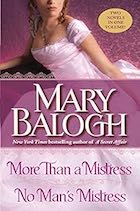
Mary Balogh, More Than a Mistress / No Man’s Mistress

In More Than a Mistress, Jocelyn Dudley, the duke of Tresham, is injured in a duel and hires the sharp-tongued Jane Ingleby as his nurse. Their constant bickering masks a mutual attraction, and when Tresham no longer needs a nurse, he offers Jane employment as his mistress. In No Man’s Mistress, Tresham’s brother, Ferdinand, wins a country estate in a card game. When he goes to inspect his new property, he’s shocked to find Viola Thornhill already living there; moreover, she claims the house is hers and refuses to move out. In both books, the women are hiding their true identities, and when the secrets come out, they unleash a lot of angst and conflict. I didn’t love either of these novels, mostly because I felt they went on too long after the secrets were revealed. I also found all four protagonists frustrating at times, as none of them were good at communicating their true feelings and opinions. My favorite character in both books was Tresham and Ferdinand’s sister, who fortunately has her own book! But these two novels are not among Balogh’s stronger offerings.

Mini-Reviews: Wager, Cadenza, Check

Virginia Heath, Never Wager with a Wallflower

Miss Venus Merriwell has made some mistakes in the area of romance, but she’s still hoping an intellectual, high-minded gentleman will come along and sweep her off her feet. Of course, that gentleman will be nothing like Galahad Sinclair, a charming but apparently frivolous and ignorant gambler. In reality, Gal is intelligent and kind, and he finds himself reluctantly attracted to Vee. But conflict over a desirable London property (Gal wants it for his new high-class gambling establishment, while Vee hopes to expand the orphanage she helps run) may derail their romance. Eh, this book was fine, but I never really got invested in it. Something about the writing style didn’t quite work for me; the dialogue felt stilted and modern. I also didn’t particularly connect with either Gal or Vee, which is a problem for me in a romance! Overall, this book (like the rest of the series, really) is just OK — there’s much better historical romance out there.

Stella Riley, Cadenza

Speaking of much better historical romance! Julian Langham is a brilliant harpsichordist about to embark on a career as a concert musician in Vienna, when he learns he’s the distant heir to an earldom and is forced to return to England. Julian has no clue how to cope with his new responsibilities, especially the three illegitimate children of the previous earl, so he decides to hire a woman as his housekeeper/governess. But the girl who shows up on his doorstep, Arabella Brandon, gives him much more than he bargained for. I’m a huge fan of this series, and this is definitely one of my favorite installments! I adored the shy yet passionate Julian and the slowly deepening intimacy between him and Arabella. There’s also a secondary romance involving Arabella’s cousin, Elizabeth, which I wasn’t initially as invested in but which got a lot more compelling as it went along. My only complaint is that I kind of wish each romance had gotten its own book! I’m now even more eager to read Midwinter Magic, the novella that caps off the series, as I’m not ready to say goodbye to these characters yet.

Ali Hazelwood, Check & Mate

Hazelwood’s YA debut is a rivals-to-lovers romance between chess prodigies. Mallory Greenleaf hasn’t played chess for years, but when her BFF asks her to play in a charity tournament, she reluctantly agrees — only to beat “Kingkiller” Nolan Sawyer, who is currently the No. 1 ranked chess player in the entire world. Now Mal is facing unwelcome media attention and all kinds of pressure to continue playing, and Nolan seems surprisingly eager for a rematch. Will Mallory be able to find a renewed love of the game, and more importantly, will she allow herself to ask for what she truly wants? For me, the best part of this book by far is all the behind-the-scenes information on the world of elite chess. Hazelwood clearly did her research, and I found the ins and outs of training and tournaments fascinating. However, the romance fell flat for me, mostly because I found Mallory so exasperating. She’s completely obnoxious to almost everyone around her (when she’s not playing the martyr for her family) and makes the wrong choice at almost every turn. I honestly couldn’t see what the way-too-amazing Nolan saw in her, and I’m weary of the “perfect guy falls in love with deeply flawed girl” trope. I think I’m ready to acknowledge that Hazelwood just isn’t the author for me.

Mini-Reviews: Midnight, Counterfeit, Blonde

Lauren Willig, The Mark of the Midnight Manzanilla

It’s 1806, and the successful publication of Miss Gwen’s gothic novel has sparked a vampire craze in London society. Rumor has it that Lucien, the reclusive duke of Belliston, is one such creature of the night. Sally Fitzhugh thinks that’s nonsense and seeks out an acquaintance with the duke to prove it. Meanwhile, Lucien is determined to discover the truth behind his parents’ tragic deaths several years ago. When a young woman is found dead with red “fang marks” on her neck, it seems clear that someone wants to frame Lucien for murder, so he and Sally team up to investigate. I find myself with nothing much to say about this book. It’s a cute, fun read, like the other Pink Carnation books, but nothing about it stands out to me. The villain is pretty easy to spot, and Sally and Lucien, while likable, feel a bit generic. I did enjoy seeing Turnip and Arabella again, though!

Darcie Wilde, A Counterfeit Suitor

In this fifth book in the series, Rosalind Thorne continues her work as a a “useful woman” helping society matrons. A rich widow with social aspirations has asked Rosalind to investigate her daughter’s suitor, fearing the man may be a fortune hunter. But Rosalind is distracted by the news that her forger father has fallen into the clutches of Russell Fullerton, a blackmailer with a grudge against Rosalind. Family drama and murder ensue, with a side helping of possible Bonapartist intrigues. I’m conflicted about this series; I like the main characters, particularly Rosalind and Adam Harkness (her Bow Street Runner beau), but the mystery plots are always too long and overly convoluted. There’s currently one more book in the series, and I’ll read it in December, but I doubt I’ll continue with the series after that.

Ally Carter, The Blonde Identity

A woman wakes up on the snowy streets of Paris with no memories. Then a bunch of people start shooting at her, but fortunately one man comes to her rescue. He calls her Alex and thinks she’s a spy — which is how she learns that she has an identical twin who’s managed to piss off a bunch of intelligence agencies, not to mention some very dangerous criminals. Now the woman and her rescuer must team up to outrun the bad guys and find Alex, all while navigating their strong mutual attraction. I read this book with the most enormous grin on my face! I love the blend of spy adventure plus romantic comedy, and the novel gleefully embraces all the tropes of those genres: only one bed, amnesia, kissing “to maintain our cover,” etc. It’s funny, breezy, and just a delightful romp. I think the first half is better than the second, which becomes a little too bogged down in relationship angst. But if you’re in a reading slump or just looking for something fun, I highly recommend this one!

Mini-Reviews: Fight, Familiar, Village

Maureen Lee Lenker, It Happened One Fight

Joan Davis has worked hard to become a famous and beloved movie star, and her goal is nearly in sight. Her only problem is her costar, Dash Howard. Audiences love “Davis and Dash” films, but she can’t stand him, and he’s constantly pranking her on set. When one of his pranks goes spectacularly awry, leaving Dash and Joan legally married, the answer is simple: move production of their current film to Reno, where they can divorce after residing there for six weeks. But as Joan and Dash get to know each other better, they reconsider their plan to separate. This book is obviously inspired by the screwball comedies of the 1930s, and I enjoyed the setting and the movie allusions very much. However, the romance itself fell a bit flat. Mostly, I thought the book dragged on too long — there were several points when Joan and Dash overcame a big conflict and the book could have ended, but instead they had to confront yet another obstacle. I just got a bit tired of it. I’d love to read more historical romance set in this time period, but this one wasn’t as enthralling as I hoped it would be.

Lish McBride, A Little Too Familiar

This cozy paranormal romance centers around Declan, a werewolf, and Lou, an animal mage who specializes in bonding humans to animal familiars. When Declan moves in with Lou and her housemates, the two are immediately attracted to each other, but Declan has a traumatic past that’s left him distrustful of animal mages. When that past comes back to haunt him, he and Lou (and their other housemates and friends) must team up to stop Declan’s enemies. I don’t read a lot of paranormal romance, but I liked this book a lot. All the main characters are kind, well-intentioned people, and the “found family” vibe is strong. The romance worked for me (though it’s definitely racier than I’d prefer), and the suspense plot provided some stakes for the novel, but it’s pretty low-conflict overall. Some of my favorite scenes were when Declan, Lou, and their friends were just hanging out and bantering. There’s at least one sequel to this book, and I definitely plan on picking it up at some point!

Catherine Lloyd, Death Comes to the Village

After being seriously injured at Waterloo, Major Robert Kurland is back at his estate near the village of Kurland St. Mary to recover. One night, looking out his bedroom window, he sees an unidentified figure carrying a heavy load. Meanwhile, Lucy Harrington, the vicar’s oldest daughter, is disturbed when one of the young female servants disappears without even collecting the wages she’s owed. When Lucy visits Robert (an errand of mercy on her father’s behalf), they compare notes and team up to discover what’s going on, soon uncovering evidence of theft and murder. I really enjoyed this cozy historical mystery! While Lucy seems to have a bit more freedom than is period-appropriate (conversing with the major in his bedroom, gasp!), she’s not just a progressive 21st-century heroine in period garb. The mystery is solid, though not brilliant, and I appreciated that the plot wasn’t overly convoluted. I’m definitely interested in continuing with the series; it looks like there are seven more books, and luckily my library seems to have them all!

Mini-Reviews: Widow, Conspiracy, Rake

John Dickson Carr, The Red Widow Murders

“Do you believe that a room can kill?” The people gathered at Lord Mantling’s London home are about to answer that question. One particular room in the house, dubbed the Widow’s Room, has been the site of four previous violent deaths. All the victims were alone in the room and apparently poisoned, though no one could discover how the poison was administered. Now Lord Mantling and his guests draw lots to see who will spend two hours locked inside the Widow’s Room — and when the unlucky loser dies like his predecessors, detective Sir Henry Merrivale must figure out how, and by whose hand, the death occurred. I have mixed feelings about this book. The solution to the locked-room puzzle is ingenious, but the book really plods. Also, none of the characters feel or behave like real human beings, and the murderer’s plan is incredibly farfetched. This is my second encounter with Carr’s work, and so far I’m not really clicking with him, but I hope that future reads will work better for me.

Michelle Diener, The Emperor’s Conspiracy

Charlotte Raven started life on the streets, but she was rescued from poverty by a warmhearted noblewoman. Now she lives among the upper classes, but she still maintains ties to her roots. When she warns a society friend about a vicious gentleman she encountered in her old life, she’s plunged into danger, along with the friend’s brother, Lord Edward Durnham. Charlotte and Edward team up to figure out who’s trying to do them harm, falling in love in the process. But Charlotte’s oldest friend, who is now a London crime boss, isn’t ready to let her go. So many things annoyed me about this book, from the utter implausibility of Charlotte’s situation to the anachronistic prose to the insta-love between Charlotte and Edward. What kept me reading was the fast-paced plot, and I’ll admit I was mildly entertained. But I definitely wouldn’t recommend this one and won’t be keeping my copy.

Mary Balogh, The Notorious Rake

Mary, Lady Mornington, has been terrified of thunderstorms ever since a traumatic event in her past. So when she’s caught in one with only Lord Edmond Waite for company, she clings to him in terror, even though she despises him because of his terrible reputation. Desperate to block out the storm, she sleeps with him — but when the intrigued Edmond wants to pursue a relationship with her, she wants nothing more to do with him. As he persistently seeks her out, however, she slowly discovers there’s more to him than meets the eye. This book definitely has its flaws: The thunderstorm thing is a bit ridiculous (although Balogh does a pretty good job of selling it), and Edmond is a problematic hero in that he keeps bothering Mary even after she repeatedly tells him to back off. And yet, I can forgive a lot in a romance novel if I find the central relationship believable, and I definitely bought the connection between Edmond and Mary. Plus, Edmond grows a lot throughout the book and reveals surprising depths, which for me redeems him as a hero. Balogh’s books can be hit or miss, but this one is a winner!