Mini-Reviews: Style, Hemlock, Scene

William Strunk Jr. and E.B. White, The Elements of Style, Fourth Edition

I somehow made it through an English degree and almost a decade as a professional editor without reading this book, which is a classic (maybe even the classic) American work on writing and grammar. I expected it to be stuffy and out of date — and it is, a bit. The authors resist using “hopefully” to mean “it is to be hoped,” but that ship has definitely sailed at this point. And their brief mention of that newfangled invention, the word processor, is adorable. But most of this book is still helpful and relevant, and I was surprised by how funny it is too! “Prestigious. Often an adjective of last resort. It’s in the dictionary, but that doesn’t mean you have to use it.” Overall, I think this book would be useful for students or anyone whose job requires a lot of writing, editing, or both (notice how I didn’t use “and/or,” which the authors call “a device, or shortcut, that damages a sentence and often lends to confusion or ambiguity”). It deserves its classic status.

T. Kingfisher, Hemlock & Silver

Since childhood Anja has been obsessed with poisons and their antidotes, and now she’s expert enough that the local townspeople turn to her for help with poisoning cases. Nevertheless, she’s shocked when the king himself comes to her with a problem: His 12-year-old daughter, Snow, is sick from no obvious cause, and her condition is worsening. Anja travels to Snow’s residence and attempts to discover if and how the princess is being poisoned. What she actually discovers is a portal to a mysterious other world; but will she be able to thwart the evil lurking there and save Snow’s life? I’ve loved every one of Kingfisher’s books that I’ve read so far, and this one is no exception. Blunt, tactless Anja is a delight, and her narrative voice keeps the book from being too dark or scary despite a few horror-adjacent moments. I also really liked the desert setting, which evokes Mexico or the American Southwest rather than the traditional quasi-medieval-European fantasy kingdom. There’s a bit of romance too, which is always welcome. Definitely recommended if the premise appeals to you!

Laura Wood, Let’s Make a Scene

Cynthie Taylor is a famous actress who’s just been dumped, and press coverage of the breakup has been merciless. To turn things around, her agent suggests that she sign on to a sequel of the film that launched her career. Unfortunately, that means reuniting with her costar, Jack Turner-Jones, with whom she has a tempestuous history. Even worse, her agent wants them to fake-date each other to create good buzz for the new film. As Cynthie and Jack grow closer in the present, they also have to come to terms with the past. I love a good fake-dating rom-com, and this one is funny, well written, and pure wish fulfillment in a good way. I liked how the narrative alternates between the present and 13 years ago, when Cynthie and Jack first met; the switches happen just often enough to give context and complexity to their relationship. I also liked all the behind-the-scenes acting stuff, especially since the movies are Austen-esque period pieces—it made me wish I could actually watch them! It looks like Wood has already written a book featuring Cynthie’s friend Theo, which I’m now interested in checking out as well.

Mini-Reviews: Viscount’s, Christmas, Deerskin

Louise Allen, The Viscount’s Betrothal

Decima Ross, a spinster at age 27, is sure no man could ever fall in love with her because of her exceptional height. After her brother’s latest insensitive attempt to push her into the arms of an unwilling bachelor, Decima flees, but a snowstorm forces her to seek shelter with Adam, Viscount Grantham. Snowed in with only two servants, Decima and Adam soon grow close; but when they meet again in London, Adam is betrothed to another (beautiful and petite) lady. I’ve really enjoyed some of Allen’s other Regency historicals, but this one was disappointing: anachronistic behavior and dialogue, and characters behaving stupidly for the sake of the plot. I’ll continue to read more by Allen, but this is not one of her best.

Julianna Keyes, It’s Beginning to Look a Lot Like Christmas

Eve and Will are rival writers at the same travel blog, and they’ve both been assigned to cover Noelville, Vermont, during the run-up to Christmas. The problem is, neither one of them is a fan of the holiday season. But as they experience the marvels of the Christmas-themed town—including a nutcracker museum, cookie decorating classes, a moonlit sleigh ride, and more—they’re slowly won over despite themselves, and they also discover a surprising mutual attraction. I enjoyed this little Christmas novella, which feels like a self-aware Hallmark movie. Eve and Will’s snarking about the over-the-top Noelville traditions is the best part of the book, and they have a lot of fun banter. I felt like the romance was missing a scene or two; there’s never really a point at which they express their feelings for each other. But I’d recommend this one if you’re looking for a fun, bite-sized holiday treat.

Robin McKinley, Deerskin

Lissar, the daughter of a beloved king and queen of a prosperous kingdom, has a seemingly charmed life. But apart from her fleethound, Ash, she doesn’t have many friends and tends to be isolated and overlooked. When Lissar is 17, a traumatic event forces her to run away from home, and after a long period of healing, she finds herself in a new kingdom with a job in the royal kennels. As she slowly wins respect and love from those around her, she starts to hope for a better life—until the ghosts of her past trauma come back to haunt her. This book is a retelling of the Perrault fairytale “Donkeyskin,” which I’m not familiar with. But the dark thing that happens to Lissar is truly dark, so proceed with caution. Otherwise, McKinley’s books always seem to have weird pacing—lots of setup and a very short climax—but I don’t mind because she’s such a great writer that she just carries you along. This isn’t one of my top favorites by her, but it’s still well worth reading.

Mini-Reviews: Rose, Scandal, Lukov

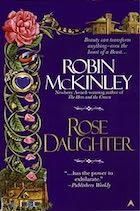
Robin McKinley, Rose Daughter

Robin McKinley’s Beauty is one of my favorite retellings of Beauty and the Beast; when I last read it in 2020, I called it the quintessential retelling, praising its thoughtful heroine and gorgeous prose. Rose Daughter is McKinley’s other Beauty and the Beast retelling, and until now I’d never reread it, thinking that if I wanted a Robin McKinley take on this story, I’d just read Beauty again. Now, while I still prefer Beauty, I think Rose Daughter is enchanting in its own way. In this version, Beauty is an avid gardener and lover of roses. When she comes to the Beast’s palace, she takes on the task of bringing back to life his overgrown and dying rose garden. Like most of McKinley’s books, this one is quite slow, and I wish we got more of a sense of the Beast’s personality. But Beauty and her two sisters are wonderful characters, and I liked the book’s emphasis on their close sibling relationship. If you like fairy tale retellings, I’d definitely recommend both this book and Beauty; I think they each bring something unique and worthwhile to the story.

Anne Gracie, Marry in Scandal

Lady Lily Rutherford longs to marry for love, but she believes that, between her plump figure and her inability to read, she’ll have a hard time finding a husband. Her large fortune, however, makes her a target for unscrupulous men, one of whom abducts her with the intention of forcing her into marriage. Fortunately, she’s rescued by her brother’s friend, Edward Galbraith — but when she and Ned take multiple days to travel back to London, they soon learn they must wed to avoid a scandal. Lily falls for Ned immediately, but he is reluctant to love anyone, even his beguiling wife. This is a pretty standard marriage-of-convenience setup, and Anne Gracie doesn’t really bring anything new to the table in terms of plot or characterization. I did find the main characters, particularly Ned, appealing and could see why they fell for each other. Overall, this is a solid, engaging historical romance, and I certainly plan to continue with the series, but it’s not doing anything particularly special or exciting.

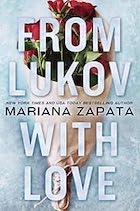
Mariana Zapata, From Lukov with Love

Jasmine Santos is a pairs figure skater with no partner, and at age 26, she’s running out of time to win the gold medal she wants more than anything. A surprising solution presents itself when superstar Ivan Lukov — whom Jasmine has known for years and always hated — suggests partnering up. Jasmine reluctantly agrees, but as she and Ivan train together, her feelings toward him slowly begin to change. Whether you like this book or not will probably depend on how you feel about Jasmine. She’s foulmouthed, angry, impatient, defensive, and not particularly kind — but also hardworking, determined, strong, and loyal. I didn’t always like her, but what sold me on the romance is that Ivan admires her toughness and appreciates her for who she is. It’s the slowest of slow burns, which I liked but other people might not, and I do think the book is bloated and repetitive in spots. But overall, I’m glad I read this one and would recommend it to fans of sports romances and the enemies-to-lovers trope.

Mini-Reviews: Tower, Bath, Gate

Nancy Campbell Allen, The Lady in the Coppergate Tower

Hazel Hughes has dreamed of a girl who looks exactly like her for years. So when her long-lost uncle reveals that she has a twin sister in Romania — a sister who appears to be slowly going mad — Hazel isn’t unduly shocked. She agrees to accompany her uncle to Romania in hopes that her skills as a Healer will help her sister. Dr. Sam MacInnes, Hazel’s employer, decides to come along for protection; as the two slowly fall in love, they also realize Hazel’s uncle is hiding something and try to uncover his sinister secrets. I’m continuing to enjoy this series of steampunk fairy tales. This installment is a riff on Rapunzel, but it also contains some clever allusions to Dracula — for example, in this book Hazel and Sam consider and reject the possibility that her uncle could be a vampire. The romance itself is a bit bland, as no real obstacles stand in the couple’s way. While I did like the book overall, I’m pretty sure I won’t be keeping the series on my selves once I read the fourth and final installment.

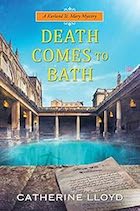
Catherine Lloyd, Death Comes to Bath

In this installment of the Kurland St. Mary series, Robert’s injured leg is paining him more than usual, so he and Lucy head for Bath in hopes that the spa town’s mineral-rich waters will provide relief and healing. There Robert befriends Sir William Benson, who’s also “taking the waters” for his health, and the two families soon become acquainted. But when Sir William dies, apparently drowned in the baths, Robert suspects foul play. And between Sir William’s much younger wife, three disappointing sons, and two odious stepsons, there’s no shortage of possible murderers. This is another strong entry in the series, benefiting from a new location and a close focus on the small circle of suspects. I liked Robert and Lucy’s dynamic as well; though they still butt heads occasionally, they work together and recognize each other’s strengths. I’m happy that the series is still so entertaining six books in, and I’m looking forward to the next one.

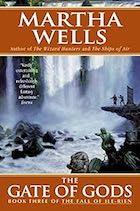
Martha Wells, The Gate of Gods

Following the events of The Ships of Air, Tremaine and her allies are in the country of Capidara, Ile-Rien’s ally and the current seat of its government-in-exile. They’re hoping to use their hard-won knowledge of the etheric gates to liberate the Rienish sorcerers trapped inside the besieged city of Lodun. But their plans go awry when half the group — including Tremaine, Ilias, and Giliead — travels to an unexplored world using a new type of etheric gate and can’t get back again. This conclusion to the Fall of Ile-Rien trilogy is a fitting end to the series; it answers the big questions of who the Gardier are and what they want, and it sees Tremaine finally deciding what she wants from her life. That said, I did find the ending anticlimactic — some of the answers the book provides don’t feel terribly satisfying. I also wanted more development for the secondary characters such as Florian, Gerard, and Niles, who were a constant presence throughout the trilogy but never really got their own stories. Overall, I’m glad I finally read this series but won’t be keeping it on my shelves.

Mini-Reviews: Curse, Moonflower, Pearls

Elizabeth C. Bunce, A Curse Dark as Gold

Charlotte Miller has been struggling to run Stirwaters, the mill she’s inherited from her father. Stirwaters is plagued by bad luck; the local townsfolk say it’s cursed. Charlotte is far too practical to believe in curses, but as mishap after mishap befalls Stirwaters, she’s determined to do whatever it takes to save the mill — even accept the help of the mysterious Jack Spinner, who claims he can spin straw into gold. But his help comes with a price, and eventually he’ll ask for something Charlotte is unwilling to pay. I really liked this retelling of Rumpelstiltskin when I first read it; this time around, I still think it’s very well done, but it might be a bit too slow for me. Most of the book is just Charlotte becoming more and more miserable as Stirwaters is threatened, and she pushes all her loved ones away to deal with the problem alone, which I found frustrating. But Charlotte’s community is well portrayed, there’s a sweet romance with realistic ups and downs, and I liked the resolution to the curse. I’d recommend this for fans of atmospheric fairytale retellings who don’t mind a slower pace.

Lauren Willig, The Lure of the Moonflower

The final book in the Pink Carnation series focuses on the Carnation herself, Miss Jane Wooliston, who is on a mission to locate the missing Portuguese queen before the French do. But since she doesn’t know the country or the language, she’ll need the help of Jack Reid, a British agent (and former French agent) known as the Moonflower. But will she be able to trust him with the mission — and her heart? The plot of this book is even less substantial than usual; even the climactic scene doesn’t have particularly high stakes, and the matter of the missing queen feels like an afterthought. The meat of the book, though, is Jane and Jack’s relationship, which I think is quite well done. Since Jane’s been a pivotal series character since book #1, it was important that she have a love interest worthy of her, and Jack definitely fits the bill. The book also gives us one last look at several of the other series couples, which was fun but a little overkill. I also appreciated Willig’s “where are they now” note at the end of the book, which did a pretty good job of wrapping things up. Overall, I think this is one of the better books in the series and definitely a fitting end to the Pink Carnation’s adventures.

Darcie Wilde, The Secret of the Lost Pearls

In this installment of the Rosalind Thorne series, an old school friend requests Rosalind’s help to discover who stole her valuable pearl necklace. The woman fears that the thief is her youngest sister, Nora, who’s recently returned to the family after a scandalous and ill-fated elopement. But when Rosalind goes to stay with the family, she senses many secrets and soon identifies several other plausible suspects. This book has the same strengths and weaknesses as the previous books in the series: a likable main character and an interesting look at the fringes of Regency high society, but an overly complicated plot that made the book feel like a slog. I think the next book in the series just came out, or will shortly; but while the series has its good points, I’m no longer interested enough to continue. Thankfully, Rosalind and her friends end up in a reasonably good place here, so I won’t feel like I’m abandoning their stories unfinished.

Mini-Reviews: Player, Curses, Porter

Stella Riley, The Player

Due to a scandalous tragedy, Adrian Devereux has spent the past 10 years living abroad, working as an actor and gambler. But now his brother, the Earl of Sarre, has died, so he must return to England and assume the title. There he learns that Marcus Sheringham, the man who betrayed him and forced him into exile, has huge gambling debts and must marry an heiress to avoid ruin. As Adrian gets to know Caroline, the heiress in question, he becomes convinced she’s too good for Marcus — and he certainly isn’t averse to a little revenge — so he devises an elaborate plot to marry Caroline himself. I’m so glad I discovered Stella Riley, because I’ve been loving her books — I devoured this one in a single sitting! While the plot is absurdly melodramatic, and I’m not usually a fan of the revenge-seduction trope, I loved Adrian and Caroline so much that I didn’t care. The most important thing for me in a romance is that I believe the main characters are truly right for each other, and I definitely got that with this book. Can’t wait for the next one!

Lish McBride, Curses

Lady Merit Cravan has been cursed to take the form of a beast, and she can only break the curse if she marries before her 18th birthday. Though Merit doesn’t expect love, she’s worried about making a bad choice, so she asks Tevin DuMont, a handsome but penniless con artist, for help evaluating her suitors. He’s made his living by charming rich young women, then accepting bribes from their parents to stay away, so he’s the perfect person to help unmask insincere fortune hunters. But as Merit and Tevin get to know each other better, their inconvenient feelings may ruin everything. I love a good Beauty and the Beast retelling, and this one is unique in that the genders are flipped. But much as I liked Merit, I was far more interested in Tevin and the rest of his ramshackle family. (Especially his brother, Amaury — fingers crossed for a sequel where he’s the hero!) Instead of following the curse/marriage drama, I’d rather have followed the DuMonts on their adventures! Still, this is a fun read, and I’d definitely recommend it to fans of the fairy tale.

AJ Pearce, Mrs. Porter Calling

In the spring of 1943, things are going well for Emmy Lake. Though her husband, Charles, is away at war, she enjoys living with her friends Bunty and Thelma, and she finds fulfillment in her job at Woman’s Friend magazine. That changes, however, when the magazine’s new publisher, a rich socialite named Mrs. Porter, begins suggesting changes that cater to the frivolous concerns of the wealthy rather than the issues the magazine’s readers really care about. As Emmy and her friends fight to save the magazine, another tragedy of war strikes, forcing them to reexamine their priorities. I’m continuing to enjoy this series, which manages to be upbeat and positive without sugarcoating the war’s harsh realities. Emmy and her friends are lovable characters worth rooting for. Her editor, Guy Collins, remains a favorite, and I hope I smell a hint of romance for him in future books! I’d definitely recommend this series to fans of the period, but start with book #1, Dear Mrs. Bird.

Mini-Reviews: Rogue, Song, Jewel

Amberley Martin, The Rogue and the Peasant

Esme is a peasant, but her mother always told her she’d be a queen someday. So when a noble lady arrives at her cottage to whisk her off to Finishing School, Esme assumes it’s time to fulfill her destiny — but being kidnapped doesn’t seem like part of the plan. Meanwhile, the kidnapper, Rory, has his own problems: He’s paying off a debt to a sinister Fairy Godmother, and he’s literally haunted by his father’s ghost. When Esme and Rory begin to work together, they learn that their fates are intertwined in surprising ways. Based on the book’s cover copy, I thought this was going to be a romance, and it definitely 100% is not. I also thought the author’s influences were a little too obvious — there’s a whole chapter that basically rips off the movie Labyrinth. But I did like Esme and Rory as characters, and the book subverts traditional fairy tale narratives in interesting ways. Overall, it’s a decent fantasy read, just not what I was expecting.

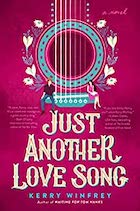
Kerry Winfrey, Just Another Love Song

Fifteen years ago, Sandy and Hank were high school sweethearts, determined to leave their small town of Baileyville, Ohio, and pursue their dreams. Now Hank has achieved his goal of becoming a famous musician, but Sandy stayed in Baileyville. While she’s mostly content with her life, she regrets the way things ended with Hank, especially since no other man she’s dated has measured up. When Hank comes back to town, Sandy is forced to confront her unresolved feelings. I loved Kerry Winfrey’s first book, Waiting for Tom Hanks, and I really enjoy her warm, funny writing style. But I didn’t love this one quite as much, mostly because I don’t tend to like second-chance romances. I also thought the book’s dramatic tension vanished around the halfway point, when Sandy and Hank have an honest conversation that eliminates most of the conflict. But I did like the book overall and will definitely keep reading more by this author.

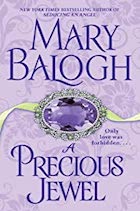
Mary Balogh, A Precious Jewel

Sir Gerald Stapleton has no interest in marriage; past experience has taught him that women can’t be trusted, and he feels himself too dull and ordinary to inspire love. But he doesn’t want to do without female companionship altogether, so he occasionally visits a high-class brothel. When he meets Priscilla, one of brothel’s employees, he is drawn to her — and when another client abuses her, Gerald impulsively decides to make her his mistress. But the more time they spend together, the more complicated their relationship grows. I was fascinated by this book’s premise and by the unconventional protagonists, a beta-male hero and a prostitute heroine. While I found Gerald unlikable at times and Priss too much of a doormat, I was also able to sympathize with both characters and root for them to figure things out. I’m not exactly sure how I’d rate this book, but it’s certainly a memorable one!

Mini-Reviews: Goddess, Deceit, Bryony

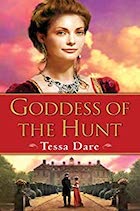
Tessa Dare, Goddess of the Hunt

Lucy Waltham has been in love with her brother’s friend Sir Toby Aldridge for ages, but he still sees her as a little girl. To make Toby notice her, Lucy decides to practice her seduction skills on another of her brother’s friends, Jeremy Trescott. Appalled by her scheme to chase Toby, Jeremy resolves to stop her by any means necessary — even if it means letting her seduce him instead. Despite the farfetched plot, this book is enjoyable Regency fluff with likable main characters. I read most of it in one sitting and regret nothing! This author has been hit or miss for me, but I’d definitely recommend this book for fans of historical romance with some heat.

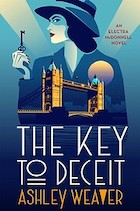
Ashley Weaver, The Key to Deceit

Just weeks after her first espionage mission, Electra “Ellie” McDonnell is once again summoned by Major Ramsey to help with a case. A dead woman has been recovered from the Thames, and Ramsey suspects her of spying for the Germans. He needs Ellie’s lock-picking skills to open a locket found on the woman’s body. What they discover points to a dangerous spy ring that is sending photos of strategic London locations to the Nazis. As Ellie and her criminal associates help pursue the spy ring, she also continues her investigation into her mother’s past — and finds herself torn between old friend Felix and the antagonistic but attractive Ramsey. I’m enjoying this series for its blend of mystery, WWII setting, and romance, and I’m eager for the next installment to come out (probably not till next year, alas!). If you enjoy these genres, I’d definitely recommend the series, although you should start with book #1, A Peculiar Combination.

T. Kingfisher, Bryony and Roses

I’m a sucker for Beauty and the Beast retellings, and this is a great one! When Bryony gets trapped in a snowstorm and is about to freeze to death, she suddenly finds herself on a path to a secluded manor house infused with magic and inhabited by a Beast. At first she resents being trapped in the manor house, but she gradually learns that the Beast is a prisoner as well, and she sets out to discover how to break the house’s sinister enchantments. The strength of this retelling is in the characters, especially Bryony: she’s pragmatic, stubborn, funny, and a devoted gardener who is determined to grow things herself, without the help of the magical house. I loved her snarky interactions with the Beast as they get to know each other better. If you love fairy tale retellings, I’d highly recommend this one, and I’m excited to continue exploring T. Kingfisher’s work!

Mini-Reviews: Falling, Shoe, Kiss

Lois McMaster Bujold, Falling Free

Space engineer Leo Graf doesn’t want to be a hero; he just wants to keep his head down and do his job. But his latest assignment involves genetically engineered humans called quaddies — they have a second pair of arms instead of legs, which makes them excellent workers in a zero-gravity environment. When Leo learns how the quaddies are exploited and what their eventual fate will be, he decides to take action. I enjoyed this competently written sci-fi adventure, but I wasn’t blown away. Parts of it feel dated now (understandably, since it was published in the ’80s), and the story and characters aren’t particularly unique. Still, the book does raise some interesting moral questions, and I’m excited to continue with the series!

Julie Murphy, If the Shoe Fits

Aspiring fashion designer Cindy has just graduated from design school, but now she’s at a loose end and feeling creatively blocked. Due to her stepmother’s connections, she is offered a place on Before Midnight, a Bachelor-esque reality show. Cindy is skeptical, but she thinks it could be an opportunity for her to publicize her name and brand, as well as break some ground by being a plus-size woman on a show full of thin beauties. But when she unexpectedly falls for the guy on the show, she has to figure out how much of their relationship is actually real. This novel, loosely based on Disney’s Cinderella, is a cute, quick read, but nothing about it really stood out to me. The love interest doesn’t have much personality, so I wasn’t invested in the romance. It’s a fine read if you like the premise, but definitely not a keeper for me.

Mary Balogh, Only a Kiss

Percy Hayes is the Earl of Hardford, but despite acceding to the title two years ago, he’s never been to the Hardford estate; located in the “wilds of Cornwall,” it’s a world away from his carefree, pleasure-filled life in London. Indeed, when he finally visits the estate on a whim, he runs into a bewildering set of problems and responsibilities. He also meets the beautiful but cold Imogen, Lady Barclay, and finds himself unwillingly attracted to her. But she carries deep emotional wounds from the Napoleonic Wars, in which her husband was tortured and killed, and she’s seemingly impervious to Percy’s charm. Can he convince her to open her heart? This sixth book in the Survivors’ Club series is one of my favorites. I loved seeing Percy’s normal charm and poise desert him in his conversations with Imogen, and his growth as he embraces his responsibilities is very satisfying. Definitely one of the strongest books in the series, in my opinion!

Mini-Reviews: Thorn, Orange, Duke

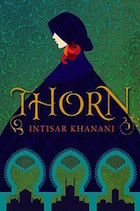
Intisar Khanani, Thorn

Despite being a princess, Alyrra is a nobody. Abused and neglected by her family, she has nothing to look forward to except a politically strategic marriage. But when she is betrothed to the prince of a neighboring kingdom whom she has never met, she suddenly finds herself embroiled in intrigue and magic. A sorceress curses Alyrra to switch bodies with her lady’s maid, so no one recognizes her as the true princess and she must work as a goose girl instead. But Alyrra is content with her new life — until she realizes that she has a duty to ensure the good governance of her new kingdom, not to mention protect the life of the prince. Overall, I really enjoyed this book! Alyrra is a sympathetic heroine, and I enjoyed watching her slowly, painfully grow throughout the story as she realizes that she can’t avoid her real life forever. There are some pacing issues and some awkward character introductions that had me flipping backwards to make sure I hadn’t missed something. I also wanted some of the secondary characters to be more fleshed out, particularly Kestrin. But I liked the book despite these issues and will plan to read more by Khanani.

Note: This book was originally self-published in 2012, but it was subsequently rereleased by a traditional publisher. According to the author, the rerelease has “gone through four rounds of professional edition . . . the middle of the book was replotted, and the story overall has grown by about 20,000 words.” So, since I read the original self-published version (which was gifted to me years ago), my comments may not be particularly applicable to the version that’s widely available now! I’d actually like to read the rereleased version and see if the issues I complained about have been addressed.

Ellery Queen, The Chinese Orange Mystery

When Ellery Queen accompanies his friend Donald Kirk to a dinner party at Kirk’s hotel suite, he is shocked to discover a murdered man in the waiting room of Kirk’s office. The crime is bizarre for a number of reasons: not only does no one recognize the corpse, but there is absolutely no identifying information to be found anywhere on or around the dead man. Moreover, everything in the room has been turned backwards or upside-down — furniture, art, even the victim’s clothes. As Ellery’s policeman father investigates the case officially, Ellery also does some sleuthing among Kirk’s friends and family, and he eventually discovers the identity of both the victim and the murderer. I enjoyed this mystery and found the solution very clever; I never would have guessed it, but it does make sense and is fairly clued (although the killer’s motive is a little weak). Even the list of dramatis personae drops a few hints! Recommended for fans of Golden Age mysteries — and even though it’s part of a series, it can definitely be read out of order.

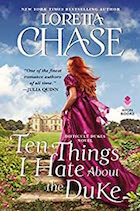
Loretta Chase, Ten Things I Hate about the Duke

This second novel in the Difficult Dukes series focuses on Lucius, Duke of Ashmont, whose wild and rakish behavior is a well-known society scandal. He has no interest in reforming his wicked ways, however, until he crosses paths with strong-minded bluestocking Cassandra Pomfret. I’m not a big fan of the “reformed rake” trope, but I liked that Lucius spends most of the book acknowledging his faults and genuinely making an effort to improve himself. He admires Cassandra’s strength and intelligence, and he supports her without trying to take charge or get in her way. I should say that, while this book can technically stand alone, it does refer back to events in A Duke in Shining Armor. I’m looking forward to the third book now, which looks like it will have a marriage-in-trouble plot…unfortunately, it’s not out yet!