Mini-Reviews: Bride, Mink, Undercutting

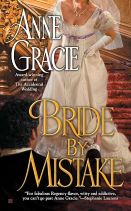
Anne Gracie, Bride by Mistake

Eight years ago, young soldier Luke Ripton was fighting Napoleon’s forces in Spain when he stumbled across a girl, Bella, being attacked by bandits. He rescued her and learned that she was running away from her vicious cousin, who planned to marry her and steal her fortune. Luke’s only course of action was to marry Bella himself, bring her to a convent for safekeeping, and have the marriage annulled later. In the present, Luke learns the annulment didn’t go through, so he has no choice but to retrieve his Spanish wife. But Bella is far from the demure, obedient bride he expected. Despite the implausibility of the plot, which veers into soap opera territory near the end, I had a lot of fun with this book! Bella is a strong heroine who’s determined to do the right thing, and Luke is unwillingly charmed by her. I also liked the book’s unique setting, focusing on Spain during and after the Napoleonic Wars. Overall, though it’s probably not a keeper for me, I found this an enjoyable historical romance.

James Anderson, The Affair of the Mutilated Mink

Another house party goes wrong at the English stately home of Alderley. This time the earl, who has recently become a film enthusiast, invites an American movie producer who’s thinking of using Alderley as the setting for his new project. The writer and leading man also attend, as well as an Italian actress who may become the leading lady. Then the earl’s wife invites her cousin and cousin’s husband, while the earl’s daughter, Gerry, asks two of her boyfriends so she can make up her mind between them. The stage is set for another murder, and while all the evidence initially points to one of Gerry’s suitors, the case soon becomes more complicated. This Golden Age pastiche is just as enjoyable as The Affair of the Bloodstained Egg Cosy and has a lot of fun with the genre’s tropes, including a Great Detective who comes in to “assist” the local police with the investigation. I especially enjoyed the references to fictional detectives such as Peter Wimsey and Roderick Alleyn, who are real people in this universe. Looking forward to reading the third and final book next month!

Megan Bannen, The Undercutting of Rosie and Adam

Tanrian marshal Rosie Fox doesn’t mind taking on the most difficult and dangerous jobs. As an immortal demigod, she can’t die, so her motto is “Act first, think never.” But she may be in over her head when the portals between Tanria and Bushong start malfunctioning, threatening the lives of everyone inside Tanria. Her boss calls in Adam Lee, the inventor of the portals, to see if he can repair them; instead, he and Rosie end up stuck in Tanria. As they search for a way out, they also grow closer, but Adam is keeping some pretty big secrets about his past. I love the creative fantasy world of this series, with its complex theology and quasi-Western vibes. But this book, I think, relies a little too much on the world-building and not enough on characterization or plot. Not a lot happens in the book till the last hundred pages or so, and the romance between Rosie and Adam also feels a bit forced. There’s a mismatch between the darker subject matter (the weight of immortality, the meaning of death, complicated family dynamics) and the light, breezy tone. I did still enjoy the book, and it certainly gives some good closure to the series, but I don’t ever need to read it again.

Mini-Reviews: New York, Unicorn, Daughter

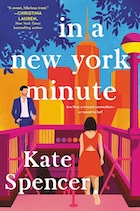
Kate Spencer, In a New York Minute

Franny’s day goes from bad to worse when, on her way home from being laid off, her dress gets caught in the subway doors and rips apart. A handsome stranger gives her his suit jacket so that she can cover up. And that would have been the end of the story, except that a bystander caught the whole thing on camera. Now Franny and the subway guy, Hayes, have been dubbed #SubwayQTs, and the local news is doing a story on their supposed romance. It’s not true, of course; but as Franny and Hayes continue to bump into each other, it feels like fate may be nudging them together after all. This was a pleasant enough rom-com that really wants to be described as “a love letter to New York City,” and maybe I’m just a grumpy old lady now, but that type of narrative does nothing for me. I wasn’t particularly invested in the romance, which didn’t have any obstacles beyond the characters’ general obtuseness. There were some cute moments, and I can see a version of this plot working as a movie, but overall there’s just nothing substantial about this book.

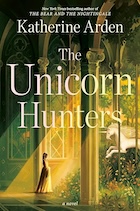
Katherine Arden, The Unicorn Hunters

Anne, duchess of Brittany, is facing a crisis. The king of France is pressing for her hand in marriage so that he can absorb the duchy into his own kingdom—and if she refuses, he’ll take it by force. Her only hope is to marry another powerful ruler who can help her fight the French, but in return, she’ll have to leave Brittany and give up her role as its leader. She plans to marry secretly in the forest of Brocéliande, organizing a unicorn hunt as a cover story. But Brocéliande is an uncanny place, on the boundary between the mortal world and the Lost Lands, and Anne soon learns she has more powerful enemies than France to contend with. I absolutely loved this book, which combines so many of my favorite things. Give me medieval Brittany, fantasy elements, and a romance, and I’m sold! Arden’s writing is vivid and magical, and Anne is a wonderfully drawn character based on a real historical person. I’ve loved every book by Arden I’ve read so far, but this one just may be my favorite. It will definitely be one of my top books of the year!

D.E. Stevenson, The Baker’s Daughter

Sue Pringle has lived in the small town of Beilford, Scotland, all her life. Her father is the baker, and her grandfather owns a prosperous shop. But she’s somewhat bored with her life and eager to try something new. The perfect opportunity arises when a painter from London, John Darnay, moves to town needing a housekeeper. Sue takes the job and soon finds her world expanding. She also develops strong feelings for Darnay, but his social station is far above hers, and he happens to be married already. I enjoy Stevenson’s quiet, romantic, character-driven books, and this one is no exception. I liked getting both Sue’s and Darnay’s perspectives throughout the novel, and the secondary characters are very well drawn. But readers should beware of some distasteful racism that is typical of the period. I don’t remember other Stevenson novels being this egregious, so if you haven’t read the author before, I wouldn’t recommend starting here. But as someone who likes Stevenson’s general vibe, I still found a lot to enjoy in this book.

Mini-Reviews: Flowerheart, Seething, Fuzzy

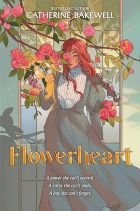
Catherine Bakewell, Flowerheart

Clara Lucas has always wanted to be initiated into the Council of Magicians, but the Council won’t accept her until she learns to control her strong, wild magic. When she accidentally curses her father with a life-threatening illness, her plight becomes even more urgent. Desperate, Clara makes a bargain with Xavier Morwyn, her former childhood friend and now a prominent magician: If he teaches her to control her magic so that she can heal her father, she’ll then surrender all her magic to him. But as she works with Xavier, she learns that he and the Council are both keeping secrets. This is a cozy YA fantasy with a side of romance, which should have been right up my alley, but I found it bland and juvenile. The book had a few interesting ideas but never went beyond the surface level, and I just didn’t care about Clara or her problems. This may work better for a YA (or younger) audience, but it did nothing for me.

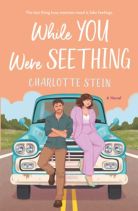
Charlotte Stein, While You Were Seething

PR expert Daisy Emmett has been hired to fix the image of famous romance author Caleb Miller, who recently disparaged his fans on national TV. Daisy has set up a regional tour to humanize Caleb and promote his new book, but there are two big flaws in her plan: (1) Caleb is basically a recluse and has no interest in doing the tour; and (2) he was her nemesis in college, and they still can’t get through a conversation without arguing. As their road trip progresses, though, Daisy learns that Caleb doesn’t hate her as much as she thought. I found this book really compelling and devoured it in two days, but I also kept wondering why Caleb is so unnaturally closed off and self-loathing. There’s never a satisfying explanation for his behavior, or why he couldn’t just have told Daisy the truth back in college and saved them both 10 years of pain and pining. So this book was fun in the moment for me, but the plot logic doesn’t really pass the smell test.

H. Beam Piper, Little Fuzzy

Zarathustra is a frontier planet, governed by Terra but effectively managed by the Zarathustra Company, which profits greatly from the planet’s natural resources. The Company’s hegemony is threatened, however, when prospector Jack Holloway encounters a monkey-like being he dubs “Little Fuzzy.” The creature and his Fuzzy friends soon exhibit signs of sapience, which would be a major scientific discovery—but would also necessitate turning the planet into a protected aboriginal zone, drastically limiting the Company’s rights. This book is a fun, plot-driven read that I think would make a good movie or TV episode. The inquiry into the Fuzzies’ sapience is entertaining, with lots of skullduggery as the Company tries to rig the outcome in its favor. There’s not much nuance in the novel; it’s clear from the outset who all the good guys and bad guys are. But I enjoyed it nonetheless and am interested to read John Scalzi’s “reboot,” Fuzzy Nation, at some point.

Mini-Reviews: Spindle’s, Portent, Nowlan

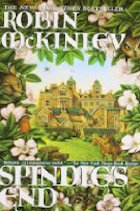
Robin McKinley, Spindle’s End

In this retelling of Sleeping Beauty, Katriona attends the baby princess’s name-day, where she witnesses the evil fairy lay her curse on the infant. In the ensuing fear and chaos, Katriona is charged with taking the princess away and keeping her safe. Not knowing what else to do, she takes the baby back to her small backwater village, where she and her aunt raise “Rosie” as their own. But as Rosie grows up, she gradually becomes aware of her true identity and the terrible fate that awaits her. Robin McKinley’s novels are books of my heart, and this one is no exception. The pacing is very slow, but that just gives readers time to immerse themselves in Rosie’s world, in the homely little village community among the people and animals who love her. The book follows the fairy tale pretty closely while creating very specific characters and putting a unique spin on the ending. In short, I can’t be objective about this book; I love it and enjoyed this reread immensely.

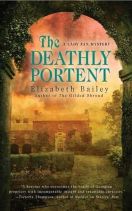
Elizabeth Bailey, The Deathly Portent

Ottilia Fanshawe and her husband, Lord Francis, are on a journey when their carriage breaks down near the village of Witherley. They attempt to summon the blacksmith to repair the carriage, only to discover that the man has just died in violent circumstances. The locals are blaming Cassie Dale, who allegedly had a vision of the blacksmith’s death and who they believe is a witch. Tillie is convinced there’s a more rational explanation for the crime, and as she and Francis linger in town to investigate, they discover many people in the village with possible motives for murder. I liked this historical mystery, but I think I enjoyed the historical bits more than the mystery bits. I was able to guess the killer, even though the person’s motive was extremely farfetched, and there were maybe a few too many suspects. I did like Tillie and Francis’s dynamic, though, as well as the secondary romance between Cassie Dale and the vicar. I’d be interested to read more in this series, but I’ll get them from the library rather than buying.

Alden Nowlan: Selected Poems

Several years ago, someone on LibraryThing (I wish I could remember who!) posted a poem by Alden Nowlan that intrigued me enough to pick up a book of his poetry. Nowlan was a 20th-century Canadian poet from rural Nova Scotia, and his poems often deal with themes of poverty and the natural world. I doubt most of the poems will stay with me, but almost all had at least one image or phrase that struck me as interesting. Here’s one of my favorites from the collection:

“Canadian Love Song”

Your body’s a small word with many meanings.
Love. If. Yes. But. Death.
Surely I will love you a little while,
perhaps as long as I have breath.

December is thirteen months long,
July’s one afternoon; therefore,
lovers must outwit wool,
learn how to puncture fur.

To my love’s bed, to keep her warm,
I’ll carry wrapped and heated stones.
That which is comfort to the flesh
is sometimes torture to the bones.

Mini-Reviews: Lions, Correspondent, Bank

Poul Anderson, Three Hearts and Three Lions

Holger Carlsen is a Danish engineer who joins the underground to fight the Nazis during World War II. When he’s injured and loses consciousness in battle, he wakes up in an unfamiliar environment: in the middle of an ancient forest, next to a stallion decked out as a medieval warhorse. Though unsure of what’s occurred, Holger soon realizes that he has a role to play in his new surroundings. Along with the warhorse, a dwarf, and a beautiful girl who can transform into a swan, Holger sets out to find his way home, fighting various forces of evil along the way. This is an entertaining fantasy tale in the vein of an Arthurian legend. Holger meets all the expected foes: evil Faeries, dragons, trolls, a werewolf, and even Morgan le Fay. Every woman in the story tries to sleep with him, which I found annoying, but the book at least acknowledges that it’s strange! And I liked his instinct to try and understand his predicament scientifically. Overall, there’s nothing particularly unique about this novel, but it’s a good yarn.

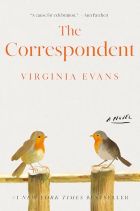
Virginia Evans, The Correspondent

This epistolary novel comprises the correspondence to and from seventy-something Sybil Van Antwerp. She spends a significant amount of time writing letters, and her correspondents range from close friends (her brother Felix and best friend Rosalie) to pen pals (author Joan Didion) to complete strangers (the customer service representative at a DNA analysis website). Through these letters, Sybil is revealed as an intelligent, flawed, complicated woman who reflects on her life and discovers it’s not too late to change. I can see why this book has gotten so much good buzz – it’s a really fascinating portrait of an ordinary life. I genuinely did both laugh and cry as I read it. That said, I didn’t like Sybil as much as I think I was supposed to; while the book acknowledges her flaws, it also has more patience for her abrasiveness and unkindness than I did. The subplot about her trying to audit classes at the University of Maryland drove me crazy! I know others’ mileage will vary, however, and I’m excited to pass the book on to my mom, who I think will enjoy it.

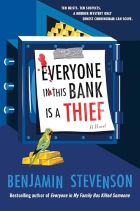
Benjamin Stevenson, Everyone in This Bank Is a Thief

Ernie Cunningham and his fiancée, Juliette, have just entered Huxley’s Bank, hoping to get a loan to start a private detective business. But their plans are interrupted when an armed, masked individual enters the bank and takes everyone inside hostage. Strangely, the robber doesn’t seem very clear on his or her demands, and Ernie soon discovers that his fellow hostages all have something to hide. Throw in a missing person, multiple murders, and what looks like spontaneous combustion, and Ernie is on track to solve another sensational case—if he doesn’t get killed first. I’m continuing to enjoy this series. I always like a good heist narrative, and while Ernie isn’t always the most likable narrator, the other characters (especially Juliette) do call him out for his questionable decisions. I’d recommend this book to mystery fans, but the series should be read in order, starting with Everyone in My Family Has Killed Someone.

Mini-Reviews: Gilded, Enchanting, Scoop

Elizabeth Bailey, The Gilded Shroud

In this Georgian-era historical mystery, Emily Fanshawe, the marchioness of Polbrook, is strangled in her bedchamber, and the most likely suspect is her husband. Their marriage has always been contentious, they argued the night before the murder, and now Lord Polbrook is nowhere to be found. His family is horrified yet determined to prove him innocent—a task that falls on his younger brother, Lord Francis Fanshawe, and on his mother’s new companion, Ottilia Draycott, whose clever mind soon uncovers some pertinent secrets. I read this book a long time ago and remember liking it, so I’m pleased to say I really enjoyed it this time as well! The historical setting feels grounded, and both Francis and Ottilia are interesting, sympathetic characters. The mystery is well plotted but a bit slow, and I found it less compelling than the romantic subplot. But I’m excited to read the next book, which I also own, and it looks like Bailey has also written some romances that I’d like to check out!

Stephanie Burgis, Enchanting the Fae Queen

Imperial general Gerard Moireul is a brilliant military strategist with an unassailable reputation for honor and integrity. Queen Lorelei of Balravia is notorious for her flighty, scandalous behavior. They’ve been nemeses for years, both politically and personally. But when a magical bargain forces them to compete in a fae tournament, they must work together, and slowly they come to realize they’re much more alike than they thought. I’m generally a Burgis fan, and I enjoy the enemies-to-lovers trope, so overall I found this quite fun. Both Gerard and Lorelei are likable characters underneath their exaggerated public personas, and I’m especially fond of an uptight, duty-bound hero. I do think the broader political situation in this fantasy world is boring and basic; the book is more enjoyable when it focuses on the romance. Overall, it’s a fun read, and you don’t necessarily have to read the previous book, Wooing the Witch Queen, to follow this one.

Evelyn Waugh, Scoop

British novelist John Courteney Boot has gotten himself entangled with the wrong woman and needs to skip town. He asks a friend to get him a job as a foreign correspondent covering the imminent war in the East African republic of Ishmaelia. But through a series of misunderstandings, the newspaper sends the wrong man, William Boot, who writes a nature column and has absolutely no desire to travel beyond his country village. As William embarks on his bewildering adventure, he learns more than he bargained for about journalism and international relations. This novel is both a biting satire on journalism and an extremely well-plotted farce. I loved how William’s oblivious blundering essentially caused the revolution (and counterrevolution) in Ishmaelia. On the minus side, there aren’t really any characters to root for, and the worldview expressed by the novel is cynical and bleak. Overall, I enjoyed the book’s humor but don’t think I’d ever want to reread it.

Mini-Reviews: Unlikely, Penance, Outcrossing

Betty Neels, An Unlikely Romance

Orphan Trixie Doveton doesn’t expect too much from life; she’s content with her work as a nurse-in-training and doesn’t believe she’ll ever marry. So she’s shocked when Professor Krijn van der Brink-Schaaksma, a renowned endocrinologist and very eligible bachelor, proposes a marriage of convenience. He needs someone to manage his social life and keep his acquaintances at bay so he can concentrate on the book he’s writing. Trixie, having fallen in love with him almost immediately, accepts—but can she be happy when the man she desperately loves hardly seems to notice her? I enjoyed this a bit more than my previous Neels title, No Need to Say Goodbye. I liked that Trixie wasn’t a complete doormat; though she outwardly conforms to all Krijn’s expectations, she isn’t happy about it and occasionally lets her anger show. I also liked getting a few glimpses into Krijn’s head as his feelings for his wife begin to change. It’s not a deep or significant book, but not bad for a quick, nostalgic read.

Ellis Peters, Brother Cadfael’s Penance

***Warning: SPOILERS for previous books in the series!***

In the late fall of A.D. 1145, the civil war between King Stephen and Empress Maud rages on, but most people just want the fighting to be over, regardless of the victor. To that end, one of the empress’s major supporters changes sides and surrenders a key castle to Stephen. When some of the castle’s knights refuse to betray the empress, they are taken prisoner. Among them is Olivier de Bretagne, Brother Cadfael’s son from his crusading days. Cadfael sets out for Coventry, where a peace conference is being held, to see if he can locate and ransom Olivier. But doing so will risk his place among his Benedictine brethren—and possibly even his life. I adore this series and am sad to have finished it, but I think this is an extremely fitting conclusion. Cadfael faces his biggest challenge yet, as he’s torn between love of his vocation and love of his son. The book also explores the complexities of friendship, loyalty, and father-son relationships, all while painting a vivid picture of medieval life. I can’t recommend this series highly enough, although I definitely think this book should be read last.

Celia Lake, Outcrossing

In this fantastical version of 1920s England, Rufus Pride is magically gifted but untrained, since the man who was supposed to teach him died in the Great War. Now Rufus is struggling to make ends meet with no steady trade, magical or otherwise. Meanwhile, Ferry Wright is from an aristocratic family, but she’s become a governess rather than marry the much older man her parents have chosen for her. When Rufus and Ferry meet, they’re immediately drawn to each other but don’t see a way to be together. Then Rufus falls in with a gang of smugglers who put both his and Ferry’s lives in danger. This book is marketed as a “cozy historical fantasy romance,” which is a fair description and right up my alley. I found it slight but charming, although the dialogue was occasionally a bit stilted to my ear. I also could have done without the two or three steamy scenes. But overall, I enjoyed this one and would consider reading more by the author – she seems to be quite prolific!

Mini-Reviews: Ring, Moon, Earl

Lois McMaster Bujold, The Spirit Ring

In a magical version of Renaissance Italy, Fiametta is the privileged daughter of a goldsmith and master mage. Her biggest problem is an unrequited crush on one of the duke’s soldiers—that is, until the duke is assassinated by a rival who seems to command dark magic. When this man’s soldiers kill Fiametta’s father and seize his corpse for use in an evil ritual, she teams up with the local abbot, who also has some knowledge of magic, and with Thur, a would-be metalworker who was supposed to be her father’s new apprentice. This stand-alone fantasy novel is one of Bujold’s earlier works, but it has a lot of her characteristic elements: strong world-building, an intelligent heroine with agency, and ordinary people doing heroic things because there’s no one else around to do them. The book has a YA feel to it, possibly because Fiametta and Thur are both teenagers, and their romance is a bit underdeveloped. Overall, though, I really enjoyed this one and would recommend it to fantasy fans!

Robert A. Heinlein, The Moon Is a Harsh Mistress

It’s 2075, and the Federated Nations of Earth have established a thriving colony on the moon. But times are tough on Luna, whose resources are being unfairly exploited by the Terran government. A small group of Lunar citizens decides to start a revolution, including narrator Manny, an engineer who has befriended self-aware supercomputer “Mike.” Along with a crafty professor, a beautiful revolutionary, and a Terran self-proclaimed soldier of fortune, Manny and Mike engineer a rebellion—but at what cost? This novel combines clever world-building with speculative science and libertarian political philosophy. There are some interesting ideas in it, and I liked Manny’s narrative voice once I got used to the Lunar dialect, but I also found it a slog; it really drags after the initial setup. It was fascinating that some aspects of the plot were very dated while others still felt timely. Overall, this was a mixed bag for me, and I’ll probably wait a while before trying anything else by Heinlein.

Kate Pembrooke, Not the Kind of Earl You Marry

William Atherton, the earl of Norwood, is a man of unassailable respectability and political aspirations. So when a newspaper announces his engagement to Charlotte Hurst, a social nobody whom he’s never even met before, he’s furious. But when it becomes obvious that Charlotte knows nothing about the announcement either, William proposes that they pretend it’s true: A temporary engagement will prevent any scandal and give him the chance to figure out who’s really behind the announcement. But as William and Charlotte spend more time together, their fake betrothal starts to feel all too real. I enjoy the fake relationship trope, and this is an inoffensive example of it, but honestly the book fell a bit flat for me. Contrary to the title, William is exactly the kind of earl anyone would marry—handsome, rich, intelligent, kind, and essentially flawless. Lovely in real life but dull in fiction, and Charlotte is no better. Overall, the book just feels like the blandest possible version of this story, and I’m not particularly tempted to pick up the sequel.

Mini-Reviews: School, Remember, Secret

Soman Chainani, The School for Good and Evil

Every year, two children are kidnapped from the village of Gavaldon. One, beautiful and kind-hearted, is sent to the School for Good, and the other, ugly and malicious, goes to the School for Evil. This year, Sophie is determined to be the one selected for the School for Good, where she’ll become the heroine of her very own fairy tale, complete with Prince Charming. But when she and her friend, the plain and all-black-wearing Agatha, are chosen, she’s shocked to end up in Evil, while Agatha is sent to Good. Can the two girls figure out how to fix this mistake – and what happens if they want to go home? I loved the first sentence of this book (“Sophie had waited all her life to be kidnapped”), but unfortunately it was mostly downhill from there. The plot lurches along unsteadily and is surprisingly hard to follow, and I found Sophie so awful that I wondered why Agatha (or anyone) would want to be friends with her! There are some interesting ideas in the book, but they never quite gel into anything substantial. Not recommended, and I won’t be continuing with the series.

Mary Balogh, Remember That Day

Winifred Cunningham is close friends with Owen Ware and has been invited, with her family, to his family’s estate of Ravenswood for a few weeks. Winifred wonders whether Owen will propose to her; they share a passion for helping others and might do a lot of good together. But she’s not in love with him, and as the visit proceeds, she finds herself unexpectedly attracted to his brother, Colonel Nicholas Ware. Meanwhile, Nicholas is about to make a pragmatic proposal to his commanding officer’s daughter, but meeting Winifred throws a wrench in his plans. This is another mildly pleasant installment of the Ravenswood series. I liked the central love story but felt it lacked depth; too much time was spent on the myriad supporting characters in both Nicholas’s and Winifred’s families, and I just don’t find them interesting! I really hope the next book is Stephanie’s story, which still intrigues me, but after that I’ll probably stick with Balogh’s earlier titles.

Tana French, The Secret Place

This fifth book in the Dublin Murder Squad series is set at St. Kilda’s, a posh girls’ boarding school where a student from the neighboring boys’ school was found dead a year ago. The case was never solved, but now Detective Stephen Moran has received an anonymous note saying, “I know who killed him.” Hoping for a permanent spot on the Murder Squad, Moran teams up with Antoinette Conway, the abrasive detective who worked the case the first time around. As they delve deeper into St. Kilda’s mysteries, they’re shocked to discover just how much these teenage girls are hiding. I liked this book a lot more than Broken Harbor, though a few things still bugged me: The narrative switches between the present-day investigation and the months leading up to the boy’s murder, and I found the present-day story much more interesting. The teen speak felt inauthentic, and I didn’t like the supernatural element. But I did really love the insights into teen friendship and psychology, as well as the development of Moran and Conway’s partnership. I’m interested to see how that dynamic continues and changes in the next (and final) book.

Mini-Reviews: Blue, Nothing, Wish

Lia Louis, Dear Emmie Blue

Emmie has been best friends with Lucas since high school, and lately she’s been hoping they can become more than friends. So when Lucas plans a nice dinner at their favorite restaurant with a big question to ask her, she’s ecstatic—until he asks her to be “best woman” at his upcoming wedding. Emmie is devastated, but ultimately she agrees and tries to suppress her feelings. Meanwhile, she finds herself unexpectedly growing closer to Lucas’s brother, Eliot, who helps her with some difficult family issues of her own. Has she been in love with the wrong brother all along? This was a reread for me, and I still enjoyed it this time around. There’s nothing groundbreaking about the plot, but I like that Emmie has important relationships and problems that don’t involve her love life at all. And without spoiling the romance, I’ll just say I enjoy a man who pines!

Jodi Taylor, The Nothing Girl

Growing up in the shadow of a strict aunt and malicious cousins, Jenny Dove has always faded into the background. Now she’s dissatisfied with her small life—always at home, never allowed to pursue an education or career—but doesn’t know how to change it. Enter Russell Checkland, a chaotic artist who’s just been rejected by the love of his life. He shocks Jenny by proposing a marriage of convenience: Her money (inherited from her parents) will help restore his dilapidated estate, and in return he’ll help her to try new things. But Jenny’s growing confidence and delight in her new life are threatened when it seems that someone is trying to kill her. There is so much plot in this book, and I didn’t even get to the magical talking horse! But this is a delightful little fairy tale, somewhat in the vein of The Blue Castle but with a modern setting and a bit more spice. I loved it, and it will definitely be in my top 10 books of the year!

Louise Allen, His Housekeeper’s Christmas Wish

Alex Tempest runs (literally) into Tess Ellery on the streets of Ghent and causes her to miss her boat back to England. He therefore offers to escort her to London, where she hopes to find employment as a governess or companion. Unfortunately, a society matron spots them together on the boat and assumes Tess is Alex’s mistress, ruining her chances of a respectable job. With no other options, Alex hires Tess as his housekeeper, but their mutual attraction makes everything more complicated, especially when Alex is forced to visit his estranged family at Christmas. Louise Allen’s historical romances have been hit or miss for me, and unfortunately this was one of the misses. I found the plot contrived and unrealistic, and I never really bought Alex and Tess’s romance. I also don’t love stories where family dysfunction is magically healed just because it’s Christmas. Not a terrible book, but definitely not a keeper for me.