Review: The Grimm Legacy

Grimm Legacy, ThePolly Shulman, The Grimm Legacy

High-school student Elizabeth Rew is feeling lonely: her new stepmother is taking up most of her father’s time, and she’s just transferred to a new school where she doesn’t have any friends. So when her history teacher suggests that she get a job with the New York Circulating Material Repository, she looks forward to the new experience. The Repository is a lending library for objects, including famous historical artifacts like Marie Antoinette’s wig; but Elizabeth soon discovers that there are even more important objects to be found. Specifically, the Grimm Collection houses fairytale items with magical properties, including flying carpets and seven-league boots. As Elizabeth explores the wonders of the Grimm Collection, she also befriends her fellow employees, including popular Marc, beautiful Anjali, and standoffish Aaron. When some of the magical items go missing, it’s up to Elizabeth and her newfound friends to discover who is stealing from the Grimm Collection — before they become the thief’s next victims.

A few years ago I read Polly Shulman’s other book, Enthusiasm, and really enjoyed it. Unfortunately, this book didn’t work for me quite as well. I absolutely loved the premise — what if you could actually borrow the magic mirror from Snow White or Aladdin’s lamp? — and many of the details related to this concept worked very well. I especially liked the idea that borrowers had to leave a “deposit” for the items, which could be something like their sense of direction, their singing voice, or their firstborn child. The problem with the book is that it’s geared toward a very young audience. I don’t have a problem with YA in general, and I’ve read many excellent books in the genre, but this one really felt like YA or even juvenile fiction. If I’d read the book at age 11, I probably would have loved it, but as an adult, I found it far too simplistic. There were also a few plot points that weren’t fully fleshed out, such as Elizabeth’s relationships with her dad and stepmom. Overall, the book is a decent read, but I wouldn’t recommend it unless you’re really OK with juvenile or YA fiction.
Review: Miss Hargreaves

Miss HargreavesFrank Baker, Miss Hargreaves

When Norman Huntley and his friend Henry are on holiday in Ireland, they decide on a whim to visit the exceedingly ugly church of the village of Lusk. As their tour guide rhapsodizes about the church’s history, he mentions one of its former clerics. Intending to make a joke at the tour guide’s expense, Norman pretends to have heard of this cleric from a (fictional) common acquaintance, Miss Constance Hargreaves. He immediately — with assistance from Henry, who plays along — invents an entire personality and history for Miss Hargreaves, and after a while, the two young men almost believe she is real. But nothing can prepare Norman for the shock of discovering that a woman calling herself Miss Hargreaves is coming to visit him, and she is completely identical to the made-up description he and Henry had concocted! Miss Hargreaves soon embarrasses Norman with her eccentricities, and he begins to wish he could get rid of her — but how can he do so? And if he is really responsible for her existence, should he?

When I first picked up this book, I expected it to be a light, fluffy comedic tale, similar to most of the other early-20th-century British fiction I’ve read. I mean, the synopsis almost sounds like something out of P.G. Wodehouse! But while this book does have its comic moments — like everything that comes out of Norman’s father’s mouth! — it’s actually much more serious than it sounds. Norman’s reaction to learning that he has (presumably) created another human being runs the gamut from shock to amusement to horror. He’s often quite cruel to Miss Hargreaves when she doesn’t show him the love and respect he feels are his due. In this sense, I think Baker was making a point about the dangers of playing God: Norman created Miss Hargreaves and is therefore in some sense responsible for her, but he is too proud and impatient and flawed to fulfill his responsbilities. Overall, this is an odd little book that raises some fairly serious philosophical questions. Recommended if the premise sounds interesting to you!

Review: While Beauty Slept

While Beauty SleptElizabeth Blackwell, While Beauty Slept

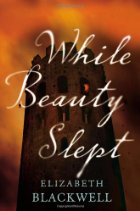
This loose retelling of Sleeping Beauty follows the fortunes of Elise, a peasant who dreams of a better life. Growing up, she listened to her mother’s stories about working at the king’s palace and fantasized about going there herself one day. When a tragic outbreak of the pox kills most of her family, Elise decides she has nothing to lose and sets out to follow her dream. But working at the palace turns out to be more complicated than Elise anticipated. She sees that the king and queen, though apparently blessed with both love and riches, are devastated by their childless state — especially because the king’s brother has a jealous eye on the throne. She also observes the complicated relationship between the queen and Millicent, a relative of the king’s who lives in the palace and has a reputation for witchcraft. When an heir to the throne is born at last, Elise is caught up in the turmoil that ensues; eventually, she is the only person who can ensure the future of the kingdom.

I’m a big fan of fairy tale retellings, so I was excited to find a copy of this book at the library. Overall, I really enjoyed it, but I would caution fantasy lovers that it’s much more of a historical novel than a fairy tale. There’s hardly anything supernatural in the book; although Millicent plays the part of the evil fairy in the Sleeping Beauty tale (and even curses the newborn princess), her ultimate strike against the royal family has nothing to do with magic or sorcery. But I love historical fiction, so I very much enjoyed this magic-less tale. And many elements of the Sleeping Beauty story were still incorporated into this book; I especially liked the burning of the spinning wheels. Elise got on my nerves sometimes — she’s a bit too judgmental and superior for my liking — but ultimately I was interested in the story she told. The ending, in particular, packs a real punch! So all in all, I’d recommend this book to fans of historical fiction or fairy tale retellings.

Review: Lost Lake

Lost LakeSarah Addison Allen, Lost Lake

The tiny vacation resort of Lost Lake in Suley, Georgia, means different things to different people. For Eby Pim, it’s a tangible reminder of her happy life with her now-deceased husband, George; but it’s also an increasingly burdensome property to maintain, and Eby has decided to sell it. For Eby’s longtime friend and constant companion, Lisette, Lost Lake is a refuge, and she vows she’ll never leave. And for Kate Pheris, widowed one year ago and just now waking up from her grief, Lost Lake is a memory of the best summer she ever had. When Kate impulsively decides to revisit Lost Lake with her daughter, Devin, she is immediately drawn to Eby and the other colorful inhabitants of the surrounding town. Kate and Devin’s arrival also catalyzes several important changes in Suley, including the resolution of a long-buried tragedy and the banishing of an old ghost. Eventually Kate is able to help Eby create a new future — and maybe even find one for herself.

As a longtime fan of Sarah Addison Allen, I couldn’t resist buying her newest book immediately (in hardcover, no less!) and devouring it as soon as possible. Fortunately, this book contains all of SAA’s trademark elements: a community of strong women with interconnected lives, decades-old secrets that are gradually revealed, understated romance, and a hint of magic. I especially loved the flashbacks to Eby’s life with George in Europe; they were so romantic and lavishly described that they made me want to hop on the next plane to Paris! I wasn’t terribly fond of the storyline with the alligator…I don’t want to spoil the book, so I’ll just say that the magical element was a bit too prominent for me. Overall, this is not my favorite SAA novel (that would be The Sugar Queen), but it is a lovely, relaxing read that I would definitely recommend to fans of this genre.

Review: The Shadowy Horses

The Shadowy HorsesSusanna Kearsley, The Shadowy Horses

Verity Grey is a young archaeologist who has recently quit her job at the British Museum and is looking for freelance work. Her former colleague (and ex-boyfriend) Adrian tells her about a potential job in the coastal town of Eyemouth, Scotland, but he is vague about the details. Nevertheless, Verity is intrigued enough to travel to Eyemouth for an interview. There she learns that the head of the expedition, wealthy archaeologist Peter Quinnell, is hoping to find traces of the Ninth Roman Legion, which appeared in Britain in the second century A.D. and then vanished from history. Verity is excited to be part of such a potentially major find — until she learns that Quinnell has no tangible evidence that the Ninth ever passed through Eyemouth. Rather, he is basing his expedition on the word of an eight-year-old boy who is said to have the second sight. Verity is extremely skeptical at first; but the longer she spends in Eyemouth, the more she becomes convinced that something supernatural is at work.

I was surprised to discover that, unlike many of Susanna Kearsley’s other novels, this book is not a work of historical fiction; all the action takes place in the present day. Aside from that, however, The Shadowy Horses definitely has a similar feel to Kearsley’s other books. There is a young, intellectual heroine who is fascinated by history; a story in the present that closely parallels a story in the past; various supernatural elements (in this case, a ghost!); and a romance. These are all things that generally appeal to me in books, but once again, I found myself unable to get emotionally involved with this novel. There is just something about Kearsley’s writing that keeps me at a distance; though her books (including this one) are very readable, I’m never on the edge of my seat, dying to know what will happen next. A lack of dramatic tension, perhaps? Anyway, I did enjoy this book — the bits about archaeology were especially fascinating, though probably a bit outdated now — but it wasn’t anything more than a pleasant read for me.

Review: Between Two Thorns

Between Two ThornsEmma Newman, Between Two Thorns

This novel follows three different characters as their stories intertwine in a fantastical world. First there’s Sam, a middle-aged drunkard with marital problems who find himself running afoul of powerful creatures that he never knew existed. Then there’s Cathy, the daughter of a noble family in the Nether, a world that mirrors our own world (known to those in the Nether as Mundanus). Folk in the Nether are patronized by various Fae overlords, so they have access to magic — but they are also beholden to the dangerous, capricious Fae. Cathy desperately wants to escape her life in the Nether and has been studying at Cambridge in Mundanus, but eventually her family and her Fae patron catch up with her. And finally, there is Max, an Arbiter whose job is to protect mundanes from Fae interference. But something is wrong with the Arbiters in Bath and London, and it just might be connected to a Fae-based power struggle in the Nether.

I think my summary of the plot is pretty confusing; but to be fair, the book itself is pretty confusing too! If you like a lot of world-building, though, you’ll probably find a lot to enjoy. The Nether is essentially a world that is connected to the Fae (although its inhabitants are all humans), and it has the general atmosphere of 18th- or 19th-century England. Cathy is desperate to escape to Mundanus because she doesn’t want to be forced into an arranged marriage and become some man’s property. I found her story easiest to follow, and therefore I enjoyed it the most, although I think Cathy is a bit of a Mary Sue. Max is a more interesting character — I liked the idea that Arbiters’ souls are disconnected from their bodies so that they can remain emotionless and therefore uncorruptible. Nonetheless, I’m still not entirely clear on what Arbiters do, and obviously there is much more to be revealed in the sequels. In fact, my biggest complaint with the book is that it’s really just a setup for the subsequent books; none of the storylines are really resolved. Still, I liked the world-building enough that I will probably give the next book a chance.

Review: Un Lun Dun

Un Lun DunChina Miéville, Un Lun Dun

Zanna and Deeba, two seemingly ordinarly pre-teen girls, are suddenly thrust into an unfamiliar world when they follow an umbrella into a dark London basement and emerge in Un Lun Dun. Un Lun Dun is an “abcity,” part of a universe that parallels our own but has many significant differences. (For example, giraffes aren’t exactly harmless herbivores in Un Lun Dun….) At first, Zanna and Deeba only want to go home; but they soon learn that Un Lun Dun is under attack by the evil Smog, and Zanna is supposed to be the “Schwazzy,” or chosen one, who will fulfill an ancient prophecy and defeat it. The girls are willing enough to help, but when their first encounter with the Smog goes terribly wrong, it’s up to Deeba, rather than the chosen Zanna, to save the day.

This was my first encounter with Miéville, and I’m thinking it won’t be my last. If you enjoy detailed world-building and clever puns, this is definitely a book for you! The world of Un Lun Dun is wildly inventive, from the trash-can warriors known as “binjas” to the flying buses to the “extreme librarians” who populate the abcity. You may think the book sounds a lot like Gaiman’s Neverwhere, what with the alternate London setting, but I was actually reminded a lot more of Jasper Fforde. The plot itself is rather predictable, but it’s still a fun ride to follow Deeba as she figures out who her real allies and her real enemies are. Some may find the book a bit preachy on the issue of environmentalism — the villain is literally called Smog, after all — but since this book is aimed toward younger readers, I suppose the message shouldn’t be too subtle! All in all, I found this book very entertaining, and I’m interested to try some of Miéville’s adult novels now.

Review: The Wanderers

The WanderersCheryl Mahoney, The Wanderers

Jasper is a wandering adventurer-for-hire, fighting monsters and rescuing damsels in distress — for a fee. He stays in one place just long enough to collect his reward; he never sticks around for the happily-ever-after part. He doesn’t want any emotional entanglements, and he’s got a whole list of Rules to keep him suitably detached. But when a seemingly ordinary battle against an evil magician introduces Jasper to a talking cat, he finds himself breaking Rule 18 (always travel alone) and making a friend in the process. Things get even more complicated when one of the damsels Jasper rescues demands to join him on his adventures. Julie is determined, thirsty for adventure, and desperately afraid of her (literal) witch of a mother. As Jasper, Julie, and Tom the cat continue to travel in search of wrongs to right, Jasper finds it harder and harder to follow the Rules. Will this unlikley team be able to conquer their personal monsters and find their way to their own happy ending?

This is the debut novel of a blogger I follow, Cheryl Mahoney at Tales of the Marvelous. It’s always a little nerve-wracking to read a book by someone you know — even someone you only know on the Internet — but I’m happy to say that I found this book absolutely delightful! I loved Jasper as a protagonist, with his stubborn practicality and his long list of Rules. I like that he’s brave but not foolhardy; he knows that walking away from a fight you can’t win is sometimes the best choice. Julie is also a wonderful character, strong and capable but also legitimately fearful of her mother’s evil magic. Since she’s not invincibly tough all the time, I found her more relatable than many fantasy heroines. I also loved the world of this novel, which operates on fairytale-esque principles, but with some interesting twists. For example, third sons are normally fated to succeed on quests, but sometimes the son in question doesn’t quite have what it takes to get things done. Then there are the Good Fairies, who are actually much more dangerous than Bad Fairies when crossed. Ultimately, all I can say is that I finished this novel with a huge smile on my face. I would definitely recommend it to fans of this genre!

N.B. — The book is available as an e-book for Nook and Kindle, as well as through Amazon if you want a hard copy.

Review: Curtsies & Conspiracies

Curtsies and ConspiraciesGail Carriger, Curtsies & Conspiracies

After the events of Etiquette & Espionage, Miss Sophronia Temminick is back at Mademoiselle Geraldine’s finishing school, where young ladies learn to finish…anyone or anything. Sophronia learns that she has received top marks in her espionage classes, which causes resentment among the other students, even her close friends. Meanwhile, she discovers more information about the crystalline valve prototype that caused so much trouble in the previous book. While she tries to learn more about the valve’s purpose, it quickly becomes evident that she’s not the only interested party — and that her best friend Dimity might be in danger because of it. While Sophronia attempts to put her clandestine skills to good use, she must also cope with the arrival of boys from a rival academy — including one who flirts with her most scandalously! Will Sophronia be able to protect her friend and solve the mystery, all while trying to listen to her confused heart?

This second book in Carriger’s Finishing School series is another fun Victorian romp with steampunk trappings. The world of these books is fascinating and very entertaining, with its steam-powered “mechanimals” and rules of supernatural etiquette. This book even furnishes a few specific alternate-universe facts, such as that the telegraph was introduced a few years ago but failed dismally. These tidbits help to anchor the novel’s plot a bit more in reality, which is important because most of it is so entirely silly! If you’re not familiar with Carriger’s schtick, be prepared for a lot of riduculous names and pseudo-British witticisms. I personally enjoy the silliness, but your mileage may vary. I also quite like Sophronia, a delightfully practical, self-assured heroine who doesn’t let little things like rules or restrictions prevent her from satisfying her curiosity. My only complaint is that I’m still very confused about the valve and the various parties involved. No one’s motives are clear yet, which makes it hard to know whether Sophronia is doing a good job or not. But I’m still definitely planning to continue with the series to find out!

Review: The Last Enchantment

The Last EnchantmentMary Stewart, The Last Enchantment

This third book in Stewart’s Merlin saga picks up right where The Hollow Hills left off: Arthur has just been crowned High King of Britain, and now he must confront the various threats to his kingdom. He immediately engages in battle with the Saxons and attains victory after victory, but the more serious dangers to Arthur’s kingship come from within. First, Morgause has managed to hide away Mordred, the son she conceived during her incestuous liaison with Arthur, who will ultimately be Arthur’s doom. There’s also the necessity of ensuring the succession, which means Arthur must find a bride. And finally, some of the northern kings are chafing under Arthur’s rule, so he faces internal rebellions as well as external threats. Through all of this, Merlin remains by Arthur’s side to give him advice, friendship, and the occasional prophecy.

My biggest feeling on finishing this book is one of relief — I’m finally done with this trilogy! (Yes, there is a fourth book, The Wicked Day, but I don’t own that one and have no intention of reading it.) It’s not badly written at all, but it moves so slowly that I couldn’t wait to be done! I think the pitfall of telling Arthur’s story from Merlin’s point of view is that (at least in this version of events) Merlin likes to go off by himself to read or tend his garden or visit foreign lands, so he’s not by Arthur’s side during all the interesting parts. There’s almost nothing in this book about Arthur’s knights, or his relationship with Guinevere, or most of the famous legends of Camelot. In short, I found this book — and the series as a whole — pretty boring, although maybe Arthur enthusiasts would enjoy it more. Personally, it’s not something I ever need to read again.