Review: Grave Mercy

Grave MercyRobin LaFevers, Grave Mercy

Ismae has grown up hating and fearing her abusive father, and when he sells her to an equally abusive husband, she despairs of ever finding a different path for her life. But a twist of fate brings Ismae to the convent of Saint Mortain, the ancient Breton god of death. Though Brittany has been superficially Christianized, worship of the old gods still persists, and the sisters of Saint Mortain serve their god by training young women as assassins to do his will. Ismae happily embraces her new life and devotes herself entirely to Mortain. But when she is sent out into the world to do the god’s bidding, she learns that serving him is more complicated than it appears. Her task is to pose as the mistress of Gabriel Duval, a knight of the duchess of Brittany, who is desperately trying to keep the duchy independent of French rule. As Ismae encounters conspiracy and treachery at every turn, she also becomes increasingly attracted to Gabriel. But can she continue to serve Mortain while also following her heart?

I picked up this book from the library because the premise sounded interesting, but I’m still surprised by how much I liked it! First of all, convent-trained assassins? Yes, please! The book is also far more rooted in historical reality than I thought; while there are some fantasy elements, the book reads as straight historical fiction, and many of the characters and events are real. I really liked the novel’s focus on political intrigue and Ismae’s realization that, despite her  training, she is completely out of her depth at the Breton court. There aren’t many scenes of killing or ass-kicking, though, which might disappoint some readers. I also liked the romance between Ismae and Gabriel, which was predictable but still very well done. I am definitely planning to read the rest of this trilogy; book 2, Dark Triumph, just came out and focuses on two minor characters from this book. Looking forward to it!

Review: Fire and Hemlock

Fire and HemlockDiana Wynne Jones, Fire and Hemlock

College student Polly believes that she has led a completely ordinary, uneventful life. But while packing for her return to school after a vacation, she begins to contemplate a photograph that has hung on her bedroom wall for years. As she looks at the photograph, she slowly begins to remember a different version of her past — a past in which her closest friend was a talented cellist named Thomas Lynn. In this alternate timeline, Polly met Tom when she was a little girl, and they quickly struck up a friendship, writing letters to each other full of strange and magical events. But when their made-up stories started to happen in real life, Polly knew that something sinister was at stake. Now she must sift through her rediscovered memories in order to save Tom from seemingly certain doom.

This is a book that I really liked overall, but I have a couple of major nitpicks. First, I love Diana Wynne Jones’ style; I’ve read a few of her books and enjoyed them, but I really need to seek out the rest of her work! I also really like the concept of the book: basically, Polly has two sets of memories and has to figure out what that means. It was a really interesting idea to explore, and I think it was executed very well. My biggest quibble is the ending, which I don’t think works at all. Polly realizes why she has the dual memories, figures out how to save herself and Tom, and then it just kind of happens with no real explanation. What happens to the baddies? What will Polly and Tom do going forward? There are a lot of unanswered questions, and that bugs me. My other problem with the book was the romance; I just found it really icky that the hero was so much older than Polly and that he basically had his eye on her since she was a child. I can see where DWJ was trying to go with it, but it did not work for me. Still, this is a book I would definitely recommend overall, especially to fans of retold fairy tales.

Review: The Crystal Cave

The Crystal CaveMary Stewart, The Crystal Cave

This novel, the first installment of Stewart’s Arthurian saga, reimagines the story of Merlin, legendary wizard and mentor to King Arthur. Merlin is the illegitimate son of the king of South Wales, a status that brings both privileges and dangers. He never goes hungry and is able to study with tutors, but he is also a target for anyone who might wish to succeed the king or seize power. When the king dies, the ensuing struggle for the throne puts Merlin in grave danger, and he decides to flee the kingdom. At age 12, with no name, no friends, and no particular skill with a sword, Merlin must learn to survive in a hostile world. He also begins to learn that he possesses unusual abilities — powers that enable him to see into the future and foretell the coming of Arthur, who will eventually become king of a united Britain.

I really enjoy Mary Stewart’s novels of romantic suspense, so I was excited to acquire her first three Arthurian books at a library sale a few years ago. But I have to admit, I was a little disappointed by this book. It’s well-written, and the historical insights into Roman Britain are fascinating…it just moves so slowly! It seems like the first hundred pages of a not-very-long novel are just about Merlin as a child in the king’s home, where nothing much happens to him, and he spends all day hiding in the ruins of the underground plumbing system. Once he leaves South Wales, the story picks up, and I quite enjoyed the descriptions of battles and political maneuverings among the various claimants to the British throne. I’ll read the remaining books because I already bought them, but I wasn’t as excited by this book as I’d hoped.

Review: Taming the Forest King

Taming the Forest KingClaudia J. Edwards, Taming the Forest King

This fantasy/romance hybrid is narrated by Tevra, a colonel in the king’s light cavalry who is leading a small contingent of soldiers into the northern provinces to investigate some rumors of wrongdoing. A woman in a man’s world, Tevra has fought her whole life to gain respect in her chosen profession, and she rigidly obeys the military’s strict code of honor in order to protect the good reputation she’s earned. But when she reaches the northern Forest, she will be tested in ways she never thought possible. A corrupt ruler has impoversihed the entire region, and supernatural threats menace the area as well. But the greatest danger may be from Tevra’s own heart, as she finds herself strongly attracted to Dard, a young man hailed by the local lords as the Forest King. Can Tevra start a romantic relationship that will lead to gossip and scandal while still maintaining her honor?

This book is a little bit dated and cheesy (originally published in 1986), but I have to admit that I really enjoyed it overall! The title is a bit of a misnomer; although the Forest King has a significant role in the book, I think it’s quite inaccurate to say that anyone attempts to “tame” him. But the book is much more romance-y than I expected. I was anticipating a fantasy novel with some romantic elements, but it’s actually more of a romance novel with a few fantasy trappings. The central focus of the book is Tevra’s love life, and there are two suitors in the picture. Of course, Tevra doesn’t realize that either man is in love with her — which is a trope that normally bugs me a lot, but here it didn’t bother me because I was simply enjoying the book so much! Aside from the aforementioned love-related blindness, I really liked Tevra; she’s a unique character in that she’s almost entirely driven by a strict devotion to duty. She’s also badass without being obnoxious about it, a rare feat among fantasy heroines these days. Overall, I’d definitely recommend this book to anyone looking for a fun, romantic read.

Review: The Night Circus

The Night Circus by Erin MorgensternErin Morgenstern, The Night Circus

The action of this novel centers around a beautiful, mysterious circus known as Le Cirque des Rêves. It is open only at night, and it contains unimaginable wonders — not only acrobats, contortionists, and exotic animals, but also gardens made entirely of ice and carousels with animals so lifelike that they breathe. In this magical environment, Celia and Marco meet and fall in love. However, unbeknownst to them, they are also rivals: both of them are magicians whose tutors are engaged in a deadly game. As Celia and Marco outdo themselves with feats of magical prowess, they must also find a way to end the “game” without paying an unthinkable price.

I find myself a little conflicted about this book, since I absolutely loved certain aspects of it but found other parts underwhelming. By far the strongest part of the novel is its setting: the Night Circus is described in such specific, evocative, loving detail that I absolutely believed in its magic. I’ve rarely read a book with such lush, awe-inspiring descriptions. By comparison, the plot of the star-crossed dueling magicians, while a wonderful idea in theory, is a bit flimsy in execution. I didn’t particularly connect with any of the characters. Even Celia and Marco are extremely flat, with no particular defining characteristics except for their mutual infatuation. The circus is the heart of the book, but the events and people surrounding it seem almost like afterthoughts. That said, I did enjoy reading the book overall and would definitely read more by Morgenstern. Also, I hope this book is made into a movie and that Baz Luhrmann directs it — it would be gorgeous.

Review: Light Boxes

Light Boxes: A Novel by Shane JonesShane Jones, Light Boxes

This slight novel is set in an unnamed town that’s experiencing perpetual winter. The townspeople know that this is caused by a godlike being named February, who has also banned all forms of flight. Birds fall from the sky, kites don’t work, and hot-air balloonist Thaddeus Lowe can no longer take to the sky. The town’s children begin to go missing, and adults commit suicide out of their desperation and despair. Eventually Thaddeus and some of the townspeople decide to fight back, but how can their pitiful efforts outmatch the might of February?

I should say right up front that I don’t think I’m the right audience for this book. I loved the concept, and the cover blurb made me think that it would be sort of a magical fable. But ultimately I just didn’t get the point of the book; in fact, I’m not entirely sure it has one. The writing style is lyrical, almost like poetry — and maybe I’d have liked the book more if I’d approached it as poetry rather than a novel. The plot is interesting, but it’s only outlined as the merest sketch. I felt like a lot more could have been done with the ballooning/flying idea, for example. That said, I don’t think this is a bad book at all, and I’m sure there are many people who would absolutely love it. Unfortunately, it just wasn’t for me.

Review: The Raven Boys

The Raven Boys by Maggie StiefvaterMaggie Stiefvater, The Raven Boys

In a household full of witches, psychics, and otherwise supernaturally gifted women, Blue Sargent is the only one with no powers of her own. She does, however, possess a gift for strengthening other people’s magic; so every year on St. Mark’s Eve, she goes with her mother to a certain church to count the dead as they pass by. Blue has never seen the spirits before, so this time she is shocked to notice a boy about her age walking past the church. He’s wearing an Aglionby sweater, which marks him as a student at the local fancy prep school, a Raven boy. Blue is troubled by her vision because the boy’s presence on this path means he’ll die within the year. When she meets the Aglionby boy and his friends in person, she decides to try to prevent the boy’s death and help him on his own magical quest.

I feel like I didn’t do a very good job of explaining this book, because there are a lot of things going on. Blue is one of the main characters, but the book also spends a lot of time with each of the four Raven boys (the one Blue saw and his three best friends). So we learn a lot about the boys’ pasts, their various problems, and their quest to find the lost body of the Welsh king Owen Glendower. As a result of the scattered focus, nothing is covered in very much depth. I learned just enough about the characters to grow attached to them and become curious about their fates, but there’s a lot left to be resolved. The book’s pace is fairly slow, which fits with Stiefvater’s reflective style of writing. The romantic element of this book, though present, is very low-key; I imagine it will be more prevalent in later books in the series. Overall, this book didn’t blow me away like The Scorpio Races did, but I still really enjoyed it and look forward to reading more by Maggie Stiefvater.

Review: The Assassin’s Curse

The Assassin's Curse (Strange…Cassandra Rose Clarke, The Assassin’s Curse

Ananna is the daughter of a prominent pirate clan, which makes her a valuable matrimonial prize. Yet when her parents arrange an advantageous marriage with a man from another pirate clan, she rebels. Fearing that her parents will force her into the marriage, she runs away — but not before her scorned fiancé threatens to send an assassin after her. Ananna has heard the horror stories about assassins: they lurk in the shadows and use blood magic to curse their doomed victims. But when her assassin catches up with her, Ananna inadvertently saves his life, thus binding them together. Now she needs to find a way to break the curse that ties her to the assassin without getting into even more trouble.

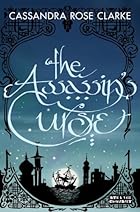
First of all, isn’t that a wonderful, striking cover? It’s definitely appropriate for the novel, which is set in a quasi-Middle Eastern fantasy world — a refreshing change from the faux-medieval backdrop of many fantasy novels. Also, there are pirates, and they’re the fun kind of pirates, roguish yet charming.  I also grew to enjoy both Ananna and Naji (the assassin) as characters, although Ananna’s extremely informal dialect did get on my nerves at first. My biggest gripe with the book is that, after the major characters and conflict are established, nothing happens. And in the end, absolutely nothing is resolved; you have to read the sequel (not yet published) to find out what happens! The book doesn’t technically end on a cliffhanger, but basically it’s only the first part of the story. What’s worse, there is no indication before the ending that this book is part of a series. So if you do decide to read it, be forewarned that you won’t be able to find out what happens until #2 is released! That said, I liked the book and will probably read the next one; I’m just sorry the (non)ending left such a bad taste in my mouth.

Review: The Graveyard Book

The Graveyard Book by Neil GaimanNeil Gaiman, The Graveyard Book

“There was a hand in the darkness, and it held a knife.” So begins this novel about an ordinary boy in an extraordinary situation. When the sinister man Jack murders the boy’s family and comes after him, he manages to escape to the local graveyard and evade Jack for the time being. He is taken in by the ghostly inhabitants of the graveyard, who give him the name Nobody Owens. Bod grows up in the graveyard with certain abilities (such as Fading and Haunting) but certain limitations (such as not interacting with living people). He loves his family in the graveyard but is also curious about the outside world. The older Bod gets, the more he is drawn to the world of the living; but the man Jack is still looking for him, and he must confront many dangers before he can truly begin to live his life.

This book is a wonderfully atmospheric tale, perfect for a chilly autumn evening. Gaiman’s descriptions are evocative and often spooky, from the  menace of Jack and his associates to the slavering ghouls to the ancient power of the Sleer. Bod is a grave (pun intended) but likable child, and his adventures both in and out of the graveyard make for entertaining reading. I also loved Silas, Bod’s guardian, and I would have liked to know more about him. The ending is sad in some ways, but it feels absolutely right for the story. My only complaint is that this book is less substantial than Gaiman’s work for adults (Neverwhere is still my favorite), but I definitely enjoyed it nonetheless.

Review: The Ladies of Grace Adieu

Susanna Clarke, The Ladies of Grace Adieu and Other Stories

When I read Jonathan Strange and Mr. Norrell last year, it pretty much knocked my socks off, so I was excited to find  Clarke’s collection of short stories (all of which were, I think, previously published elsewhere).  Here are my thoughts on the individual stories:

“The Ladies of Grace Adieu” — Jonathan Strange visits his brother-in-law in Gloucestershire and is surprised to discover three young ladies with magical talents; however, they don’t always use these talents for benevolent purposes. A suitably creepy and atmospheric story, but I didn’t quite follow the plot.

“On Lickerish Hill” — In the 15th or 16th century, a young peasant girl marries the local squire and is forced to spin a large quantity of wool in an impossibly short period of time. My least favorite story in the bunch; the period language got on my nerves, and in general the story didn’t feel like it had very much substance to it.

“Mrs. Mabb” — In Regency England, a girl’s lover jilts her for the mysterious Mrs. Mabb, and the girl decides to fight back. I liked this story, especially the descriptions of the girl’s experiences in fairyland, which are darker and more painful than the word “fairyland” suggests.

“The Duke of Wellington Misplaces His Horse” — The title of this one is pretty self-explanatory. 🙂 This is one of the shortest, most amusing stories in the bunch, and the setting (the village of Wall) is borrowed from Neil Gaiman’s Stardust. Definitely one of my favorites in the bunch.

“Mr. Simonelli or The Fairy Widower” — Simonelli keeps a journal about his new job as the vicar of a country village and his encounters with a fairy lord who is looking for a new human bride. I liked this story because it was longer and more fleshed out than most of the others; it also conveys a subtly disturbing atmosphere.

“Tom Brightwind or How the Fairy Bridge Was Built at Thoresby” — A Jew and a fairy visit the decaying town of Thoresby and make a plan to help its inhabitants. I wasn’t terribly interested in this story as such, but it does shed some light on Clarke’s fairies and their family relationships.

“Antickes and Frets” — Mary, Queen of Scots, plots to destroy Elizabeth by using magic. I enjoyed the incorporation of actual historical figures into this story.

“John Uskglass and the Cumbrian Charcoal Burner” — John Uskglass, the Raven King, inadvertently injures a lowly charcoal burner, who turns to various Christian saints for retribution. This was my favorite story in the bunch; the saints were hilarious, and I just really liked the whole idea of this story.

Sorry that took so long! I never know how to review short story collections. Should I talk about each story individually or just give my impressions on the collection as a whole? As you can see, I’ve chosen the former approach because I think it’s more helpful to people who are deciding whether the collection is worth their time or not. Anyway, I wouldn’t recommend this book to someone who hasn’t read Jonathan Strange, but for those who have read it, these stories shed an interesting light on Clarke’s world and her vision of the realm of fairy.