Review: Bellman & Black

Bellman & BlackDiane Setterfield, Bellman & Black

This atmospheric novel tells the story of William Bellman, who makes one decision in childhood that will alter the entire course of his life. When he is ten years old, he and a few friends are playing in the field near their village, and they see a rook on a far-off tree branch. Will bets his friends that he can hit the bird with his slingshot, and to everyone’s astonishment, he actually does it. Will and his friends soon forget the incident, but from then on, rooks become a touchstone and a bad omen for William Bellman. As he gets older, he becomes more and more successful: first he get a job at his uncle’s mill, then rises through the ranks until he eventually runs it. He marries and has children, and he begins to make a very comfortable living. But when an illness sweeps through the village and takes most of William’s family, he will do anything to save his remaining daughter — including making a desperate deal with the mysterious Mr. Black. William’s encounter with Black leads him to an entirely different business venture, one that eventually threatens to consume him.

I absolutely loved Diane Setterfield’s debut novel, The Thirteenth Tale, so I had high expectations for this book. Unfortunately, I’m coming away from it with mixed feelings. The writing style is just as rich and gorgeous as I remember, and I found myself reading very quickly despite the slow-moving plot. I also admire the novel’s atmosphere of suspense; it has a wonderfully autumnal, sinister quality, despite the fact that not a lot of scary stuff actually happens. In fact, that may be my biggest problem with the book: there’s this great buildup of tension throughout the novel, but in the end there’s no payoff. The interludes about rooks — and William’s encounters with them throughout the book — are meant to heighten the suspense, I think, but I didn’t really understand their role in the story. Frankly, I was a bit confused about the story as a whole; I was expecting a Faustian narrative in which William essentially sells his soul for success, but that’s not really what happens. In short, I’m not sure what I’m supposed to be taking away from this book — but I’m definitely not giving up on Setterfield yet!

Review: The Lady Vanishes

Lady Vanishes, TheEthel Lina White, The Lady Vanishes

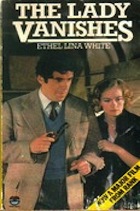
Iris Carr is a privileged young Englishwoman enjoying a holiday somewhere in Europe with a large group of friends. But when her crowd is ready to leave, Iris decides to stay an extra day and enjoy the beauties of the mountains by herself. When she boards the train to go home, she is immediately isolated from the other passengers because she doesn’t speak the native language. So when a talkative English spinster named Miss Froy introduces herself, Iris is glad to have the company, even though Miss Froy is rather a bore. After a long chat, Iris takes a nap in her compartment; but when she wakes up, Miss Froy is gone! Eventually she begins to worry, so she finds a young Englisman to act as interpreter and ask the other passengers where Miss Froy went. To Iris’ shock, they all claim not to remember Miss Froy and say Iris must be imagining things. Iris knows she didn’t imagine Miss Froy, but without any evidence to the contrary, how can she be sure? And if the lady does exist, why won’t anyone admit to seeing her?

Recently I watched Alfred Hitchcock’s “The Lady Vanishes” and really enjoyed it, but I had no idea it was based on a book! I’m glad I discovered the novel, though, because with all due deference to Hitchcock, the book is better. While the movie is a somewhat straightforward thriller, the book has more psychological tension because it keeps you in the dark about Iris’ mental state for much longer. Are the other passengers involved in some sort of unlikely but sinister conspiracy, meaning that she and Miss Froy are both in danger? Or, perhaps even worse, is Iris having a mental breakdown and imagining the whole thing? Either way, she’s trapped in a nightmarish situation, and the book does an excellent job of heightening this tension. I also think the book’s ending is better than the movie’s; while the film ends with a dramatic shootout, the novel has a much more subtle conclusion. So I would definitely recommend this novel to anyone who likes psychological thrillers, especially if you’ve seen or plan to see the movie!

Review: In Your Dreams

In Your DreamsKristan Higgins, In Your Dreams

Emmaline Neal is one of three police officers in the tiny town of Manningsport, New York. She’s a tough, no-nonsense woman who knows her way around a Taser, but she’s also dealing with the fallout of a broken heart. Her first love is about to marry the shrew he dumped Emmaline for — and even worse, he’s invited her to the wedding! Emmaline knows she can’t go alone, so she reluctantly asks Jack Holland to be her date. Jack is friendly, popular, and drop-dead gorgeous, and he can’t say no to a damsel in distress. Em is aware that she’s definitely not Jack’s type, so she’s determined to keep her distance. But after a little wedding-related humiliation and a few glasses of wine, her practical resolutions fly out the window. After one amazing night together, Em tries to fight her growing feelings for Jack — even though he actually seems to be interested in her, too. But Jack is dealing with his own problems, including the sudden reappearance of his dainty ex-wife, who is not-so-subtly trying to get him back. Will Jack and Em be able to overcome their respective pasts and finally find happiness together?

As a Kristan Higgins fan, I’ve been reading and enjoying each new book that comes out, but I have to say that this is definitely my favorite of her recent books! Jack and Em both feel like real people to me, and they each have very specific baggage that prevents them from immediately falling into each other’s arms. I also — contrary to my expectation! — really liked the presence of the Evil Ex in this book. Having an ex-lover resurface is often a tedious, contrived obstacle to keep the hero and heroine apart; but in this book, the presence of Jack’s ex illuminates certain aspects of his character that show why he works with Emmaline. Here, the Evil Ex isn’t actually evil, but she is very needy and can be selfish. By contrast, Jack and Em are both giving people who are willing to sacrifice a lot for the people they love. I do have a few issues with the ending of the book, though; everything seems to work out a little too perfectly. For example, even Emmaline’s ex is redeemed in the end, which I don’t think was necessary. But even despite the magically perfect ending, I’d definitely recommend this book to fans of contemporary romance!

Review: The Neruda Case

Neruda Case, TheRoberto Ampuero, The Neruda Case (trans. Carolina De Robertis)

Cayetano Brulé, one of the most respected private investigators in Valparaíso, is on his way to meet a prospective client when he stops at a restaurant for lunch. When he opens the menu, he sees a photograph of Pablo Neruda and immediately recalls his first case as a detective, in which his client was the Nobel laureate himself. Suddenly it’s 1973, and Cayetano (a Cuban by birth) is somewhat adrift in his adopted homeland of Chile. At a political party with his wife, Cayetano meets Neruda for the first time, and they soon strike up a conversation. Later, Neruda invites Cayetano to his home and makes a surprising request: he wants Cayetano to find a missing person, a doctor whom Neruda knew many years ago. Cayetano’s search takes him to Mexico City, Havana, and even East Berlin, and he eventually learns that Neruda’s desire to find the doctor is not as straightforward as it seems. Meanwhile, Chile is also experiencing a period of upheaval, as Salvador Allende’s Marxist government is succeeded by the dictatorship of Pinochet.

This novel attempts to do many different things, with mixed results. As a mystery, I think it falls flat; there is no real urgency to Cayetano’s search, and the results of his investigation ultimately don’t matter very much to the story. The book is more successful at painting a portrait of Pablo Neruda at the end of his life. I feel like I got a sense of his personality and his importance to Chile as a political figure. Best of all, this book does a wonderful job of depicting the political situation in Chile at the time and relating it to the wider issue of global politics. It’s no coincidence that Cayetano mostly visits Communist countries, in an era dominated by the Cold War and the ideological conflicts between socialism and capitalism. The novel is definitely not neutral on this subject; both Cayetano and Neruda favor Allende’s government, while Cayetano condemns his wife’s more radical Communism. Overall, I was fascinated by the setting much more than I was by the story. So I’m glad I read this book, but I won’t be seeking out any more installments of the series.

Review: The Midnight Queen

Midnight Queen, TheSylvia Izzo Hunter, The Midnight Queen

Gray Marshall is a promising student of magick at Oxford’s prestigious Merlin College, but his life changes instantly when an ill-fated midnight expedition results in the death of one of his classmates. Although Gray had nothing to do with the violence that resulted in this tragedy, he soon learns that everyone is blaming him. His tutor, Professor Appius Callender, whisks him off to the professor’s country house as punishment for his supposed misdeeds. At first Gray is miserable there; his magickal powers seem to have deserted him, and he is forced to work in the professor’s gardens all day. But then he meets Sophie, the professor’s kind and intelligent daughter, and he soon discovers there is more to her than meets the eye. As Gray and Sophie become closer, they begin to uncover shocking secrets about Sophie’s family, as well as a conspiracy that threatens not only Gray but the entire kingdom of Britain.

I hardly ever buy books on impulse anymore; usually I’ll only shell out money for an author or series I already know I like. But this book jumped out at me because of its beautiful cover, and then the lure of a Regency-era fantasy with romance totally sold me! Overall, I’m glad I took the plunge in buying this book, because I really enjoyed it. Gray is a very endearing hero: studious, shy, and hardworking, with a stutter that appears when he’s nervous. He’s well matched in Sophie, a heroine who is strong without being abrasive and forward-thinking without being anachronistic. The book moves fairly slowly, which might bother some readers, and I also felt that the plot was a bit scattered. For example, Gray frequently mentions his various siblings, but only one of them is even “on page” in this book, so I was a bit confused and distracted by the other sibling references. Still, I suppose these loose ends and tangents might be resolved in a sequel; if one should materialize, I’ll definitely be seeking it out!

Review: The Winter Long

Winter Long, TheSeanan McGuire, The Winter Long

***Warning: SPOILERS for previous books in this series!***

Things finally seem to be looking up for October Daye. Now that the malevolent, usurping Queen of the Mists has been dethroned and the true queen reinstated, Toby’s biggest problem is having to dress up for court functions. But of course, this pleasant state of affairs can’t last, as Toby learns when Simon Torquill — the man whose spell once turned her into a fish for 14 years — suddenly re-enters her life. Shockingly, he doesn’t seem to want to harm Toby this time; in fact, he claims that he’s only trying to protect her from another, more powerful enemy. Toby knows she can’t trust Simon, but the more she investigates his allegations, the more it seems he’s actually telling the truth. Someone from Toby’s past is out to get her, and it’s the last person she would ever expect. Can Toby once again protect her loved ones, defeat the bad guys, and live to fight another day?

Seanan McGuire actually wrote a little intro to this book in which she said, “Everything I have done with October’s world to this point has been for the sake of getting here.” And indeed, this book is a game-changer for the series, shedding a whole new light on the events of previous books. I love the fact that McGuire has plotted this series so meticulously, and it really shows in this installment. Now I want to go back and re-read the entire series, so I can pick up on all the little clues I missed the first time around! So plot-wise, I really loved this book, and I’m very intrigued to see what’s next for Toby and the gang. At the same time, though, I’m a little nervous about the future of this series. With every new installment, it seems that the stakes get higher and higher, and Toby becomes more and more important in her Fae world. In the first few books, she seemed refreshingly ordinary, but now it seems that she’s some kind of Chosen One, which is a trope that often bugs me in fantasy novels. I’m definitely still hooked on the series for now, but I hope that I will still be enthusiastic after future installments!

Review: Silence

SilenceShusaku Endo, Silence (trans. William Johnston)

This novel is set in 17th-century Japan, at a time when Christianity has been outlawed, and Christians are imprisoned and tortured so that they will renounce their faith. Nevertheless, various missionary groups from Europe, both Catholic and Protestant, continue to arrive in Japan in hopes of spreading the Christian religion there. One such missionary is Sebastian Rodrigues, a Portuguese priest who believes that God is calling him to minister to His church in Japan. Rodrigues also hopes to find his former teacher and mentor, Father Ferreira, who is rumored to have renounced Christianity and adopted a traditional Japanese lifestyle. When Rodrigues arrives in Japan, his enthusiasm for his mission slowly declines as he sees Christian peasants being tortured and executed for their faith. For the first time, he experiences serious doubts in the face of God’s silence: if He exists, why does He allow his faithful disciples to suffer? As Rodrigues struggles with this question, he must eventually decide whether his faith is truly worth defending at any cost.

This book is laser-focused on a single issue: God’s silence in the face of suffering, and the implications of that for a person of faith. If this is an issue that interests you at all, I would definitely recommend this book! The writing style is sparse and direct, enhancing the nature of the stark choice that confronts Sebastian Rodrigues. The character’s struggle really rang true for me, and there are certainly no easy answers in this book. For me the most compelling character was Kichijiro, the Japanese guide who shelters Father Rodrigues and his companions but later betrays them. He is a weak, pathetic, utterly despicable character, yet Rodrigues comments that “Christ did not die for the good and beautiful. It is easy enough to die for the good and beautiful; the hard thing is to die for the miserable and corrupt….” In sum, this book isn’t a particularly fun or quick read, but I think it’s an important one for anyone interested in questions of faith or in the clash between Western religion and Eastern culture.

Review: Murder at the Brightwell

Murder at the BrightwellAshley Weaver, Murder at the Brightwell

Amory Ames and her husband Milo are having marital difficulties. They met just a few years ago and married quickly after a whirlwind romance. But now Milo is spending most of his time in various fashionable European cities — and gaining quite a reputation as a playboy — while Amory sits at home. Then one day Amory receives a visit from Gil Trent, a longtime friend and former fiancé, who needs her help: Gil’s sister has just gotten engaged to a thoroughly unsuitable man, and Gil hopes that Amory can persuade her not to go through with the wedding. Intrigued by Gil’s reappearance in her life, and angry at her husband, Amory agrees to help. She accompanies Gil to the fashionable Brightwell hotel, where Gil’s sister, her fiancé, and a small group of friends have gathered. But Amory gets more than she bargained for when the fiancé is murdered, and the culprit must be someone she knows….

This is one of those books that you’ll enjoy if the summary sounds interesting to you. I really like traditional English mysteries set in the first half of the 20th century, and this novel is a solid addition to that tradition. Amory is a likeable narrator and protagonist, and even though her amateur sleuthing seems a bit unnecessary (given the presence of a competent police inspector on the case), at least she’s not obnoxious or too stupid to live. The mystery plot is reasonably satisfying; it’s not particularly original or shocking, but the killer’s identity did surprise me. There’s a strong romantic subplot in the novel as well, as Amory must choose between Gil and Milo. I’m a fan of romance in my fiction, so I enjoyed this plotline, although I was never really in any doubt about whom Amory would choose. All in all, I enjoyed the book and would certainly read a sequel if one materializes.

N.B. I received an ARC of this novel at Book Expo America. The US publication date, per Amazon, is October 14.

Review: Love’s Shadow

Love's ShadowAda Leverson, Love’s Shadow

Edith Ottley, a pretty and intelligent young woman, has begun to be bored with her life. Her husband Bruce is pompous, condescending, and unaware of his intellectual inferiority to his wife. Edith’s only solace is the companionship of her friend Hyacinth Verney, a young heiress who is living a dashing and unconventional life in London. Hyacinth has just begun to explore the possibility of getting married, and she is strongly attracted to the handsome but aloof Cecil Reeve. But Cecil, in turn, is hopelessly in love with a widow ten years his senior, although she doesn’t return his affections. In short, this novel is a comedy of manners about a social circle in which everyone is in love with the wrong person. Amidst all their tangled romances and unrequited loves, can any of the characters find true happiness?

I read this novel a couple weeks ago, and I find that I don’t have much to say about it now. The book is quite witty in places, and some of the situations and characters strongly reminded me of Jane Austen. (Bruce Ottley, for example, is a slightly more sympathetic Mr. Collins if ever there was one — which makes me wonder why Edith married him in the first place!) But this book never really goes below the surface or allows the reader to sympathize with any of the characters. All the conflicts in the book came across as trivial to me, and in the end I didn’t much care how all the various romances resolved. If you enjoy stylish, witty comedies of manners, you’ll find something to enjoy in this novel; but if you need a strong plot or sympathetic characters, you’ll end up feeling frustrated, as I did.

Review: Do Androids Dream of Electric Sheep?

Do Androids Dream of Electric Sheep?Philip K. Dick, Do Androids Dream of Electric Sheep?

Sometime in the early 21st century, World War Terminus has resulted in widespread destruction and nuclear fallout, so everyone who can afford it has emigrated to Mars. To help these emigrants establish a new civilization, androids were created to be servants and laborers. As time went on, the androids became more sophisticated until they were virtually indistinguishable from humans — except for a complete lack of empathy. Now some of these androids have returned to Earth, where their presence is illegal, and policeman Rick Deckard is charged with hunting them down and “retiring” them. In fact, he is authorized to kill them on sight; but as he pursues the rogue androids, he must confront his own feelings and beliefs, including what it means to be human.

When I started this book, I was expecting the main issue to be the nature of the androids themselves: If they have the same intelligence and (mostly) the same emotions as humans, aren’t they also human? But oddly enough, the book leaves no doubt on this issue — the androids are not human, and Rick Deckard’s struggle with this fact gets him into trouble on several occasions. Even though the androids are machines, Deckard can’t help but see them as human beings, due to his own empathetic response. He feels pity for them, recognizes their contributions to society, and even falls in love with one of them. Ultimately, the real issue of the book is not the humanity of the androids, but rather the humanity of the humans: Can Deckard do his job and still retain his humanity? As such, I found the book a fascinating read, even though it wasn’t quite what I expected.

Blade Runner final cutAfter reading this book, I decided to rent the movie “Blade Runner” so that I could compare and contrast the film adaptation with the original. Basically, the movie is VERY different from the book, and I was bewildered by most of the changes. The movie is visually stunning — I loved the vision of a post-apocalyptic Los Angeles — but I just didn’t understand Deckard’s relationships with the androids in the movie at all. It’s hard to say more without spoiling, but let me just say that the final confrontation scene goes VERY differently in the movie versus the book. The movie also suggests (and Ridley Scott confirmed that this was his intention) that Deckard himself is an android, which is 100% NOT the case in the book. So while “Blade Runner” is an interesting movie in its own right, it’s definitely not a faithful adaptation of the book!