Mini-Reviews: Red, Rom-Com, Garden

Mary Roberts Rinehart, The Red Lamp

Professor William Porter has recently inherited a seaside house from his Uncle Horace. He decides to stay there during his summer vacation, along with his wife Jane, niece Edith, and Edith’s beau Warren Halliday. When they arrive, they immediately learn that the house is reputed to be haunted, and they soon witness strange occurrences themselves, such as a red light shining from the supposedly empty house. Then sheep start dying with their throats cut, and a police deputy goes missing. Are evil spirits responsible for these tragedies, or is human malice at work? This is my first book by Rinehart, and I wasn’t terribly impressed. The novel tries hard to create an atmosphere of eerie suspense, but I never fully felt that; instead, William’s constant musings on possible supernatural explanations just irritated me. In terms of moving the mystery plot forward, not much happens till almost the end of the book. I felt like there weren’t enough clues for readers to grab hold of, and I’m not quite sure the solution all hangs together. Still, Rinehart’s writing is good, and I’m interested to try more of her work; maybe this one is an uncharacteristic dud.

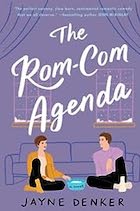
Jayne Denker, The Rom-Com Agenda

Eli has just been dumped by his girlfriend, Victoria, but he’s convinced she’s the one. While she’s on sabbatical in Europe, he and his friends devise a plan to win her back: He’ll give himself a makeover, basing his new look and personality on the heroes of classic romantic comedies. When he meets Leah, a lonely young woman who quickly gets absorbed into his friend group, they immediately hit it off and begin watching the rom-coms together. But as Eli and Leah grow closer, he must decide where his heart truly lies. This contemporary romance is predictable but sweet, and I enjoyed the allusions to some of my favorite movies, like Better Off Dead and The Princess Bride. I liked Leah’s quiet strength and Eli’s exuberant, genuine nature. The book also has a low steam factor with no explicit sex scenes, which is a plus for me. Overall, though, this is a fun read but not a standout, and I don’t feel particularly compelled to seek out more by the author.

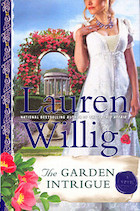
Lauren Willig, The Garden Intrigue

Augustus Whittlesby is widely regarded as the worst poet in Paris, but he’s also secretly a British agent working with — and infatuated by — the Pink Carnation, a.k.a. Miss Jane Wooliston. Jane’s friend, Emma Delagardie, constantly ridicules Augustus’s terrible poetry but is also maybe a tiny bit attracted to him. When Augustus and Emma are thrown together to write a masque for Bonaparte and his court, they develop a deeper relationship. But Augustus is conflicted, both because of his feelings for Jane and because he’s using Emma to learn more about Bonaparte’s plans for invading England. Augustus has been a frequently recurring character throughout this series, so I’m glad he finally got his own story. I liked that both he and Emma ultimately have the same conflict: they have to choose between guarding their (relatively) safe, self-protective lives and taking a chance on real love. This book isn’t quite as light and fun as earlier installments of the series, and it isn’t one of my favorites, but it’s still an enjoyable read.

Mini-Reviews: Orchid, Leopard, Between

Lauren Willig, The Orchid Affair

After spending the past 16 years as a governess, Laura Grey is eager to be sent on her first mission for the Pink Carnation. To her dismay, she’ll be posing as a governess — but her real job will be to spy on her pupils’ father, André Jaouen, who works for Bonaparte’s ministry of police. André is keeping many secrets, and as Laura discovers where his loyalties truly lie, she also finds herself increasingly drawn to him. This is another enjoyable installment of the Pink Carnation series. I liked seeing how the French Revolution and rise of Napoleon affected the people who were experiencing it firsthand. I also enjoyed the romance between Laura and André, who have both experienced hardship and gained wisdom from it. The book’s pacing is a bit slow, though, and I just didn’t love it quite as much as some others in the series. Still, I’m glad to have revisited this one!

Andre Norton and Rosemary Edghill, Leopard in Exile

This sequel to The Shadow of Albion finds most of the principal characters in America, known in this universe as New Albion. Sarah, now the Duchess of Wessex, travels to Baltimore to help her friend Meriel, whose husband Louis (the lost dauphin of France) has gone missing. The Duke of Wessex follows his wife, but he’s also been given a spy mission he may or may not choose to complete. And the evil sorcerer the Marquis de Sade is seeking the Holy Grail, rumored to be in the French colony of Louisianne, which will give him unimaginable demonic power. After I loved the previous book so much, it’s not surprising that this one was a bit of a letdown. While the setting is unique and fascinating, I got weary of all the world-building, especially when it slowed down the narrative. Also, I wanted more character interaction and development; I particularly felt the lack thereof in Sarah and Wessex’s relationship. That said, I’m still glad to have read the book and sorry the series won’t continue.

Mhairi McFarlane, Between Us

Roisin has been dating Joe, a successful TV writer, for nearly a decade, but lately she’s been thinking about breaking up. The problem is that they’re both part of a tight-knit friend group, and she doesn’t feel like she has a good enough reason to dump him. But things come to a head when the friend group gathers to watch Joe’s new TV show, which contains scenes straight from Roisin’s life, including private details about her dysfunctional family. After this betrayal, Roisin begins to wonder if she ever really knew Joe at all. I’m a McFarlane fan and enjoyed this latest book very much, but those expecting a light contemporary romance will be disappointed. Though there is a very sweet love story, the vast majority of the plot centers around Roisin’s relationship with Joe and her growing knowledge of his true character. McFarlane likes to explore the ways men can abuse and exploit women, so the focus on Joe is not surprising, but I would have liked a little more emphasis on Roisin’s new romance and her complicated family dynamics.

Mini-Reviews: Scandal, French, Murder

Sophie Irwin, A Lady’s Guide to Scandal

Ten years ago, Eliza Courtenay married the wealthy Earl of Somerset out of duty to her family, even though she was in love with Somerset’s nephew at the time. The marriage was restrictive and unhappy, but now the earl has died and left Eliza unexpectedly rich. She decides to take control of her life and set up her own household in Bath. But her newfound independence comes with complications, especially when she’s torn between her old love (who is now the earl) and the charming yet scandalous Lord Melville. I greatly enjoyed Irwin’s debut novel, A Lady’s Guide to Fortune Hunting, so I had high hopes for this one, but it never quite grabbed me. I liked the development of the love triangle, where Eliza’s choice of man reflects her choice about what kind of life she really wants. But at the same time, that conflict feels very modern; with historical romance, I want to be transported to a different time, and I didn’t feel that here. Overall, I’d call this one good but not great.

Sarah Ready, French Holiday

After watching her sister marry her best friend, with whom she’s been desperately in love for the past four years, Merry DeLuca needs an escape. Her godmother offers to let her stay in her French chateau, and Merry jumps at the chance. But she’s shocked to discover that Noah Wright, the best man at her sister’s wedding, is also staying at the chateau to work on a travel documentary. Merry and Noah have always disliked each other, but now their close proximity causes them to reevaluate their relationship. I enjoyed this contemporary romance, though it feels a little unpolished (which makes sense, as I believe it’s self-published). At times the prose gets a bit overwrought, and some of the humor veers toward cringey, but the romantic/sexual tension is well done, with excellent use of the “only one bed” trope. Definitely worth a read if the premise interests you!

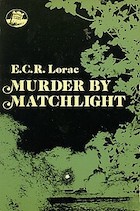
E.C.R. Lorac, Murder by Matchlight

In the opening chapter of this World War II-era mystery, a young man witnesses a murder—but because of the wartime blackout, he doesn’t actually see anything except a face that’s briefly revealed when the victim lights a match in the seconds before his death. Scotland Yard Inspector Macdonald is on the case and soon learns that the key to the truth lies in the dead man’s mysterious identity and background. This vintage mystery was a bit of a mixed bag for me. I loved the wartime setting and its subtle but important effects on the plot — for example, one of Macdonald’s suspect interviews is interrupted by an air raid. The cast of characters is interesting, and Macdonald is a likable sleuth. But I think the mystery itself is a bit weak, and the plot is mostly just Macdonald interviewing people, which gets boring. Overall, though, I’d be interested in reading more by Lorac.

Mini-Reviews: Rogue, Widening, Carnation

Virginia Heath, Never Rescue a Rogue

Giles Sinclair and Diana Merriwell have delighted in vexing each other ever since his best friend married her sister. Everyone thinks their teasing banter is masking a mutual attraction, but they both vehemently deny it. Yet when Giles finds himself in trouble, it’s Diana he turns to for help, and eventually they’ll have to admit to themselves — and each other — that their friends were right all along. There’s a lot in this book that requires suspension of disbelief (Giles might be illegitimate but no one knows! Diana is secretly a hard-hitting investigative journalist!). But if you can roll with the implausibilities of the plot, as well as the characters’ modern attitudes and language, this is a fun book. I liked it more than the first in the series, and I’ll definitely seek out book #3 when it comes out.

W. Bolingbroke Johnson, The Widening Stain

This vintage mystery novel, originally published in 1942, is set in a fictional university library. A French professor is found dead in the stacks, apparently having fallen off a high ladder. But Gilda Gorham, the library’s head cataloger, suspects foul play — especially when another member of the faculty is later strangled and a priceless manuscript goes missing. I liked this book well enough; the writing style is brisk and humorous, gently satirizing the world of academia and providing several limericks (of varying quality) as a bonus. The mystery itself isn’t terribly satisfying, as the motive hinges on some dubious psychology. But still, I found it an enjoyable read and a pretty good start to 2023.

Lauren Willig, The Secret History of the Pink Carnation

It’s 1803, and the Scarlet Pimpernel (who’s a real person in this universe) has inspired several other heroes with flowery names to spy against Napoleon. Lord Richard Selwick, a.k.a. the Purple Gentian, is on a mission to thwart Bonaparte’s invasion of England when he meets Amy Balcourt, an impetuous young lady who wants to join the Gentian’s league. As Amy and the Gentian fall in love, Richard struggles with when and how to reveal his true identity. I’m really glad I decided to revisit this series, because this book is a delightful romp of a historical romance that doesn’t take itself too seriously. If you’re looking for historical accuracy and period-appropriate dialogue and manners, this is not the book for you. But if you’re in the mood for some light-hearted, swashbuckling fun, I would definitely recommend it! Now I’m really looking forward to book #2, as I remember it being one of my favorites in the series.

Mini-Reviews: Kiss, Corner, Matzah

Lisa Berne, You May Kiss the Bride

Gabriel Penhallow is bored witless by the young ladies he meets in Society, but he knows it’s his duty to marry, so he decides to propose to the beautiful but insipid Cecily Orr. While visiting the Orrs, however, he comes across Livia Stuart, whose straightforward nature both irritates and attracts him. An impulsive kiss forces Gabriel and Livia into a hasty betrothal, but a true romance develops as they spend more time together. This is a pretty stereotypical historical romance, with a stuffy, imperious hero and a feisty, unconventional heroine. That said, I do like that formula and I enjoyed the book. It’s a bit different from The Worst Duke in the World (which I also enjoyed) — less frivolous in tone, and with more explicit sexytimes. Overall, I’d consider reading more by the author, but I’m not racing out to do so.

Elizabeth Cadell, The Corner Shop

Lucille Abbey is a highly competent, efficient woman who runs a secretarial business. When three of her best secretaries quit a particular job within the first day, Lucille decides to see for herself why this job is so difficult. She encounters an absentminded, impolite professor and an uninhabitable cottage; but despite her initial antipathy, she decides to stay and put things in order. Later, in Paris, she encounters the professor again and gets mixed up in an art theft. This is a light, pleasant read that I enjoyed for its sharp character observations and satisfying romance. The plot has a few too many coincidences but resolves well, though I wanted the art thief to get more of a comeuppance! Overall, I liked this more than Any Two Can Play and will likely reread it at some point.

Jean Meltzer, The Matzah Ball

Rachel is a Jewish woman with a shameful secret: She loves Christmas and is, in fact, a best-selling author of Christmas romance novels. But now her publisher is asking for a Hanukkah romance, and Rachel is at a loss — for her, Hanukkah just doesn’t have the same magic. Hoping for inspiration, she decides to attend a high-profile Hanukkah celebration called the Matzah Ball . . . but to get a ticket, she’ll need a favor from Jacob Greenberg, her summer camp first-love-turned-nemesis. If you would like to learn more about being Jewish in America during Christmastime, or about living with an invisible illness (Rachel has chronic fatigue syndrome), you’ll like this book. But if you’re looking for a believable, relatable romance, look elsewhere. Rachel and Jacob were 12 years old when they fell in “love,” and after only one meeting as adults, they’re thinking about each other in terms of love and long-term commitment. I just couldn’t buy it, and I wouldn’t recommend the book unless Rachel’s specific attributes and situation in life really resonate with you.

Mini-Reviews: Lady, Flight, Velocipede

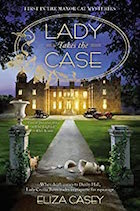
Eliza Casey, Lady Takes the Case

The lady of the title is Lady Cecilia Bates, the daughter of an old, aristocratic family that has fallen on hard times. To keep the estate functioning, her brother, Patrick, needs to marry a rich woman; luckily, American heiress Annabel Clarke has agreed to attend their house party. All seems to be going according to plan until one of the other guests, a famous explorer, is poisoned over dinner. When Patrick appears to be the police’s main suspect, Cecilia decides to launch her own investigation, along with Annabel’s intelligent maid, Jane, and a little help from Jane’s cat. I liked this book and think it would appeal to fans of Downton Abbey, but I think the setting and characters are definitely more interesting than the mystery. I’m not sure I care enough to read the sequel; another book in a similar vein is Alyssa Maxwell’s Murder Most Malicious, and I’d rather continue with Maxwell’s series.

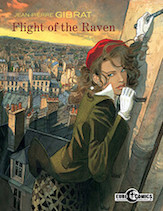
Jean-Pierre Gibrat, Flight of the Raven

I’m not generally a big graphic novel fan; I’m not a very visual person, and my tendency is to go straight for the text without really absorbing the illustrations. But this GN drew me in with its World War II setting, French Resistance heroine, and cat burglar hero, not to mention the absolutely gorgeous art! The overarching plot — in which the heroine, Jeanne, searches for her missing sister and worries about a traitor within her Resistance cell — is not particularly well fleshed out, but it’s really just an excuse for her to team up with the cat burglar and the other quirky characters she meets along the way. Overall, I did like this and would recommend it to people who enjoy both historical fiction and graphic novels.

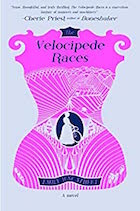
Emily June Street, The Velocipede Races

In an invented world similar to late Victorian England, velocipede racing is both a popular sport and the only socially acceptable way for upper-class men to earn money. Women, of course, don’t participate and are not even supposed to ride velos in private. Nevertheless, Emmeline Escot has always dreamed of racing, and she’s determined not to let social conventions get in her way. Complications ensue, however, when she is inadvertently “compromised” by a rich stranger and forced to marry. I picked up this book knowing very little about it, so I’m happy to say I enjoyed it! But I think my favorite parts were honestly the interactions between Emmeline and her new husband; their relationship interested me a lot more than the descriptions of velo racing, and I found Emmeline’s obsession with the races a little tedious. Still, I think this one is worth reading if you like historical romance with a strong (and not terribly subtle) feminist message.

Mini-Reviews: Premeditation, Skeptics, Summer

Tirzah Price, Pride and Premeditation

This YA historical novel is a spin on Pride and Prejudice: Lizzie Bennet dreams of being a barrister, but since such a career is unheard of for a woman, she’s currently an unpaid assistant at her father’s law firm. She hopes that scoring a big client for the firm will convince Mr. Bennet to hire her; when the rich and socially prominent Mr. Bingley is accused of murdering his brother-in-law Mr. Hurst, Lizzie hopes Bingley will be that client. Unfortunately, Bingley is already represented by the arrogant Mr. Darcy, but that won’t stop Lizzie from doing some investigating of her own. The writing style is a bit clunky (too modern, too American), and Lizzie annoyed me sometimes — she’s much more headstrong and obnoxious than the original Elizabeth Bennet. But I did enjoy the book’s creative way of integrating P&P’s characters into a murder mystery plot. It’s a fun, fast read, so I’d recommend it if the premise interests you. I think a series is planned, so I may check out the sequels too.

Christina Pishiris, Love Songs for Skeptics

Zoë Frixos has what many people would consider a dream job: she’s a music journalist at a respected London magazine. But the magazine is in trouble, and the only hope of saving it is to score an interview with famous yet reclusive rock star Marcie Tyler. In her quest to get the interview, Zoë keeps butting heads with Marcie’s publicist, Nick Jones, who is as arrogant and hostile as he is (frustratingly) attractive. Meanwhile, Zoë also has to sort out her personal life, as her childhood best friend and first love, Simon, has just moved back to town. This book was published in January 2021, but it feels like a throwback to the chick-lit heyday of the ‘90s. That’s not necessarily a bad thing — I enjoyed Zoë’s first-person POV, the predictable career and relationship angst, and the musical references peppered throughout. I didn’t particularly buy the romance, though. Because we never get the hero’s POV, he remains pretty opaque, and I couldn’t figure out what drew him to Zoë. Overall, not bad but not great — it was worth the $2.99 sale price I paid for the e-book, but I’m glad I didn’t pay full price.

Jessica Brockmole, At the Edge of Summer

When 15-year-old Clare Ross’s father dies, she is taken in by her parents’ old friends in France, Monsieur and Madame Crépet. At first she’s shy, grief-stricken, and lonely; but when the Crépets’ son Luc comes home from university for the weekend, Clare finds an unexpected friend. Their relationship deepens over the course of the summer, but eventually Clare moves out to live with her grandfather, and she and Luc can only be close via letters. Then World War I intervenes, but of course they are destined to meet again. I liked this book; it’s sweet and a little sad but ultimately hopeful. The main characters are endearing, particularly Luc. But the love story was almost too romantic for me, verging on the sappy. And I would have liked a little more plot; despite Luc’s wartime experiences and Clare’s travels, not a lot actually happens. Overall, this is an enjoyable read, but like Brockmole’s previous book, Letters from Skye, I didn’t love it.

Mini-Reviews: College, Scholar

Caroline Stevermer, A College of Magics

Faris Nallaneen is the future duchess of Galazon, but until she is of age, her wicked uncle acts as regent. He’s decided to get her out of the way by sending her to Greenlaw, an all-female college with an unusual curriculum. Faris is reluctant at first, but she eventually makes friends, learns unexpected skills, and even discovers a unique magical destiny. After her time at Greenlaw, she must find a way to balance her magical responsibilities with her duties as the duchess of Galazon. I feel like that’s a very boring summary of a very fun book! It’s a quasi-Edwardian fantasy of manners, which is a subgenre I didn’t even know I needed in my life. At one point, Faris’s friend Jane turns an assassin’s bomb into a fashionable hat and then wears it, which gives you an idea of the tone. The magic in the book is not really explained or described in depth, so those who love detailed world-building might be disappointed. But overall, I liked it a lot — so much so that I immediately proceeded to read the sequel!

Caroline Stevermer, A Scholar of Magics

This book is set in the same world as A College of Magics and focuses on Faris’s friend, Jane Brailsford. Jane is now a teacher at Greenlaw and a powerful magician, and she’s been tasked with convincing the new warden of the west to take up his duties. Her mission takes her to Glasscastle, an all-male magical university in England, which takes a very different approach to magic than Greenlaw. There she meets Samuel Lambert, an American sharpshooter who’s been recruited to help Glasscastle with a special weapon for the top-secret Agincourt Project. When Lambert’s work and Jane’s mission collide, they team up to protect the future warden of the west and to discover the true nature of the Agincourt Project. This is another fun romp through an alternate 20th-century England, and I liked it as much as its predecessor. But it took me a long time to read, and I think that’s because of the pacing: nothing much actually happens until at least halfway through the book (and possibly more like two-thirds). Nevertheless, I still enjoyed spending time with these characters in this world!

Mini-Reviews: Gentleman, Goodbye, First

Amor Towles, A Gentleman in Moscow

In 1922, Count Alexander Ilyich Rostov is arrested and tried for the crime of being an aristocrat. But because he once wrote a poem with a revolutionary message, he isn’t immediately killed; instead, he is sentenced to house arrest for life in Moscow’s Metropol Hotel. As Alexander lives out his days in the Metropol, he befriends a variety of people, including hotel employees, Party officials, a beautiful actress, and (most significantly) a solemn young girl named Nina. Despite the turbulent political situation in the country as a whole, this novel focuses on one man’s life as he adapts to extraordinary circumstances. Like everyone else, I loved this book! The pace is slow, and there aren’t many dramatic events, but it felt like real life to me. There are some delicious satirical jabs at the broader political situation in Russia/the USSR, but the novel focuses primarily on Alexander’s own experiences. I would definitely recommend this to anyone who enjoys historical fiction!

Beatriz Williams, Lauren Willig, and Karen White, All the Ways We Said Goodbye

This is one of those historical novels with multiple storylines set in three different time periods. In 1914, Aurélie de Courcelles abandons her luxurious life with her mother at the Paris Ritz and runs to her father’s ancestral home, which is later invaded by German soldiers. In 1942, Daisy Villon is primarily concerned with keeping herself and her children safe in occupied France, but she is eventually drawn into the resistance effort and an illicit love affair. And in 1964, Babs Langford travels from England to Paris in search of information about her deceased husband’s war years. Overall, I liked this book and found it entertaining; there’s a lot of drama and excitement to keep the pages turning, and I do love a good WW2 spy plot. On the other hand, the plot twists and “reveals” are quite predictable. And while I liked all three stories, I think they were a little much for one book; perhaps the authors should have eliminated the 1964 story and focused on the other two in greater depth. As I said, I enjoyed the book overall, but I didn’t like it as much as these authors’ previous book, The Glass Ocean.

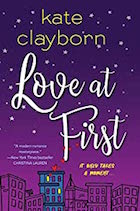
Kate Clayborn, Love at First

Nora Clarke loves her Chicago apartment building; her happiest childhood memories were spent there with her grandmother, and she’s known and loved her neighbors all her life. So when the building’s owner dies and his nephew, Will Sterling, inherits it, Nora is terrified that things will change. In fact, Will has no interest in owning or living in the building, so he decides to rent out his uncle’s unit to short-term tenants. Aghast, Nora is determined to stop him; but the more time she spends trying to persuade Will, the more she is attracted to him. I was a bit nervous about this book since I enjoyed Love Lettering so much, but thankfully I ended up loving this one too! I liked that the characters actually move on from the apartment conflict pretty quickly; they each come to understand the other’s position and are both willing to compromise. The real obstacles to their relationship are their fears and insecurities, which I found very realistic. I was rooting so hard for Will and Nora, and I enjoyed the quirky secondary characters as well (Will’s buttoned-up boss might be my favorite). And as with Love Lettering, I adored Kate Clayborn’s writing style. Fans of contemporary romance with minimal drama, where people actually deal with their problems like adults, should definitely check out this author!

Mini-Reviews: Blue, Sorcerer, Queen, Rogue

Lia Louis, Dear Emmie Blue

Emmie has been best friends with Lucas for years — ever since he found the balloon she released into the air when they were just 16. More recently, Emmie’s feelings have deepened into love; so when Lucas invites her to a special birthday dinner and says he has something important to ask her, she’s convinced that he wants to start a romantic relationship. But he actually asks her to be his “best woman” at his upcoming wedding. Emmie is crushed and must now reevaluate her relationship with Lucas and his family, who have always loved her more than her own negligent mother ever did. This book is enjoyable women’s fiction with a romantic subplot (which I loved, even if it was a bit predictable!), but it touches on some heavier themes — not only Emmie’s relationship with her parents, but also a traumatic incident from her past. This book isn’t a keeper for me, but I liked it quite a bit and will look for more books by Louis.

Zen Cho, Sorcerer to the Crown / The True Queen

I was just as delighted by Sorcerer to the Crown on this reread as I was the first time I read it. It’s set in an alternate Regency universe in which England’s magic is disappearing, and the Sorcerer Royal, a man of African descent, must team up with a magically gifted woman to get it back. The sequel, The True Queen, deals with sisters from the island nation of Janda Baik, which has been colonized by the English: one of them is lost in Fairyland, and the other must rely on English magicians for help to find and retrieve her. I love the combination of an Austen-esque setting, mystery, fantasy, and romance, so I really enjoyed both books (perhaps the first a smidge more than the second). Most authors writing in this time period don’t get the style or voice quite right, but I think Zen Cho really nails it! The books are also more diverse than many works of historical fiction set in this period, featuring queer characters and people of color. Definitely recommended if the premise interests you!

Evie Dunmore, A Rogue of One’s Own

This sequel to Bringing Down the Duke focuses on Lady Lucinda Tedbury, an ardent suffragist whose sole focus is convincing Parliament to pass an act allowing married women to own their own property. In pursuit of this goal, Lucie and her friends are trying to buy a London printing press to disseminate their ideas; but they are thwarted by Tristan Ballentine, a notorious rake who has just purchased a 50 percent share in the business. Lucie has known Tristan for years and has always viewed him as weak and contemptible; but the more they’re forced to work together, the more she adjusts her opinion of him. I didn’t enjoy this book as much as the first in the series, largely because I don’t like the “reformed rake” trope and also didn’t find Lucie a very interesting heroine. I think the series is a bit schizophrenic so far; it tries to be a serious examination of feminism, but it also has to hit all the beats of a historical romance novel, and I feel like the split focus detracts from both goals. That said, I’m interested enough to continue with the third book when it comes out next year.