Review: The Midnight Queen

Midnight Queen, TheSylvia Izzo Hunter, The Midnight Queen

Gray Marshall is a promising student of magick at Oxford’s prestigious Merlin College, but his life changes instantly when an ill-fated midnight expedition results in the death of one of his classmates. Although Gray had nothing to do with the violence that resulted in this tragedy, he soon learns that everyone is blaming him. His tutor, Professor Appius Callender, whisks him off to the professor’s country house as punishment for his supposed misdeeds. At first Gray is miserable there; his magickal powers seem to have deserted him, and he is forced to work in the professor’s gardens all day. But then he meets Sophie, the professor’s kind and intelligent daughter, and he soon discovers there is more to her than meets the eye. As Gray and Sophie become closer, they begin to uncover shocking secrets about Sophie’s family, as well as a conspiracy that threatens not only Gray but the entire kingdom of Britain.

I hardly ever buy books on impulse anymore; usually I’ll only shell out money for an author or series I already know I like. But this book jumped out at me because of its beautiful cover, and then the lure of a Regency-era fantasy with romance totally sold me! Overall, I’m glad I took the plunge in buying this book, because I really enjoyed it. Gray is a very endearing hero: studious, shy, and hardworking, with a stutter that appears when he’s nervous. He’s well matched in Sophie, a heroine who is strong without being abrasive and forward-thinking without being anachronistic. The book moves fairly slowly, which might bother some readers, and I also felt that the plot was a bit scattered. For example, Gray frequently mentions his various siblings, but only one of them is even “on page” in this book, so I was a bit confused and distracted by the other sibling references. Still, I suppose these loose ends and tangents might be resolved in a sequel; if one should materialize, I’ll definitely be seeking it out!


Review: Somewhere in France

Somewhere in FranceJennifer Robson, Somewhere in France

Lady Elizabeth Neville-Ashford, known to friends and family as Lilly, has always felt stifled by her privileged upbringing. Though she’d like to go to university and embark on a career, it seems her only task in life will be to snare a rich, titled husband. Unfortunately, the only man to catch her eye is Robbie Frasier, a promising young surgeon whom her parents consider quite unsuitable. But with the outbreak of World War I, Lilly suddenly has access to a variety of new opportunities. Hoping to help with the war effort, she learns how to drive and eventually applies to the Women’s Army Auxiliary Corps, where she becomes an ambulance driver. Meanwhile, she carries on a clandestine correspondence with Robbie, who is working in a field hospital in France. When she and her colleagues are offered a chance to transport injured soldiers from the front lines, Lilly jumps at the chance to be reunited with Robbie. But will the tragic violence of this war ultimately separate them forever?

I picked up this book because I wanted to read something set in World War I for the centennial, but I wasn’t in the mood for something incredibly dark or depressing. Unfortunately, this book goes too far in the other direction; it’s a light, pleasant romance, but the World War I setting is a mere backdrop. I don’t need to read about the horrors of war in graphic detail, but I do want to feel that the characters are in real danger, that they must struggle against real obstacles, and that the war has left some kind of mark on them. Instead, even the descriptions of what Robbie sees on his makeshift operating table are bland, evoking no emotional response whatsoever. Part of the problem is that Lilly and Robbie are both such clichés: she is the naive and enthusiastic upper-class heroine, while he is the overprotective self-made hero. I just didn’t really care about either character, so I wasn’t invested in their romance at all. I was more interested in the secondary characters, Lilly’s brother Edward and her friend Charlotte — I’d love to read the story of their romance! Overall, this book isn’t a bad read, but it is completely and utterly forgettable.

Review: Isla and the Happily Ever After

Isla and the Happily Ever AfterStephanie Perkins, Isla and the Happily Ever After

Isla Martin has had a crush on Josh Wasserstein since their first year together at the School of the Americas in Paris. But because of his relationship with another girl and her own shyness, nothing has ever happened between them, and Isla is convinced nothing ever will. But then, the summer before their senior year, she bumps into Josh in a Manhattan cafe and actually finds the courage to talk to him. It soon becomes obvious that her crush isn’t as unrequited as she thought, and the two embark on a giddy, passionate relationship. But even the intensity of first love can’t blind Isla to the pitfalls ahead of them: Josh is an artistic slacker who might get kicked out of school despite his talent, while Isla is a bright girl who works hard but doesn’t know what to do after graduation. Can Isla and Josh stay together when everything, from geography to family issues to their own future paths, seems determined to keep them apart?

I’ve been waiting for this novel, the companion to Anna and the French Kiss and Lola and the Boy Next Door, for YEARS, and I was definitely not disappointed! This book really captures the feeling of being young and in love, with its dizzying highs, despairing lows, and all the accompanying drama. Isla is a sweet but spunky heroine, and I personally found her more relatable than Anna or Lola: she’s shy and has a rich interior life, but she has a little more trouble turning her dreams into reality. I like that this book highlights the differences between a crush and a real relationship; even though Isla gets to date the boy of her dreams, their relationship is far from perfect! This book is full of all the swoonworthy romantic moments you’d expect in a Perkins novel, though it’s certainly more explicit than Anna and Lola. The book is definitely geared to a teenage audience (unsurprisingly, since it’s YA), so I did occasionally feel like I was a bit too old for the story. But I still really enjoyed the book and would recommend it to anyone who wants a dramatic, romantic read!

Review: I Will Repay

I Will RepayBaroness Emmuska Orczy, I Will Repay

Paris, 1783: Paul Déroulède, a wealthy but non-aristocratic member of Parisian society, accidentally kills the young Vicomte de Marny in a duel. The vicomte’s sister, Juliette, swears an oath that she will one day avenge her brother’s death. Ten years later, Juliette finally gets her opportunity: by provoking an angry mob right outside Déroulède’s door, she is able to gain entrance to his house and look for a means to destroy him. But the more time she spends with Paul Déroulède, the more she finds herself responding to his kind, chivalrous nature. Meanwhile, Déroulède occupies a somewhat tenuous position in the brand-new Republic of France: while he is popular with the common masses for his moderate, benevolent views, many of the revolutionary leaders view him as dangerous. When Juliette discovers that Déroulède is planning to rescue the condemned Marie Antoinette — an act that would brand him as a traitor to the Republic — she must decide whether to fulfill her oath or listen to the promptings of her heart.

So as it turns out, there are SEQUELS to The Scarlet Pimpernel! Since TSP is one of my favorite books of all time, I was thrilled to discover that many of the sequels are in the public domain and easily downloadable in e-book format. I Will Repay is the first of these sequels (in publication order), and I really enjoyed it — despite the fact that the Pimpernel has a very minor role, and Marguerite and Chauvelin don’t appear at all! But I loved the descriptions of Paris in the throes of the French Revolution, as well as the romance between Juliette and Déroulède. Of course, the book is far from perfect; the writing style is quite flowery and over-the-top, and I really wasn’t a fan of the (unconscious) sexism exhibited throughout the book. For example, in one pivotal scene, Déroulède defends Juliette’s actions by saying, essentially, that you can’t expect girls to act rationally. So that really bugged me — especially coming from a female author, who should know better! But I have to admit, I still kind of loved this book, and I look forward to reading more of the Pimpernel sequels!

Review: Naughty in Nice

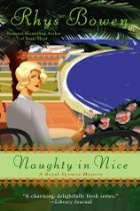
Naughty in NiceRhys Bowen, Naughty in Nice

Lady Georgiana Rannoch is facing yet another a dreary winter in London. Despite her royal pedigree — she’s 34th in line to the throne of England — she has no income, and the worldwide depression in the wake of World War I has made it impossible for her to find work. What’s more, her brother Binky and his intolerable wife, Fig, have decided to close up their London house, which means Georgie will be essentially homeless. Fortunately, the queen comes to her rescue by sending her to the French Riviera on a secret mission: she must recover a stolen snuffbox, believed to be in the possession of one Sir Toby Groper. At first, Georgie is ecstatic to be in Nice, mingling with rich English pleasure-seekers and dashing French aristocrats. She even meets Coco Chanel, who asks her to model one of the looks from Chanel’s new collection. But then a priceless necklace is stolen and a man is murdered — and in the eyes of the French police, Georgie is the prime suspect! Can she clear her name by finding the real thief and murderer?

I’m really enjoying the Royal Spyness series, and this book (the 5th installment) is no exception. It’s a light, exuberant mystery that still manages to incorporate a lot of information about this time period. For example, the Prince of Wales and his paramour, Wallis Simpson, make brief appearances in the book, and there are also a few mentions of Hitler as he begins his rise to power in Germany. In addition to the setting, I enjoyed the plot of this book, which is a bit more substantial than some of the earlier books in the series. Georgie is a fun character, but she’s not really much of a detective; she tends to stumble onto the solution of the mystery rather than actually investigating or deducing anything. In this book, though, she actually does take some initiative and is able to put the pieces together — though not before her own life is endangered once more. All in all, I think this is one of the better installments of the series, and I’m planning to continue with The Twelve Clues of Christmas in December!

Review: Double Cross

Double CrossBen Macintyre, Double Cross: The True Story of the D-Day Spies

Seventy years ago, the Allies stormed the beaches of Normandy and began the campaign to liberate Nazi-occupied Europe. Many circumstances contributed to the success of the D-Day invasion, but one of the most important factors was the campaign of disinformation being fed to the Germans by a network of double agents whose sole purpose was to convince the Abwehr that the Allies would be landing at Calais rather than Normandy. Had these agents failed, the Germans would have concentrated their forces at Normandy, most likely stopping the Allied invasion in its tracks. This book tells the stories of the individual double agents involved in this task, including Serbian playboy Dusko Popov (“Tricycle”), Peruvian socialite Elvira Chaudoir (“Bronx”), and Polish nationalist Roman Czerniawski (“Valentine”). Ultimately, Macintyre makes a convincing case for the proposition that the Allies would never have won the war on the battlefields had they not already won the intelligence war.

This book gives a wealth of fascinating detail about the six men and women who acted as double agents in Britain, allegedly spying for Germany but really working for the Allies. I was shocked to learn that British intelligence had actually discovered and turned every German agent in Britain at the time! Because of this, the Allies were able to present a unified message to the Germans, subtlely directing their attention away from Normandy and toward other possible invasion sites. Some of the specific stories in the book prove once again that truth is stranger than fiction: for example, Dusko Popov thrived on creating networks of sub-agents that were entirely fictional, yet he retained the Abwehr’s complete trust. I also loved the fact that these double agents were handled in Britain by the Twenty Committee, so named because the Roman numeral for 20 is XX, or “double cross.” In short, if you’re interested in true stories of WWII-era espionage, Ben Macintyre is your man!

Review and GIVEAWAY: Mortal Heart

Mortal HeartRobin LaFevers, Mortal Heart

This final book in the His Fair Assassin trilogy focuses on Annith, one of the most skilled novices at the convent of St. Mortain in medieval Brittany. She has lived her entire life in the convent but yearns to be sent on her first mission to the outside world, so that she can finally use her skills to serve the god of death. But the abbess has stubbornly kept her in the convent while allowing other, less skilled novices to go out on missions. When Annith hears that the abbess intends to make her the next Seeress, effectively locking her within the convent walls forever, she decides to leave the convent and find her own way to serve Mortain. Along the way she runs into a group of hellequin, doomed souls who can only redeem themselves by ushering the spirits of the dying into the afterlife. At first the hellequin terrify Annith, but she soon grows closer to their mysterious leader, Balthazaar. Will Annith be able to overcome her past, including the secrets the abbess is keeping, and forge her own destiny?

I was a big fan of Grave Mercy and, to a lesser extent, Dark Triumph, so I jumped at the chance to grab this galley at BEA! Unfortunately, I wasn’t completely enamored with the book, although I’m having a hard time pinpointing why. For one thing, the plot doesn’t have much forward momentum; there’s a lot about Annith’s past and the secrets hidden in the convent, but her current journey is much less interesting. I also found Balthazaar underwhelming as a romantic lead. There’s just no spark between him and Annith, possibly because the book spends so much time in the past. And although his big secret makes total sense in the world of this series, it made me less enthusiastic about him and Annith as a couple. That said, I do think the book is a good resolution to the series as a whole, providing some closure on all the main characters and resolving the dangling plot threads from earlier books. So I’d certainly recommend this novel to fans of the series, but I still think the first book, Grave Mercy, is the best.

**********

WIN THIS BOOK

Since I was lucky enough to have the opportunity to read this book, I’d like to give someone else a  chance as well. So with that in mind, I am offering one lucky winner my advance reader copy of Mortal Heart. It’s only been read one time and is still in great shape, I promise! 🙂 Here’s how to enter:

  • Comment on this blog post between now and July 3, 2014, at 11:59 p.m. (Eastern time). Be sure to mention that you are entering the giveaway!
  • One entry per person, please!
  • This giveaway is limited to US readers only. (I know, I know, sorry!)
  • The winner will be chosen randomly, and I’ll announce the results in a new post sometime on July 4.

And…that’s it! Good luck, everyone!

Review: Letters from Skye

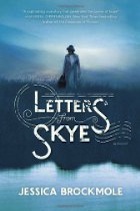
Letters from SkyeJessica Brockmole, Letters from Skye

This epistolary novel tells two parallel love stories, each set against the backdrop of a world war. In 1912, Scottish poet Elspeth Dunn receives a fan letter from David Graham, an exuberant young American. Elspeth replies to the letter, and she and Davey soon strike up a regular correspondence. At first they discuss literature and their favorite books, but soon they’re exchanging ideas about everything under the sun, including their most secret dreams. Unsurprisingly, Elspeth and Davey fall in love, but their romance is fraught with complications. When America enters World War I, Davey enlists immediately as an ambulance driver on the battlefields of France. Additionally, Elspeth is already married, so her stolen moments with Davey are as fleeting as they are precious. Meanwhile, in 1940, Elspeth’s daughter Margaret — also involved in a wartime romance — stumbles upon one of Davey’s letters and decides to search for the secrets in her mother’s past.

In theory, I should love this book, since it combines a lot of my favorite things: epistolary novel, WWI and WWII setting, love stories, family secrets. But while I found it an entertaining read, my overall experience was somewhat disappointing. First of all, the story is really about Elspeth and Davey, so the parts about Margaret felt very cursory and not fleshed out at all. I would have liked to know a lot more about her reactions to her mother’s secret, as well as the details of her own romance. Also, the story itself seems very superficial, given the gravity of the WWI backdrop. Even though I enjoy light romances with happy endings, I felt like this book lacked emotional stakes. Elspeth and Davey are likeable characters, and their letters are often very charming, but I was never in any real doubt about the end result of their story. Maybe part of my problem is that this book seems like a copycat of The Guernsey Literary and Potato Peel Pie Society, only not nearly as good! Overall, this book is a nice, quick read, but it won’t stay with me the way Guernsey has.

Review: The Letters of Nancy Mitford and Evelyn Waugh

Letters of Nancy Mitford and Evelyn Waugh, TheCharlotte Mosley, ed., The Letters of Nancy Mitford and Evelyn Waugh

“I want to write a sad story of a man who gave up drink and hated all his chums. It is me.” — Evelyn Waugh, 12 November 1944.

Nancy Mitford and Evelyn Waugh were two of the most popular and respected authors of the early and mid-20th century; they were also lifelong friends who kept up a correspondence lasting more than two decades. This book is a collection of their letters to each other, which are full of jokes, literary allusions, and most of all gossip. They each had a very pointed, satirical sense of humor that was frequently directed at members of their own social set — and quite often at each other. In many ways they couldn’t be more different: Waugh was very conservative, old-fashioned, and staunchly Roman Catholic, while Mitford was a spiritually indifferent socialist living as an expatriate in Paris. But their correspondence reveals that they understood one another and shared a deep, affectionate friendship. Through their discussions of current events, important people, and of course books (both their own and other people’s), Mitford and Waugh’s letters provide a unique window into their age.

It’s taken me a long time to write this review, because how can one “review” a collection of letters that weren’t (necessarily) meant to be public? All I can say is that I enjoyed reading them. I’ve read a few books by each of these authors — Mitford’s The Pursuit of Love and Love in a Cold Climate, Waugh’s Brideshead Revisited and A Handful of Dust — but otherwise I didn’t know much about either of them. I do think some level of familiarity with their work is helpful, but you definitely don’t have to be an expert in order to enjoy these letters. They’re often hilarious (how I shrieked, as Nancy would say) and also have some interesting discussions about literature. I want to read more of their books now! Of course, their chatter about mutual friends and acquaintances was hard to follow, although the editor did a fairly good job of identifying people in footnotes; but I still enjoyed this collection overall. If you’re interested in early- and mid-20th-century literature, this might be a good book to seek out.

Review: The Hollow Hills

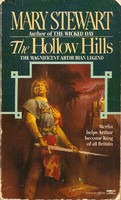
The Hollow HillsMary Stewart, The Hollow Hills

Picking up right after The Crystal Cave left off, this book follows Merlin from the day Arthur was conceived to the day he became high king of Britain. Although Merlin helped Uther Pendragon to marry Ygraine, he is currently out of favor with the king. Yet when Uther needs advice about what to do with his unborn child, Merlin is still the first person he consults. If the child is a boy, Uther must recognize him as the king’s son, just in case he is unable to produce a legitimate heir. At the same time, however, he must keep the boy far away from his court, both to protect him and to get him out of the way in case there should be another son with a better claim to the throne. Merlin suggests sending the child to one of Uther’s loyal knights, where he will be raised as a foster child ignorant of his true parentage. Meanwhile, Merlin becomes Arthur’s friend and protector, teaching him all he needs to know in order eventually to take his rightful place as the king’s heir.

I wasn’t terribly impressed with the first book in this series, The Crystal Cave, but I actually liked this book more. It starts off slowly, but once Arthur is born, the book picks up and gets significantly more interesting. Unsurprisingly, I enjoyed the political machinations aspect of the book more than the mystical aspect; I found Merlin’s visions and prophecies a little boring! I did like watching the relationship between Merlin and Arthur unfold, though, and I look forward to seeing how it continues in the next book. Overall, I’m glad I decided not to give up after The Crystal Cave, and I’m a little more excited about The Last Enchantment than I was before.