Mini-Reviews: Messenger, Crazy, Gothic

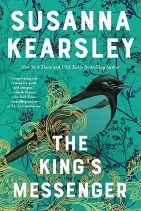
Susanna Kearsley, The King’s Messenger

It’s 1613, and King James I sits on the throne of England. His son, Prince Henry, has recently died, and rumors suggest that he was poisoned. To investigate (or possibly to set up a scapegoat), the king sends one of his messengers, Andrew Logan, to arrest the prince’s mentor and close companion, Sir David Moray. Traveling with Andrew are a scrivener and his daughter, Phoebe Westaway, who will record any statements made by Sir David. Andrew and Phoebe have a contentious history, but their proximity on this journey leads to very different feelings. Meanwhile, their perspective on Sir David also begins to change. Susanna Kearsley is a top-notch writer of historical fiction, and while I don’t know much about this time period, her depiction feels believable and authentic. I found the present-day adventure and romance more interesting than Sir David’s history with the prince, which is interspersed in the narrative via flashbacks. But overall, I really liked this one, though A Desperate Fortune remains my favorite Kearsley novel.

Annie Darling, Crazy in Love at the Lonely Hearts Bookshop

Nina, who works with her two BFFs at a bookstore specializing in romantic fiction, prides herself on being unconventional, from her vintage-pinup-girl style to her sleeves of tattoos. Her romantic ideal is Heathcliff from Wuthering Heights. Noah, a consultant who’s evaluating the bookstore’s finances, couldn’t be farther from Nina’s usual type—yet she feels a surprising attraction to him. But as they get to know each other, they discover an unpleasant shared history that may drive them apart. I remember enjoying the previous book in this series, True Love at the Lonely Hearts Bookshop, but this one didn’t do much for me. I think it’s because I can’t really relate to Nina at all (again, her romantic ideal is Heathcliff). The book also feels pretty dated in its approach to friendships and relationships, despite being published in 2018—it seems a bit like a Bridget Jones’s Diary copycat. Overall, not a horrible book, but not one I’d recommend either.

Silvia Moreno-Garcia, Mexican Gothic

It’s 1950, and Noemí Taboada is a glamorous socialite in Mexico City. But when she receives a disturbing letter from her cousin Catalina, who has recently married and moved to her husband’s remote mountaintop estate, she decides to visit and find out what’s going on. Noemí is repulsed by the decaying estate and its hostile inhabitants. She’s also alarmed by Catalina’s seeming insanity, and becomes even more so when she too starts having strange dreams. She eventually uncovers a complex and horrific history that’s holding her cousin captive—and is now attempting to ensnare her as well. I’ve enjoyed every Moreno-Garcia book I’ve read so far, and this is no exception, though it’s way closer to horror than I normally go! It’s definitely not for the faint of heart—there’s violence (including sexual violence), body horror, and all manner of creepy goings-on. But I really liked this take on the gothic genre and how it explores power dynamics, particularly conquerors vs. conquered and men vs. women. I also loved Noemí as a heroine; she’s got quite a bit more intelligence and spunk than some of her predecessors in this genre. It’s not quite my kind of book, but if this premise interests you, I’d highly recommend it!
Mini-Reviews: Splendor, Remember, Albion

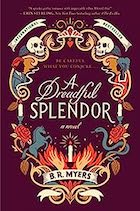
B.R. Myers, A Dreadful Splendor

Genevieve Timmons is a fake spiritualist who uses her seances to steal from the wealthy families who hire her. When the law catches up with her, she gets an unexpected reprieve: A lawyer hires her to perform a seance for Mr. Pemberton of Somerset Park, whose fiancée tragically died the night before their wedding. The lawyer thinks the seance will bring his employer peace, but when Genevieve arrives at the park, she learns that Pemberton has other ideas — he thinks his fiancée was murdered and wants to use the seance to prompt the guilty party to confess. As Genevieve gets to know the various people living at the park, she uncovers many secrets and possibly even a real ghost or two. This is a decent read, combining gothic historical mystery with a bit of romance, but I felt there was a little too much going on. Between Genevieve’s sad backstory and the various machinations at Somerset, character development takes a backseat. Overall, I didn’t dislike the book, but it didn’t particularly do anything for me either.

Mary Balogh, Remember Me

Lady Philippa Ware is finally making her London society debut at age 22, after delaying it several times due to a family scandal. There she meets Lucas Arden, the Marquess of Routh, whom she once overheard insulting her as “soiled goods.” She hates him at first but is soon drawn to him, and he to her. Both their families encourage a match between them, but can they overcome their painful shared past? This isn’t a bad book, but I found it a frustrating one. Balogh seems much more interested in family dynamics than in the core romance here; Philippa and Lucas are almost afterthoughts in the huge cast of characters, many of whom were introduced in book #1 and will inevitably have their own books in the series. I also found Lucas’s grandparents more overbearing than endearing in their relentless pressure for him to produce an heir. That said, I still want to continue with the series and will hope for stronger romances in subsequent books.

Andre Norton and Rosemary Edghill, The Shadow of Albion

It’s 1805, and Sarah Cunningham has decided to leave her life of drudgery in Baltimore for the promise of good fortune in London. But once she’s in England, her carriage has a terrible accident — and when she wakes up, everyone is calling her the Marchioness of Roxbury. Moreover, the world is strangely different from her own: America never had a revolution and the Stuarts are still on the throne of England. As Sarah struggles to understand her new identity, she also clashes with the Duke of Wessex, Roxbury’s fiancé and a spy for the English king. But Sarah and Wessex must eventually put aside their differences to foil a nefarious French plot. I feel like that summary just barely scratches the surface — suffice to say, this book is a mixture of alternate-history epic, political intrigue, and Regency romance that I really, really loved! It’s a dense read but still somehow a page-turner, and I would highly recommend it to fans of historical fiction (despite the alternate/fantastical elements). Can’t wait to read the sequel!

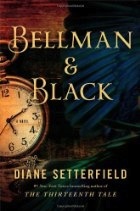
Review: Bellman & Black

Bellman & BlackDiane Setterfield, Bellman & Black

This atmospheric novel tells the story of William Bellman, who makes one decision in childhood that will alter the entire course of his life. When he is ten years old, he and a few friends are playing in the field near their village, and they see a rook on a far-off tree branch. Will bets his friends that he can hit the bird with his slingshot, and to everyone’s astonishment, he actually does it. Will and his friends soon forget the incident, but from then on, rooks become a touchstone and a bad omen for William Bellman. As he gets older, he becomes more and more successful: first he get a job at his uncle’s mill, then rises through the ranks until he eventually runs it. He marries and has children, and he begins to make a very comfortable living. But when an illness sweeps through the village and takes most of William’s family, he will do anything to save his remaining daughter — including making a desperate deal with the mysterious Mr. Black. William’s encounter with Black leads him to an entirely different business venture, one that eventually threatens to consume him.

I absolutely loved Diane Setterfield’s debut novel, The Thirteenth Tale, so I had high expectations for this book. Unfortunately, I’m coming away from it with mixed feelings. The writing style is just as rich and gorgeous as I remember, and I found myself reading very quickly despite the slow-moving plot. I also admire the novel’s atmosphere of suspense; it has a wonderfully autumnal, sinister quality, despite the fact that not a lot of scary stuff actually happens. In fact, that may be my biggest problem with the book: there’s this great buildup of tension throughout the novel, but in the end there’s no payoff. The interludes about rooks — and William’s encounters with them throughout the book — are meant to heighten the suspense, I think, but I didn’t really understand their role in the story. Frankly, I was a bit confused about the story as a whole; I was expecting a Faustian narrative in which William essentially sells his soul for success, but that’s not really what happens. In short, I’m not sure what I’m supposed to be taking away from this book — but I’m definitely not giving up on Setterfield yet!

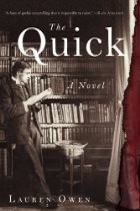
Review: The Quick

Quick, TheLauren Owen, The Quick

This novel, set in late Victorian England, centers around James Norbury and his sister Charlotte. After growing up isolated in a crumbling country estate, James is eager to move to London and try his luck as a poet. He slowly begins to conquer his shyness and mix a little in society, and eventually he even falls in love. But everything changes one fateful night when James is attacked, kidnapped, and initiated into the sinister Aegolius Club. Meanwhile, Charlotte has grown more and more anxious about her brother, who seems to have vanished without a trace. She journeys to London and attemps to discover what has happened to him, but what she finds out is more shocking and horrible than she ever could have imagined. As the Aegolius Club’s secrets are slowly revealed, and its members become more and more dangerous, Charlotte realizes that her only course of action is to destroy the club; but even if such a thing were possible, would she truly be able to rescue James?

I find that I really can’t talk about this book without mentioning one significant spoiler, so please STOP READING NOW if you don’t want to know anything else about the plot of this book! … If you’re still interested, here goes: this book is about vampires. I mention it because there is nothing in the book’s description or on the cover blurb about them, yet they are central to the entire book! Personally, I’m not a big fan of vampire novels and would not have picked up this book if I’d known they would be such a big part of the plot. That said, I actually really liked it a lot; Owen is a wonderful writer, and I found the novel a real page-turner despite the fact that it’s over 500 pages long. In fact, my other complaint is that it could probably have ended a few chapters before it did. I wasn’t a huge fan of the (largely depressing) ending, and I would have liked a little happiness for the main characters in the end, after they’d suffered so much. Still, this is a very accomplished gothic novel, and I’d definitely consider reading more by Lauren Owen.