Mini-Reviews: Love, Byzantium, Ensemble

Lindsey Kelk, Love Me Do

UK native Phoebe Chapman is excited to spend a couple weeks visiting her sister in Los Angeles. Sure, her sister has to leave pretty much immediately for an emergency work trip, but Phoebe is happy enough to stay at her luxurious house and explore the city, with the help of handsome neighbor Ren and bubbly personal trainer Bel. Phoebe soon learns that Bel has a crush on Ren but is painfully awkward around him, so she decides to help the couple get together. But a little well-meaning advice soon spirals out of control, with Phoebe writing love letters to Ren on Bel’s behalf – while falling for Ren herself. I’m a sucker for a Cyrano de Bergerac storyline, and I enjoyed this book even though Phoebe’s plan was obviously doomed from the start. Yes, Ren is a little too good to be true, and the conflicts are all resolved pretty quickly. But I liked Phoebe’s humorous voice and her enthusiastic descriptions of LA from an outside perspective. Overall, it’s a fun read if the premise interests you.

John Julius Norwich, A Short History of Byzantium

In the late ’80s and early ’90s, English popular historian John Julius Norwich wrote a three-volume history of the Byzantine Empire. This book condenses that longer work into a single tome of 500-ish pages, giving a broad-strokes overview of the history of Byzantium from the reign of Constantine the Great in the fourth century to the Ottoman conquest of Constantinople in 1453. It’s a lot of ground to cover, so Norwich mostly sticks to the emperors and other powerful figures (popes, patriarchs, rival monarchs, etc.) who show up in the historical record. As someone who’s only mildly interested in the Byzantine Empire, I don’t think I’m the target audience for this book, which would probably be more enjoyable to someone with more background knowledge. But Norwich is an entertaining writer, and I think I will retain at least some of what I read, so I’d recommend it to people who are enthusiastic about the period.

Aja Gabel, The Ensemble

This novel closely follows four characters, members of a professional string quartet whose careers and lives are intertwined in various complicated ways. There’s first violinist Jana, the ambitious and emotionally ruthless leader of the group; Brit, the calm and kind second violinist; Henry, the viola prodigy to whom everything seems to come easily; and Daniel, the cellist with a monumental chip on his shoulder. As time passes, each character comes to terms with what he or she really wants from the quartet and from life in general. Literary fiction doesn’t always appeal to me; I find “literary” is often synonymous with “depressing.” But in this case, I found enough to like about these (sometimes quite unlikable) characters, and enough outcomes to root for, that I liked the book more than I expected to. I also thought the descriptions of music and life as a musician rang true. Overall, I think I’d like to read this book again someday, so I’m keeping it on my shelves for now.
Mini-Reviews: Sonya, Benedettos, Magic

Ben Macintyre, Agent Sonya: The Spy Next Door

Born to German Jewish parents in Berlin in 1906, Ursula Kuczynski grew up sympathetic to left-wing politics and joined the German Communist Party in her teens. After her marriage, she and her husband moved to Shanghai, where she was approached by a Soviet intelligence officer and recruited as a spy. She accepted the work eagerly, her ardent communist beliefs intensifying as the Nazis rose to power in Germany. Using the code name Sonya, Ursula engaged in espionage for the USSR for decades, her missions taking her all over the world and eventually leading her to the UK. I don’t generally gravitate toward nonfiction, but Ursula’s life is so fascinating that this biography reads like a novel. Macintyre weaves in plenty of history to give context to Ursula’s actions and also paints a vivid picture of her personal life, using her own writings and those of her family, friends, and associates as sources. This is definitely another winner from Macintyre!

Katie Cotugno, Meet the Benedettos

A few years ago, the five Benedetto sisters were living the high life in LA as stars of a successful reality TV show. Now, their fame and status are fading, and they’re even in danger of losing their house. Lilly, the sisters’ de facto leader, is determined to hold her family together but doesn’t quite know how. And things get even more complicated when movie star Charlie Bingley and his friend Will Darcy move into their neighborhood – especially when Charlie seems interested in Lilly’s sister June, and Lilly herself is simultaneously attracted to and repulsed by the snobbish Will. I couldn’t resist this Pride and Prejudice retelling and devoured it in a day. I like how this novel centers the relationships among all five Benedetto sisters; they’re very different people, but it’s obvious how much they love each other. I also loved the chemistry between Lilly and Will and especially loved getting inside Will’s head. Some things didn’t quite work for me – the ending was a bit anticlimactic – but overall I enjoyed this one, and it’s reminded me that I really want to read P&P again soon!

V.E. Schwab, A Darker Shade of Magic

This novel is set in a universe in which there are four different Londons: Grey London, in the ordinary world; Red London, in a prosperous world with abundant magic; White London, where magic is scarce and used as a weapon; and Black London, which devoured itself long ago. Kell lives in Red London but has a unique ability to travel between the worlds. Lila, a Grey Londoner, is a thief with ambitions to become a pirate. They meet when Lila picks Kell’s pocket, but the item she steals turns out to be an extremely powerful and dangerous artifact from Black London. Together, they must return it to its proper world before it falls into the wrong hands. I really love the creative world-building of this novel, and Kell and Lila are both compelling characters. Once they meet up, the book becomes a page-turner after a somewhat slow start. I first read this novel eight years ago and wondered whether it would hold up, but I still enjoyed it this time around and am excited to continue with the trilogy.

Mini-Reviews: Women, Coconut, Belle

Madeleine St. John, The Women in Black

This novel follows the lives of four women who all work at Goode’s department store in 1950s Sydney, Australia. Patty, in her mid-30s, is married but unhappily childless, and her husband Frank is oblivious to her emotional turmoil. Fay is around 30 and has been going out with men for years, but somehow none of them seem to want to marry her. Lisa, a temporary hire for the Christmas season, dreams of going to university and becoming a poet, but her strict father won’t hear of it. And Magda, a glamorous Slovenian immigrant, is adjusting to a culture very different from her own. I loved this book and devoured it in a single sitting. It’s light and charming and slyly funny, and I became invested in the stories of all four women. I especially loved Magda, who enjoys the finer things in life and is generous in sharing them. There’s a bit of romance, but the main focus is on women’s experiences and relationships. The book reminds me a bit of Miss Pettigrew Lives for a Day, but with a slightly more satirical edge. I expect to revisit it often and would recommend it as a great comfort read!

Amy E. Reichert, The Coincidence of Coconut Cake

Milwaukee restaurateur Lou Johnson is having a run of terrible luck. First her fiancé cheats on her; then, that very night, food critic Al Waters samples her cooking — which is subpar because of her distress over the breakup — and writes a scathing review. The day the review comes out, Lou goes to a bar to drown her sorrows and meets Al. They’re attracted to each other and soon strike up a romance. The only problem is, he doesn’t realize she owns the restaurant he panned, and she doesn’t know he’s the hostile reviewer because he writes under a pen name. I’m a sucker for a You’ve Got Mail story, and this is a fun one that made me want to visit Milwaukee and eat some fried cheese curds immediately. I never quite believed in Lou and Al as characters; they seemed like stock types rather than real people to me. But I liked the setting and the overall cheerful, Hallmark-esque vibe of this novel, so I’d consider trying more by this author.

Paula Byrne, Belle: The Slave Daughter and the Lord Chief Justice

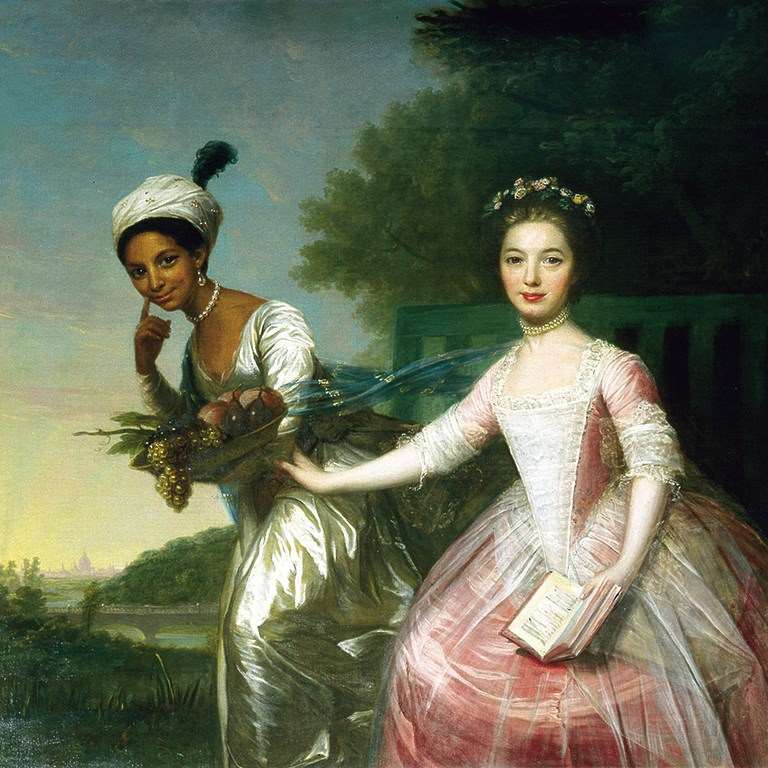
The idea for this book came from an 18th-century English portrait of two young women — one white, one black — who are portrayed as equals, almost as sisters. The black woman was Dido Elizabeth Belle, the illegitimate daughter of an English naval captain and an African slave. She grew up in the house of her great-uncle, the Earl of Mansfield, who happened to be the Lord Chief Justice and who decided several cases that would be crucial to the antislavery movement in Britain. It’s a fascinating story, but unfortunately, there’s very little about Dido in the historical record, and consequently very little in the book! Instead, Byrne focuses on the English slave trade, the status of black individuals in London, the Earl of Mansfield’s legal career, etc. It’s all interesting, but I was hoping for more biography, less history. The book does have numbered endnotes, many of which cite primary sources, yet Byrne also editorializes a fair amount. I’d say it’s more of a popular history than a scholarly one. Overall, I’d recommend it for people who are interested in the period. Apparently there’s also a movie about Dido, called Belle, which I’m interested in watching now.

Here is the portrait of Dido and her cousin, Elizabeth Murray:

Review: War and Peace

War and PeaceLeo Tolstoy, War and Peace (trans. Anthony Briggs)

“Set against the sweeping panoply of Napoleon’s invasion of Russia, War and Peace — presented here in the first new English translation in forty years — is often considered the greatest novel ever written. At its center are Pierre Bezukhov, searching for meaning in his life; cynical Prince Andrei, ennobled by wartime suffering; and Natasha Rostov, whose impulsiveness threatens to destroy her happiness. As Tolstoy follows the changing fortunes of his characters, he crafts a view of humanity that is both epic and intimate and that continues to define fiction at its most resplendent.” (Summary from Amazon.)

It took me more than three months to read this book, and I’m still not quite sure what to make of it. I feel a bit presumptuous in criticizing such a well-known classic, but certain parts of the novel worked for me much more than others. There’s a lot of social comedy in this book, which I loved! And I find the Napoleonic era fascinating, although I’ve only been exposed to it from a British point of view, so it was interesting to see that conflict from a Russian perspective. However, there are reasons most people never finish this book, and those reasons are: the overly long, mind-numbingly tedious descriptions of battles; philosophical digressions; and tirades about the right and wrong way to study history. I do think this book is worth reading once, but I’m glad I don’t ever have to read it again!

I also want to note that I liked the Briggs translation; it’s not as word-for-word accurate as the Pevear-Volokhonsky translation is rumored to be, but I suspect it’s more readable. Instead of footnoting the long French passages, Briggs just translates them directly into English, although he does note when certain characters are speaking French. I actually preferred this, but some readers may not. Also, the Briggs translation is pretty aggressively British; for example, some of the lower-class soldiers have Cockney accents! Again, I didn’t mind this, but I can see how others might. All in all, I’d recommend this translation for casual readers but maybe not for serious scholars.

Review: Conquest

Juliet Barker, Conquest: The English Kingdom of France 1417-1450

The title of this nonfiction work is pretty self-explanatory: Barker narrates the progress of the Hundred Years’ War starting shortly after Henry V’s victory at Agincourt. She describes the major battles and sieges in meticulous detail, while also painting a picture of the broader diplomatic situation between England and France. The book depicts the major players during this phase of the Hundred Years’ War, including Henry V of England; the Duke of Bedford, Henry’s brother and the chief military leader in France; Charles VII of France; the Duke of Burgundy, whose relationship with the English informed much of the course of the war; and Joan of Arc. Ultimately, Barker analyzes the course of events and offers an explanation for why England eventually lost its claim to the crown of France.

Honestly, this is a book you’re only going to like if you’re already interested in the subject matter. Personally I’ve always been fascinated by the Middle Ages; I’d also previously read Juliet Barker’s Agincourt, so in some ways I was the ideal audience for this book. Barker is a good writer, and this book appears meticulously researched. The book is told more from the British perspective than the French; I wouldn’t necessarily call it a pro-British bias, but there is definitely more time spent on England than on France, perhaps because of the availability of sources. I will say that I struggled at some points because of the repetitive nature of events (“then X castle was besieged and taken by the English, and then the French got mad and took it back,” etc.). But I would definitely recommend this book as a source for anyone studying the period. For someone with less knowledge of or interest in the late Middle Ages, I’d recommend Agincourt instead.